How To Thin Arizona Citrus Fruit In Summer For A Better Harvest
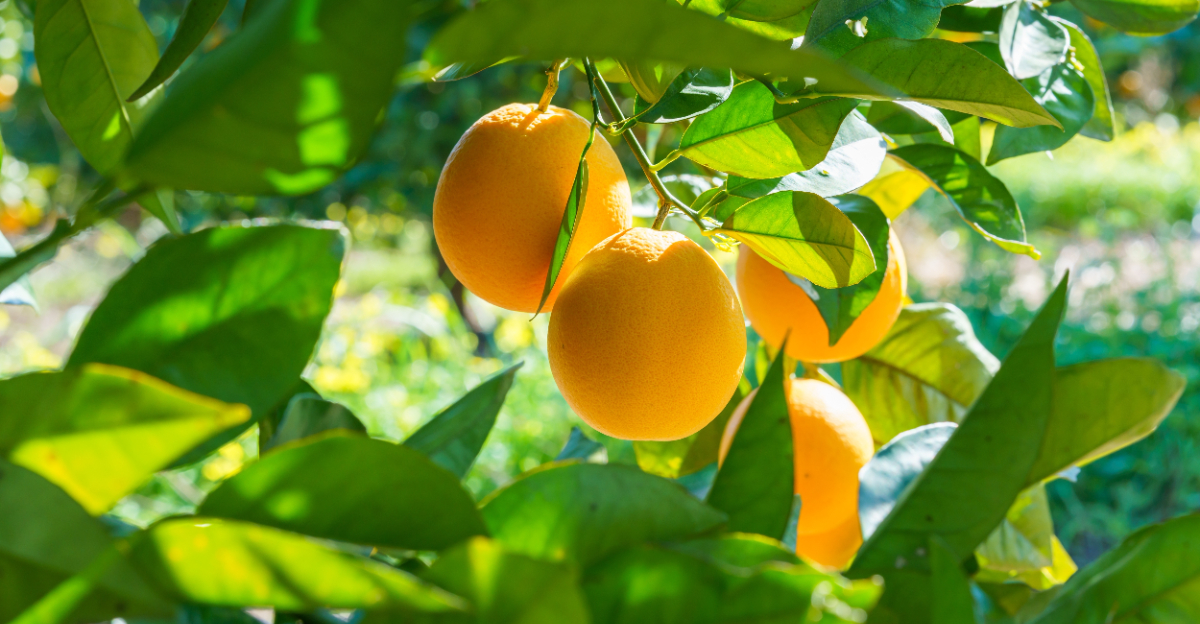
A citrus tree covered with fruit looks like every gardener’s dream. It feels wrong to remove fruit that has already started growing, especially after months of waiting for it to develop.
That is why many people leave every piece exactly where it is. The problem is that more fruit does not always lead to a better harvest.
When a tree carries too much at once, it has to divide its energy between every developing orange, lemon, or grapefruit. That can lead to smaller fruit and extra strain during the hottest part of the growing season.
In Arizona, summer heat makes that balancing act even more important.
Giving your tree a little help now can improve the quality of the fruit that stays on the branches. Thinning at the right time is not about reducing your harvest.
It is about helping your citrus tree put its energy into producing healthier, better-sized fruit when harvest season arrives.
1. Pick Off The Smallest Fruit First
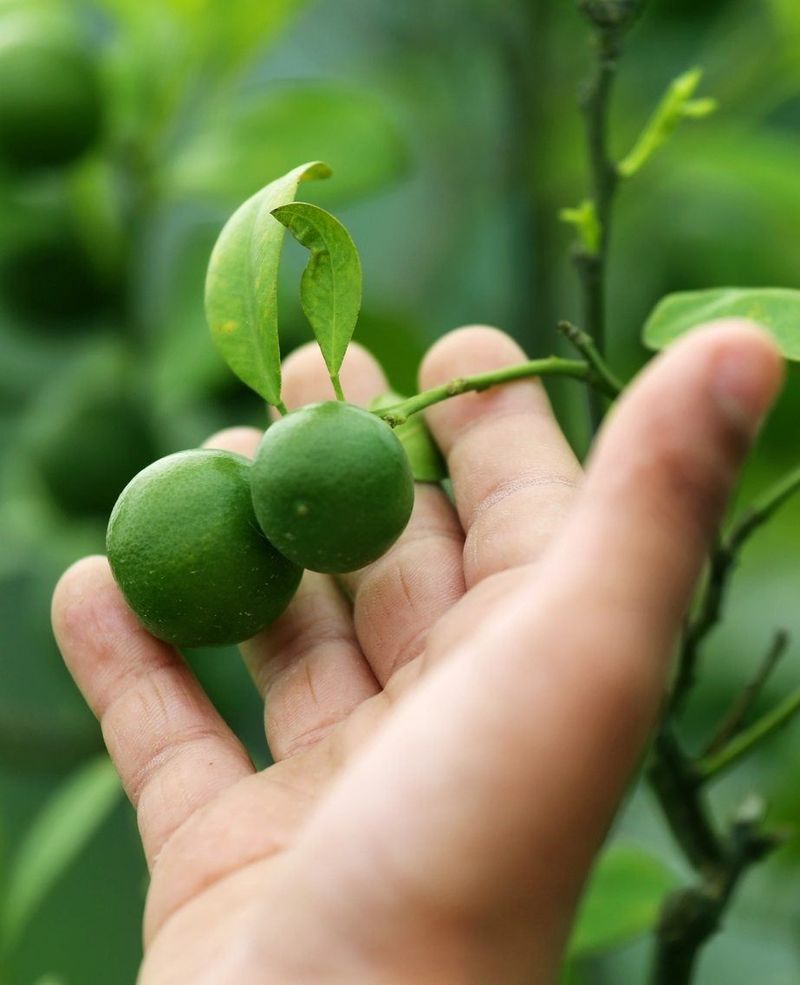
Start with the runts. Across a loaded citrus tree, the smallest fruit are almost always the ones that will never size up properly.
Removing them first makes the whole job easier and faster.
Look for fruit that is noticeably smaller than everything else on the same branch. On a navel orange tree, for example, some fruit may already be marble-sized while others are barely a pea.
Those tiny ones are not going to catch up. Pull them off by hand or snip them cleanly with pruners.
Removing the smallest fruit first also helps you see the bigger picture. Once those are gone, it becomes much clearer which clusters still need more thinning.
You are not guessing as much.
Work section by section through the canopy. Start at one side and move methodically so you do not miss dense spots buried inside the tree.
Citrus canopies get thick fast, especially on mature trees.
Tossing the removed fruit into a bucket keeps the area tidy and makes it easier to spot what you have already done. Leaving pulled fruit on the ground can attract pests, so dispose of them promptly.
2. Leave Enough Space Between Fruit
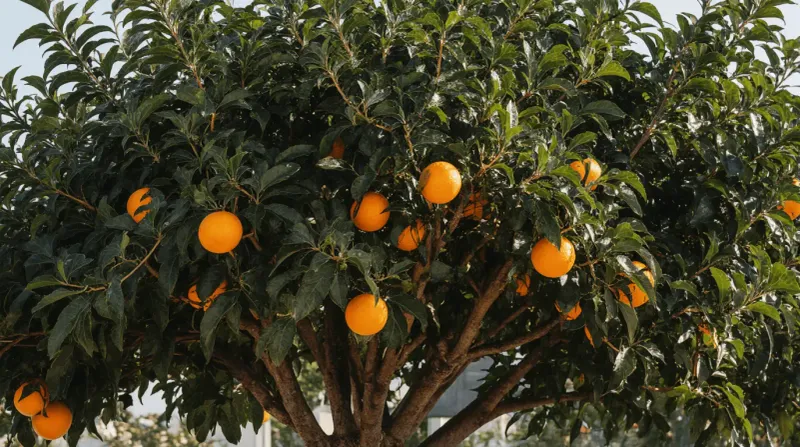
Spacing matters more than most people realize. When citrus fruit crowd each other, they compete hard for water, nutrients, and sunlight.
None of them wins that fight cleanly.
A good rule of thumb is to aim for roughly four to six inches between each fruit on a branch. That gap gives every fruit room to swell and fill out properly before harvest.
Fruit that are packed tight tend to stay smaller and can develop uneven skin texture.
Look at each cluster and decide which fruit stays. Ideally, keep the one that sits in the best position on the branch.
That usually means the one facing outward with good light exposure rather than one buried deep in the canopy.
Do not stress over getting the spacing perfect on every single branch. Getting it close is good enough.
The goal is to reduce competition, not achieve a perfectly uniform look across the entire tree.
Your Arizona Garden Changes Every Week. Your Plan Should Too.
Gardening in Arizona changes quickly throughout the season. Every Friday you’ll receive a simple weekly plan showing exactly what to plant, prune, fertilize, harvest, and protect so you never miss the right timing.
On young trees especially, proper spacing during thinning helps protect developing branches from strain. Overloaded young limbs can crack or split under the weight of a full fruit load, particularly during the intense summer heat common in Arizona.
Keeping things spaced out reduces that risk significantly.
3. Remove Fruit From Overloaded Branches
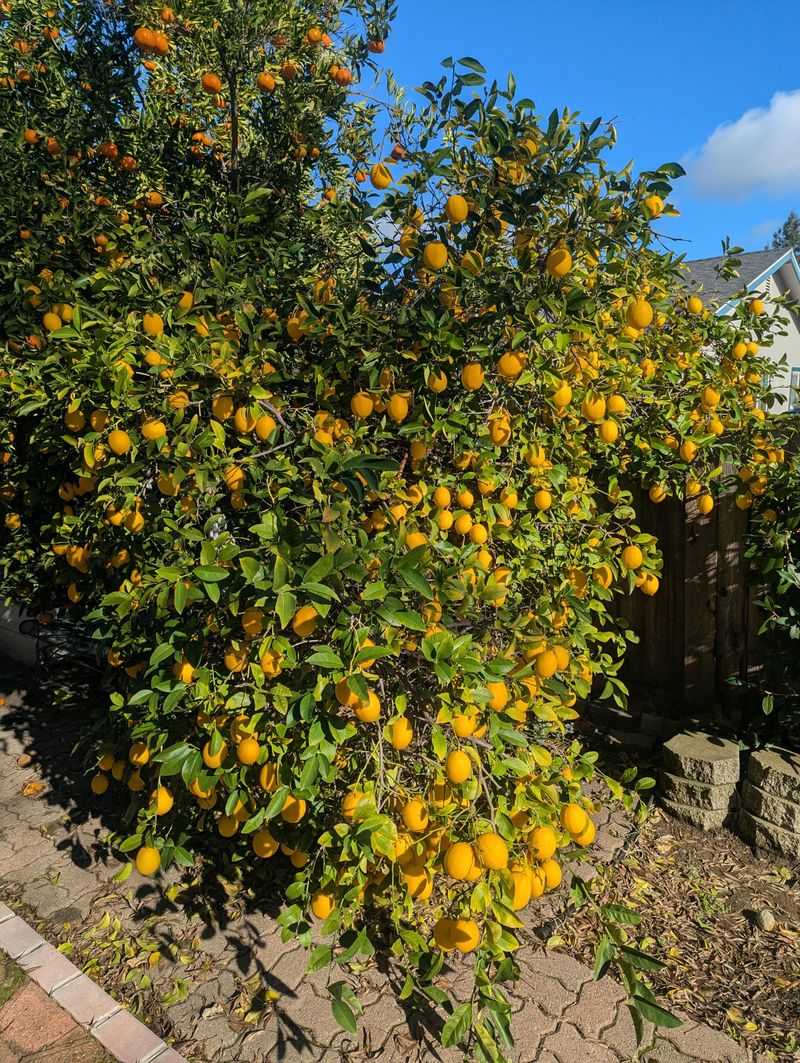
Some branches look like they are about to give up. When a single limb is carrying fifteen or twenty small fruit, it is under serious stress.
That branch needs help fast.
Overloaded branches are easy to spot. They droop noticeably lower than surrounding branches and often look crowded with tight clusters of green fruit.
Left alone, they can crack, especially once summer heat pushes those fruit to swell.
Start by removing fruit from the very tip of the branch. Tips carry the most leverage and put the most strain on the attachment point near the trunk.
Pulling a few from the end immediately reduces pressure on the whole limb.
Work inward from the tip, removing fruit until the branch lifts back up and holds its position without sagging. That is a reliable visual cue that you have removed enough weight.
You do not need to count fruit precisely.
Pay extra attention to branches that have already started to angle sharply downward. Those are the ones at highest risk of splitting at the crotch where they meet a larger limb.
Splitting wounds on citrus trees are slow to recover and can let in disease or pests. Preventing that kind of damage through smart thinning protects the long-term structure of the tree.
4. Take Off Damaged Or Misshapen Fruit
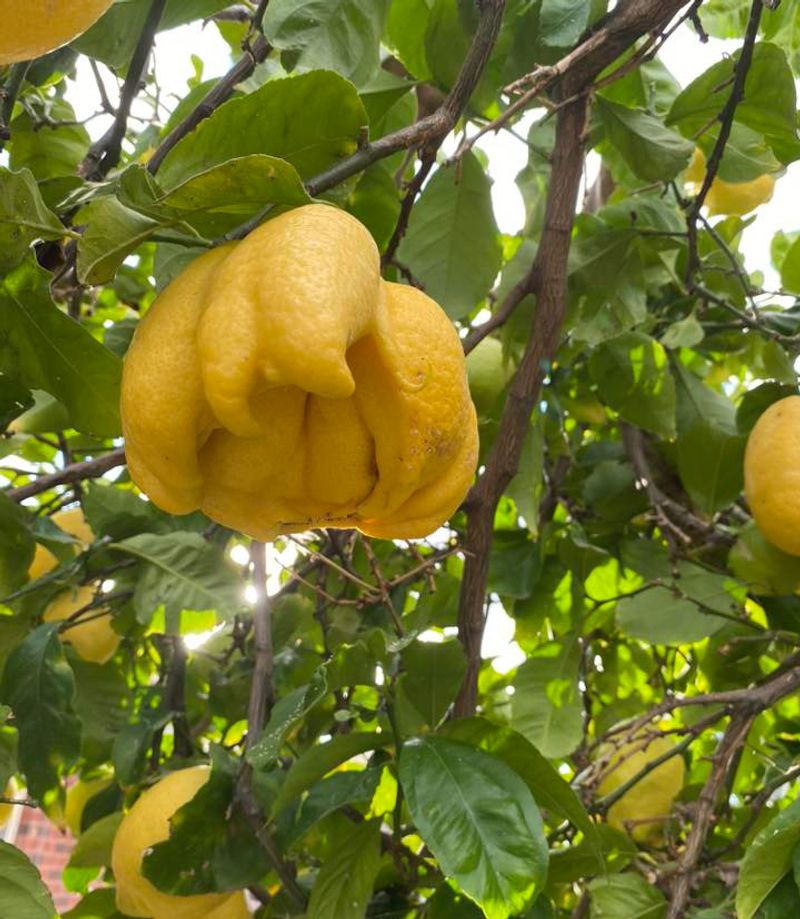
Not all fruit worth removing is small. Some fruit looks a decent size but is already compromised.
Damaged and misshapen fruit will not improve as the season goes on, so removing it early makes sense.
Scarred fruit is common in desert gardens. Wind, insects, and early cold snaps can all leave marks on developing citrus.
A little surface scarring does not always affect flavor, but deep scarring or deformed shapes usually mean the internal structure is off too.
Misshapen fruit often develops when pollination is uneven or when conditions were rough during the early growth stage. These pieces tend to stay oddly shaped, develop thick uneven rinds, and produce less juice than properly formed fruit.
Keeping them on the tree wastes resources.
Check for fruit with soft spots, visible pest damage, or unusual coloring. Any piece that looks off in multiple ways is a good candidate for removal.
Trust your eyes on this one.
Removing compromised fruit also reduces the chance of pest populations building up on the tree. Certain insects are drawn to stressed or damaged fruit.
By pulling those pieces early, you cut off a potential breeding ground before it becomes a bigger problem later in the season.
5. Use Clean Pruners For Every Cut
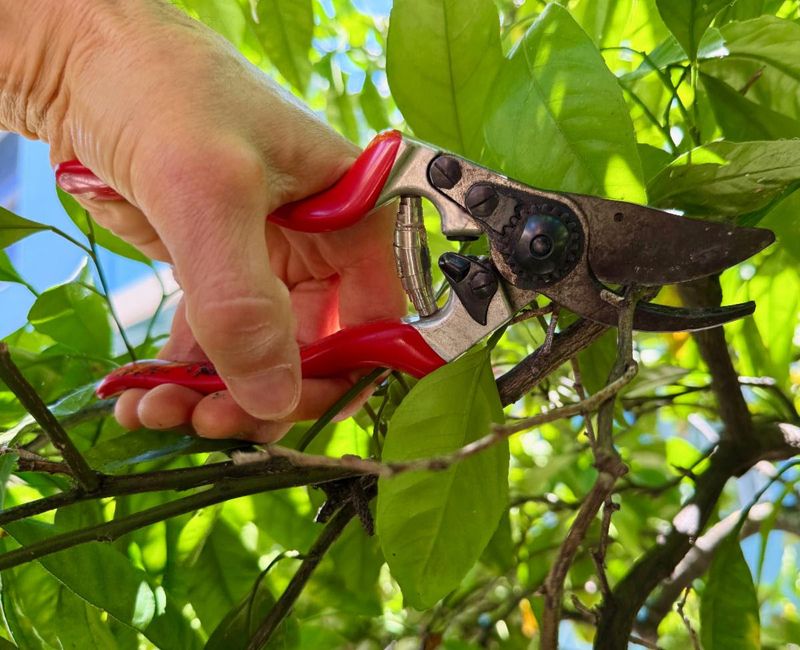
Dirty pruners spread problems fast. Moving from tree to tree or even branch to branch without cleaning your tools can transfer bacteria and fungal spores directly into fresh cuts.
It is an easy mistake to avoid.
Before you start thinning, wipe your pruner blades with a cloth dampened with rubbing alcohol or a diluted bleach solution. That quick step removes residue from previous cuts and reduces the chance of introducing pathogens into the tree.
Repeat the wipe-down if you notice any diseased-looking fruit or spots while working. Visible mold, unusual discoloration on stems, or oozing sap near cuts are all signs to stop and re-clean your tools before continuing.
Sharp blades also matter. Dull pruners crush and tear stem tissue instead of slicing cleanly.
Crushed tissue takes longer to callus over and creates a rougher entry point for disease. Keeping blades sharp is just as important as keeping them clean.
A small whetstone or pull-through sharpener kept nearby makes it easy to touch up blades mid-job if needed. Quality pruners hold an edge well, but even good tools need occasional sharpening during heavy use.
Investing a few minutes in clean, sharp tools at the start of each thinning session protects the health of your citrus trees without requiring much extra effort.
6. Water Well After Thinning
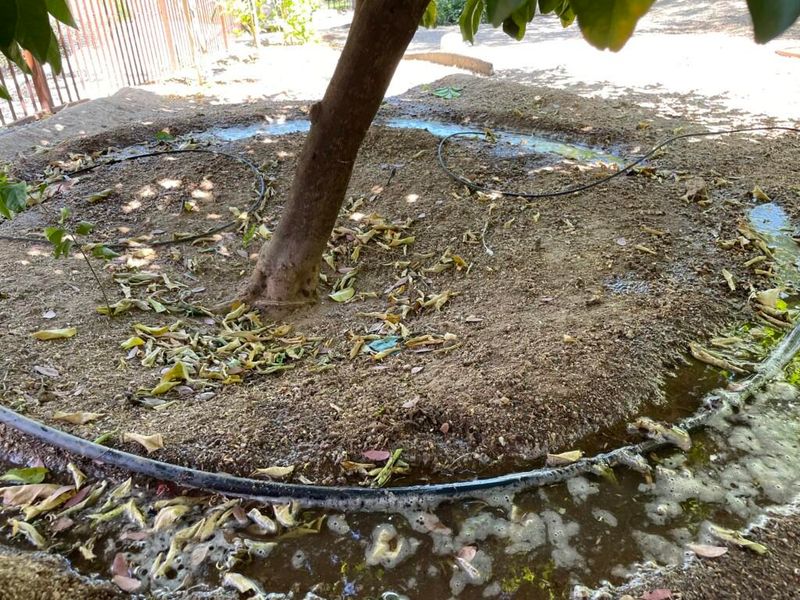
Thinning puts the tree to work. Removing fruit triggers a response in the tree as it redirects energy toward the fruit that remain.
Giving the tree a deep watering right after thinning supports that recovery process.
Summer in the desert Southwest means soil dries out fast. After thinning, water deeply and slowly rather than giving the tree a quick surface soak.
Slow, deep watering encourages roots to pull moisture from deeper soil layers where temperatures stay cooler.
Drip irrigation works well for citrus in hot climates. Running drip emitters for a longer period after thinning, rather than a short burst, gets water down to the root zone where it actually does some good.
Surface moisture evaporates quickly in summer heat.
Watch the soil around the tree over the next few days. If it dries out completely within 24 hours, your watering time was too short.
Adjust accordingly based on your soil type and how hot the days have been running.
Mulching around the base of the tree after watering helps hold that moisture in place longer. A two to three inch layer of organic mulch, kept a few inches away from the trunk, slows evaporation significantly.
7. Don’t Remove Too Much Fruit At Once
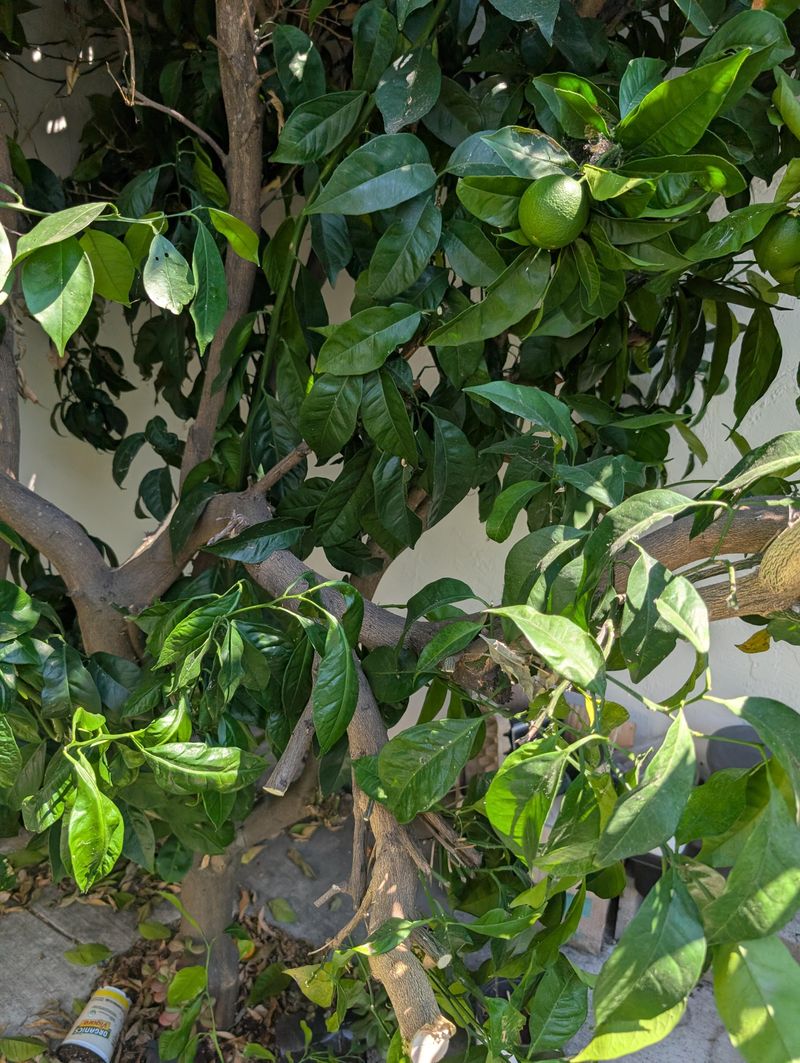
More is not always better when it comes to thinning. Pulling off too much fruit in one session can stress the tree just as much as leaving too many on.
Balance is the target.
A common mistake is getting enthusiastic and stripping branches down to just one or two fruit when five or six properly spaced ones would have been fine. Over-thinned trees sometimes respond by pushing out a flush of new growth that ends up wasted energy.
A general guideline is to remove no more than one-third of the total fruit load in a single session. If the tree is extremely overloaded, spread the thinning over two sessions spaced about a week apart.
That gives the tree time to adjust between rounds.
Keep stepping back from the tree as you work. Viewing the whole canopy from a few feet away gives a much better sense of how balanced the load looks compared to staring at individual branches up close.
Perspective helps prevent over-thinning in one spot while missing another.
Younger trees need a bit more caution than established ones. A mature citrus tree with a well-developed root system handles thinning stress more easily.
A tree that is only two or three years old is still building its root structure and canopy.