What California Plumeria Owners Should Do Before The First Cool Nights
There’s a specific moment every California plumeria owner recognizes, and it usually catches you off guard.
The afternoon is warm. The blooms still look perfect. Then the sun drops, and the air turns sharp enough to notice.
That’s the exact window where good instincts and bad timing start pulling in opposite directions.
Plumeria comes from warm places, and it has quiet expectations about how fall should go. Most owners never learn those expectations until something goes wrong. A leaf drops early. A branch gets soft. A pot stays out one night too many.
None of that has to happen to you.
A little attention now, before the real cold shows up, changes everything about how your plant handles winter. The fixes are small. The timing is what matters.
So before those first cool nights roll in, here’s what actually needs your attention, and what can simply wait.
1. Stop Fertilizing As Growth Slows
Late summer still feels like feeding season, but your plumeria stopped listening a while ago.
Shorter days and cooler nights send a clear signal to the plant, and that signal says slow down. A plant that’s slowing down has no real use for a fresh dose of fertilizer, no matter how productive that feels to you.
University of California guidance describes plumeria as a tropical plant with a built-in rest period, and fall feeding works directly against that rhythm.
Many California growers taper off by late August and stop completely within a few weeks after.
High-nitrogen products cause the biggest headache. They push soft, leafy growth that has zero time to firm up before the first genuinely cold evening arrives, and soft tissue is always first in line for damage.
If feeding through summer is part of your routine, switch to something bloom-focused, higher in phosphorus and potassium, then stop entirely once the season turns.
That supports the flowers already on the way instead of triggering another round of leaves nobody asked for.
Salt buildup gives you one more reason to quit early. Fertilizer salts collect in the soil over a season, and since watering slows down through fall, those salts just sit there instead of flushing out.
One deep watering with plain water before you stop feeding rinses the pot clean. Come spring, once new tips push out and warm weather sticks around, the feeding schedule can start right back up.
Your plant isn’t hungry. It’s resting, and that rest is exactly what pays off in next summer’s flowers.
2. Reduce Watering Before Dormancy Begins
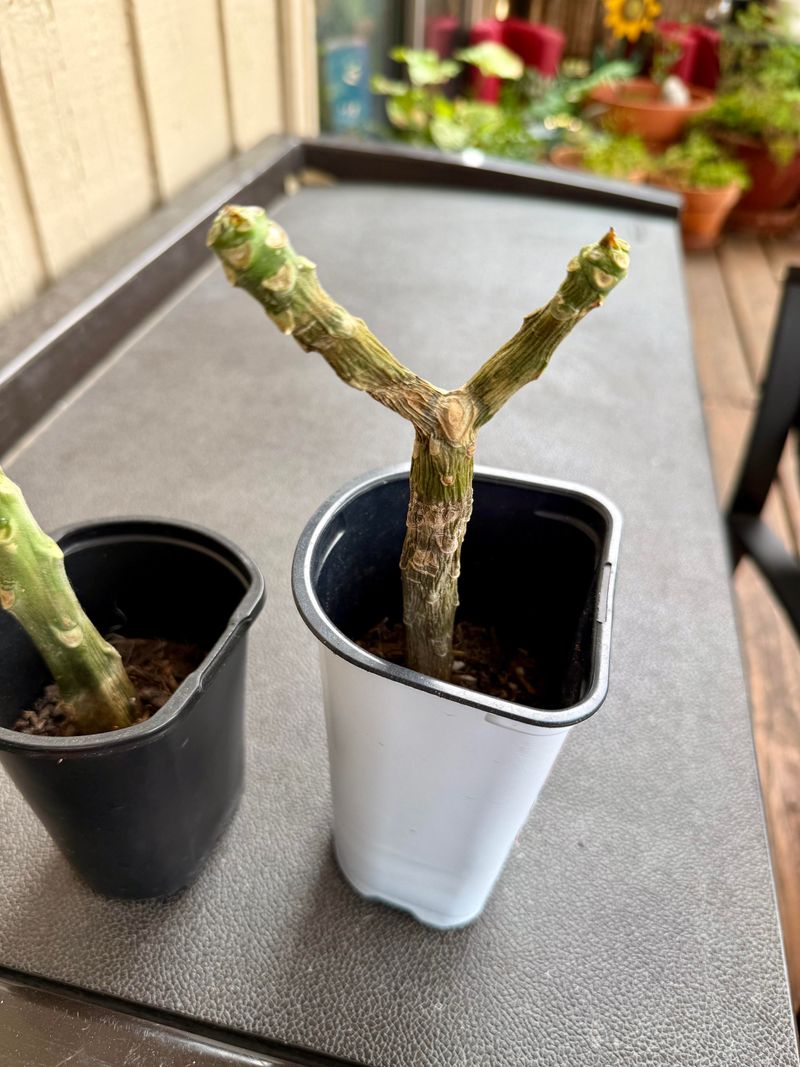
Watering habits are the hardest thing to unlearn once fall arrives.
The same pot that needed a gallon twice a week in August suddenly wants a fraction of that by late October, and most owners keep the old schedule out of habit rather than need.
Cooler roots take up far less moisture, and leaves that are yellowing or already gone aren’t pulling water through the plant anymore. Wet soil combined with cold weather is basically an invitation for root rot.
Your California Garden Changes Every Week. Your Plan Should Too.
Gardening in California changes quickly throughout the season. Every Friday you’ll receive a simple weekly plan showing exactly what to plant, prune, fertilize, harvest, and protect so you never miss the right timing.
Start stretching the gap in September. Where you once watered every few days, wait until the top couple inches of soil turn dry, then give it less water than before.
Once nights settle into the fifties, once every two to three weeks covers most potted plants across coastal and inland California. A fully dormant, leafless plant tucked in a garage might need nothing for weeks at a stretch.
Check the trunk instead of the calendar. A healthy dormant plumeria feels firm and solid in hand. A slightly wrinkled tip means it can handle a small drink. A soft, squishy base means it already got too much, and no amount of skipped waterings fixes that overnight.
Terra cotta dries faster than plastic, and a pot under an eave stays drier than one sitting in the open, so your own setup changes the math a little.
Rain adds another layer here. Winter storms can refill an uncovered pot again and again, which is exactly why moving containers under cover protects the roots just as much as it protects the branches above.
3. Move Potted Plants Somewhere Sheltered
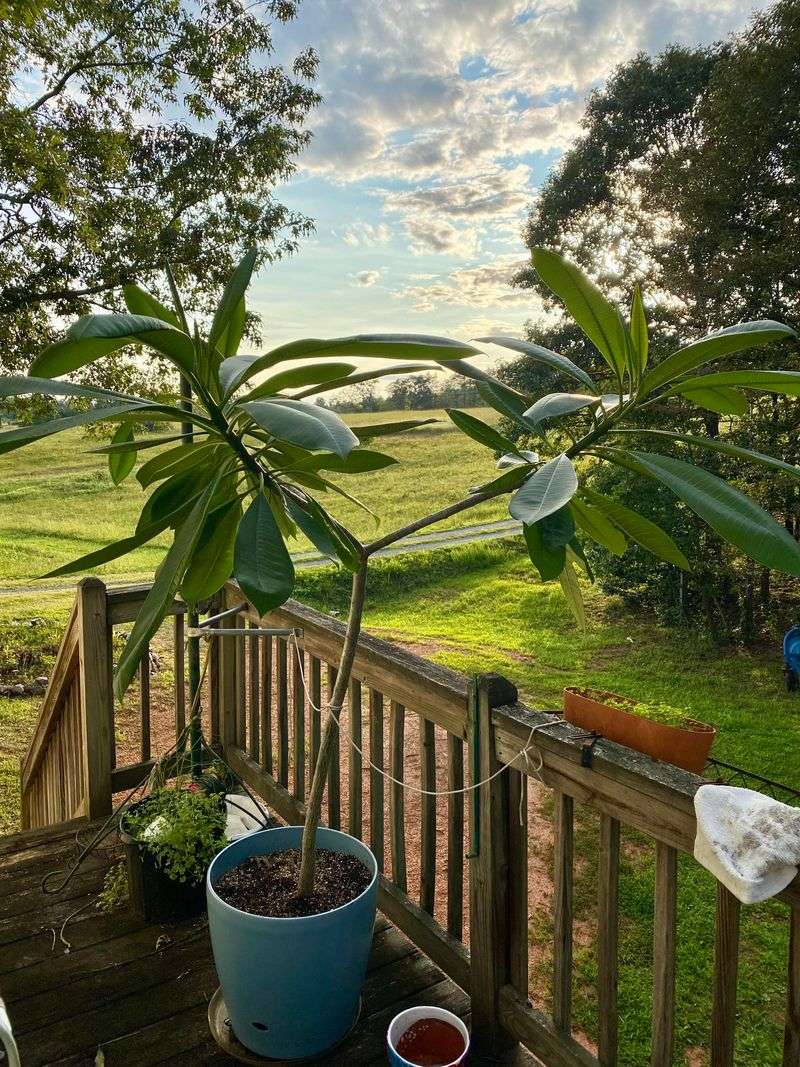
Procrastination causes more plumeria damage in California than actual frost does.
Waiting for a cold warning before moving a heavy pot usually means dragging it somewhere in the dark, in a rush, with the temperature already dropping around you.
Plumeria comes from warm parts of Mexico, Central America, and the Caribbean, and UC guidance places it firmly in the tropical category.
Trouble tends to start as temperatures near freezing, and even sustained cold in the thirties puts real stress on the plant before any frost shows up.
Pick a winter spot early, well before you actually need it. A garage, covered patio, sunroom, or a south-facing wall against the house all work fine, as long as the plant stays dry and out of the wind.
A furniture dolly saves your back and your pots both. Group containers together against a warm wall so they share a little heat, and keep them somewhere easy to cover with a frost cloth if a rough night shows up on the forecast.
Coastal Southern California often gets away with just an overhang and a tarp. Inland valleys, the high desert, and the foothills see real frost, which makes an enclosed garage or shed the safer call.
Light doesn’t matter much once the plant is fully leafless, so a dim garage corner works fine at that stage. A plant still holding green leaves prefers a bright window or a sheltered patio until those leaves finish dropping on their own schedule.
Move it on a mild afternoon, and you won’t be dealing with any of this in a panic later.
4. Let Leaves Drop Naturally On Their Own
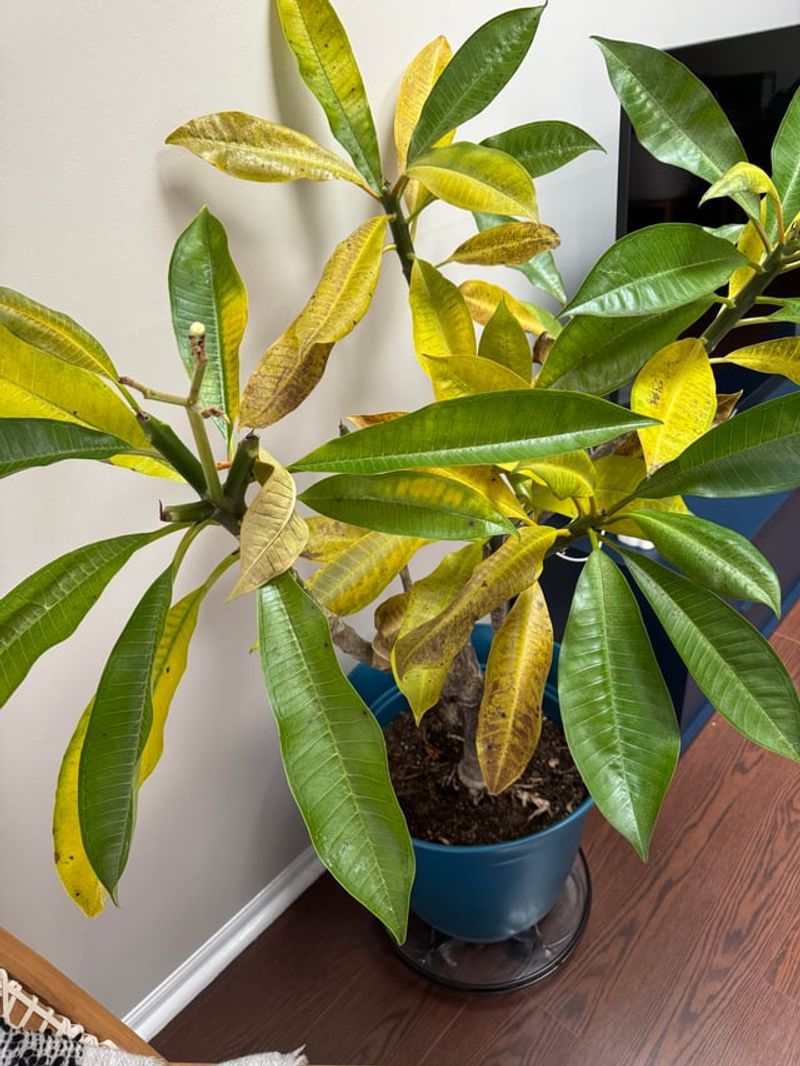
Yellow leaves in October send new owners into a small panic every single year.
Gardening groups fill up with questions asking what went wrong, when the honest answer is usually nothing at all.
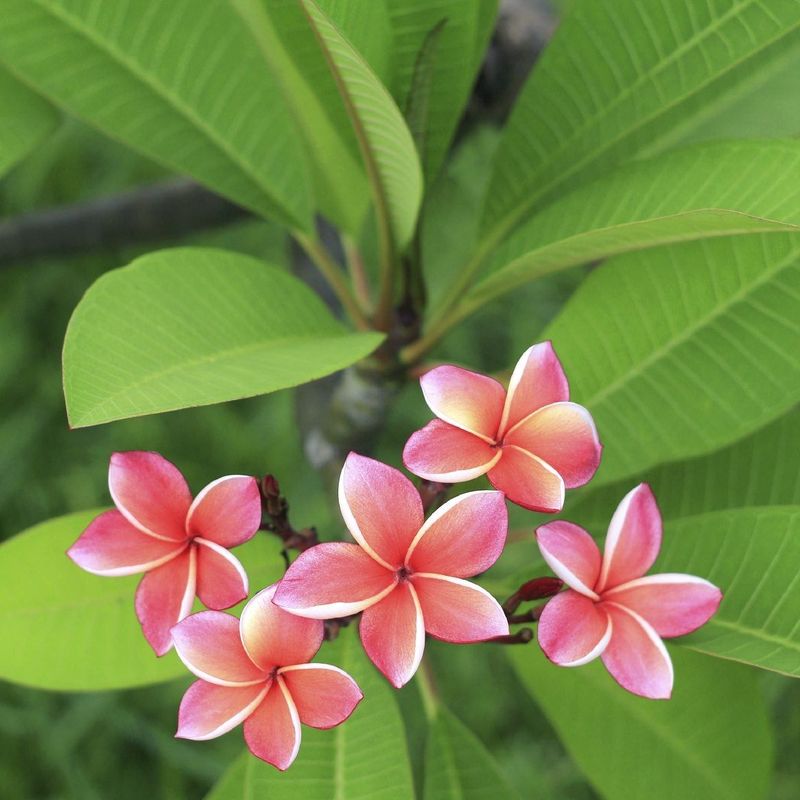
In the wild, plumeria drops leaves during the dry season, not because of cold. Shorter days, cooler nights, and less water trigger that same response in a California backyard, and the plant settles into semi-dormancy right on schedule.
Leaves typically start yellowing from the base of the branch and work upward, then fall gradually over several weeks between October and December.
Some plants drop everything. Others hold a small tuft near the tips all winter. Both are completely ordinary.
Resist pulling leaves off by hand. As they fade, the plant is pulling stored sugars back into the branches for later, and stripping them early can wound the stem and open the door to rot.
Telling normal shedding from real trouble comes down to a few details. Natural drop is slow and yellow. Cold damage looks blackened and water-soaked at the branch tips after a cold night, often with a noticeable sour smell.
Sudden collapse of green leaves during otherwise warm weather usually points to overwatering, or to rust fungus, which leaves an orange powder on the underside of leaves.
Rake up anything that falls and toss it rather than composting nearby, since rust spores tend to overwinter right in that debris.
Bare branches actually look pretty sculptural sitting in a winter pot. Fat tips forming by late winter are the clearest sign the rest period did exactly its job.
5. Cut Back On Any Late Pruning
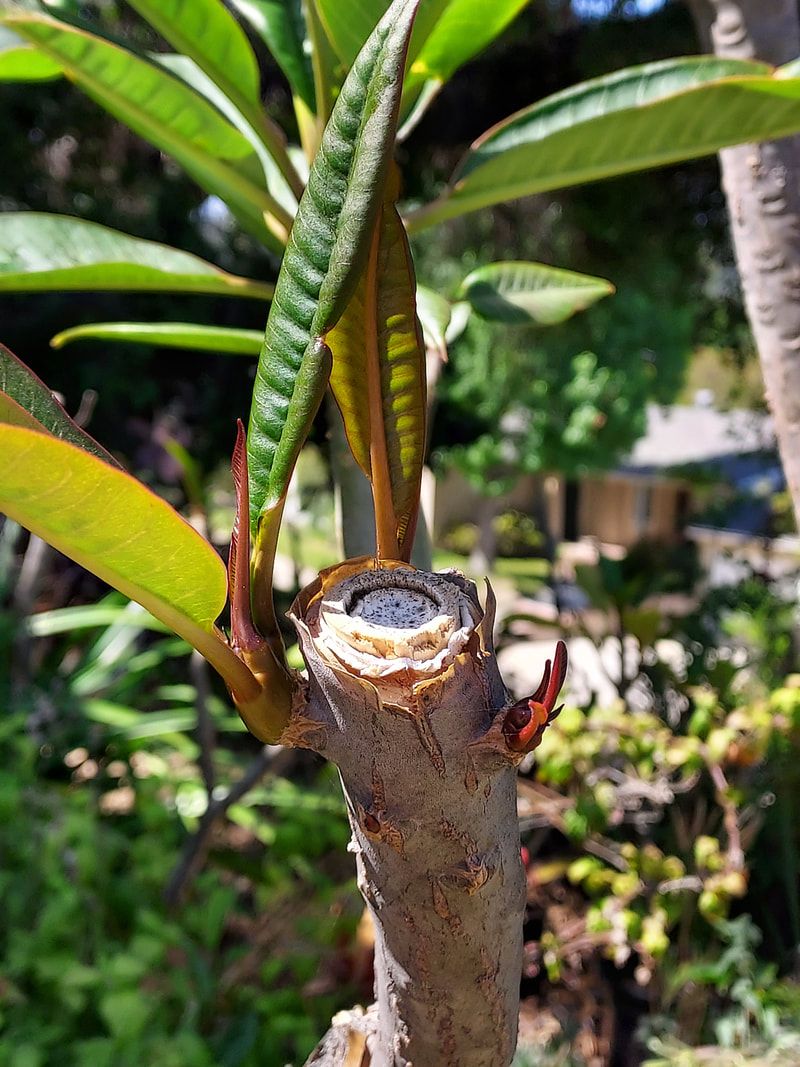
Pruning shears in October cause more regret than any cold night ever will.
A branch removed now leaves an open wound at about the worst possible point in the plant’s yearly cycle.
Fresh cuts on plumeria weep a milky sap and take real time to seal over. Cool, damp fall air slows that healing process down and gives fungus and bacteria an easy way in.
Pruning also stimulates growth, which sounds nice until you think it through. Cutting a tip often pushes two or three new shoots, and soft new growth arriving right before cold weather rarely ends well.
Late winter through early spring is the window most California growers rely on, right as buds swell and warmth returns for good. Cuts made then close up fast, and the plant gets a full season to branch out and recover the shape you’re after.
There’s one clear exception. A branch that’s already black, mushy, and clearly rotting needs to come off right away, cut back into firm white tissue, with the wound dusted in cinnamon or sulfur powder afterward.
Rot moves downward through the stem, so putting that job off can cost the entire plant. Wipe your blade down with rubbing alcohol between cuts so problems don’t travel from one branch to the next.
Cuttings taken in fall root poorly too, since rooting really depends on warmth and longer days.
Save the shaping work for spring, and jot down now which branches need a trim later. Future you gets a plan already made, and a plant that made it through winter with every tip intact.
6. Store Bare Root Plants In A Dry Spot
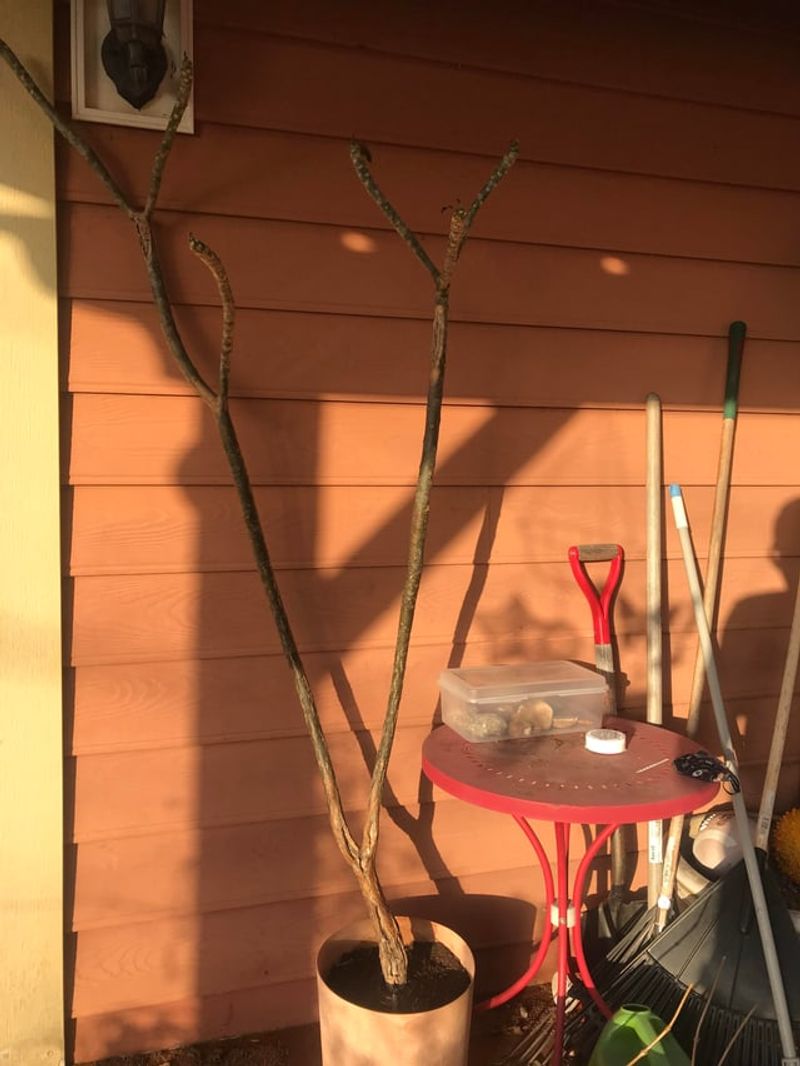
Some growers skip the pot entirely and treat plumeria almost like an oversized bulb.
Once the leaves are gone, the plant can come out of the ground or slip out of its container and sit in storage with bare roots until spring returns.
Dry, dark, and above freezing sums up the ideal spot. A garage shelf, a closet, a shed corner, or the space under a workbench all qualify, ideally somewhere between fifty and seventy degrees.
Shake most of the soil off the roots and let the plant air out for a few days so any small nicks have a chance to dry and seal. Wrapping the roots loosely in newspaper works well, or the plant can simply stand upright in an empty box.
Skip the plastic bag entirely. Trapped moisture combined with cool air is basically a recipe for rot, and rot at the base is brutally hard to reverse once it starts climbing upward.
Check on stored plants about once a month. Firm branches mean everything’s on track. A soft or blackened base means cutting the damage away immediately and letting the rest dry out again before it spreads further.
Label anything you grow by variety, because bare gray sticks all start looking suspiciously identical by February. Masking tape and a marker take thirty seconds and save a lot of guessing come spring.
Around March or April, once nights hold comfortably above the fifties, pot everything back up in a fast-draining mix and water sparingly until new leaves appear. Roots come back surprisingly fast once real warmth returns.
7. Watch For The First Real Cold Warning
Weather apps turn into a plumeria owner’s closest ally right around Halloween.
Fall in California rarely commits to one temperature for long, with an eighty-degree afternoon regularly followed a few days later by a night dipping into the thirties.
Forty degrees Fahrenheit works as a reasonable caution line, and anything approaching thirty-two calls for real action. Actual freezing damages stems and growing tips, and a hard freeze can take out a small plant completely.
Your backyard almost never matches the number on your phone. Low spots, open lawns, and still, clear nights all run colder, sometimes five degrees or more below the forecast.
Keep frost cloth, an old sheet, or even a cardboard box within easy reach. Cover plants before sunset to trap the day’s warmth underneath, then uncover them in the morning so nothing overheats once the sun’s back out.
A plant set against a house wall or tucked under an eave holds warmth better than one sitting out in the open, which makes placement worth thinking about early.
Inland spots like Sacramento, Fresno, and the Inland Empire see frost most winters, while coastal stretches from San Diego up through Santa Barbara often dodge it entirely.
Even so, a single unusual night can undo years of steady growth, so no part of California gets a completely free pass.
Set a reminder to check the ten-day forecast every Sunday from October through February. Two minutes of reading beats a whole spring spent nursing blackened branches back into shape.
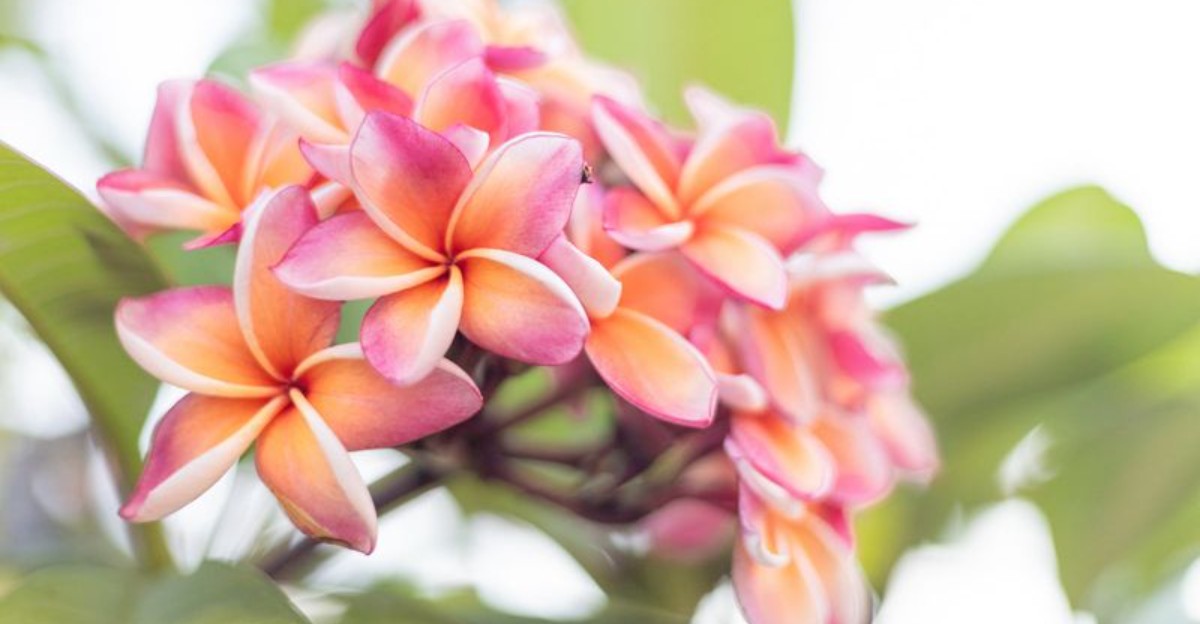
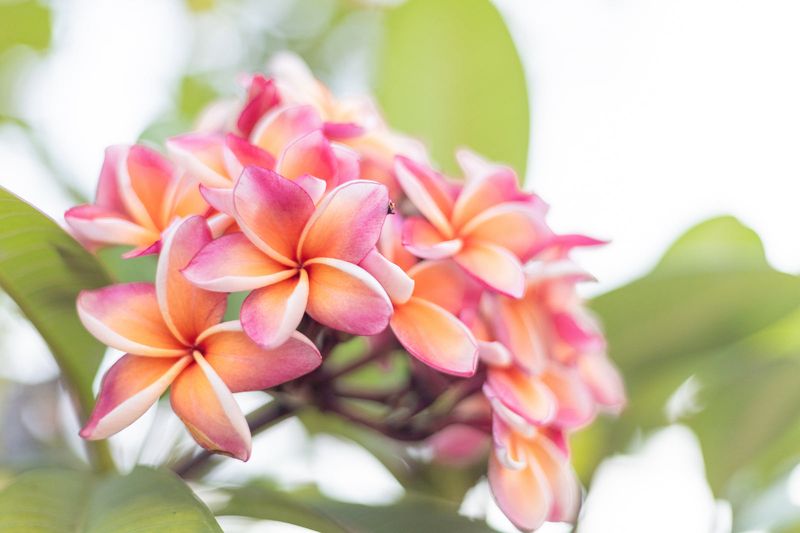
The reward shows up in June, when fat buds finally crack open into those unmistakable pinwheel blooms.