A Lesser Known Cousin Of The Black Widow Is Moving Into Louisiana Yards
A spiky orb rests on your patio railing, and it wasn’t there last spring. Louisiana yards hold quieter tenants than anyone expects. Homeowners across Shreveport and Slidell keep finding the shapes.
Spiked egg sacs cling to mailboxes, grills, and porch furniture. Their numbers climb season after season across Louisiana neighborhoods. You might walk past it without a passing glance.
This creature descends from a spider you already recognize. Its temperament stays calmer than its famous relative, surprising you.
It travels well, tucked inside potted plants you might buy. Nurseries move them across state lines before you notice.
Females favor tight, dark gaps near human activity. Bites stay uncommon, but caution protects you regardless. Color alone won’t tell you what you’re dealing with.
Texture tells you more than shade ever could. Once you know the signs, spotting them takes minutes. Once you spot it, it’s easy to identify and manage.
Introducing The Brown Widow, A Quieter Relative Moving In
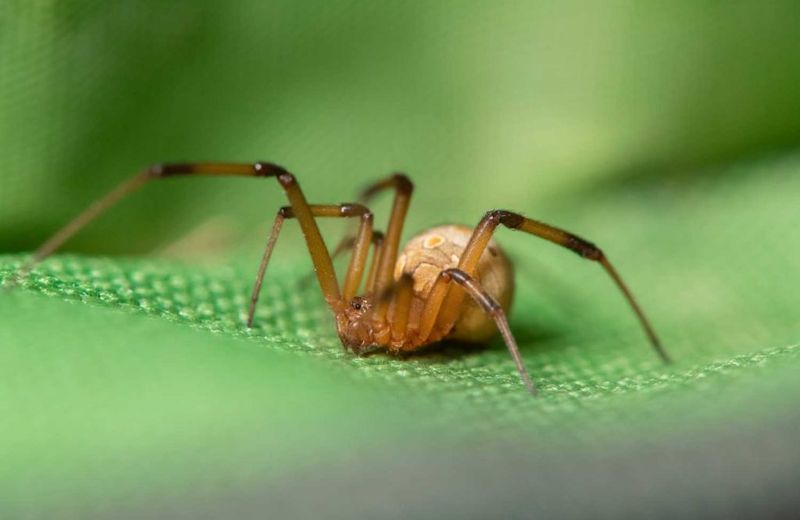
Picture a black widow that traded its glossy tuxedo for a speckled khaki jacket. That is the brown widow, a smaller, shyer relative that has been settling into yards across south Louisiana.
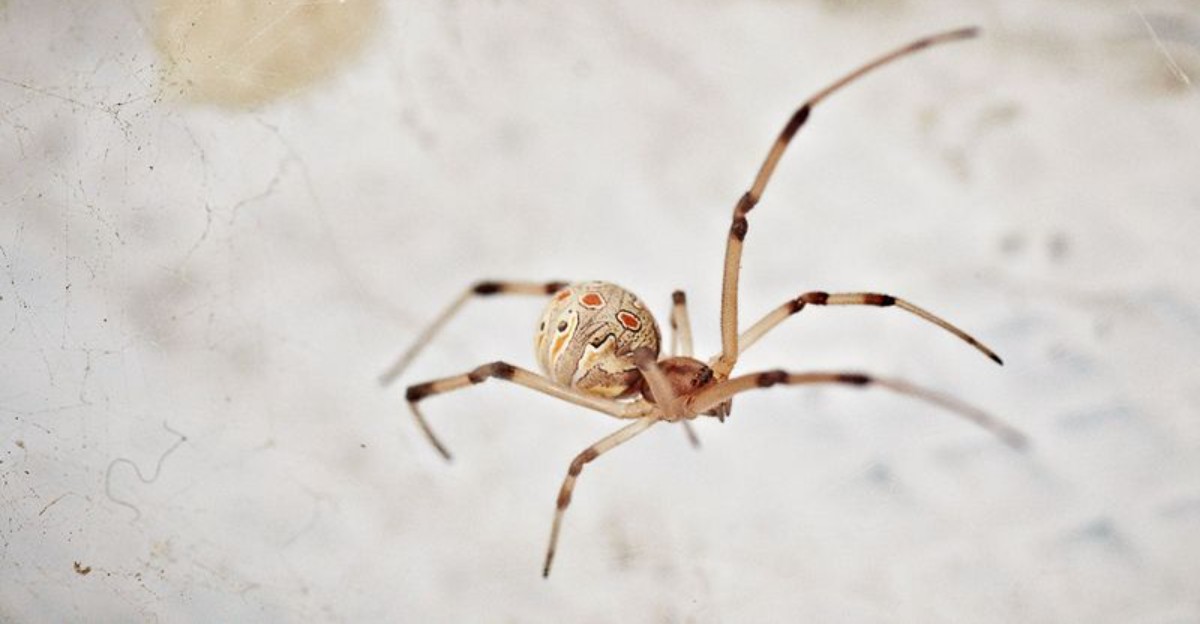
Adults measure about an inch across with legs extended, and the body is often tan, gray, or muddy brown. Faint bands ring the legs, and the abdomen may show a pattern of dark and light patches.
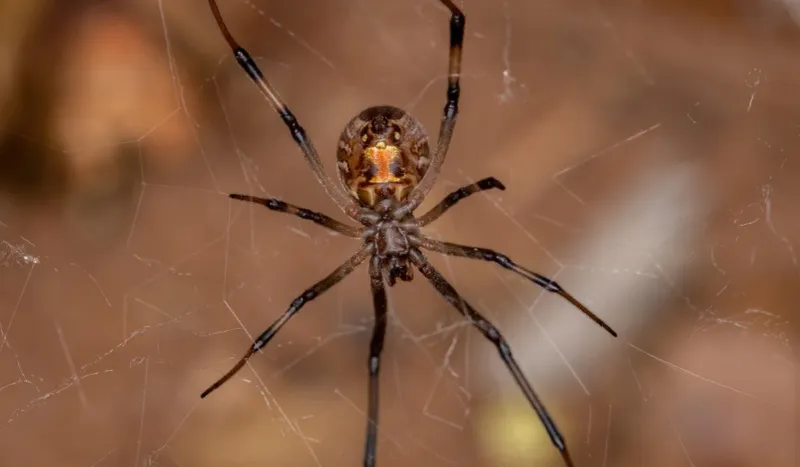
The giveaway sits underneath. Flip the view and you may spot an hourglass shape that leans orange or yellow rather than the bright red seen on its famous cousin.
Brown widows are believed to have origins in Africa, though they spread through warm regions worldwide by hitching rides in cargo, nursery pots, and vehicle bumpers. They were first documented in Florida in the mid-1900s.
Behavior sets them apart just as much as color. When something big approaches, a brown widow usually drops from its web, curls into a ball, and waits it out rather than standing its ground.
Warm, humid Louisiana weather suits them well, and mild winters let populations carry over instead of thinning out. Coastal parishes tend to report them earliest, though sightings are increasingly reported inland.
Fun fact: researchers have noticed brown widows often move into spots where black widows once lived, sometimes reducing how many of the darker spiders stick around.
Some homeowners may see this as a manageable trade-off, though brown widow populations can still grow substantially.
Spiky Egg Sacs, The Clue That Gives Them Away
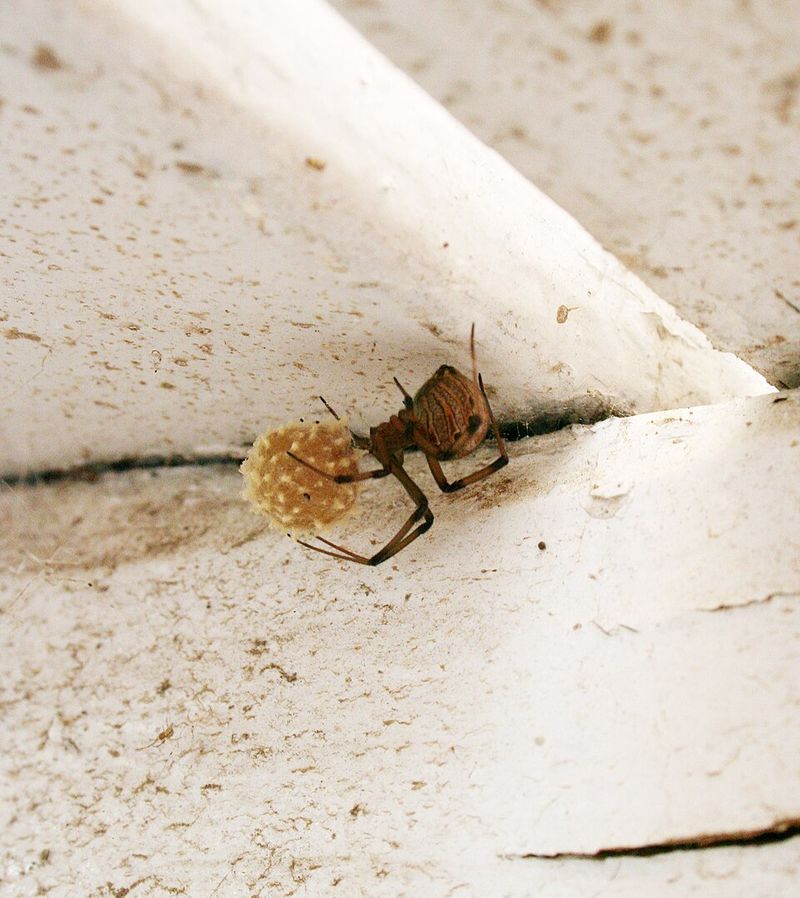
Forget the spider for a second. The single easiest sign of a brown widow is the nursery it builds.
Brown widow egg sacs look like small beige balls covered in soft spikes, roughly the size of a pea. Folks often compare them to small spiked clusters.
Black widow sacs, by contrast, are smooth and papery with no points at all. Once you see the difference side by side, you will not mix them up again.
Your Louisiana Garden Changes Every Week. Your Plan Should Too.
Gardening in Louisiana changes quickly throughout the season. Every Friday you’ll receive a simple weekly plan showing exactly what to plant, prune, fertilize, harvest, and protect so you never miss the right timing.
A single female can produce sac after sac through the warm months, and each one may hold well over a hundred eggs. That reproductive output explains how a couple of spiders turn into a much larger local population by late summer.
Look for the sacs in sheltered pockets: the underside of plastic chairs, inside mailbox posts, behind meter boxes, along the lip of a grill cart, or tucked into the folds of a rolled-up hose.
Spotting sacs before they open gives you a head start. Knock them into a bag with a stick, seal it, and toss it in an outdoor bin rather than leaving pieces on the ground.
Wearing gloves is smart, mostly because you cannot see whether the mother is hiding an inch away in the tangle.
Homeowners who check these spots once a month during spring and summer usually keep numbers low without any sprays. Regular looking beats reacting after the population takes off.
Favorite Hangouts Around Louisiana Homes

Ask a pest control tech where these spiders turn up and you will get a very specific list. Brown widows love small, dry, protected gaps at knee height or lower.
Patio furniture ranks near the top, especially the hollow tubing under plastic and metal chairs. Kids’ playsets, swing chains, and the underside of picnic tables run a close second.
Mailbox posts, gate latches, and the recessed handles on garbage bins are prime real estate too. Anywhere your fingers reach into a dark pocket, a widow might already be settled in.
Around the house itself, check the gap behind shutters, inside electrical meter housings, under the lip of the AC unit, and along the rim of soffit vents. Cluttered garages and cracked-open sheds offer even more square footage.
Gardeners find them in stacked nursery pots, upside-down wheelbarrows, coiled hoses, and beneath the rims of raised beds. Firewood piles and stacked bricks along a fence line provide ideal shelter.
Notice the pattern: these are all spots that stay dry, shaded, and undisturbed for weeks at a time. Brown widows are not interested in your open lawn or sunny driveway.
A practical habit helps a lot. Before you grab, tap the object first with a broom handle and give it a quick look with a flashlight.
Rearranging stored items a few times a season makes those cozy corners far less appealing. Spiders prefer stability, so a little chaos works in your favor.
How Worried Should You Actually Be
Here is the reassuring part. Brown widow venom is chemically similar to black widow venom, but the spider delivers a much smaller amount and rarely bites at all.
Doctors who study these cases report that reactions usually stay local. Think redness, mild swelling, and soreness around the spot, fading over a day or two.
The dramatic full-body symptoms associated with black widow bites, such as cramping and sweating, show up far less often with brown widows. Medical literature describes these bites as generally minor for healthy adults.
Temperament plays a big role. In laboratory tests, brown widows had to be squeezed repeatedly before they would bite, while black widows defended themselves much sooner.
Most bites happen by accident, when a hand or foot presses a spider against skin. Sliding on a shoe left outside or grabbing a coiled hose are classic setups.
If a bite does happen, wash the area with soap and water, apply a cool cloth, and watch how it develops.
Call a doctor if pain spreads, the area worsens, or the person bitten is very young, elderly, or has health concerns. Photographing the spider helps medical staff, though catching it is not required.
Children and pets deserve extra attention simply because they explore with their hands and noses.
Teaching kids to look before reaching under things builds a habit that serves them far beyond spider season. Caution beats panic here, and a pair of gloves solves the problem for a few dollars.
Yard Habits That Make Your Property Less Inviting
Spiders follow food and shelter, so the fix starts with taking both away. Clutter is the number one invitation.
Stack firewood off the ground and set it several feet from exterior walls. Store empty pots inside sealed bins rather than leaving them nested in a shady corner.
Sweep webs from porch ceilings, railings, and door frames every couple of weeks with a long-handled broom. Repeated disruption convinces females to relocate somewhere calmer.
Outdoor lighting matters more than people expect. Bright white bulbs pull in moths, beetles, and gnats, which is basically a buffet advertisement.
Switching to warm yellow LED bulbs or motion-activated fixtures cuts insect traffic near doorways. Fewer bugs means fewer reasons for widows to stay.
Trim shrubs so they do not press against siding, and keep a clear strip of gravel or bare soil along the foundation. Damp mulch piled high against the house creates a highway for all sorts of crawlers.
Seal gaps around utility penetrations, weatherstrip doors, and repair torn window screens. Brown widows mostly stay outdoors, though open garages tempt them inside.
Rinse patio furniture with a hose at the start of each season, aiming water into the hollow leg openings.
If you prefer treatment, a targeted residual spray applied to cracks, undersides, and eaves works better than broadcasting chemicals across the lawn.
Many Louisiana homeowners schedule this in early spring before egg sacs multiply. Consistency wins. Ten minutes of tidying beats an afternoon of worrying later.
Telling Widows Apart From Louisiana’s Other Backyard Spiders
Louisiana hosts hundreds of spider species, and honestly, only a handful raise eyebrows. Knowing the lineup saves a lot of unnecessary stomping.
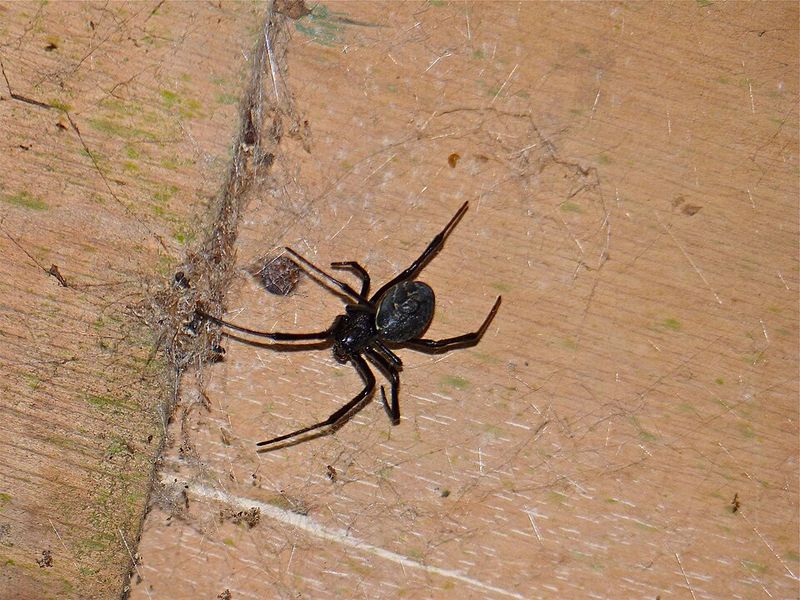
Southern black widows are shiny, jet black, and marked with a vivid red hourglass. They build the same messy, sticky webs low to the ground and prefer similar hiding pockets.
Brown recluses are a different animal entirely: tan, long-legged, with a violin shape behind the eyes and no bright markings. They favor indoor storage areas, closets, and cardboard boxes rather than outdoor furniture.
Common false widows and cellar spiders get blamed constantly and deserve none of it. Cellar spiders, with their thread-thin legs and bobbing habit, actually prey on other spiders.
Big golden orb weavers strung across garden paths in late summer look alarming yet pose almost no concern. Wolf spiders sprint across driveways and carry babies on their backs, which is startling but harmless.
The reliable test for widows is the web plus the hourglass. Widow webs feel strong and irregular, with no neat wheel shape, and the spider usually hangs belly-up.
Use a flashlight at night when widows sit out in the open. Daytime searching often turns up empty webs while the resident hides in a crevice.
Snap a photo from a safe distance and compare it with the LSU AgCenter’s spider identification pages.
Learning three or four species covers nearly everything you will meet in a Louisiana yard, and confidence replaces the guesswork fast.