What Causes Curling Leaves On Georgia Fig Trees In Late Spring
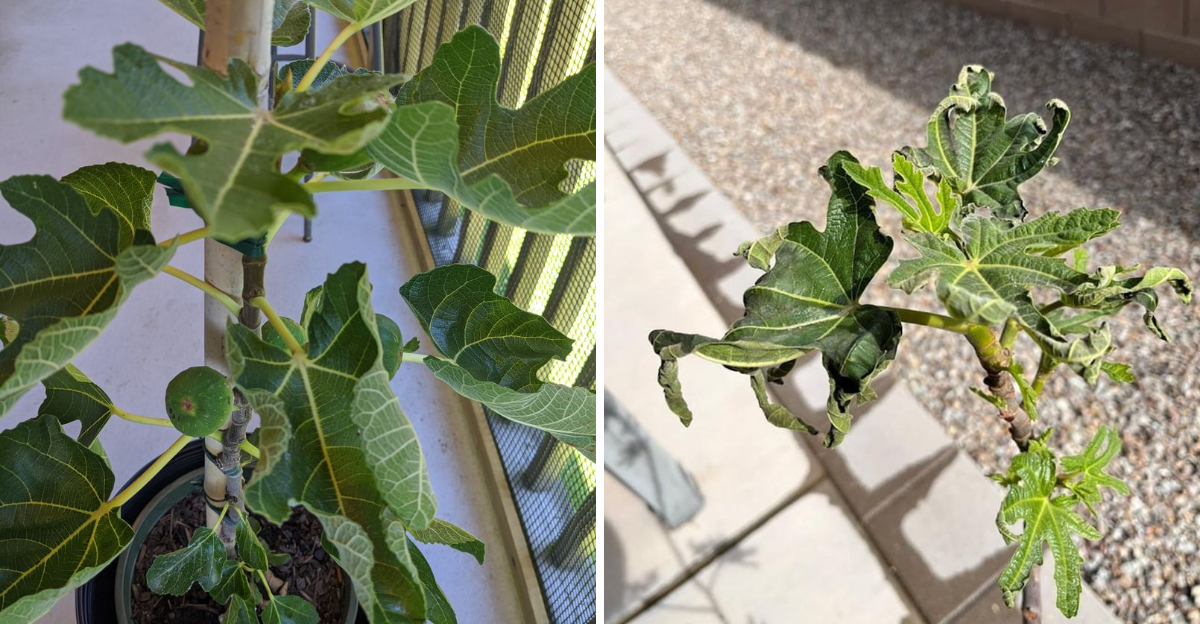
You planted a fig tree, you’ve been watching it settle in beautifully, and now the leaves are curling like they’re trying to tell you something. Welcome to late spring fig ownership in Georgia.
It’s a little unsettling the first time it happens, especially when the rest of the tree looks perfectly fine.
Here’s the thing though: curling fig leaves in Georgia are actually pretty common this time of year, and the reasons behind it range from totally harmless to worth addressing sooner rather than later.
Warm temps, shifting soil moisture, pest activity, and even nearby lawn sprays can all play a role.
Before jumping to conclusions, it’s worth taking a calm, methodical look at what’s been going on around that tree lately. The answer is usually closer than you’d expect.
1. Dry Soil Or Drought Stress
Soil that dries out too quickly can send a fig tree into stress faster than most gardeners expect. During late spring in Georgia, temperatures rise quickly, and the soil around fig trees can lose moisture well before the next watering day rolls around.
Young fig trees and container-grown figs are especially vulnerable because their root systems have less soil to draw from.
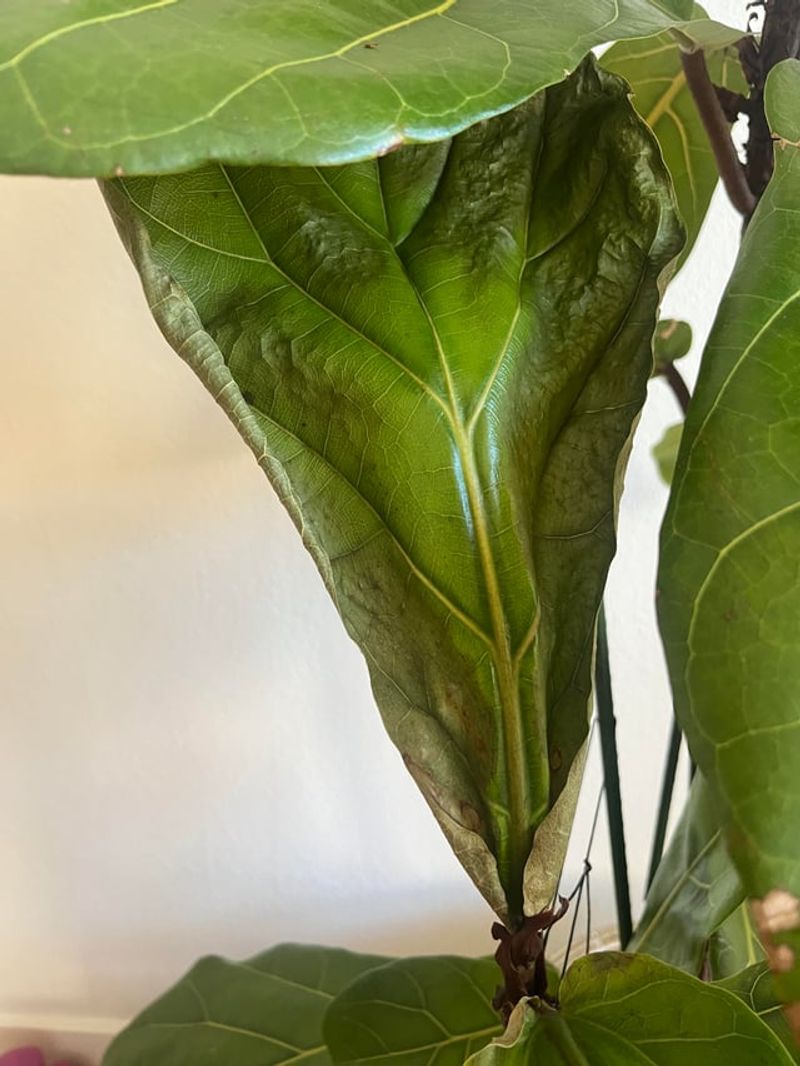
When a fig tree does not get enough water, the leaves respond by curling inward, almost like they are trying to hold onto whatever moisture is left inside. The curling typically starts at the edges and moves toward the center of the leaf.
Leaves may also feel dry or slightly crispy along the margins, and some of the newer growth near the tips of branches may look wilted during the hottest part of the day.
Georgia clay soil can make this tricky because it sometimes feels moist on top while being dry just a few inches below the surface. Checking soil moisture at a depth of two to three inches gives a more accurate picture of what the roots are actually experiencing.
Mulching around the base of the tree with wood chips or straw can help slow moisture loss and keep the root zone cooler on hot afternoons. Consistent, deep watering is usually more helpful than frequent shallow watering for established fig trees.
2. Hot Windy Weather
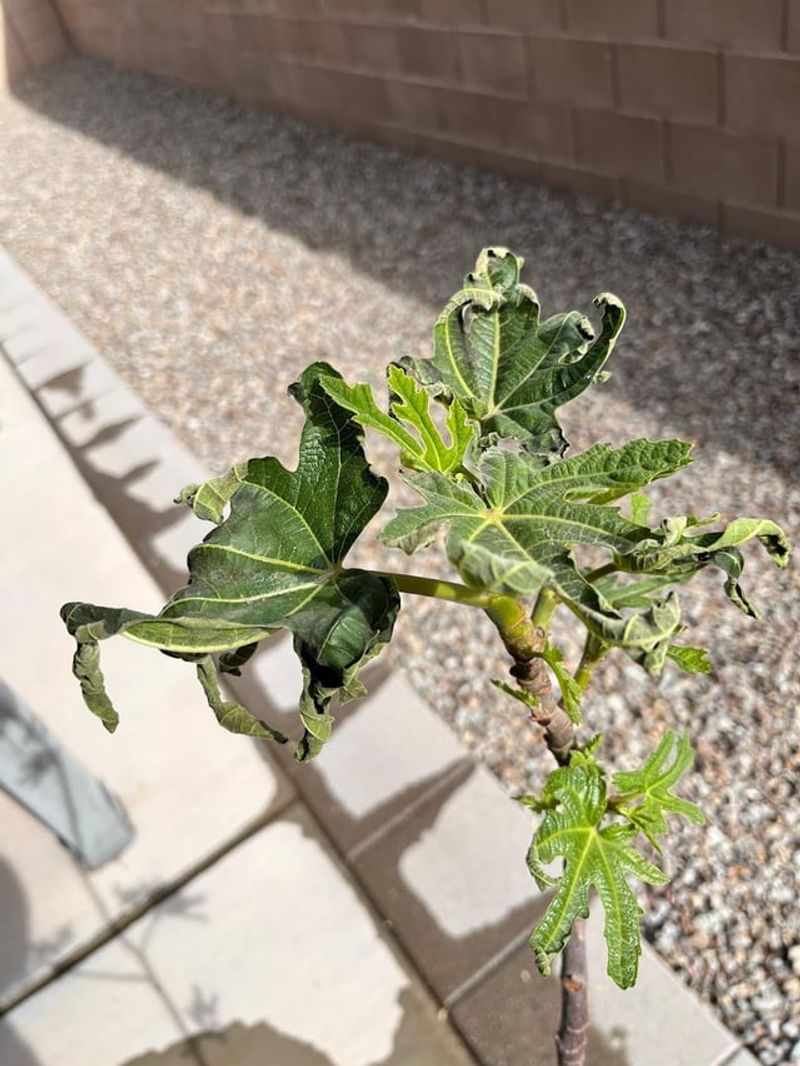
Late spring in Georgia can bring stretches of hot, gusty weather that stress fig trees even when the soil has plenty of moisture. Wind pulls water out of leaves faster than roots can replace it, a process called transpiration stress.
When this happens, fig leaves curl as a way of reducing the surface area exposed to the drying wind and intense sun.
This type of curling tends to look different from pest damage or disease. The leaves may curl uniformly upward or inward along the edges without any spots, discoloration, or sticky residue.
The curling often looks worst in the afternoon and may ease up slightly in the cooler morning hours. New growth that pushes out during a windy stretch is especially likely to show this kind of response because the young tissue has not fully hardened yet.
Your Georgia Garden Changes Every Week. Your Plan Should Too.
Gardening in Georgia changes quickly throughout the season. Every Friday you’ll receive a simple weekly plan showing exactly what to plant, prune, fertilize, harvest, and protect so you never miss the right timing.
Gardeners who notice curling after a few days of strong south winds should observe whether the curling improves once calmer, cooler weather returns.
Planting fig trees near a fence, wall, or other windbreak can reduce wind exposure without blocking too much sunlight.
Container figs on patios or decks are particularly easy to move to a more sheltered spot during rough weather. Keeping trees well-watered during windy periods helps reduce the stress that leads to leaf curling in the first place.
3. Overwatering Or Poor Drainage
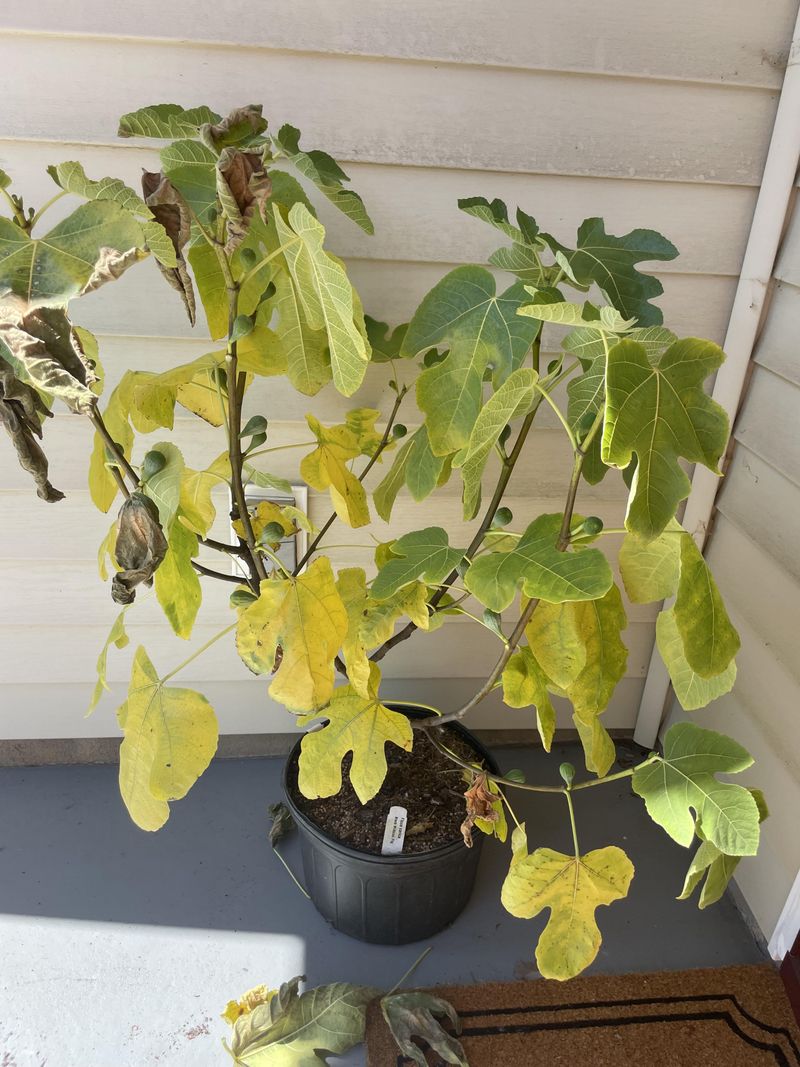
Too much water can be just as hard on a Georgia fig tree as too little. When roots sit in soggy soil for extended periods, they struggle to absorb oxygen, and the tree begins to show stress above ground in ways that can look surprisingly similar to drought symptoms.
Curling leaves are one of the first visible signs that something is off at the root level.
Overwatered fig trees often show leaves that curl downward rather than upward, and the foliage may look dull or slightly yellowish rather than crisp and dry.
The soil around the base of the tree may feel wet or spongy, and in some cases, a faint musty smell can come from the root zone.
Georgia’s heavy clay soils are known for holding water longer than sandy or loamy soils, making drainage a real concern in many parts of the state.
Raised beds, amended planting holes, and container growing with well-draining potting mix are practical options for gardeners dealing with poor drainage.
Before watering a fig tree, pressing a finger two to three inches into the soil can help confirm whether moisture is actually needed.
During rainy stretches in late spring, established in-ground figs may not need any supplemental water at all. Paying attention to recent rainfall totals and checking the soil before reaching for the hose can prevent a lot of unnecessary overwatering.
4. Aphids On Tender New Growth
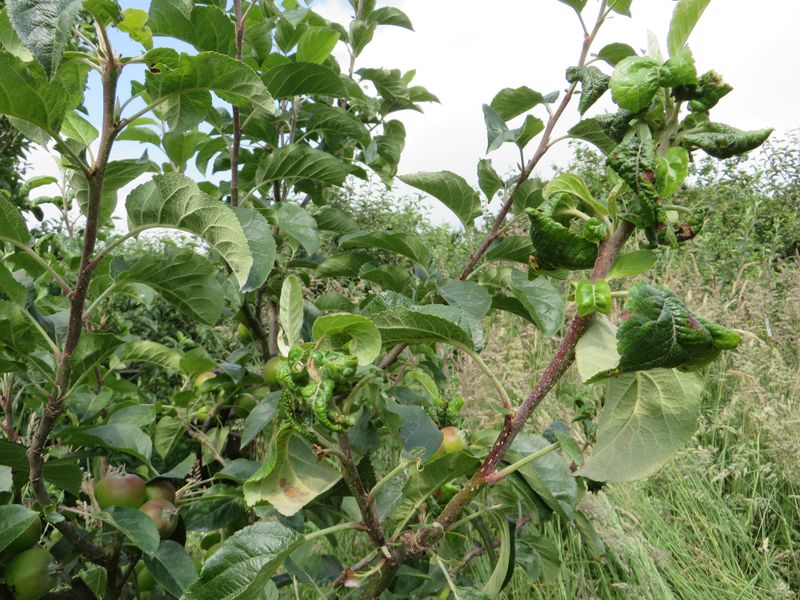
Clusters of tiny soft-bodied insects on the underside of new fig growth are a common sight in Georgia gardens during late spring. Aphids tend to target the most tender, freshly emerged leaves because the tissue is soft and easy to feed from.
As they feed, they inject a substance into the leaf that interferes with normal cell growth, causing the leaf to curl, pucker, or twist in ways that look almost like the tree is folding in on itself.
Checking the undersides of curled leaves is one of the quickest ways to spot an aphid problem.
The insects range from pale green to yellowish or even dark brown depending on the species, and they are usually found in tight clusters near the growing tips of branches.
A sticky residue on leaves or nearby surfaces, sometimes followed by a dark sooty mold, is another sign that aphids may be active.
Aphid populations in Georgia can build up quickly during warm spring weather, especially when natural predators like ladybugs and lacewings have not yet arrived in large numbers.
A strong stream of water from a garden hose can knock aphids off leaves without harming the tree.
Insecticidal soap is another option that many gardeners find effective for light to moderate infestations. Avoiding excessive nitrogen fertilizer in spring can also help by reducing the flush of overly soft new growth that aphids find most attractive.
5. Spider Mites During Hot Dry Weather
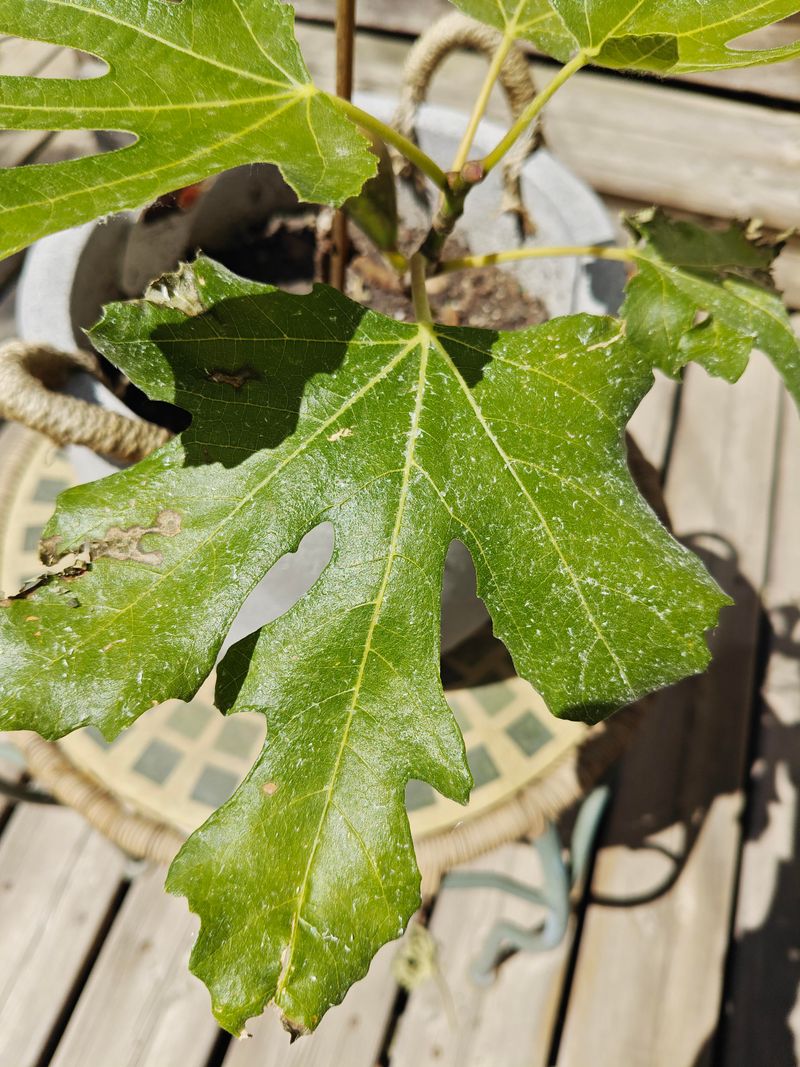
Hot, dry stretches in late spring create near-perfect conditions for spider mites to thrive on Georgia fig trees. These tiny pests are barely visible to the naked eye, but the damage they leave behind is hard to miss.
They feed on the undersides of leaves by piercing individual cells, which causes a fine, speckled or bronzed appearance across the leaf surface along with curling at the edges.
Fine webbing on the undersides of leaves or between leaf stems is one of the most reliable signs that spider mites are present. The webbing can look like thin, dusty threads and may be most noticeable in the morning light.
Heavily affected leaves may eventually turn yellowish or brownish and feel rough or papery to the touch. Spider mite damage tends to show up on multiple leaves across the tree rather than being limited to a single branch.
Georgia fig trees that are already stressed from lack of water or excessive heat seem to attract higher numbers of spider mites, which is why keeping trees adequately watered during dry spells matters.
A strong spray of water on the undersides of leaves can reduce mite populations and wash away webbing.
Miticides labeled for use on fig trees are available for more serious cases, but many home gardeners find that improving irrigation and air circulation around the tree helps manage mite pressure over time.
6. Herbicide Drift From Nearby Lawn Sprays
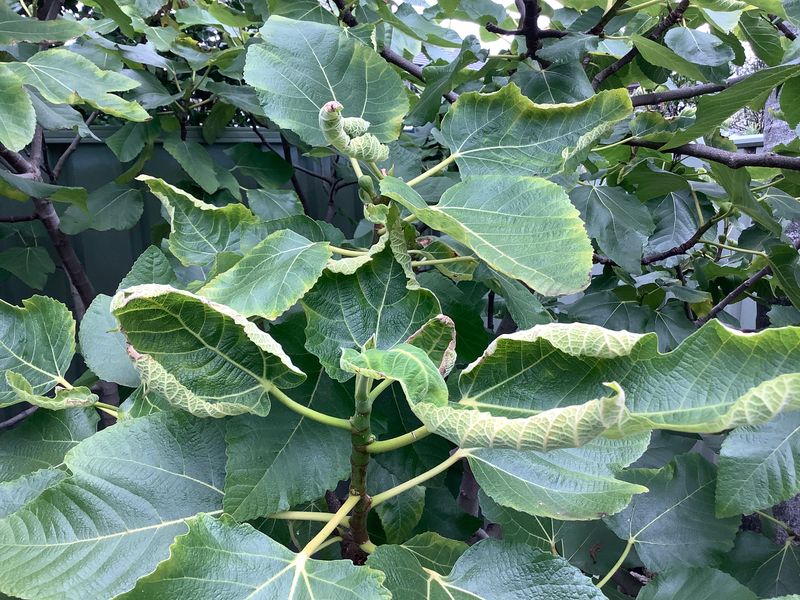
One of the trickier causes of curling fig leaves is herbicide drift, which happens when weed-control sprays applied to nearby lawns or garden areas travel through the air and land on fig foliage.
Fig trees are known to be sensitive to certain herbicides, and even small amounts of drift can cause noticeable leaf distortion.
Late spring is a busy time for lawn care in Georgia, so the timing often lines up with new fig growth that is particularly vulnerable.
Herbicide-affected leaves tend to curl, cup, or twist in unusual ways that look different from pest damage or water stress. The distortion may appear on just one side of the tree or on whatever foliage was facing the direction of the spray.
New growth coming in after the exposure may look narrow, twisted, or fan-shaped rather than the broad, lobed shape a healthy fig leaf should have. There are usually no insects, webbing, or sticky residue present.
Gardeners who suspect herbicide drift should think back to any recent lawn treatments in their own yard or neighboring properties.
Talking with neighbors about spray timing or using physical barriers like fencing or row cover during application days can reduce the chance of future exposure.
Affected trees may push out new healthy growth once the drift source is removed, though recovery time can vary depending on how much exposure occurred. Patience and careful observation are the best tools in this situation.
7. Transplant Or Root Stress
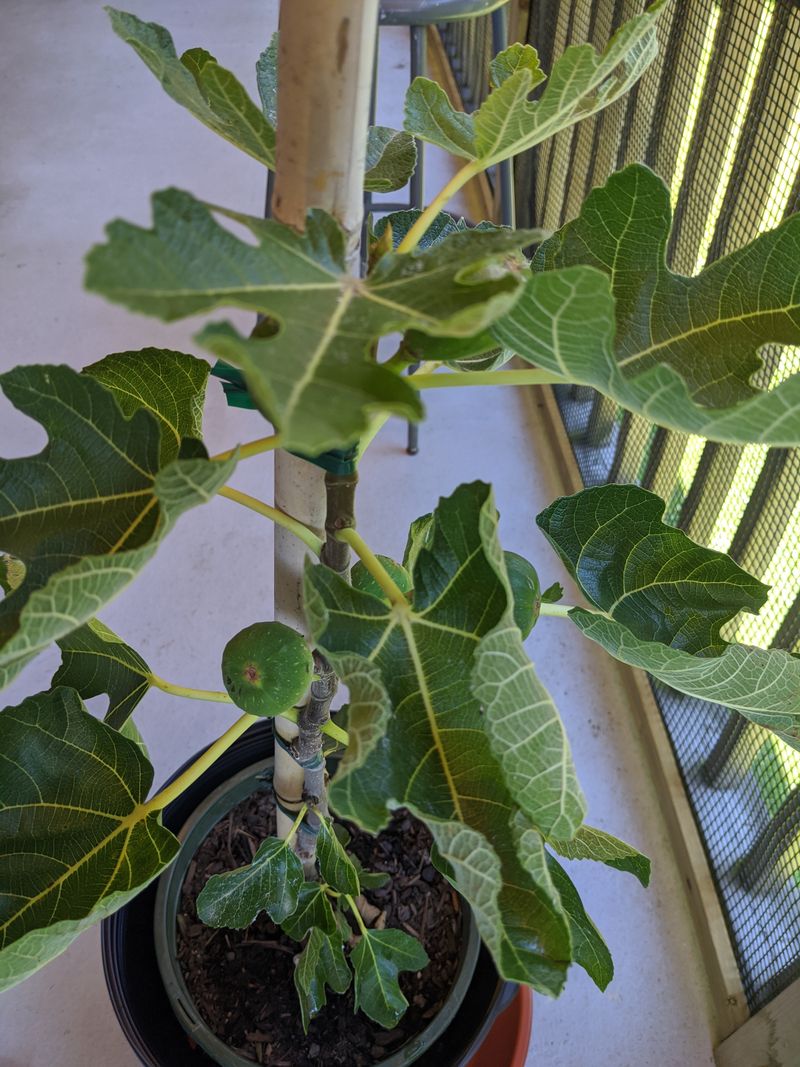
Planting or transplanting a fig tree in late spring means the tree has to establish new roots right when Georgia temperatures are already climbing.
Root systems that have been recently disturbed cannot supply water and nutrients to the canopy as efficiently as an established tree, and the leaves are often the first place that stress becomes visible.
Curling, wilting, and drooping leaves during the weeks following a transplant are common responses to this adjustment period.
Even fig trees that look healthy at the nursery can show leaf stress within a few days of being moved into the ground. The curling may affect the entire canopy or just the newer growth at branch tips.
Some leaf drop is also possible, and the overall appearance of the tree may look tired or lackluster compared to how it looked before planting. This does not necessarily mean the tree is in serious trouble.
gardeners who transplant figs in late spring should plan to water more frequently during the first several weeks until the root system begins to settle in.
Avoiding heavy fertilizer applications right after transplanting helps reduce pressure on roots that are still recovering.
Mulching around the base of the tree keeps soil moisture more stable and reduces temperature swings in the root zone.
Giving the tree several weeks to adjust before making any major pruning or treatment decisions is generally the most sensible approach for newly planted Georgia figs.