The 7 Flowering Trees Florida Homeowners Plant For Instant Curb Appeal
Nobody drives slowly past a bare lawn. They slow down for the tree exploding in color at the end of the driveway, the one that makes the whole block look like somebody actually cared.
Florida hands homeowners an unfair advantage in that department. The growing season is long, the light is relentless, and the right flowering tree does not just perform, it puts on a show.
Most of the country manages that for two weeks in spring. Florida stretches it into something else entirely.
The trick is knowing which trees actually deliver on that promise in our heat and soil. You also need to know which ones look incredible at the nursery and sulk for years afterward.
A bad choice is not just an eyesore. It is a slow, expensive lesson.
Our state has no shortage of flowering trees worth planting. A handful of them are genuinely capable of changing the entire personality of a front yard from the road.
1. Plant Crape Myrtle For Summer Color Near The Street
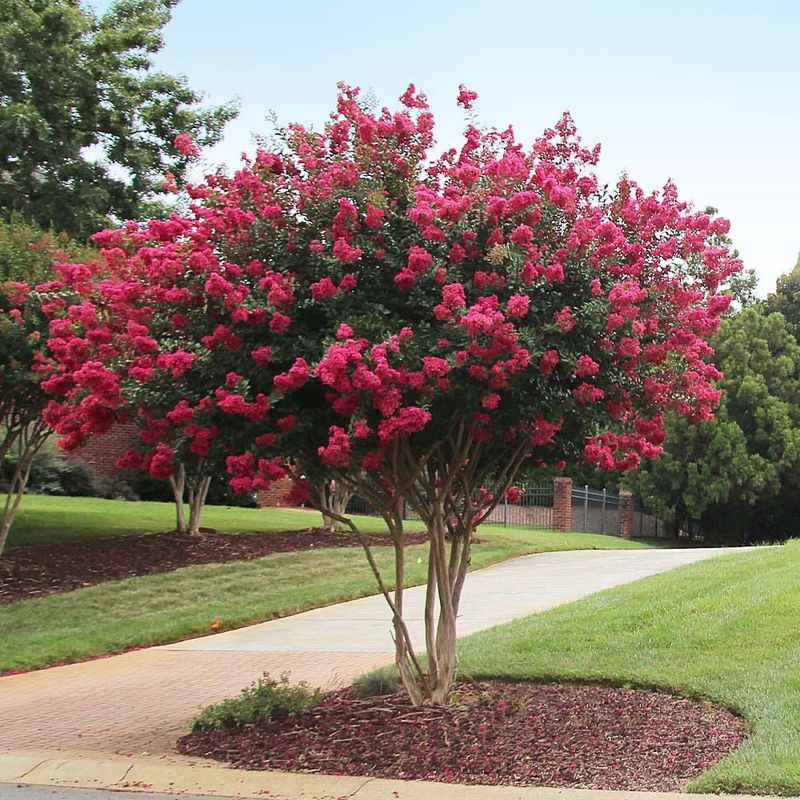
A front yard can feel brighter and more polished the moment a crape myrtle hits its summer stride. Few ornamental trees match its ability to deliver weeks of vivid color in the kind of heat that wilts almost everything else.
Crape myrtle is not a native tree, but it has earned a strong place in warm-region landscapes because it handles summer sun and humidity well when sited correctly.
The flowers come in shades of white, pink, red, lavender, and deep purple depending on the cultivar. Beyond the blooms, the bark peels into attractive patterns of gray, tan, and cinnamon that add visual interest even after the flowers drop.
This makes it a tree with more than one season of appeal, which matters when you are thinking about curb appeal year-round.
Placement is worth thinking through carefully. Crape myrtles come in sizes ranging from compact dwarf forms under six feet to full-size trees that can reach twenty-five feet or more.
Choosing the right cultivar for the space avoids crowding near overhead lines, rooflines, or sidewalks. Check the mature size before you plant rather than counting on heavy pruning to manage an oversized choice.
Speaking of pruning, avoid the harsh topping practice sometimes called crape murder. Cutting the main branches back to stubs weakens the tree’s natural form and encourages dense sprout growth.
It also takes away the graceful canopy that makes crape myrtle so attractive in the first place.
Light shaping to remove crossing branches or spent flower heads is usually all that is needed to keep these trees looking their best near streets and driveways.
2. Use Southern Magnolia For Classic Native Beauty
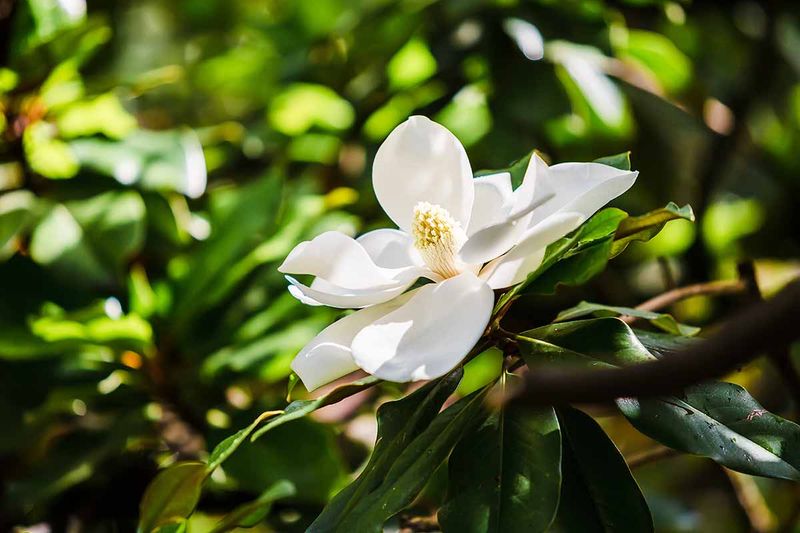
Classic curb appeal sometimes needs room to breathe, and southern magnolia is a tree that proves the point beautifully. This native species brings bold, glossy foliage and large creamy white flowers that can reach a foot across.
The fragrance alone is enough to stop people in their tracks during late spring and early summer when the blooms are at their peak.
Your Florida Garden Changes Every Week. Your Plan Should Too.
Gardening in Florida changes quickly throughout the season. Every Friday you’ll receive a simple weekly plan showing exactly what to plant, prune, fertilize, harvest, and protect so you never miss the right timing.
Southern magnolia is native to the southeastern United States, including much of this state. That means it is well adapted to local soils, humidity, and seasonal rainfall patterns.
It can anchor a front yard with a sense of permanence and classic Southern charm that few other trees match. The deep green leaves stay on the tree year-round, giving the landscape structure in every season.
That said, this tree needs honest space planning before you commit. Mature specimens can reach sixty feet or taller with a wide canopy spread, though many cultivars stay more compact.
The large, leathery leaves drop steadily throughout the year and can be slow to break down in mulch beds. Surface roots can also spread broadly near the base of mature trees.
Avoid planting southern magnolia in tight spots near foundations, sidewalks, or small front yards where the eventual size will create problems.
A spacious lawn with plenty of clearance from structures gives this tree room to develop its natural form without constant intervention.
When placed well, it becomes a genuine landmark in a neighborhood, the kind of tree that defines a home’s character for generations.
3. Choose Fringetree For Soft Spring Blooms
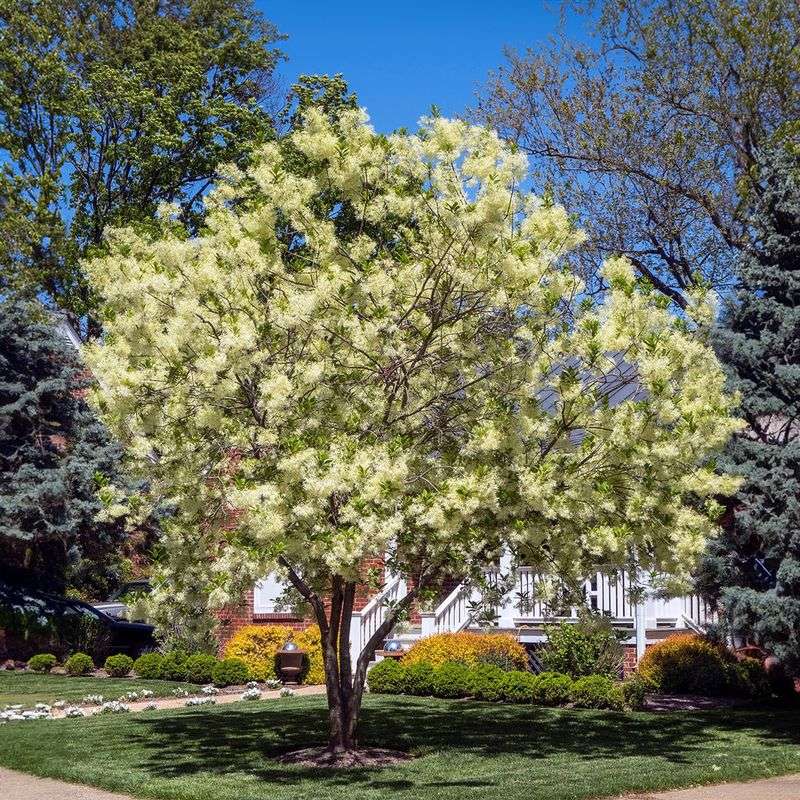
Spring flowers can soften a landscape fast, and fringetree does it with a kind of understated elegance that is hard to find in showier ornamentals.
The blooms appear in early to mid-spring as loose, airy clusters of white that look almost like soft fringe hanging from the branches.
On a calm morning, the effect is genuinely stunning, and the mild fragrance adds to the experience.
Fringetree is native to the eastern United States including parts of northern and central regions of this state. That native status matters because it means the tree is naturally suited to local soils, wildlife, and seasonal patterns.
Native bees and other pollinators visit the flowers, and female trees produce small dark fruits that birds find attractive in late summer.
One of fringetree’s real strengths for smaller front yards is its more modest mature size. It typically grows as a large shrub or small tree, often reaching ten to twenty feet depending on conditions.
That scale makes it a realistic choice where a southern magnolia or large crape myrtle would simply be too much tree for the space available.
Honest expectations help here. Fringetree is not a year-round focal point.
The spring bloom is its main event, and the tree is fairly quiet the rest of the year. Leaves are clean and attractive through summer, but fall color is not dramatic.
Think of it as a seasonal accent that brings real elegance to the front yard for a few weeks each spring. After that, it settles quietly into the background without demanding much attention or maintenance.
4. Add Chickasaw Plum For Early Native Flowers
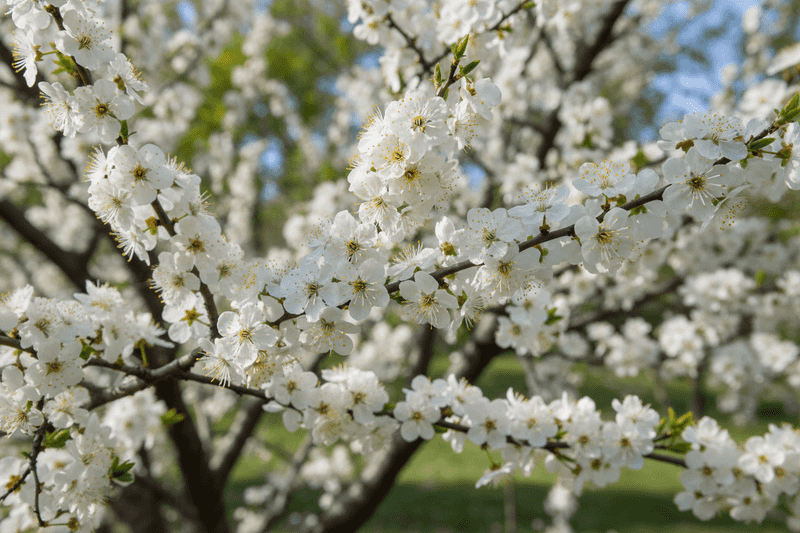
A native tree can bring charm before summer arrives. Chickasaw plum does exactly that with a burst of small white flowers that appear very early in the season, often before most other plants have woken up.
That early bloom makes it one of the first signs of spring in a front yard, and it catches the eye at a time of year when color is genuinely scarce in local landscapes.
Chickasaw plum is native to the southeastern United States and well established across much of this state. Its wildlife value is real and well documented.
The early flowers attract native bees and other pollinators at a time when few other food sources are available. Later in the season, the small tart fruits attract birds and other wildlife, making it a genuinely productive addition to a yard designed with nature in mind.
The natural growth habit of Chickasaw plum is something to understand before planting. It tends to form thickets by sending up root suckers around the base, which gives it a spreading, informal character over time.
In a naturalistic or wildlife-friendly front yard, that habit adds to its charm and creates a layered, living look.
In a very formal or tightly manicured landscape, the suckering tendency may require more management than some homeowners want to take on. It fits best where a relaxed, natural aesthetic is the goal rather than a clipped, symmetrical design.
When given the right setting, Chickasaw plum rewards the homeowner with early seasonal color and wildlife activity. It also brings a genuinely native character that no exotic ornamental can replicate.
5. Try Golden Trumpet Tree For A Bold Seasonal Show
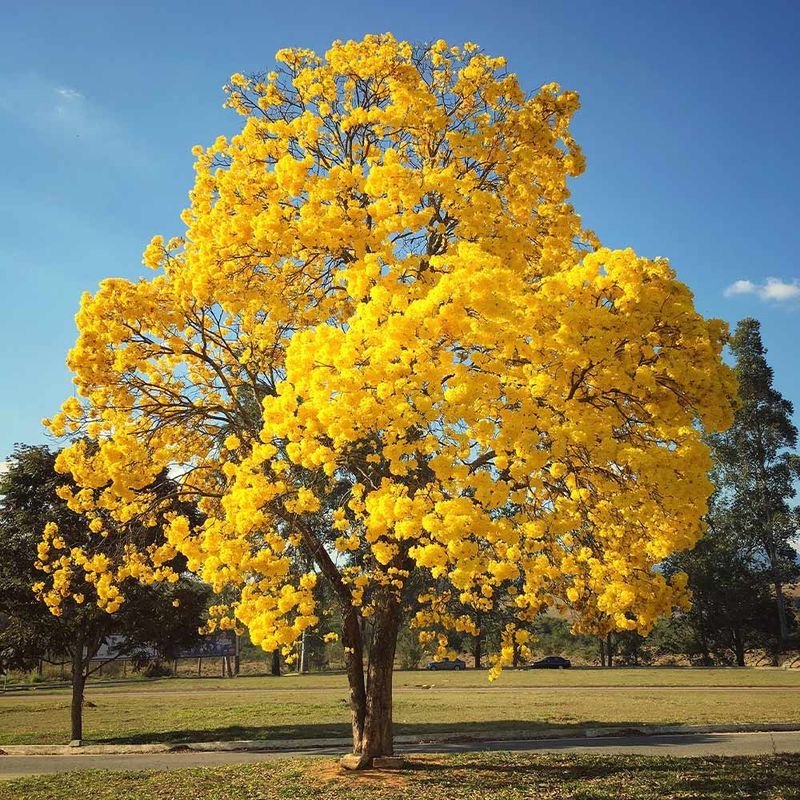
Bold color works best when the site fits, and golden trumpet tree is a striking example of that principle in action. When it blooms, the tree puts on one of the most dramatic floral displays of any ornamental tree in warm-region landscapes.
Clusters of bright yellow trumpet-shaped flowers cover the branches at a time when leaves are sparse, making the color even more intense and eye-catching from the street.
Golden trumpet tree is not native to this state, but it can perform well in warmer central and southern regions where frost is rare enough to suit its needs. Regional fit genuinely matters here.
In cooler northern areas, cold snaps can set the tree back significantly or limit its flowering. Check local conditions and talk to a knowledgeable nursery professional before committing to this tree if you are outside the warmest zones.
Mature size is another factor worth planning around. Golden trumpet tree can reach twenty-five to thirty feet or more at full size, with a canopy that needs open space to develop naturally.
It works well as a street tree or yard specimen where there is enough clearance from overhead utilities, rooflines, and neighboring structures.
The blooming period is seasonal rather than continuous, so the tree is not always the focal point it becomes during peak flower time. Outside of bloom season, it has a fairly open canopy and moderate leaf litter.
Used where the climate suits it and the space allows, this tree can deliver a seasonal curb appeal moment that genuinely stops traffic. It can make a front yard look extraordinary for weeks at a time.
6. Use Jacaranda Where Warm Regions Suit It
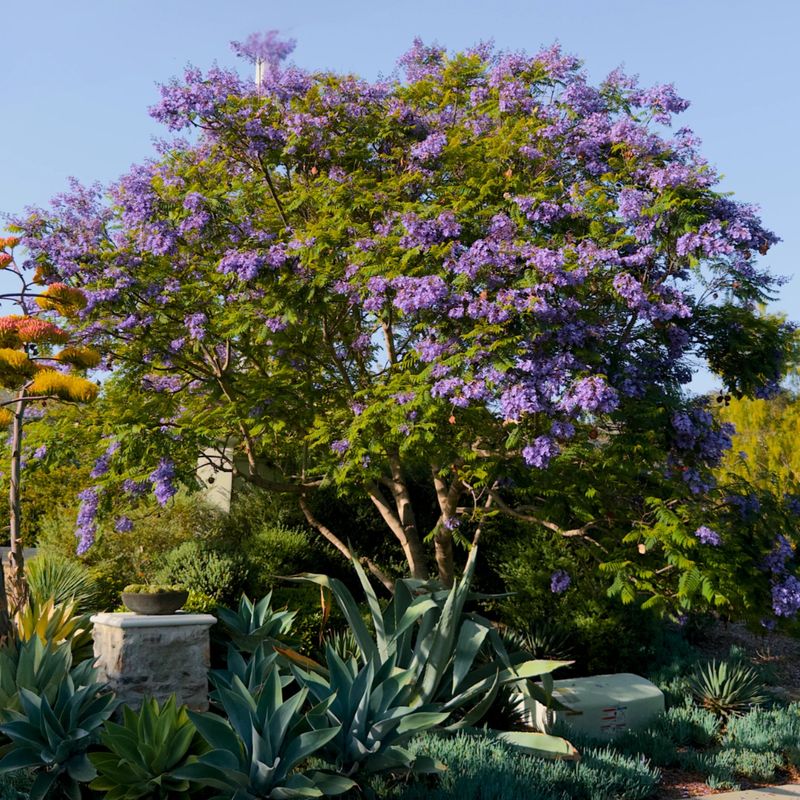
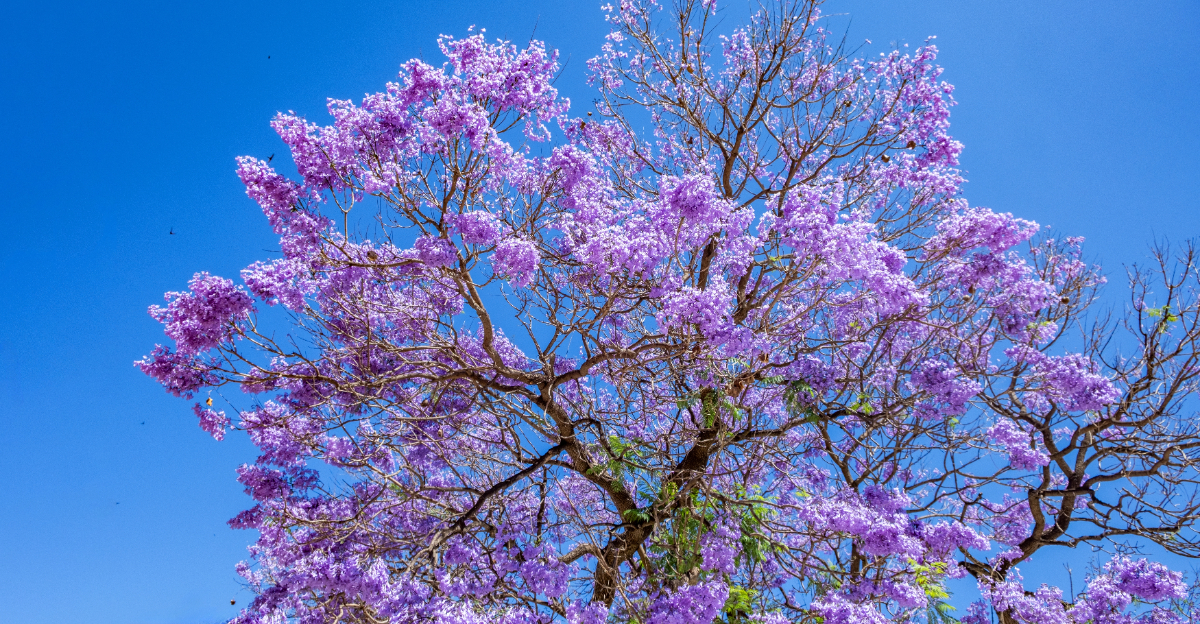
Warm-region homeowners have another showy option in jacaranda. This tree produces one of the most photographed floral displays of any ornamental species used in this state.
The purple-blue flower clusters are dramatic, and a mature tree in full bloom creates a canopy of color that is nearly impossible to ignore from the street. It is the kind of tree that makes neighbors stop and ask what it is.
Jacaranda is not native and it is not suited to every part of this state. It performs best in the warmest southern and coastal regions where cold temperatures rarely dip low enough to cause serious damage.
In northern and some central areas, winter cold can limit flowering or cause branch damage, so regional suitability should be confirmed before planting. Consulting UF/IFAS Extension resources for your specific county is a smart step.
Mature jacaranda trees can reach twenty-five to forty feet depending on conditions, with a broad spreading canopy. That size means placement needs real thought.
Give the tree enough room away from driveways, walkways, and patios. The fallen flowers create a slippery, colorful carpet that requires regular cleanup during bloom season.
Leaf litter is also a consideration, as jacaranda drops leaves before or during flowering and again in late season. In a landscape where tidiness is a priority, that litter can feel like extra work.
Used in the right warm-region setting with enough space and realistic expectations about cleanup, jacaranda delivers curb appeal that is hard to match. The seasonal bloom alone can define the entire character of a front yard.
7. Plant Sweetbay Magnolia For Fragrance And Native Charm
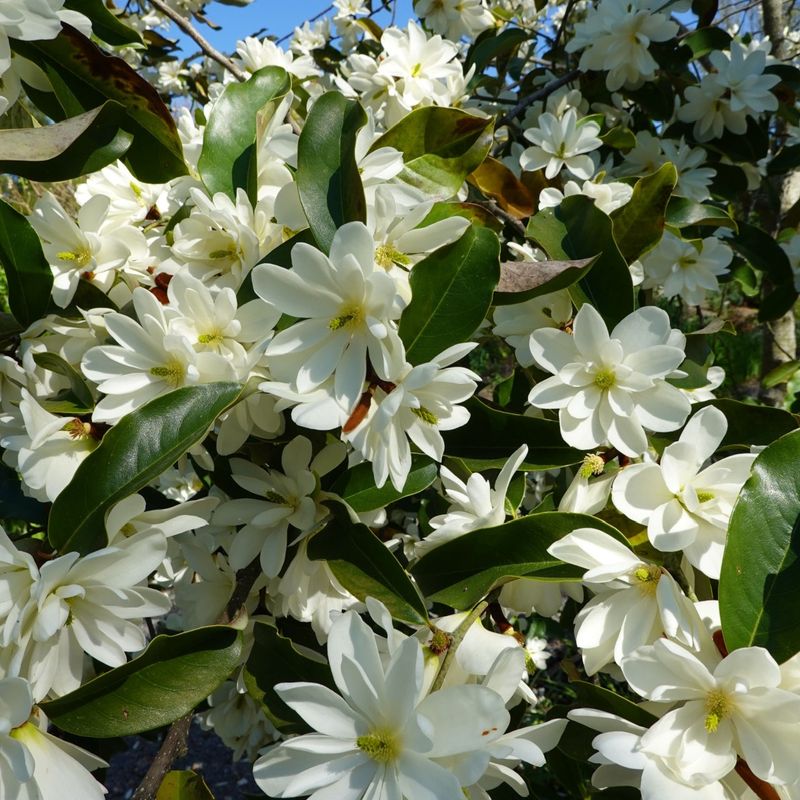
Fragrance adds a different kind of curb appeal, one that you notice before you even see the flowers.
Sweetbay magnolia offers exactly that kind of sensory welcome, with creamy white blooms that carry a clean, lemony scent during late spring and into summer.
It is one of those trees that makes a front yard feel genuinely inviting rather than just visually polished.
Sweetbay magnolia is native to the southeastern United States and found naturally across much of this state, including wet flatwoods and stream edges. That native character means it supports local wildlife in ways that non-native ornamentals simply cannot.
The flowers attract pollinators, and the seeds are eaten by birds including wild turkey and various songbirds. Planting it adds ecological value alongside its visual appeal.
In terms of size, sweetbay magnolia is generally more manageable than its larger cousin, southern magnolia. It often grows as a multi-stemmed shrub or small tree in home landscapes, but in Florida it can become much taller over time.
Mature size should be checked before planting near walks, roofs, or utilities. The semi-evergreen leaves have a distinctive silvery underside that catches light and moves gracefully in a breeze.
This adds subtle texture even when the tree is not in bloom.
Site conditions matter with sweetbay magnolia. It naturally grows in moist to wet soils and handles periodic flooding better than many ornamental trees.
A front yard with a low spot, a rain garden area, or reliably moist soil gives this tree a real advantage. It can also grow in average well-drained soil with regular moisture, but it thrives where conditions stay consistently damp.
As a native alternative to more exotic choices, it brings authentic regional character and lasting seasonal charm.