The Texas Lawn Pest That Keeps Coming Back No Matter What You Spray
You sprayed. You waited. You celebrated. Then, a few days later, they were back like nothing ever happened.
If that sounds familiar, you’re not alone. Texas homeowners have been locked in this battle for decades, and plenty of them are losing.
This pest doesn’t just survive a quick blast of spray. It shrugs it off, packs up, and pops up a few feet away.
Here’s the tricky part. What you see on the surface is only a tiny piece of the problem. The real action happens deep underground, where the colony keeps growing, rebuilding, and planning its comeback.
And these little invaders don’t just ruin the look of your lawn. They can make your yard a painful place for kids, pets, and anyone walking barefoot.
So why won’t they stay gone? Let’s break down what’s really going on, and what actually works.
The Texas’s Most Persistent Lawn Pest
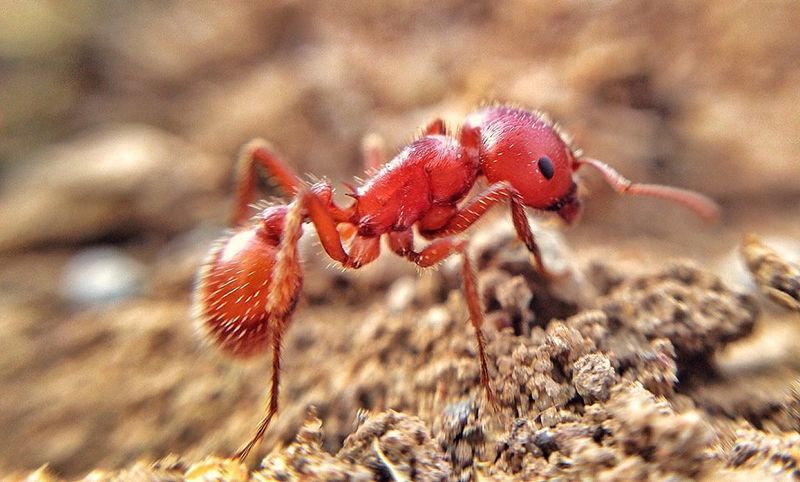
Long before they became a Texas headache, fire ants lived in the wetlands of South America. Floods there taught them to survive tough conditions. That toughness is exactly why they thrive in yards today.
The story of how they got here is pretty wild. In the 1930s, the ants likely rode on cargo ships into the port of Mobile, Alabama.
Some experts think they hid in soil used to balance the ships. From there, they slowly spread across the South and eventually marched into Texas.
Now they cover much of the eastern two-thirds of the state. You can find them in lawns, gardens, school playgrounds, and cattle pastures.
Places like Houston, Dallas, Austin, and San Antonio all deal with them. Dry West Texas sees fewer of them, since the ants like moisture.
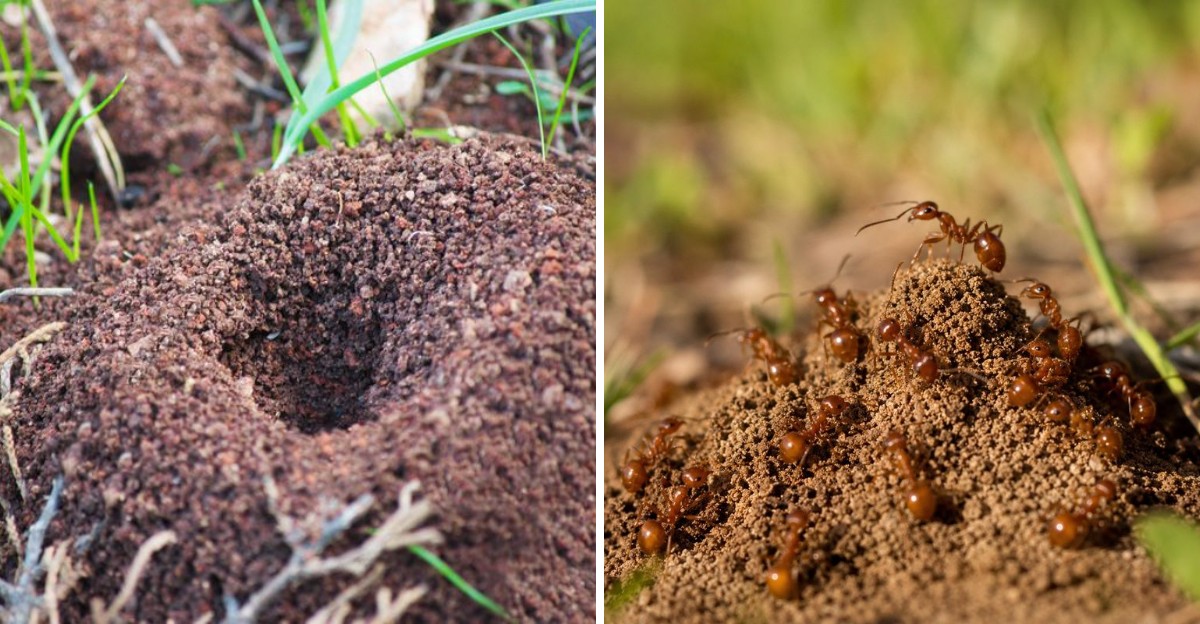
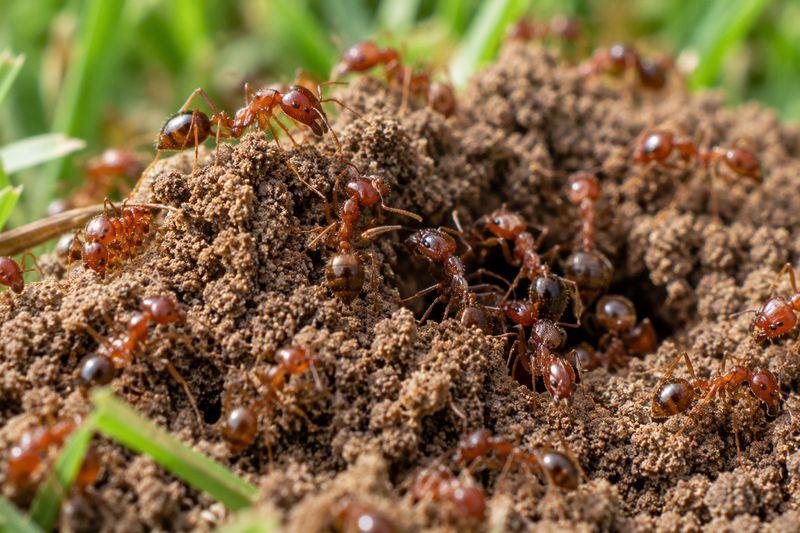
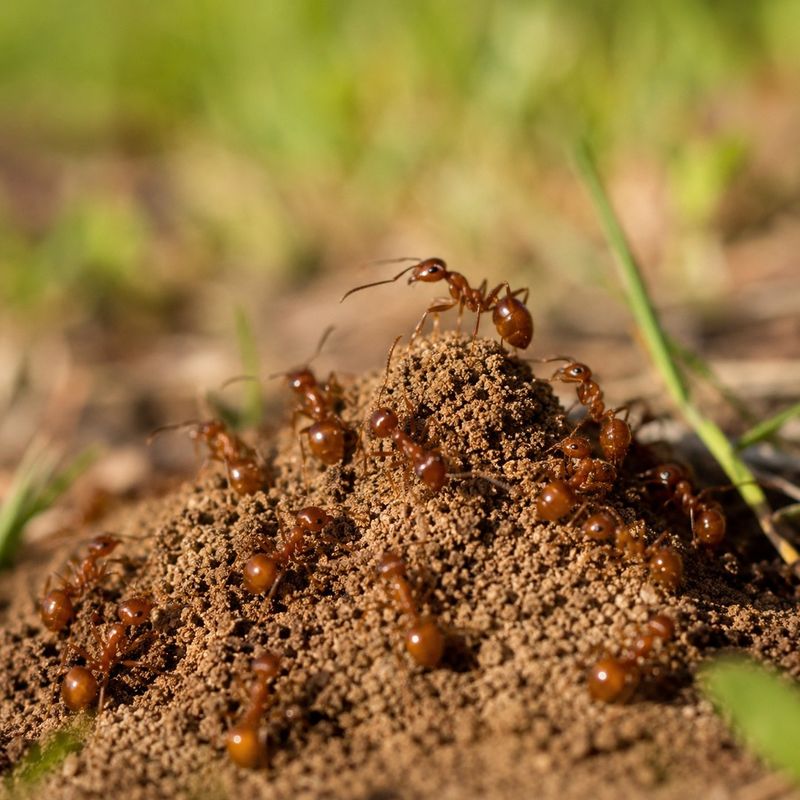
Spotting them is usually easy. Look for mounds of loose, fluffy soil with no clear hole on top. The ants enter through tunnels underground instead. If you poke a mound, hundreds of tiny reddish ants will rush out fast.
Their sting is what makes them famous. A fire ant grabs your skin with its jaws and then stings again and again.
Within a day, small white blisters often show up. Try not to pop them, since that can lead to infection.
Here is a helpful tip for any family. Teach kids to spot mounds and stay clear of them. Check the yard before letting pets out to play.
If someone gets stung many times or has trouble breathing, get medical help right away, because some people have serious allergic reactions.
Why Spraying Mounds Rarely Solves The Problem
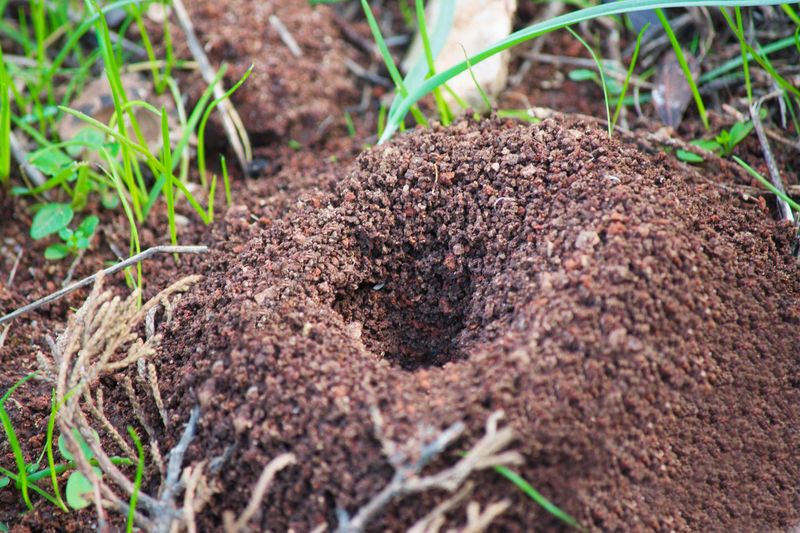
Picture yourself pouring a whole jug of spray onto a mound. It feels great for about a day. Sadly, that good feeling usually fades once you see what happens next.
Here is the problem with sprays and drenches. They mostly reach the ants near the top of the mound.
A fire ant nest can go several feet down into the soil, though. Deep inside, the queen is often sitting safe and sound.
Your Texas Garden Changes Every Week. Your Plan Should Too.
Gardening in Texas changes quickly throughout the season. Every Friday you’ll receive a simple weekly plan showing exactly what to plant, prune, fertilize, harvest, and protect so you never miss the right timing.
The queen is the heart of the whole colony. She lays hundreds of eggs every single day. As long as she survives, the colony can rebuild its numbers quickly. Wiping out a few thousand workers barely slows her down.
So what does a smart queen do when trouble strikes? She moves. The surviving ants pack up their young and relocate to a safer spot nearby.
Often that new mound shows up just a few feet away, sometimes right along your sidewalk or flower bed.
That is why so many Texans feel like they are playing a never-ending game of whack-a-mole. Each spray pushes the ants around instead of ending the problem. You spend money and time, but the colony stays alive.
Disturbing a mound also makes things worse. Kicking it, digging it up, or tapping it before treating it puts the ants on alert. They may carry the queen deeper or move her out fast.
A better habit is to leave mounds alone until you have a real plan. If you must treat one right away, follow the label closely and use plenty of liquid so it soaks deep. Still, treat sprays as a backup tool, not your main weapon.
Many Texas Colonies Have Multiple Queens
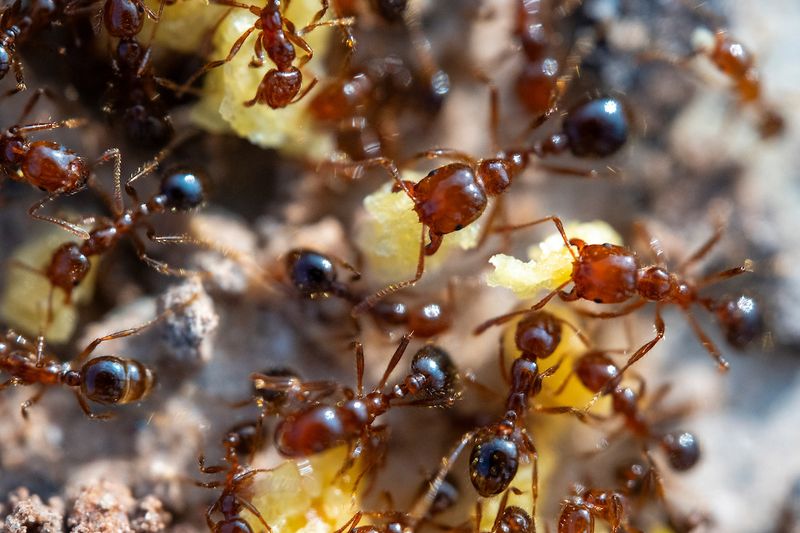
One queen is tough enough to deal with. Now think about a colony with dozens of them. That is the reality in many yards, and it changes the whole fight.
Scientists sort fire ant colonies into two main types. Single-queen colonies have one ruler and defend their space from other ants. Multiple-queen colonies are friendlier with neighbors, and they share territory without fighting.
Texas has plenty of those multiple-queen colonies. Instead of one big mound, you might see many smaller ones scattered across the lawn.
Underground, tunnels link them together like a hidden highway system. Workers and queens move back and forth between them freely.
Because of this setup, a yard with multiple-queen colonies can have far more ants per acre. Some studies have found hundreds of mounds per acre in heavily infested areas. That is a lot of stinging trouble packed into one space.
So why does it matter to you? Wiping out one mound in a connected network is like closing one store in a huge chain.
The rest of the business keeps running. Other queens simply keep laying eggs, and the population bounces back.
Fun fact: fire ants can even form living rafts during floods. They hook their bodies together and float until they reach dry ground. Queens ride safely in the middle, which shows just how much the colony protects them.
The lesson here is simple. Fighting mound by mound is rarely enough when you have a network.
You need a method that reaches every queen, even the ones you cannot see. That is where yard-wide treatments come in, which we will cover soon.
New Colonies Keep Flying In
Ever noticed a swarm of winged ants right after a good rain? Many folks think a different bug has moved in. In reality, those flyers are fire ants getting ready to start new colonies.
Every spring and fall, mature colonies raise special winged males and females. After a rain, when the air is warm and still, they burst out of the mound. They fly high into the sky to mate in what experts call mating flights.
Once the flight ends, the males are done with their job. The newly mated queens drop back down and snap off their wings.
Each one then digs a small chamber in the soil. Before long, she lays her first eggs and a brand new colony begins.
These queens can travel a surprising distance. Some are carried by the wind for a mile or more. That means your neighbor’s yard, a nearby vacant lot, or an open field can all send new queens your way.
Here is the frustrating part. You could clear every mound on your property and still see new ones months later.
Your hard work was not wasted, though. Fresh colonies are small at first and much easier to control.
Talking with neighbors can make a big difference. When a whole street treats at the same time, fewer queens fly in from next door. Some Texas neighborhoods and homeowner groups even plan shared treatment days.
Keep an eye out after spring and fall showers. Small new mounds often pop up a few weeks later. Catching them early saves you a lot of trouble down the road.
The Texas Two-Step Method That Actually Works
Texans love a good two-step on the dance floor. As it turns out, the best fire ant plan shares the same name. Experts at Texas A&M AgriLife call it the Texas Two-Step, and it works far better than spraying alone.
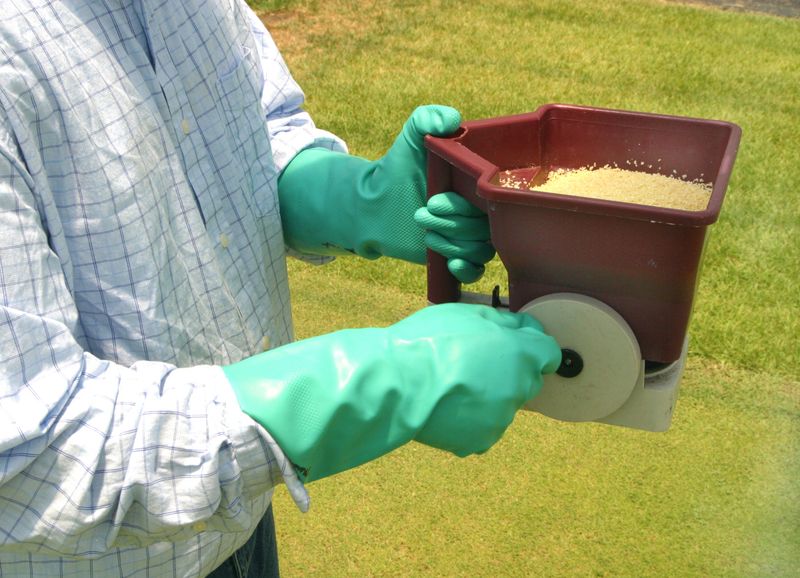
Step one is broadcasting fire ant bait across your entire yard. Bait usually comes as small granules made of corn grits soaked in soybean oil and a slow-acting ingredient.
You spread it with a handheld or push spreader, much like grass seed. The label will tell you how much to use, and it is often only a pound or two per acre.
So how does bait beat the hidden queen? Worker ants find the granules and think they found food. They carry it back to the colony and share it.
Eventually, the workers feed it to the queen herself, and that is what brings the colony down.
The slow action is the secret. If bait worked too fast, workers would stop before reaching the queen. Instead, the colony keeps sharing it through every tunnel, even in multiple-queen networks.
Step two is treating problem mounds directly. Some mounds sit in spots where you just cannot wait, like near a swing set or front door. For those, use a mound drench, granules, or dust labeled for fire ants.
Patience is part of the plan. Some baits show results in a week, while others take several weeks.
Resist the urge to spray everything in the meantime, since that can scare ants away from the bait. Give the method time, and you should see far fewer mounds.
Timing And Tips For Better Results
Good timing can turn an okay treatment into a great one. A little planning goes a long way with fire ants. These simple habits can help your bait work its best.
First, pick the right season. Spring and fall are ideal because ants forage the most then. In the heat of a Texas summer, ants often hunt only in the cooler hours. In winter, they slow down and barely eat at all.
Next, check the weather and your grass. Spread bait on dry grass with no rain in the forecast for at least a day.
Water can ruin the bait and make it useless. Skip early mornings with heavy dew and try late afternoon instead.
Want a quick way to know if ants are hungry? Drop a potato chip or a bit of hot dog near a mound.
If ants swarm it within about 30 minutes, they are ready to eat. That is the perfect moment to spread your bait.
Freshness matters more than most people think. The soybean oil that attracts ants can go rancid over time.
Old, stale bait just gets ignored. Buy only what you need, keep the bag sealed tightly, and store it somewhere cool and dry.
Finally, make it a routine. Plan to repeat the Texas Two-Step once or twice a year. Many families treat in spring and again in fall to stay ahead of new queens.
Always read the label and keep kids and pets off the lawn as directed. With steady effort, your yard can stay much more comfortable all year long.