What Frogs On Your Missouri Porch During A Storm Are Really Telling You
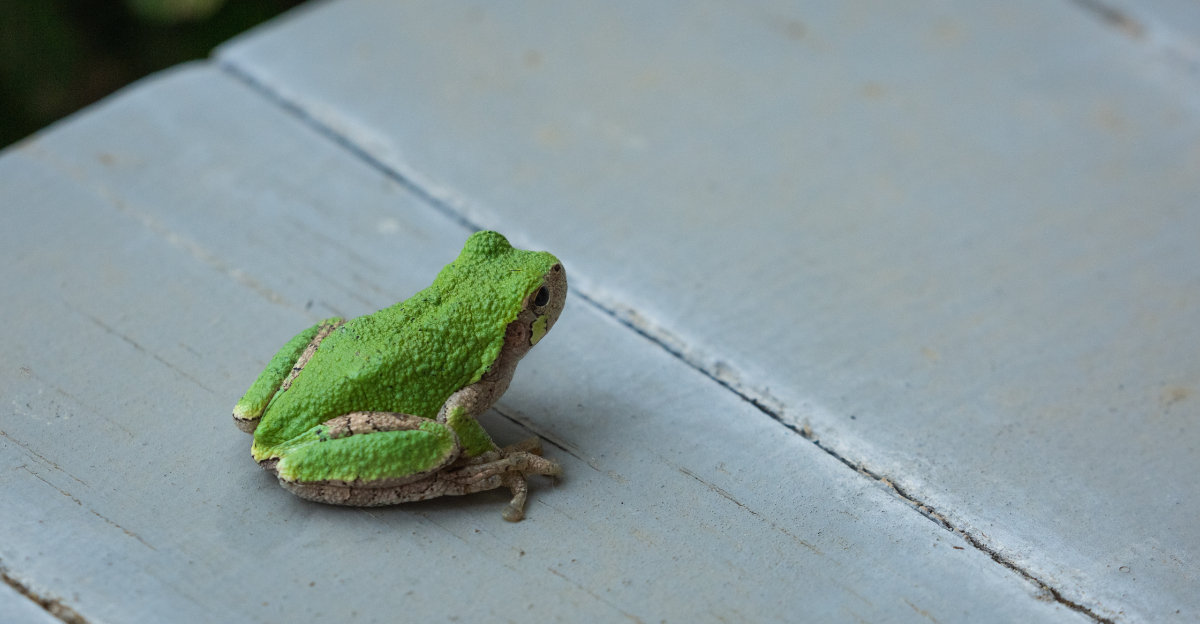
Small bodies gather near your porch light, and something feels curious. You notice the shift before your mind explains why. Rain hasn’t touched the ground yet, but they already sense it.
Missouri frogs detect pressure changes long before your skin catches on. Their delicate skin absorbs moisture faster than you’d expect. Every movement toward your door signals a gentle coming shift.
Storms draw insects toward light, and frogs follow that movement. Your porch becomes a gathering spot the instant clouds arrive. Wetlands across Missouri guide amphibians into unfamiliar corners during heavy weather.
Species differ, size differs, but purpose stays constant among them. None of them arrived on your steps by chance. Awareness guides every hop, every pause, every retreat you personally witness.
Patterns hide inside their presence, patterns worth reading closely. Understanding begins the moment you stop overlooking them as ordinary. Nothing about this stops moving once you notice it.
Why Frogs Seek Out Porches During Storms
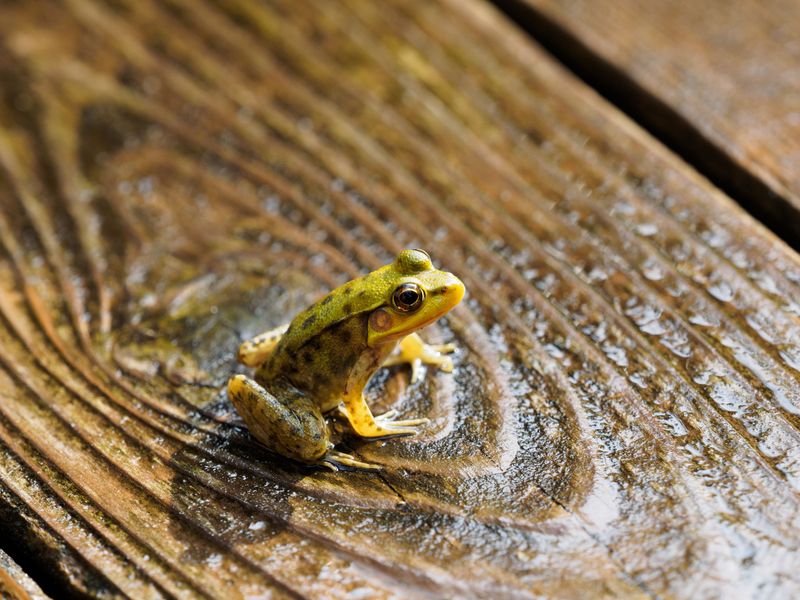
Rain is coming, and frogs know it first. Their skin is incredibly sensitive to changes in air pressure, humidity, and temperature, picking up signals humans simply cannot feel.
When a storm approaches, the drop in barometric pressure triggers a biological response in frogs. Their bodies sense moisture in the air before a single raindrop falls.
Porches offer a sweet spot for frogs seeking shelter. The overhang blocks wind, the wood or concrete holds warmth, and the structure provides cover from predators circling during chaotic weather.
Frogs are ectothermic, meaning outside temperatures control their body heat. A porch microclimate stays more stable than open ground, making it an ideal refuge when conditions shift fast.
Lights on your porch attract insects, and insects attract frogs. A well-lit porch during a storm becomes an easy feeding spot for a hungry amphibian.
Frogs on your Missouri porch during a storm are not random visitors. They are following instincts honed over millions of years, and your porch just happens to check every box on their survival list.
Understanding this behavior helps you see your home differently. Your porch is not just an outdoor living space; it is an active part of the local food web and ecosystem.
Common Frog Species Found In Missouri
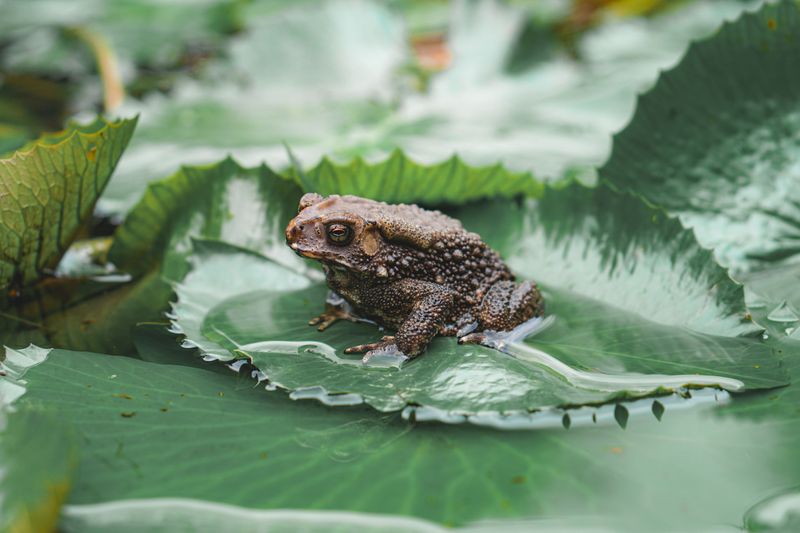
Not every frog on your porch is the same species, and telling them apart is easier than you think. Missouri hosts more than twenty frog and toad species, each with distinct looks and habits.
The American Bullfrog is the big one, often the size of your fist. Its deep, resonant call sounds like a distant foghorn and is unmistakable on a humid summer night.
Gray Tree Frogs are the acrobats of the group. They change color from gray to green depending on their surroundings, and their sticky toe pads let them cling to almost any surface.
Spring Peepers are tiny but loud beyond belief. A chorus of these small frogs can carry a remarkable distance, filling the air with high-pitched whistles after a warm spring rain.
Your Missouri Garden Changes Every Week. Your Plan Should Too.
Gardening in Missouri changes quickly throughout the season. Every Friday you’ll receive a simple weekly plan showing exactly what to plant, prune, fertilize, harvest, and protect so you never miss the right timing.
Green Frogs look similar to Bullfrogs but are noticeably smaller. They tend to stay near permanent water sources like ponds, streams, and drainage ditches near suburban neighborhoods.
Cope’s Gray Tree Frog is nearly identical to the Gray Tree Frog but has a different call. Telling the two apart requires a trained ear, since their appearance is almost the same.
When frogs on your Missouri porch during a storm appear, look at size, color, and toe shape. A quick observation can tell you a lot about which neighbor paid you a visit.
What Changes In Weather Trigger This Behavior
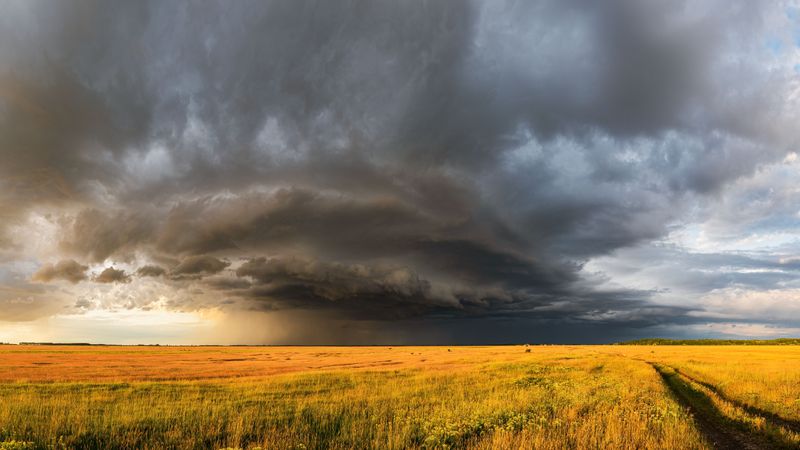
Frogs respond to atmospheric pressure changes much like a barometer does. Their behavior shifts dramatically in response to specific atmospheric changes that signal incoming storms.
Barometric pressure dropping is the number one trigger. When pressure falls, moisture in the soil and air increases, which activates the moisture receptors across a frog’s permeable skin.
Temperature swings also matter a great deal. A sudden drop of even five degrees signals to frogs that conditions are about to become unstable, pushing them toward shelter.
Rising humidity is another key factor. High humidity allows frogs to breathe more easily through their skin, encouraging them to move around more freely before a storm hits.
Wind direction changes can also prompt movement. Frogs sense shifts in airflow that carry scents and moisture from incoming weather systems, acting as an early warning system for their tiny bodies.
Soil vibrations from distant thunder can be felt by frogs through their front legs. Amphibians are known to respond to low-frequency vibrations long before humans can hear or feel anything unusual.
All of these triggers stack on top of each other during a major storm. When frogs on your Missouri porch during a storm pile up, multiple environmental alarms are going off at once in their nervous systems.
Signs Your Yard Is A Frog Habitat
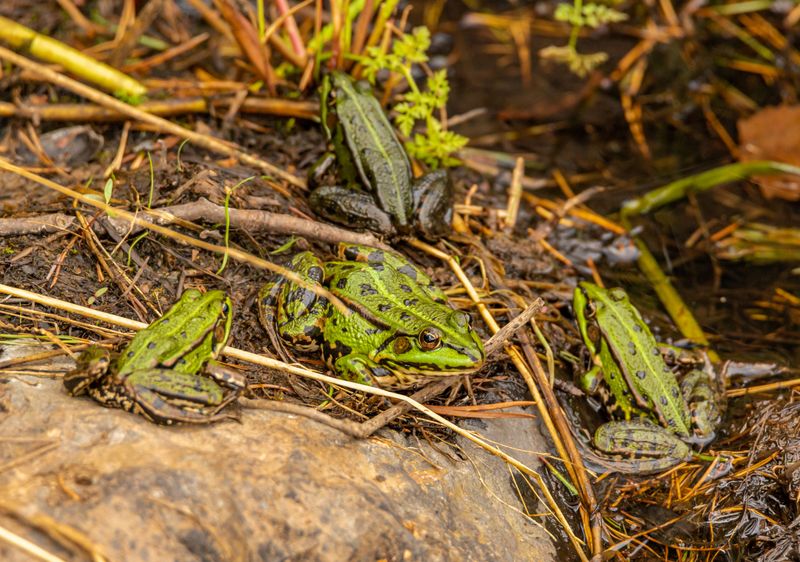
Frogs do not just wander onto any porch randomly. They follow habitat corridors, and if they are visiting yours, your yard is sending them a clear invitation.
Standing water is the biggest draw. Even a small birdbath, clogged gutter drain, or low-lying area that holds water after rain creates the breeding and hunting ground frogs need.
Dense ground cover like leaf piles, mulched garden beds, and low shrubs gives frogs safe places to hide during the day. Without cover, frogs are too exposed to risk traveling through your yard.
Native plants support insect populations, and insects are the main food source for frogs. A yard full of native flowers and grasses will always attract more amphibian visitors than a plain lawn.
Absence of chemical pesticides and herbicides matters enormously. Frogs absorb chemicals through their skin, so a yard free of synthetic treatments is far more welcoming to amphibian life.
Proximity to natural water features like creeks, ponds, or retention basins increases frog traffic significantly. If your neighborhood has any of these within a quarter mile, expect seasonal visits.
Compost piles and wood stacks are bonus habitat features. They trap moisture, host insects, and provide dark hiding spots that frogs find irresistible, especially heading into stormy weather.
Is This Behavior Something To Worry About
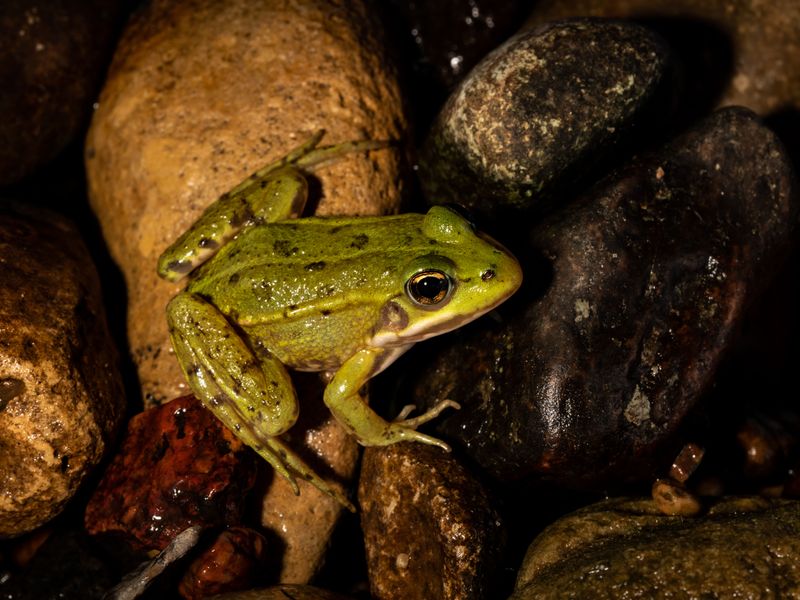
Seeing frogs cluster on your porch before a storm can feel alarming if you have never noticed it before. The good news is that this behavior is completely natural and poses no threat to your home.
Frogs do not cause structural damage. They are not chewing through wood, nesting in walls, or creating any kind of infestation the way rodents or insects might.
Some species do carry salmonella bacteria on their skin. You should wash your hands after handling any wild frog, but simply having them on your porch carries no real health risk for most people.
Frogs near entry points can sometimes hop inside if a door is left open. This is more of a minor inconvenience than a genuine problem, and gently guiding them back outside is easy.
Certain species like the American Toad have mild skin secretions that can irritate a pet’s mouth if the animal tries to bite or lick one. Supervising curious dogs and cats outdoors during frog season is a smart habit.
Noise from frogs calling near the house can be loud on rainy nights. If the chorus becomes disruptive, adding a water feature farther from the house can redirect their calling spot.
Frogs on your Missouri porch during a storm can be a sign of a healthy local ecosystem. Their presence often suggests your environment supports biodiversity.
How To Safely Coexist With Visiting Frogs
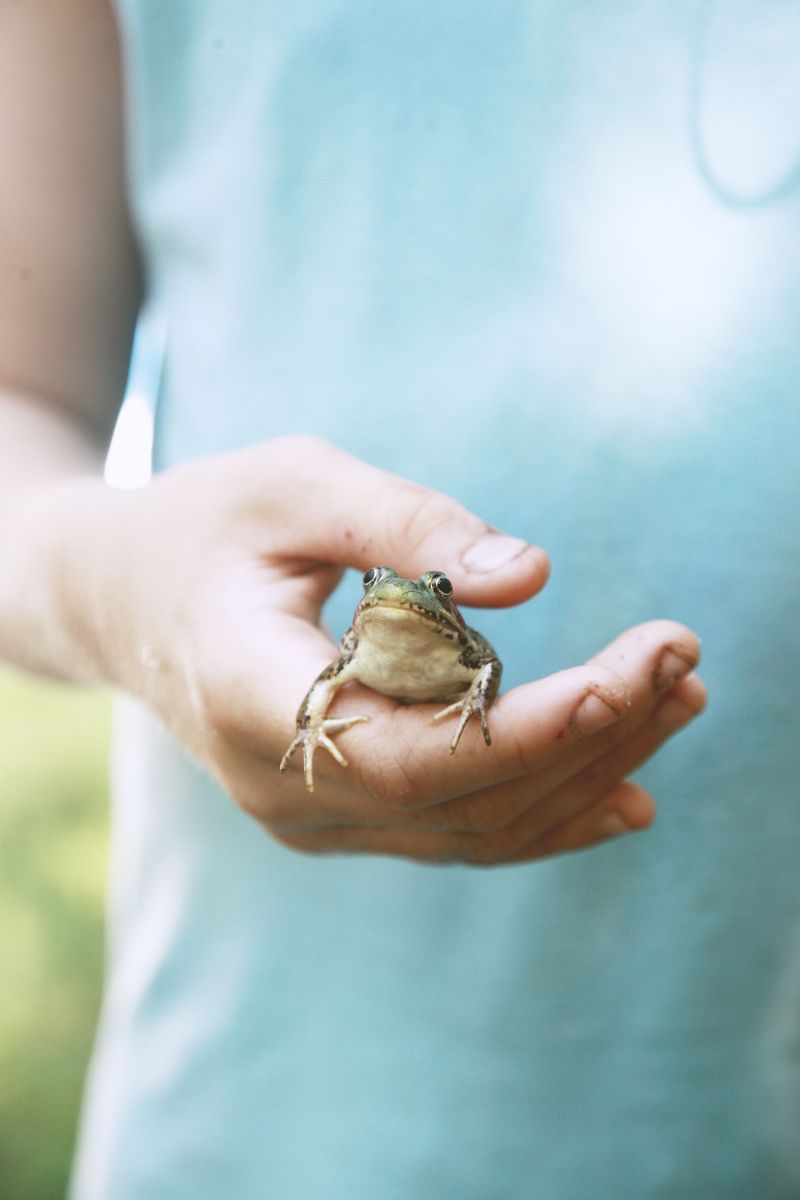
Living alongside frogs takes almost no effort, and a few simple habits make the experience better for both you and your amphibian visitors. Coexistence starts with knowing what not to do.
Never use chemical pesticides near areas where frogs gather. Their permeable skin absorbs toxins almost instantly, and even small exposures can cause serious harm to their health over time.
If a frog ends up inside your home, stay calm and scoop it gently into a container. Release it outside in a shaded, moist area near your garden or a plant bed.
Keeping outdoor lights on a timer or switching to yellow bulbs reduces insect attraction. Fewer insects near your door means fewer frogs congregating right at your entryway on stormy nights.
Avoid moving frogs long distances from where you find them. Frogs have small home ranges and rely on familiar territory, so relocating them too far can actually cause more harm than leaving them alone.
Adding a shallow dish of clean water near garden beds gives frogs a dedicated hydration spot. This small gesture can keep them happily in your garden instead of clustered on your porch steps.
Frogs on your Missouri porch during a storm suggest your space offers something they need. A few small adjustments can help you enjoy the natural pest control they bring every season.
What Frog Calls Are Telling You About The Storm
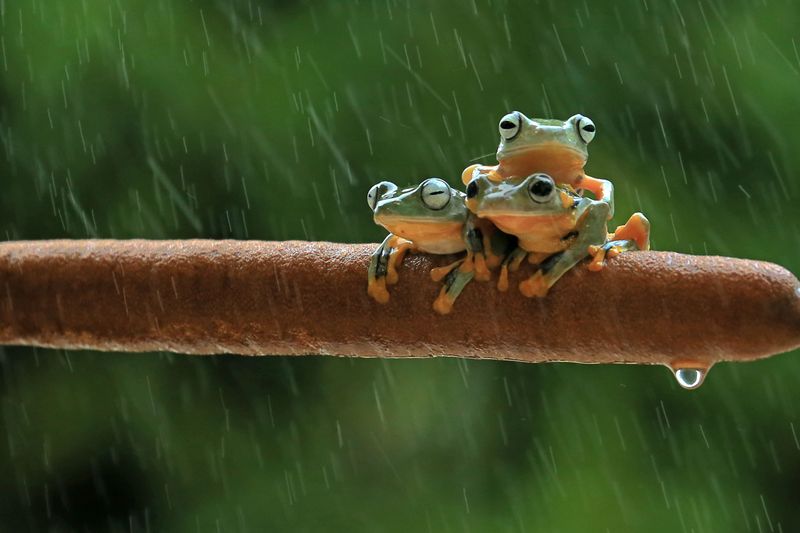
Before the thunder rolls in, frogs start talking. Their calls are not just mating songs; they are real-time weather commentary broadcast across your backyard in the hours before a storm.
Male frogs call more aggressively when humidity spikes and pressure drops. The combination of these two signals creates near-perfect breeding conditions, so calling intensifies dramatically right before heavy rain.
A sudden burst of calling from multiple species at once is one of several reliable pre-storm indicators. Frog choruses have long been treated as informal weather signals in rural communities.
The pitch and frequency of calls can also shift. Some species produce shorter, faster calls when temperatures drop quickly, which often happens in the hour before a strong front moves through.
Silence from frogs that were previously calling is equally telling. When frogs go quiet mid-chorus, it often signals that the storm has arrived or that a predator is nearby in the wet grass.
Spring Peepers calling in late afternoon rather than at dusk is an unusual pattern worth noting. Off-schedule calling often means atmospheric pressure has already begun its pre-storm descent.
Learning to read frog calls as weather signals adds a whole new layer to your outdoor experience. Next time you hear a loud chorus firing up on a cloudy afternoon, check the radar because rain is likely on the way.