What Georgia Homeowners Should Know About Eastern Towhees Nesting In Summer Gardens
A lot of wildlife activity happens without homeowners ever noticing it. You might spend hours in the yard and still miss what is happening beneath shrubs, around garden borders, or in spots that seem completely quiet.
Not every bird wants to be seen. Some prefer to stay hidden and go about their day without drawing attention to themselves.
That is why people are often surprised when they learn certain birds have been using their yard for weeks. The signs can be subtle.
A quick movement near the ground. A rustling sound that disappears as quickly as it starts.
Then one day you realize there is far more activity out there than you first thought.
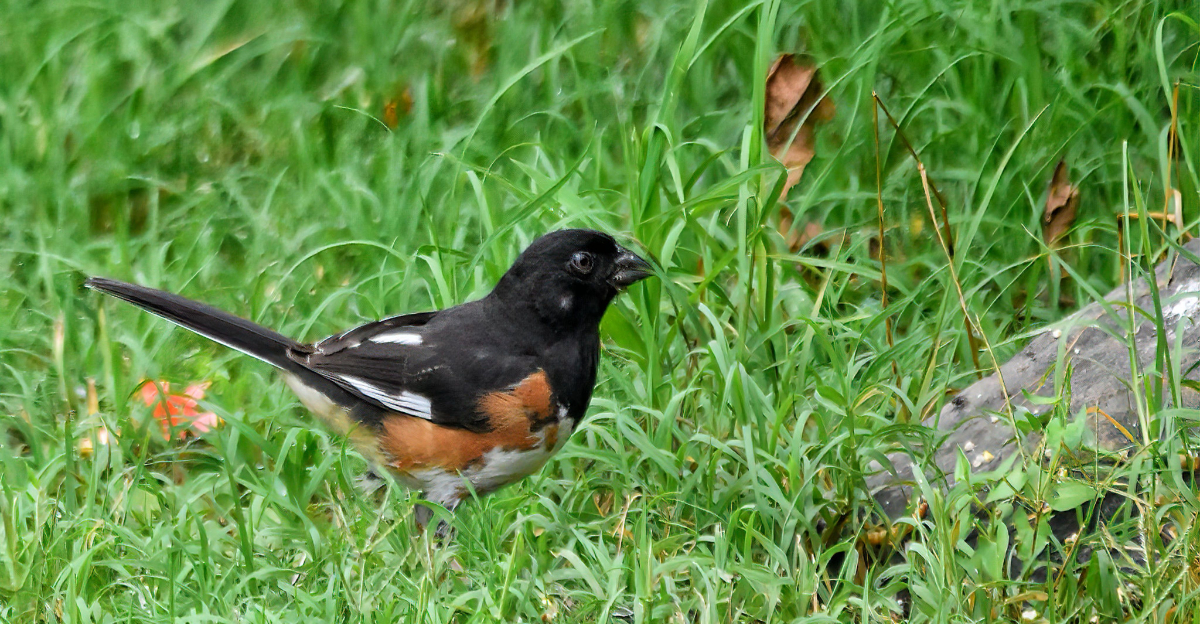
Eastern towhees are one example. During summer, gardens throughout Georgia can provide the shelter and cover these birds are looking for.
Knowing a little more about their nesting habits can help homeowners better understand the visitors sharing their outdoor space.
1. Eastern Towhees Often Nest Directly On The Ground
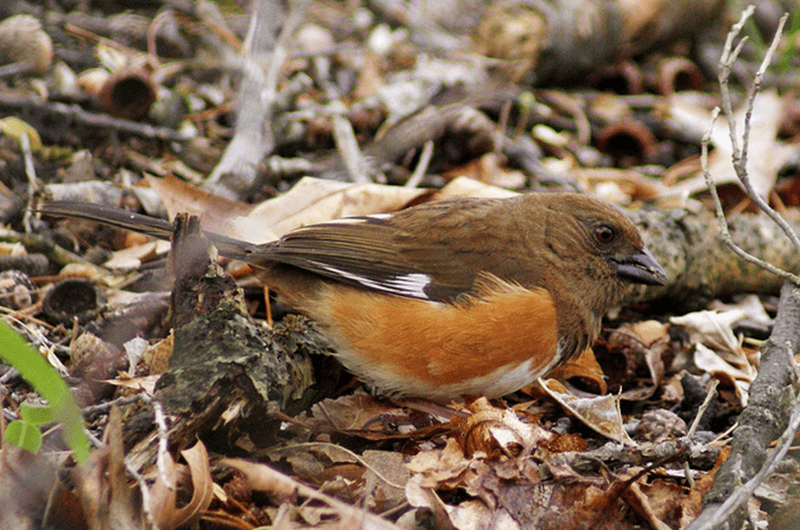
Ground-level nesting is one of the most surprising things about Eastern Towhees.
Unlike robins or cardinals that nest in trees, towhees prefer well-hidden spots near the ground, often using leaf litter and dense shrubs for cover.
Nests are cup-shaped and woven from dry grass, bark strips, and leaves. Female towhees build them almost entirely on their own, choosing spots that feel sheltered and hidden from above.
Spotting a nest by accident is easier than you think. One wrong step while weeding near a shrub border can expose or disturb a nest you never knew was there.
During summer nesting season, slow down near garden edges. Watch for a female towhee flying low and acting nervous near a specific patch of ground.
That behavior often signals a nest is close by.
Avoid poking around leaf piles or low brush once you notice towhee activity. Ground nests are fragile and easy to damage without realizing it.
Towhees pick spots near but not always under cover. Open patches of leaf litter at the edge of a shrub line are common nesting zones.
2. Dense Shrubs Can Hide Nests In Plain Sight
Thick shrub borders look like ordinary landscaping from the outside. Inside, they can be packed with activity during nesting season.
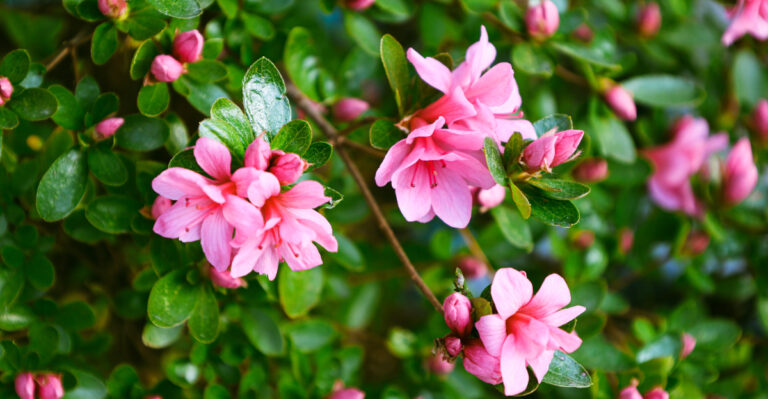
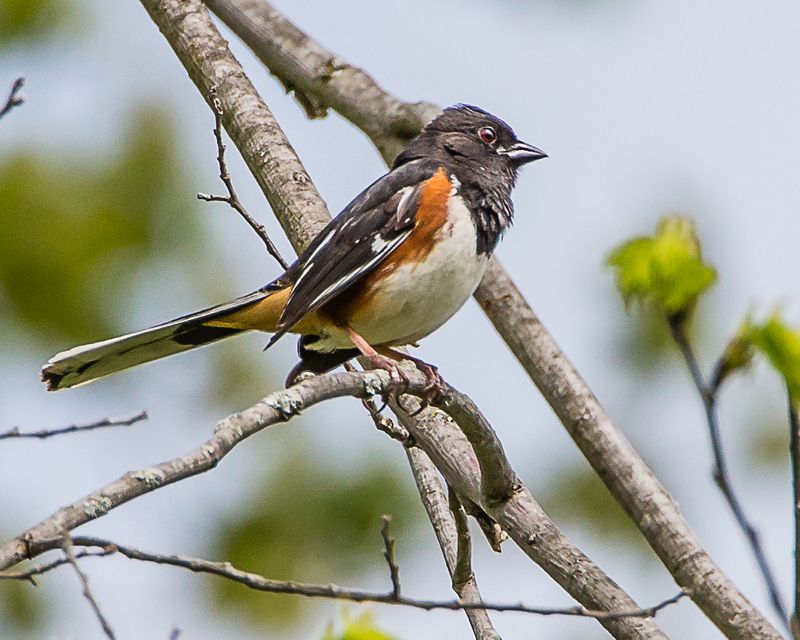
Eastern Towhees love shrub tangles. Overgrown azaleas, wild blueberry bushes, and native viburnums create exactly the kind of low, brushy cover these birds seek out for nesting.
A shrub that looks messy to a homeowner looks like a perfect nursery to a towhee.
Nests built near shrub bases are nearly impossible to see without crouching down and parting branches. Most homeowners walk past them dozens of times without ever noticing.
Watch for repeated low flights in and out of the same shrub. Parent birds often use a consistent entry point when visiting the nest.
That repetition is a reliable clue something important is happening inside.
Pruning dense shrubs in early summer can expose or disturb active nests. Holding off on heavy pruning until late summer gives nesting pairs enough time to finish raising their young.
Your Georgia Garden Changes Every Week. Your Plan Should Too.
Gardening in Georgia changes quickly throughout the season. Every Friday you’ll receive a simple weekly plan showing exactly what to plant, prune, fertilize, harvest, and protect so you never miss the right timing.
Not every dense shrub will hold a nest, but when towhees are active in your yard, assume any low, thick planting could be sheltering one. A little extra caution near shrub borders costs nothing and protects a lot.
3. Summer Cleanup Can Disturb Active Nesting Areas
Summer yard work feels urgent. Weeds grow fast, beds get messy, and the urge to tidy everything up hits hard in June and July.
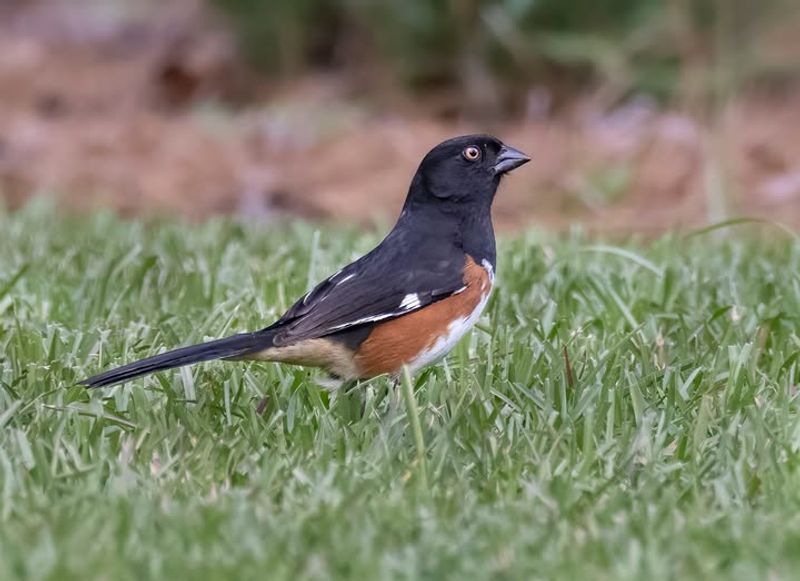
Towhee nesting season overlaps almost perfectly with peak summer garden maintenance. Raking, trimming, edging, and blowing leaves can all disturb active nests if you are not paying attention to where birds are spending their time.
Raking near shrub borders is one of the riskiest tasks during this period. Nests sit right at ground level, and a rake can pull one apart in seconds.
Leaf blowers aimed at shrub bases can do the same kind of damage.
Before starting any cleanup near garden edges, scan the area for bird activity. If a towhee flushes from a spot repeatedly, stop and look before moving forward with any tools.
Mowing close to naturalized areas or unmaintained garden edges also poses a real risk. Keeping a buffer of unmowed, undisturbed ground around known bird activity zones gives nesting pairs a safer margin.
Timing matters just as much as technique. Early morning yard work stirs up the most bird activity.
Working in the late afternoon, when birds tend to be less active, can reduce accidental disturbances without dramatically changing your routine.
Slowing down during summer cleanup is not about doing less work. It is about being more intentional with where and when you work in the garden.
4. Leaf Litter Plays An Important Role During Nesting Season
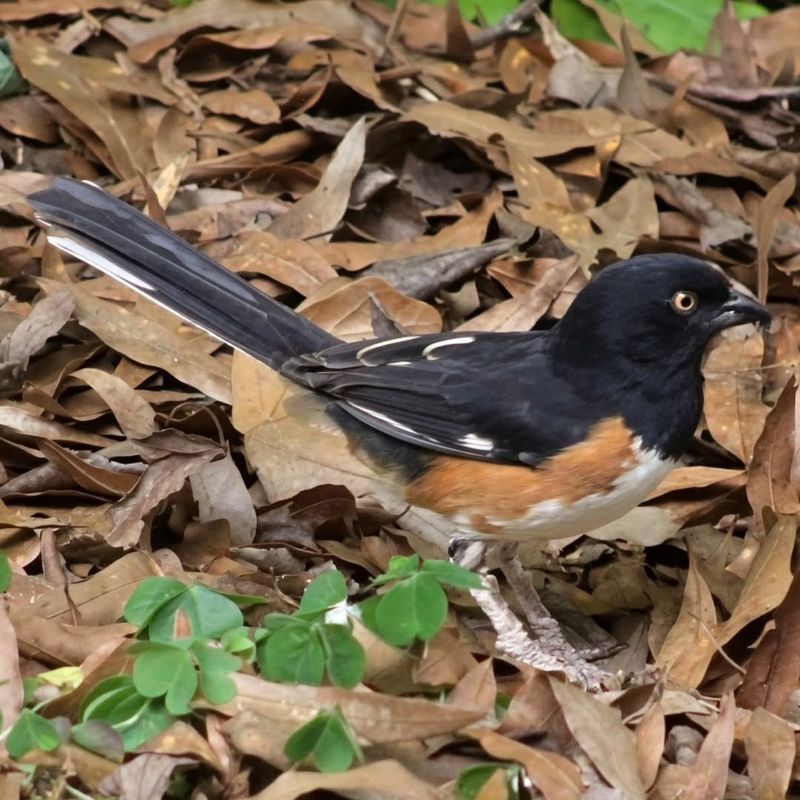
Leaf litter gets a bad reputation in tidy gardens. Most homeowners rake it up the moment it accumulates, but for Eastern Towhees, it is one of the most valuable resources in the yard.
Towhees forage by scratching through leaf litter with both feet at once, a distinctive two-footed backward hop that uncovers insects, seeds, and small invertebrates hiding underneath. Without leaf litter, that foraging behavior has nowhere to go.
Nesting pairs rely heavily on nearby leaf litter not just for food but for nesting material. Dry leaves, bark fragments, and plant debris all get woven into the nest structure.
Removing leaf litter near shrub borders reduces the materials available to nesting females.
Leaving a layer of leaves under shrubs and along garden edges does not mean abandoning all garden care. It means being selective about where you clean up and where you let things stay natural.
A six-inch layer of undisturbed leaf litter under shrubs supports not just towhees but a whole community of ground-feeding and ground-nesting birds. Insects thrive in that layer too, providing a reliable food source for parent birds feeding nestlings.
5. Parent Birds May Stay Hidden Even When A Nest Is Nearby
Silence does not mean absence.
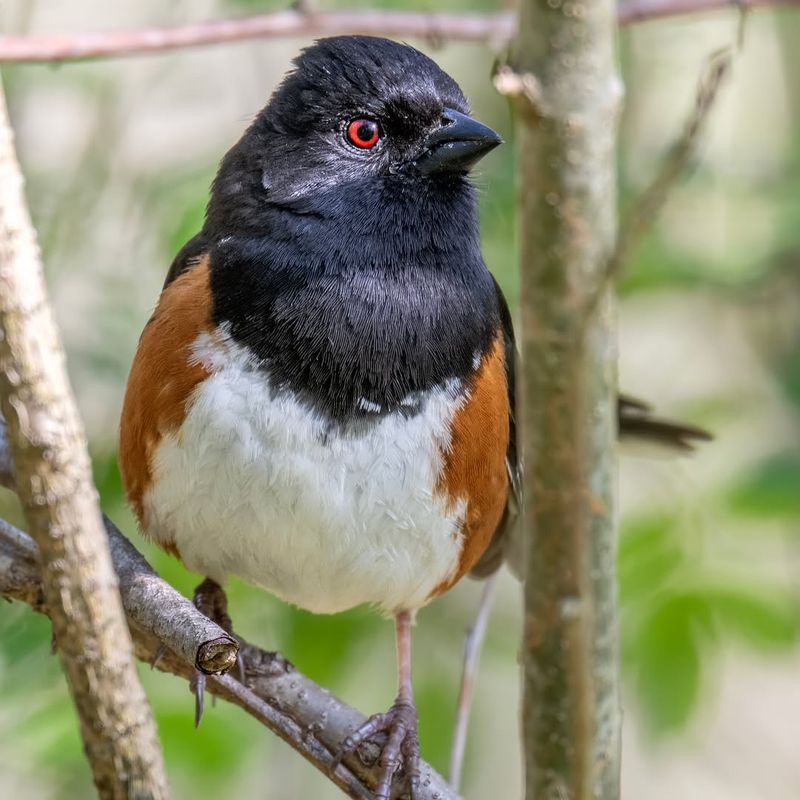
Eastern Towhees are surprisingly good at going quiet when they feel threatened, and a parent bird sitting tight near a nest can be almost invisible even in a small yard.
Male towhees are bold and visible when singing from exposed perches early in the season.
Once nesting begins in earnest, both males and females become much more secretive. Loud singing drops off.
Low-level movement near cover becomes their main mode of getting around.
Homeowners sometimes assume towhees have left the yard because they stop hearing that sharp drink-your-tea call. In reality, the birds may still be nesting just a few feet away, staying quiet to avoid drawing attention to the nest site.
Watch for subtle clues instead of waiting for obvious bird activity.
A single towhee moving low along a shrub border, pausing frequently and looking alert, is often a parent bird checking the route back to the nest.
Avoid approaching areas where you see this kind of cautious movement.
Parent birds that feel stressed near the nest may temporarily abandon a feeding run, which affects nestlings waiting for food.
Giving birds space during this period does not require major changes to your routine.
6. Native Plants Provide Valuable Cover For Nesting Pairs
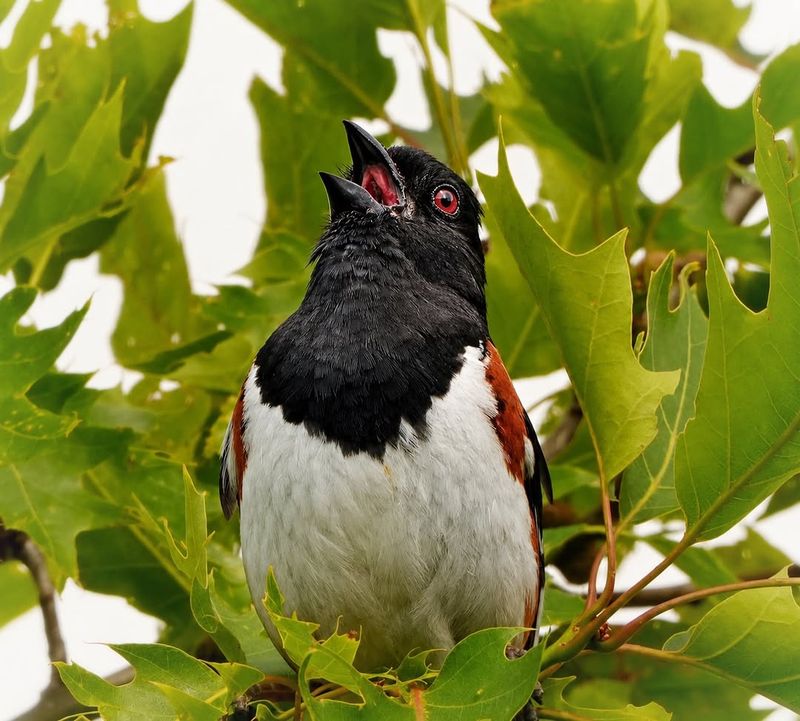
Not all plants offer the same value to nesting birds. Native plants have a clear edge when it comes to supporting Eastern Towhees during summer nesting season.
Native shrubs like beautyberry, sparkleberry, and wild azalea grow with a dense, layered structure that creates exactly the kind of low cover towhees prefer.
Their branching patterns start close to the ground, giving nesting birds easy access without exposing them to open air.
Beyond structure, native plants help create a more reliable food source for nesting towhees.
Parent birds spend much of the breeding season searching for insects to feed their young, and native shrubs tend to attract and support a wider range of those insects.
Having that food close to the nest reduces the distance adults need to travel and makes feeding nestlings easier throughout the season.
Adding even a few native shrubs to a garden edge can meaningfully improve habitat quality. A small cluster of native plantings near an existing shrub border gives towhees more options when selecting a nest site.
Non-native ornamentals with dense foliage can offer some cover, but they rarely support the insect diversity that makes a yard truly productive for nesting birds. Structure alone is not enough.
Replacing even one or two non-native foundation shrubs with native alternatives is a practical step that benefits towhees and other ground-nesting species.
Many native shrubs sold at local nurseries across the Southeast are low-maintenance and well-suited to summer heat.
7. Young Towhees May Leave The Nest Before They Can Fly
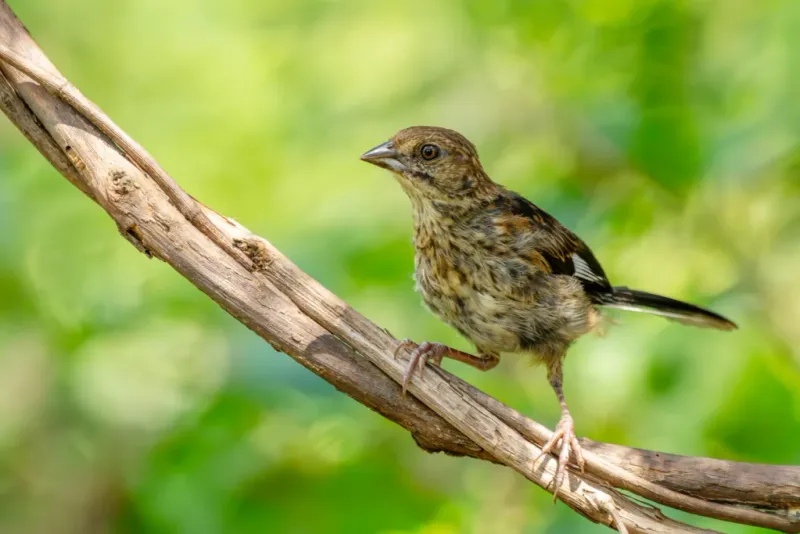
Finding a young bird on the ground in summer can feel alarming. Most homeowners assume something went wrong, but for Eastern Towhees, leaving the nest before full flight ability is completely normal.
Fledgling towhees leave the nest at around eight to nine days old. At that point, they cannot fly well, but they can hop, scramble through vegetation, and stay hidden in low cover.
Parent birds continue feeding them on the ground for another week or two after they leave the nest.
A fledgling sitting quietly in leaf litter or near a shrub base is almost certainly not in trouble. It is just doing what young towhees do: waiting for a parent to return with food while staying as still and hidden as possible.
Resist the urge to pick up or relocate a fledgling found in the yard. Moving it away from the area separates it from the parent birds actively searching for it in that specific spot.
Keep pets away from areas where you spot a fledgling. Cats pose the most serious risk to ground-level young birds during this vulnerable period.
Even brief exposure can cause injuries that prevent a young bird from recovering.
If a fledgling seems genuinely injured or has been brought inside by a pet, contact a licensed wildlife rehabilitator in your area.