What It Means As Freshwater Jellyfish Quietly Appear In Minnesota Lakes
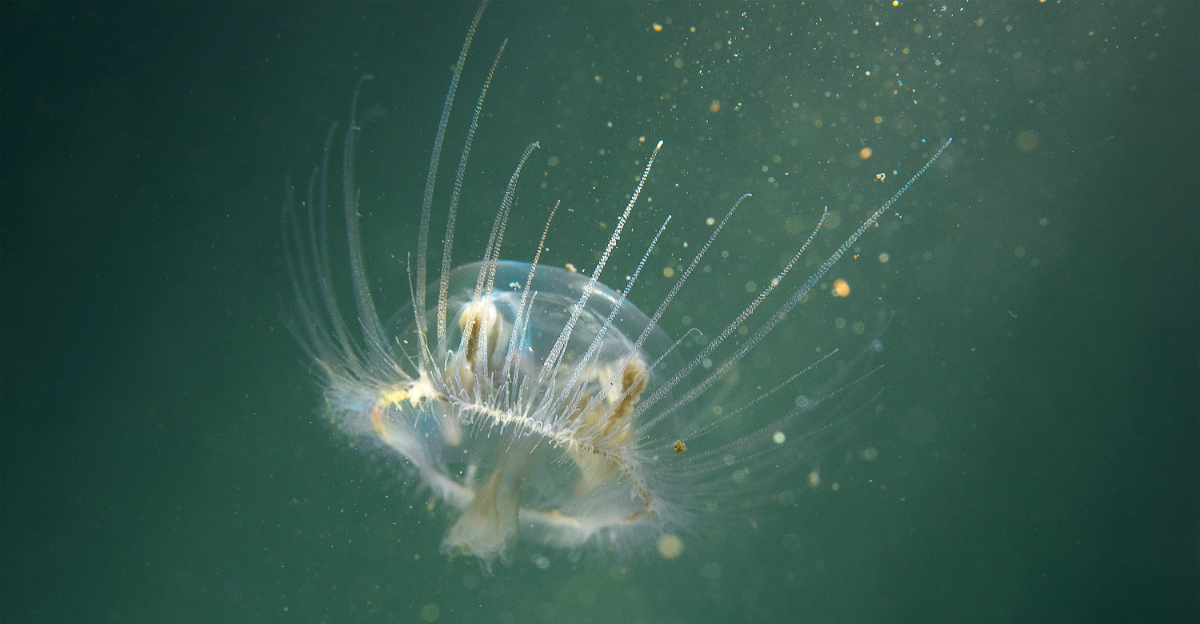
Your lake looks different this week, and you cannot explain why. Tiny clear discs drift just beneath the surface, moving with strange purpose. Minnesota anglers keep spotting them near docks and swim rafts.
Nobody warned you about creatures scarcely larger than a coin. Something unfamiliar is surfacing across the state, carrying a stranger story than expected. Scientists call this bloom rare, unpredictable, and strikingly beautiful.
Warm water triggers their sudden appearance, then just as fast, they retreat. Lakes across Minnesota rarely reveal this kind of secret so openly. Curious swimmers snap photos before the tiny discs dissolve into darkness again.
Local chatter spreads faster than the creatures themselves. Biologists say their presence signals something deeper about lake health.
Each sighting pulls you closer to a mystery hiding in plain sight. Patterns like this rarely repeat in quite the same way. You need to know what triggers this eerie, glowing return.
Meet Craspedacusta Sowerbii, The Lake’s Tiniest Surprise
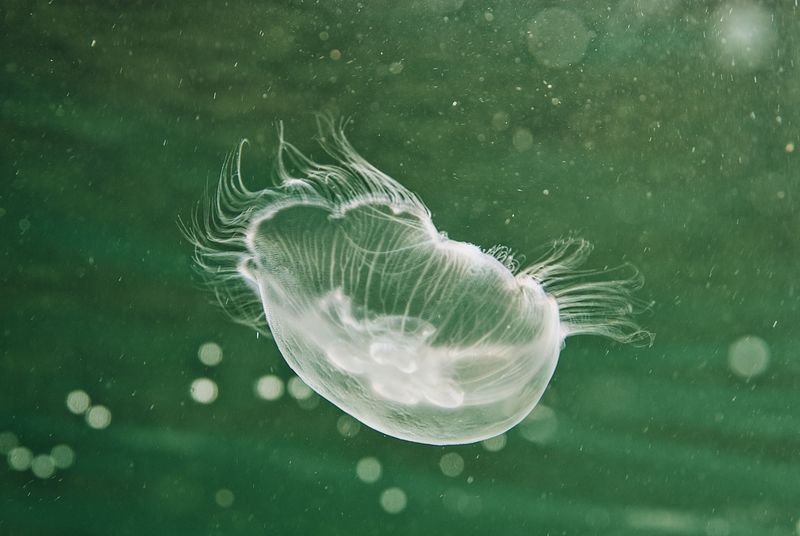
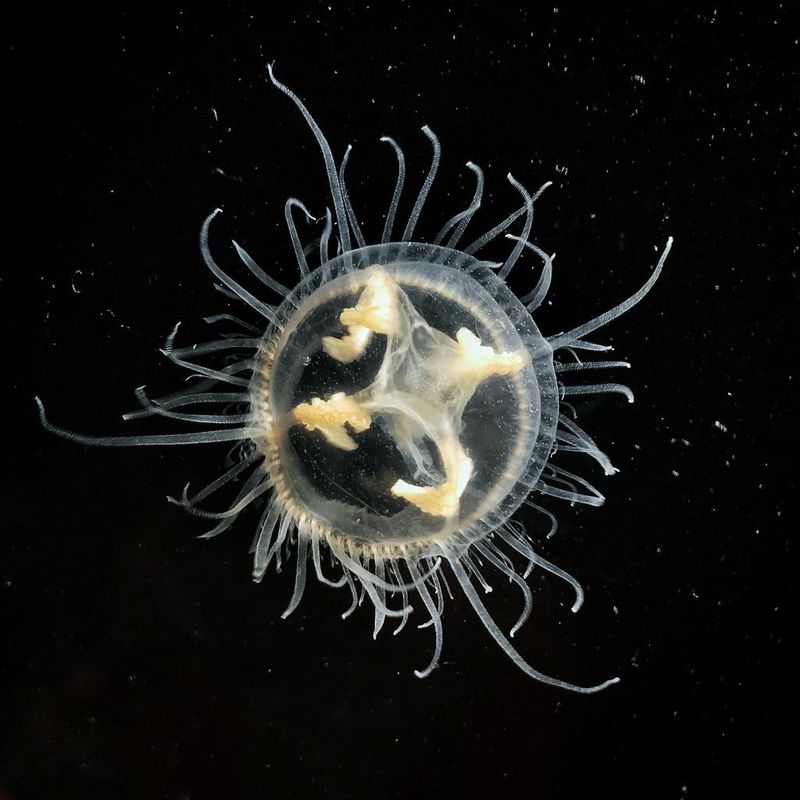
Picture a contact lens with a fringe of hair-thin tentacles, pulsing slowly through green water. That is Craspedacusta sowerbii, the freshwater jellyfish that keeps startling Minnesota swimmers.
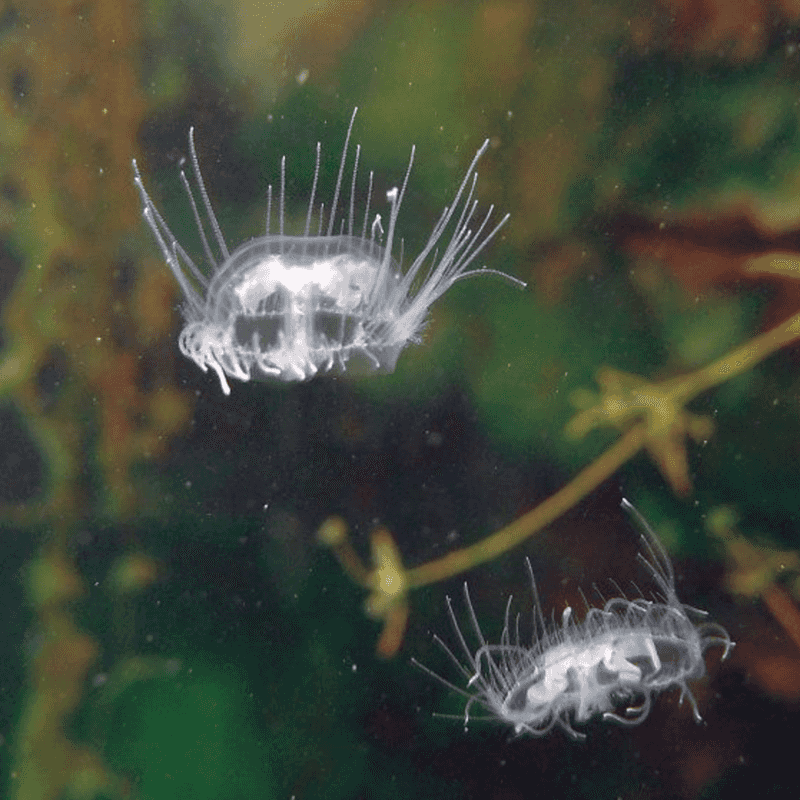
Adults measure roughly a half inch to an inch across. The bell is clear, sometimes tinted faintly white or greenish, with dozens of short tentacles ringing the edge like eyelashes.
Unlike ocean jellyfish, these have a flat, saucer shape rather than a deep dome. They swim by squeezing their bell, then drift downward before pulsing upward again, which gives them a bobbing motion that catches sunlight in a strange, hypnotic way.
Here is the odd part. Despite the name, they are not close relatives of the big jellies you meet at the beach.
They belong to a group called hydrozoans, which spend much of their lives as something entirely different.
The species was first described in 1880 after appearing in a water lily tank in London. Scientists were initially uncertain what they had found, since nobody expected a jellyfish in a heated greenhouse in England.
Genetic studies suggest their likely homeland lies in the Yangtze River basin in China, though the exact origin remains debated among researchers.
Minnesota has recorded scattered sightings since the 1990s, from metro lakes up toward central counties, though it’s unclear whether this reflects more jellyfish or simply more public reporting.
Researchers suspect they have been present far longer than the records show, simply overlooked because they are small, clear, and easy to mistake for floating debris.
Why Late Summer Is When They Show Up
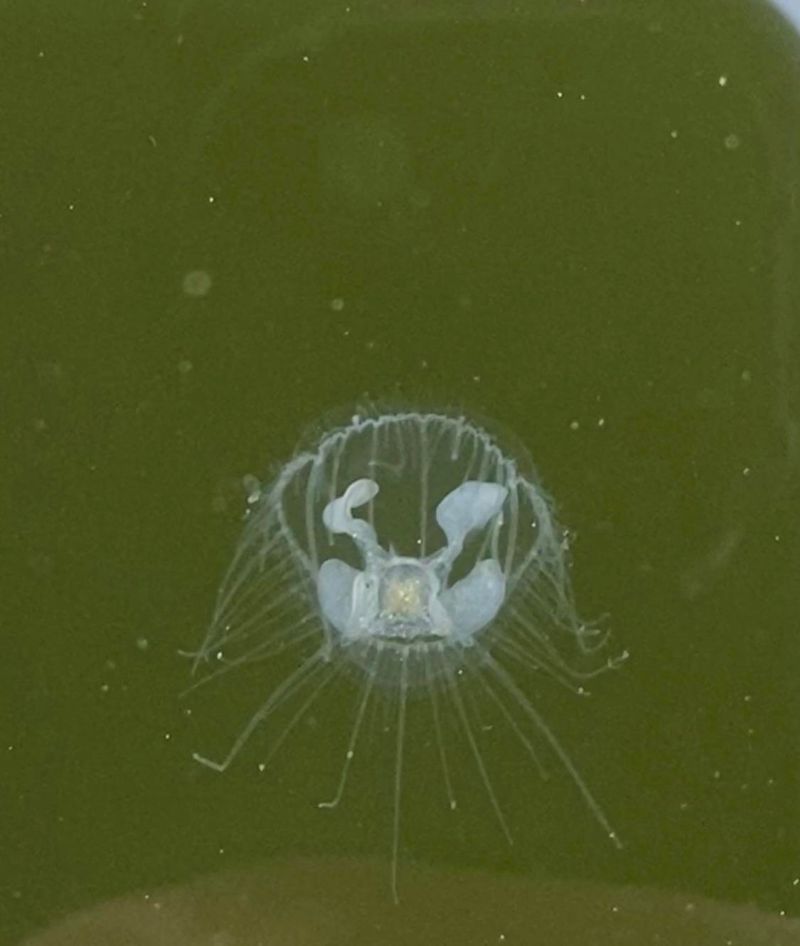
Timing is the strangest part of the whole story. You can swim in a lake for twenty summers and see nothing, then hit one warm week in August or September and the water appears dotted with small drifting discs.
Water temperature is the trigger. When lakes climb past roughly 77 degrees Fahrenheit and hold there for a stretch, conditions become favorable for the jellyfish stage to develop, according to general findings on the species.
Before that moment, the animals exist as polyps. These are microscopic, tube-shaped creatures barely two millimeters tall, clinging to submerged rocks, logs, and plant stems where no swimmer would ever notice them.
Your Minnesota Garden Changes Every Week. Your Plan Should Too.
Gardening in Minnesota changes quickly throughout the season. Every Friday you’ll receive a simple weekly plan showing exactly what to plant, prune, fertilize, harvest, and protect so you never miss the right timing.
Warm, calm, low-flow conditions let the polyps bud off little medusae, which is the scientific word for the swimming jellyfish stage. Within a few weeks those medusae grow large enough to spot from a dock.
September in Minnesota often delivers exactly the right combination. Surface water still holds August heat, wind is lighter, and the water column is clear after algae blooms settle.
Sightings usually cluster near shorelines and quiet bays rather than the middle of open water. Early afternoon on a bright, windless day gives the best viewing, since the jellies rise toward warmth and light.
Then, almost as quickly, they retreat. Cooling water sends the population back into the polyp stage, where it waits out the long Minnesota winter in a tough resting form called a podocyst.
Blank years are normal, which is why longtime lake residents are often caught off guard by their sudden appearance.
Can They Sting
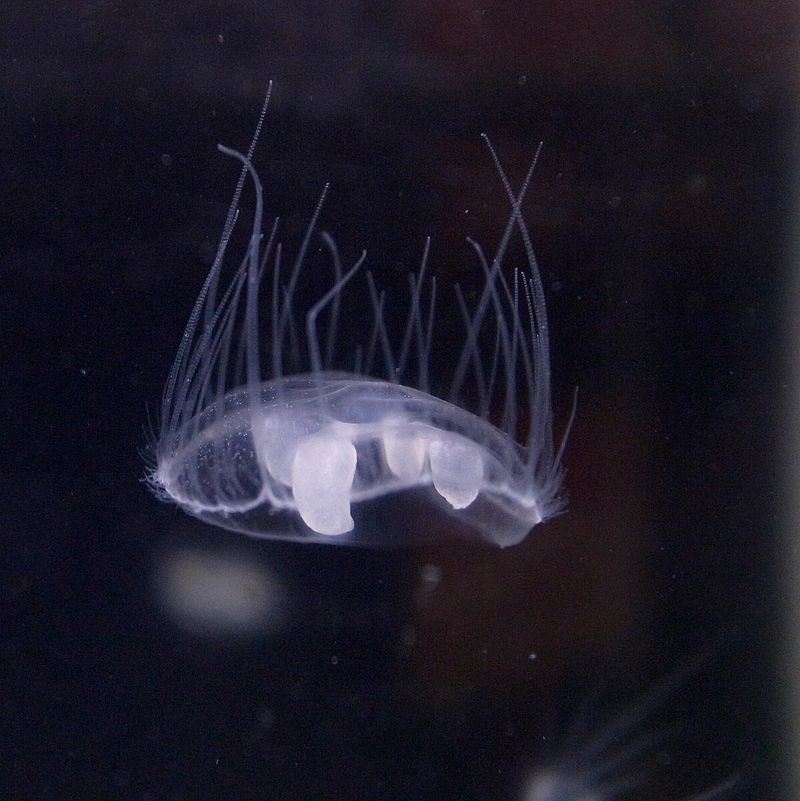
The first question at every dock is the same one, and it comes with a nervous laugh. Yes, these jellyfish carry stinging cells, and no, they are not a concern for people.
Their tentacles hold nematocysts, the same microscopic harpoon structures that ocean jellies use. Each cell fires a barbed thread loaded with paralyzing toxin when it brushes against prey.
The catch is scale. Those threads are built to subdue water fleas and copepods, creatures smaller than a grain of rice, so they lack the length and force to penetrate human skin.
Most swimmers who scoop one into a cupped palm report feeling nothing at all. A few describe a faint tickle, which is more likely the tentacles brushing the skin than any actual sting.
Sensitive folks might notice a slight itch, similar to touching a nettle leaf lightly. Rinsing with clean water and moving on handles it fine.
Pets that swim through a bloom are equally unbothered, since fur and thicker skin add another layer of protection.
Practical advice for a September swim: enjoy the show. Bring a clear glass jar, fill it with lake water, and let kids watch one pulse for a few minutes before pouring it gently back.
Avoid rubbing your eyes right after handling one, just as a sensible habit with any aquatic critter. Beyond that, the risk to swimmers ranks well below stubbed toes on dock ladders.
What Their Arrival Signals About Water Quality
Rumors travel fast on lake message boards. One neighbor insists jellyfish mean the water has gone bad, another swears they prove the lake is pristine.
Both takes miss the mark. Researchers have found these medusae in clear northern lakes, murky reservoirs, gravel pits, and slow river backwaters alike.
What they do prefer is stability. Calm water with limited current, decent clarity, and a reliable supply of zooplankton keeps the polyp colonies healthy enough to bud.
Their appearance leans more toward a temperature story than a pollution story. Stretches of warm surface water lasting several weeks are the strongest predictor, which is why sightings often follow hot summers.
That connection is worth paying attention to. As Minnesota summers trend warmer and lake surfaces hold heat longer into September, conditions that favor blooms are showing up in more places and more often.
Scientists treat the jellies as one small data point among many, alongside ice-out dates, water clarity readings, and shifts in fish spawning timing. No single species tells the whole story of a lake.
For lake association volunteers, a sighting is a good excuse to log observations. Note the date, water temperature, location, and rough abundance, then share it with a local lake monitoring program or the Minnesota DNR, if one is accepting reports in your area.
Those records fill real gaps. Because blooms are patchy and short-lived, community reports often supply better coverage than formal surveys ever could.
How These Drifters Reached Landlocked Minnesota
A creature native to Chinese river valleys somehow ended up in lakes across central Minnesota. The travel story explains a lot about how species move around the modern world.
Those microscopic polyps are the secret. Tough, sticky, and nearly invisible, they attach to almost any hard surface and tolerate conditions that would finish off the adult stage.
Resting podocysts survive drying, freezing, and long periods without food. A speck of mud in a boat trailer’s crevice can carry one for weeks.
Aquarium and water garden plants were the earliest highway. Shipments of ornamental water lilies and aquatic vegetation moved polyps between continents throughout the late 1800s and 1900s.
Once inside North America, they spread through boats, bait buckets, live wells, and waterfowl. Ducks and geese can transport polyps on their feet or feathers between nearby waters.
Stocked fish shipments likely helped too, since transport water rarely gets sterilized. Bit by bit, the species filled in across the Midwest.
Minnesota records now include lakes in the metro region, central counties, and scattered points north. Given how easy they are to overlook, the actual range may extend beyond current records. The practical lesson matches advice you have heard for zebra mussels.
Drain live wells and bilges, rinse gear, let equipment dry before switching lakes, and dump bait on land rather than in the water. Habits built for one hitchhiker happen to block dozens of others at the same time.
Their Place In The Food Web, And What Anglers Should Expect
Anglers tend to ask a blunter question than swimmers do. Will these things mess with the fishing?
Evidence so far says the effect is modest. Medusae feed on zooplankton, mainly water fleas, rotifers, and copepods, which are the same snacks young panfish and minnows depend on.
In heavy blooms, that overlap could nudge competition upward in a small bay. Researchers have observed local dips in zooplankton numbers where jellies gather thickly.
Because blooms are brief and patchy, though, lake-wide fish populations rarely show measurable change. Walleye and bass anglers on Minnesota lakes with long histories of sightings have not reported meaningful shifts.
Predation runs the other direction too. Bluegills, crappies, and even some larger invertebrates pick medusae out of the water column, so the jellies feed the system as well as feed from it.
Worth remembering: an adult jelly is made up almost entirely of water, which makes it a low-calorie mouthful.
For anyone fishing during a bloom, the practical effect is mainly visual. Clouds of pulsing discs can make bobber watching slightly distracting, and tentacles occasionally cling to line or nets. Neither one hurts your tackle. A quick rinse handles it.
If anything, a bloom is a decent conversation starter and a reminder of how much activity happens in the few feet of water beneath the boat. Bring a phone, take a photo, and report the sighting before the water cools and the show wraps up for the year.