What It Means For Homeowners As Paper Wasp Nests Swell Across New Jersey
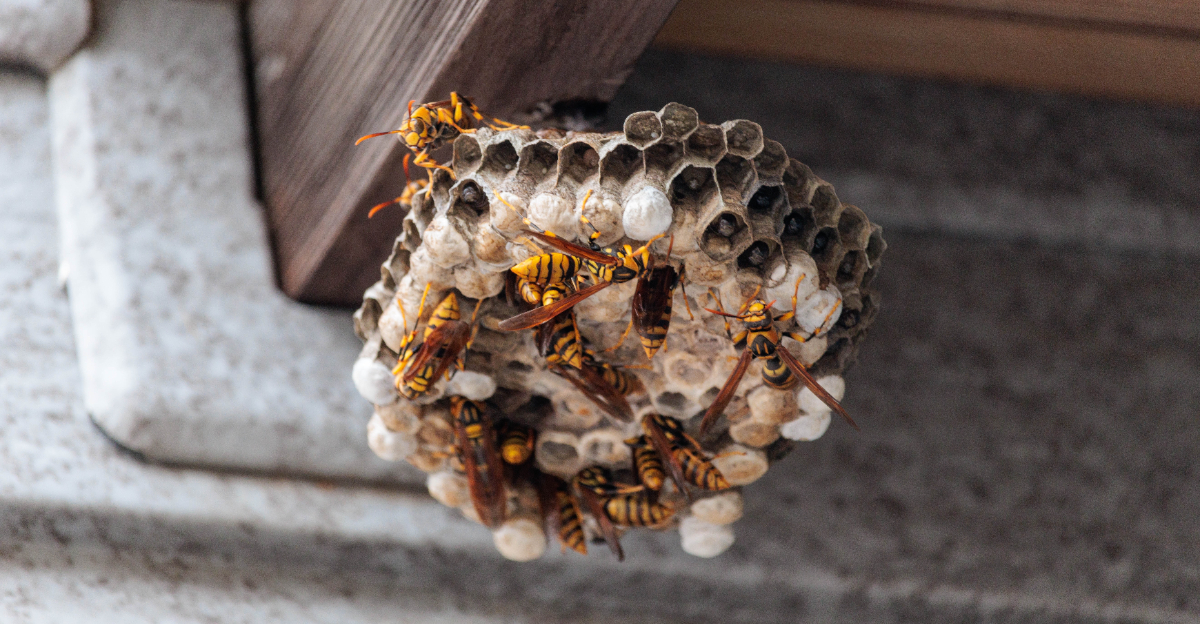
You hear it before you see it, a faint rustle above your porch light. Something above you has been growing since spring, cell by cell. Compact at first, that shape has grown fast since June.
Now it rivals the size of your palm, crowded with residents. New Jersey homeowners are spotting this exact scene right now. Cape May and Sussex County share the same story.
Grill lids near you stay shut longer than they did before. Mailboxes draw a closer look before you reach for them. Shed doorways suddenly feel busier than they did in July.
A little know-how spares you a painful afternoon later. Timing decides whether you handle this calmly or wrong. Yards across New Jersey are facing this same buildup.
Waiting too long turns your manageable job into a hassle. Acting too fast can turn your small problem into a muddle. Here’s what you must do next.
Late-Summer Colonies Hit Their Biggest Size
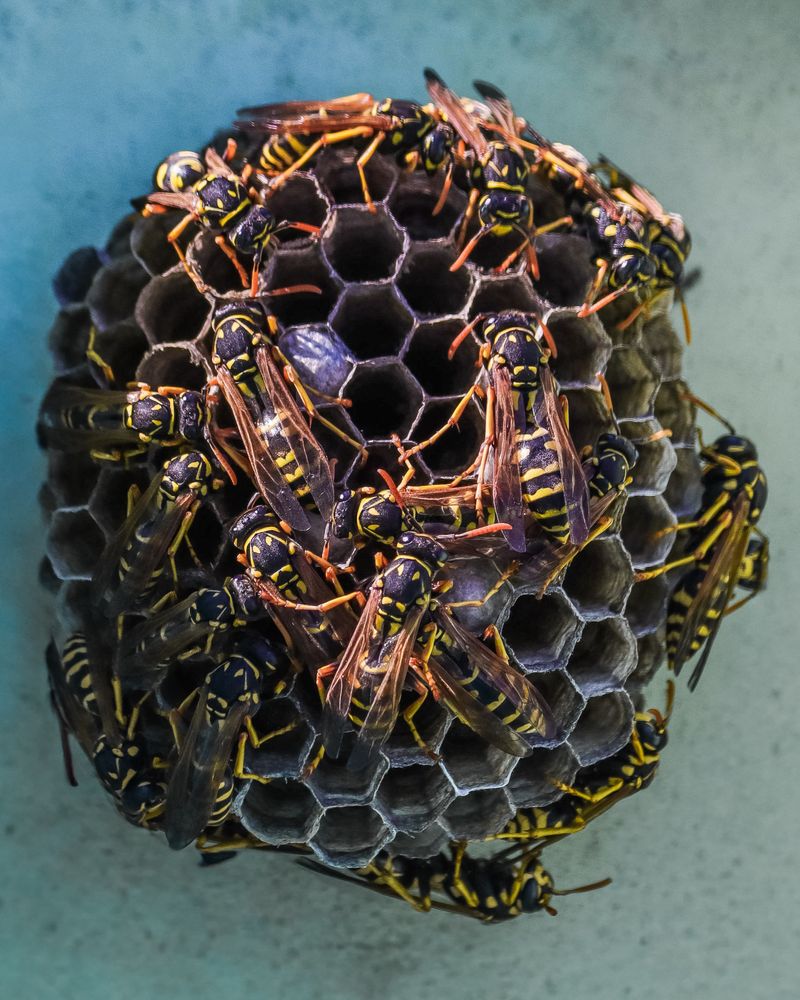
In counties like Bergen, homeowners often find a papery gray dome the size of a saucer on their garage ceiling this time of year. Back in April, that same nest was a tiny cluster of cells built by one lone queen.
By early September, the colony has had five months to grow, and the workforce can reach dozens of adults. More workers mean more traffic in and out, which is why homeowners suddenly notice insects they walked past for weeks.
The nest itself looks like a small upside-down umbrella with open, honeycomb cells facing the ground. You can often see pale larvae tucked inside, plus a few adults standing guard on the surface.
Growth slows once cool nights arrive, and new queens leave to find winter shelter in wall voids or leaf litter. The old nest is not reused the following year, so the paper shell you see in October is basically a leftover.
For homeowners, the practical takeaway is timing. September is peak visibility, so a quick walk around the eaves, mailbox, and grill lid gives you a clear picture before autumn chores begin.
Nests near a doorway deserve attention first, since bumped siding sends a jolt through the whole colony. A nest tucked behind a shed, far from foot traffic, can often stay put until frost.
Jot down what you find using your phone. A photo makes it much easier to compare notes with a pest professional later.
Favorite Hiding Spots Around The House
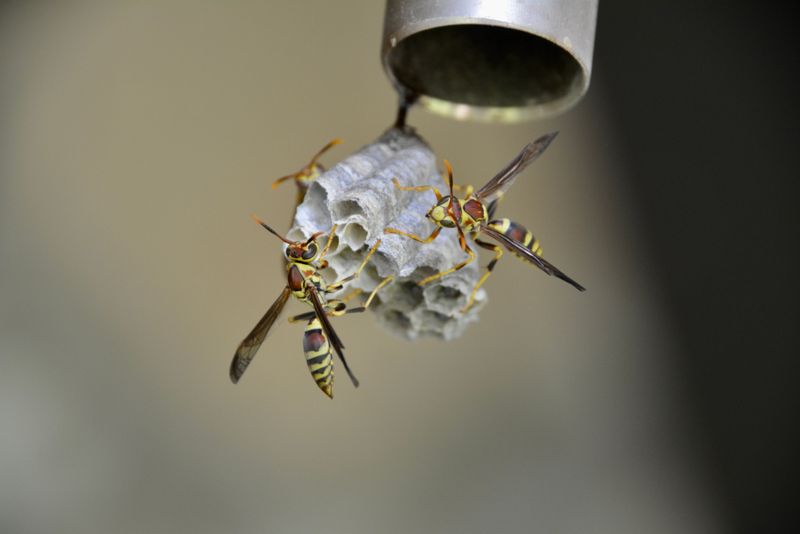
Porch ceilings, grill lids, and the underside of patio furniture make the short list of favorite spots. Anything with a flat overhang and shelter from rain works as a building site.
Around New Jersey homes, the classics include soffits, gutter corners, and the inside of a mailbox flap. Playground equipment, basketball hoop poles, and the hollow rails of a deck also show up often.
Shrubs get used too, especially dense boxwood and holly planted near a foundation. Hedge trimming in September can turn a routine chore into a surprise, so tap the branches with a rake handle first.
Your New Jersey Garden Changes Every Week. Your Plan Should Too.
Gardening in New Jersey changes quickly throughout the season. Every Friday you’ll receive a simple weekly plan showing exactly what to plant, prune, fertilize, harvest, and protect so you never miss the right timing.
Sheds and detached garages are prime real estate because their doors stay closed for weeks at a stretch. Check the ceiling and the top of the door frame before you reach for a ladder.
Look with a flashlight from a distance rather than sticking your face near the eave. Sunlight behind the nest makes the comb glow slightly, which helps you spot it from ten feet away.
Insects flying a steady route to one point on the house is a strong clue. Follow that flight path with your eyes, not your feet.
Homeowners with kids or pets should focus on spots at head height or lower. A nest under a stair rail, a swing set beam, or a low window shutter carries more risk than one twenty feet up.
Turning your findings into a seasonal checklist pays off. Spring inspections of those same locations catch tiny starter nests, which are far simpler to handle than a September colony.
September Behavior And Why Stings Feel More Common
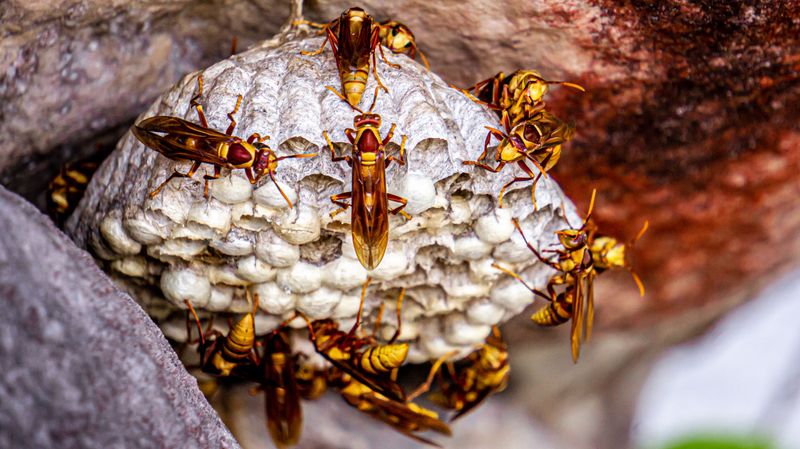
Here is the key point: the insects have not become more aggressive, the frequency of encounters has simply increased. More adults per nest plus more people outdoors equals more close encounters.
Food is tighter in late summer, so foragers investigate soda cans, fallen pears, and the grill you forgot to scrub. Labor Day cookouts and backyard football games put humans right in that flight zone.
Defense of the nest is typically the trigger, not food-seeking behavior. Vibration from a slammed door, a leaf blower, or a ladder against the gutter reads as a threat to the nest.
Unlike honey bees, these wasps can sting more than once and do not lose the stinger. That is why swatting turns one warning into several.
If you disturb a nest, walk away calmly in a straight line and get indoors. Running in circles or waving your arms keeps you inside the alarm zone longer.
For a normal sting, cool water, ice for ten minutes, and an antihistamine handle the swelling. Watch for hives, wheezing, dizziness, or throat tightness, and call 911 if any of those show up.
Anyone with a known allergy should carry an epinephrine auto-injector during yard work through October. Tell a family member where it is stored.
Wearing shoes on the lawn, checking chair cushions, and keeping drinks covered cut your odds considerably. Small habits make a big difference during these last warm weeks.
Neighbors often ask whether a colony gets touchier as autumn arrives. Activity does taper with the first cold snaps, though a nest by the front door still deserves respect in the meantime.
Cool Mornings And Cautious Choices
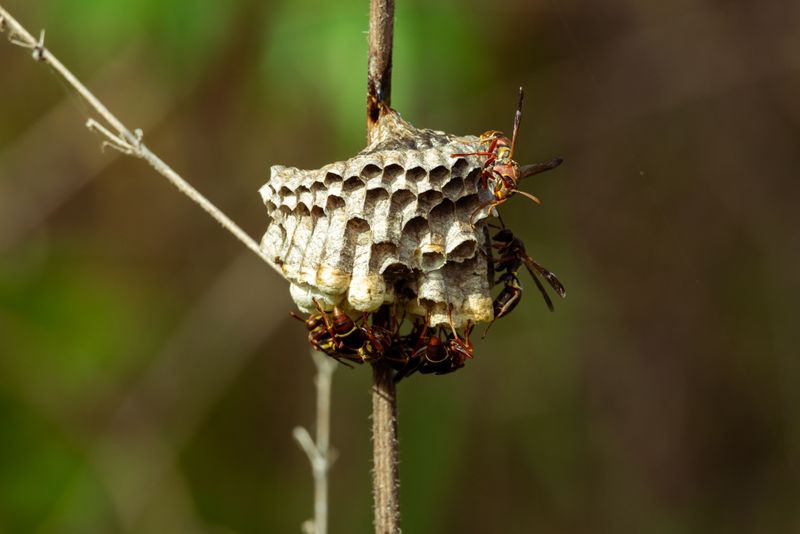
Dawn on a cool morning is a homeowner’s friend. Cool air slows flight, and nearly the whole colony is home and sluggish.
Midday attempts go poorly because foragers are out and returning insects react to a disturbed nest.
Evening also works, though poor light combined with ladder use increases fall risk. Read the label, wear long sleeves, and plan an exit route before you press the nozzle.
Skip the ladder entirely if the nest sits above shoulder height. Ladder falls are a real risk, so avoid climbing to reach a nest whenever possible.
Nests inside wall voids, attic vents, or chimney chases belong to a licensed professional. So do nests near a bedroom window, a heavily used door, or anywhere a family member reacts badly to stings.
Wait a full day after treatment before knocking down the paper comb. Returning foragers hover for hours, and pulling the nest early gives them a reason to linger.
New Jersey pest companies tend to book up quickly in September, so calling early improves your chances of a prompt appointment. Booking early is smarter than tackling a nest above a stairwell yourself.
Hosing a nest with water is usually ineffective and can soak your siding unnecessarily. Burning a nest is not recommended, as it risks igniting nearby wooden eaves.
Once things quiet down, scrub the spot with soapy water. Old nest material and scent markings can invite next spring’s queen to build in the same corner.
Simple Fixes That Make Your Home Less Inviting
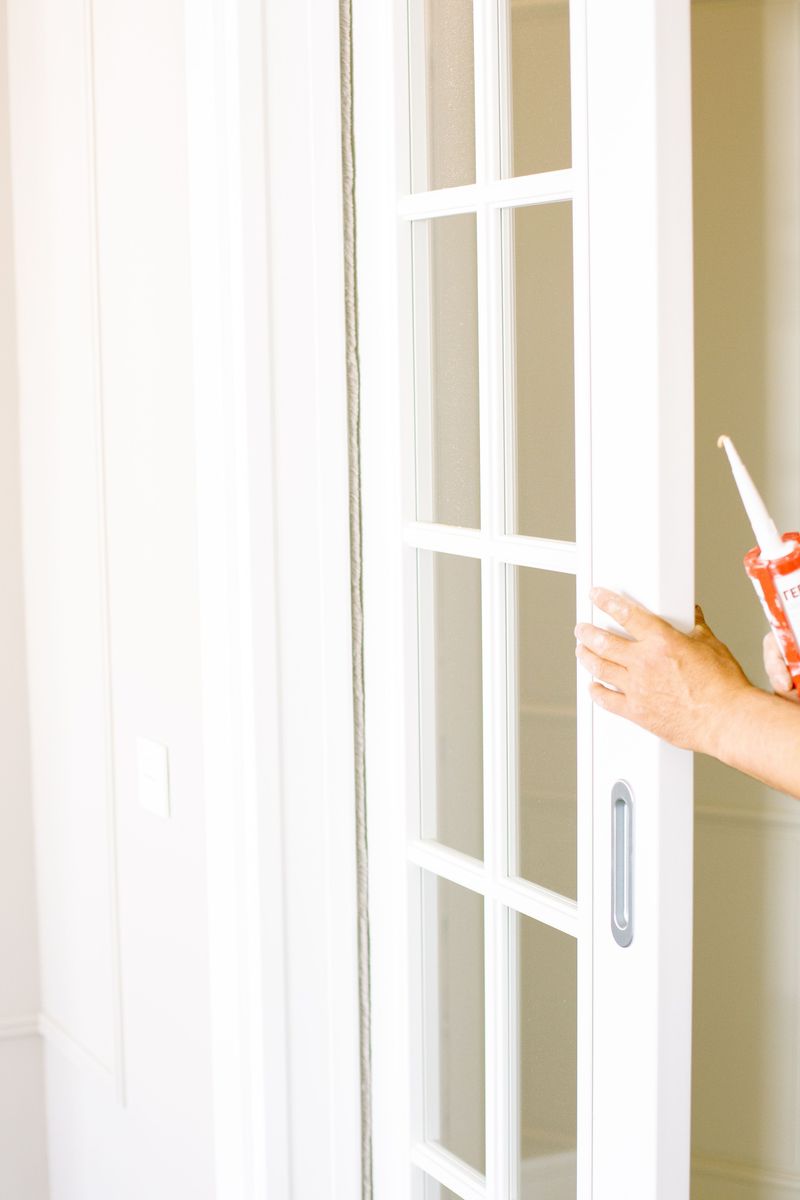
Prevention costs little compared to the price of professional removal in September, and it can be done in a single afternoon. Caulk, screen, and a latching garbage can lid do a lot of the work.
Start with openings: gaps around soffits, torn attic vents, loose siding, and unscreened gable vents. Fine mesh hardware cloth over vents blocks entry while letting air move.
Trash and recycling bins pull in foragers looking for sugar. Rinse cans, keep lids latched, and store bins away from the back door.
Fallen fruit under apple, pear, and fig trees turns into a buffet by mid-September. A five minute pickup twice a week keeps traffic down.
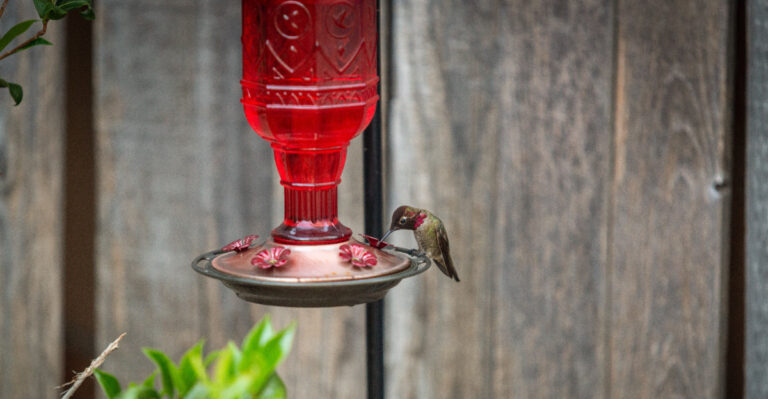
Hummingbird feeders and open compost piles work the same way. Move feeders away from seating areas, and bury kitchen scraps under dry leaves.
Hang a few decoy nests if you like, though results vary by yard. Some homeowners have tried peppermint oil sprayed on clean eaves in spring, though results are inconsistent and not well documented.
Doorway hardware matters more than people expect. Hollow railings, unused light fixtures, and rolled-up patio umbrellas all offer dry, shaded cavities.
Store umbrellas closed and upright indoors, plug railing openings with steel wool or caulk, and cap unused fixture boxes. Each small change removes one option from the list.
Walk the perimeter in April and again in June with a flashlight. A golf ball sized nest comes down with one quick spray and no drama.
Neighbors who share a fence line get better results by comparing notes. Two tidy yards work better than one.
Backyard Predators Worth A Second Look
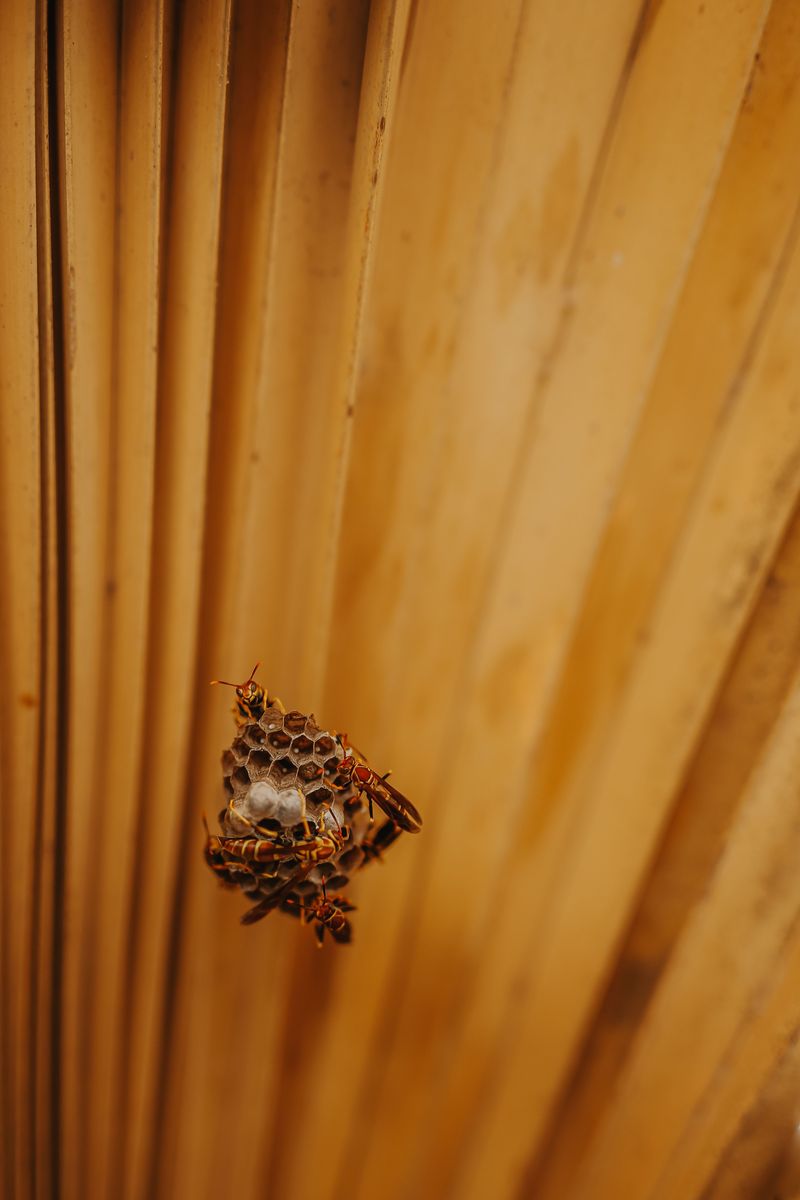
Before you reach for the spray, consider what these insects do for a vegetable garden. Adults hunt caterpillars, hornworms, and cabbage loopers to feed their young.
A single colony can carry off hundreds of soft-bodied garden pests over a summer. Some gardeners credit them with helping protect a tomato patch from pests.
They also visit goldenrod, aster, and mountain mint in September, moving pollen while sipping nectar. Pollination is a side job, but it counts.
Unlike yellowjackets, they build open combs and rarely swarm a picnic table for meat. Their temper stays mild until the nest itself gets touched.
That distinction changes decisions. A nest under a shed roof at the far corner of the yard can be left alone, while one over the kitchen door cannot.
Fun fact: their nest paper is chewed wood fiber mixed with saliva, and the recipe fascinated early naturalists curious about papermaking.
Colonies wind down with the first hard frost, and the paper shell weathers apart over winter. New queens shelter in sheltered cracks and start fresh combs in spring.
So the choice is not really removal versus tolerance across the whole property. It is nest by nest, based on location, foot traffic, and who in the house reacts badly to stings.
Keep a mental map of the ones you allow to stay. Point them out to kids as something to watch from a safe distance rather than something to fear.
That balance, a little space here and a firm boundary there, is how New Jersey homeowners get through September with fewer surprises.