Why Skunks Love New Jersey Yards And How To Keep Them Away
If you have ever stepped outside on a quiet New Jersey evening and caught that unmistakable smell, you already know skunks are not shy neighbors.
They wander through backyards in towns across the Garden State, from suburban Bergen County to rural Warren County, and they are surprisingly comfortable making themselves at home. The good news is that they are not random visitors.
They show up for specific reasons, and once you understand those reasons, you can actually do something about it. I spent a good chunk of last summer figuring out exactly what was drawing skunks to my yard and what finally got them to move on. What I found surprised me.
Most of the fixes were simple, low-cost, and something any homeowner could handle over a weekend.
Skunks usually aren’t aggressive. But they can still make a mess.
Think torn-up lawns. Scared pets.
And that awful spray smell that just won’t leave. Here’s how you can make your New Jersey yard less skunk-friendly.
Start with the easy fixes, then tackle the things most people forget.
1. They Love To Feast On Every Food Source You Leave Out
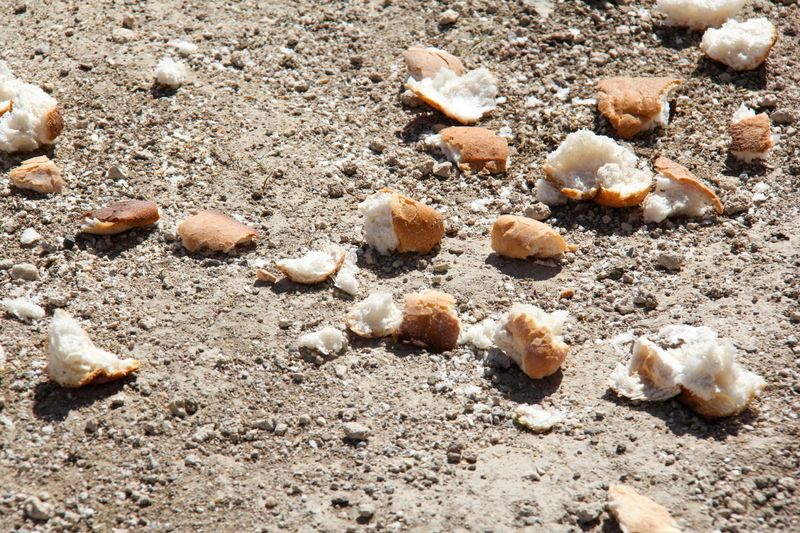
Skunks are opportunists, plain and simple.
If your yard is offering free meals, they will keep showing up like clockwork. I learned this the hard way when I noticed them returning every single night to the same corner of my yard near an old apple tree.
So what exactly keeps drawing them back? They love fallen fruit more than almost anything else.
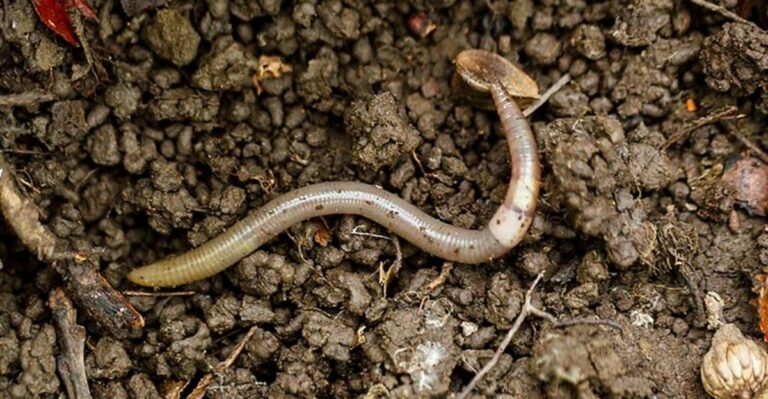
Rotting apples, pears, and berries sitting on the ground are one of the top reasons skunks become regulars in a yard. Grubs and earthworms run a close second, which is why you will often notice small holes dug across your lawn after a good rain.
Spilled birdseed is another big one.
Millet, sunflower seeds, and cracked corn pile up fast under feeders and attract skunks just as reliably as they attract birds.
They love unsecured trash and compost too. Open bins are an open invitation, and skunks will check the same spot every single night without fail.
Even pet food left outside can do it. An empty bowl with a little residue is enough to bring them sniffing around, so get in the habit of bringing dishes inside before dark.
Outdoor lights are a sneaky culprit as well since they draw in moths and beetles, and skunks follow those insects right onto your porch.
Grill drippings and meat scraps round out the list because high protein smells travel surprisingly far and can pull skunks in from well beyond your yard.
The truth is skunks will eat just about anything within sniffing distance.
If it smells like food and it is easy to reach, a skunk will find it.
One of the simplest changes you can make is swapping an open compost pile for a sealed bin.
It is one of those small swaps that stops feeding them before you even realize you were doing it.
Your New Jersey Garden Changes Every Week. Your Plan Should Too.
Gardening in New Jersey changes quickly throughout the season. Every Friday you’ll receive a simple weekly plan showing exactly what to plant, prune, fertilize, harvest, and protect so you never miss the right timing.
2. They Like To Sniff Out Pet Food Left Outside And They Find It Fast

Leaving pet food outside overnight is one of the fastest ways to get a skunk problem started.
These creatures have an excellent sense of smell, and a bowl of kibble sitting on a back porch might as well be a neon sign. Skunks are natural foragers that spend their nights methodically patrolling the same routes, sniffing out anything edible along the way.
Once one discovers a reliable food source, it will return to that exact spot night after night like clockwork. I used to leave my dog’s bowl outside after evening feedings, and within a week, I had a regular skunk visitor showing up around 9 p.m.
The fix sounds obvious once you hear it: bring the food inside.
But a lot of people do not realize that even an empty bowl with food residue can still attract skunks. They are persistent investigators that will nose around a porch, dig along a fence line, and check every corner of a yard before moving on.
Rinsing pet bowls before leaving them outside, or just storing them indoors, removes that scent trail entirely.
Cat owners in New Jersey who feed outdoor or feral cats face an extra challenge.
Feeding stations left out overnight become prime targets, especially in wooded suburban areas where skunks are already active and on the move. Switching to daytime-only feeding schedules for outdoor cats helps a lot, since skunks are mostly nocturnal and do the bulk of their foraging between dusk and midnight.
Water bowls can also draw skunks in dry stretches of summer.
Fresh water is a resource, and skunks will drink, cool down, and linger anywhere they find it.
Bringing in water dishes at night is a small habit that adds up over time. When it comes to wildlife, the best welcome mat is no welcome mat at all.
3. They Love Hiding Under Decks And Sheds
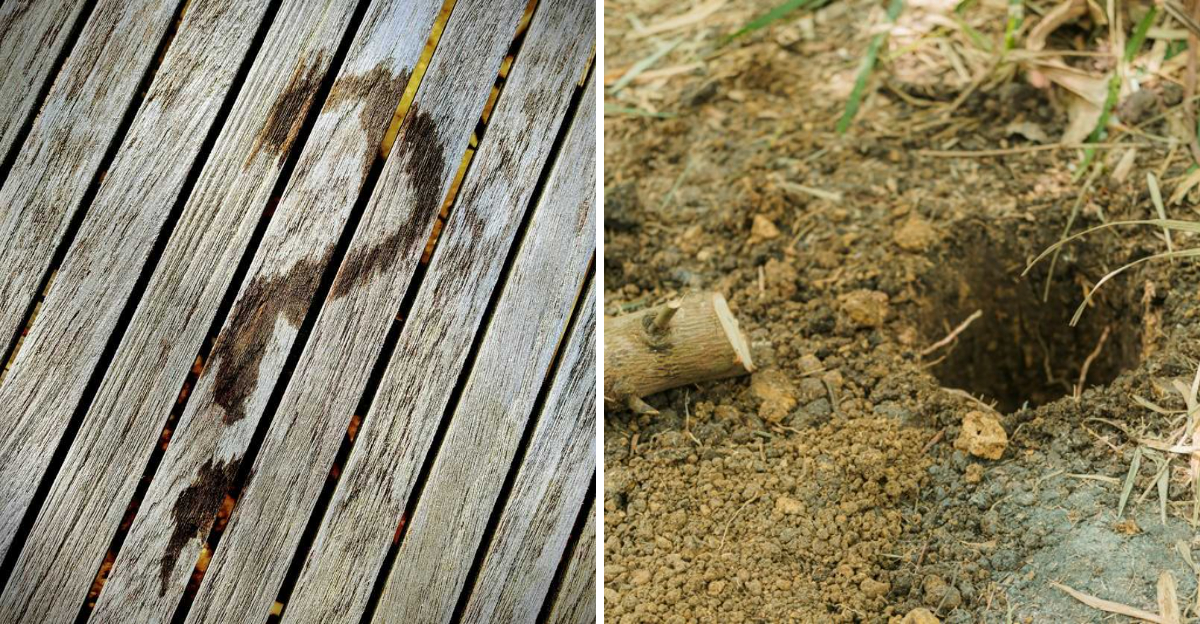
Skunks do not just visit New Jersey yards for food. They also look for safe, dark, sheltered places to rest and raise young.
The space under a deck or shed is basically a five-star skunk hotel.
I found this out when it set up a den under my back deck one spring and stayed for nearly three weeks.
The most effective fix is exclusion, which means physically blocking off the openings.
Hardware cloth, also called welded wire mesh, works better than chicken wire because the gaps are smaller and the material is harder to push through.
Burying it a few inches into the ground along the perimeter of your deck or shed prevents them from digging under it.
Before you seal anything up, make sure no skunks are already inside.
One way to check is to loosely stuff the opening with newspaper for a few days.
If it gets pushed out, something is living in there, and you need to deal with that before closing it off permanently.
In New Jersey, this kind of exclusion work is best done in late summer or early fall, after young skunks from spring litters have left the den.
Doing it at the wrong time of year can trap animals inside, which creates a much bigger problem than the one you started with.
4. Keep Skunks Away From Digging Up Your Lawn At Night
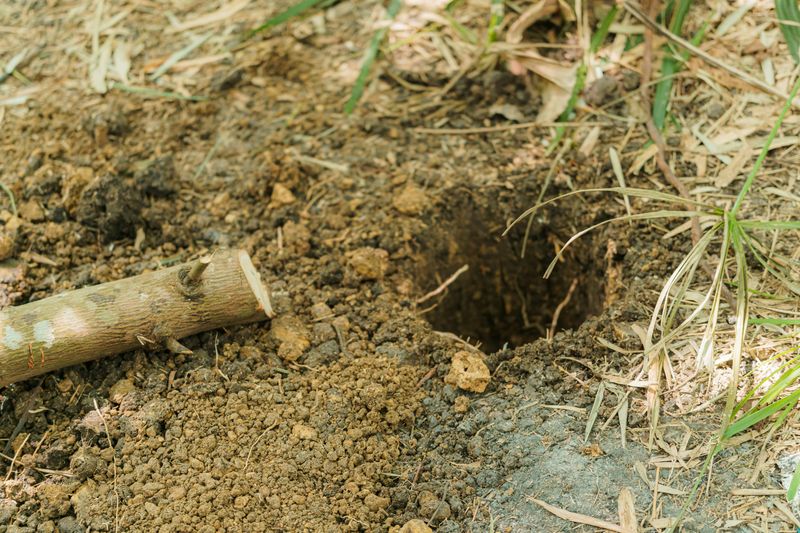
Waking up to find your lawn looking like a golf course gone wrong is a frustrating way to start the morning.
Those small, cone-shaped holes scattered across the grass are classic skunk digging signs.
They dig to find grubs, which are the larvae of beetles that live just beneath the soil surface.
New Jersey lawns, especially those with Japanese beetle grub populations, are particularly vulnerable in late summer.
The grubs move close to the surface during warm nights, and skunks follow the scent trail right through your grass.
Treating your lawn for grubs is one of the most direct ways to reduce skunk digging, because it removes the food source rather than just chasing it away.
Beneficial nematodes are a natural grub treatment that works well in New Jersey’s climate.
They are microscopic organisms that you apply with water, and they work through the soil to reduce grub populations over time.
This is not an overnight fix, but it is safer for pets and kids than chemical treatments.
You can also try netting or turf protection fabric over problem areas while grub treatments take effect.
They find it harder to dig through physical barriers.
Combining a grub treatment with a short-term physical barrier gives your lawn a real chance to recover.
5. Use The Backyard Smells Skunks Avoid

Skunks rely heavily on their sense of smell, which actually works in your favor once you know how to use it against them. Certain smells genuinely irritate them and will make them think twice about hanging around.
Better yet, this is one of the easiest and most affordable strategies to try before moving on to bigger solutions.
Fresh citrus peels scattered along garden borders and near entry points are a great place to start.
Skunks cannot stand the smell, so tossing orange and lemon peels every few days costs almost nothing and keeps them on edge. Just make sure the peels stay fresh because once they dry out completely they lose their scent and become completely useless.
Peppermint oil is another winner. Soak a handful of cotton balls, tuck them near den openings and fence gaps, and let the smell do the heavy lifting.
Replace them every three to four days and always after rain since moisture kills the scent faster than anything else.
For a little extra firepower, pick up a bottle of fox or coyote urine from your local garden center and spray it along fence lines and entry points once a week. It sounds ridiculous but it works because skunks trust their nose above everything else.
The smell of a predator nearby is enough to send them looking for easier territory. Just know that predator urine breaks down quickly outdoors so skipping reapplication after rain means starting from scratch.
The real secret here is consistency rather than perfection. Layer all three together if skunks have already made your yard a regular stop and stay on top of reapplication.
A few citrus peels here, some peppermint cotton balls there, and a weekly spritz along the fence line can quietly shift your yard from a nightly skunk destination to somewhere simply not worth the bother.
6. Secure Trash Cans, It Matters More Than You Think

Trash cans are one of the most overlooked entry points for problems in New Jersey neighborhoods.
A standard trash can lid that just rests on top is no real obstacle for a skunk motivated by the smell of last night’s leftovers.
Skunks are not as agile as raccoons, but they can tip lighter cans over and root through the contents without much effort.
Switching to cans with locking lids is a straightforward upgrade that makes a noticeable difference.
Several brands make heavy-duty outdoor cans with latching mechanisms that are genuinely difficult for wildlife to open.
The upfront cost is worth it compared to cleaning up scattered garbage every few weeks.
Placement matters too.
Storing trash cans in a garage or shed until the morning of pickup eliminates the overnight exposure window entirely.
If that is not possible, keeping them as far from the house foundation as practical reduces the chance that they will linger near entry points after they are done investigating.
Rinsing cans and bags before putting them out also helps.
Food residue on the outside of bags is enough to attract skunks from a distance.
In warmer New Jersey summers especially, smells travel farther at night, so clean cans really do make a measurable difference in skunk activity around your property.
7. Use Motion Lights And Sprinklers To Deter Skunks Away
Skunks are nocturnal, which means they count on darkness to feel safe while they forage.
Disrupting that sense of security with sudden light or water is a surprisingly effective way to make your yard feel unwelcoming.
I set up a motion-activated floodlight near my garden last August, and their activity in that area dropped noticeably within a few nights.
Motion sensor lights are affordable, easy to install, and use very little energy when set up with LED bulbs.
Positioning them near known entry points, like fence gaps, under-deck openings, or garden borders, maximizes their impact.
Skunks that get startled by sudden bright light will often retreat rather than spray, though a cornered or closely approached skunk can still spray. Give them a clear exit path before they feel threatened.
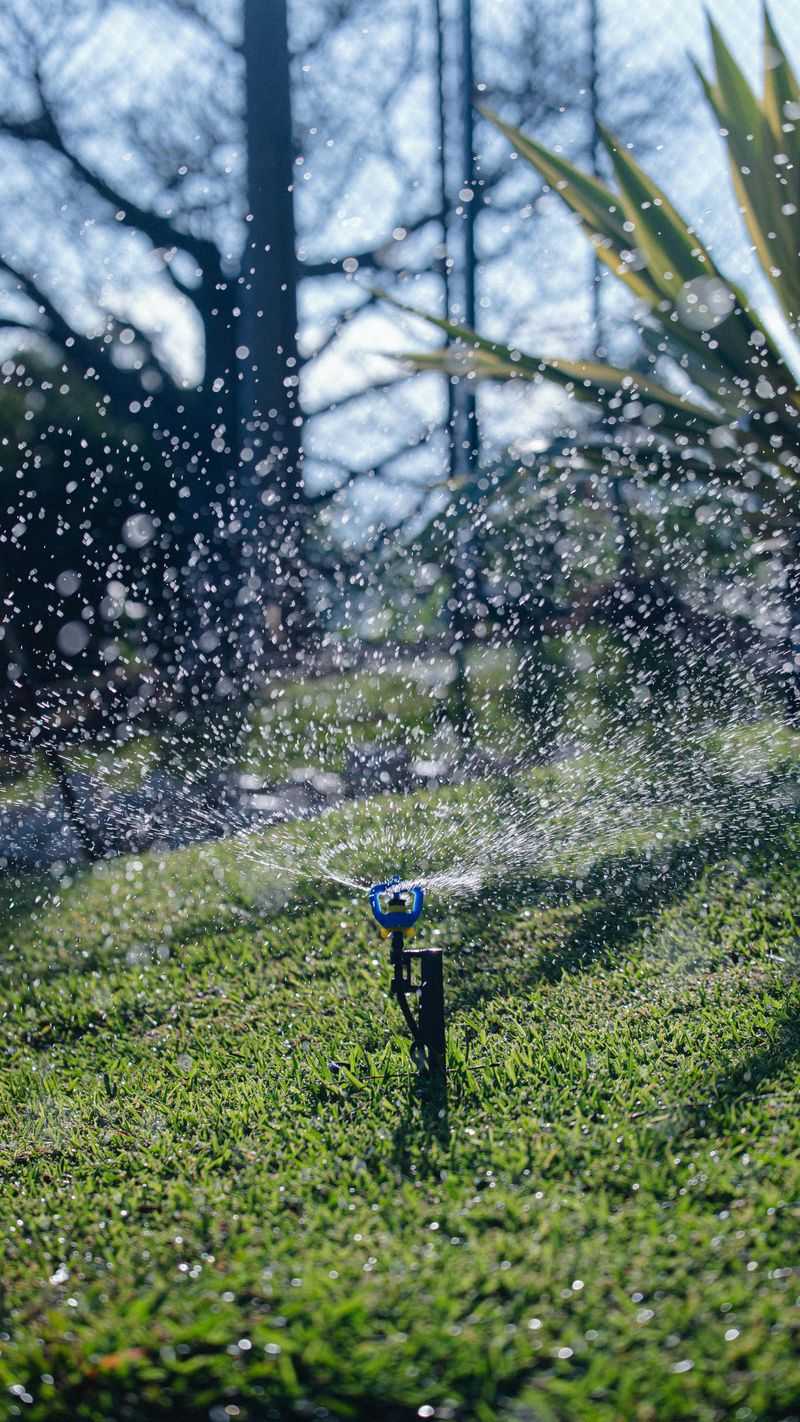
Motion-activated sprinklers add a second layer of deterrence.
Brands like Orbit make models specifically designed for wildlife deterrence that connect to a standard garden hose.
A short burst of water at two in the morning is highly effective at convincing these little creatures to find a calmer yard to explore.
The combination of light and water together creates a yard that feels unpredictable to skunks.
Animals prefer stable, quiet environments for foraging.
Making your New Jersey yard feel random and reactive is one of the most humane and practical long-term deterrent strategies available to homeowners.
8. Do This With Easy Yard Cleanup Habits To Discourage Them
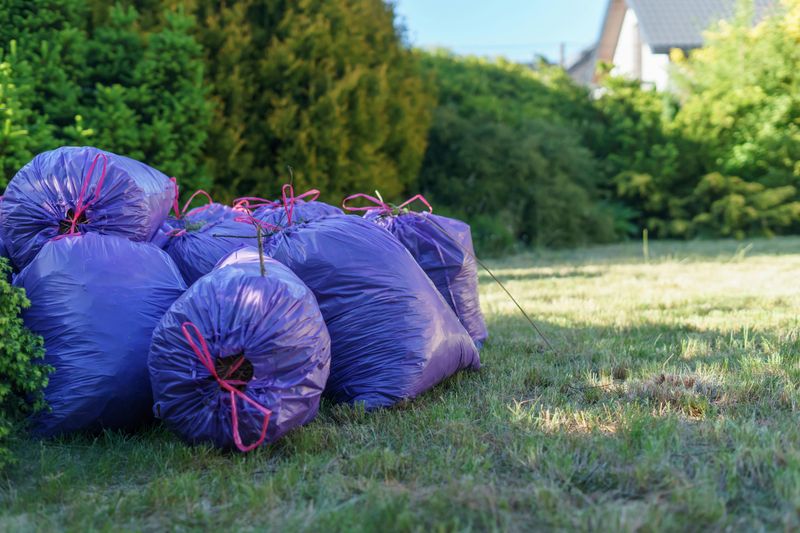
A cluttered yard is a skunk’s dream.
Piles of leaves, stacked wood, overgrown shrubs, and scattered debris all create exactly the kind of cover skunks look for when they are scouting a new area.
Keeping things tidy is genuinely one of the most effective passive deterrents, and it costs nothing but a little weekend time.
Woodpiles stored directly on the ground are especially attractive to them because they offer shelter and often harbor insects and grubs underneath.
Raising woodpiles off the ground on a rack and storing them away from the house reduces both the shelter appeal and the food source in one move.
This is a common recommendation from wildlife control professionals working throughout New Jersey.
Overgrown shrubs and dense ground cover along fence lines give them a shaded travel corridor through your yard.
Trimming back low-hanging branches and keeping ground cover thinned out removes that sense of cover and makes skunks feel more exposed.
Animals that feel exposed tend to move on quickly.
Raking leaves regularly in fall, rather than letting them pile up through the season, eliminates a favorite skunk resting spot.
Leaf piles stay moist and warm underneath, which also attracts the insects they feed on.
A consistent cleanup routine through October and November can significantly cut down on activity heading into winter in New Jersey.
9. Keep Pets Safe From Late-Night Encounters
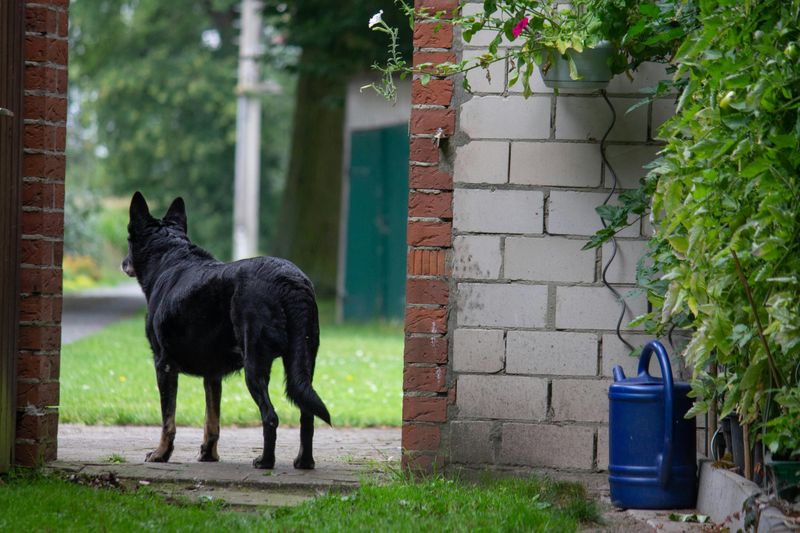
Dogs and skunks are a bad combination, and most dog owners in New Jersey have at least one neighbor who has a story about it.
Skunks do not go looking for trouble, but a curious dog charging at them in the dark will absolutely trigger a spray response.
The best thing you can do is reduce the chances of that meeting happening in the first place.
Doing a quick flashlight check of your yard before letting dogs out at night takes about thirty seconds and can save you hours of cleanup.
They are visible in a flashlight beam, and most will freeze or slowly retreat if they see you coming.
Giving them a moment to leave before releasing your dog is simple and effective.
Keeping dogs on a leash for late-night bathroom breaks during peak skunk season, which runs roughly from March through October in New Jersey, is a smart habit.
A leash gives you control over the situation if a it is spotted before your dog reacts.
If a spray does happen, a mixture of hydrogen peroxide, baking soda, and dish soap works better than tomato juice for neutralizing the odor on pet fur.
Applying it quickly and rinsing thoroughly before the oils set into the coat makes the whole process much more manageable.
Having the ingredients on hand before you need them is the kind of preparation that pays off.
10. Make The Call When Your Skunk Problem Gets Out Of Hand

Most skunk situations in New Jersey yards can be managed with the steps above, but there are times when a problem goes beyond what a homeowner can reasonably handle alone.
If skunks have established a den under your home, are repeatedly returning despite deterrents, or if you suspect it may be behaving strangely, calling a licensed wildlife removal professional is the right move.
New Jersey has specific regulations around trapping and relocating wildlife, and skunks fall under those rules.
Attempting to trap and move a it without the proper knowledge or equipment can result in a spray incident, potential injury, or a violation of state wildlife laws.
Licensed professionals know how to handle these situations safely and legally.
Skunks that are active during daylight hours, moving erratically, or appearing disoriented should be treated with extra caution.
These behaviors can sometimes indicate illness, and a wildlife professional can assess the situation properly.
This is not a scenario where DIY solutions are appropriate.
The cost of professional wildlife removal in New Jersey varies, so it is worth getting a few quotes before committing.
Many companies offer follow-up exclusion work as part of a package, and investing in a professional solution once is often cheaper. It is less stressful than dealing with a recurring skunk problem season after season.
A good wildlife control company will also help you identify what attracted them in the first place.