What It Means When A Bobcat Shows Up In Your Oklahoma Yard
Your coffee goes cold fast when a pair of golden eyes locks onto yours from the tree line. The spotted body crouched at your fence isn’t a housecat that wandered off course.
That’s a bobcat, and Oklahoma backyards see more of them than most residents realize. These cats move through suburban lots, farm edges, and creek corridors without leaving much trace behind them.
A bobcat rarely picks a yard by accident. Something about your property, food, water, cover, or an easy path, pulled it in close enough for you to notice.
Below, you’ll find what draws bobcats toward homes, how to tell one apart from other dusk-time visitors, and how to keep pets safe when one of Oklahoma’s sharpest predators claims your yard.
A Bobcat Visit Signals Nearby Prey And Cover
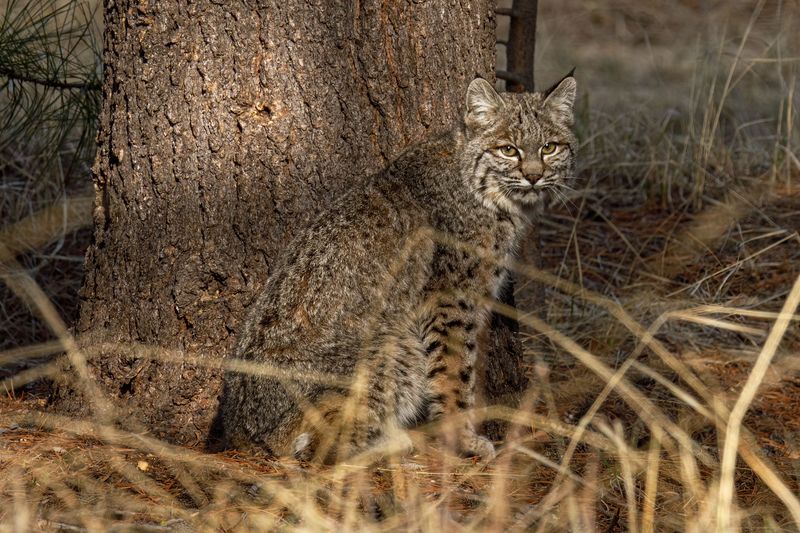
Your yard just became a hunting ground. When a bobcat shows up in your Oklahoma yard, the very first thing it tells you is that your property offers something valuable: food and cover.
Bobcats are opportunistic hunters. They target rabbits, squirrels, mice, rats, and birds, all of which thrive in suburban yards with bird feeders, brush piles, and overgrown edges.
If your yard has any of those features, you have essentially rolled out a welcome mat. Dense shrubs, wood piles, tall grass, and cluttered fence lines all create perfect hiding spots for both prey and the predators chasing them.
Oklahoma’s landscape is ideal bobcat territory. The state has a rich mix of forests, grasslands, creek bottoms, and suburban green spaces that support healthy prey populations year-round.
A bobcat rarely wanders into a yard by accident. It followed a scent trail, tracked movement, or spotted an easy meal near your home.
Cleaning up brush piles reduces prey shelter significantly. Removing bird feeders temporarily can also cut down on the small animals that attract bobcats close to your house.
Securing trash cans matters too. Garbage draws rodents, and rodents draw cats like this one straight to your back door.
Spotting a bobcat is actually a sign of a healthy local ecosystem. Predators generally thrive where prey populations are strong, which means your neighborhood likely supports real wildlife balance.
Identifying A Bobcat Versus Other Oklahoma Wildlife
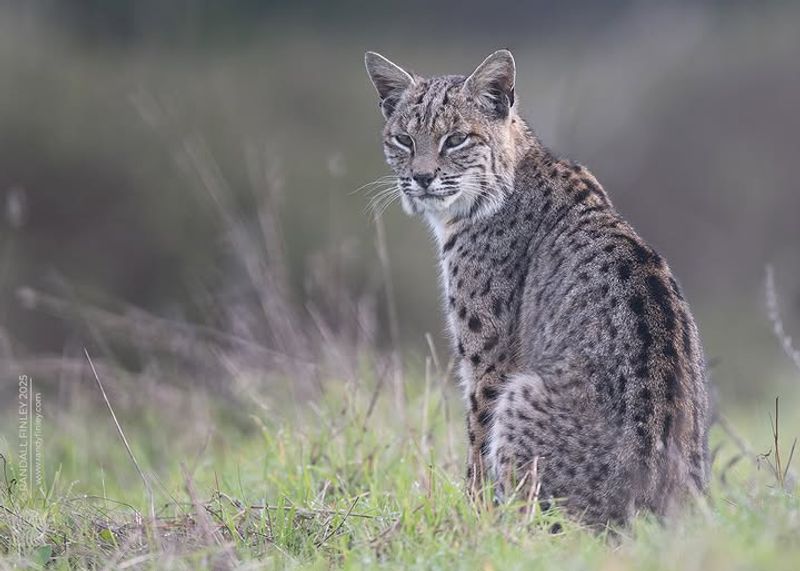
Spotted something wild in your yard and not sure what it was? Getting the identification right matters, because bobcats are often mistaken for large house cats, feral cats, or even young coyotes.
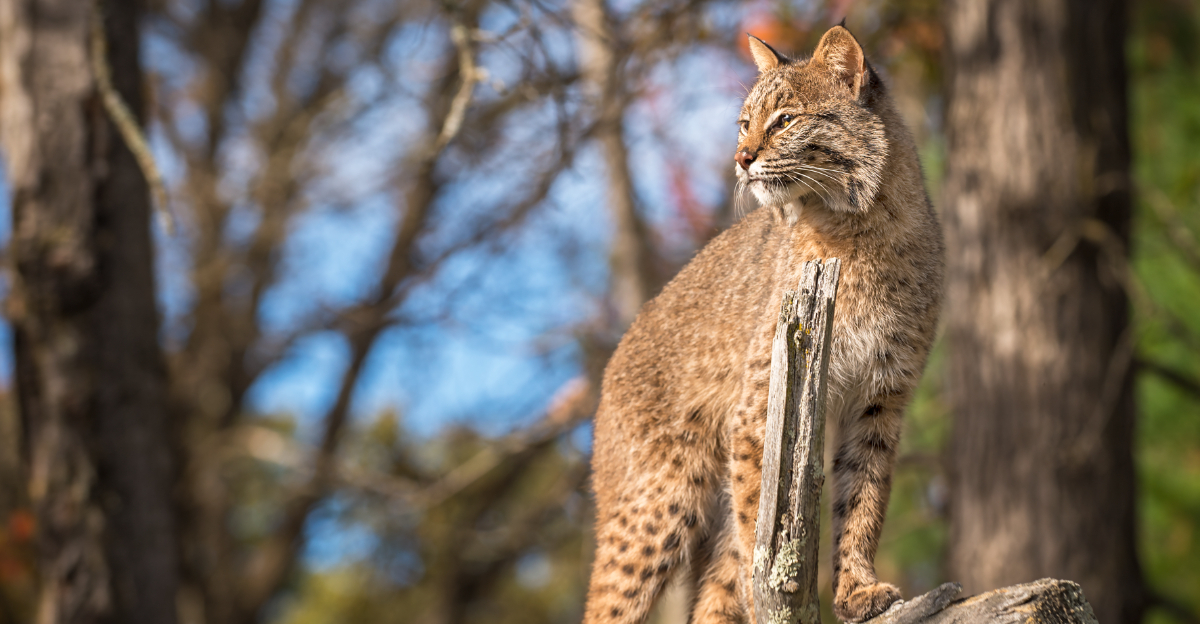
A bobcat in your Oklahoma yard is noticeably bigger than a typical domestic cat. Adults typically weigh between 15 and 30 pounds, roughly two to three times the size of an average house cat.
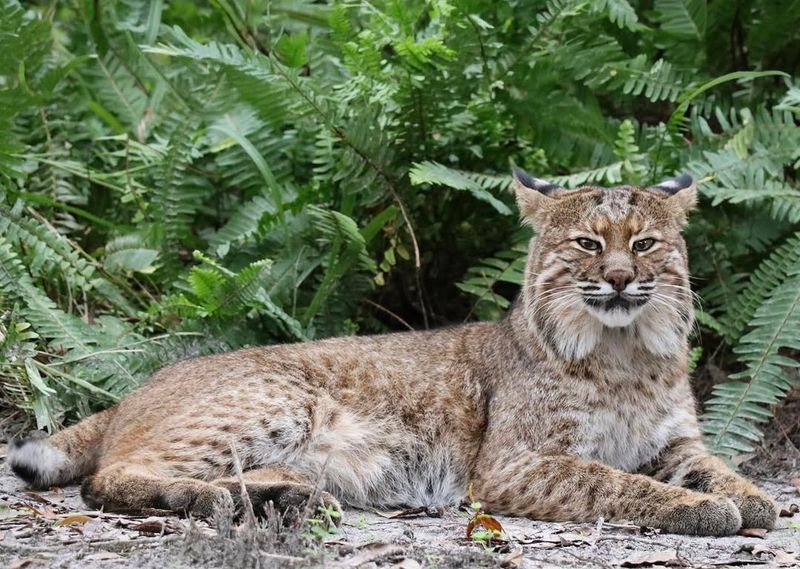
The tail is your biggest clue. Bobcats have a short, stubby tail, usually only four to six inches long, with a black tip on top and white underneath.
Their ears are pointed with small tufts of black fur at the tips, which is a trait no feral cat shares. Those tufted ears give the bobcat a slightly fierce, almost regal appearance.
Your Oklahoma Garden Changes Every Week. Your Plan Should Too.
Gardening in Oklahoma changes quickly throughout the season. Every Friday you’ll receive a simple weekly plan showing exactly what to plant, prune, fertilize, harvest, and protect so you never miss the right timing.
The coat is typically tan or brownish-gray with dark spots or streaks across the body. Coloring can vary, but the spotted pattern combined with the bobbed tail is a reliable giveaway.
Coyotes are sometimes confused with bobcats at a distance, but coyotes move differently. They trot with a loose, dog-like gait, while bobcats move with a slow, deliberate, cat-like stalk.
Mountain lions occasionally pass through the region but are far larger. A mountain lion can weigh over 100 pounds, dwarfing any bobcat you might spot near a fence line.
Knowing what you actually saw helps you respond appropriately and share accurate information with neighbors or wildlife officials.
These Sightings Are More Common Than Most Realize
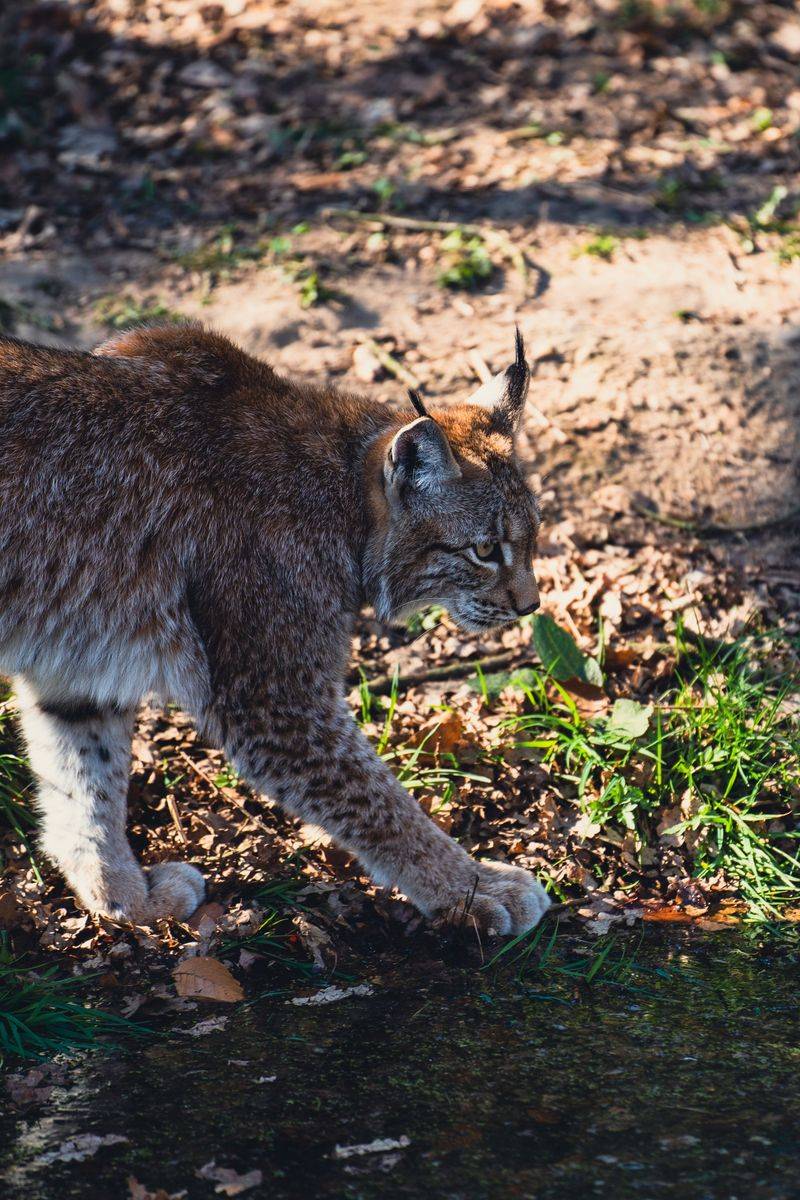
Most people assume bobcat sightings are rare, once-in-a-lifetime events. The truth is, these animals move through neighborhoods far more often than anyone realizes, usually at night when no one is watching.
Bobcats are crepuscular, meaning they are most active at dawn and dusk. That is exactly when most people are either asleep or just stepping outside, which is why encounters feel so surprising.
Trail camera footage from Oklahoma homeowners regularly captures bobcats walking fence lines, crossing driveways, and even resting under decks. Most of these visits happen without the homeowner ever knowing.
Urban sprawl has pushed bobcat habitat closer to human homes over the past two decades. As neighborhoods expand into former woodlands and creek corridors, bobcats adapt instead of retreating.
A single bobcat can have a home range between 5 and 50 square miles depending on prey availability and terrain. That means one animal could be passing through multiple neighborhoods on a regular patrol route.
Neighbors who install motion-sensor cameras are often shocked by what they find. Bobcats, foxes, raccoons, and deer all pass through yards that seem perfectly ordinary during daylight hours.
Wildlife biologists have noted increasing reports of bobcat sightings in suburban areas across the state. Habitat connectivity through creek drainages is the main reason these animals keep showing up.
A sighting during the day often means the animal is either very hungry or protecting young nearby. Females with kittens are especially likely to move during unusual hours.
Are Bobcats A Danger To Pets Or Livestock
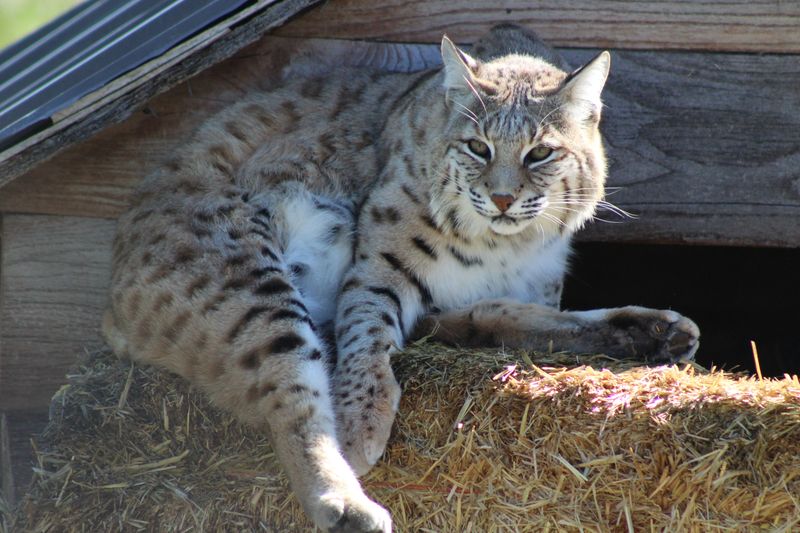
This is the question every pet owner asks the moment they spot one of these cats near the fence. Bobcats can definitely pose a threat to small animals, but the risk level depends heavily on the situation.
Small dogs, cats, chickens, ducks, and rabbits are the most vulnerable. A bobcat weighing 20 to 25 pounds is more than capable of taking down an animal that size, especially if left outdoors unsupervised.
Large dogs are generally not at risk. Bobcats prefer to avoid confrontation with animals their own size or bigger, and they will almost always retreat when a large dog approaches.
Free-range poultry operations are particularly attractive to bobcats. An unprotected chicken coop is essentially a fast-food stop for a hungry predator moving through your property at night.
Bringing small pets indoors at night is one of the most effective protective measures you can take. Most bobcat attacks on pets happen between dusk and dawn when these animals are actively hunting.
Hardware cloth fencing with a roof over poultry enclosures dramatically reduces predator access. Standard chicken wire is not strong enough to stop a determined bobcat from tearing through it.
Livestock guardian animals like donkeys or large herding dogs can deter bobcats from approaching barns or pens. Their presence and noise signal to the predator that the area is actively defended.
A bobcat that repeatedly targets livestock can be reported to the Oklahoma Department of Wildlife Conservation. They offer guidance on legal deterrent options.
Signs A Bobcat Has Made Your Property A Regular Route
One visit might be curiosity. Two or three visits mean something else entirely.
Bobcats are creatures of habit, and once they find a reliable food source or safe travel corridor, they return to it consistently.
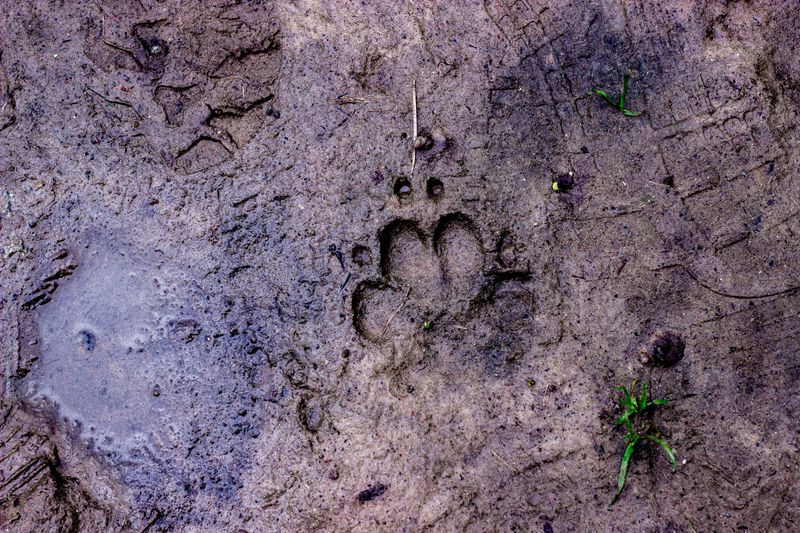
Paw prints in soft soil or mud near a creek, pond, or garden bed are a strong indicator of repeat visits. Bobcat tracks are round, about two inches wide, and show four toes without claw marks since cats retract their claws.
Scratch marks on tree bark at roughly knee height are another sign. Bobcats scratch trees to sharpen their claws and mark territory, much like domestic cats scratch furniture or posts.
Scat, which is their droppings, left in visible spots like the center of a trail or on top of a rock or log, signals territorial marking behavior. Bobcat scat often contains fur and small prey fragments.
A strong, musky odor near fence posts or large rocks can indicate scent marking. Bobcats spray urine on landmarks to communicate with other bobcats in the area.
Motion-activated cameras placed near fence gaps, brush piles, or creek banks will reveal patrol patterns quickly. Most regular visitors follow the same path every two to four nights.
Feathers, fur patches, or leftover prey signs near your property edge may signal active hunting on a routine basis. Finding these signs repeatedly means the bobcat considers your yard part of its established hunting circuit.
Knowing this helps you make smarter decisions about pet schedules. It also helps with outdoor livestock protection.
Coexisting Safely With Bobcats In Rural And Suburban Areas
Sharing space with a wild predator sounds intimidating, but coexistence is genuinely possible with a few smart adjustments. Bobcats are not aggressive toward humans, and attacks on people are extraordinarily rare across North America.
Hazing is a simple and effective tool for discouraging a bobcat from getting too comfortable near your home. Clapping your hands loudly, spraying water from a hose, or shouting firmly can encourage the animal to retreat without harming it.
Avoid feeding a bobcat intentionally or unintentionally. Leaving pet food outside, composting meat scraps near the yard edge, or maintaining a bird feeder that draws rodents all create conditions that attract these predators closer over time.
Motion-activated lights and sprinkler systems are practical deterrents that require very little ongoing effort. Bobcats prefer darkness and stealth, so sudden bright lights or unexpected water bursts disrupt their comfort level significantly.
Keeping a bobcat in your yard by doing nothing is not a neutral choice. It reinforces the animal’s comfort with human spaces, which can eventually lead to bolder behavior and real conflict.
Children should be supervised when playing in yards near wooded areas or creek corridors. While attacks on children are nearly unheard of, teaching kids not to approach or chase wildlife is wise practice regardless.
If a bobcat appears sick, disoriented, or unusually bold during daylight hours, contact the Oklahoma Department of Wildlife Conservation immediately. A bobcat showing up in your Oklahoma yard is wild nature knocking on your door.