What It Means When A Screech Owl Calls From Your California Yard At Night
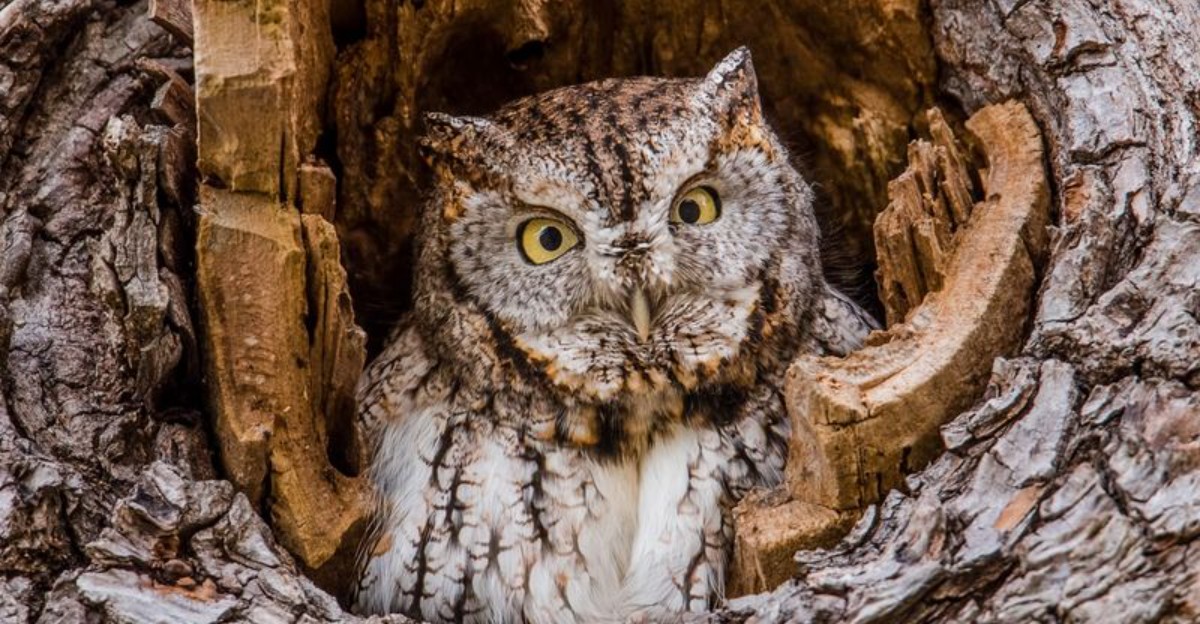
Soft, whistled notes drifting through a dark California yard can stop anyone in their tracks. The sound often starts slowly, speeds up, and fades into silence before anyone can pinpoint its source.
Many people assume it signals something spooky or unusual.
The real explanation is far more charming. That nighttime performer lives year-round in woodlands, suburbs, and parks across the state, and fall is a perfectly normal time to hear it.
Its presence also says something encouraging about the neighborhood itself.
Learning what the sound means, why it shows up in autumn, and how to enjoy it without causing stress turns a mysterious night noise into a backyard highlight.
A Screech Owl That Does Not Screech
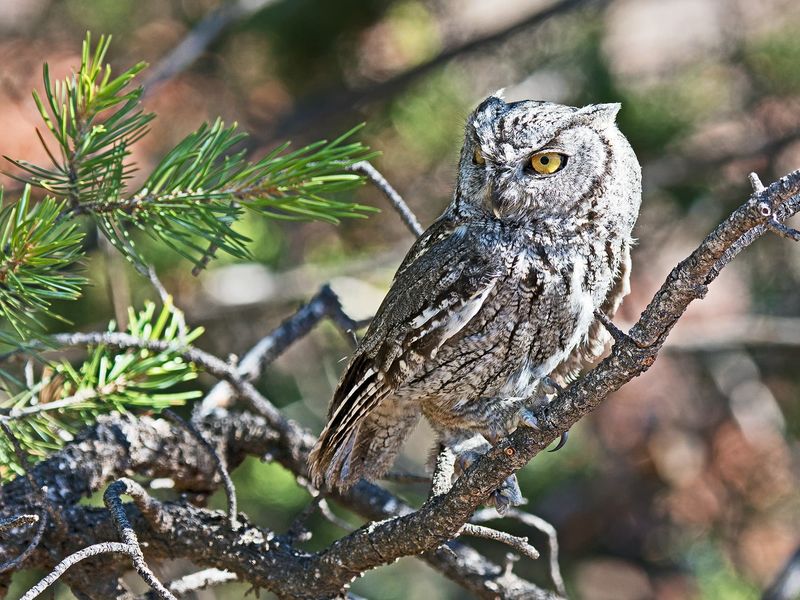
Many people expect a horror-movie shriek and end up walking right past the real sound. The Western Screech-Owl has one of the gentlest voices in the owl world.
Its main call is a run of short, hollow whistles, a bit like someone tapping a soft flute. Cornell Lab of Ornithology recordings show these notes are clear and musical rather than harsh.
Many listeners first mistake the sound for a distant toy, a quiet car alarm, or even a frog. The dramatic name has a simple history.
Early naturalists lumped several small owls together, and the Eastern Screech-Owl gives a shivery, descending whinny that sounds a bit spooky. The name stuck to the whole group, even though the western bird mostly whistles and trills.
Size adds to the surprise. An adult stands roughly 7 to 10 inches tall, with gray or brownish feathers patterned like tree bark.
Small ear tufts can stand up or lie flat, so the owl may look round-headed one minute and horned the next. That clever camouflage helps it vanish against a trunk.
A few quiet minutes outside make a big difference. Turning off music, standing still, and listening for a soft whistle repeated in a quick series often brings success.
A phone recording of the sound works better than chasing the owl itself. Apps such as Merlin Bird ID from Cornell can help confirm the call without stepping any closer to the tree.
The Bouncing Ball Song Marks Territory
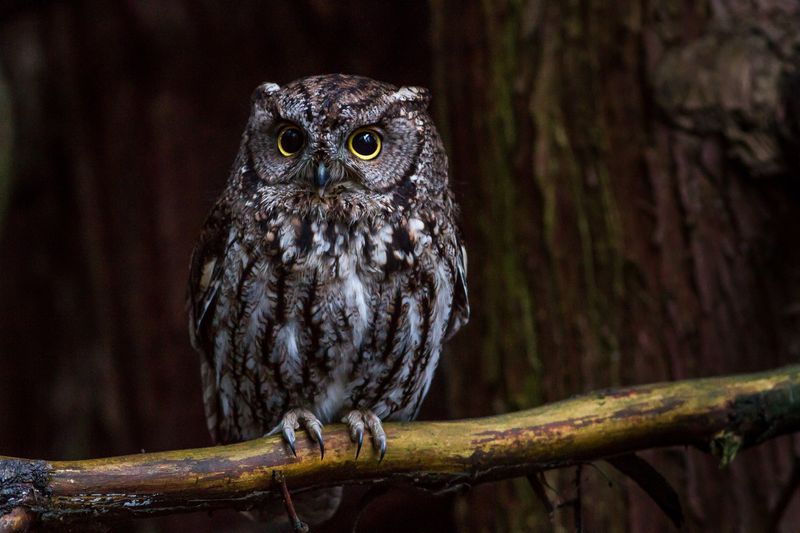
A ping-pong ball dropped on a kitchen table starts with slow bounces, then speeds into a rapid patter before stopping. Birders call the Western Screech-Owl’s main song the bouncing ball for exactly that reason.
According to the Cornell Lab of Ornithology, the song is a series of about 5 to 9 short, whistled hoots. The notes grow closer together toward the end, sometimes rising slightly in pitch.
Once that pattern becomes familiar, recognition comes almost instantly. Males do most of the singing.
Each round of whistles works like a property sign announcing that this patch of trees is taken.
Cornell notes the same song also helps a male attract and keep a mate, so it serves as both a fence and a love letter.
Females answer differently. Their reply is often described as a whinny, a softer, quivering series that sounds a bit like a tiny horse.
Your California Garden Changes Every Week. Your Plan Should Too.
Gardening in California changes quickly throughout the season. Every Friday you’ll receive a simple weekly plan showing exactly what to plant, prune, fertilize, harvest, and protect so you never miss the right timing.
A whistle followed by a whinny usually means two birds are keeping in touch. That exchange is one of the sweetest sounds of a California night.
Another common call is a double trill, a short burst followed by a longer one. Pairs use it often around the nest area.
Counting the notes offers a fun test the next time the song drifts through the yard.
Somewhere between five and nine notes, with a quickening finish, very likely means the local screech-owl is right on schedule and right on key.
Calls Happen In Fall, Not Just Spring
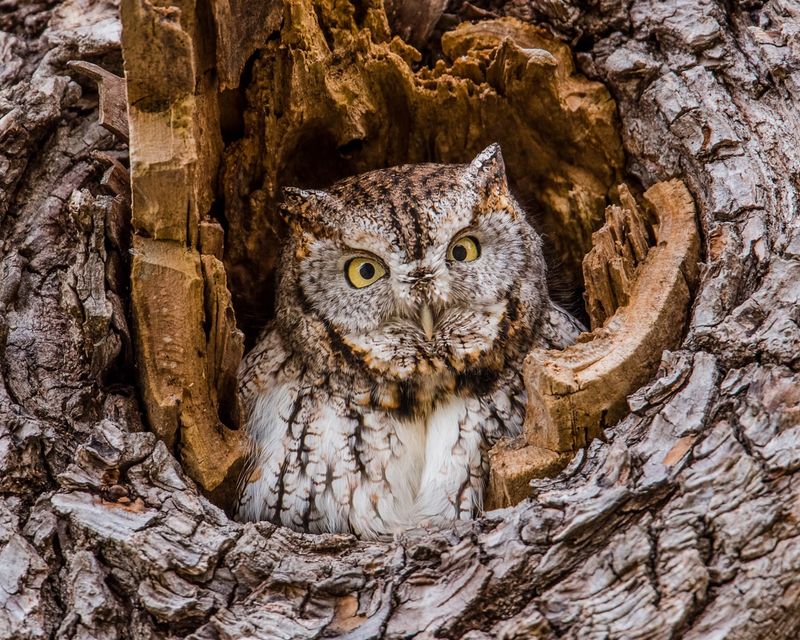
Pumpkins on the porch, leaves crunching underfoot, and a whistled song drifting from the oak next door make a classic California autumn evening. Plenty of people assume owl music belongs only to spring, but Western Screech-Owls clearly didn’t get that memo.
Cornell Lab of Ornithology describes these owls as vocal through much of the year. Audubon-affiliated sources also note that their calls can be heard in fall.
A song on a cool October night is completely normal behavior. It isn’t a sign that anything has gone wrong.
Several reasons help explain the autumn chatter. Adults hold territories year-round, so they keep reminding neighbors where the boundaries sit.
Pairs also use calls to stay connected as nights grow longer. New owls moving through an area can spark a round of vocal border checks, too.
Longer nights help listeners as well. Darkness falls earlier in fall, so owls often start calling while families are still awake, turning an after-dinner walk into a surprise concert.
Weather plays a part. Calm, dry evenings carry sound farther, while wind and rain tend to quiet things down.
Many listeners notice the most activity in the hour or two after sunset.
A simple log reveals patterns over time. Notes on the date, time, and weather for each call can show, after a few weeks, exactly when a feathered neighbor likes to clock in.
Young Owls Disperse In Autumn
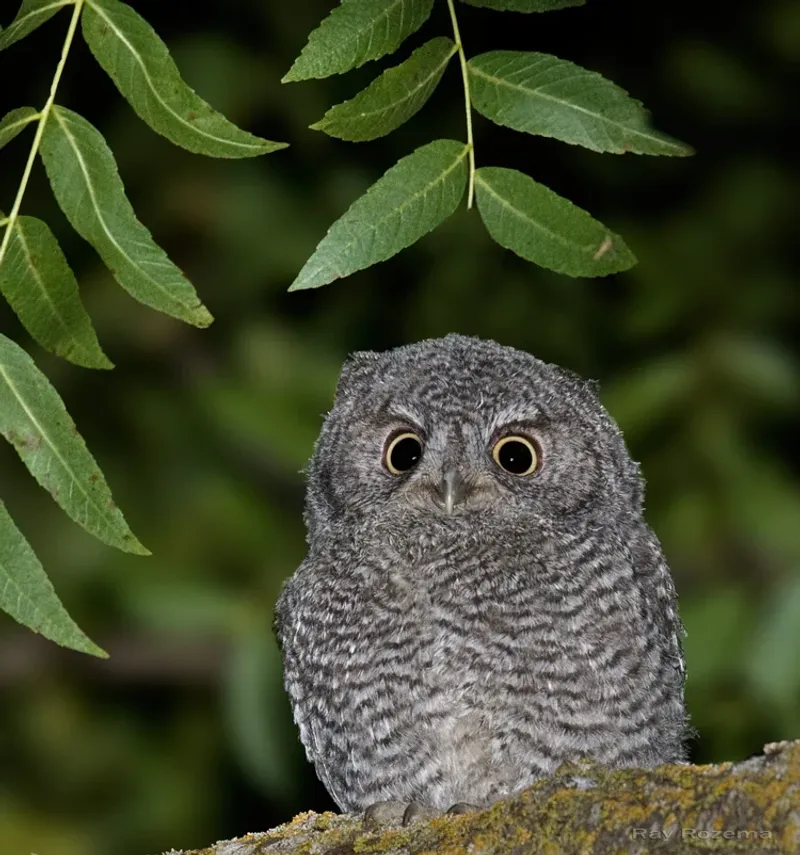
Every spring brings a new generation of owlets, and by autumn many are ready to strike out on their own. Scientists call this move dispersal.
Owlets usually hatch in spring and leave the nest cavity after about four weeks. For a while, they stay near their parents, begging for food with raspy calls and practicing short flights.
Over the following weeks, they grow more skilled and independent. Eventually, they head off to find territories of their own.
Several sources describe this departure happening in late summer and autumn. Exact timing works best as an estimate, though, since published details for this species are limited and likely vary by region and food supply.
Dispersal may explain some fall activity in the yard. A young owl passing through can trigger calls from resident adults defending their space.
Unfamiliar, slightly clumsy songs may also come from a newcomer still finding its voice. Those practice runs can sound charming in their own way.
Not every juvenile travels far. Some settle only a short distance from where they hatched, especially in neighborhoods with good trees and plenty of prey.
A young owl sitting low or looking lost is usually best left alone, since parents or its own instincts typically take care of things.
A licensed wildlife rehabilitator is the right call only for a bird that is clearly injured, trapped, or in immediate danger from pets or traffic.
Pairs Stay Close And Call In Duets
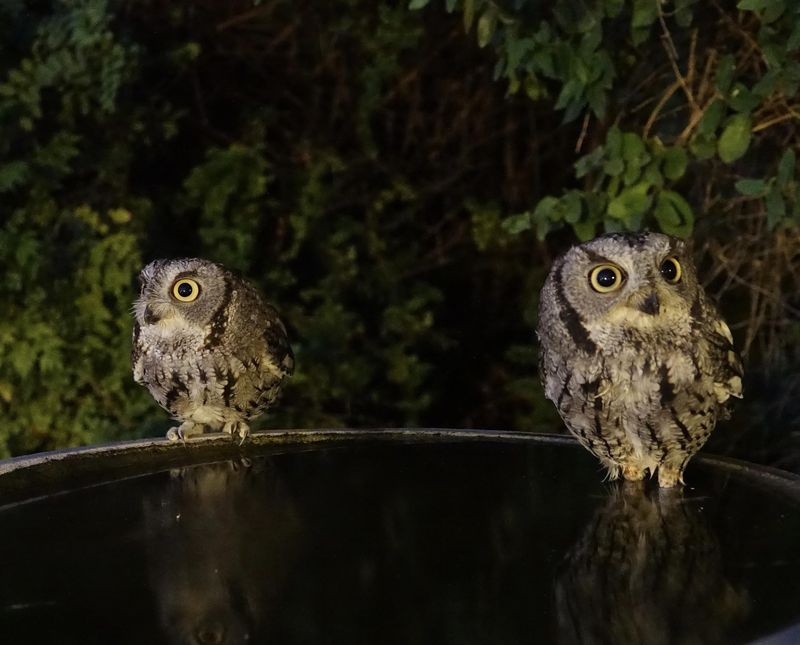
Some couples finish each other’s sentences, and Western Screech-Owl pairs finish each other’s songs. Patient listeners may catch a full back-and-forth conversation in the dark of night.
Based on Cornell Lab of Ornithology information, mated pairs generally stay together on or near the same territory throughout the year. The owls calling this fall could easily be the same ones nesting there next spring.
Many backyard fans recognize a local pair season after season. That familiarity makes each nighttime duet feel even more special.
The duet usually follows a predictable pattern. A male gives his bouncing-ball whistle, and the female answers with her softer whinny or a trill.
The calls can trade places quickly, overlapping like two friends chatting on walkie-talkies. Females are typically a bit larger than males, which is common among owls.
Their voices differ too, with the female’s often sounding slightly lower or rougher. Those small details help observant listeners tell partners apart.
Calling so close together serves several purposes. Duets help partners locate each other at night, strengthen their bond, and show neighbors that two birds defend the territory.
Teamwork really does make the dream work.
Duets are best enjoyed from a comfortable distance, ideally from a porch or window. Moving toward the sound with a flashlight can push the pair to a quieter spot, and that front-row seat may disappear for good.
They Hunt Insects And Rodents At Night
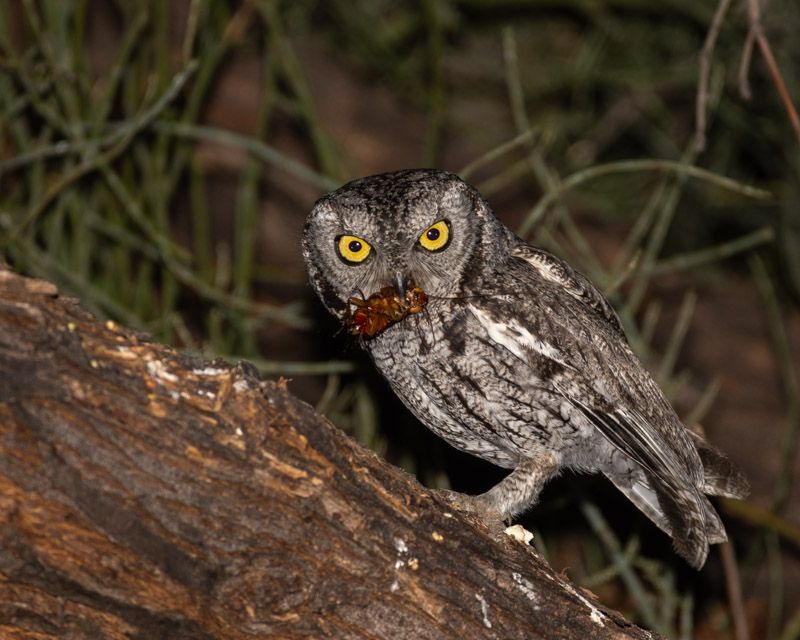
A garden may already have a night-shift security guard on duty. Western Screech-Owls hunt mostly after dark, and Cornell Lab of Ornithology lists a menu ranging from insects to small mammals.
Large insects such as moths, beetles, and crickets make up a big part of the diet. Mice and other small rodents are common targets, too.
Depending on location, these owls also catch small birds, worms, crayfish, frogs, and even fish near streams. That flexibility helps them thrive in many habitats.
Hunting style centers on patience. The owl perches quietly on a low branch, watches and listens, then glides down to grab prey with its feet.
Soft-edged feathers help muffle the sound of its wings.
That appetite brings real benefits for homeowners. Fewer rodents around sheds and garages mean fewer chewed wires and raided bird feeders, and insect numbers stay more balanced, too.
One warning deserves attention. According to the California Department of Fish and Wildlife, rodent poisons can harm owls that eat poisoned mice or rats.
Traps, sealed gaps around the home, and securely stored pet food offer safer ways to manage pests. Cutting back on garden pesticides helps as well.
More insects and healthy soil creatures mean more food for owls and songbirds alike. A slightly wild yard with native plants, leaf litter, and a few bushes can become an excellent hunting ground for this small, feathered pest controller.