North Carolina Gardeners Are Getting More Tomatoes Per Plant By Avoiding These Common Mistakes
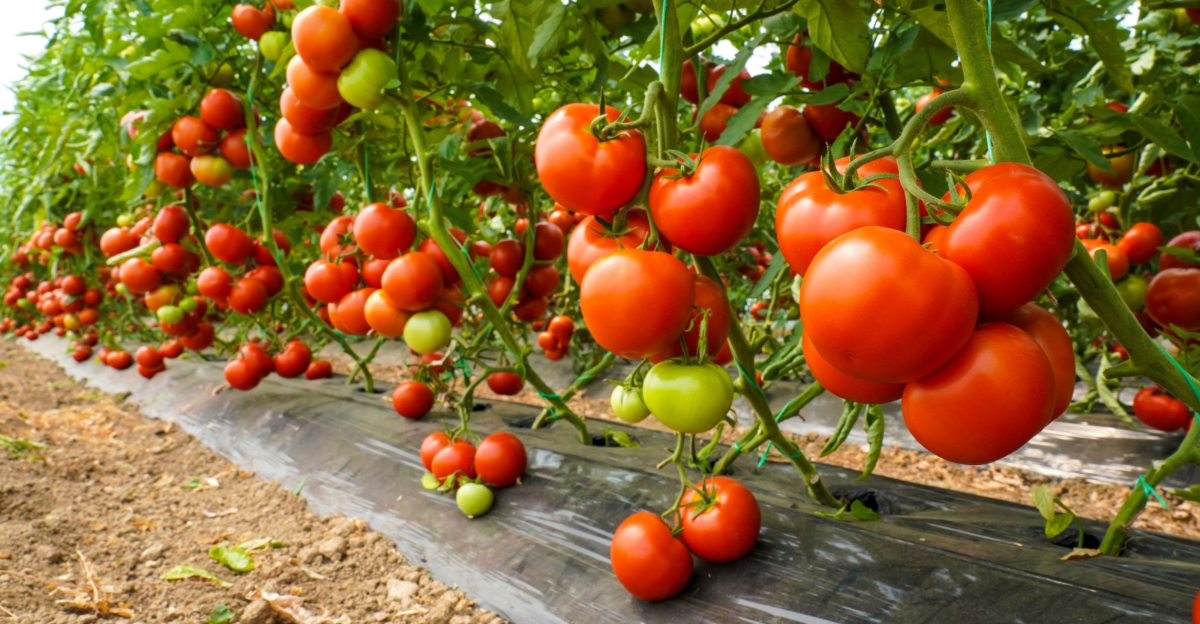
Growing tomatoes in North Carolina is one of those garden experiences that can go from incredibly rewarding to genuinely humbling pretty fast.
The summer heat is intense, the humidity is relentless, the rain shows up when it feels like it, and the pest pressure is real.
And that is before you factor in the red clay of the Piedmont, the humid coastal plain, or the shorter growing windows up in the mountains. North Carolina tomato gardening is not hard exactly, but it does have a learning curve.
The encouraging part is that a lot of the most common problems come down to a handful of small, very fixable mistakes. Drainage, spacing, mulch, watering consistency: these things matter more than most people realize.
Get those right and your plants have a much better shot at a genuinely productive season.
1. Planting Tomatoes In Too Much Shade
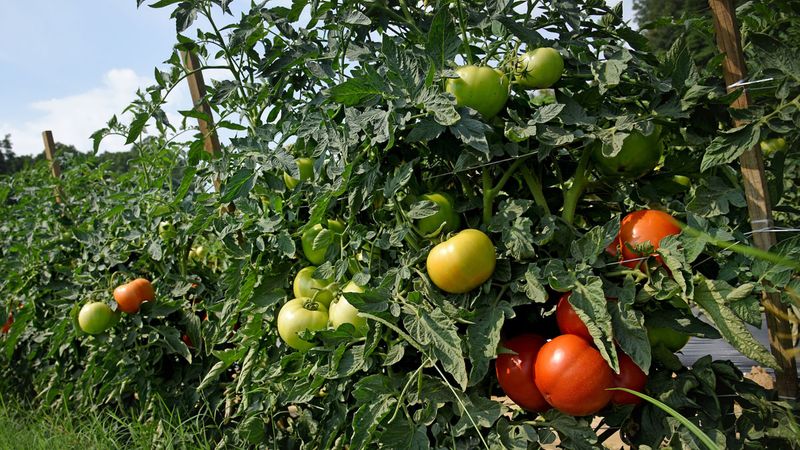
Sunny vegetable beds might seem like a given, but shade creeps in more than most gardeners expect, especially as neighboring trees fill out through late spring and summer.
Tomatoes need strong, direct sunlight to produce well, and most recommendations point to at least six to eight hours of full sun each day during the growing season.
When plants do not get enough light, they tend to grow tall and spindly while putting out fewer flowers and less fruit.
In North Carolina, deciduous trees that were bare when you planted in spring can cast heavy shade by June or July, changing the light conditions dramatically. A spot that looked sunny in March may feel like a different location by midsummer.
Gardeners who notice their tomato plants stretching toward light or producing minimal blooms often find shade is a contributing factor.
Before planting, spend a few days observing how sunlight moves across your garden from morning to afternoon. Raised beds and container gardens offer more flexibility since they can sometimes be repositioned.
Choosing the sunniest available spot gives tomato plants a much stronger foundation for the season ahead, and it reduces the chance of light-related setbacks that can cut into your overall harvest.
2. Choosing A Poorly Drained Site
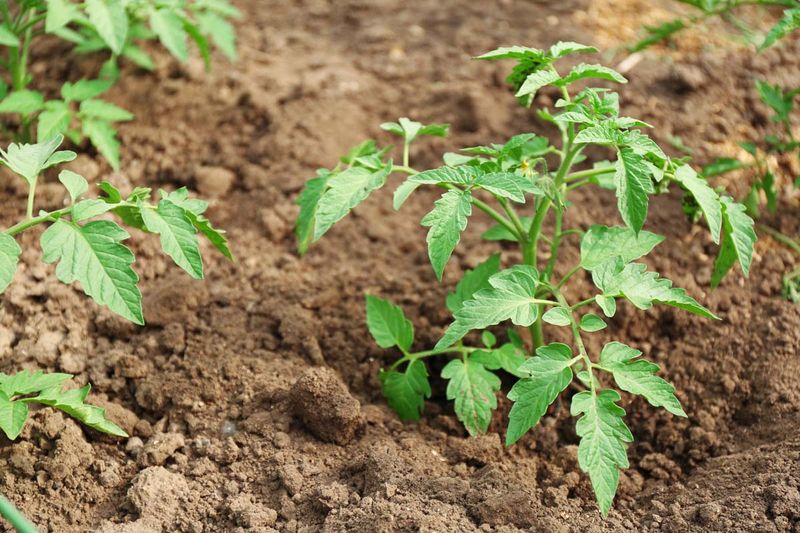
Heavy rain after a dry stretch is a familiar pattern across much of North Carolina, and when that rain hits a poorly drained garden bed, tomato roots can end up sitting in soggy soil for hours or even days.
Roots need oxygen to function well, and waterlogged conditions can stress plants and make them more vulnerable to root-related problems.
Over time, poor drainage can reduce plant health and limit how much fruit a plant supports.
Piedmont clay soil is especially prone to drainage problems because water moves through it slowly.
Gardeners who plant directly into dense clay without improving soil structure or raising the bed often notice plants that look stressed even when watering seems consistent.
Yellowing leaves, slow growth, and wilting despite wet soil are common signs that drainage may be the issue rather than lack of water.
Raised beds filled with a mix of compost and quality garden soil can make a significant difference in drainage. For in-ground gardens, working compost deeply into the planting area helps loosen clay and improve water movement.
Your North Carolina Garden Changes Every Week. Your Plan Should Too.
Gardening in North Carolina changes quickly throughout the season. Every Friday you’ll receive a simple weekly plan showing exactly what to plant, prune, fertilize, harvest, and protect so you never miss the right timing.
Choosing a site with a gentle natural slope rather than a low-lying area that collects runoff is another practical step that can help tomato plants stay healthier through North Carolina’s unpredictable summer rain patterns.
3. Skipping Soil Testing And Soil Improvement
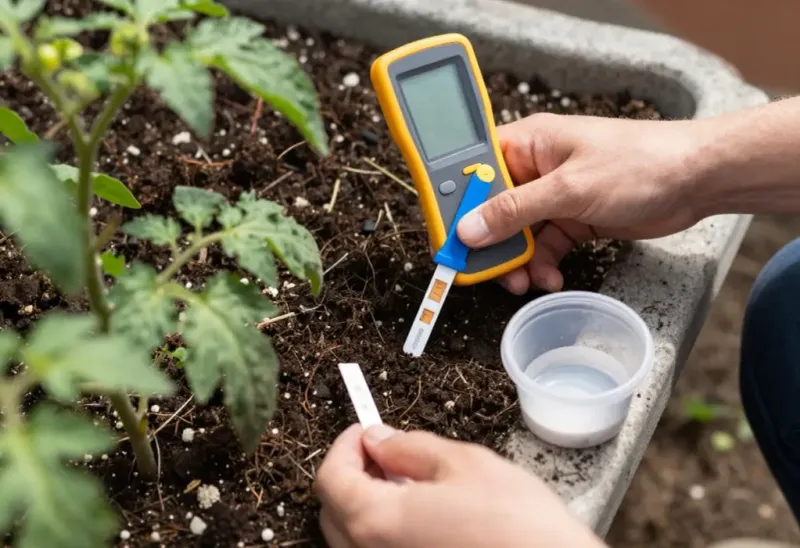
Most North Carolina soils benefit from a soil test before tomatoes go in the ground, yet this step gets skipped more often than not. Soil pH has a direct effect on whether tomato plants can access the nutrients already present in the soil.
When pH is off, even well-fertilized beds may leave plants struggling to take up what they need, leading to nutrient deficiency symptoms that can be easy to misread.
North Carolina’s soils, particularly in the Piedmont and Foothills, tend to be acidic. Tomatoes generally perform best in a pH range of around 6.2 to 6.8.
A simple soil test through the NC Department of Agriculture and Consumer Services can provide a clear picture of pH and nutrient levels along with specific lime and fertilizer recommendations tailored to your garden.
Beyond pH, adding organic matter like compost before planting improves soil texture, moisture retention, and biological activity.
Sandy coastal soils drain too quickly and benefit from compost to hold moisture longer, while heavy clay soils need organic matter to improve structure and aeration.
Taking the time to test and amend soil before planting gives tomatoes a more supportive growing environment and can reduce problems that show up later in the season when they are harder to correct.
4. Planting Tomatoes Too Close Together
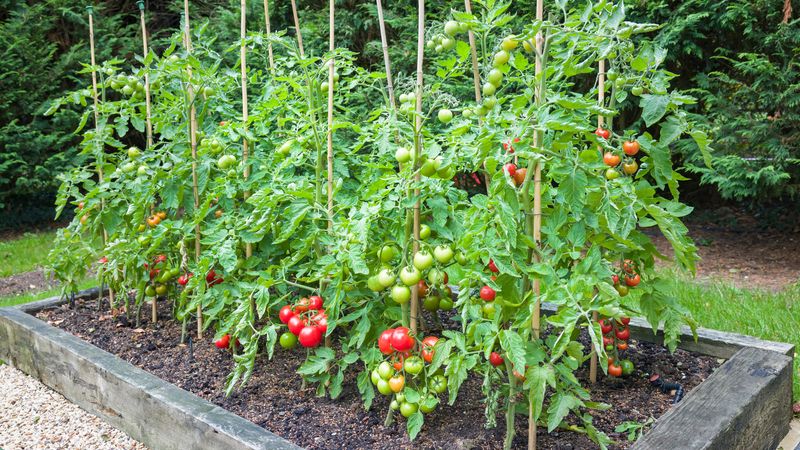
Crowded rows of tomato plants might look productive at first glance, but tight spacing tends to create problems as the season progresses.
When foliage overlaps and air cannot move freely between plants, humidity builds up around the leaves, which creates conditions that support fungal diseases like early blight and Septoria leaf spot.
Both are common in North Carolina gardens, especially during the warm, humid stretches of summer.
General spacing guidance for most indeterminate tomato varieties suggests planting at least two to three feet apart, with some larger varieties benefiting from even more room.
Determinate varieties can often be planted slightly closer, but they still need adequate airflow.
Crowding also means roots compete for water and nutrients, which can reduce overall plant vigor and fruit production as the season moves along.
Resist the temptation to squeeze extra plants into a small garden. Fewer, well-spaced plants often outperform a crowded bed because each plant has better access to light, air, and soil resources.
If garden space is genuinely limited, vertical growing with sturdy cages or trellises can help, but it works best when plants still have reasonable spacing at the base.
Giving each plant room to breathe is one of the simpler adjustments that can noticeably support plant health through a long North Carolina summer.
5. Waiting Too Long To Stake Or Cage Plants
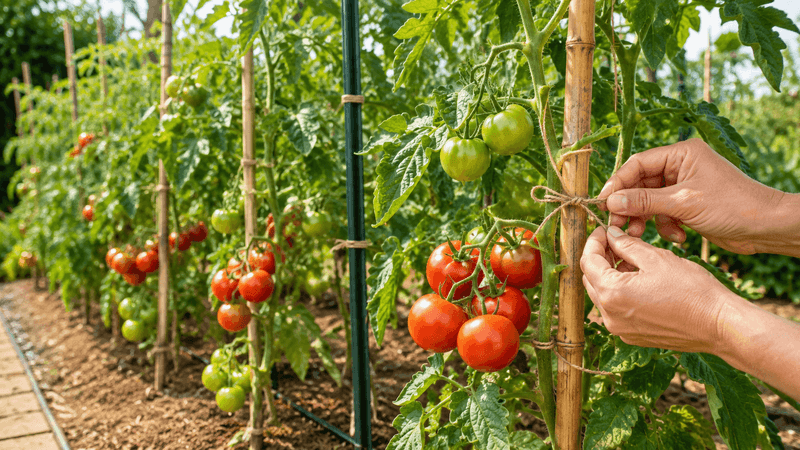
Unsupported tomato vines left to sprawl on the ground are far more exposed to soil-borne diseases, pest activity, and fruit damage than plants that are properly trained upward.
By the time a plant looks like it needs support, it has often already grown large enough that staking or caging becomes awkward and risks snapping stems or damaging roots.
Getting support structures in place early, ideally at planting time or shortly after, makes the process much smoother.
Indeterminate tomato varieties, which continue growing and producing throughout the season, can reach impressive heights and carry significant weight in foliage and fruit.
Lightweight or flimsy cages often buckle under that load, especially after heavy rain or wind, which are both common in North Carolina summers.
Sturdy cages, tall wooden stakes, or heavy-gauge wire panels offer much more reliable support through the full growing season.
Setting up support at planting also makes it easier to guide early growth in the right direction without forcing stems into uncomfortable positions later.
Tying stems loosely with soft garden tape or strips of fabric gives the plant room to grow without cutting into the stem.
Taking care of support early removes one more thing to deal with mid-season and helps keep plants upright, well-aired, and easier to check for pest and disease issues throughout the summer.
6. Watering Too Lightly Or Inconsistently
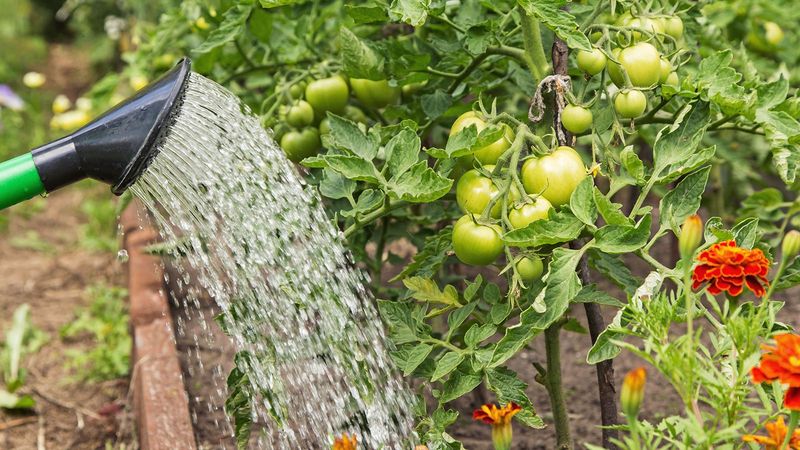
Blossom end rot and cracked fruit are two of the more frustrating things North Carolina tomato gardeners encounter during summer, and inconsistent watering is one of the contributing factors behind both.
Blossom end rot appears as a dark, sunken area on the bottom of developing fruit and is linked to calcium uptake issues that can be worsened by irregular soil moisture.
Fruit cracking often happens when a heavy rain or deep watering follows a dry stretch, causing rapid fruit expansion.
Shallow or infrequent watering encourages roots to stay near the surface rather than growing deeper into the soil where moisture is more stable. Surface roots are more vulnerable to heat and dry spells.
During North Carolina’s hottest months, tomatoes in the ground may need an inch or more of water per week, and container-grown plants often need water more frequently depending on pot size and heat exposure.
Checking soil moisture a few inches below the surface before watering gives a more accurate picture than looking at the top of the soil alone.
Watering deeply and less frequently encourages roots to grow downward, which can help plants handle dry spells better.
A consistent watering routine, adjusted based on rainfall and temperature, supports steadier plant growth and reduces the moisture swings that can lead to fruit quality problems during the season.
7. Watering The Leaves Instead Of The Root Zone
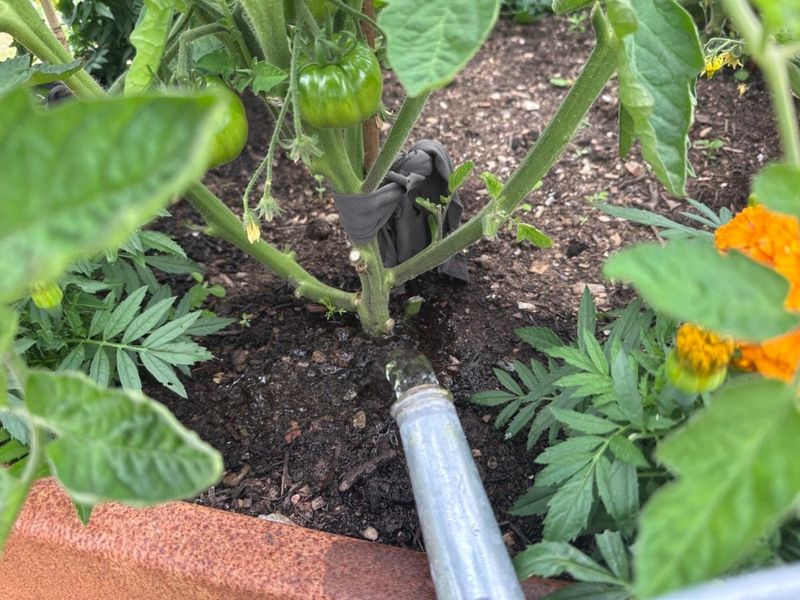
Wet foliage on tomato plants is one of the more preventable contributors to fungal disease problems, yet overhead watering remains a common habit in home gardens.
When water splashes onto leaves and stems and stays there, especially during warm, humid conditions, it can encourage the spread of fungal diseases that are already common in North Carolina gardens.
Early blight, Septoria leaf spot, and other foliar diseases tend to spread more readily when leaves stay wet for extended periods.
Directing water to the root zone rather than over the top of the plant is a straightforward adjustment that can make a real difference.
Soaker hoses, drip irrigation, or a watering wand held close to the soil surface are all practical options for keeping water where it is most useful.
These methods also reduce water waste since less moisture is lost to evaporation compared to sprinkler-style overhead watering.
Watering in the morning, if overhead watering is unavoidable, gives foliage time to dry before evening temperatures drop and humidity rises. Wet leaves overnight create conditions that favor disease development.
In North Carolina’s warm, humid summer climate, small habits like keeping foliage dry and watering at the base of the plant can support better overall plant health and reduce the frequency and severity of foliar disease problems through the growing season.
8. Forgetting To Mulch Around Tomato Plants
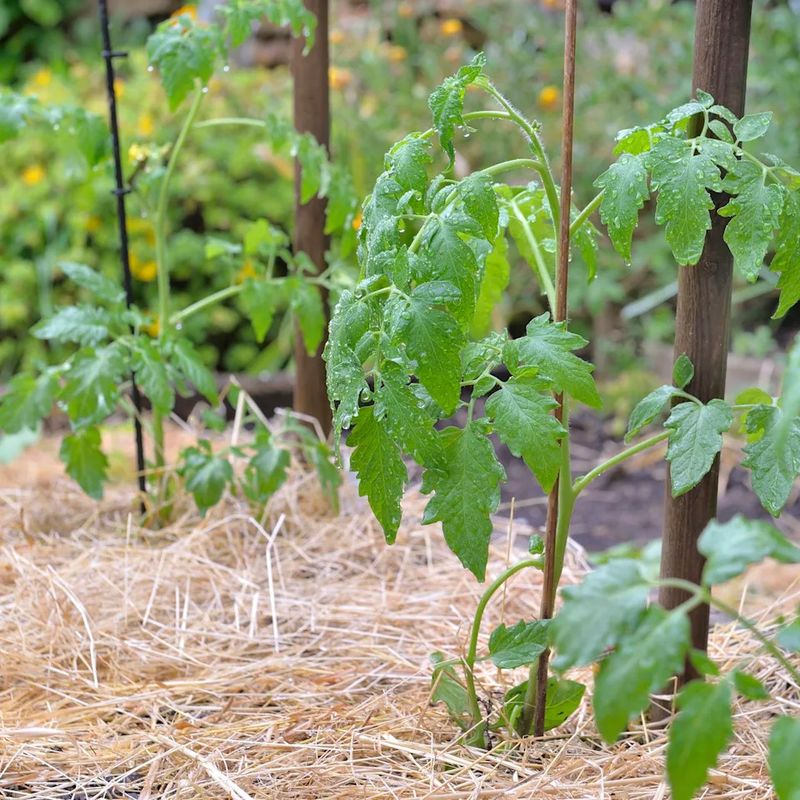
A few inches of mulch around tomato plants does a quiet but meaningful amount of work throughout the growing season.
Mulch helps retain soil moisture, which is especially valuable during North Carolina’s dry midsummer stretches when gardens can dry out quickly between rain events.
It also moderates soil temperature, keeping roots cooler during heat spells that can stress plants and reduce fruit set.
One of the less obvious benefits of mulch is that it acts as a physical barrier between soil and lower leaves. Soil can carry fungal spores that splash up onto foliage during rain or watering, contributing to early blight and other common tomato diseases.
A consistent layer of mulch reduces that splash, which can help keep lower leaves healthier longer into the season.
Straw, shredded leaves, wood chips, and pine straw are all commonly used mulch materials in North Carolina gardens.
Applying a layer of about two to three inches around the base of each plant, while keeping mulch slightly away from the main stem, provides good coverage without creating excess moisture against the stem.
Refreshing mulch mid-season if it breaks down or thins out keeps the benefits going through the full growing period. It is one of the simpler steps that supports multiple aspects of tomato plant health at once.
9. Letting Pests Or Diseases Go Unchecked
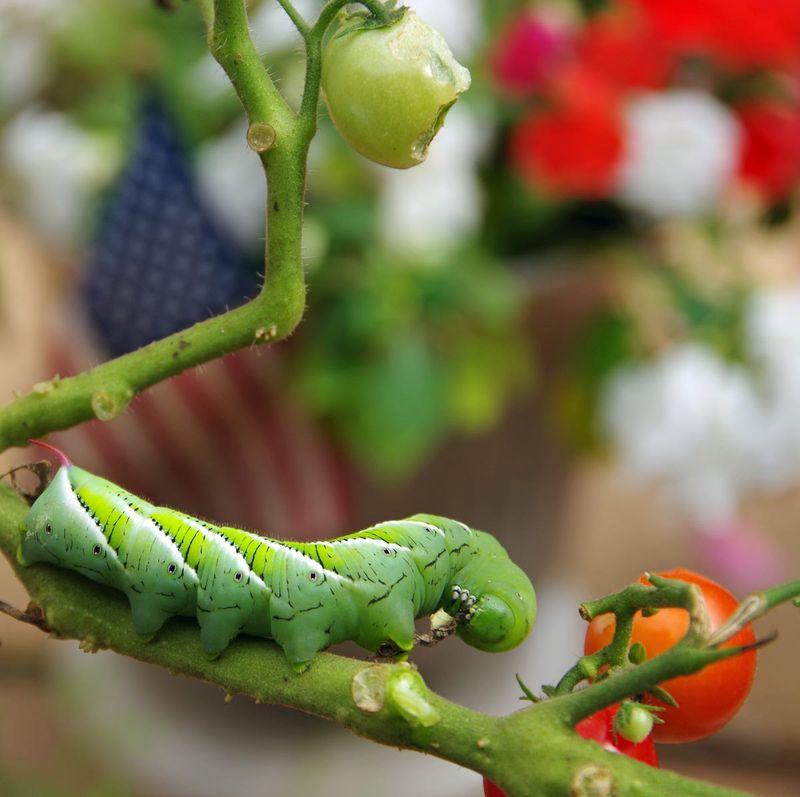
Checking tomato plants regularly during the growing season is one of the most useful habits a North Carolina gardener can build.
Pest populations and disease problems can develop quickly, particularly during warm, humid stretches, and catching issues early gives far more options for managing them than waiting until damage becomes severe.
A few minutes walking through the garden and looking closely at leaves, stems, and fruit can reveal problems before they spread widely.
Tomato hornworms, stink bugs, aphids, and spider mites are among the common pest concerns in North Carolina vegetable gardens.
Fungal diseases like early blight, Septoria leaf spot, and late blight can move through a garden quickly under the right weather conditions.
Identifying what is actually present before reaching for any treatment helps avoid unnecessary applications and supports more targeted, effective management.
Removing heavily affected leaves, improving air circulation, and adjusting watering habits are often helpful starting points when disease symptoms appear.
For pest issues, hand removal, encouraging beneficial insects, and using targeted treatments when necessary are all options worth considering.
Keeping a simple record of what appears in the garden each season can also help with planning the following year.
Staying observant and responding to problems promptly, rather than hoping they resolve on their own, gives North Carolina tomato plants a much better chance of staying productive through the full season.