What It Means When Cardinals Suddenly Flock To Your Georgia Yard Right Now
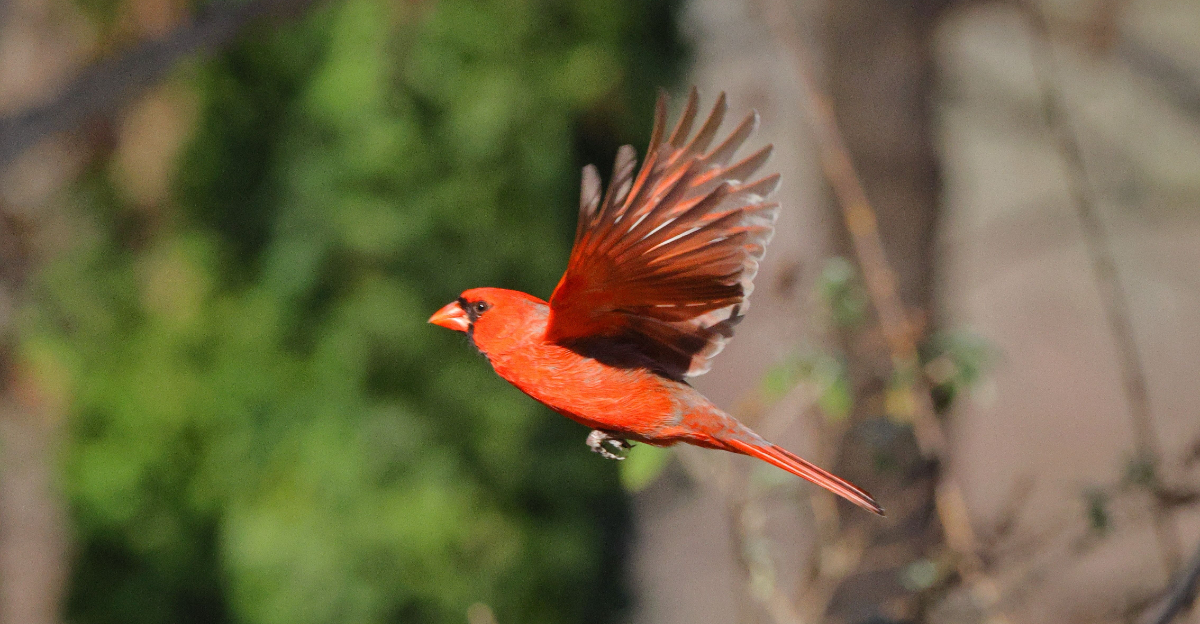
Your quiet yard can suddenly feel much busier when several cardinals appear at once. Seeing them together may seem unusual if you normally notice only one or two.
Cardinal behavior changes as the year moves forward.
In Georgia, these familiar birds can become more social outside the breeding season. Groups may gather where they find reliable food, water, and comfortable places to rest.
That sudden activity can reveal something about what your yard is offering them. It may also explain why the same birds seem to return throughout the day.
Watch where the cardinals gather before changing anything around your property.
Their favorite corner may provide exactly what they need as seasonal behavior begins shifting. Once you know what attracts them, those lively group visits become much easier to understand when they happen again.
1. Breeding Season Is Starting To Wind Down
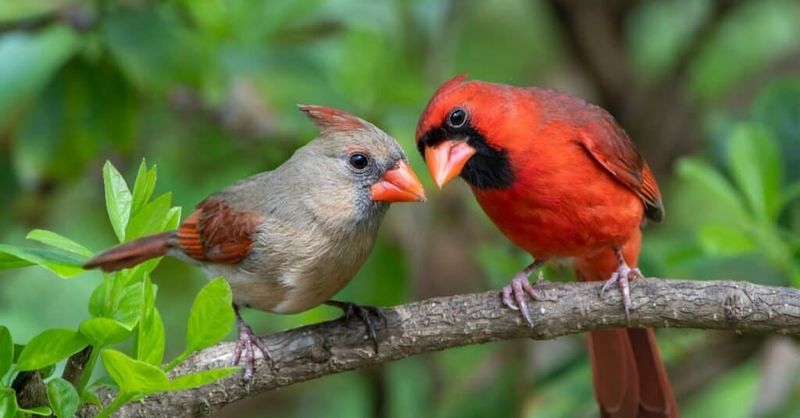
Cardinals go quiet during nesting season for good reason. Pairs keep to themselves, stay close to the nest, and avoid drawing attention.
When that protective instinct fades, everything changes fast.
Late summer marks the point where most pairs have finished raising their young. The male stops defending his territory so aggressively.
His focus shifts from guarding a patch of yard to simply finding food.
Once that territorial pressure lifts, cardinals start moving around more freely. You might notice them hopping between yards, showing up at feeders they ignored for weeks, and tolerating other birds nearby.
Breeding season in Georgia typically wraps up somewhere between late July and early September, depending on the pair. Some cardinals attempt two or even three broods in a single year, so the timing can vary.
When you see multiple cardinals together, it often signals that nesting is winding down nearby. Fewer nests to protect means fewer reasons to chase other birds away.
Groups start forming naturally as a result.
A yard with reliable food and good cover becomes a magnet at this point. Cardinals are not being careless.
They are responding to a real shift in what they need right now. Watching that shift happen is one of the better parts of backyard bird watching.
2. Cardinals Become More Social Outside Nesting Season
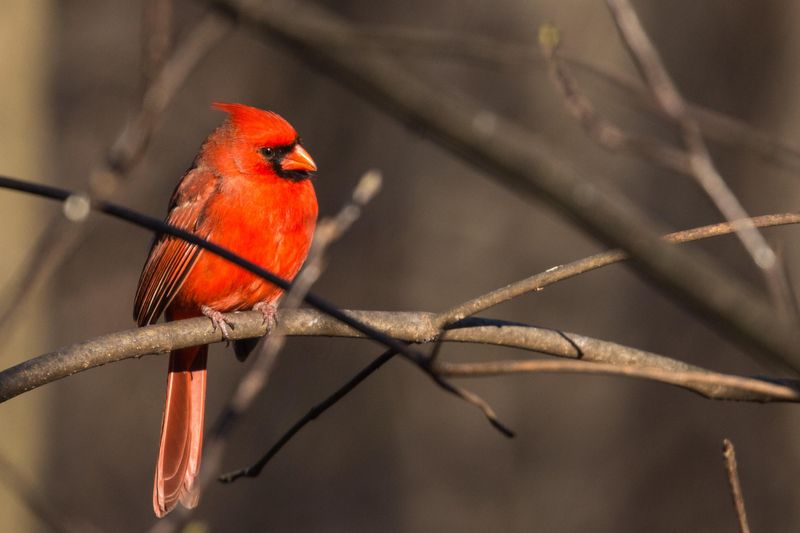
Cardnals are not naturally loners. During nesting season, they act like it, but that behavior is seasonal, not permanent.
Once the pressure of raising young fades, their social side comes back.
Outside of breeding season, cardinals form loose flocks that shift and change from day to day. These are not tight, organized groups like starlings or crows.
Cardinals gather more casually, often following food sources together.
You might see three or four birds show up at once, then five or six a few days later. The size of the group tends to grow as fall approaches.
More birds means more eyes scanning for food and watching for threats.
Being social offers real advantages. A group of cardinals foraging together is less likely to be caught off guard by a hawk or cat.
One bird spots danger while others eat, and the alarm spreads quickly through the group.
Your Georgia Garden Changes Every Week. Your Plan Should Too.
Gardening in Georgia changes quickly throughout the season. Every Friday you’ll receive a simple weekly plan showing exactly what to plant, prune, fertilize, harvest, and protect so you never miss the right timing.
Cardinals in Georgia tend to stay within a fairly small home range year-round. They do not migrate, so the same birds you see in summer are often the ones forming groups in fall.
Familiarity likely plays a role in how these loose flocks come together.
Providing a consistent food source helps keep these social groups coming back. Once cardinals learn a yard is reliable, they return regularly and bring others with them over time.
3. Young Birds Begin Joining Other Cardinals
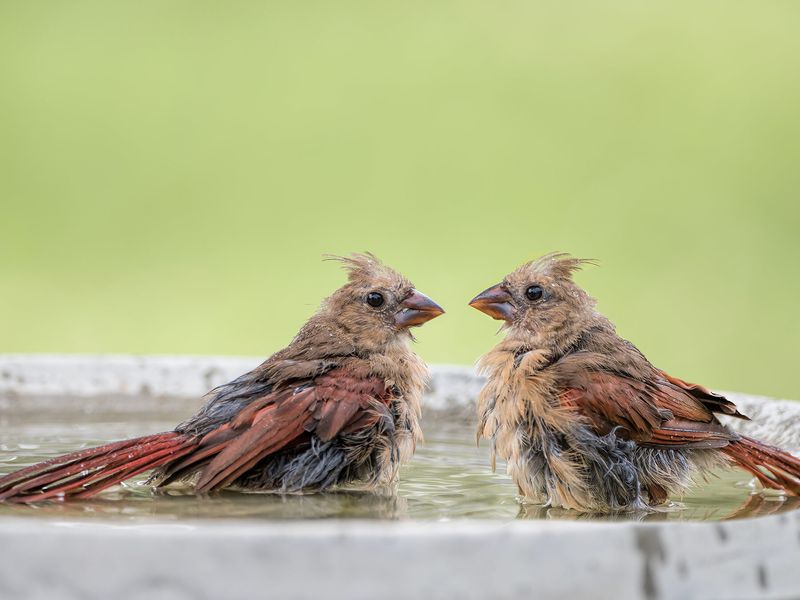
Young cardinals look nothing like their parents at first. Juveniles are mostly brown with a dull orange beak, and they blend into the background easily.
By late summer, they start venturing out on their own.
Once fledglings become independent, they no longer stay close to their parents. They begin exploring, finding food, and learning which yards are worth visiting.
This movement adds new faces to the groups you see at feeders.
Juvenile males start showing patches of red by early fall. The change is gradual, and some young males look like a patchwork of red and brown for weeks.
Females keep their brownish tones but develop the signature orange beak and red-tipped crest over time.
Seeing a mix of bright red adults and scruffier young birds together is a strong sign that a new generation is joining the local population. It also means the breeding season nearby was reasonably successful.
Young cardinals are often bolder than adults at feeders. They have not learned caution yet, so they sometimes hang around longer or approach closer than experienced birds would.
This boldness makes them easier to watch up close.
Keeping your feeder stocked during this period gives young birds a reliable place to practice finding food. A steady supply helps them build the habits that will carry them through fall and winter ahead.
4. Food Brings Small Groups Into The Same Yard
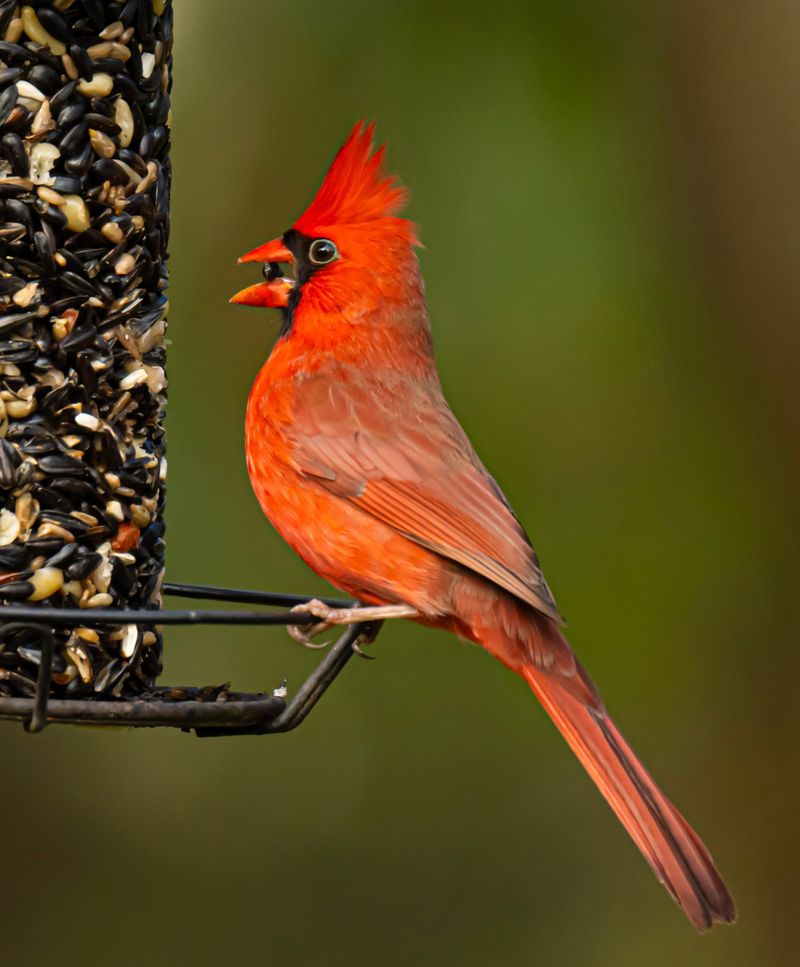
Forget mystery. When cardinals flock to a yard, food is almost always the main reason.
A reliable food source pulls birds in from a wide area, especially when natural supplies start shifting with the season.
Cardinals are not complicated eaters. They want seeds that are easy to crack, close to cover, and consistently available.
A feeder that meets those conditions will attract more birds than one that runs out every few days.
Small groups often form simply because several birds discover the same spot independently. One cardinal finds your feeder.
Another follows. A third spots the group and joins in.
It builds organically without any coordination between the birds.
Placement matters more than most people realize. Cardinals prefer feeders set at a low to medium height, not dangling high in open air.
They like to feel sheltered while eating, so positioning a feeder near shrubs or trees helps.
Keeping the feeding area clean also makes a difference. Wet or moldy seed discourages birds quickly.
Refreshing the seed regularly and clearing out old hulls keeps the feeder appealing through the season.
Once a yard earns a reputation as a dependable food stop, cardinals tend to return on a loose schedule. Morning and late afternoon visits are common.
Watching the pattern develop over a few weeks can become genuinely satisfying for any backyard birder.
5. Sunflower Seeds Are A Favorite At Feeders
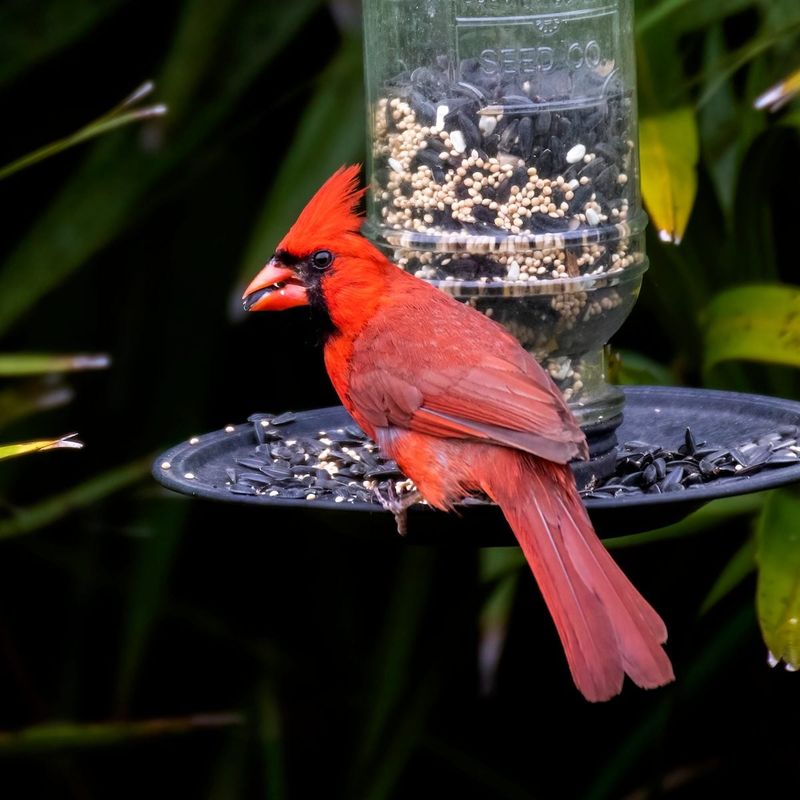
Black oil sunflower seeds pull cardinals in like nothing else. If your feeder is loaded with them, word gets around fast in the local bird community.
Cardinals have strong, thick beaks built specifically for cracking hard seeds.
Black oil sunflower seeds work better than striped sunflower seeds for most backyard setups. The shells are thinner, which makes them easier to crack.
Cardinals can handle either type, but black oil seeds tend to attract more birds with less effort on their part.
Platform feeders and hopper feeders work best for cardinals. Tube feeders with small perches are harder for them to use comfortably.
Cardinals are larger birds, and they need a solid surface to stand on while eating.
Shelled sunflower seeds, also called sunflower chips or hearts, are another solid option. No cracking required means faster eating and less mess below the feeder.
Hulls piling up on the ground can smother grass or garden plants over time.
Mixing sunflower seeds with safflower seeds can expand your feeder appeal without attracting too many squirrels. Squirrels tend to avoid safflower, while cardinals accept it readily.
It is a practical combination worth trying.
Keeping the feeder filled consistently through fall is the most important step. Cardinals learn reliable spots quickly.
An empty feeder on the wrong day can send them to a neighbor’s yard instead, and they may not return right away.
6. Fruit And Wild Seeds Keep Them Foraging Nearby
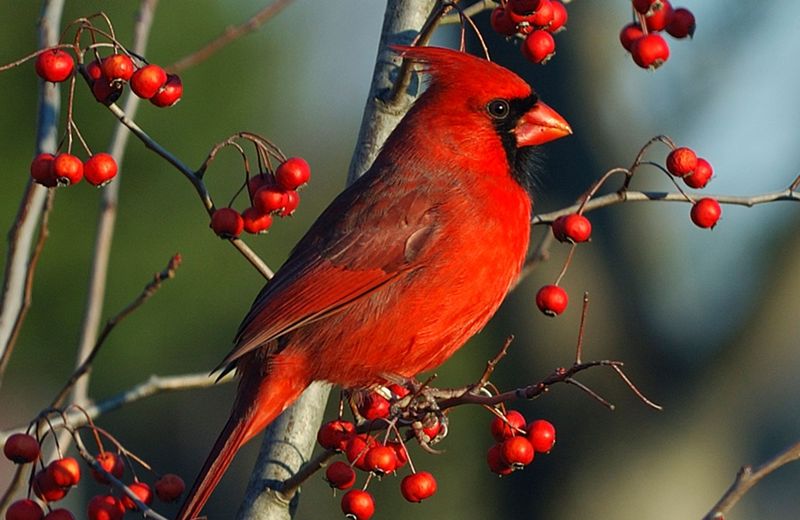
Cardinals do not rely on feeders alone. Wild food sources scattered around a yard can be just as attractive as anything you put out intentionally.
Berry-producing shrubs and seed-heavy plants draw them in for hours at a time.
Dogwood berries, beautyberry, and native viburnums are among the plants cardinals visit regularly in the Southeast. If your yard or a neighboring property has any of these, that could explain why cardinals are spending more time in the area.
Crabapple trees also attract cardinals, especially once the fruit softens in fall. Cardinals tend to prefer slightly softened fruit over hard, unripe options.
Watching them work through a crabapple tree is genuinely entertaining.
Wild grasses and native seed heads are another draw. Cardinals forage on the ground more than many people expect.
Unmowed patches or garden beds left standing through fall give them something to pick through.
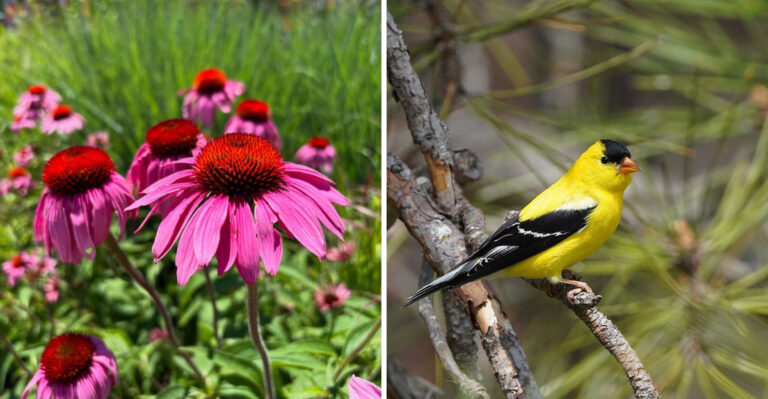
Leaving spent flower heads on coneflowers, black-eyed Susans, and native sunflowers can extend foraging opportunities well into the cooler months.
Cardinals peck at seed heads methodically, pulling out seeds one at a time with impressive precision.
A yard that combines feeders with natural food sources tends to hold cardinals longer than one that offers only a single option. Variety keeps them engaged and gives them reasons to stick around even when the feeder runs low.
7. Larger Flocks Become More Common As Fall Arrives
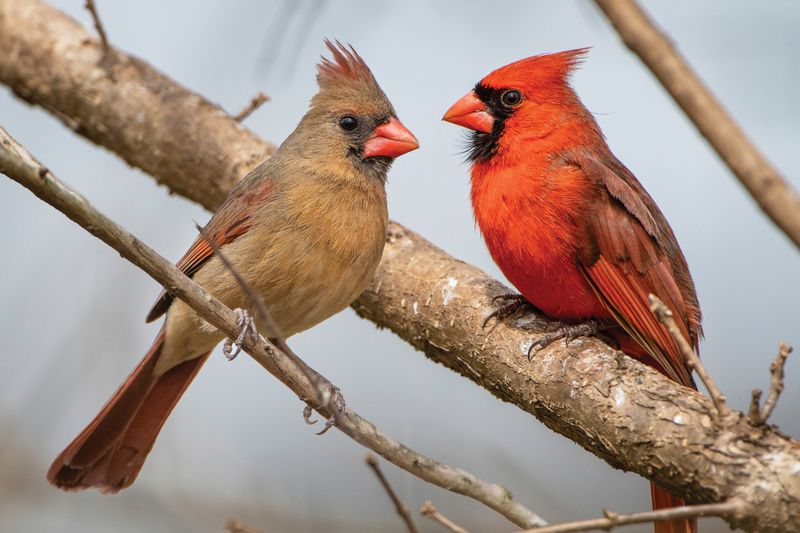
Fall changes everything for cardinals. Once temperatures start dropping and daylight shortens, their behavior shifts noticeably.
Group size grows, visits become more frequent, and the energy around feeders picks up considerably.
Cardinals in the Southeast do not migrate south for winter. They stay put and rely on whatever food is available locally.
As natural food sources become less predictable, they lean more heavily on reliable spots like backyard feeders.
Flocks of eight to fifteen cardinals are not unusual by mid-fall in areas with good food and cover. These groups are not permanent.
Birds move in and out depending on conditions, but a core group often returns to the same yard repeatedly.
Roosting behavior also shifts in fall. Cardinals gather in dense shrubs or thickets at night for warmth and safety.
A yard with thick evergreen shrubs or brush piles nearby can become a roosting spot, which means more cardinals visible during the day too.
Adding a heated birdbath can make your yard even more attractive as temperatures drop. Fresh water is harder to find in cold weather, and cardinals use it for both drinking and bathing year-round.
Watching a yard full of cardinals on a crisp fall morning is one of those simple pleasures that backyard birding delivers reliably. Keep the feeder stocked, the water fresh, and the cover available, and the birds will likely keep showing up.