What It Means When Harvester Ants Build Mounds After Arizona Rains
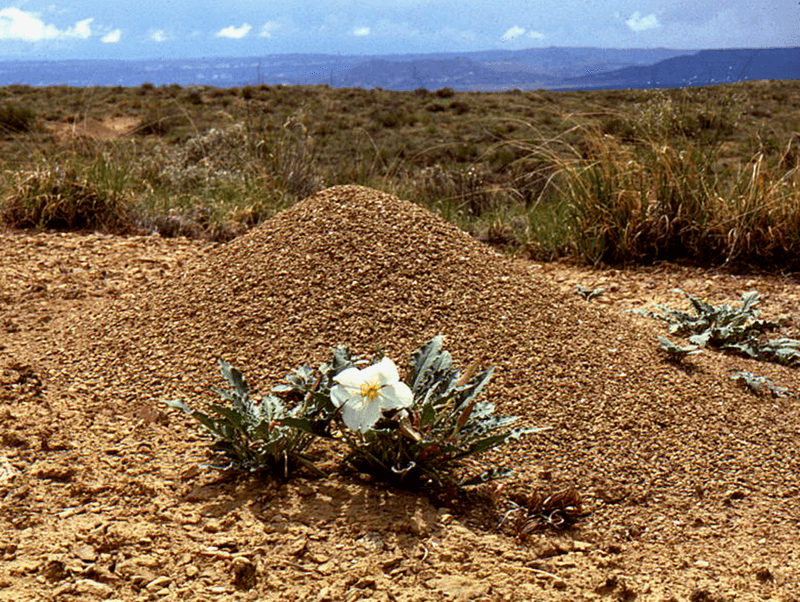
A mound that seems to pop up after a storm can make you wonder what just moved into your yard. In Arizona, harvester ants often get noticed after rain, but noticing is not the same as knowing what happened.
A swarm, fresh soil, and busy workers each mean something different. Let’s sort out what one rainy-day observation can and cannot tell you.
Rain-Linked Swarms Can Be Part of Nest Founding
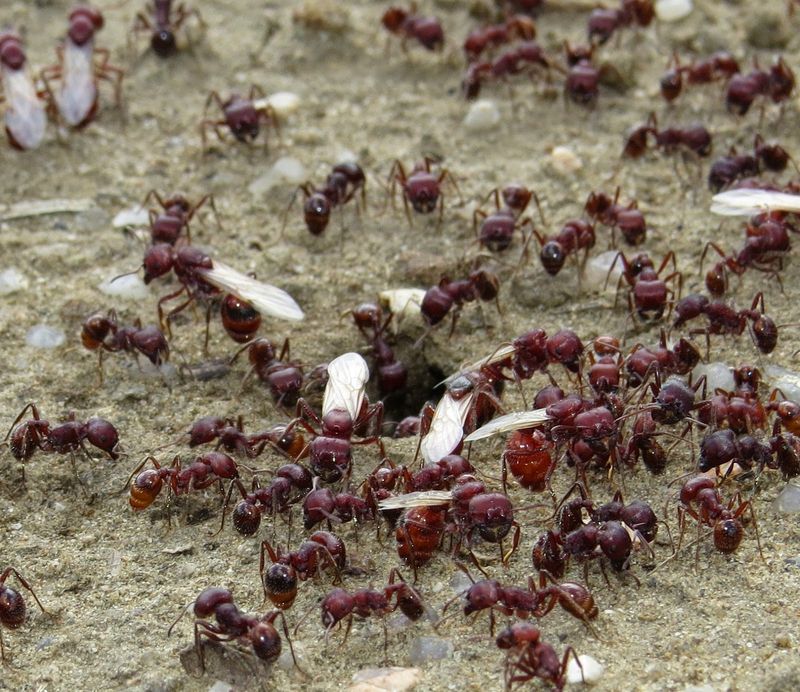
Winged ants lifting off after a storm can look like a sudden invasion. According to Arizona Cooperative Extension, winged males and females swarm in spring or summer, usually after a rainy period.
That swarm is a mating event. It may be associated with new nest founding, since a mated female can start a nest on her own.
Those details are worth knowing, but they come with limits.
A swarm does not prove that the mound near your patio is new. It also does not show that the local ant population has grown.
Winged ants, fresh soil, and busy worker traffic are three separate observations, and seeing one does not establish the others.
Swarm timing also varies, so a single date on the calendar tells you little. If you spot winged ants, treat it as a clue about the season, not a verdict on any particular mound.
Fresh Soil Does Not Date a Colony
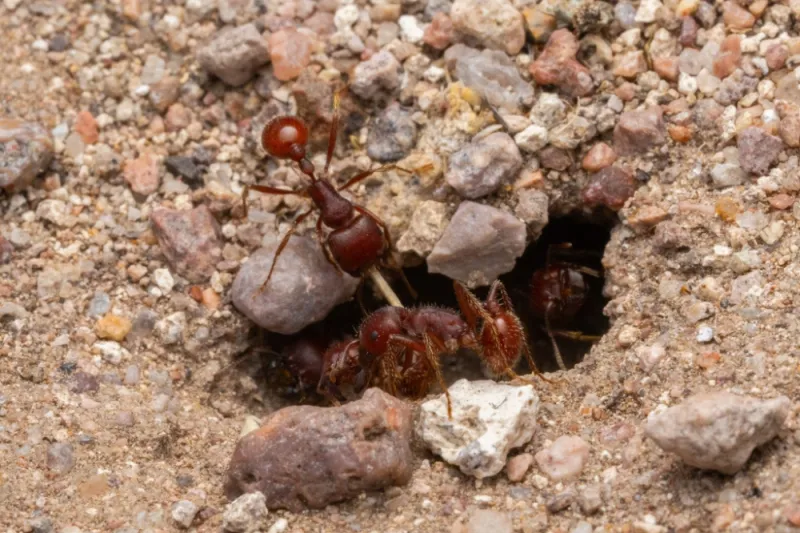
Loose, freshly dug soil makes a mound look brand new. Yet Arizona Cooperative Extension notes that workers enlarge nests, so fresh soil can be consistent with ordinary nest work at an established colony.
Enlargement is only one possibility. Repair and a newly founded nest could also leave tidy piles of excavated material.
The sources reviewed do not say how often each one explains a post-rain mound in Arizona yards.
So a yard visitor cannot read a colony’s age or origin from its appearance alone. A neat pile today might sit atop a nest that has been there for a long time.
Or it might not.
A better habit is to watch from a comfortable distance over several weeks. Notice where the mound sits and how busy it stays, and resist the urge to guess.
Post-Rain Worker Traffic May Be Foraging
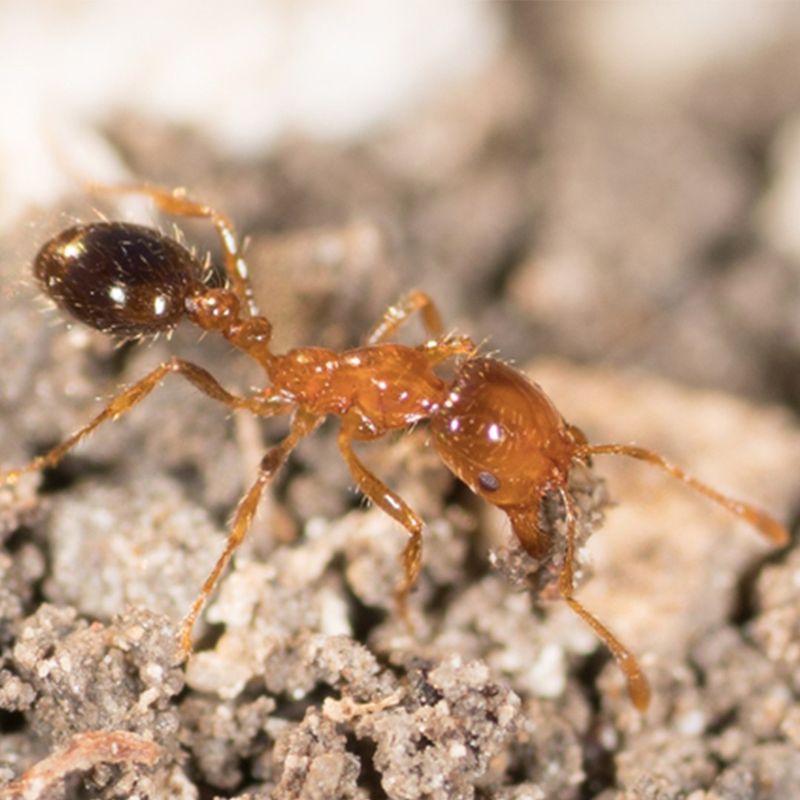
A trail of workers on damp ground may have nothing to do with building. A study of red harvester ants in New Mexico, discussed in Deborah Gordon’s 2024 review, reports increased foraging the day after rain.
Humid conditions reduce water loss for foragers, and exposed seeds may be easier to find. That offers one possible reason for conspicuous worker activity after a storm.
Keep the limits in view. The research covers red harvester ants in New Mexico, not every Arizona species or every storm.
It is a helpful regional clue, not a rule for your yard.
Worker traffic and mound construction are different things. Ants streaming out and back with seeds suggest foraging, while piles of fresh soil point to digging.
Seeing busy ants does not tell you a mound is going up.
Mound Features Vary Across Arizona
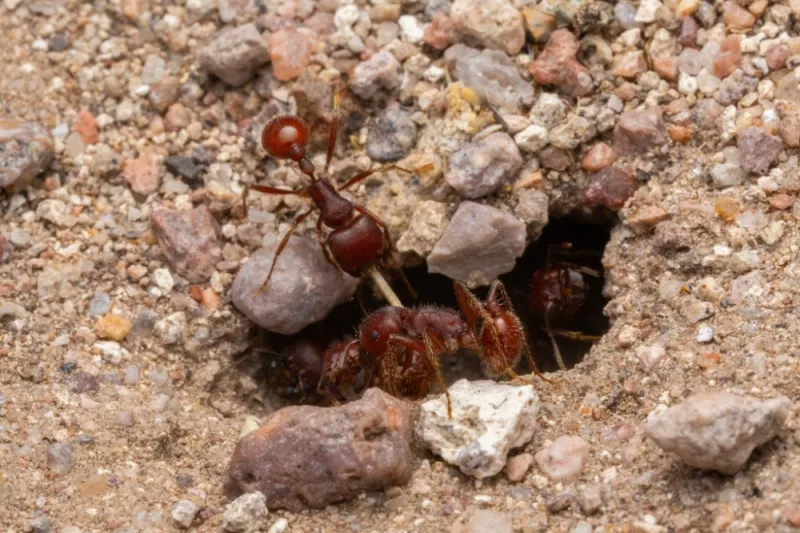
Not every harvester ant nest looks the same. Arizona Cooperative Extension describes several species in the state, and nests can include a circular bare patch with a fine-gravel mound.
Worker color varies too, so a red ant in one yard and a darker one in another could both be harvester ants. Nest appearance also differs among species.
That means no single shape, size, or color works as a universal test. Some nests have a tall gravel cone, while others are flatter.
Extension mentions wide bare areas in wildland settings, but that range is not a typical backyard measurement.
If you want a firm identification, take clear photos from a safe distance and ask your local Extension office. Appearance is a starting point, and a trained eye makes it far more reliable.
Harvester Ants Have Ecological Roles, Not Guaranteed Yard Benefits
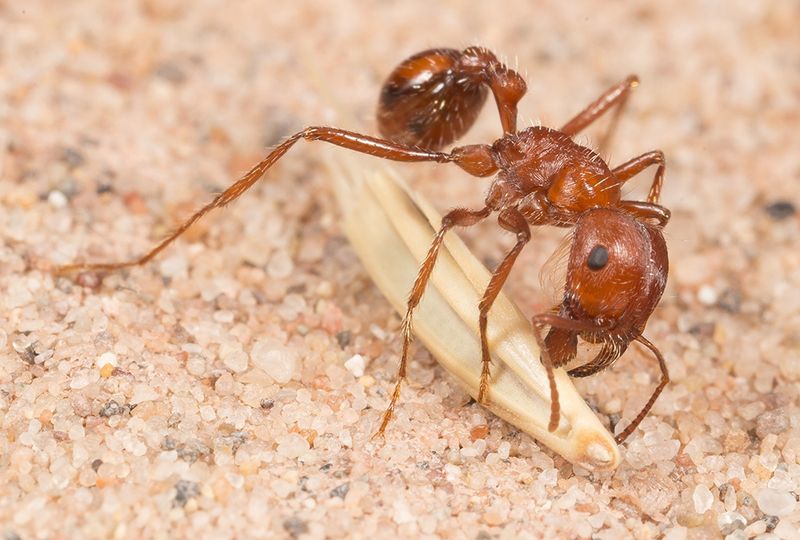
These ants are part of the desert’s working machinery. Arizona Cooperative Extension says they forage primarily for seeds and sometimes eat insects.
Extension also documents seed dispersal and increased soil permeability around nests. They also provide food for other animals, which ties them into the wider habitat.
Those are ecosystem roles, though, not promises. A colony will not reliably control pests, and it will not guarantee better soil in your garden.
Any benefit at the scale of one yard is not established.
Think of them as neighbors with a job in the habitat. Seeing them as neither villains nor helpers keeps expectations realistic, and it leaves room for the caution that nest location calls for.
Choose a Cautious Response Based on the Nest’s Location
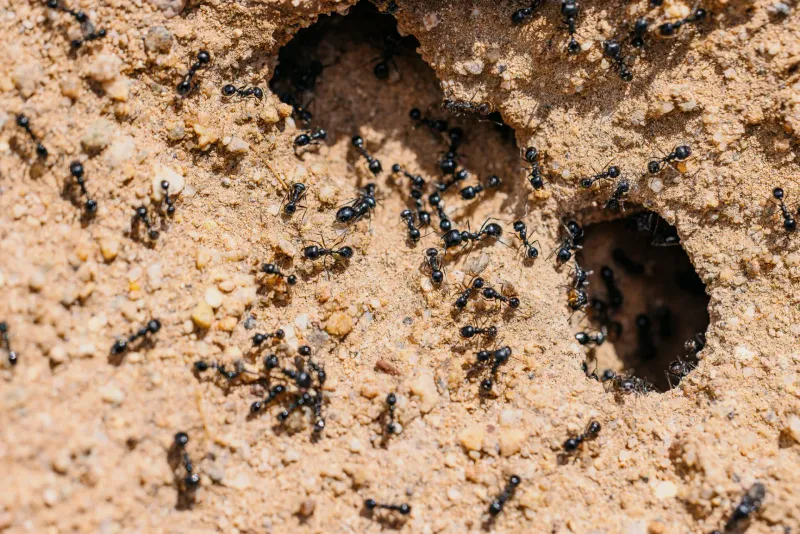
Habitat value sits alongside a real sting risk. Arizona Cooperative Extension warns that harvester ants can sting and will defend a threatened nest.
For that reason, do not poke, handle, or casually dismantle a suspected nest. Anyone with a history of allergic reactions to insect stings should take particular care.
If the nest is in an out-of-the-way spot, leaving it undisturbed is a reasonable choice. Away from people and pets, it can simply remain part of the yard.
If it sits near regular foot traffic, children, or pets, identify the ants first. Then contact your local Extension office for guidance before choosing a response.
A mound after rain is a question, not an answer.