A Native Arizona Wildflower That May Reseed Your Desert Bed Season After Season
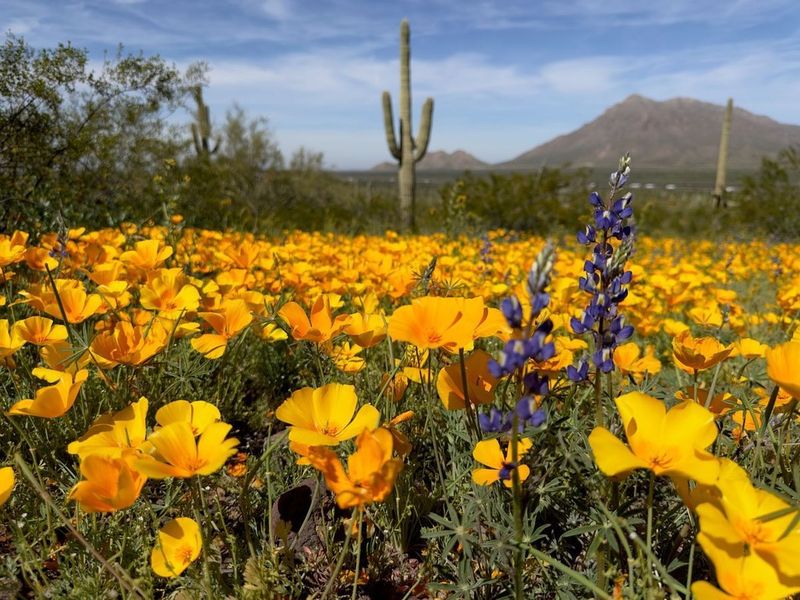
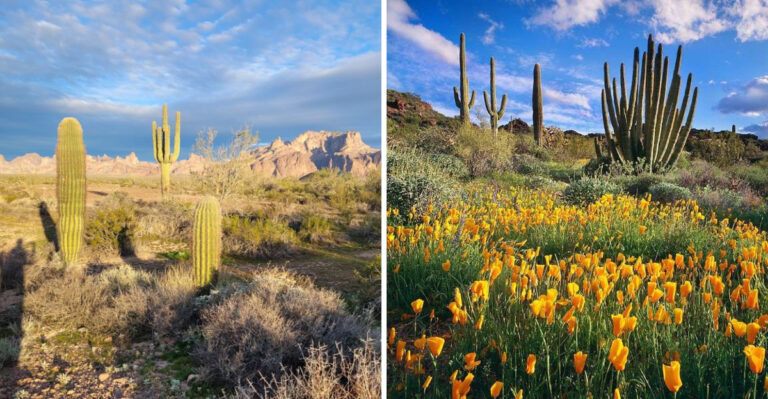
Every spring, swaths of gold roll across Arizona hillsides and roadsides, painted by a single native wildflower that grows, blooms, sets seed, and disappears before summer heat arrives. Mexican gold poppy pulls off something most desert plants cannot: it can sprout a new generation from its own seeds the following fall, giving Phoenix and Tucson gardeners a recurring spring display without buying new transplants every year.
The catch is that “recurring” is not the same as “guaranteed forever,” and getting this plant to perform well in a low-desert bed takes a bit of planning. This article walks through what the science and regional guidance actually say, so you can set up a bed that gives the poppy its best chance to return.
A Strong Spring Choice for a Low-Desert Arizona Bed
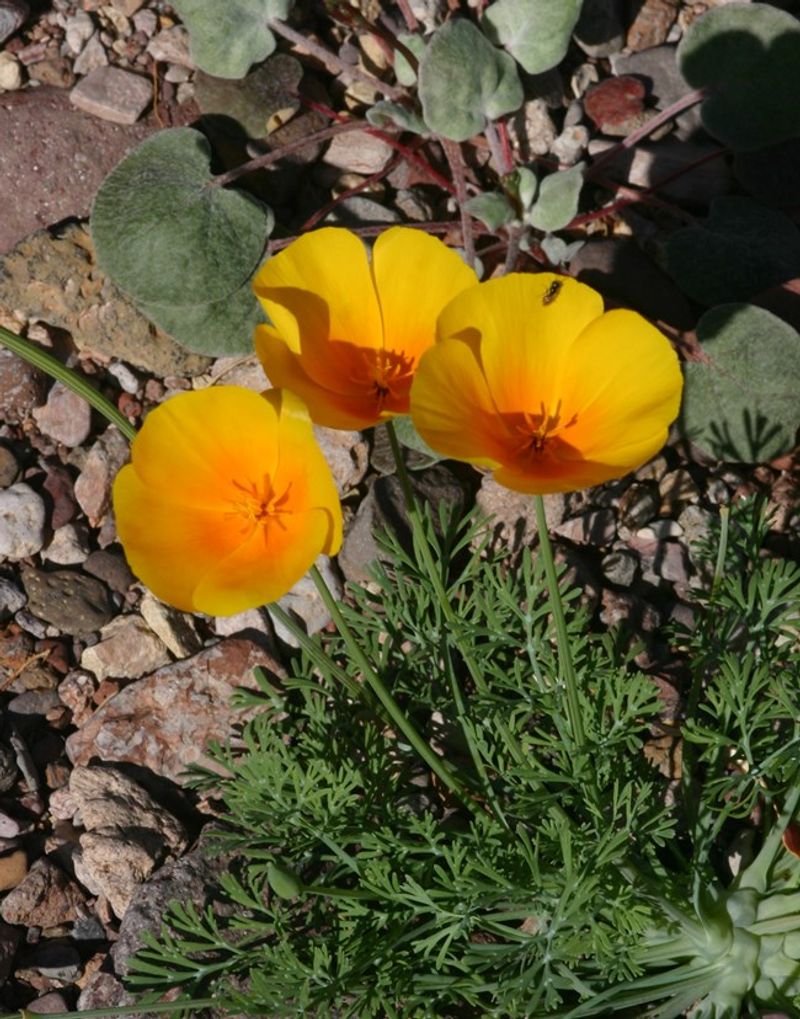
Mexican gold poppy, known botanically as Eschscholzia californicamexicana subsp. , is one of the most recognizable spring wildflowers in low-desert Arizona. Unlike many showy plants sold at Arizona garden centers, this one is genuinely native to the state, documented across southern, central, and western Arizona by the Arizona Native Plant Society’s plant list.
It thrives in full sun, tolerates the alkaline and sandy soils common to Phoenix and Tucson yards, and requires relatively little water once it is established in the ground.
The plant is an annual, meaning it completes its entire life cycle in a single season. It germinates in fall or winter, pushes up feathery blue-green foliage, and then produces those familiar cup-shaped golden-orange flowers from roughly February through May.
When temperatures climb into triple digits, the plant sets seed and dies. No root survives underground waiting for next year.
What makes Arizona gardeners return to this species is its ability to leave behind seeds that can sprout the following season, potentially reducing the need to replant each fall. That is the recurring appeal, and it is a real one, but the title that brought you here overstates the case.
The word “only” is not accurate, because Arizona has several native wildflowers that may reseed, and “forever” is not supported by any regional guidance. This article uses the evidence to show what Mexican gold poppy can realistically do for your Arizona spring bed.
Reseeding Requires the Right Arizona Conditions
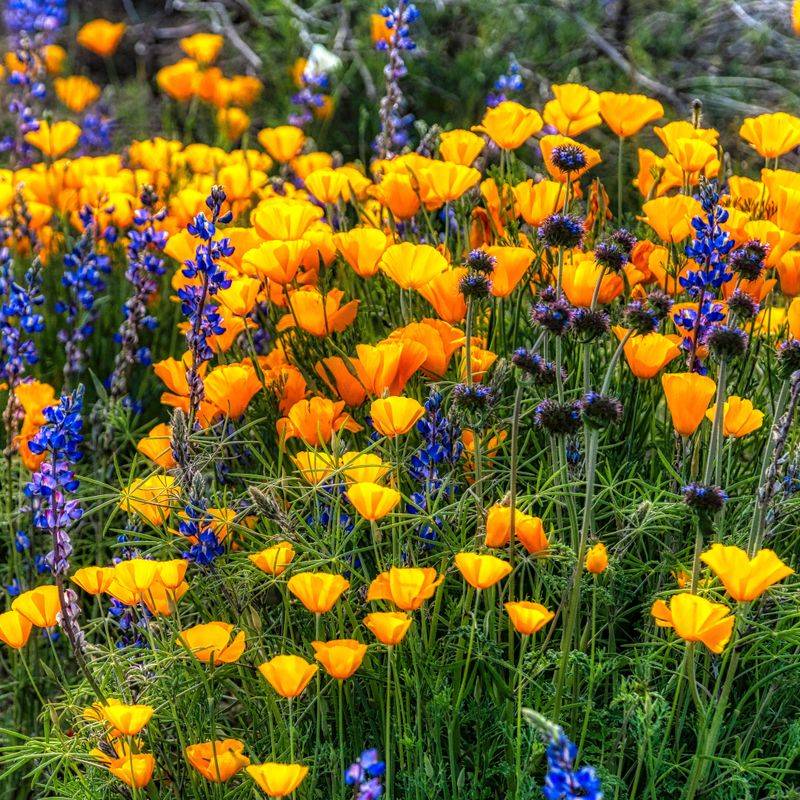
An annual wildflower does not survive Arizona summer heat as a living plant. Instead, it bets everything on seeds.
When the spring display ends, mature plants release small seeds into the soil, and those seeds must survive heat, summer monsoon moisture, seed-eating birds and insects, and soil compaction before cool fall temperatures and winter rain can trigger germination. The USDA NRCS California poppy plant guide notes that the desert subspecies is adapted to germinate with winter rain, cool temperatures, and adequate soil moisture, meaning the seed is not simply waiting to pop up no matter what happens.
In Phoenix and Tucson, several things can break that cycle. A dry fall with no supplemental irrigation may prevent germination entirely.
Compacted caliche or heavy foot traffic can seal the soil surface so seeds cannot make good contact. Weeds, especially fast-growing annuals like London rocket or stinknet, can outcompete poppy seedlings before they get established.
Your Arizona Garden Changes Every Week. Your Plan Should Too.
Gardening in Arizona changes quickly throughout the season. Every Friday you’ll receive a simple weekly plan showing exactly what to plant, prune, fertilize, harvest, and protect so you never miss the right timing.
Birds, rodents, and insects consume a meaningful share of any seed crop left on the ground.
University of Arizona Cooperative Extension guidance on wildflower establishment is candid: natural-looking wildflower meadows are genuinely difficult to establish in Arizona, and success depends on moisture, open soil, low weed pressure, and favorable conditions in each individual season. Reseeding is a conditional possibility, not a permanent guarantee.
Gardeners who understand those conditions can tip the odds in their favor, but no Arizona site produces reliable blooms year after year with zero attention.
Verify the Seed’s Arizona Identity
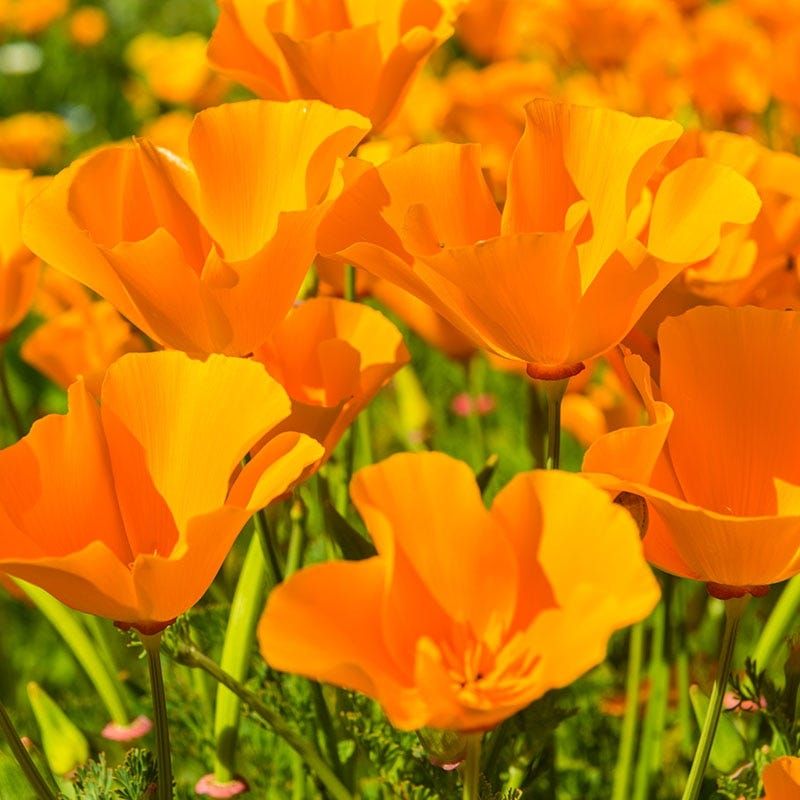
Not every California poppy seed packet contains the Sonoran Desert subspecies that is native to Arizona. The species Eschscholzia californica is widespread across the western United States, and many commercial seed companies sell generic California poppy seed without specifying the subspecies.
That matters in Phoenix and Tucson because the desert subspecies, Eschscholzia californicamexicana subsp. , is specifically adapted to Arizona’s winter-rain germination window, alkaline soils, and intense summer heat.
When shopping for seed, look for the full scientific name on the label. Reputable regional suppliers, Arizona native plant nurseries, and seed libraries affiliated with organizations such as the Arizona Native Plant Society are more likely to carry correctly identified regional seed than a national big-box retailer or an inexpensive online wildflower mix.
University of Arizona Cooperative Extension warns that low-cost commercial wildflower mixes may contain poorly adapted, non-native, or even invasive filler species that are not appropriate for Arizona conditions.
Other Arizona wildflowers can also reseed, including desert marigold, desert bluebells, blanketflower, and desert chia. Mexican gold poppy is a strong and well-supported choice for a low-desert spring display, but it is not the only option.
Whatever species you choose, verify the scientific name, confirm that the seed is appropriate for low-desert Arizona, and avoid assuming that a packet labeled “wildflower mix” or “Southwest mix” is native, adapted, or free of invasive species.
Sow Mexican Gold Poppy in the Fall
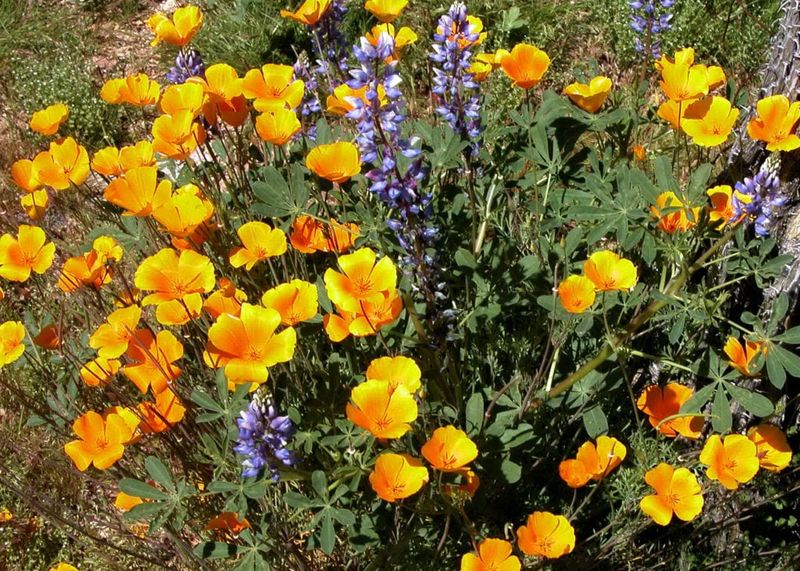
Timing is the single biggest factor most Arizona gardeners get wrong with wildflowers. Cool-season spring bloomers like Mexican gold poppy need to go into the ground in fall, commonly around November in the Phoenix and Tucson metro areas.
The University of Arizona Cooperative Extension’s November monthly gardening guide for Pima County specifically lists Mexican and California poppies among the flowers that can be sown directly in November, confirming that fall is the correct planting window for low-desert Arizona, not spring as general gardening advice from cooler climates often suggests.
Prepare the site before you scatter a single seed. Choose a location that receives full sun for most of the day.
Remove existing weeds by hand or with shallow cultivation, since weed seeds buried deeper in the soil will be brought to the surface if you till aggressively. Where the soil is very poor, a small amount of weed-free compost can be lightly incorporated.
Broadcast seed evenly across the prepared area, then use a rake to press seeds into light contact with the soil. Avoid burying seed deeply; Mexican gold poppy seed germinates best near the soil surface.
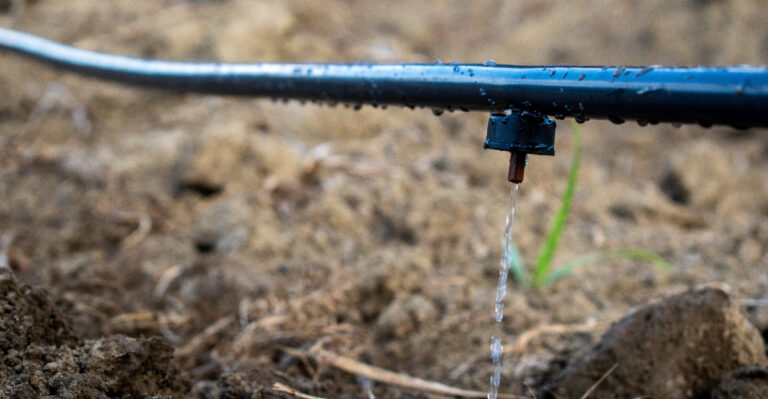
Once seed is in the ground, keep it moist but not waterlogged until germination occurs. Arizona’s winters are often dry, and a single rainfall event is rarely enough to carry seeds through to sprouting.
Plan on supplemental irrigation every few days during dry spells, tapering off as seedlings establish. After the plants are a few inches tall and rooted in, their water needs drop considerably, but “low water” after establishment does not mean zero water in a dry Arizona winter.
Protect the Next Seed Crop After Bloom
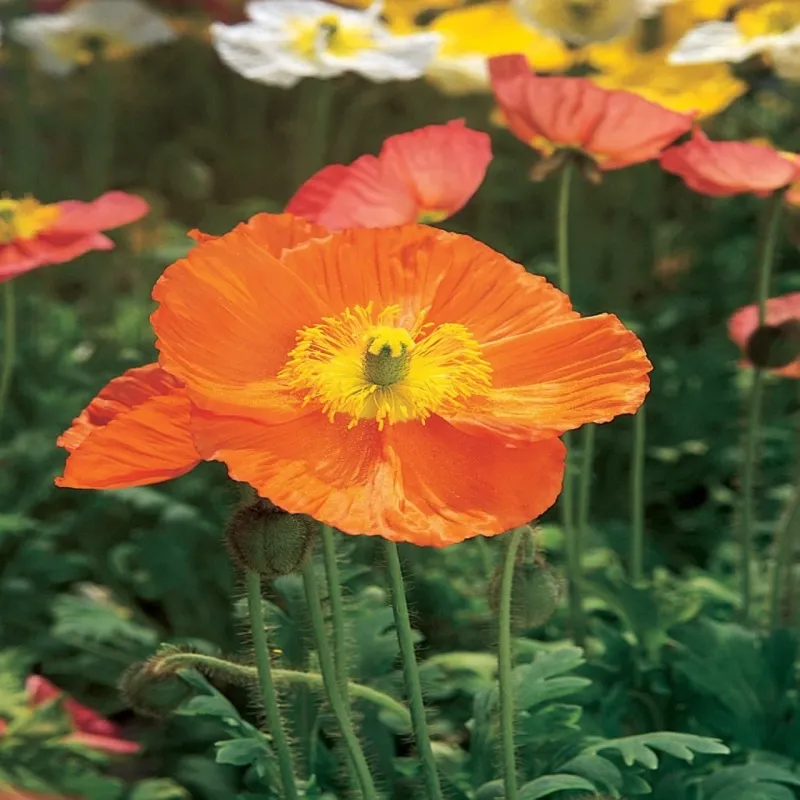
When the Arizona spring bloom winds down in May and June, the temptation is to pull out the spent plants and tidy up the bed. Resisting that urge, at least for a few weeks, is one of the most important things you can do to support a possible future display.
Seed capsules on Mexican gold poppy are long, slender, and easy to spot once the petals drop. Leaving selected plants in place until those capsules turn tan and begin to split gives seeds time to mature and fall naturally onto the soil surface.
After seeds have dropped, you can remove the dry plant material. At that point, focus on keeping some areas of open, exposed soil around where the seeds landed.
Weed competition is the biggest threat to next fall’s germination. Annual weeds that sprout after monsoon rains can shade out or crowd poppy seedlings before they get started.
Light hand-weeding through summer and early fall, while the soil is between monsoon rain events, keeps the seed bed reasonably clear without heavy disturbance.
Set realistic expectations for what the bed will look like. Arizona’s natural desert vegetation is open and spaced, not a continuous carpet, and a poppy bed that reseeds on its own will generally look informal and patchy rather than uniformly dense.
Supplemental water in fall can improve germination rates, but a denser stand also means more dry plant material at season’s end, which adds to maintenance and, in some Arizona locations, fire-risk considerations. Reseeding may simply fail in a season with poor timing or severe drought, and that is a normal part of working with annuals in the desert.
Use Arizona Poppy for a Separate Monsoon-Season Window
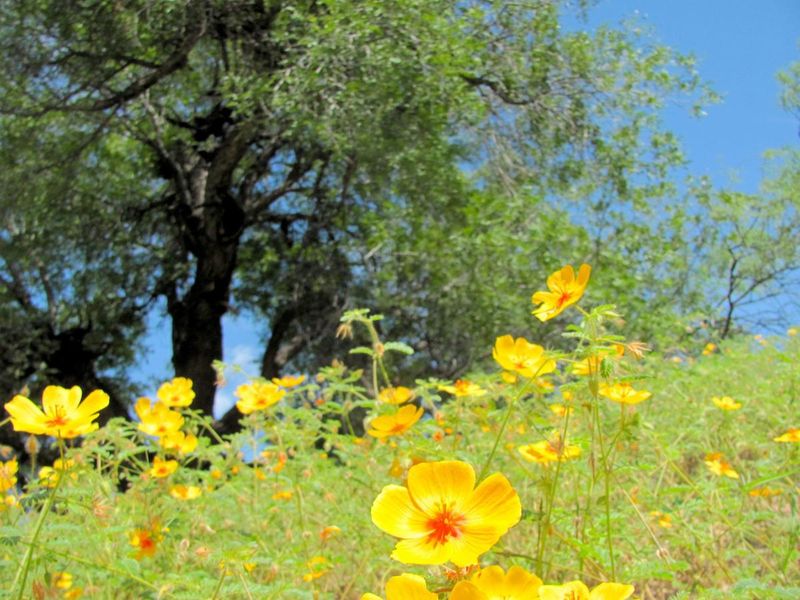
Mexican gold poppy is done by early summer, and Arizona’s low-desert heat means the garden can look bare and scorched from June onward. Arizona poppy, Kallstroemia grandiflora, fills a completely different seasonal window and is worth considering as a companion planting rather than a replacement.
The Arizona Native Plant Society’s profile of Arizona poppy describes it as a Sonoran Desert wildflower that blooms during the summer monsoon period, generally from July through September, producing large orange flowers on sprawling plants that can cover bare ground during the hottest part of the Arizona year.
Arizona poppy produces abundant seed, but its timing is less predictable than Mexican gold poppy’s. Seeds can remain dormant in the soil for multiple years before germinating when conditions are right, so a bed sown one summer may not produce a full display until two or three monsoon seasons later.
University of Arizona Cooperative Extension guidance lists Arizona poppies among the flowers that can be planted from seed during July, which aligns with the arrival of monsoon moisture in Phoenix and Tucson. The City of Tucson’s landscape plant resources also confirm its value as a summer-rainy-season bloomer suited to low-desert conditions.
Pairing Mexican gold poppy with Arizona poppy creates two separate seasonal windows, one in spring and one during monsoon season, rather than a single plant that blooms all year. That is an honest framing of what native Arizona wildflowers can deliver.
Neither species blooms continuously, and neither eliminates the need for site preparation or seasonal attention. Think of it as scheduling two separate performances on the same stage, not running a single show year-round.
Balance Habitat Benefits With Fire-Safe Maintenance
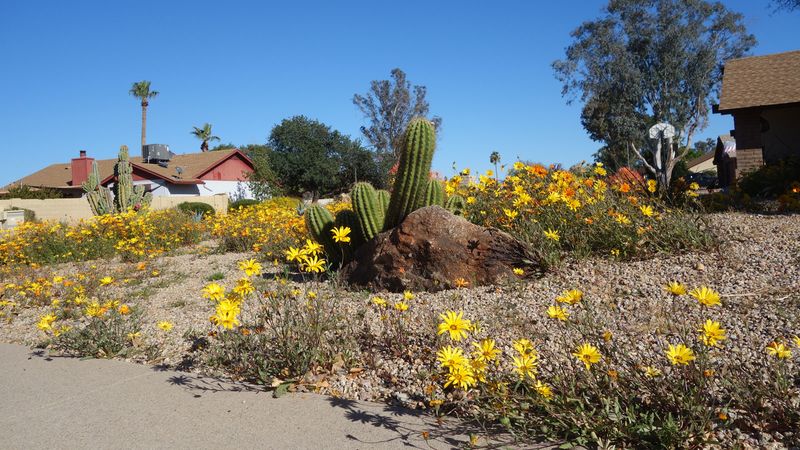
A bed of Mexican gold poppy in an Arizona yard can provide real ecological value. The flowers offer pollen to native bees, including several specialist bee species associated with poppies, and can attract butterflies and other beneficial insects during the February-through-May bloom window.
University of Arizona Cooperative Extension’s guidance on plants for pollinators in the low desert of Arizona recommends a diversity of plants with overlapping bloom periods to support pollinators across the growing season. A single annual species, however well-chosen, cannot provide complete pollinator habitat on its own, and it should not be marketed as a reliable deterrent for scorpions, mosquitoes, ticks, or other pests common to Arizona yards.
Any pest-related benefit from adding native plants to a yard is indirect and conditional.
Fire safety is a practical concern that Arizona wildflower guides sometimes underemphasize. Mexican gold poppy and Arizona poppy are both annuals that die and dry out completely at the end of their season, leaving behind brittle, flammable plant material.
In Phoenix and Tucson neighborhoods where defensible space matters, a dense stand of dry wildflower stems close to a structure or wooden fence creates a fire-risk problem that outweighs the habitat benefit.
University of Arizona Cooperative Extension’s fire-resistant landscaping guidance recommends separating wildflower beds from structures and promptly removing dead or dormant vegetation where fire exposure is a concern. A gravel buffer between the bed and the house, combined with timely cleanup of dry plant material after seeds have dropped, keeps the habitat value of the bed while reducing the fuel load in Arizona’s increasingly fire-aware landscape.
Plan for Recurring Blooms, Not a Permanent Carpet
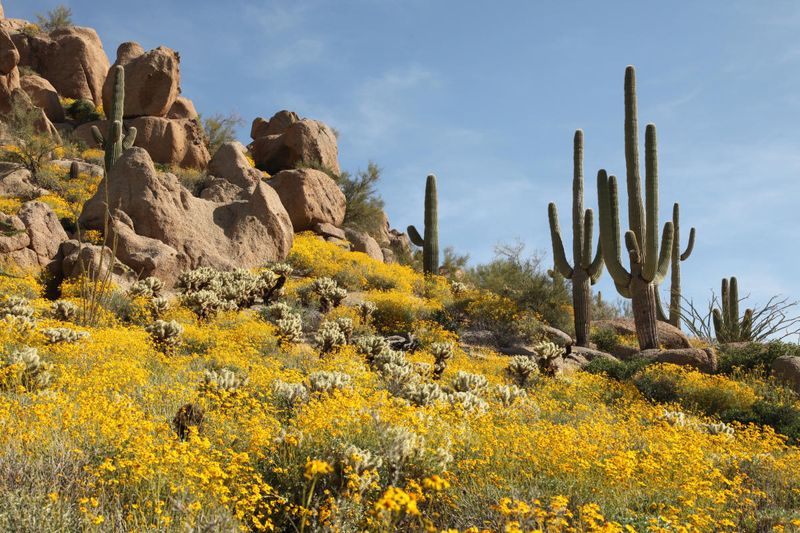
Getting the most from Mexican gold poppy in a low-desert Arizona bed comes down to a handful of repeatable steps. Source seed correctly by confirming the full scientific name Eschscholzia californicamexicana subsp. on the label and buying from a regional supplier familiar with Arizona conditions.
Sow in fall, aim for November in the Phoenix and Tucson areas, into a weed-cleared sunny bed. Keep the seed moist through dry winter spells with supplemental irrigation, then ease off once seedlings are established.
After bloom, leave selected seed capsules to mature and drop before cleaning up the bed, and do light weeding to keep soil open for fall germination.
When those conditions line up, a recurring spring display is genuinely possible and can reduce the need to buy and sow seed every single year. When they do not line up, because of drought, a late cold snap, heavy weed pressure, or seed predation, reseeding may not happen, and that is a normal outcome for an annual wildflower in the Arizona desert.
Adding Arizona poppy for the monsoon season extends your color window without asking either species to perform outside its natural timing.
A wildflower bed managed this way is a seasonal event, not a permanent groundcover. That distinction is what makes it sustainable in Arizona’s climate: low water after establishment, adapted to local soils, and honest about what it requires in return.