What It Means When You Spot This Winged Insect Massing On Pennsylvania Trees
You notice something unusual on one of your Pennsylvania trees. A mass of winged insects clustered together in numbers that stop you mid-step.
They’re not scattered randomly. They’re concentrated, deliberate looking, and numerous enough to make you reach for your phone before you’ve fully processed what you’re seeing.
If you’ve noticed this recently, you’re not alone. Reports have been coming in from across Pennsylvania this season, and what people are spotting is something every homeowner in the state needs to be able to identify quickly and respond to correctly.
This particular insect has become one of the most serious pest threats Pennsylvania trees and gardens face right now.
It targets a wide range of trees and plants, it spreads faster than most people expect, and the damage it causes compounds significantly the longer it goes unaddressed.
The good news is that early identification makes a real difference in how much damage occurs and how effectively the spread can be slowed.
Here’s exactly what to look for, what it means for your trees, and what Pennsylvania homeowners should do the moment they spot it.
1. The Insects Have Found A Favored Feeding Tree
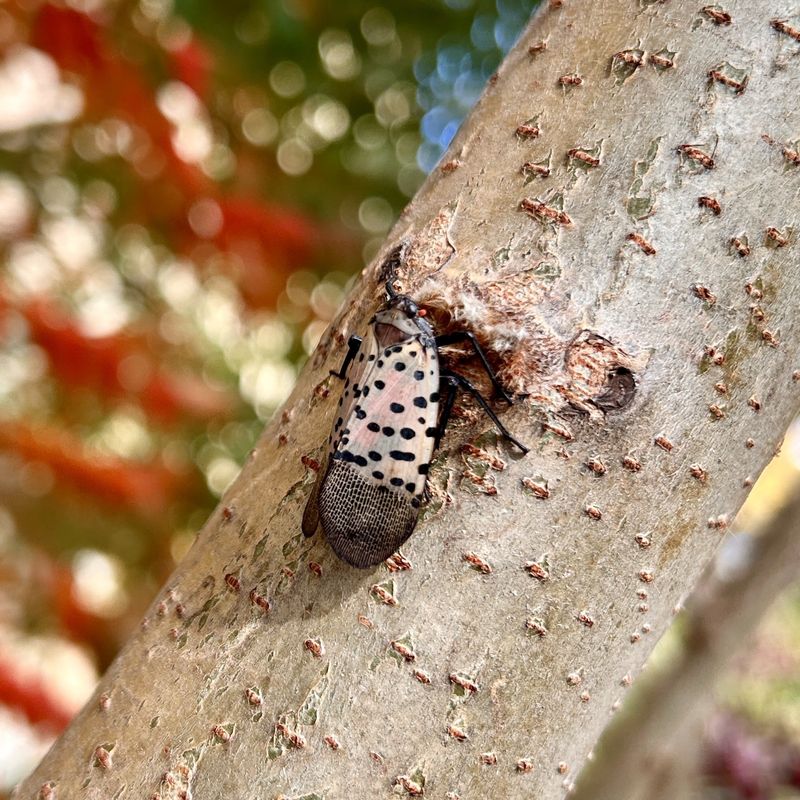
Picture walking outside on a warm August afternoon and finding dozens, maybe even hundreds, of strange insects plastered all over your maple or black walnut tree. That sight is not random.
When spotted lanternflies mass on a tree, it almost always means they have found a reliable, productive source of plant sap they love to feed on.
Spotted lanternflies are not picky eaters, but they do have clear favorites. Tree-of-heaven is their top choice, but they also flock to maples, black walnut, birch, willow, and grapevines.
These plants produce the rich sap that adult lanternflies crave, and once a group finds a good feeding spot, more individuals are attracted to join them.
Adults first become visible in Pennsylvania during summer, typically appearing around July. They stay active and keep feeding right up until hard freezes arrive in late fall.
That means a large chunk of the warmer months involves these insects actively draining sap from your trees and plants.
Spotting a mass of them on one specific tree is a strong signal that tree is under stress from feeding. The good news is that most healthy, established trees can handle some feeding pressure without suffering permanent harm.
However, grapevines and younger or already-stressed trees face much greater risk from heavy infestations. If you see them gathering, take note of which trees are affected.
Keeping a close eye on those plants through the season will help you gauge how much stress they are experiencing and whether any extra care, like watering or fertilizing, might be needed to keep them healthy through the fall.
2. How To Confirm They Are Spotted Lanternflies
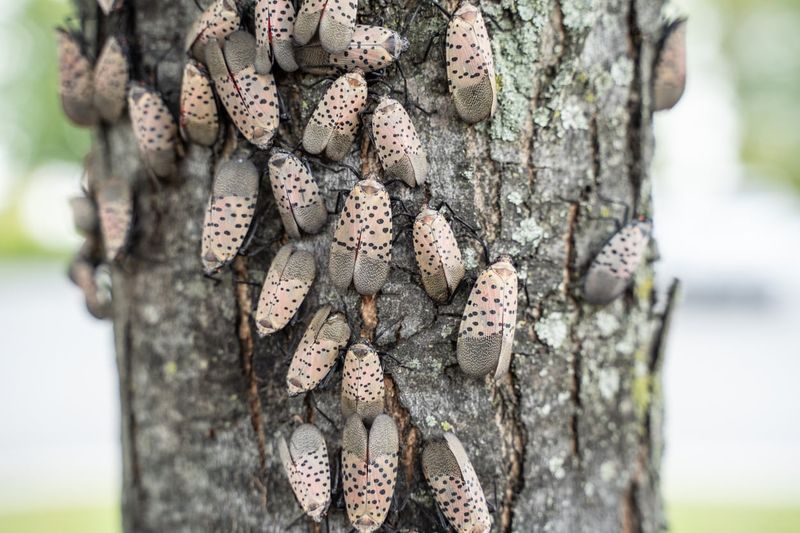
Not every winged insect you spot on a tree is a spotted lanternfly. Before you report a sighting or take any action, it helps to know exactly what you are looking for.
Your Pennsylvania Garden Changes Every Week. Your Plan Should Too.
Gardening in Pennsylvania changes quickly throughout the season. Every Friday you’ll receive a simple weekly plan showing exactly what to plant, prune, fertilize, harvest, and protect so you never miss the right timing.
Fortunately, adult spotted lanternflies have a pretty distinctive look that makes them easier to identify than many other insects.
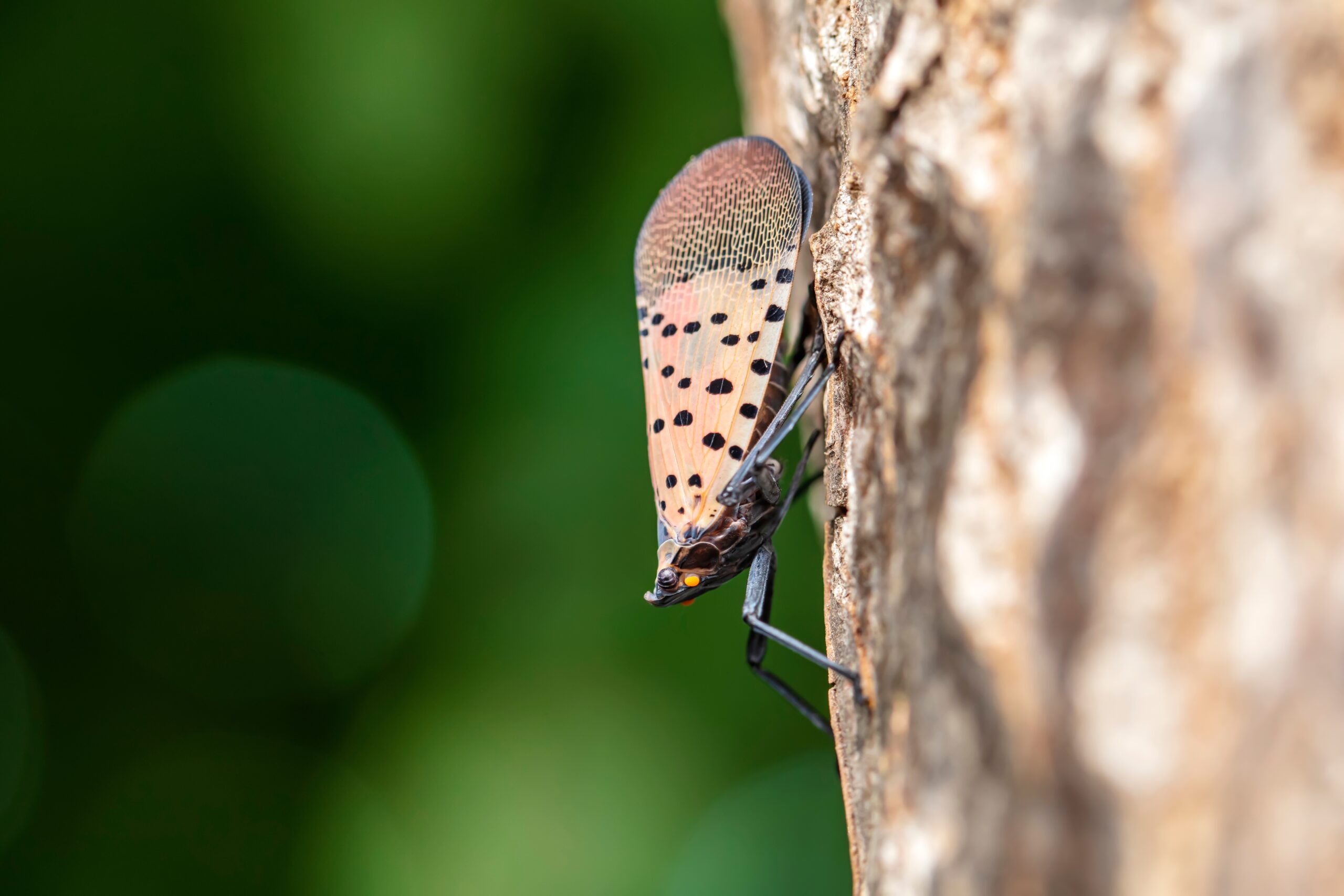
At rest, an adult spotted lanternfly is about one inch long. Its closed forewings are gray with bold black spots scattered across the surface, and the tips of those forewings display a darker, almost checkered pattern.
From a distance, a resting lanternfly can look a bit like a moth, which sometimes causes confusion.
The real surprise comes when they jump or take flight. Underneath those gray wings, spotted lanternflies hide striking red, black, and white hindwings that flash open when they move.
Seeing that burst of red is one of the clearest ways to confirm what you are dealing with. It is also worth knowing that only adult lanternflies have fully developed wings. Earlier in the season, from spring through midsummer, you might spot the younger nymphs instead.
Early-stage nymphs are small and black with white dots. Later-stage nymphs develop red patches alongside the black and white coloring. Neither nymph stage can fly, but they can still jump surprisingly far.
If you are unsure whether what you found is actually a spotted lanternfly, you can take a clear photo and submit it to the Pennsylvania Department of Agriculture for confirmation.
Getting a correct identification before acting ensures you are responding to the right pest and not accidentally disturbing a harmless native insect in the process.
3. Massing Often Signals Late-Season Feeding And Reproduction
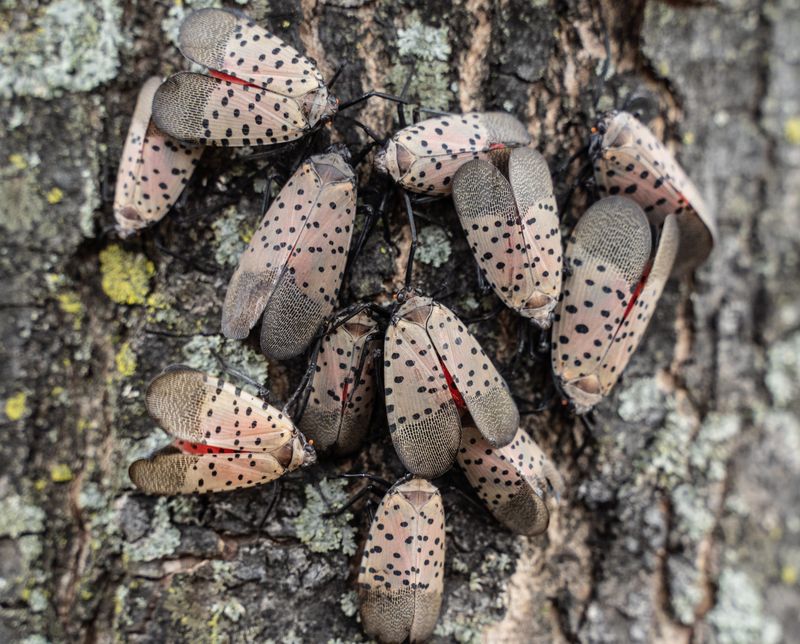
There is something almost urgent about the way spotted lanternflies gather in huge numbers during late summer and fall. That urgency is not accidental.
As the season winds down, adult lanternflies are racing against time to feed heavily and reproduce before cold temperatures arrive.
Adults become especially noticeable from late summer into fall, which is typically when most people in Pennsylvania first realize just how many of these insects are in their area.
The groups can grow impressively large, sometimes covering entire sections of tree trunks and branches.
Reproduction is a big part of what is happening during this period. Females begin depositing egg masses from late summer through early winter, with the heaviest activity usually occurring throughout autumn.
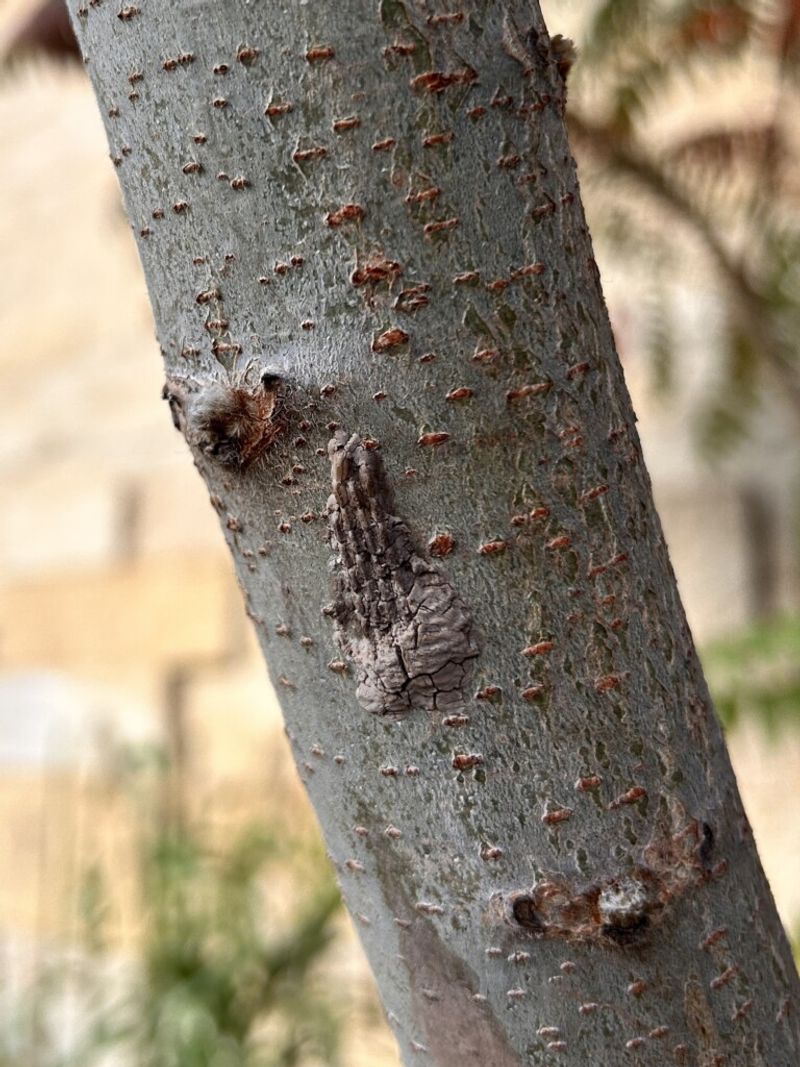
Each egg mass contains around 30 to 50 eggs covered in a grayish, mud-like coating that helps protect them through winter.
Here is something that surprises many homeowners: the eggs do not only appear on the tree where adults were feeding. Females will lay egg masses on almost any smooth, hard surface nearby.
Tree trunks and branches are common spots, but so are rocks, outdoor furniture, vehicles, trailers, and equipment left outside.
That wide range of egg-laying surfaces is part of what makes spotted lanternflies so effective at spreading to new areas. A person who parks near an infested tree and then drives to another county could unknowingly transport dozens of eggs without realizing it.
Checking outdoor surfaces for those distinctive mud-like egg coverings during fall and early winter is one of the most practical things a Pennsylvania homeowner can do to reduce next year’s population before it even gets started.
4. Sticky Surfaces Reveal Where They Have Been Feeding
You might notice something strange happening beneath a heavily infested tree even before you spot the insects themselves.
The ground, deck, or plants below could be covered in a sticky, shiny film. That stickiness is a clue that spotted lanternflies have been feeding heavily in that spot.
As they feed, adult lanternflies excrete large amounts of a sugary liquid called honeydew. This substance drips down from wherever they are feeding and coats everything below, including leaves, decking, outdoor furniture, parked vehicles, and garden plants.
On a hot day, the smell can be surprisingly noticeable and a little sour. That sweet residue does not go unnoticed by other insects either. Ants, wasps, yellow jackets, and bees are all attracted to honeydew and will swarm areas where it accumulates.
So if you suddenly notice an unusual number of stinging insects around one particular tree or area of your yard, spotted lanternfly feeding could be the reason behind it.
The sticky honeydew also creates a perfect surface for a fungus called black sooty mold to take hold. Over time, this dark mold spreads across leaves, branches, and surfaces beneath the tree, making everything look dirty and unhealthy.
While sooty mold itself does not directly harm most established trees, it does block sunlight from reaching leaves, which can reduce the tree’s ability to produce energy through photosynthesis.
Cleaning up honeydew and mold from outdoor surfaces can be a real chore during a bad infestation.
Keeping surfaces rinsed and monitoring for buildup helps prevent the mess from getting out of hand and makes outdoor spaces more comfortable to use throughout the season.
5. A Large Group Does Not Automatically Mean It Will Destroy The Tree
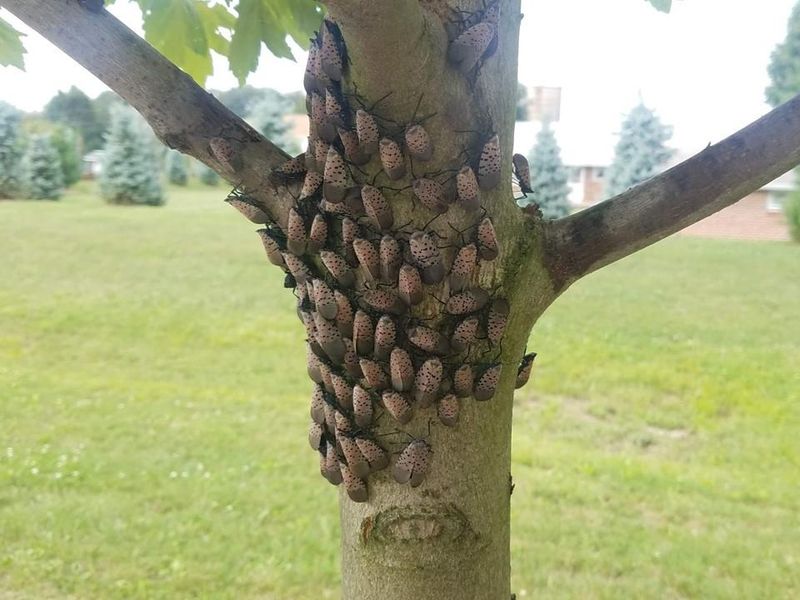
Seeing a hundred spotted lanternflies crawling up your oak or maple tree is alarming, no question about it. The first instinct for many homeowners is to assume the tree is in serious trouble.
But the reality is a bit more nuanced, and understanding the difference can save a lot of unnecessary worry.
Spotted lanternfly feeding does stress plants by removing sap, which is the tree’s food supply. However, large, well-established landscape trees do not automatically suffer catastrophic harm just because adults gather on them.
Healthy trees have significant reserves and can tolerate a fair amount of feeding pressure without losing major branches or declining severely.
Grapevines are a very different story. They are at substantially greater risk from spotted lanternfly feeding, and Pennsylvania’s wine and grape industries have experienced real economic losses because of these insects.
Hop yards and certain fruit trees also face elevated risk compared to mature shade trees. Trees that are already stressed from drought, disease, poor soil, or prior damage are more vulnerable to setbacks from heavy feeding.
If a tree in your yard was already struggling before lanternflies arrived, feeding pressure can push it further into decline and cause dieback of branches or sections of the canopy.
Even when permanent tree damage is limited, the nuisance factor is very real. The honeydew, sooty mold, and swarms of attracted insects can make outdoor spaces genuinely unpleasant to use.
Patios, play areas, and garden spaces near heavily infested trees can feel almost unusable during peak infestation periods.
Monitoring your trees closely, keeping them well-watered during dry spells, and avoiding unnecessary stress will give them the best chance of coming through the season in solid shape.
6. What Pennsylvania Homeowners Should Do

Finding spotted lanternflies on your property does not mean you are helpless. There are several practical steps Pennsylvania homeowners can take to reduce populations and slow the spread of these invasive insects to new areas.
Start with what you can do by hand. Physically destroying accessible adults is straightforward and requires no special equipment.
You can squish them directly or knock them into a container of soapy water, which stops them quickly.
Scraping egg masses off tree trunks, branches, rocks, and outdoor furniture into a sealed bag or container of hand sanitizer is also highly effective at preventing next year’s hatch.
Inspection is just as important as direct action. Before moving any vehicles, trailers, firewood, lawn equipment, or outdoor gear, check all surfaces carefully for egg masses or live insects.
A single overlooked egg mass on a trailer hitch can introduce spotted lanternflies to a county where they have never been seen before. This is how they spread so effectively across Pennsylvania and into neighboring states.
Reporting matters too. If you spot lanternflies in an area outside an established quarantine zone, reporting the sighting to the Pennsylvania Department of Agriculture helps officials track the spread and respond faster.
You can submit reports online with a photo directly through the department’s website. When it comes to pesticides, restraint is smart.
Follow all label directions carefully and avoid broad, unnecessary spraying, especially on or near flowering plants that pollinators like bees and butterflies visit regularly.
Targeting only heavily infested areas with appropriate products protects beneficial insects while still addressing the problem where it is most severe.