What It Means When Your Georgia Tomatoes Get Spots After The Rain
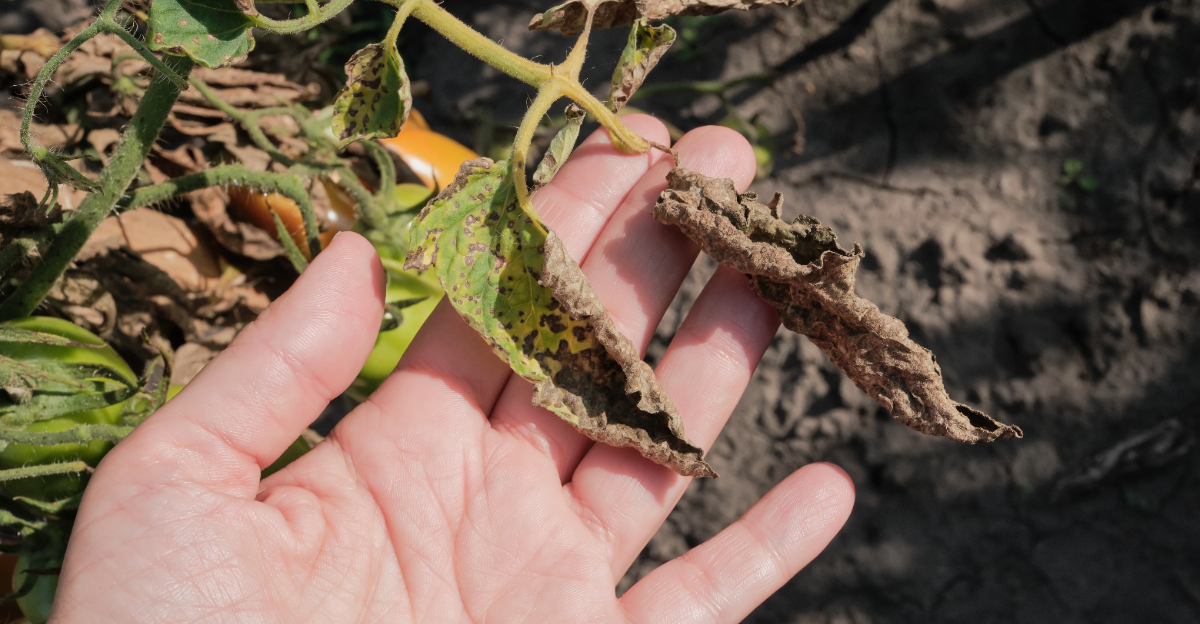
Those new spots on your tomato leaves deserve a closer look after rainy summer weather. They can be an early sign that moisture has created favorable conditions for common tomato diseases.
Warm, humid conditions in Georgia can keep foliage damp longer than gardeners realize. That extra moisture gives several fungal and bacterial diseases a better opportunity to develop and spread.
The pattern matters because tomato spots do not all look exactly alike. Their size, color, location, and surrounding tissue can offer useful clues about what is happening.
Rain can also splash disease-causing organisms from soil or infected leaves onto healthy foliage. Once symptoms appear, ignoring them can allow the issue to move through more of the plant.
Your next move depends on what those markings actually indicate.
Careful observation now can help protect the remaining healthy growth.
1. Rainy Weather Can Trigger Tomato Leaf Spot
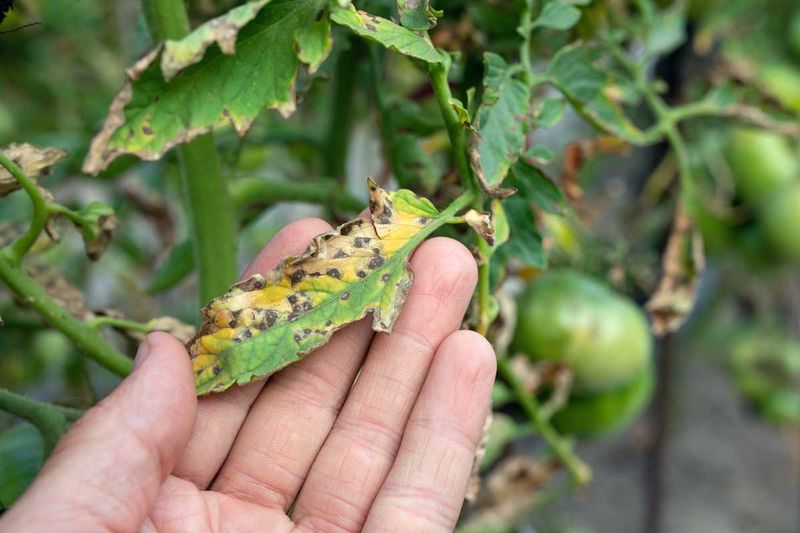
Spots showing up right after a heavy rain are not a coincidence. Wet conditions give fungal and bacterial pathogens exactly what they need to spread across your plants.
Two of the most common culprits are early blight and Septoria leaf spot. Both thrive when moisture sits on leaves for several hours at a time.
Georgia summers bring exactly that kind of weather.
Fungal spores travel through splashing water. When rain hits the soil, it kicks up spores that land on lower leaves.
From there, the infection spreads upward if nothing is done.
Warm temperatures combined with wet foliage create a fast-moving cycle. Spores germinate, infect tissue, and produce more spores within days.
A single rainy week can set off a visible outbreak.
Not every spot means the same thing. Brown spots with yellow halos often point to early blight.
Smaller, water-soaked spots with dark edges lean more toward bacterial infection.
Knowing the difference matters because the response changes slightly depending on the cause. Fungal issues often respond to copper-based sprays, while bacterial spots may need different management approaches.
2. Brown Marks Often Start On Lower Leaves
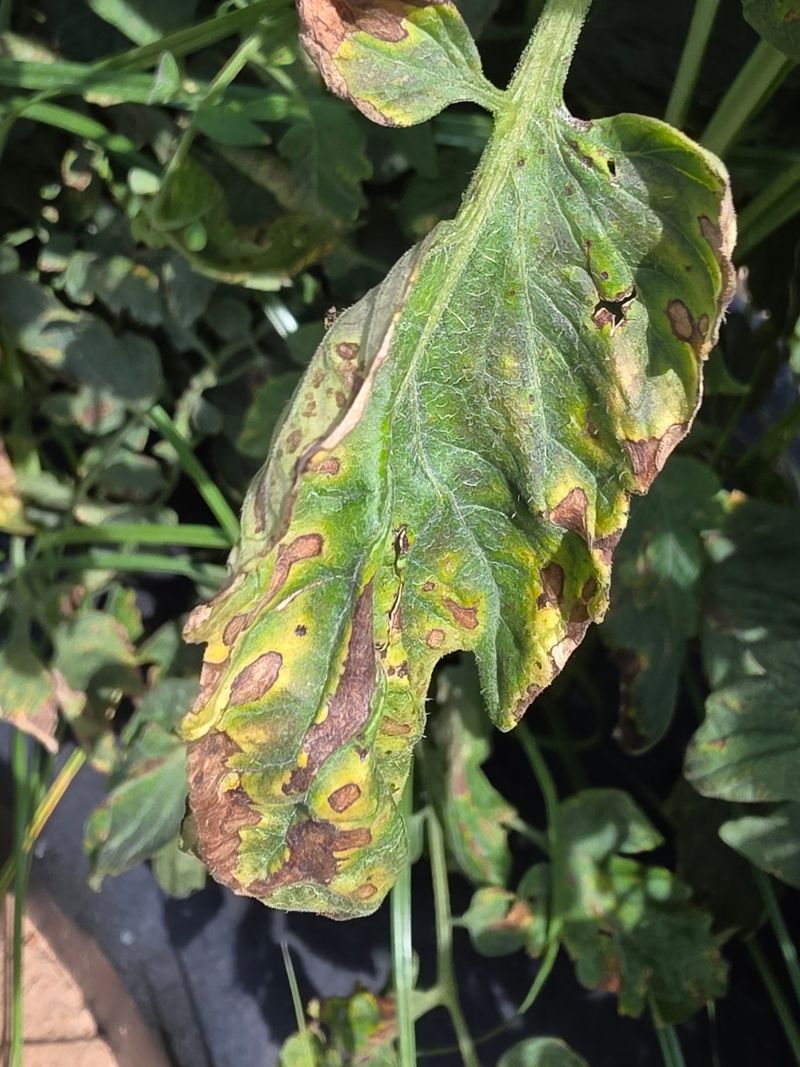
Lower leaves are usually the first to show signs of trouble, and that pattern is not random. Soil contact and poor air circulation near the ground make the bottom of the plant a hotspot for disease.
Spores from the soil splash upward during rain. Lower leaves sit closest to the ground, so they catch the most exposure.
Once infected, those leaves become a source of spreading spores to the rest of the plant.
Spotting early signs on lower foliage is actually helpful. It gives you a warning before the problem climbs higher.
Catching it at the bottom means you still have time to act.
Brown marks that start small and grow larger over several days are a sign of active infection. If the center of the spot looks dry or sunken, early blight is a strong possibility.
Septoria leaf spot tends to produce smaller spots with a lighter center and darker border. Both conditions can appear at the same time on the same plant.
Removing affected lower leaves as soon as you notice them is a practical first step. Bagging them up and tossing them away from the garden helps reduce the number of spores available to spread.
Your Georgia Garden Changes Every Week. Your Plan Should Too.
Gardening in Georgia changes quickly throughout the season. Every Friday you’ll receive a simple weekly plan showing exactly what to plant, prune, fertilize, harvest, and protect so you never miss the right timing.
3. Wet Foliage Helps Disease Develop Faster
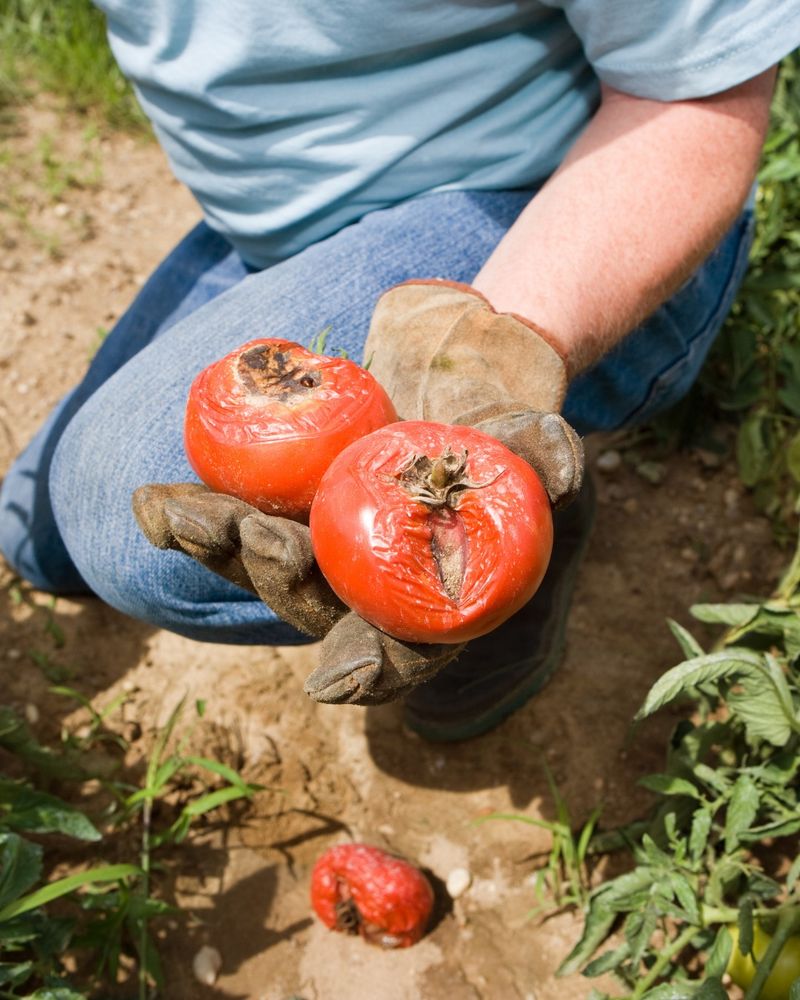
Moisture sitting on leaves is one of the biggest factors behind rapid disease spread. Fungal spores need wet surfaces to germinate, and a leaf that stays damp for six or more hours is basically an open invitation.
After a rainstorm, leaves in shaded or crowded spots can stay wet for a long time. If another rain follows within a day or two, the foliage barely dries out at all.
That kind of extended moisture is where infections take hold fast.
Bacterial leaf spot works in a similar way. It enters through tiny openings in the leaf surface, and wet conditions make those entry points easier to penetrate.
Humidity plays a role too. Even without standing water, high humidity slows down the drying process significantly.
Summers in the South often bring both heavy rain and sticky air, which extends the window for infection.
Watering habits can add to the problem. Sprinklers and overhead watering mimic rain and keep foliage wet longer than necessary.
Shifting to drip irrigation or soaker hoses can reduce leaf wetness considerably.
Timing matters as well. Watering in the morning gives leaves a chance to dry out before nightfall.
Evening watering leaves plants wet overnight, which is one of the riskier habits in a humid climate.
4. Crowded Plants Stay Damp Much Longer
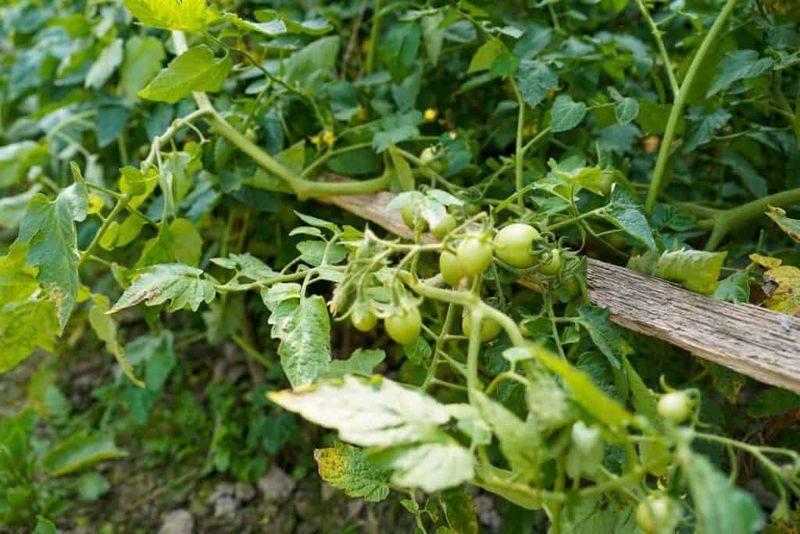
Planting tomatoes too close together creates a problem that gets worse every time it rains. Leaves that overlap trap moisture between them and block the airflow needed to dry things out.
Good air circulation is one of the most underrated parts of disease prevention. When air moves freely through the plant canopy, leaves dry faster after rain.
Crowded plants block that movement and create a humid pocket right in the middle of your garden.
Tomatoes generally need at least 18 to 24 inches of space between plants, and some larger varieties benefit from even more. Staking and caging help lift the plant off the ground and open up the structure a bit, but spacing still matters.
Pruning suckers from indeterminate varieties also helps. Fewer stems mean better airflow through the plant.
A leaner plant dries out faster than one with thick, overlapping growth.
Raised beds can actually make crowding worse if gardeners try to fit in too many plants. Compact spaces look efficient but can backfire when wet weather hits.
Thinning out your tomato patch mid-season is not always easy, but removing a plant that is heavily infected can protect the ones around it. Sacrificing one plant to slow the spread is sometimes the most practical choice.
5. Remove Affected Leaves Before It Gets Worse
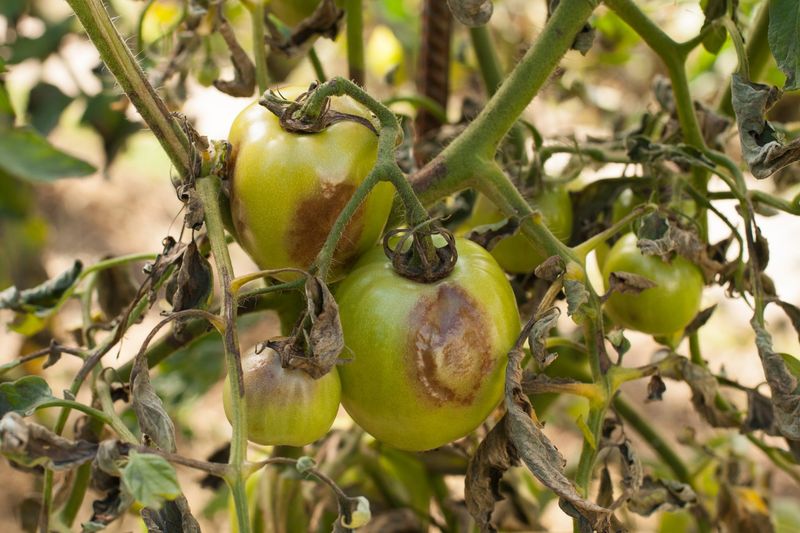
Spotted leaves are not going to recover. Once a leaf shows signs of fungal or bacterial infection, the damage to that tissue is already done.
Leaving it on the plant just keeps the problem going.
Removing infected leaves slows the cycle of spore production. Fewer infected leaves means fewer spores available to land on healthy tissue nearby.
It is a simple step that can make a real difference.
Use clean pruning shears or scissors when removing leaves. Cutting through an infected leaf and then touching a healthy one can transfer pathogens.
Wiping the blades between cuts with a damp cloth helps reduce that risk.
Put removed leaves into a bag right away. Dropping them on the ground near the plant is counterproductive.
Spores from fallen leaves can splash back up during the next rain and restart the cycle.
Do not add heavily infected plant material to a home compost pile. Home composting often does not reach temperatures high enough to break down fungal spores reliably.
Bagging and disposing of infected material through yard waste pickup is a safer option.
After removing the affected leaves, keep an eye on the plant over the next week or two. New spots appearing higher up on the plant suggest the infection has already moved beyond what you removed.
6. Water Near The Soil Instead Of Overhead
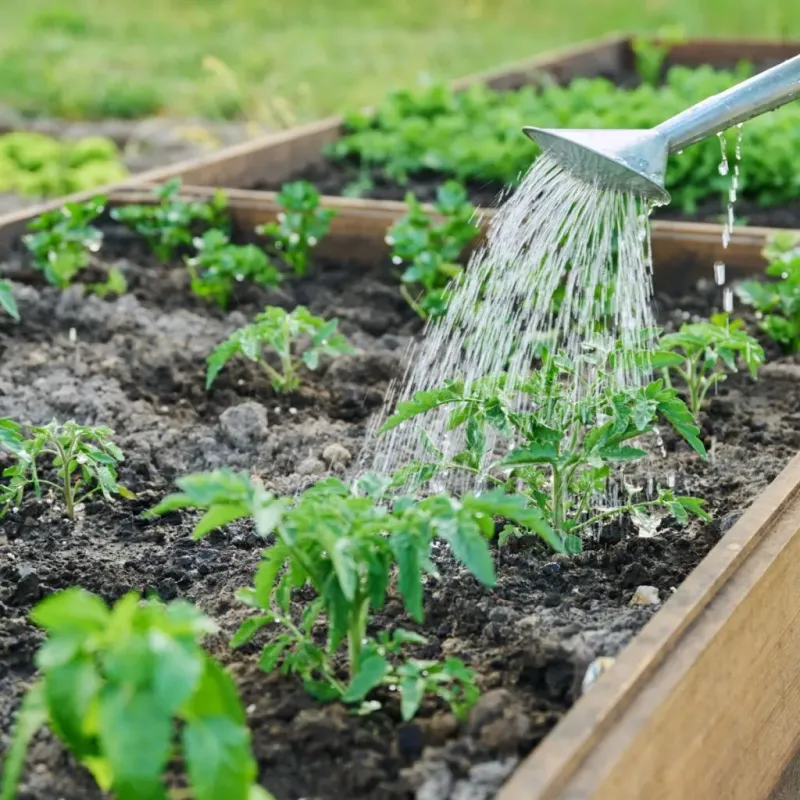
Overhead watering is one of the easiest habits to change and one of the most impactful. Sprinklers and handheld hoses that spray over the top of plants wet the leaves every single time you water.
Wet leaves are vulnerable leaves. Switching to drip irrigation or soaker hoses delivers water directly to the root zone, where the plant actually absorbs it.
Leaves stay dry, and that matters a lot in a humid growing region.
Soaker hoses are affordable and easy to set up in most garden beds. They run along the soil surface and seep water slowly into the ground.
Roots get what they need without the foliage getting involved at all.
Drip systems work similarly and can be more precise in larger gardens. Both options reduce water waste compared to overhead sprinklers, which is an added benefit during dry spells.
Timing still matters even with ground-level watering. Watering early in the morning is generally better than watering in the evening.
Morning watering allows any incidental moisture on leaves to dry off before temperatures drop at night.
In Georgia, where summer afternoons bring frequent pop-up storms, avoiding overhead watering in the morning reduces the total amount of time leaves spend wet each day.
7. Mulch Helps Keep Soil Off Tomato Leaves
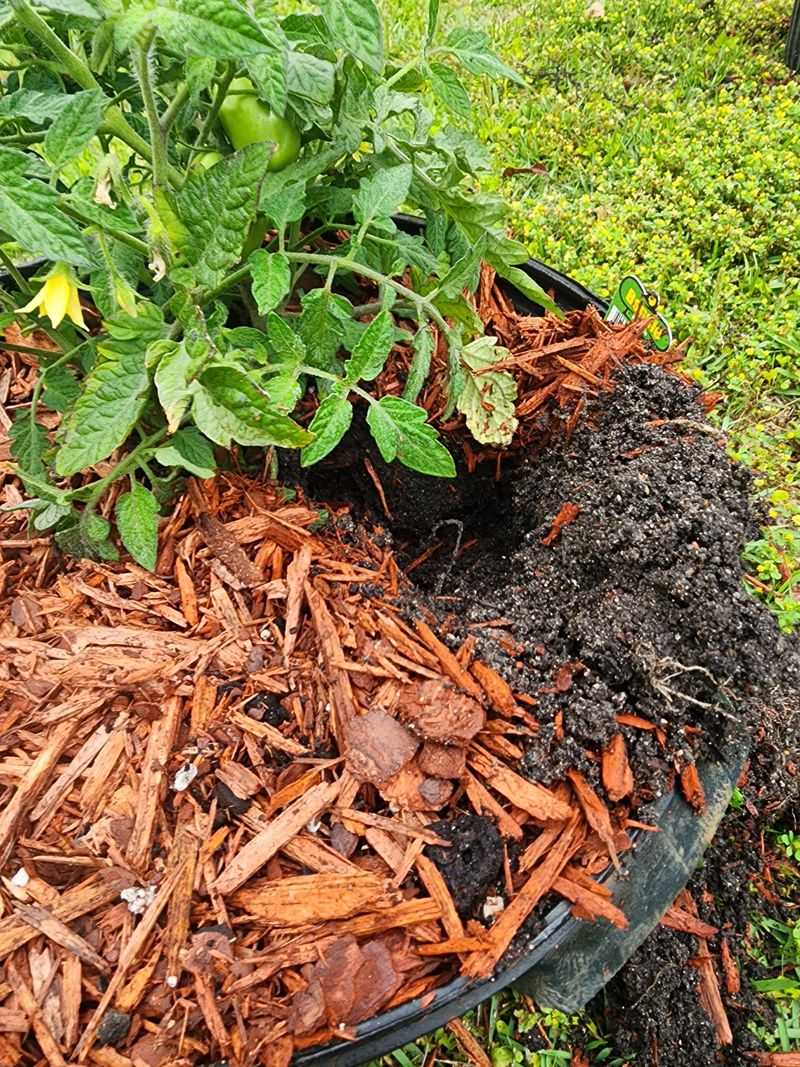
Rain hitting bare soil is a bigger problem than most gardeners realize. Every raindrop that lands on unprotected ground sends a tiny splash of soil particles into the air.
Those particles carry fungal spores with them.
Mulch acts as a physical barrier between the soil and the lower leaves of your tomato plant. Straw, wood chips, or shredded leaves laid around the base of the plant absorb the impact of raindrops before they hit bare dirt.
A two to three inch layer of mulch is usually enough to do the job. Thicker layers can sometimes trap too much moisture near the stem, so keep mulch a few inches away from the base of the plant itself.
Straw is a popular choice in Southern gardens because it is light, easy to spread, and breaks down over time to add organic matter to the soil. Pine straw works well too and is widely available across the region.
Mulch also helps regulate soil temperature and retain moisture between waterings. Those benefits make it useful beyond just disease prevention.
Replacing mulch mid-season is worth considering if it has broken down significantly or if it was in contact with heavily infected plants. Fresh mulch reduces the chance of spores from old material continuing to splash upward.