These Are The Most Aggressive Invasive Plants Taking Over Georgia Yards Right Now
One season, everything looks under control. A few months later, a plant is popping up in flower beds, climbing into shrubs, or spreading far beyond the spot where it was originally planted.
Fast growth can seem like a benefit at first, but some plants take that idea much further than most people bargain for.
Georgia homeowners deal with several invasive species that thrive in warm conditions and waste no time claiming new territory.
Some were introduced as ornamentals, while others arrived through different routes and gradually worked their way into residential landscapes.
The challenge is that many of these plants are attractive. They may produce colorful flowers, dense foliage, or quick privacy, which makes them easy to overlook in the early stages.
By the time their aggressive nature becomes obvious, removing them often requires far more effort than expected.
A few of the worst offenders continue showing up in yards year after year, and some spread much faster than people realize.
Kudzu Continues To Smother Trees And Shrubs
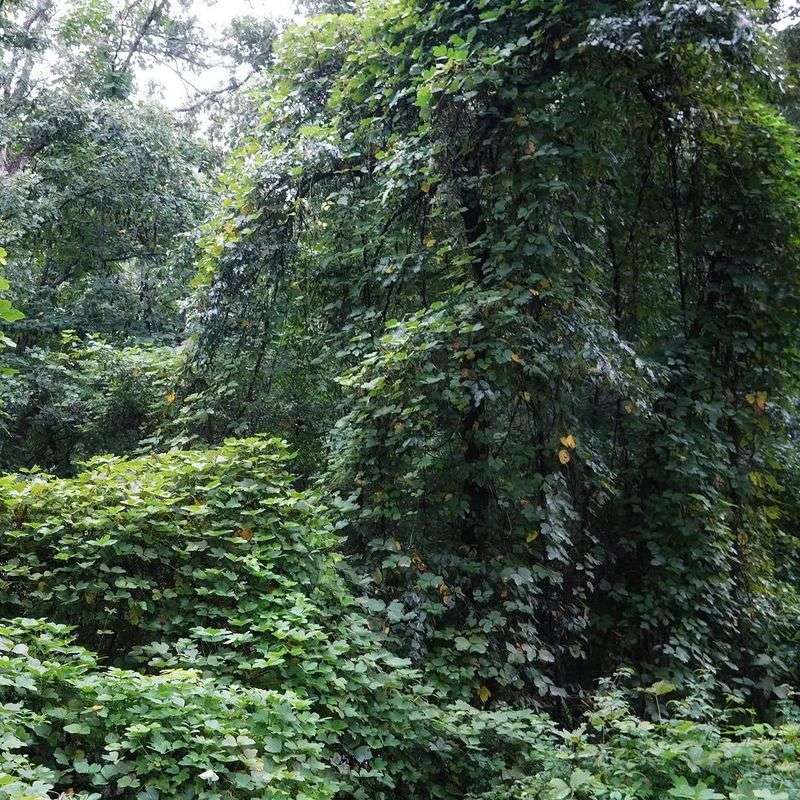
Kudzu does not creep. It charges.
During peak summer growth, this vine can extend up to a foot per day under warm, humid conditions. Trees, shrubs, fence posts, and even abandoned structures disappear beneath its enormous leaves within weeks.
Originally brought from Japan in the late 1800s for erosion control, kudzu found the American South far too comfortable. It thrives in heat, tolerates poor soil, and roots aggressively wherever a vine node touches the ground.
Removing it is a long-term project, not a weekend chore.
Cutting kudzu back without treating the root crown just gives it a reason to regrow faster. Roots can extend deep into the soil, storing energy that fuels rapid regrowth.
Consistent cutting combined with root treatment over multiple seasons is usually what it takes.
Younger infestations respond better to removal efforts. Catching kudzu before it climbs into tree canopies saves a lot of work.
Once it reaches the upper branches, removal becomes far more difficult without risking damage to the tree itself.
Check fence lines and woodland edges in your yard every few weeks through summer. Kudzu often starts at the perimeter before moving inward.
Pulling small vines by hand and digging out young root crowns is effective when done consistently and early in the season.
Left unchecked, even small patches can quickly turn into dense mats that smother nearby vegetation and spread across large areas.
Chinese Privet Forms Dense Thickets Across Properties
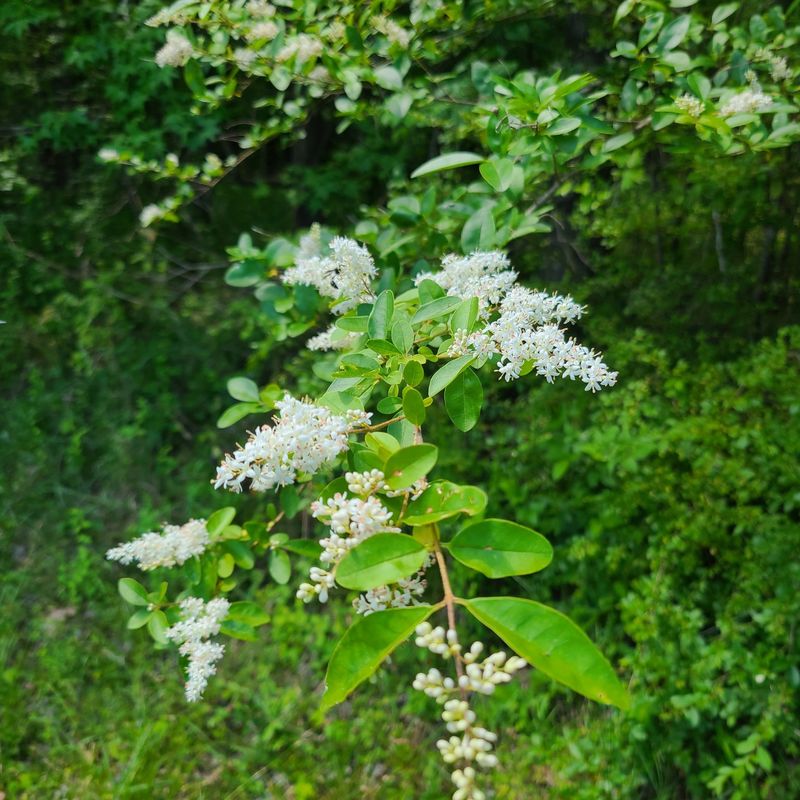
Walk the edge of almost any wooded lot in the South right now and you will probably walk straight into Chinese privet. It forms walls of dense, leathery-leaved shrubs that block sunlight and crowd out every native plant beneath them.
Songbirds and pollinators lose critical habitat when privet takes over.
Privet spreads two ways: by root sprouting and by seed. Birds eat the dark berries and scatter seeds widely.
One mature shrub can produce thousands of seeds in a single season. That combination makes privet one of the most persistent invasives in the region.
Your Georgia Garden Changes Every Week. Your Plan Should Too.
Gardening in Georgia changes quickly throughout the season. Every Friday you’ll receive a simple weekly plan showing exactly what to plant, prune, fertilize, harvest, and protect so you never miss the right timing.
Cutting privet at the base without treating the stump causes it to resprout vigorously, often sending up multiple stems where one existed before. Treating cut stumps immediately after removal is essential to prevent regrowth.
Young privet seedlings are much easier to pull than established shrubs. Checking shaded areas under mature trees in June is a good habit.
Seedlings pulled before summer ends have not yet developed the deep root system that makes older plants so stubborn.
Replacing cleared privet with native shrubs like beautyberry or buttonbush helps prevent the space from being recolonized. Bare disturbed soil is an open invitation for new privet seeds to germinate.
Replanting quickly closes that window and supports local wildlife at the same time.
Left alone for even one season, privet can rebuild dense thickets that are harder to push back than the original growth.
Japanese Honeysuckle Spreads Far Beyond Garden Beds
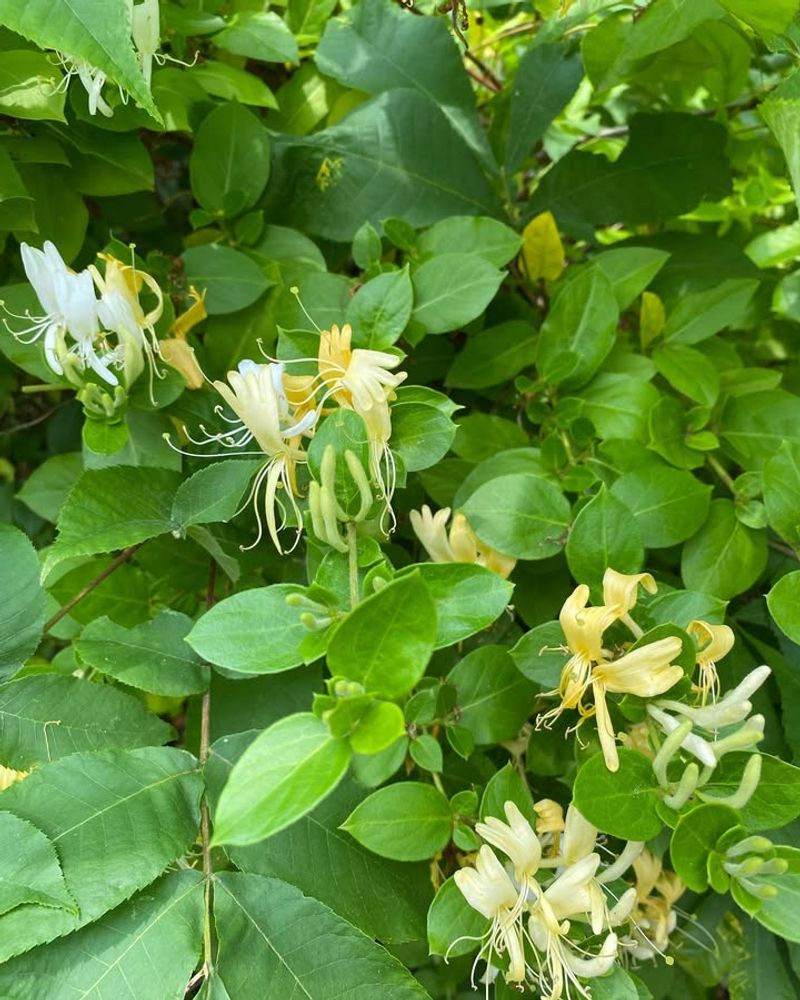
That sweet smell drifting through your yard on a June evening might not be as innocent as it seems.
Japanese honeysuckle produces fragrant white and yellow flowers that most people find pleasant, but underneath that beauty is one of the most aggressive vining plants in the South.
It climbs, it sprawls, and it smothers. Stems wrap around young trees and shrubs, girdling them over time by cutting off the flow of nutrients just beneath the bark.
What looks like a pretty vine can quietly strangle a healthy sapling over a single growing season.
Seeds spread easily through bird droppings, and the plant also expands by sending out runners that root wherever they touch soil. A single patch along a fence line can spread across an entire yard within a few seasons if left unchecked.
Pulling vines by hand works well for small patches. Getting the roots out matters more than just removing the above-ground growth.
Roots left in the soil will send up new growth quickly, especially during the warm, wet weeks of early summer.
Mowing repeatedly over low-growing patches in open areas can weaken honeysuckle over time. Combining physical removal with consistent follow-up is the most reliable approach for homeowners managing this plant without professional help.
Patience and persistence are both required here.
Chinese Wisteria Overtakes Fences And Structures
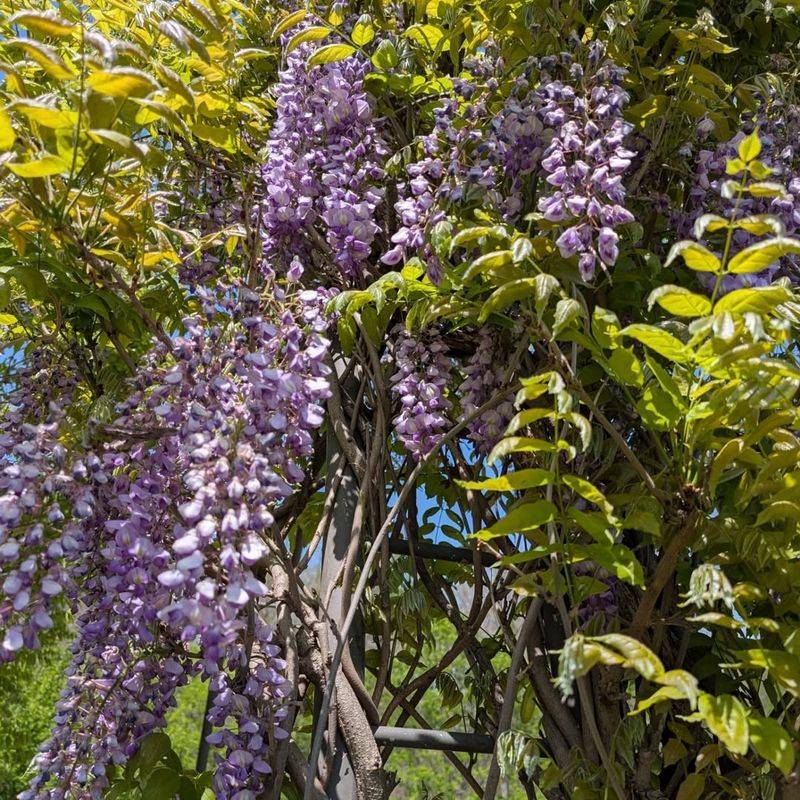
Few plants look as stunning as wisteria in full bloom, but Chinese wisteria has a destructive side that most homeowners underestimate.
Its woody vines thicken over time, capable of pulling apart wooden fences, collapsing pergolas, and even cracking masonry as stems force their way into gaps.
Growth accelerates noticeably in June. Vines that seemed manageable in spring can double in length within weeks once summer heat arrives.
Without regular pruning, a single plant can cover an entire structure in one growing season and begin reaching into nearby trees.
Chinese wisteria also spreads by root suckers and seeds. Pods that fall to the ground can germinate into new plants nearby.
Birds occasionally move seeds farther, which explains why wisteria sometimes appears in areas far from any known planting.
Pruning alone does not stop it. Cutting vines back without addressing the root system results in even more vigorous regrowth.
Roots can extend well beyond the visible plant, making full removal a significant project.
Native wisteria, specifically Wisteria frutescens, provides a far better alternative for gardeners who love the look. It blooms beautifully, stays manageable, and supports native pollinators without the aggressive spread.
Replacing Chinese wisteria with the native species is one of the most impactful swaps a Southern gardener can make this season.
Even established plantings can become difficult to control once the woody framework matures and spreads beyond the original support structure.
Japanese Stiltgrass Crowds Out Native Ground Plants
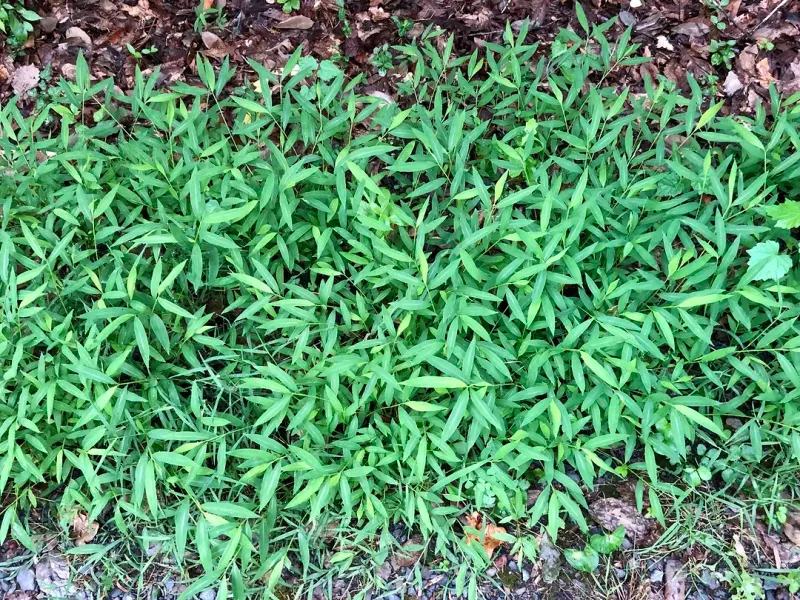
Japanese stiltgrass is easy to overlook at first glance. Its delicate, pale green blades look almost like a lawn grass, which is exactly why so many homeowners do not notice the problem until it has already taken over large areas of their yard.
Up close, the grass has a distinctive silvery stripe running along the midrib of each blade. That detail helps with identification.
Once you know what to look for, you start seeing it everywhere along shaded paths, woodland edges, and moist garden beds.
Stiltgrass thrives in conditions where lawn grass struggles. Shade, compacted soil, and moist ground all suit it well.
Native wildflowers and ground plants that would normally occupy those spaces get edged out as stiltgrass spreads its dense mat across the soil surface.
Pulling it by hand before it sets seed is the most straightforward removal method for small areas. Stiltgrass is an annual, meaning it completes its entire life cycle in one season.
Preventing seed production each year gradually reduces the seed bank in the soil over time.
Mowing before seed heads mature in late summer also helps. Timing matters here because cutting too late can actually scatter seeds rather than prevent them from spreading.
Covering cleared areas with mulch or native groundcovers after removal helps suppress future germination significantly.
Tree Of Heaven Produces Fast-Growing Colonies
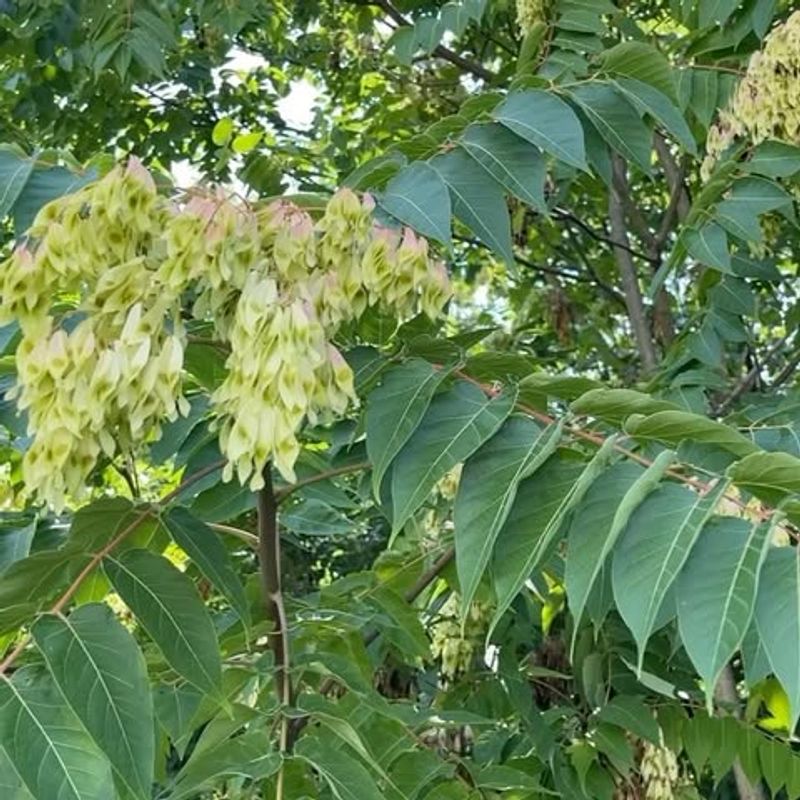
Tree of Heaven earned its dramatic name, but not for good reasons. It is one of the fastest-growing trees in North America, capable of adding several feet of height in a single season.
Give it a patch of disturbed soil and it will establish a colony before you realize what happened.
Crushed leaves and stems produce a strong, unpleasant odor that many people describe as rancid peanut butter. That smell alone often tips off homeowners who are not sure what they are dealing with.
Leaves are long and compound, with small notched glands at the base of each leaflet.
Root sprouts are the real challenge. Cutting a tree of heaven down stimulates the root system to send up dozens of new sprouts from the surrounding area.
Each sprout that goes unmanaged becomes a new stem competing for space in your yard.
Female trees produce enormous quantities of winged seeds that travel easily on the wind. A single tree can produce over 300,000 seeds in one year.
Those seeds germinate readily in bare soil, cracks in pavement, and along fence lines where other plants have not yet established.
Treating stumps immediately after cutting and monitoring for root sprouts throughout summer gives the best results. Consistent follow-up over two or three seasons is typically needed before a well-established colony begins to decline noticeably.
English Ivy Climbs And Weakens Established Trees
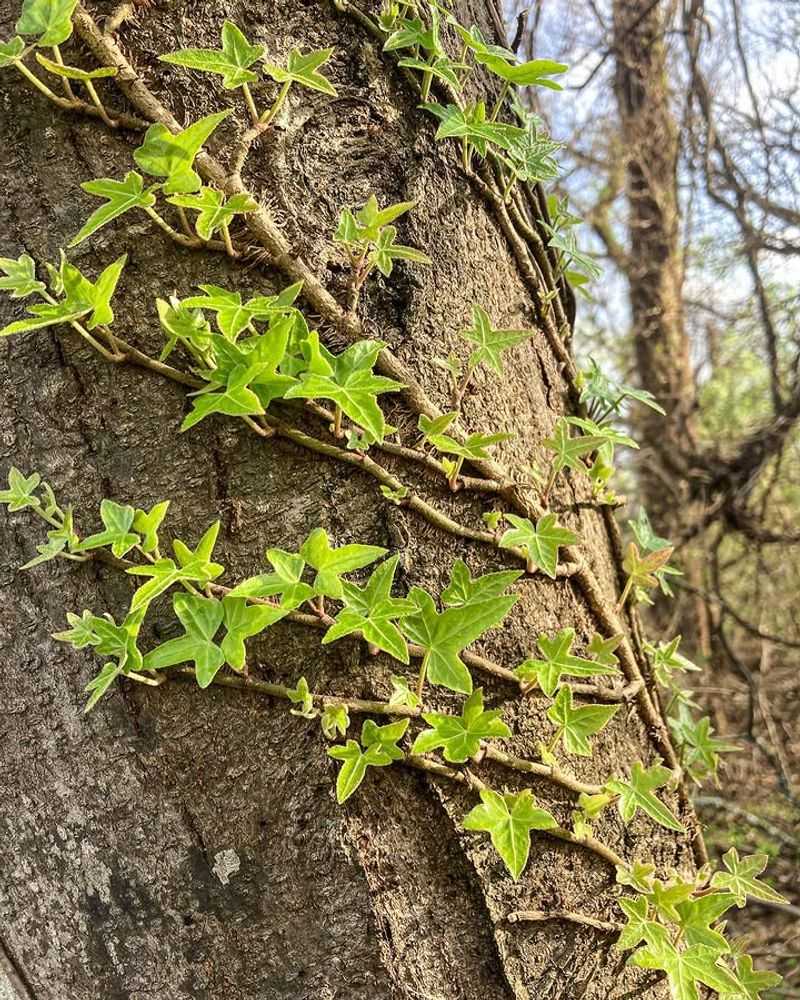
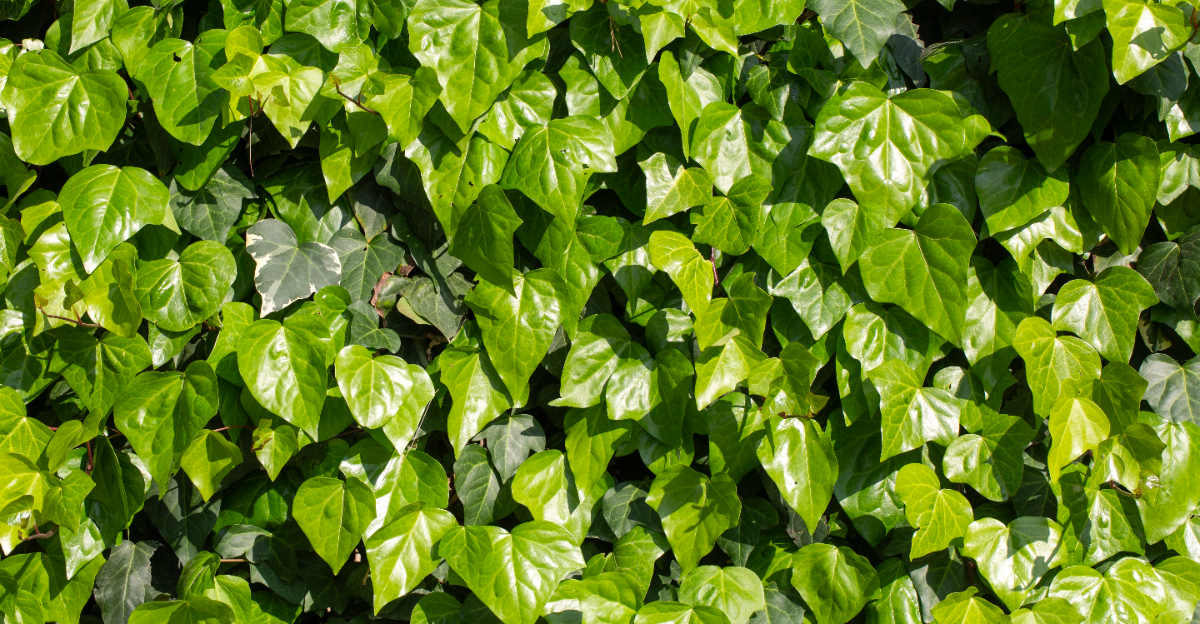
English ivy looks tidy in photos but causes real structural problems in actual yards. Once it reaches a tree trunk, it begins climbing toward the canopy, adding significant weight and trapping moisture against the bark.
Over time, that moisture creates conditions where rot and disease can take hold.
Ivy on the ground is also a problem. It forms a thick mat that blocks sunlight from reaching the soil, preventing native wildflowers, ferns, and seedlings from establishing.
Areas covered in ivy can become ecological problem spots where little else survives.
Removing ivy from trees starts at the base. Cutting a band of ivy stems around the trunk and pulling them away from the bark allows the upper portion to dry out and loosen naturally.
Yanking ivy directly off the bark can strip protective outer layers and cause additional damage.
Ground ivy pulls up more easily after a good rain. Working in sections rather than trying to clear an entire area at once keeps the task manageable.
Disposing of pulled ivy carefully matters too, since stems can re-root even after being removed from the ground.
Native groundcovers like wild ginger or native sedges make excellent replacements after ivy is cleared. Getting something established quickly in bare areas prevents ivy from simply moving back in.
Consistent monitoring through the rest of summer helps catch any regrowth before it gets a foothold again.
Callery Pear Spreads Rapidly Beyond Landscaped Areas
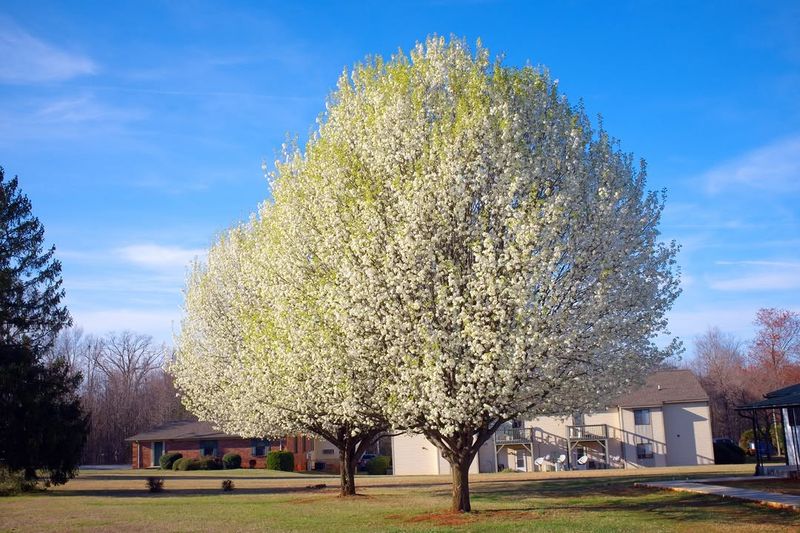
Callery pear was once the darling of suburban landscaping. Nurseries sold it by the millions for its tidy shape and showy white spring flowers.
Now it shows up in fields, roadsides, and natural areas across the South, spreading far beyond any intentional planting.
By June, the flowers are long gone and the trees are pushing dense leafy growth. Young callery pears that seeded into natural areas from nearby landscaped specimens are putting on serious height right now.
Some can grow six feet or more in a single season under good conditions.
Birds eat the small fruits and deposit seeds across wide areas. Cross-pollination between different cultivars, which were once thought to be sterile, produces viable seeds.
That biological reality turned a supposedly safe landscape tree into a widespread invasive problem.
Mature callery pears also develop sharp thorns on wild-grown branches, making removal more physically demanding than most homeowners expect. Thick gloves and long sleeves are necessary when working around established trees.
Many states and municipalities have begun restricting or banning the sale of callery pear varieties. Native alternatives like serviceberry or native crabapple provide similar seasonal beauty without the ecological drawbacks.
Swapping out callery pears in your landscape is a genuinely meaningful step toward reducing the spread of this aggressive invader across the broader region.