What It Really Means When A Great Horned Owl Is Calling In Your North Carolina Yard
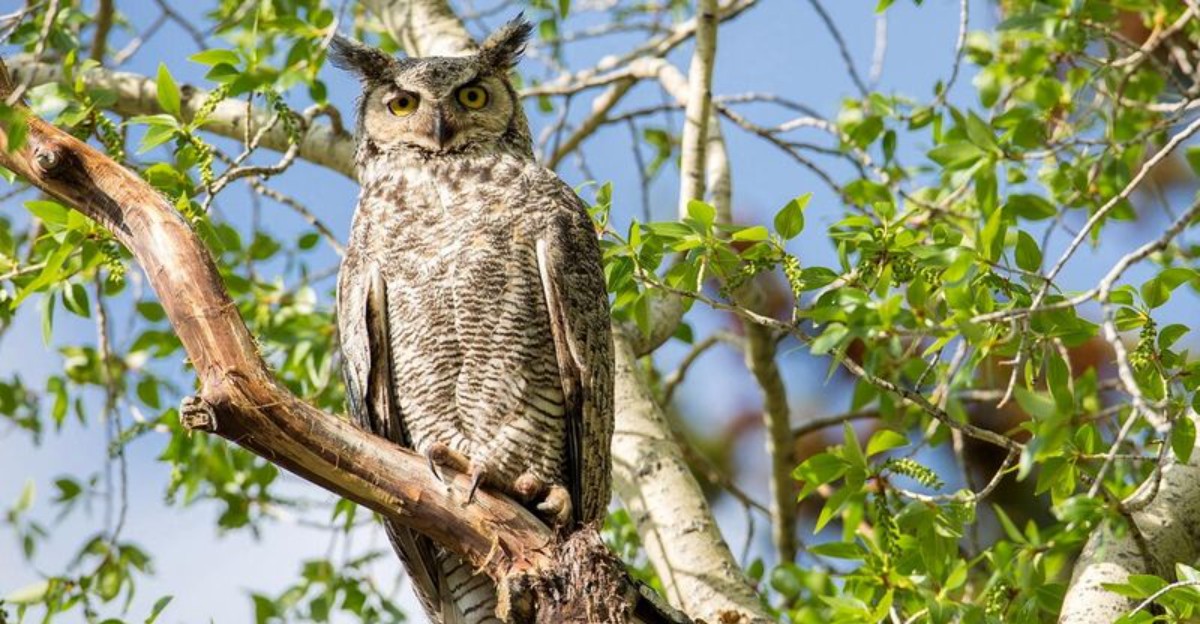
A deep, steady hooting at dusk can stop you in your tracks. In North Carolina, that sound often belongs to a great horned owl. Fall is when these owls get noisy.
They are claiming territory and forming pairs, and often two owls call back and forth. The female’s voice is usually higher than the male’s.
Great horned owls also nest earlier than most birds, sometimes in winter, so the hooting you hear now is the start of something bigger.
The calls tell you something about your yard too. They suggest the area has enough food and cover to support a large predator.
Hearing one is a small reminder of how much wildlife lives close to home. Knowing what the sounds mean makes every evening a little more interesting.
1. An Owl Is Claiming Its Territory
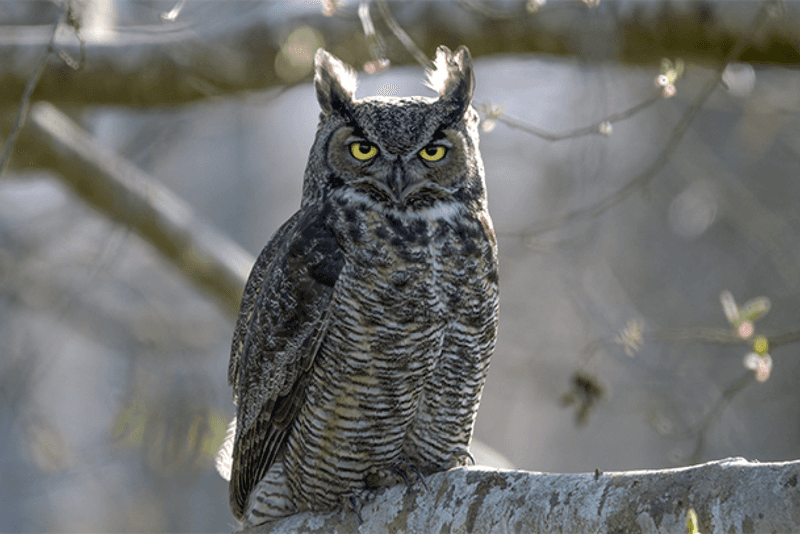
Hoo h’hoo hoo hoo. That slow, deep rhythm floating through your yard at night is a great horned owl putting up its own version of a no trespassing sign. The calls are soft, but they travel far, sometimes more than a mile on a still evening.
Most of the hooting you hear is about territory. Great horned owls stay in the same area all year, and a pair may hold onto the same patch of land for many years. By calling, an owl tells every other owl nearby that the space is already taken.
Rival owls usually listen and keep their distance, which saves both birds from risky fights. Timing matters too. You will hear the most calling around dusk, off and on through the night, and again in the hour before sunrise.
When you notice hoots coming from the same group of trees night after night, there is a good chance the owl lives close by and treats your yard as part of its home range.
Want to spot the singer? Step outside quietly with a dim flashlight pointed at the ground and let your eyes adjust. Look for a bulky shape on a high branch with two ear tufts sticking up like little horns.
A calling owl often puffs out a white patch on its throat with every hoot. North Carolina gives these owls plenty of room to settle in.
They live in every part of the state, from mountain forests to coastal plain farmland. Suburban neighborhoods with big, mature trees suit them just fine, so your backyard might be prime real estate.
2. Courtship Season Is Underway
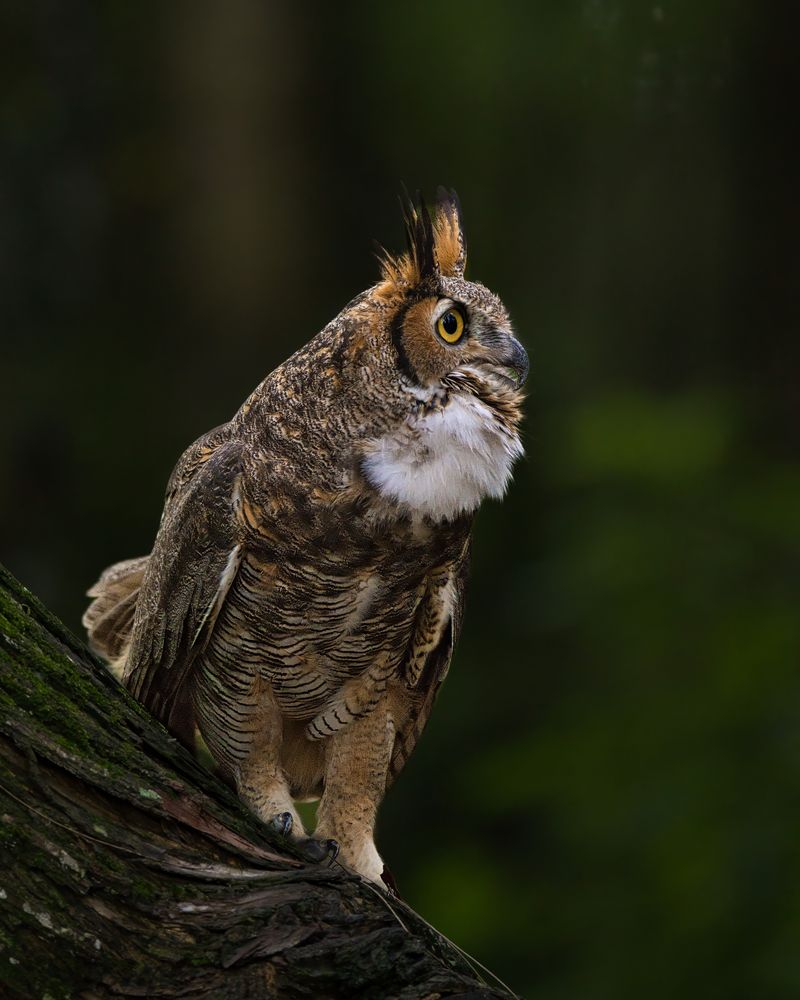
Romance sounds a little different in the owl world. When the air turns crisp in late fall, great horned owls start calling more often, and many of those calls are part of courtship.
Pairs use their voices to strengthen their bond before the busy nesting season ahead. Listen closely and you may hear a duet.
One owl hoots, then another answers from a nearby tree, and the two trade calls back and forth in a pattern that can last for several minutes. It almost sounds like a conversation, and in a way, it is.
Your North Carolina Garden Changes Every Week. Your Plan Should Too.
Gardening in North Carolina changes quickly throughout the season. Every Friday you’ll receive a simple weekly plan showing exactly what to plant, prune, fertilize, harvest, and protect so you never miss the right timing.
Here is a surprise many people never expect. The male usually has the deeper voice, even though the female is the bigger bird. Females can weigh noticeably more than males, yet their hoots tend to sound higher and a bit raspier.
Once you learn the difference, you can often tell who is talking. Duets often begin in fall and keep going through the winter months. A good way to enjoy them is to step onto your porch around sunset on a calm evening.
Turn off outdoor lights, stay quiet, and count how many voices you hear. Keeping a small notebook of dates and times can show you when your local pair is most active.
Across North Carolina, these courtship calls stand out most from October through January. Leaves have dropped, the nights are long, and sound carries easily through bare branches.
That makes late fall and early winter the perfect time to listen to your resident owls share their nightly love songs.
3. Nesting May Be Starting Soon
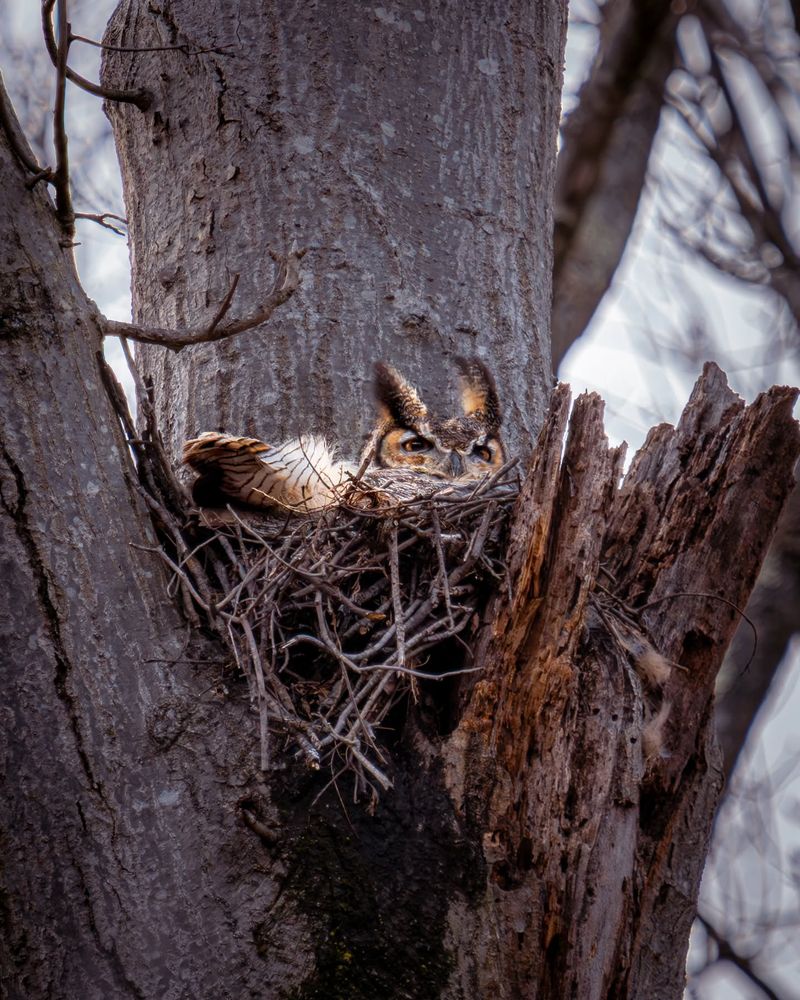
While most songbirds are still waiting for spring, great horned owls are already getting ready to raise a family.
They rank among the earliest nesting birds in North America. So if you hear a pair calling steadily during the coldest weeks of winter, eggs may be on the way. Why start so early? Owlets take a long time to grow and learn to hunt.
By laying eggs in the middle of winter, parents make sure their young are growing fast in spring, when rabbits, mice, and other prey animals are having babies of their own and food is easy to find.
Great horned owls skip the hard work of building. Instead, they move into nests that other animals have left behind. An old hawk nest, a crow nest, or even a big squirrel nest made of leaves can become an owl nursery.
They also use tree cavities, broken treetops, and rocky ledges. If you think a nest is nearby, give it plenty of space. Watching from far away with binoculars is a wonderful way to enjoy the show without causing stress.
Getting too close can make the parents nervous, and great horned owls will defend their nest fiercely. Keep kids and pets back, and skip any tree trimming near the nest until the young have grown.
In North Carolina, most great horned owls lay their eggs in January and February. That means your winter yard could be hosting one of nature’s most exciting family stories. Keep your ears open and your distance respectful, and you may get a front row seat.
4. Your Yard Has Good Hunting Ground
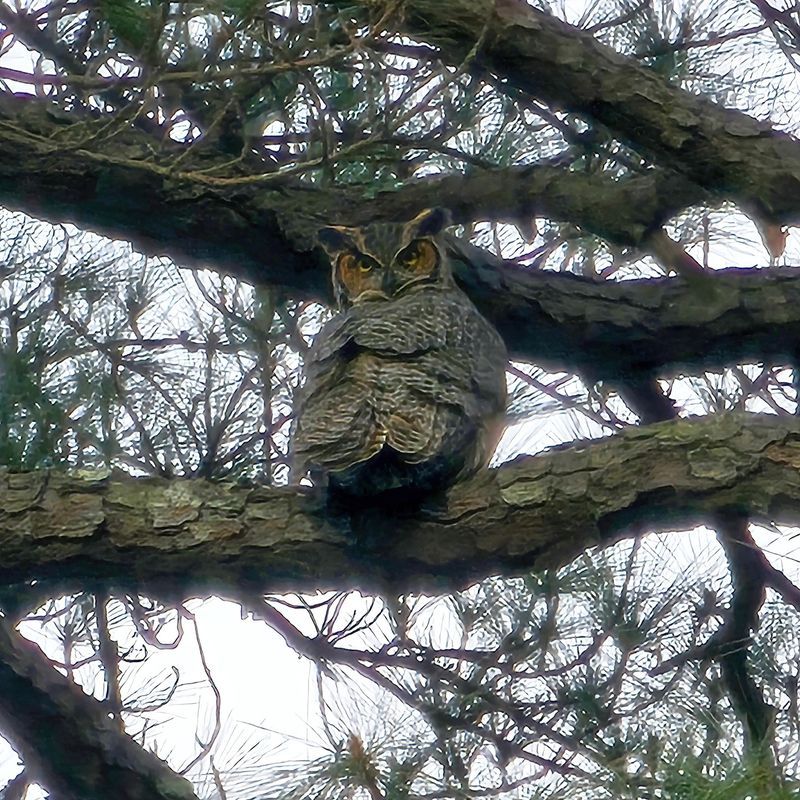
Consider it a compliment. When a great horned owl hangs around and calls from your trees, it is telling you that your yard and the land around it offer good habitat. Owls do not waste time in places where food is hard to find.
These birds are skilled hunters with a big menu. They eat rabbits, mice, rats, voles, and many other small animals, plus some birds and even insects. Their favorite setup is simple: tall trees for perching right next to open ground.
Lawns, fields, pastures, and woodland edges let an owl sit quietly, watch, and swoop down on silent wings. Having an owl nearby brings real benefits.
A single owl can catch a large number of rodents over a year, which helps keep mice and rats in check around homes, sheds, and gardens. That is free pest control that works every night without any effort from you.
Want to make your yard even more owl friendly? Keep a few mature trees standing when you can, since they serve as lookout posts and possible nest spots.
Leaving a patch of taller grass or a brushy corner gives prey animals a place to live, which in turn keeps owls coming back. Cutting back on bright outdoor lights also helps them hunt. North Carolina suburbs are often a great match for these birds.
Many neighborhoods sit right beside woods, farm fields, or creek corridors, creating the mix of cover and open space owls love. If you live in one of these spots, your yard may be part of a busy nighttime hunting route.
5. Small Pets Need Extra Care At Night
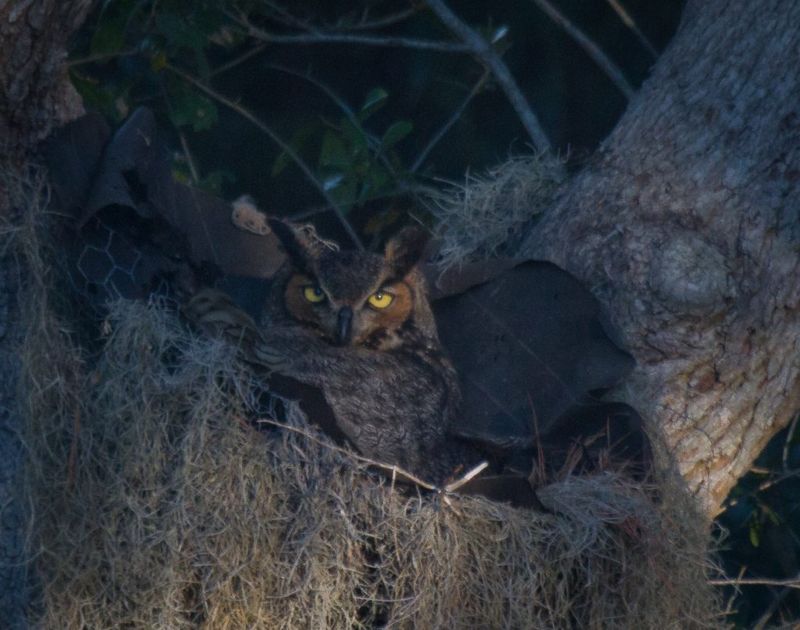
Great horned owls may look fluffy and calm, but they are some of the strongest birds of prey around.
Their grip is powerful, and they regularly catch animals as large as rabbits. They are also one of the few predators willing to take on skunks, since they have a weak sense of smell.
For pet owners, that strength is worth keeping in mind. Attacks on pets are not common, yet great horned owls have been known to grab small cats, tiny dogs, and backyard chickens.
Most of these events happen at night, when owls are hunting and pets are less likely to be watched.
A few easy habits can keep your animals safe. Bring cats and small dogs inside after dark, or stay right beside them during evening potty breaks. A short walk on a leash works better than letting a little dog roam the yard alone at night.
Chickens need special attention. Close them into a sturdy coop before dusk every evening, and give them a run with a solid or wire roof, since owls attack from above. An open top run may stop a fox but not a hungry owl.
Food matters too. Leftover pet food on the porch draws mice, rats, and other animals that owls love to hunt, which brings owls closer to your pets. Feed indoors or pick up bowls before sunset.
Plenty of North Carolina families keep outdoor cats, small dogs, and backyard flocks near wooded areas where owls live. With a little planning, your pets and your feathered neighbor can share the space peacefully.
6. Rodent Poisons Can Harm The Owl
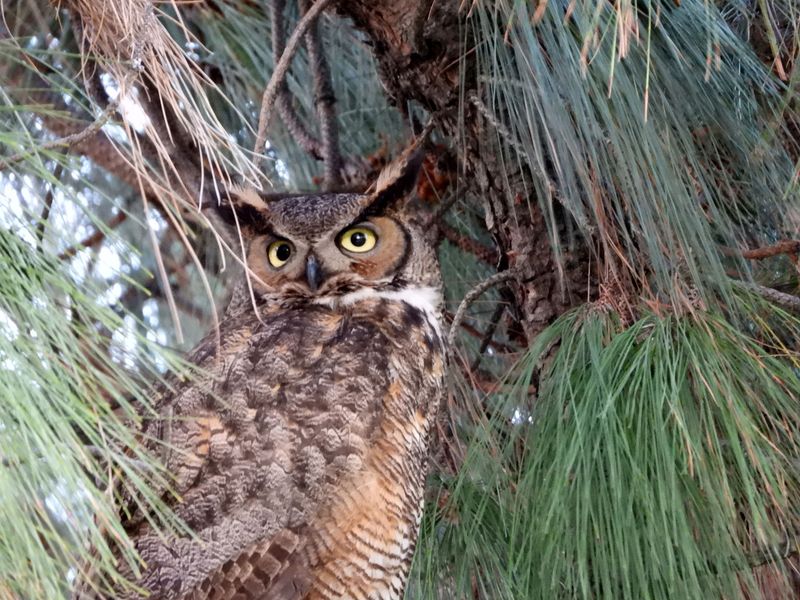
A box of rat bait might seem like a quick fix for a mouse problem. Unfortunately, the poison does not stop with the rodent. It can travel right up the food chain to the owl hooting in your trees.
Here is how it happens. A mouse or rat eats the bait, but it does not stop moving right away. It may wander outside, slow and easy to catch.
An owl snatches it up, swallows the poison along with its meal, and can become very sick. Scientists call this secondary poisoning, and it is a serious problem for owls, hawks, and other wildlife.
The good news is that safer choices work well. Snap traps placed along walls and inside sheds catch rodents without putting poison into the food chain. Electronic traps and live traps are other options for people who prefer them.
Prevention helps even more. Walk around your house and shed and look for gaps, holes, and cracks where mice can squeeze in, then seal them with steel wool, hardware cloth, or caulk.
Store garbage, birdseed, chicken feed, and pet food in containers with tight lids. Clean up fallen fruit and spilled seed so rodents have less reason to visit.
Then let your owl do some of the work. One healthy great horned owl hunting near your home can catch many rodents each season.
In North Carolina, these owls depend heavily on rats, mice, voles, and other small mammals, so keeping their food supply clean helps protect them. Your yard stays tidy, and your owl stays strong.
7. Young Owls May Be Calling In Spring And Summer
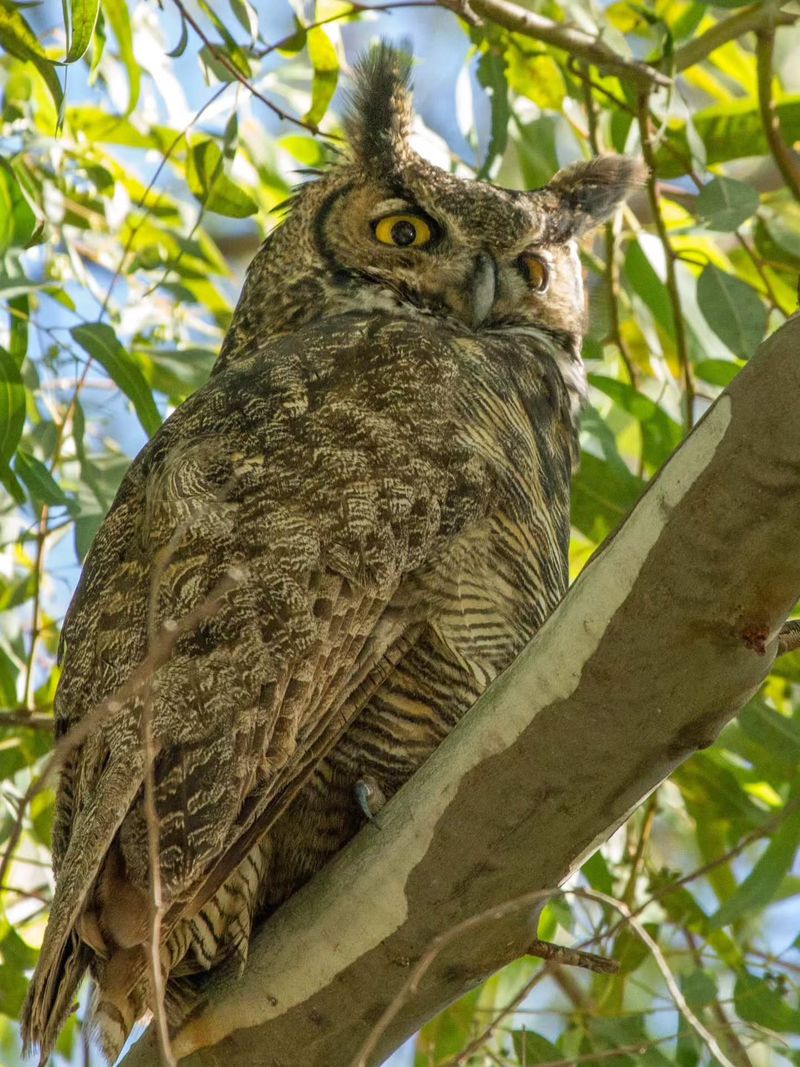
Shrieeek! If a harsh, raspy scream wakes you on a warm spring night, do not worry. That noise often comes from a young great horned owl begging its parents for dinner.
Once owlets leave the nest, their sounds change everything about the nighttime soundtrack.
Instead of soft hoots, you may hear loud, screechy calls that repeat again and again. Young owls use these calls to let their parents know where they are and how hungry they feel.
They stay near their family for weeks and sometimes months, learning to fly well and hunt on their own.
Listen around dusk and through the night in spring and early summer. The calls can sound a bit like a hissing cat or a squeaky gate, which surprises plenty of people the first time.
Young owls often leave the nest before they can fly well. They hop along branches, flutter to low limbs, and sometimes end up on the ground. That stage is normal, and the parents usually keep feeding and guarding them nearby.
If you find an owlet that looks healthy and alert, leave it alone and keep pets indoors. Things are different if an owl seems hurt.
Signs like a drooping wing, bleeding, or an owl that cannot stand mean it needs help. Contact a licensed wildlife rehabilitator, and do not try to raise or treat the bird yourself.
In North Carolina, owlets often leave their nests in spring, following that early winter nesting season. So when the screeching starts, smile. Your resident owls just raised a brand new family.