What It Really Means When Anoles Stop Showing Up In Your North Carolina Garden
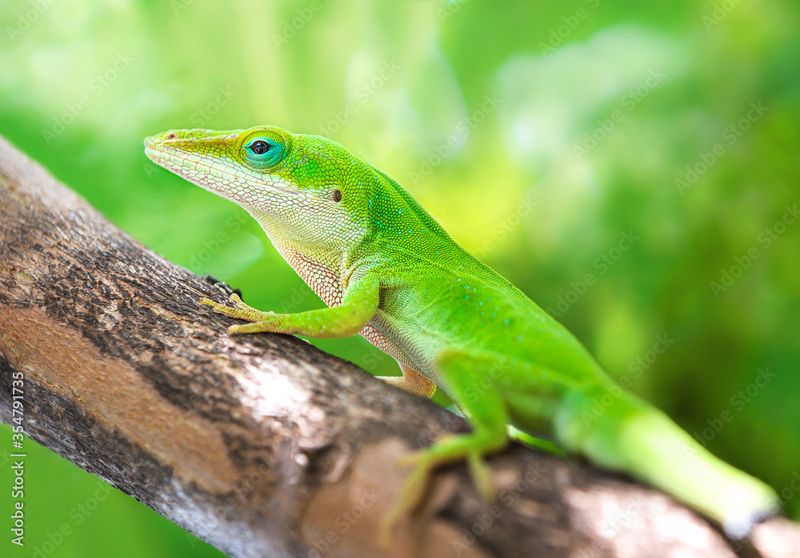
You settle into your porch chair on a warm July evening, and something feels off. The little green lizard that used to bob its head from the fence post every single morning is just gone. For North Carolina gardeners who have grown used to spotting these quick, bright creatures darting through the shrubs, that empty perch raises a real question: does a missing anole mean something is wrong with the yard? The answer is more layered than a simple yes or no, and working through the possibilities can actually tell you a lot about your outdoor space.
An Empty Perch Is a Clue, Not a Verdict
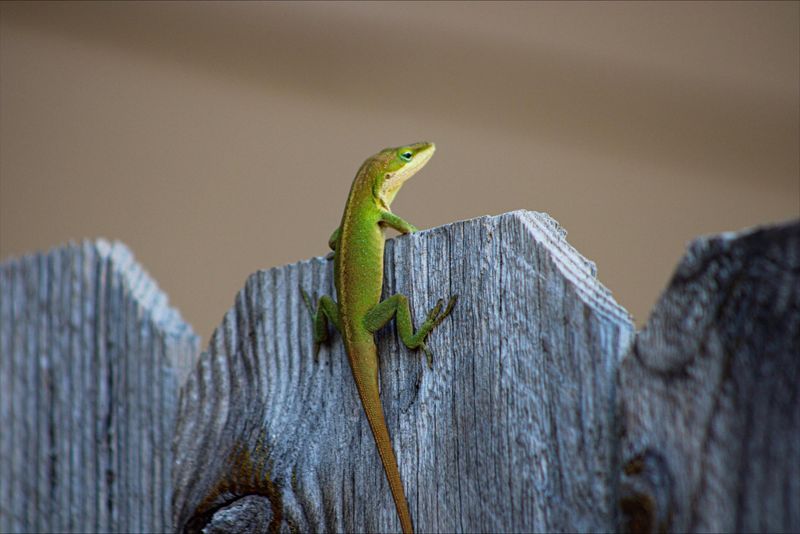
Picture the spot where you have seen them a dozen times before: a sun-warmed fence rail, the top of a potted shrub, a brick wall catching the afternoon light. Now picture it empty for the third day running. Before you start pulling out garden beds or blaming your neighbor’s pesticide sprayer, take a breath, because fewer sightings can signal a change in conditions without proving anything has actually gone wrong.
The lizard in question is the green anole, also called the Carolina anole, known scientifically as Anolis carolinensis. North Carolina Wildlife Resources Commission notes that adults reach roughly 5 to 8 inches from nose to tail tip and depend on a specific combination of warmth, layered vegetation, climbing surfaces, moisture, and a steady supply of small arthropods to thrive. Pull any one of those pieces away and the lizard may simply move to a better spot nearby, or become far harder to spot even when it has not gone anywhere at all.
What a missing anole cannot do, on its own, is tell you which condition changed or whether the change is permanent. Weather, season, vegetation shifts, predator pressure, pesticide use, and even the presence of another lizard species can all reduce your sightings without collapsing the local population. This article works through each of those explanations so you can treat the empty perch as a starting point for observation rather than a verdict on the health of your yard.
Range and Temperature Change the Meaning
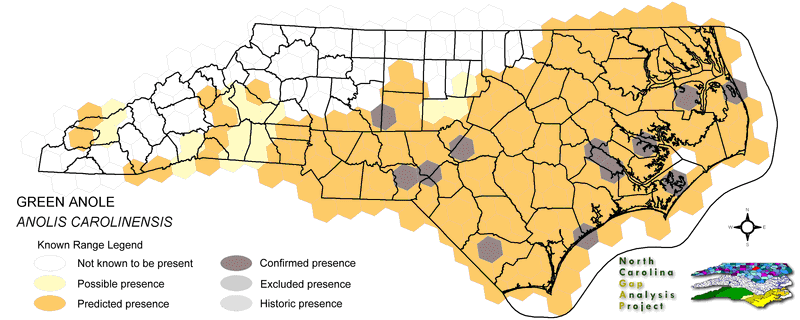
Where you live in North Carolina shapes what a missing anole actually means, and that detail matters more than most gardeners realize. Green anoles are most strongly associated with the Coastal Plain and the southern Piedmont, where warm, humid conditions suit them well for much of the year. If you garden in the mountains near Boone or Asheville, the absence of anoles may simply reflect the cooler temperatures and higher elevation that sit near the outer limits of the species’ comfortable range, not a problem you caused.
Temperature sensitivity runs deep in this species. Green anoles are diurnal, meaning they are active during daylight hours, and they depend on external heat to regulate their body temperature. North Carolina Biodiversity Project records confirm that cold, cloudy, or windy stretches can dramatically reduce visible activity, even in areas where anoles are otherwise common. A week of overcast skies and temperatures dropping into the low 50s can make a normally active fence lizard disappear from view entirely.
Your North Carolina Garden Changes Every Week. Your Plan Should Too.
Gardening in North Carolina changes quickly throughout the season. Every Friday you’ll receive a simple weekly plan showing exactly what to plant, prune, fertilize, harvest, and protect so you never miss the right timing.
So before you redesign the garden or draw conclusions about ecosystem health, consider the calendar and the map together. A Piedmont gardener who stops seeing anoles in late October is most likely watching a seasonal slow-down, not a habitat crisis. A Coastal Plain gardener who loses sightings in mid-July might have a different story worth investigating. Region and season are your first two filters, and they cost nothing to check.
A Missing Lizard May Still Be Nearby
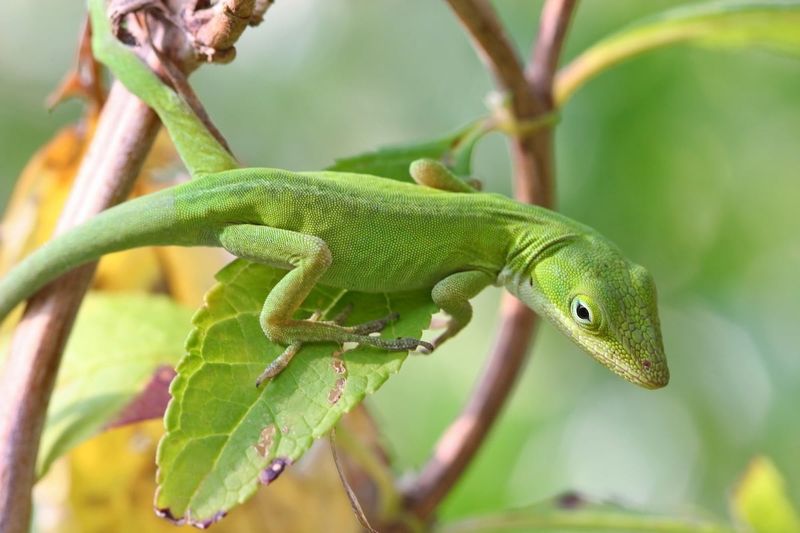
Here is where it gets tricky. An empty perch does not mean an empty yard. Green anoles can shift where they hang out based on temperature, time of day, humidity, and whether they feel exposed. They may drop lower into a shrub when it is hot, push deeper into leaf litter when a storm rolls through, or simply relocate to the shaded side of a fence that you rarely check.
The lizard you are missing may be ten feet away, watching you look for it.
Research on green anoles in urban settings, published in Frontiers in Ecology and Evolution, found that city environments can alter behavior, habitat use, and movement patterns in ways that change what a homeowner sees without necessarily reducing the local population. An anole that used to claim your fence post as its territory may have adjusted its routine in response to nearby construction, a new predator, or even a change in how much foot traffic passes through your yard.
A practical approach is to check the same locations at similar times of day over several weeks before deciding the anoles are truly gone. University of Florida IFAS Extension guidance on pest monitoring suggests one to three garden checks per week as a general scouting habit, though that figure comes from broader garden pest management advice rather than a specific anole survey method. Think of it as building a personal baseline: a few weeks of consistent, informal observation at the same spots gives you something real to compare against, rather than one unlucky morning becoming the whole story.
Layered Vegetation Creates Useful Anole Habitat

Walk through any stretch of Coastal Plain woodland where green anoles are thriving and you will notice the same thing every time: the vegetation goes up in layers. Low groundcover gives way to shrubs, shrubs give way to small trees, and the whole arrangement offers climbing routes, shaded hiding spots, sunny basking perches, and enough nooks to hunt small insects without ever crossing open ground. Replicating even part of that structure in a backyard is one of the most concrete things a North Carolina gardener can do to make the space more usable for anoles.
A field study of Anolis carolinensis in eastern Texas, archived by the U.S. Forest Service Research and Development, estimated that green anole abundance was roughly 16 times higher in a plot with greater shrub density compared to a sparse-shrub plot, and that the lizards favored individual shrubs with 4 to 6 times the average shrub volume. Those numbers come from one study in eastern Texas, not from controlled North Carolina backyard trials, so treat them as a directional signal rather than a guarantee. Still, the pattern is clear: thin, widely spaced plantings offer far less than a connected, layered arrangement.
Practically speaking, preserving shrubs, vines, small trees, groundcover, leaf litter, moist soil, and any decaying wood you might otherwise haul away gives anoles more of what they actually use. Fences and walls count too, especially when they are near vegetation that offers quick escape cover. Sunny spots for basking matter, but so does nearby shade for cooling down and hiding from hawks or cats.
No single native plant has been shown to reliably bring anoles back to a North Carolina yard, so skip the idea of a magic planting recipe. The structure of the vegetation, meaning how it connects and how many layers it provides, is what the evidence actually supports.
Use Pest Control Strategically, Not Automatically
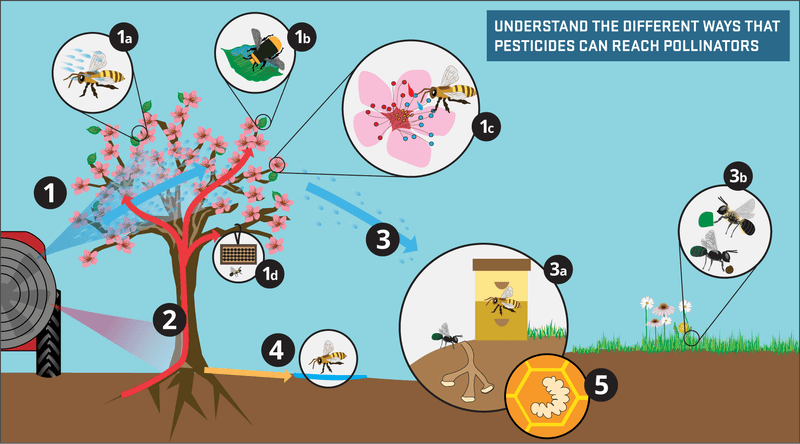
Pesticides are a reasonable thing to think about when anole sightings drop, but they are one possibility among several, not an automatic explanation. What absence alone cannot tell you is whether a chemical ever reached the lizard, reduced its prey, or played any role at all. Weather, season, vegetation, and simple detection issues all remain on the table until you actually look at each one.
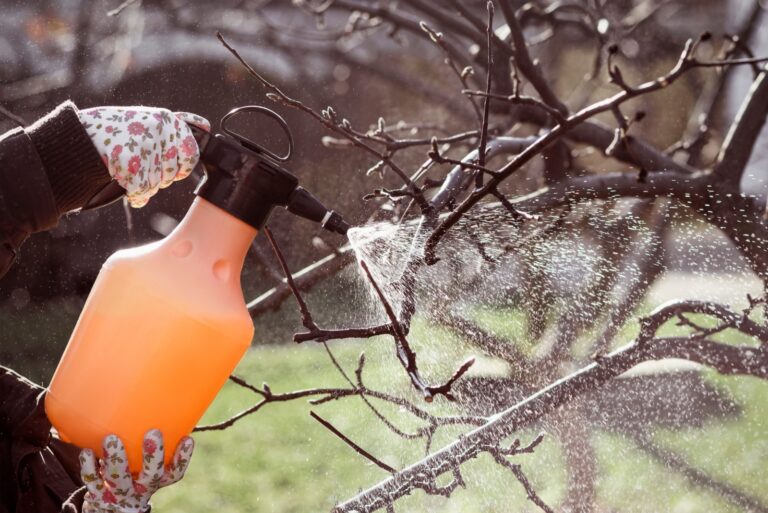
That said, pesticides genuinely can affect nontarget organisms. Broad-spectrum insecticides can reduce the small arthropods that anoles depend on for food, and spray drift or runoff can reach areas beyond the intended target. The practical response is not to abandon pest management entirely but to make it more deliberate. NC State Extension’s integrated pest management guidance lays out a clear process: monitor your garden regularly, correctly identify the organism causing damage, decide whether the level of damage actually warrants treatment, try cultural or mechanical controls first, and reserve pesticide applications for situations where they are genuinely needed and always follow the label.
That sequence protects both your plants and the broader garden food web without requiring you to let every pest run unchecked. A caterpillar you can hand-pick does not need a spray. A confirmed fungal disease on a prized shrub might. The distinction matters because reflexive spraying on a schedule, regardless of what is actually happening in the garden, is the kind of habit most likely to reduce the insects and other small prey that keep anoles around in the first place.
Supporting wildlife does not mean abandoning reasonable maintenance. It means making pest-control decisions based on what you actually see rather than habit or convenience.
Do Not Confuse a Brown Color With a Brown Anole
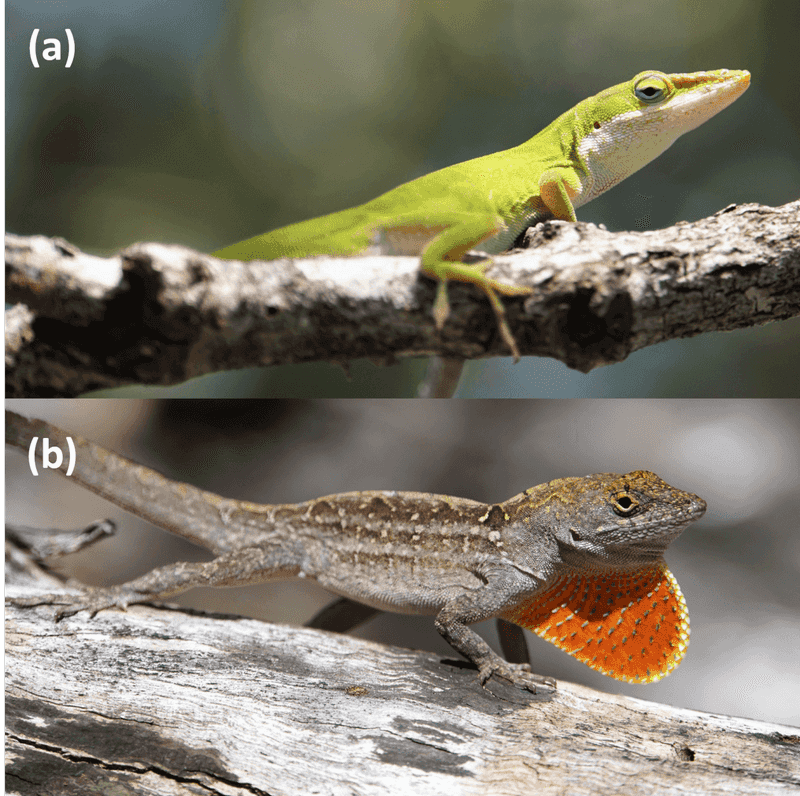
Many Piedmont gardeners spot a brownish lizard on the fence and immediately wonder if an invasive species has taken over. The identification is trickier than it looks. Green anoles, Anolis carolinensis, can appear green, brown, or even grayish depending on temperature, stress, activity level, and social conditions. Color alone cannot tell you which species you are looking at, so a brown lizard on your fence post is not automatically an intruder.
Check the NC Wildlife Resources Commission’s green anole profile for identification guidance rather than guessing from color.
The introduced brown anole, Anolis sagrei, is a genuinely different species and is established in parts of North Carolina, particularly near the coast and in urban areas. Where the two species share space, research published in Animal Behaviour found that brown anoles can alter green anole space use, social behavior, and perch height. Green anoles tend to move higher into the vegetation when brown anoles are present below. That is a real and documented effect, but it is not the same as local extinction.
Studies have not concluded that brown anoles universally eliminate green anoles from a yard or neighborhood, so seeing a brown anole does not mean your native lizards are gone for good.
On the legal and ethical side, the guidance here is specific. Do not release purchased or relocated anoles into your yard; moving wildlife can spread disease and place animals in unsuitable conditions. Brown anoles specifically are listed as a restricted species under North Carolina rules, and
NC Wildlife’s restricted species permit page states that importing, transporting, possessing, selling, transferring, or releasing them is unlawful without the required authorization. That restriction applies to brown anoles specifically; if you have questions about other reptiles, consult NC Wildlife directly rather than assuming a blanket rule covers every species.Let the Anole Prompt Better Observation
Putting the whole picture together, a missing anole works best as a prompt to look more carefully at your yard, not as a scorecard that grades whether you are doing things right. Run through the checklist: Does your region and the current season make sightings likely? Have you checked the same spots at the same time of day over several weeks? Does the vegetation offer enough connected layers, shelter, and sunny perches?
Have you been spraying on a schedule without a confirmed pest problem driving that decision?
Green anoles eat flies, crickets, beetles, ants, and other small arthropods, placing them inside the food web as small-scale predators. That role has real value, but it does not add up to a dependable stand-alone pest-control program for your garden. NC Wildlife describes them as insectivores within a broader ecosystem, not as a replacement for monitoring and managing specific pest problems.
Wildlife-friendly vegetation actually can support organisms some homeowners would rather not have around, so keeping an eye on conditions and addressing verified problems through integrated pest management stays important even in a yard managed with wildlife in mind. Dense plantings and leaf litter benefit many species, and NC State Extension’s wildlife habitat guidance recommends monitoring conditions and managing verified problems rather than treating biodiversity as either uniformly good or uniformly risky. The practical action plan is straightforward: observe informally for several weeks, make modest habitat improvements where the structure is genuinely thin, avoid moving or releasing lizards, and treat any future anole sighting the way it deserves to be treated, as one honest clue about what is happening in your corner of the yard.