What It Really Means When Leafcutter Bees Leave Perfect Circles In North Carolina Rose Leaves
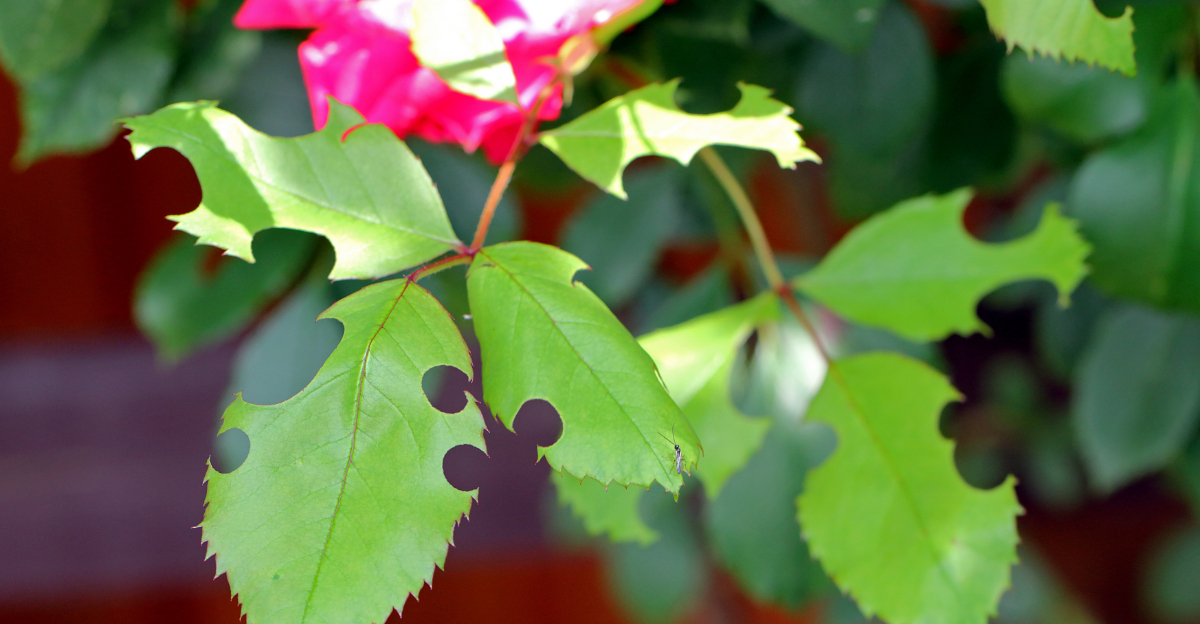
Perfectly round circles cut from rose leaves are one of the clearest signs that leafcutter bees have been active in your North Carolina garden.
These gentle, solitary bees use the cut leaf pieces to line and seal their nests, rather than feeding on the plant itself.
Unlike many pests, leafcutter bees cause only cosmetic damage, leaving roses otherwise healthy and unaffected in terms of growth or blooming.
Their presence actually signals a healthy pollinator population, since these bees play an important role in supporting local plant diversity.
Avoiding pesticide use near affected roses helps protect these beneficial insects from unnecessary harm. Providing additional habitat, like small bee houses, can encourage even more leafcutter activity in your yard.
Their nesting behavior tends to peak during warmer months before tapering off as temperatures cool. Seeing these neat circles is a small but reassuring sign that pollinators are thriving nearby.
1. The Missing Circles Are Nest Building Material
Picture a tiny, precise craftsman working quietly among your rose bushes, cutting out perfectly shaped pieces of leaf with nothing but her own jaws.
That is exactly what a female leafcutter bee from the genus Megachile is doing when you spot those smooth, rounded cutouts on your North Carolina roses. She is not eating the leaf at all. She is collecting building supplies.
The bee uses her strong mandibles to slice clean, curved sections from the leaf edge, usually working quickly and efficiently. Once she has a piece the right size, she rolls it up and carries it back to her nesting site tucked under her body.
She may make dozens of trips from your rose plant to her nest in a single day, gathering enough material to complete several cozy chambers.
Each piece of leaf serves as a construction material, almost like wallpaper or insulation lining the inside of a tiny nursery.
The bee is remarkably precise about the size and shape she cuts, which is why the holes look so uniform and almost machine-made.
Gardeners who see these marks for the first time often assume something is seriously wrong with their roses, but the opposite is true.
Your rose simply caught the eye of a skilled and industrious bee who found its leaves to be the perfect building material. Healthy, flexible leaves with the right texture are what she is after, and your rose passed the test.
2. The Cuts Are Usually Semicircular Scoops
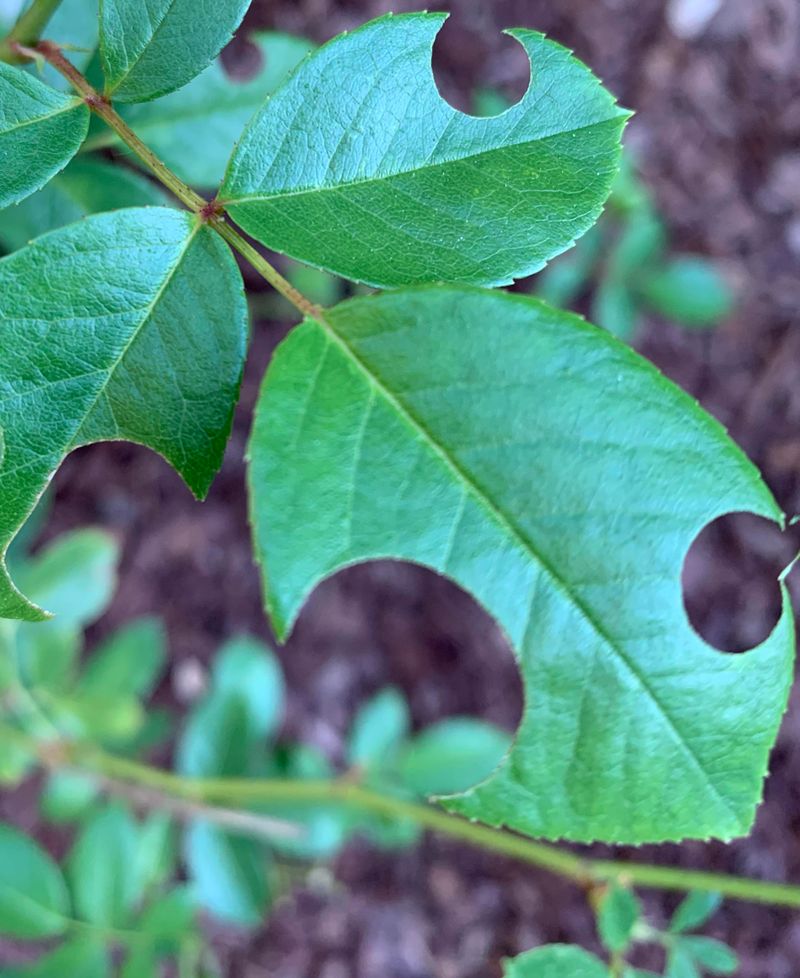
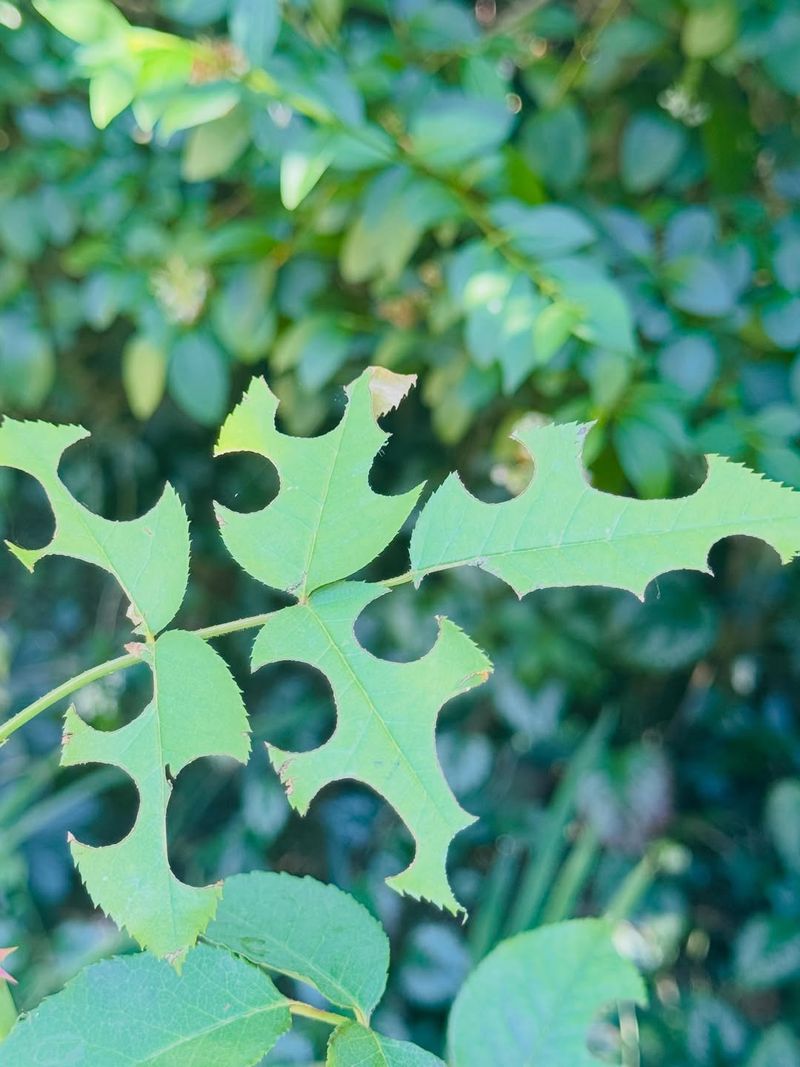
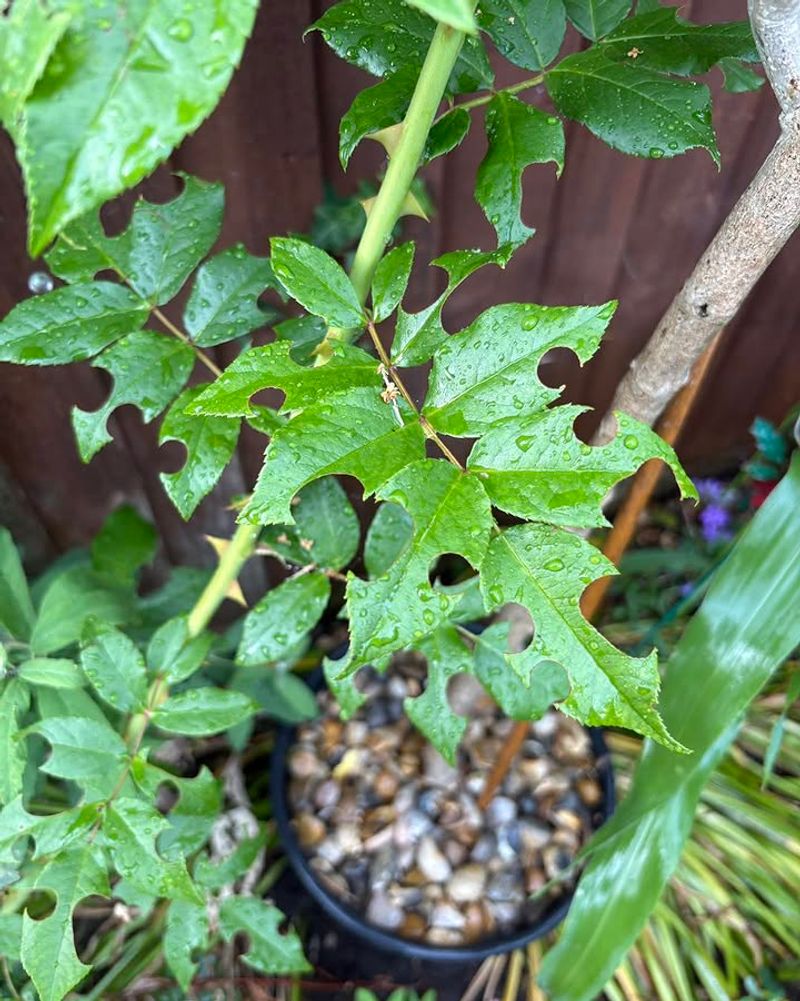
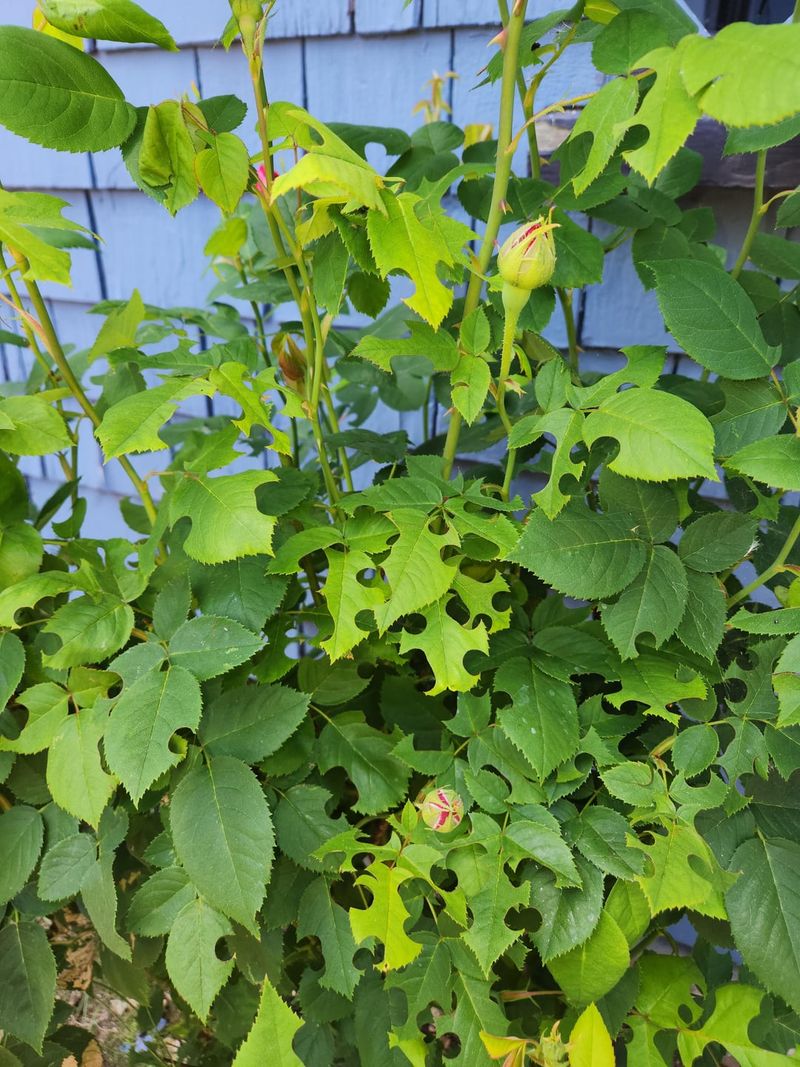
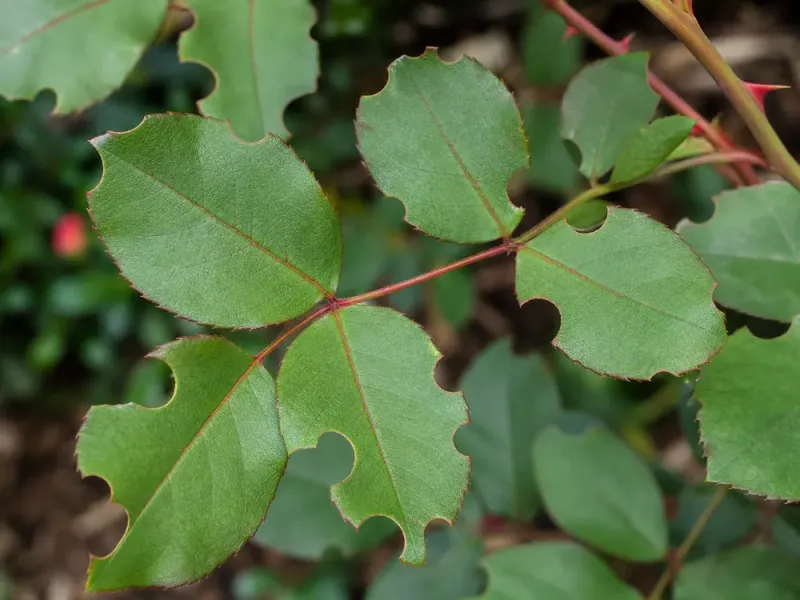
Most people call them perfect circles, but if you look closely at your rose leaves, you will notice the cuts are actually smooth semicircular scoops taken from the outer edge of the leaf rather than holes punched through the middle.
That distinction matters a lot when you are trying to figure out what visited your garden. The clean, curved outline is the real giveaway.
Other garden visitors leave very different marks. Caterpillars and beetles tend to chew ragged, irregular edges or skeletonize a leaf by eating the soft tissue between the veins.
Leafminers tunnel through the inside of a leaf, creating pale winding trails. Slugs leave irregular holes with no particular shape.
Your North Carolina Garden Changes Every Week. Your Plan Should Too.
Gardening in North Carolina changes quickly throughout the season. Every Friday you’ll receive a simple weekly plan showing exactly what to plant, prune, fertilize, harvest, and protect so you never miss the right timing.
None of those signs look anything like the smooth, scalloped edge a leafcutter bee leaves behind.
Before you reach for any kind of treatment, it really pays to get down close and examine the shape, location, and pattern of the damage. Leafcutter bee cuts start at the edge of the leaf and curve inward in a consistent arc.
The surrounding leaf tissue usually looks completely healthy, with no yellowing, spotting, wilting, or webbing nearby.
If the cuts are smooth, rounded, and located along leaf margins rather than scattered randomly across the surface, you are almost certainly looking at leafcutter bee activity.
Knowing how to read these signs accurately saves you time, protects helpful insects, and keeps your gardening decisions grounded in what is actually happening in your yard.
3. Female Bees Use The Leaves To Line Nest Cells
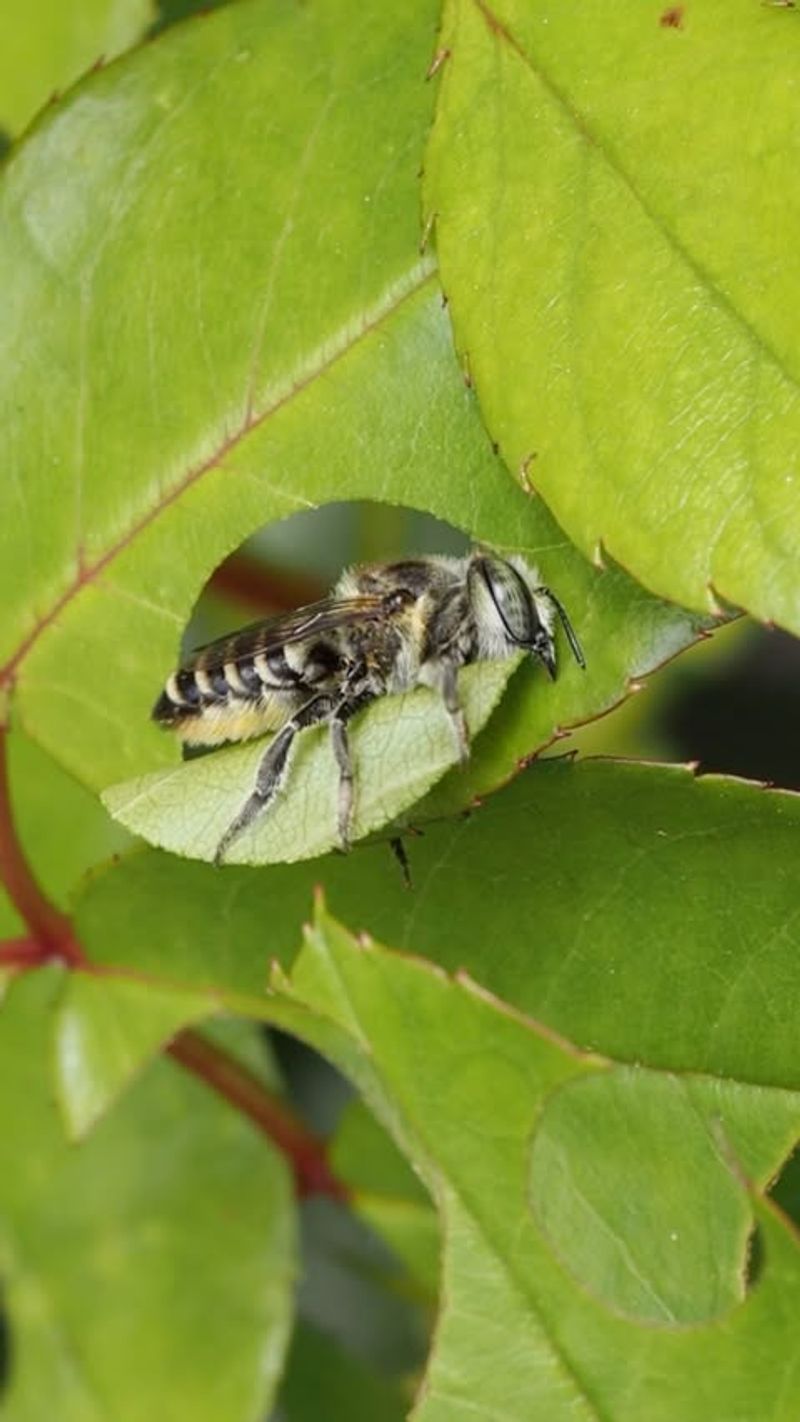
Here is something that sounds almost unbelievable until you see it for yourself. A female leafcutter bee constructs individual nursery rooms inside her nest, and she lines each one from the inside out using the leaf pieces she collects.
Think of it like building a tiny sleeping bag for each of her offspring, carefully crafted from plant material she chose herself.
Once a chamber is lined and shaped, she fills it with a mixture of pollen and nectar she has gathered from nearby flowers. That protein-rich blend will be the only food her larva needs to grow.
After stocking the cell, she lays a single egg on top of the pollen ball, then seals the chamber shut with more leaf material, creating a snug, self-contained nursery pod. She repeats this process multiple times, stacking cells end to end inside the nest cavity.
Nesting sites vary by species. Some leafcutter bees prefer hollow plant stems or pre-existing holes in wood, while others use soil tunnels, crevices in fences, or cavities in old lumber.
In North Carolina gardens, they often take advantage of hollow stems left on ornamental grasses, bamboo, or woody perennials.
Each nest might contain anywhere from five to twenty or more cells depending on how long the season lasts and how productive the female is.
The rose leaf pieces you see missing are not random. They are carefully selected components of a beautifully engineered structure built entirely by one very determined bee.
4. Rose Leaves Are A Common Material Choice
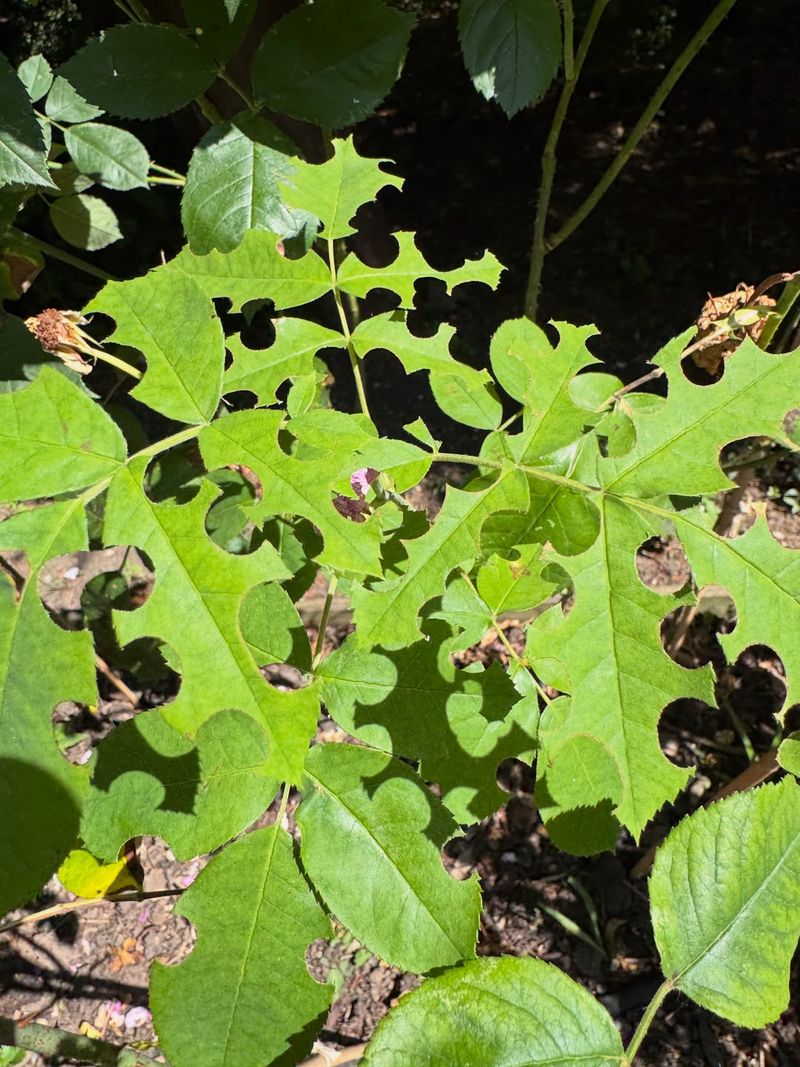
Roses have a reputation for being fussy plants, but to a leafcutter bee, they are simply an excellent source of raw material.
The leaves tend to have just the right combination of flexibility, thickness, and texture that female leafcutter bees prefer for nest construction.
Across North Carolina, rose bushes are among the most commonly targeted plants for this reason. Leafcutter bees are not exclusively loyal to roses, though.
Depending on the species and what is growing nearby, a female might also collect leaf pieces from redbud trees, grapevines, clover, Virginia creeper, or other plants with suitably pliable leaves.
She is essentially shopping for the best available building material in her territory, and sometimes your rose bush simply happens to be the best option in her neighborhood.
Seeing repeated cuts on the same rose plant does not mean the bee is targeting a weak or struggling specimen. Quite the opposite.
Leafcutter bees tend to select leaves that are healthy, firm, and free of disease because those pieces hold their shape better inside a nest cell. A rose covered in fungal spots or wilted foliage is actually less appealing to her.
So if your rose keeps getting visited season after season, take it as a quiet compliment. The bee has essentially given your plant a quality inspection and approved it.
Regular pruning, feeding, and watering will keep your roses in great shape for both their blooms and their unexpected role as a bee supply store.
5. The Rose Usually Keeps Growing Normally
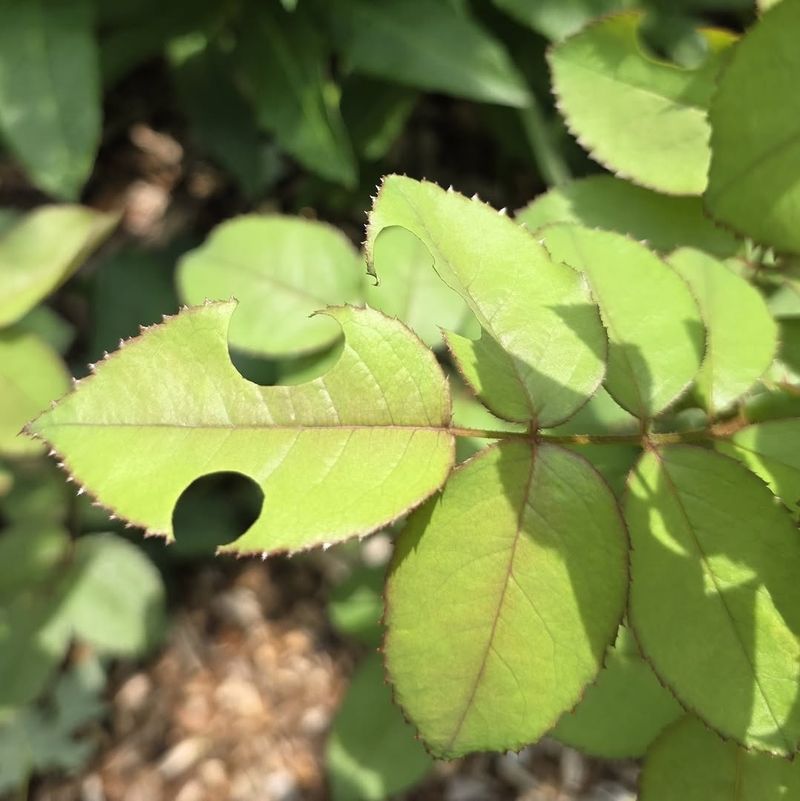
Spotting those neat little cutouts can feel alarming at first, especially if you have spent all season nurturing your roses. The good news is that leafcutter bee activity is almost always a cosmetic issue rather than a real threat to your plant’s health.
Roses are tough, vigorous plants, and losing a few small sections of leaf tissue rarely puts a dent in their ability to grow and flower.
A single rose leaf contains far more surface area than a bee ever removes. Even when a busy female makes multiple cuts from the same plant over several days, the total amount of leaf tissue lost is typically quite small compared to the overall canopy.
Established roses have enough photosynthetic capacity to absorb the loss easily and keep producing the energy they need for strong stems and blooms.
Where gardeners sometimes go wrong is blaming leafcutter bees for problems that actually have other causes.
If your rose is showing yellowing leaves, stunted growth, widespread spotting, or poor flowering, those symptoms point to watering issues, nutrient deficiencies, fungal diseases, or pest infestations rather than bee activity.
Clean semicircular cuts and healthy surrounding tissue are the hallmarks of leafcutter bee work. Before adjusting any part of your rose care routine, take a full look at soil moisture, drainage, sunlight exposure, and the overall condition of the plant.
Keeping your focus on those fundamentals will serve your roses far better than worrying about a few missing leaf edges.
6. Leafcutter Bees Are Valuable Garden Pollinators
Finding leafcutter bee activity in your garden is actually worth celebrating. These bees are not just collecting leaf pieces.
Every time a female forages for pollen and nectar to stock her nest cells, she visits flower after flower and transfers pollen as she goes. That makes her a genuinely productive pollinator, and her impact reaches well beyond your rose bushes.
Unlike honey bees, which carry pollen in specialized leg baskets that keep it fairly contained, leafcutter bees carry pollen on a dense brush of hairs on the underside of their abdomen called a scopa.
Pollen sticks loosely to this surface and falls off easily onto the next flower she visits, making cross-pollination highly efficient.
Some research suggests that leafcutter bees can be more effective pollinators than honey bees for certain crops, including alfalfa and blueberries.
In North Carolina gardens, leafcutter bees visit a wide variety of flowering plants beyond roses, including coneflowers, black-eyed Susans, garden beans, and native wildflowers.
Their pollination work supports fruit set, seed production, and overall garden biodiversity. Encouraging their presence by planting diverse flowering species and providing nesting habitat is one of the smartest things a gardener can do.
Putting up a simple bee house with hollow tubes creates ready-made nesting cavities that leafcutter bees readily adopt.
When you see those circular cuts, you are not looking at a problem. You are looking at evidence that your garden is healthy enough to attract and support one of nature’s most efficient and hardworking pollinators.
7. One Female Usually Works On Her Own Nest
Unlike the buzzing colonies most people picture when they think of bees, leafcutter bees live remarkably independent lives. Each female is essentially a one-bee operation.
She finds her own nesting site, constructs her own cells, gathers her own pollen and nectar, and raises her offspring entirely on her own without any workers, guards, or a queen directing her efforts.
You might notice several leafcutter bees using nesting tubes close together in a bee house, which can make them look like a colony at first glance.
What is actually happening is that multiple independent females happen to find the same attractive neighborhood of nesting cavities.
They are more like apartment neighbors than colony members. Each bee minds her own nest and does not share resources or cooperate with the others.
This solitary lifestyle has some interesting implications for gardeners. Because there is no colony to defend, leafcutter bees are remarkably calm and non-aggressive.
A female is entirely focused on her nesting tasks and has no interest in stinging unless physically handled or trapped. Children and pets can move around the garden without worry even when leafcutter bees are actively foraging nearby.
Males do not sting at all. The whole dynamic is completely different from dealing with a social bee nest.
Understanding this solitary nature makes it easy to appreciate these bees as quiet, independent contributors to your garden ecosystem rather than a source of concern or disruption.
8. The Best Response Is Usually Simple Observation
When you spot those telltale semicircles on your rose leaves, the most useful thing you can do is simply watch and appreciate.
North Carolina gardeners do not need to apply any treatments, remove the bee, or take protective action against leafcutter bee activity.
The cuts are harmless, the bee is beneficial, and interfering with her nesting process does more harm than good to your local pollinator population.
The best approach is to continue your normal rose care routine without changing a thing on account of the bee.
Water consistently, fertilize as needed, and monitor for actual disease or pest problems using the usual signs like discoloration, wilting, webbing, or widespread irregular foliage loss.
None of those symptoms will look anything like the clean, smooth semicircular cuts a leafcutter bee makes, so telling them apart is genuinely straightforward once you know what you are looking at.
If you want to go a step further, consider making your yard even more welcoming for these pollinators. Planting a variety of native flowering plants extends the foraging season and gives leafcutter bees more options for pollen and nectar.
Installing a small bee house with tubes of varying diameters provides additional nesting options beyond hollow stems.
Reducing or eliminating pesticide use in the garden protects not just leafcutter bees but the whole community of beneficial insects that keeps your garden balanced and productive.
Those circular cutouts on your rose leaves are not a warning sign. They are an invitation to look closer and enjoy the quiet, extraordinary life happening just outside your door.