What It Really Means When Luna Moths Show Up Around North Carolina Garden Lights
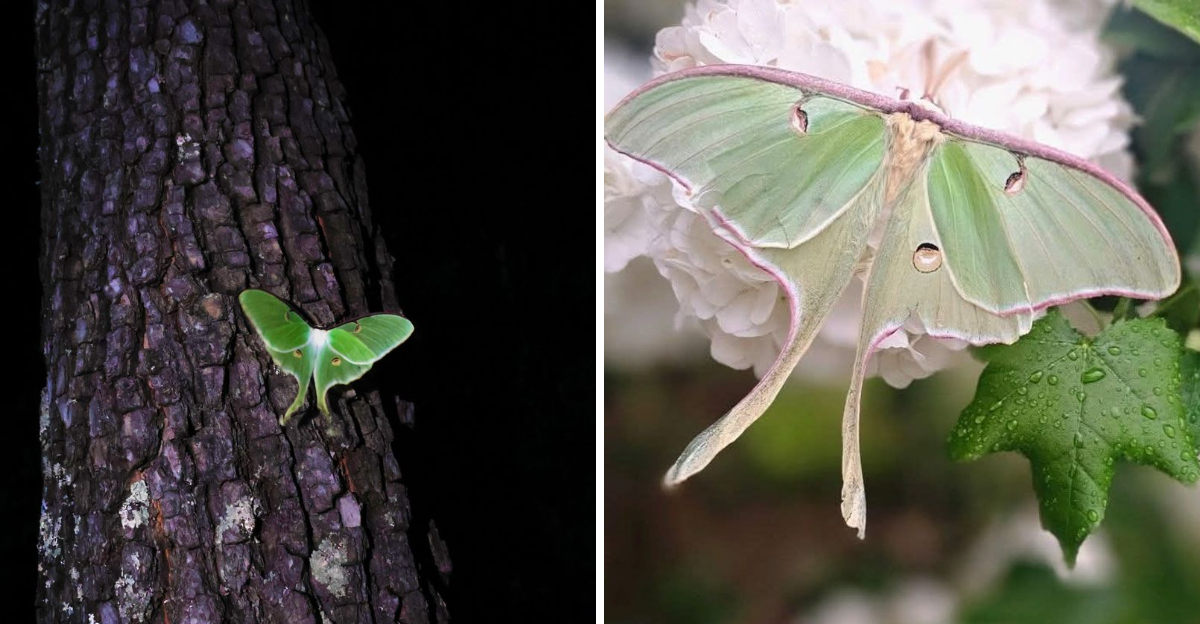
North Carolina nights can produce a visitor that looks almost unreal.
One minute, the porch wall is empty. The next, a pale green shape sits beneath the light with wings wider than your hand and tails that curl like ribbons.
It does not buzz at you. It does not race for the door. It simply stays there, quiet enough to make the whole scene feel slightly enchanted.
So why did this giant moth choose your house?
The porch bulb offers one clue, but the real story stretches beyond that glow. Nearby trees matter. The hour matters. Even the moth’s short adult life changes what that unexpected visit means.
A luna moth does not have much time to waste, and a bright backyard can alter a night that already runs on a tight schedule.
Before you touch it, feed it, or move it somewhere “safer,” look at what brought it close.
That green visitor may quietly hold one surprisingly useful clue about the darkness around your garden after sunset each night.
1. Read The Light Visit As Nocturnal Attraction
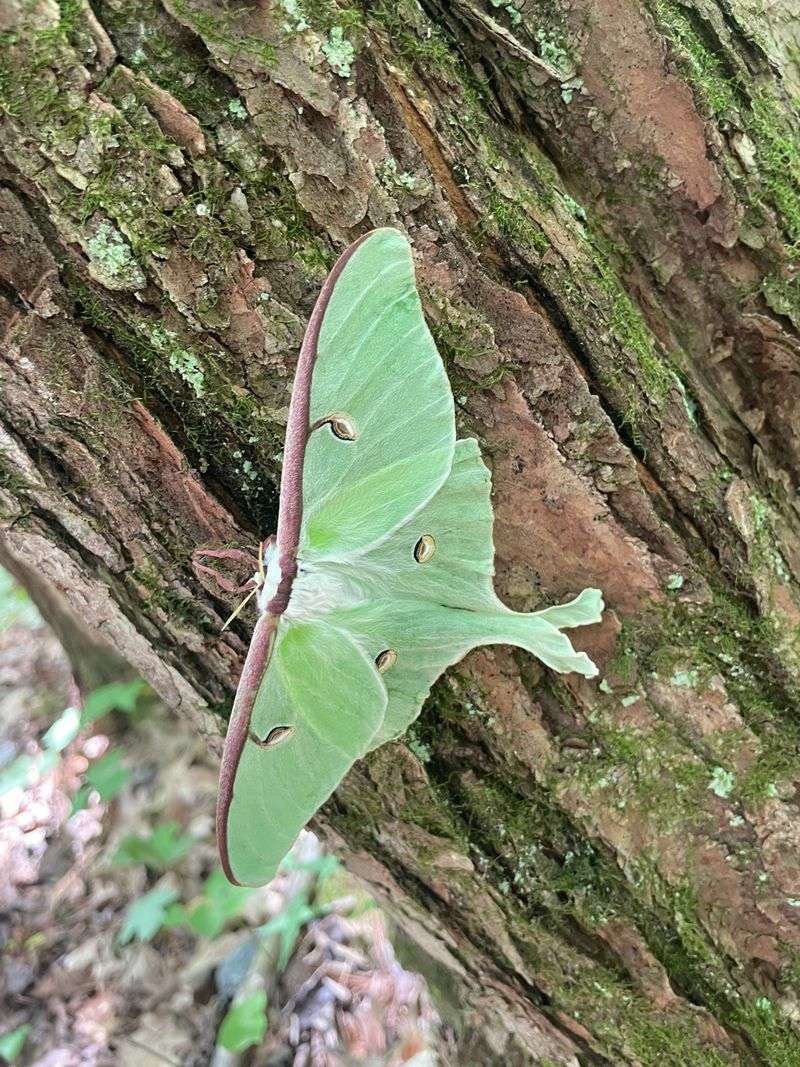
A luna moth beneath the porch light did not necessarily hatch anywhere near the porch.
The glow itself can pull a moth active after dark away from its usual route. Artificial light changes moth flight and can hold insects close to a fixture much longer than darkness would.
Scientists still study the exact mechanism, so the old “moths mistake bulbs for the moon” story is too simple.
For you, the useful clue is the location.
A moth pressed against siding beside a bright fixture may have reached the house because the light became hard to ignore. One on a tree farther from the house may tell you more about nearby habitat.
Luna moths are active after dark.
Their pale green wings can span several inches, so one adult at eye level feels much more dramatic than the average porch visitor.
Resist the urge to switch every light on for a better view.
Give the moth a darker exit instead. Turn off decorative fixtures once you no longer need them. A motion sensor can keep a walkway useful without an all-night beacon.
Warm, dim, well-shielded outdoor light can also reduce the amount of stray glow across the yard.
Your porch did not suddenly become a moth nightclub on purpose.
The bulb simply forgot to charge admission.
2. Expect Adults To Focus On Mating
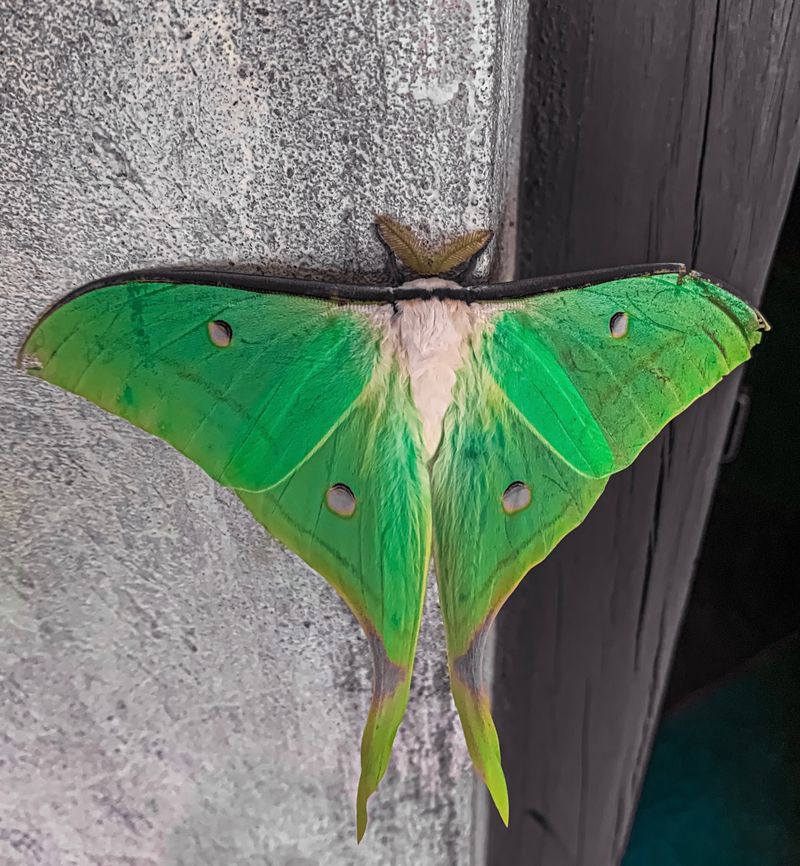
An adult luna moth has no long summer agenda.
Its adult stage lasts only about a week. In that brief stretch, the main job is simple: find a mate, reproduce, and place the next generation on suitable host trees.
That explains those extravagant antennae.
Males carry broad, feathery antennae that detect female sex pheromones. Females release those chemical signals at night, and males can follow the scent through the dark.
A bright porch light can interrupt that already short schedule.
The moth beside your door may not have chosen the wall as a rest stop. Artificial light can alter normal night activity and keep moths near fixtures instead of farther out in the landscape.
Your North Carolina Garden Changes Every Week. Your Plan Should Too.
Gardening in North Carolina changes quickly throughout the season. Every Friday you’ll receive a simple weekly plan showing exactly what to plant, prune, fertilize, harvest, and protect so you never miss the right timing.
Take a close look, but keep your hands away.
A male usually has fuller, more featherlike antennae. A female tends to have narrower antennae and a fuller abdomen, especially before she deposits her eggs.
Sightings can stretch across much of the warm season in the Southeast, so a spring visitor may not be the last pale green surprise near the porch.
The visit may last only until the next dark period.
No reservation. No luggage. No extended stay.
This guest has a very short social calendar, and your porch light may have accidentally become the loudest distraction on it.
3. Remember Adult Luna Moths Do Not Feed
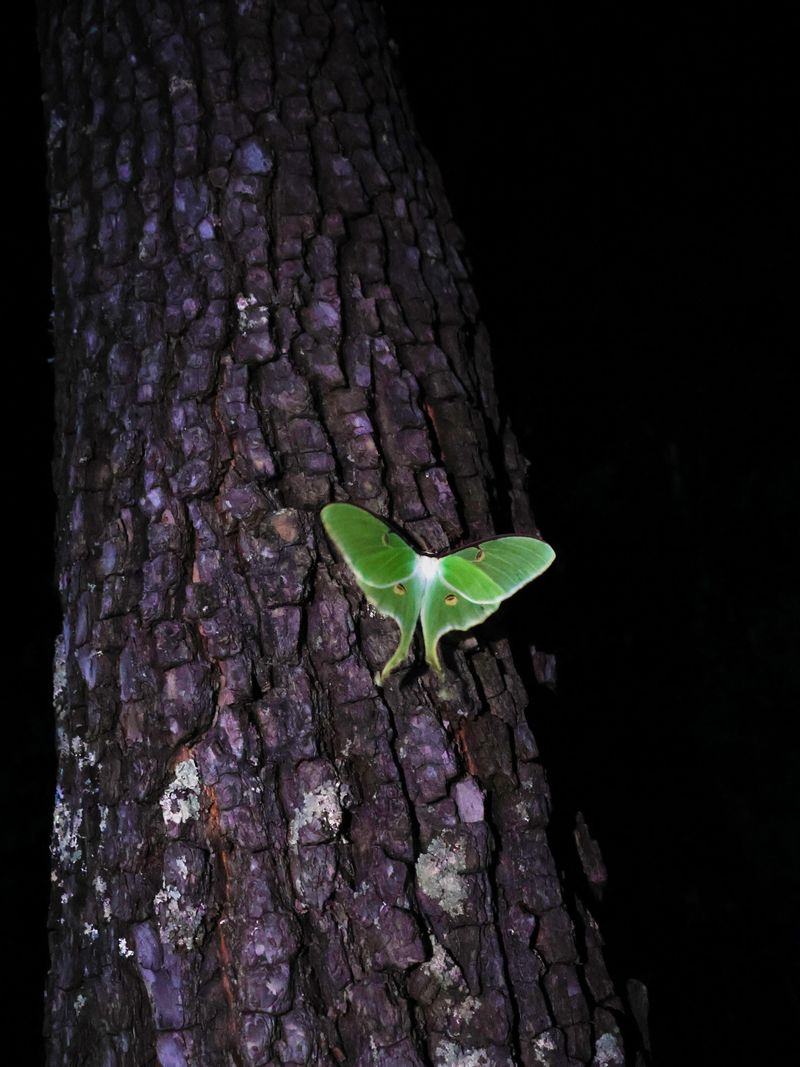
That giant moth does not need sugar water, flowers, fruit, or a tiny emergency snack plate.
Adult luna moths lack functional mouthparts. They do not feed during the adult stage.
The energy that carries them through those few days comes from reserves built during the caterpillar stage.
That changes how you should respond to a porch visitor.
Do not set out nectar or sliced fruit. The moth cannot use either one. A bright flower bed beside the porch did not lure the adult over for dinner either.
The caterpillar handled the serious meals earlier.
Luna moth larvae feed on leaves from suitable host trees and build the reserves that later support flight and reproduction. Once the adult emerges from its cocoon, the menu closes.
That makes every unnecessary detour more significant.
A moth that spends hours beside a bright fixture cannot replace the energy used there with a quick sip from a blossom. Darkness gives it a better chance to continue its normal nighttime activity.
You can help with one extremely easy move.
Turn off the nearby light once you are finished outside, then leave the moth alone.
No food station is required. No rescue buffet belongs on the porch.
For perhaps the first time in backyard wildlife care, less effort really does put less on your plate.
4. Look For Host Trees Around The Yard
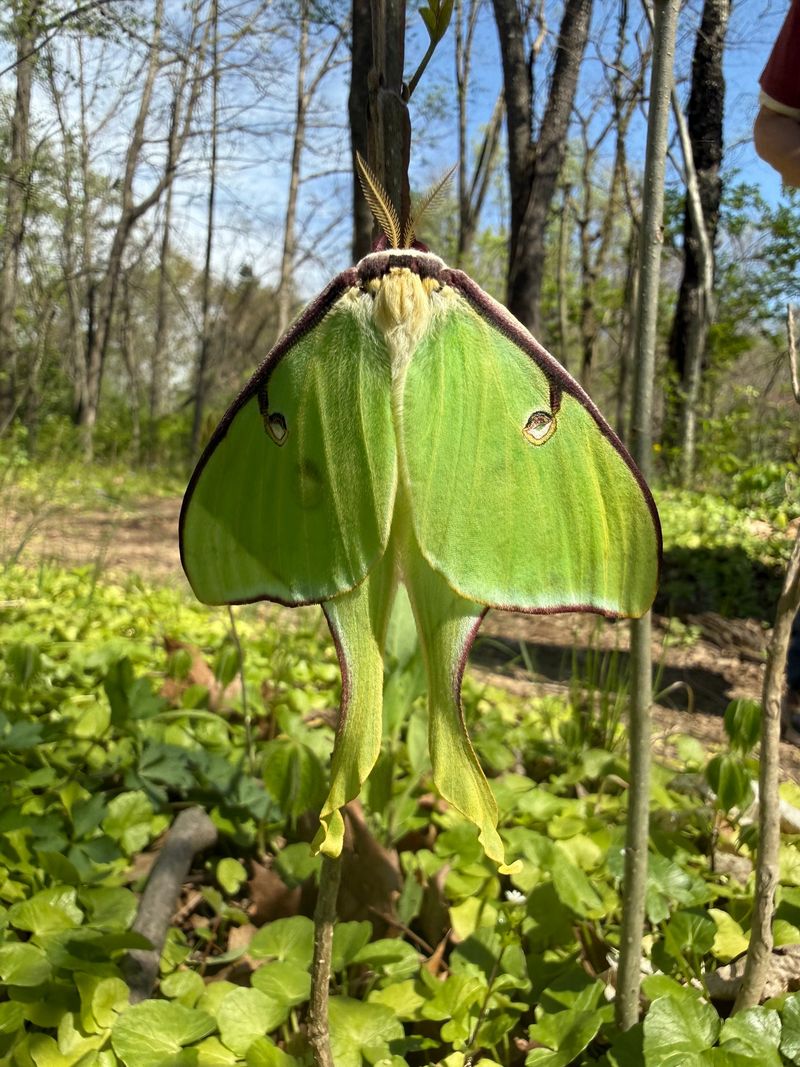
A luna moth at the porch can turn the next morning into a tree inspection.
Start with the big plants, not the flower pots.
Luna moth caterpillars use several hardwood trees as food. Hickories, walnuts, sweetgum, and persimmon can all serve that role in the Southeast.
A mature tree nearby may support the larval stage long before an adult appears beside your light.
That does not prove the moth came from your yard.
Adults can travel, and one porch visit does not come with a birth certificate. Still, suitable trees make your property part of a much more useful habitat than a lawn with no canopy.
Look up without an easy find.
The caterpillars are green and blend well with foliage. Small missing sections along leaves may have many possible causes, so do not treat every chewed edge like a luna moth clue.
The bigger lesson is much simpler.
A host tree feeds the stage that actually eats. A porch flower does not feed the adult at all.
That makes an old hickory or sweetgum far more relevant to the moth’s life cycle than a pot of nectar-rich annuals.
You may have admired that tree for shade every summer.
A luna moth sees the family pantry.
Suddenly the biggest plant in the yard gets a much more interesting job description.
5. Keep Hickories, Walnuts And Sweetgums In Mind
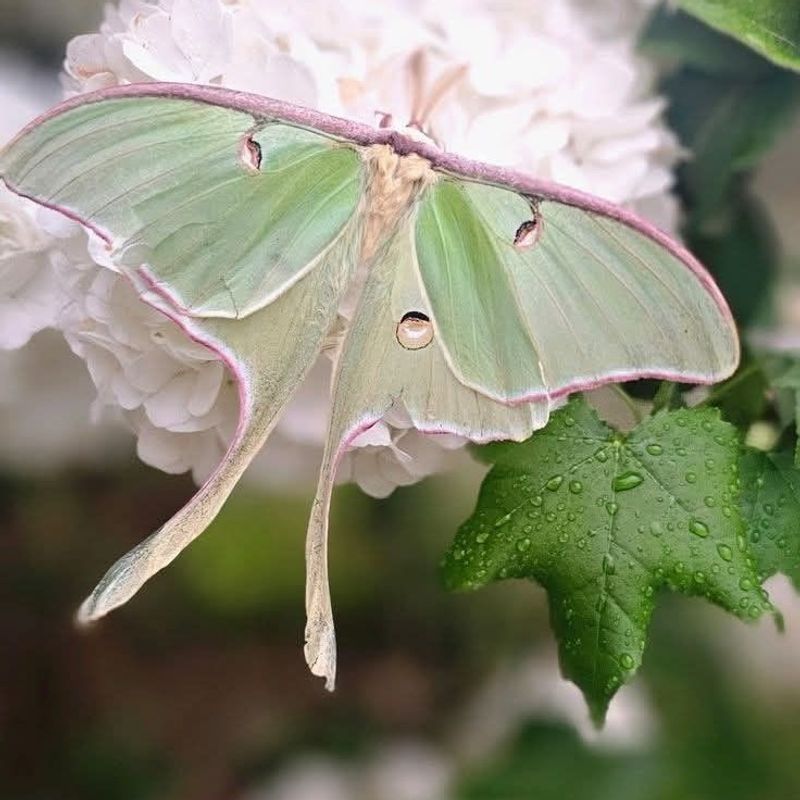
That old sweetgum may annoy you each autumn, but a luna moth caterpillar would vote to keep it.
Large native trees do more than frame the yard. They supply the leaves that young luna moths need before the adult stage ever begins.
Hickories, walnuts, sweetgum, persimmon, and several other hardwoods can serve as host plants across the species’ range.
A healthy tree can usually spare some foliage.
One caterpillar does not turn a mature hickory into a skeleton. The leaves it eats become fuel for the adult moth you later admire beneath the porch light.
That makes routine tree care part of the story.
Avoid unnecessary insecticide use on known host trees. A product meant for another insect that eats leaves can also affect caterpillars you hoped to support.
Treat a real pest problem, not every chewed leaf that appears in June.
Keep some natural cover beneath suitable trees too.
Luna moth caterpillars spin cocoons from silk and leaves. A perfectly vacuumed woodland edge offers fewer quiet places than a softer layer of natural debris.
You do not need to turn the whole yard wild.
Keep paths neat. Keep patios clear. Let a less formal corner beneath mature trees stay a little less polished.
The luna moth does not need a designer garden.
It needs the right tree, fewer chemical surprises, and one corner where every fallen leaf does not receive an eviction notice.
6. Turn Off Excess Lights After Dark
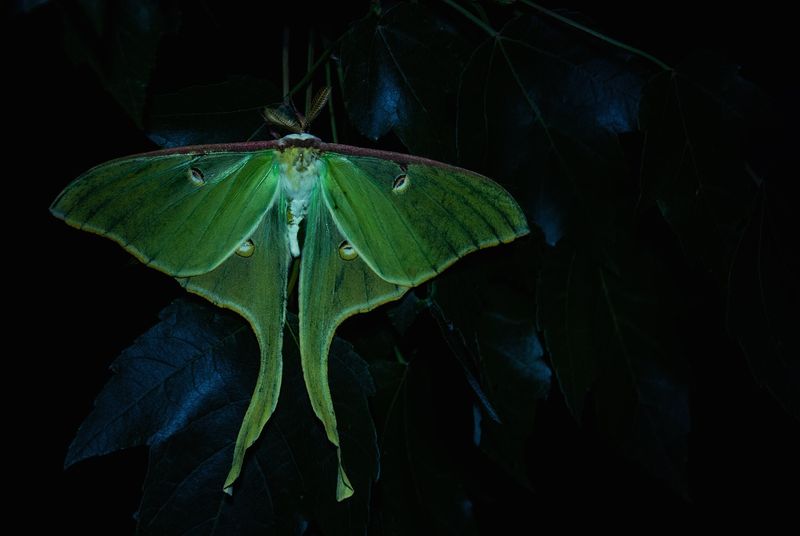
A luna moth beside the porch gives your outdoor lights an unexpected performance review.
The brightest fixture may work harder than you need.
Artificial light at night can change moth activity. Shorter wavelengths often attract more moths than longer wavelengths.
Darkness still creates the least interference, so bulb color is only part of the answer.
Start with time.
Turn decorative lights off after you come inside. Put security fixtures on motion sensors. A timer can handle lights that nobody remembers at midnight.
Then look at direction.
A shielded fixture sends light toward steps or a path instead of across the lawn and into nearby tree canopies.
That gives you useful visibility and keeps half the garden from a stage-like glow.
Warm-toned bulbs can reduce attraction compared with cooler, blue-rich light in many moth groups. Keep brightness only as high as the task requires.
One dark section of the yard can help too.
Leave the area near host trees or a wooded edge free from unnecessary light. Your patio can stay functional while the back corner gets its night back.
This is not a demand for flashlight-only nights.
It is a simple trim.
Keep the light that earns its electric bill. Cut the glow that serves no real purpose.
Your luna moth visitor may still stop by.
At least the porch will no longer advertise vacancy with a giant neon sign.
7. Leave Resting Moths Undisturbed
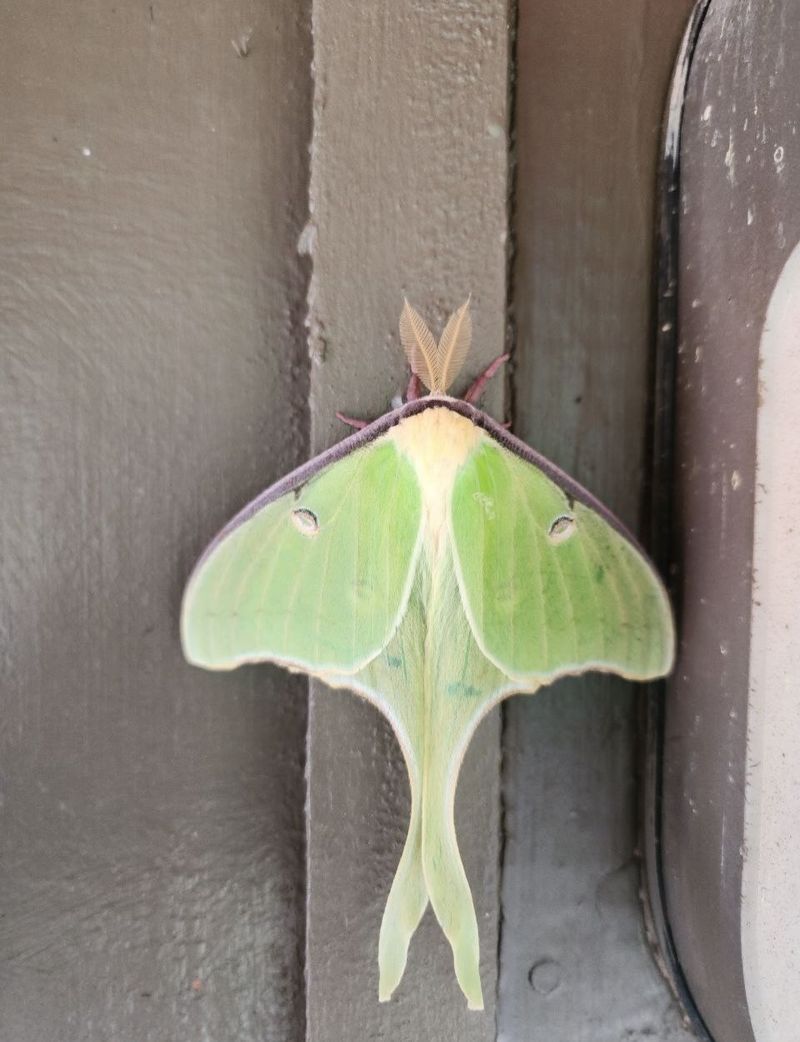
A luna moth on the wall at breakfast does not need a relocation crew.
It may simply be at rest after a night of flight.
Leave it where it sits when the spot is safe. Adult luna moths have a limited energy reserve, so unnecessary contact adds activity with no meal available afterward.
Keep fingers off the wings.
Moth scales come away easily with contact. A small amount of scale loss does not automatically ruin flight, but there is no benefit to a rub or firm grip on such delicate wings.
The camera can get close instead.
Take a photo from a respectful distance. The long tails, pale green color, eyespots, and feathery antennae make plenty of detail available without any need for touch.
Pets deserve supervision around the visitor.
A curious paw can turn a calm morning encounter into chaos in one second. Children can enjoy the moth just as well with a look-first rule.
A doorway creates the main exception.
Move the moth only when its location puts it at clear risk from feet, doors, or routine traffic.
Let it step onto a twig or piece of cardboard, then place that support in a shaded, protected spot nearby.
Most safe visitors can handle the departure themselves after dark.
No box. No sugar water. No dramatic rescue mission.
Sometimes the best wildlife welcome is simple.
Your spectacular guest can keep the seat it already chose.