What It Really Means When Vultures Circle Your Texas Property
Few sights in a Texas sky are quite as arresting as vultures circling overhead in a slow, wide spiral.
There’s something about it that commands attention in a way that’s hard to look away from, and for most Texas homeowners, the immediate reaction is a mixture of curiosity and mild unease.
What are they circling? What do they know that you don’t? And should you be concerned about what’s happening on your property? These are exactly the right questions to ask.
Vultures don’t circle randomly. Their behavior is purposeful and driven by very specific conditions below them, and when they’re circling your Texas property, they’re responding to something real.
What that something is ranges from entirely ordinary to genuinely worth investigating, and knowing how to read the signs makes a meaningful difference in how you respond.
Beyond the practical explanation, vultures have carried deep symbolic meaning across cultures and traditions for centuries, and in Texas, where wildlife and folklore run close together, a circling vulture rarely goes unexamined.
1. They’re Riding Thermals
Picture a bird gliding effortlessly across a wide Texas sky without flapping its wings even once. That is exactly what vultures do when you see them circling high above your property.
They are not circling because something is wrong. They are riding thermals, which are columns of warm air that rise up from the ground as the sun heats the earth below.
Thermals form naturally during the warmer parts of the day, usually mid-morning through the afternoon. Vultures are experts at finding these invisible elevators in the sky.
Once they catch a thermal, they spread their wings wide and let the rising air carry them upward in a slow, graceful spiral. It takes almost no energy at all, which makes it a very smart way to travel and search for food.
You can usually tell a vulture is riding a thermal by how high it is flying and how relaxed its movement looks. The bird barely flaps.
It just tilts and glides in wide, lazy circles. This kind of high circling is completely normal behavior and happens all across Texas, especially in open areas like ranches, fields, and pastures.
Just because vultures are circling your land does not mean there is a carcass below. Many times, your property simply sits beneath a reliable thermal spot that the birds have learned to use regularly.
Think of it like a favorite shortcut they take every day. So if you see them way up high, spinning slowly in the sky, there is a very good chance they are just enjoying a free ride on the warm Texas air.
2. They May Be Searching A Much Larger Area For Food
Vultures are some of the best natural scouts in the animal world. When they circle over your property, they could actually be scanning an area that stretches for miles in every direction.
Their soaring flight is not random at all. It is a very efficient search pattern that helps them cover huge amounts of land while using very little energy.
Your Texas Garden Changes Every Week. Your Plan Should Too.
Gardening in Texas changes quickly throughout the season. Every Friday you’ll receive a simple weekly plan showing exactly what to plant, prune, fertilize, harvest, and protect so you never miss the right timing.
Turkey vultures, which are extremely common across Texas, have a skill that most birds do not have. They can actually smell their food from a great distance.
Their sense of smell is remarkably sharp, and they use it to sniff out carrion even when it is hidden under thick brush or tall grass.
So while a turkey vulture circles above your land, it might be catching a scent that is drifting in from a neighboring property or even from a road several miles away.
Black vultures, on the other hand, rely more on their eyesight. They will often follow turkey vultures to a food source rather than find it on their own.
This means a group of mixed vultures overhead could simply be a team effort, with each bird using its own strengths to locate a meal somewhere in the region.
The key thing to remember is that circling at a high altitude is a searching behavior, not a landing behavior. When a vulture actually finds something, it will begin to descend.
If the birds you are watching stay high and keep moving across the sky, they are most likely passing through your area as part of a much broader search. Your property is just one small piece of a very large puzzle they are trying to solve.
3. Repeated Low Circling Could Mean Carrion Is Nearby
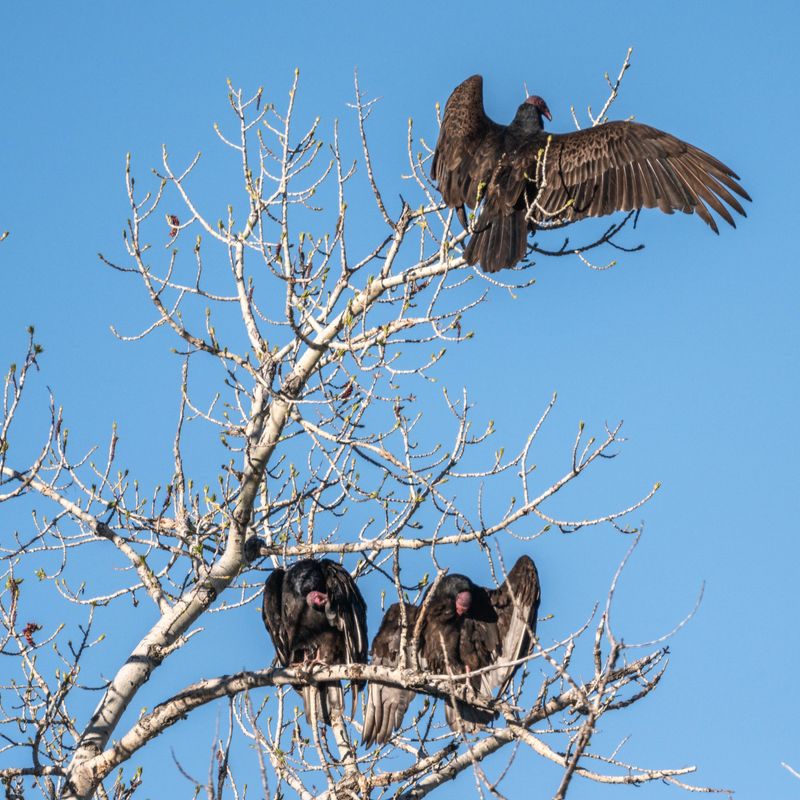
Not all vulture circling looks the same, and knowing the difference can tell you a lot about what is happening on or near your property. High, wide circles usually mean the birds are just traveling or searching.
But when you notice vultures starting to circle lower and lower, or when they begin to land nearby, that is a different story worth paying attention to.
Low circling is a strong sign that a vulture has picked up a scent or spotted something on the ground. The birds will tighten their circles and drop in altitude gradually as they zero in on a food source.
You might see them landing in trees close by, hopping around on the ground, or gathering in a group near a specific spot. This kind of behavior is a much more reliable clue that there may be a carcass somewhere in the area.
Common sources that attract vultures to Texas properties include roadkill near fences, a wild animal that passed away in the brush, or livestock that may have gone down somewhere on a large piece of land.
Ranchers and farmers actually find this behavior useful because it can help them locate an animal they did not know was down.
If you see repeated low circling over the same general area for more than a day, it is worth taking a walk or a slow drive around that part of your property to check things out. You do not have to get close to the birds.
Just look for signs like feathers on the ground, a group of birds perched in one tree, or the birds flushing up when you approach a certain spot. That will help you narrow down exactly where they are focused.
4. A Large Group Returning Daily May Have A Roost Nearby
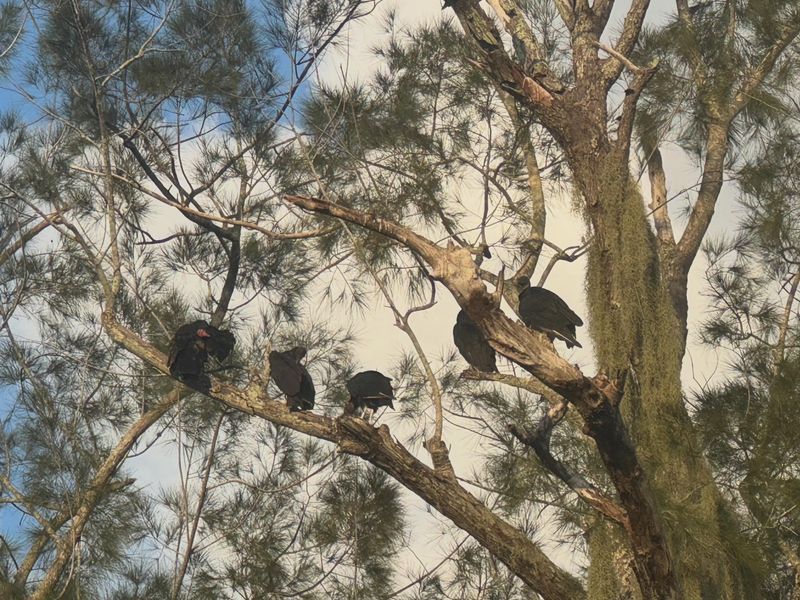
Seeing a few vultures pass overhead is one thing. But when a large group shows up every single day, circling the same area and then disappearing into the same patch of trees as the sun goes down, you are likely dealing with a roost.
Vultures are very social birds and they love to sleep together in groups. These communal resting spots are called roosts, and once a group of vultures finds one they like, they will return to it night after night.
Roosts can form almost anywhere that offers a tall, sturdy perch with a good view of the surrounding land. In Texas, vultures commonly roost in large live oaks, dry trees, cell towers, water towers, and even on the rooftops or ridgelines of barns and houses.
A roost can start small, with just a handful of birds, and grow into a group of dozens or even hundreds over time as other vultures follow the crowd.
Having a roost on your property is not automatically a crisis, but it can become a problem depending on where the birds settle.
Vultures have a habit of spreading their wings to warm up in the morning sun, which looks dramatic and can startle people who are not expecting it.
They also produce a lot of waste, and their droppings can damage roof materials, stain surfaces, and create an unpleasant smell over time.
If a roost is forming somewhere on your land, the earlier you notice it, the easier it is to discourage the birds from sticking around.
Simple deterrents like reflective tape, noise, or removing attractive perch spots can help encourage the group to move on before the roost becomes fully established and harder to break up.
5. You Could Be Seeing Turkey Vultures Or Black Vultures
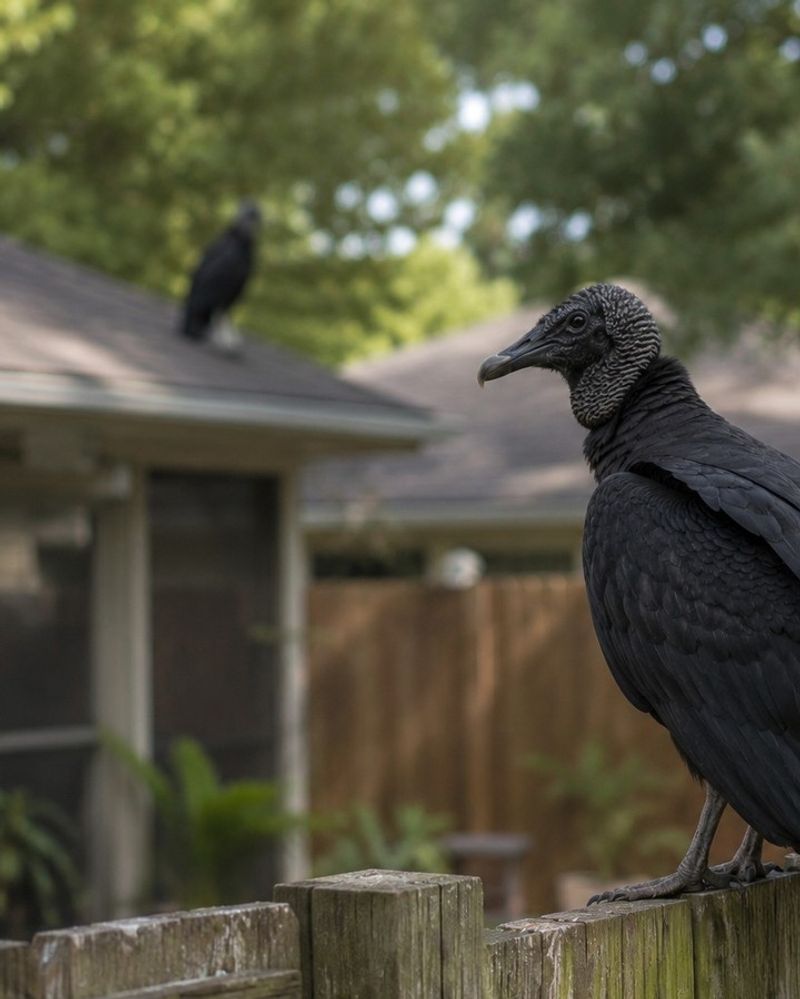
Texas is home to two different species of vultures, and learning to tell them apart is actually pretty fun once you know what to look for.
Both birds are large, dark, and impressive in the air, but they have some clear differences that make identification easier than you might expect.
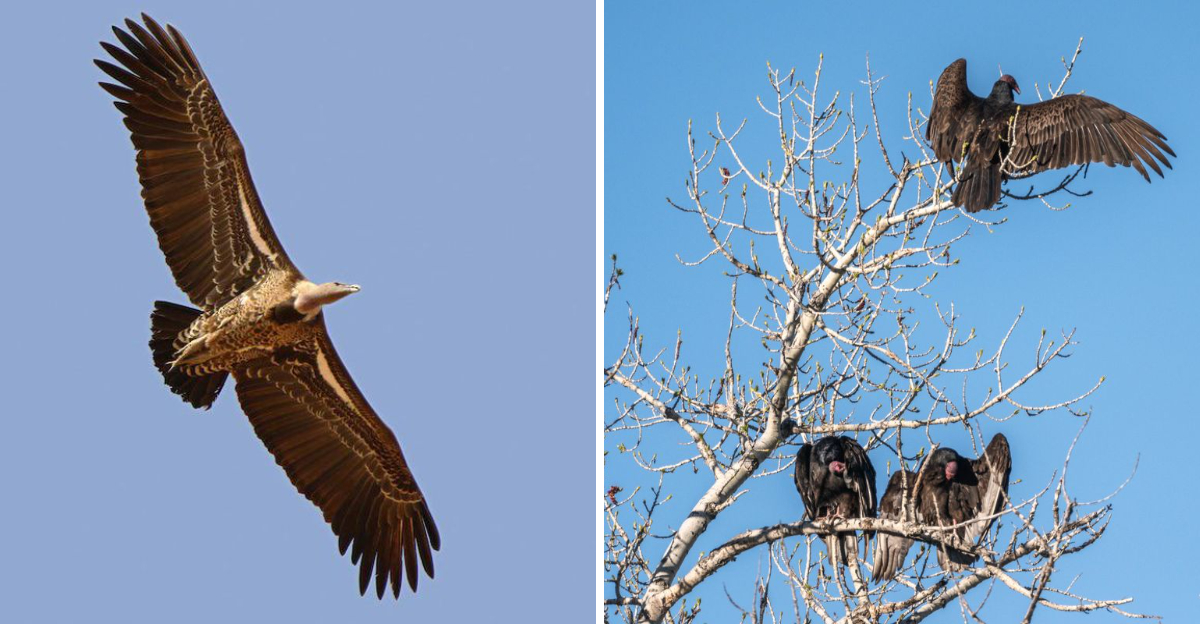
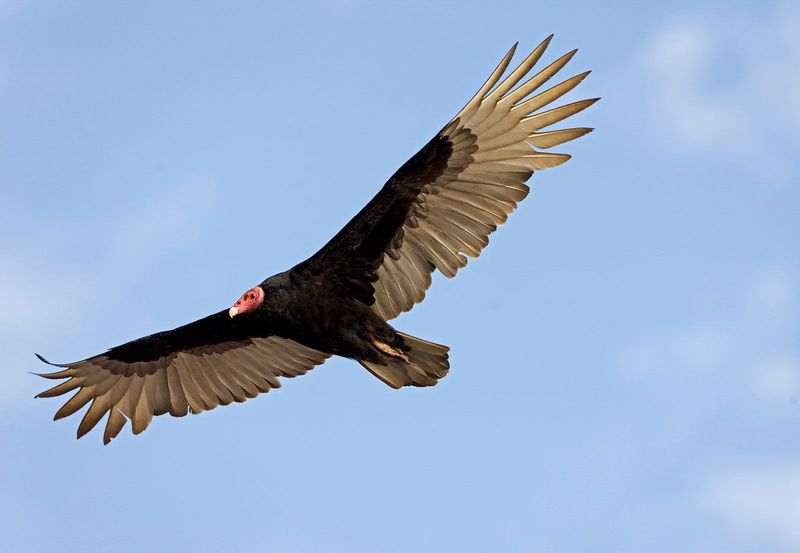
Turkey vultures are the more common of the two and are found all across Texas throughout most of the year. When they fly, they hold their wings in a slight V-shape, which birders call a dihedral.
Their wingtips look silvery or two-toned from below, and their heads are small and red, like a turkey’s, which is exactly where their name comes from.
Turkey vultures tend to wobble and rock from side to side when they soar, almost like they are balancing on an invisible tightrope. That rocking motion is one of the easiest ways to spot them from a distance.
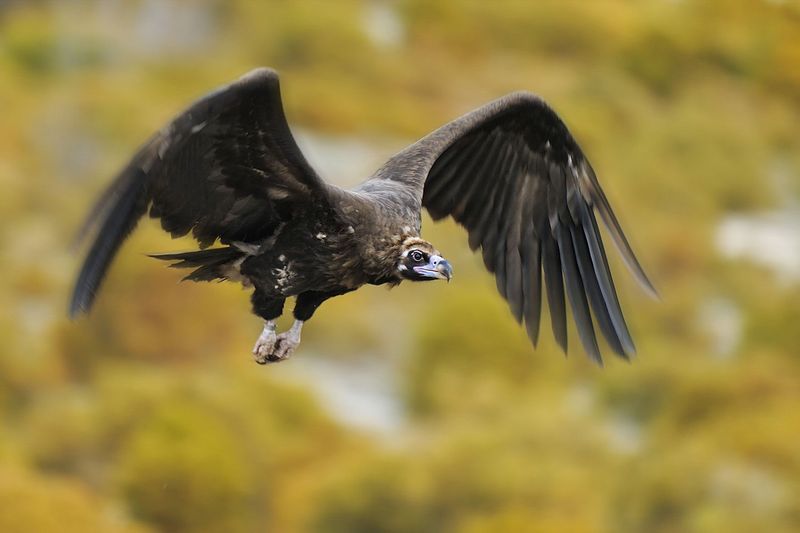
Black vultures look stockier and more compact. They have shorter tails, broad wings with white patches near the wingtips, and gray or black heads.
They flap more frequently than turkey vultures and tend to fly in a flatter, more direct style. Black vultures are highly social and often travel in larger groups.
They are also more aggressive around food sources and will sometimes chase turkey vultures away from a carcass.
Both species are protected under the federal Migratory Bird Treaty Act, which means it is illegal to harm them without a special permit. Knowing which bird you are looking at can also help you understand their behavior better.
Turkey vultures tend to be more solitary searchers, while black vultures prefer to work as a group, so the species mix you see overhead can give you useful clues about what they are up to.
6. Circling Alone Usually Isn’t A Reason To Worry
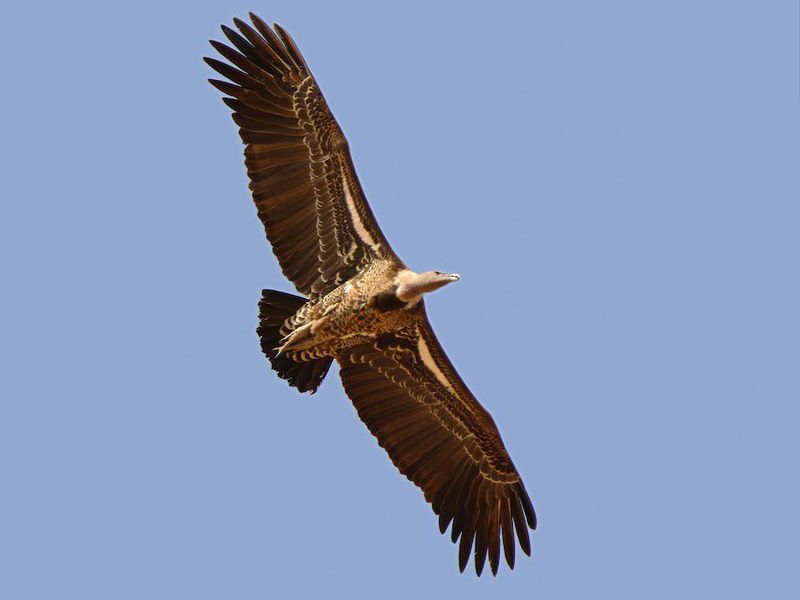
Here is something worth keeping in mind the next time you look up and spot vultures overhead: circling by itself is almost never a reason to panic.
Most of the time, these birds are simply passing through, riding air currents, or scanning the landscape as part of their daily routine.
They are wild animals doing what wild animals do, and their presence in the Texas sky is actually a sign of a healthy ecosystem.
Vultures play an incredibly important role in nature. They clean up carcasses that would otherwise sit and rot, reducing the spread of bacteria and disease in the environment.
Without them, the landscape would be a lot less pleasant for everyone, including the people who live and work on Texas land. Respecting what they do for the ecosystem is a good starting point for any conversation about managing them.
Problems are more likely to show up when large numbers of vultures begin roosting on your structures or causing physical damage to your property.
Vultures have been known to tear at rubber roof seals, window caulking, and vinyl surfaces, which can lead to real repair costs if left unchecked. That is when it makes sense to take action.
Since both turkey vultures and black vultures are federally protected birds, you cannot legally remove or harm them without proper permits.
If you are dealing with a persistent roosting problem, the best step is to contact your local Texas Parks and Wildlife office or the USDA Wildlife Services program.
They can walk you through legal and effective options for managing the situation. A little knowledge goes a long way when it comes to living alongside these fascinating and useful birds.