What It Really Means When Your Texas Lawn Crunches Underfoot In August
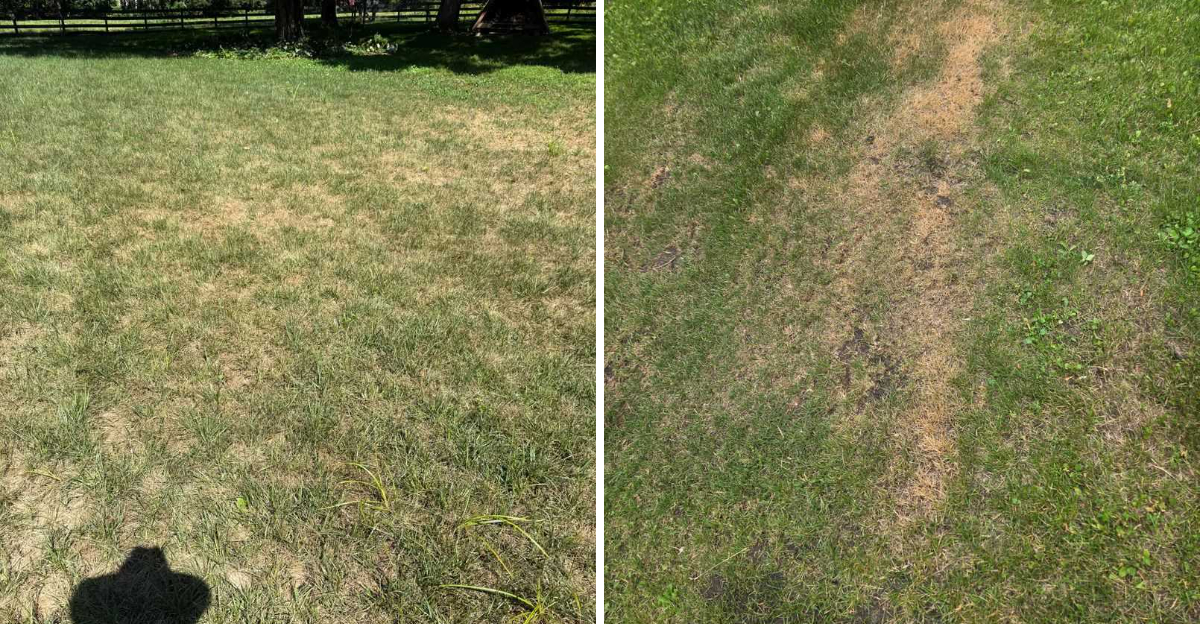
A Texas lawn can sound wrong before it looks wrong.
One step across the grass brings a dry, papery crunch that seems to demand an immediate response.
By afternoon, the same patch may look duller, flatter, or more tired than the rest of the yard. The obvious reaction is to reach for the hose, but that sound can point to more than one problem.
Some causes start in the soil. Others begin at the sprinkler head, the mower deck, or the base of the grass itself. One patch may recover quickly, while another keeps fading even after a deep soak.
So what is the lawn actually telling you?
The answer comes from reading several clues together rather than trusting the sound alone. Color, footprints, soil resistance, patch shape, root condition, and grass type all narrow the possibilities.
One wrong move can make a stressed patch harder to recover. August heat makes mistakes expensive, which is why the smartest move starts with diagnosis before another gallon of water hits the yard.
1. Read Crunchy Blades As A Drought Warning
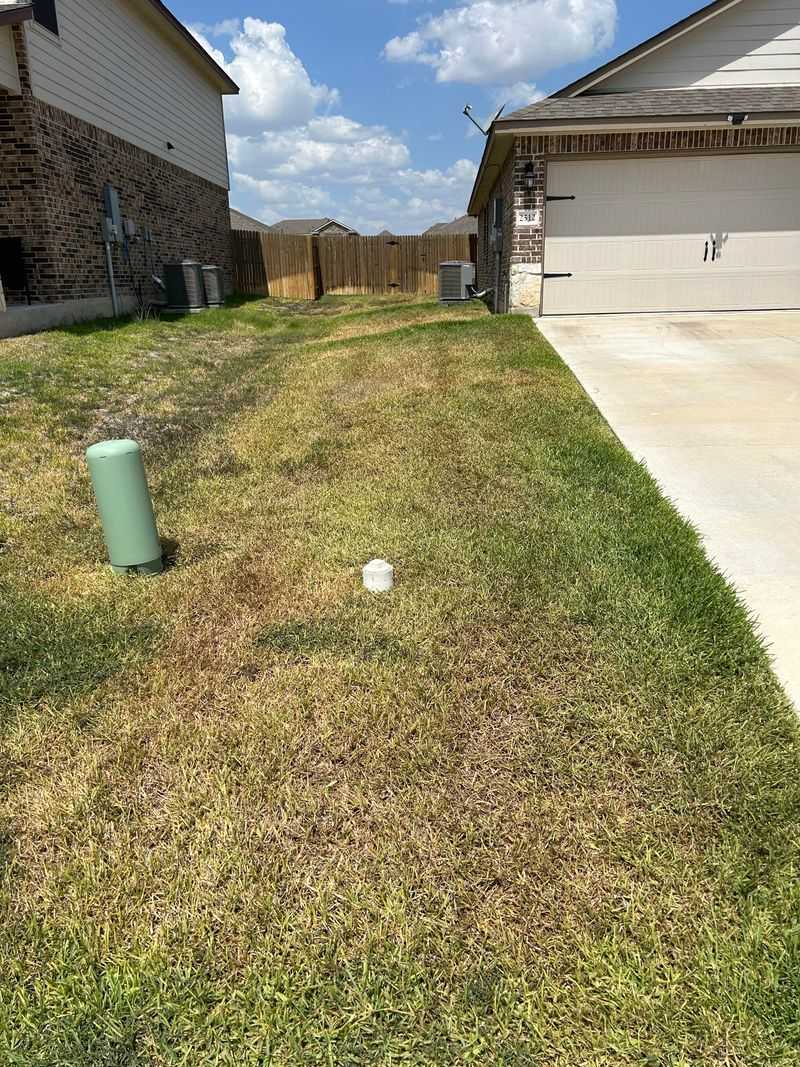
That brittle sound often starts with water stress, especially after several hot, dry days.
Grass blades lose internal pressure as available moisture drops, so the turf stops feeling springy and begins to feel stiff underfoot.
Color can shift from healthy green toward blue-gray or dull green before the lawn turns tan. Footprints also linger longer because dry blades do not spring upright as quickly.
Look at the lawn early in the morning.
A stressed patch that still appears folded, curled, or dull before the day’s heat builds deserves closer attention.
Bermuda may fold its blades lengthwise, while St. Augustine often shows broader leaves that curl or lose their normal glossy look.
Then check below the surface.
Push a screwdriver or soil probe several inches into the ground in multiple spots. Dry soil resists the tool much more strongly than moist soil.
One hard spot does not tell the whole story, so compare the crunchy area with nearby turf that still feels normal.
Surface dryness alone can mislead.
Texas sun can bake the upper half inch while usable moisture remains deeper in the root zone. That is why sound should trigger inspection, not an automatic irrigation cycle.
The lawn may indeed be thirsty.
The useful clue is a dry root zone paired with dull color, lingering footprints, and brittle blades. Once those signs line up, a deep watering makes far more sense than a quick splash based on crunch alone.
2. Check Whether Warm Season Turf Has Gone Dormant
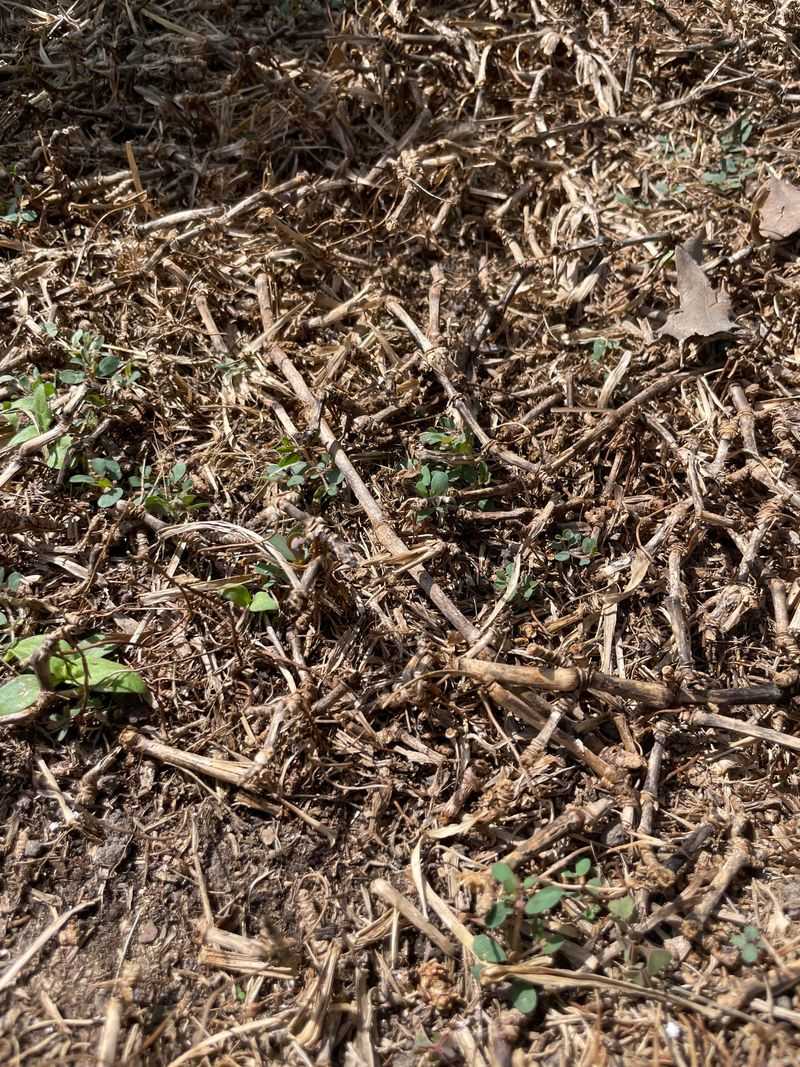
Brown or crunchy grass does not always mean the lawn has failed.
Several warm-season grasses used in Texas can slow growth sharply during drought and protect themselves by going dormant.
Bermuda is especially capable of browning during extended dry weather, then resuming growth after moisture and favorable conditions return. Zoysia can also enter a protective slowdown under stress.
Grass type changes the interpretation.
St. Augustine is less comfortable with prolonged drought and usually needs more careful moisture management through extreme summer conditions.
Your Texas Garden Changes Every Week. Your Plan Should Too.
Gardening in Texas changes quickly throughout the season. Every Friday you’ll receive a simple weekly plan showing exactly what to plant, prune, fertilize, harvest, and protect so you never miss the right timing.
Buffalograss handles dry weather far better and may lose color while the crowns remain alive. Centipede grass, more common in East Texas, can show stress quickly when heat and moisture problems stack up.
Look at the base of the plant instead of judging only the blade tips.
Healthy crown tissue near the soil line should remain firm. Turf that feels loose, mushy, or badly deteriorated at the crown deserves more investigation because dormancy alone does not explain that condition.
Patch pattern also helps.
A broad, even color change across an entire sunny area may fit drought or dormancy better than a sharply expanding irregular patch.
Do not force green color with repeated shallow watering.
A dormant-capable lawn may need enough moisture to protect crowns without being pushed into constant weak growth during the hottest stretch.
Knowing the species matters before deciding that every brown blade needs the same treatment. August turf can be resting, struggling, or failing, and those are three very different situations.
3. Probe The Soil Below The Dry Surface
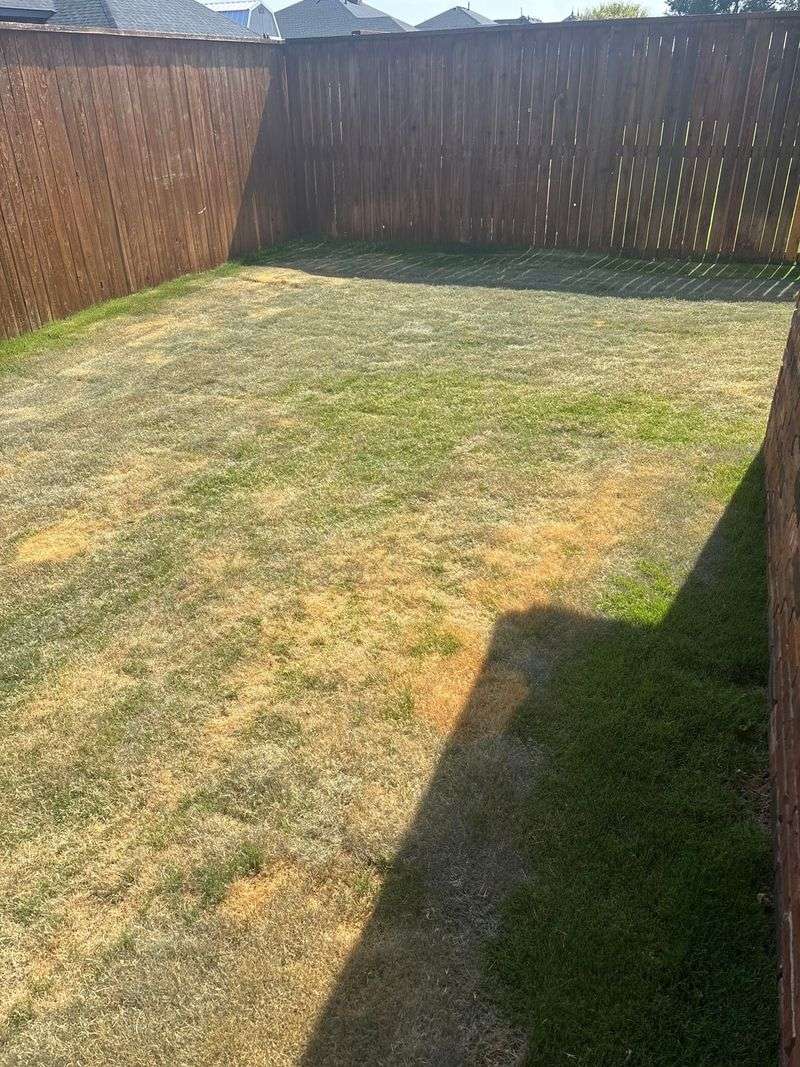
The top of the lawn can look desert-dry while the root zone still holds useful moisture.
Texas clay often creates that illusion. The surface hardens quickly under sun, especially where foot traffic or mowing has compacted it, while deeper soil can remain damp.
Sandy ground behaves differently and may dry more evenly from top to bottom.
A simple probe test cuts through the guesswork.
Push a six-inch screwdriver, metal rod, or soil probe into several parts of the lawn. Moist soil usually accepts the tool with less resistance. Dry ground stops it quickly or requires noticeably more force.
Compare several locations.
Test the crunchy patch, nearby healthy turf, and an area close to an irrigation head. Differences can reveal more than one reading.
Moisture depth matters too.
Grass roots using only the top inch of soil are much more vulnerable to August heat than roots exploring several inches down.
A lawn watered lightly every day can stay deceptively green for a while while building a shallow root system that struggles during a hot, windy week.
The goal is not keeping the soil wet constantly.
Roots need air as well as water, so irrigation should recharge the active root zone and then allow some drying before the next cycle.
Let the probe settle the argument between appearance and reality.
A crunchy surface with moist soil below points toward another cause or simply a dry crust. A crunchy surface paired with resistance several inches down gives drought stress a much stronger case.
4. Look For Missed Irrigation Zones
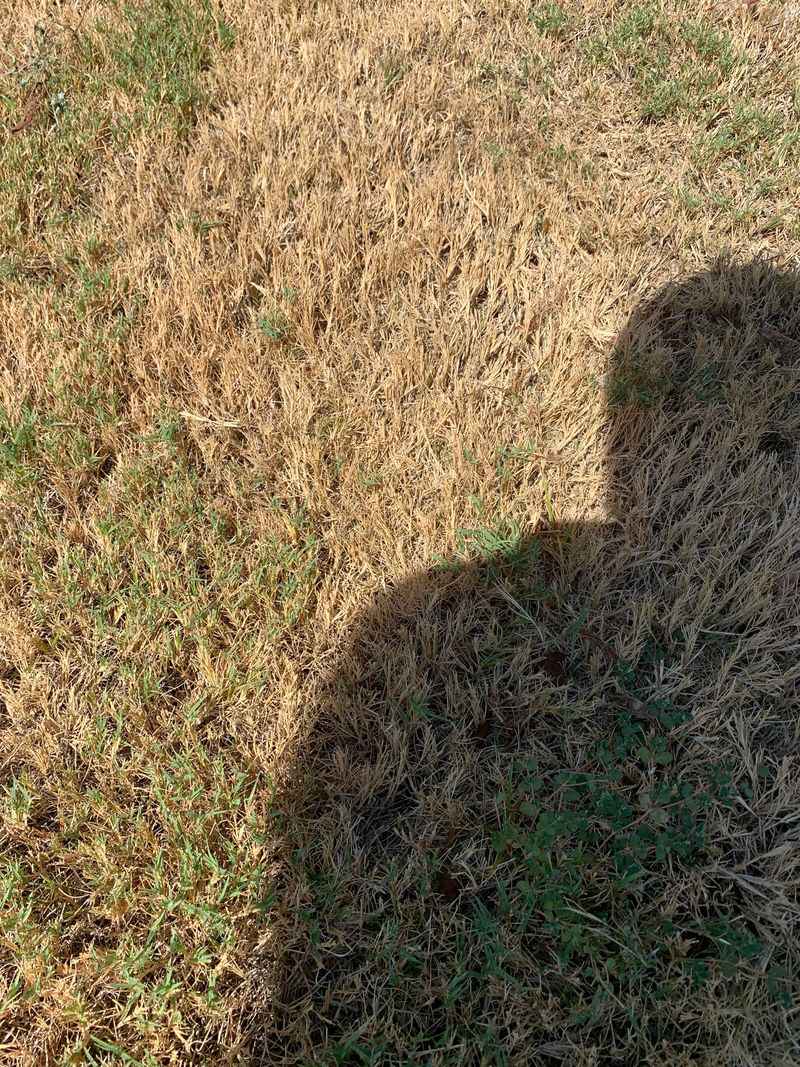
A dry patch shaped like a crescent, stripe, or wedge often points toward water distribution rather than statewide drought drama.
Sprinkler systems can quietly lose coverage during summer. A broken head may spray sideways. A clogged nozzle can reduce output.
Grass growth can block a low head, and shifting soil can tilt a sprinkler just enough to leave one section under-watered.
Run each zone during daylight.
Watch every head rise, rotate, and cover the area it is supposed to reach. Look for blocked spray, weak arcs, overspray onto pavement, and mist that drifts away before landing on the grass.
Dry patterns often match the geometry of the system.
A narrow strip beside a driveway may sit outside the spray arc. One triangular patch may fall between three heads. A circular dry spot around a failed rotor can be almost suspiciously tidy once you know what to look for.
Wind adds another complication.
Fine spray can drift badly during hot Texas afternoons, so a zone that seems to run normally may still deliver uneven water under breezy conditions.
Use catch cans or straight-sided containers when coverage remains unclear.
Set several across the zone, run the irrigation, and compare the amount collected. Large differences point toward distribution trouble rather than a simple need for more runtime.
That distinction saves water.
Extending every zone by ten minutes will not repair one clogged nozzle. Fix the missing coverage first, then decide how much irrigation the lawn actually needs.
5. Check Sunny St. Augustine For Chinch Bugs
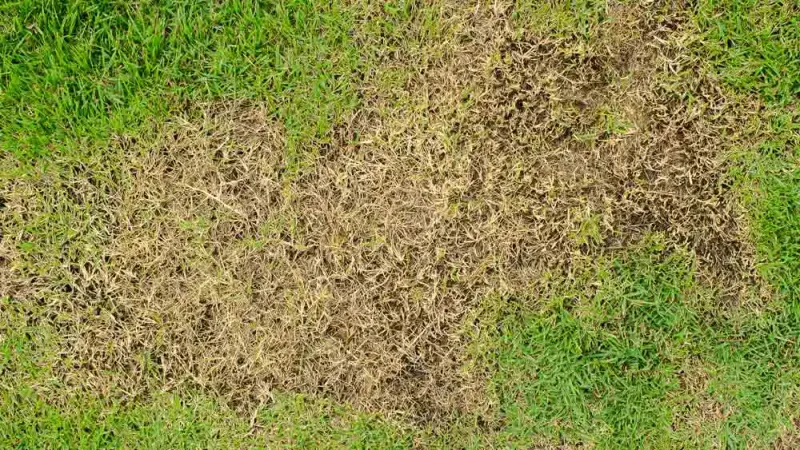
A hot, sunny St. Augustine patch can look drought-stressed while insects are doing the real damage.
Southern chinch bugs thrive in warm conditions and often show up in the hottest parts of the lawn, including areas near driveways, sidewalks, and south-facing exposures.
Damage commonly begins as yellowing or reddish-brown turf that expands outward in irregular patches.
The location is a clue.
Chinch bug trouble often favors full sun more than deep shade. A thirsty lawn can also stress in sunny areas, so the pattern should lead to inspection rather than an instant diagnosis.
Part the grass at the edge of the damaged patch.
Look near the soil surface and lower stems, especially where healthy and affected turf meet. Adults are small, dark insects with pale wings, while younger stages are much smaller and can show reddish coloring.
Use a flotation test when the insects are hard to spot.
Press an open-ended metal can into the soil at the edge of the patch, fill it with water, and keep the level high for several minutes. Small chinch bugs may float to the surface where they become easier to see.
Do not treat on appearance alone.
Drought stress, poor irrigation coverage, root problems, and disease can create similar patches. Confirming the insect before using any pesticide prevents wasted treatment and protects beneficial organisms.
A crunchy St. Augustine lawn beside hot pavement deserves a closer look. Sometimes the hose is innocent, and the real problem is moving just above the soil line.
6. Separate Drought Stress From Root Trouble
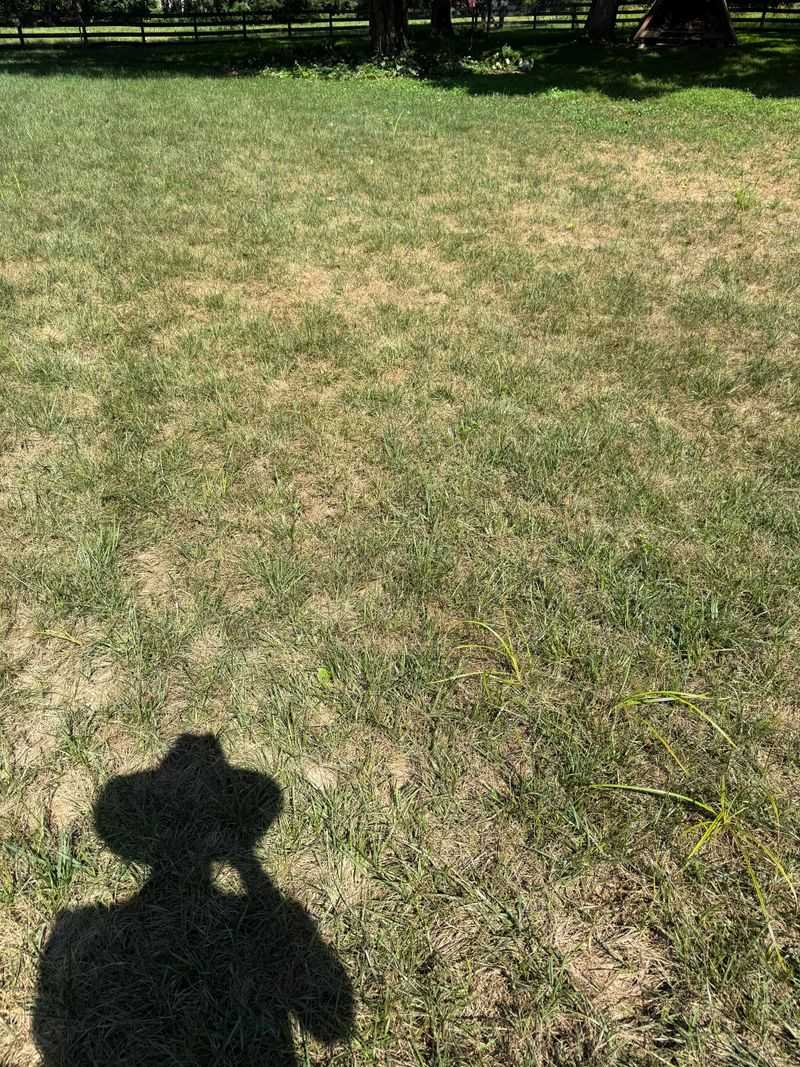
Grass can sit above moist soil and still behave like it cannot find a drink.
Root trouble explains that contradiction. Compacted soil, poor drainage, chronic overwatering, and weak root development can all reduce the turf’s ability to move water into the leaves during extreme heat.
Start with compaction.
Heavy foot traffic, parked vehicles, and repeated pressure on clay soil squeeze out pore space. Water may run off instead of soaking in, while roots remain shallow and stressed.
A screwdriver that stops abruptly in one high-traffic zone can point toward more than simple dryness.
Then look at low spots.
Soil that stays saturated after irrigation or rain can deprive roots of oxygen. The turf above may yellow, thin, or wilt despite sitting over wet ground. Adding more water makes that problem worse.
Pull a small plug from the edge of an affected area.
Healthy roots should feel firm and show pale to light coloring. Weak, shortened, darkened, or soft roots suggest a deeper problem than ordinary drought response.
Summer is not the ideal moment for aggressive renovation.
Core aeration and major soil correction are better timed for periods when the turf can recover safely. During extreme heat, reduce traffic, correct irrigation problems, and avoid creating fresh stress with unnecessary disturbance.
The key is response after watering.
Turf with functional roots should show some recovery after the root zone is properly recharged. A patch that remains limp or crunchy despite adequate moisture deserves a root-level investigation before another irrigation cycle gets added.
7. Keep The Mower From Scalping Stressed Grass
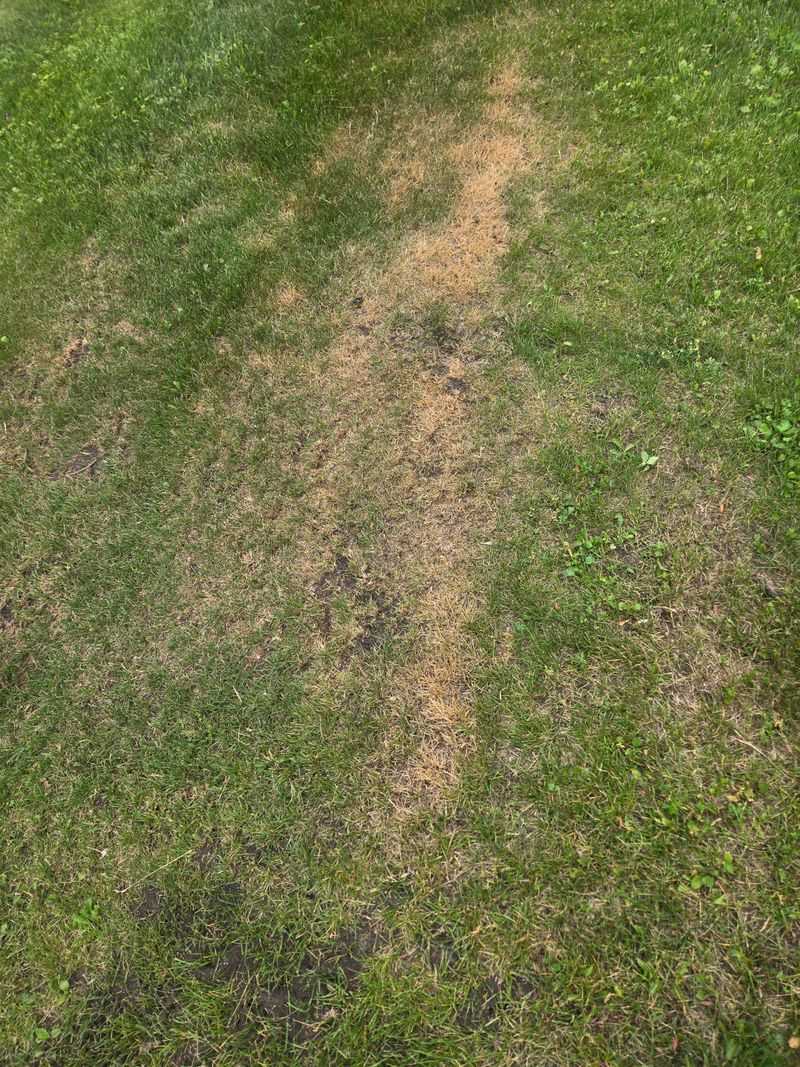
A low mower deck can turn summer stress into visible damage in a single pass.
Grass needs leaf area to produce energy, shade the soil, and protect the crown. Removing too much at once exposes tender tissue and leaves less foliage available to support recovery during extreme heat.
Match mowing height to the grass.
St. Augustine generally benefits from a taller cut than Bermuda. Zoysia sits somewhere between depending on cultivar and maintenance style. The exact setting matters less than avoiding sudden, drastic reductions during stressful weather.
Use the one-third rule.
Remove no more than about one-third of the leaf blade in one mowing. A lawn that has grown tall after rain should come down gradually rather than being chopped to the usual height in one afternoon.
Sharp blades matter too.
A dull mower tears the grass and leaves ragged tips that lose moisture faster and turn brown along the cut edge. The lawn can look drought-stressed even when the problem is partly mechanical.
Raise the deck during a harsh stretch.
A little extra leaf height helps shade the soil and gives the plant more photosynthetic area while growth is under pressure.
Mow less often when the lawn slows down.
There is no benefit in running the mower across crunchy turf simply because Saturday arrived.
August is the month to stop treating the lawn like a calendar appointment. Let actual growth determine when the mower comes out, and let the grass keep enough leaf tissue to protect itself.