What Lacewings Gathering On North Carolina Plants This Summer Are Actually Telling You About Your Garden
North Carolina gardens send tiny green status updates.
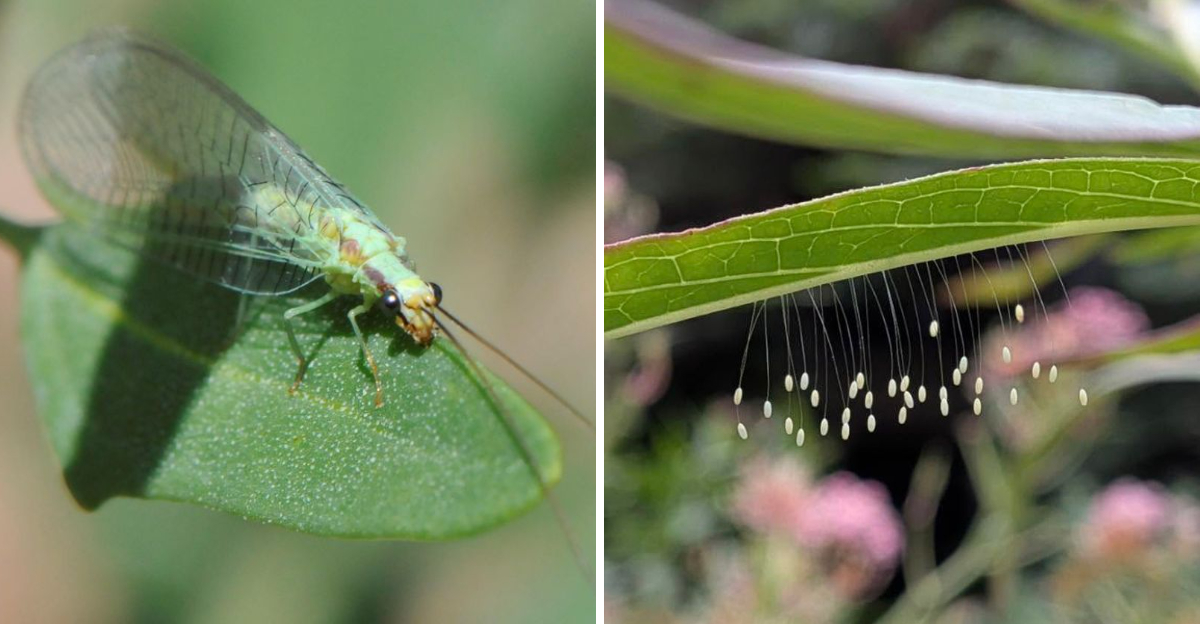
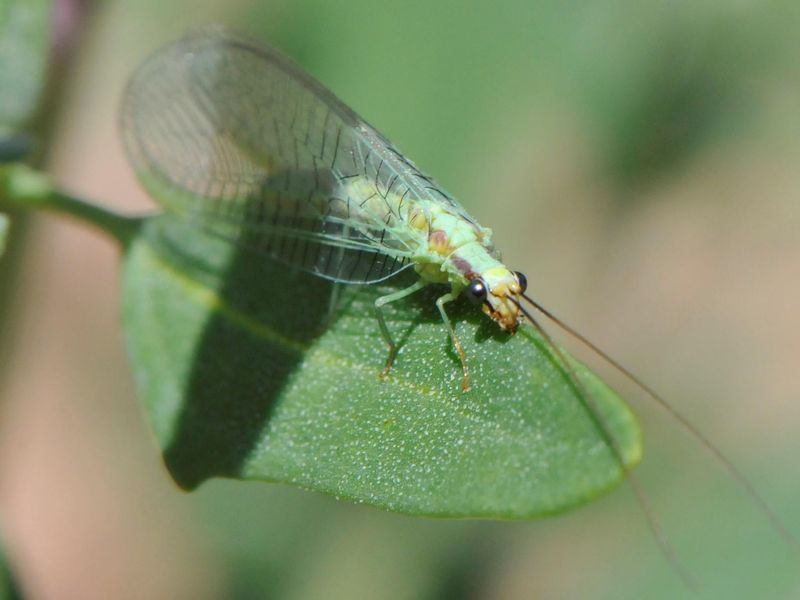
On tomatoes, roses, peppers, and squash, lacewings may look like delicate decorations, all shimmer, golden eyes, and wings thin as glass.
But their arrival is rarely random. They show up where the garden has something to say.
Maybe aphids are gathering on tender growth. Maybe flowers are feeding the adults. Maybe your yard has enough shelter, moisture, and plant variety to support a real backyard food web.
That is useful information, not background noise.
Many gardeners see an unfamiliar insect and reach for a spray, which can wipe out the very helpers already moving in.
Lacewings are garden allies, and their presence can reveal what is happening long before pest damage becomes obvious.
So what are these fragile-looking visitors telling you about your North Carolina garden this summer?
Start by reading the plants around them. The clues are smaller than you expect, and much more helpful before summer pests turn those notes into real garden trouble nearby right beside the porch.
1. Soft Pests Are Probably Nearby
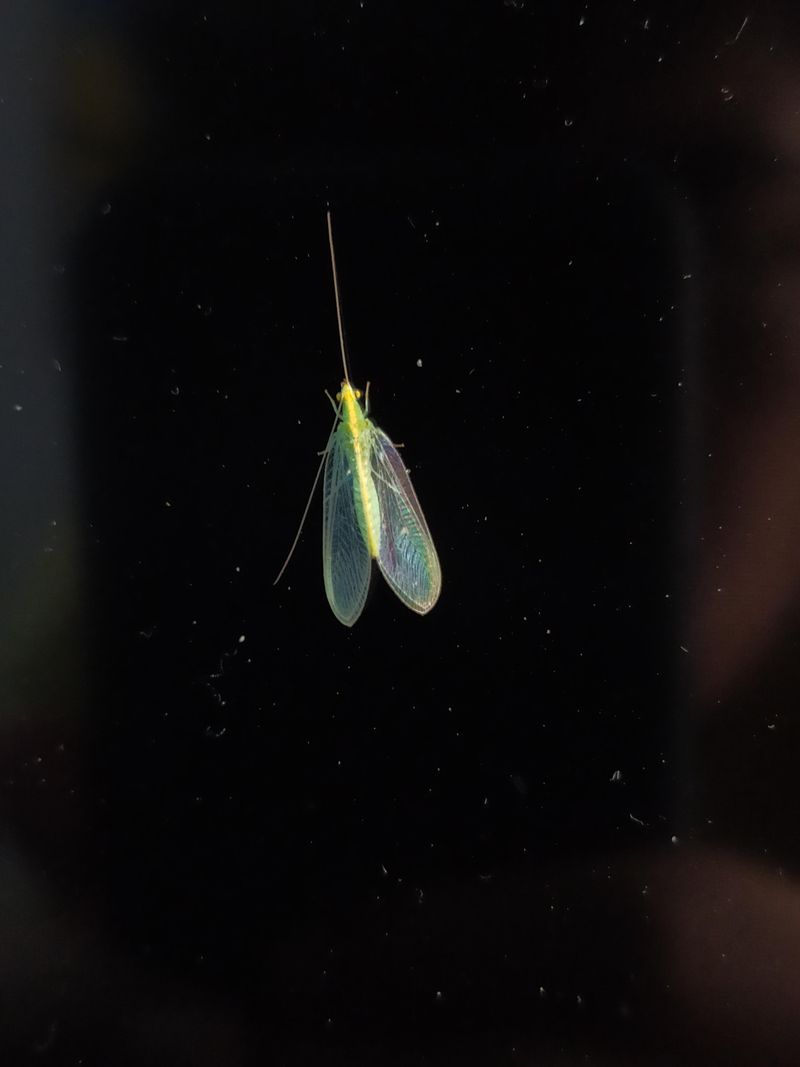
A tiny green insect hovering near the tip of your rose bush is not there by chance.
Lacewings are drawn in by the smell of soft-bodied pests, and if you are spotting adults fluttering around your plants, there is a very good chance that aphids, spider mites, or scale crawlers have already set up camp somewhere nearby.
Aphids love tender new growth.
They cluster on the undersides of leaves and along young stems, sucking out plant sap and leaving behind sticky honeydew. Mites are even sneakier, often hiding in fine webbing near leaf veins.
Scale crawlers are nearly invisible at first, but they can spread fast across woody stems on plants like gardenias and hollies, which are common in North Carolina landscapes.
NC State Extension notes that lacewings are naturally attracted to gardens where these soft-bodied prey insects are present.
Think of lacewing activity as a free pest alert system.
Instead of panicking, flip a few leaves and look closely at stems near the base of new shoots. You might find a colony already forming.
Catching pest pressure early, before it explodes, is one of the biggest advantages a home gardener has.
The lacewings spotted it before you did, and that head start is genuinely useful information you can act on right away.
2. Eggs May Be Hanging On Stalks
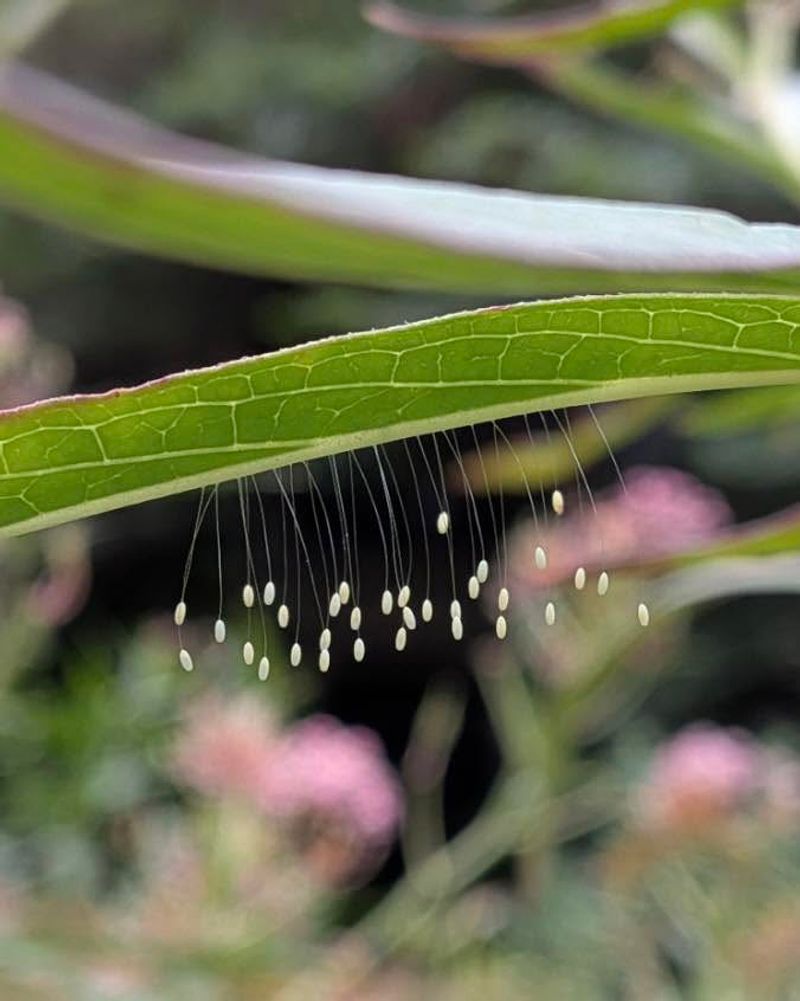
Spotted something that looks like tiny white dots on threads hanging from a leaf? Do not wipe them off.
Those are lacewing eggs, and they are one of the most interesting sights a North Carolina gardener can stumble across on a warm summer morning.
Lacewing females lay their eggs on thin silk stalks, lifting each one just above the leaf surface.
Scientists believe this spacing helps protect the eggs from being eaten by the very first larva to hatch, which would otherwise munch its siblings before moving on to actual prey.
Each egg is about the size of a pinhead, pale green or white, and almost glows when light hits it at the right angle.
Your North Carolina Garden Changes Every Week. Your Plan Should Too.
Gardening in North Carolina changes quickly throughout the season. Every Friday you’ll receive a simple weekly plan showing exactly what to plant, prune, fertilize, harvest, and protect so you never miss the right timing.
NC State Extension encourages gardeners to learn to recognize these eggs so they are not accidentally removed during routine garden cleanup.
They can appear on the tops or undersides of leaves, on stems, and even on nearby structures.
If you find a cluster of stalked eggs, mark that plant with a small flag or ribbon and check back in a few days.
The eggs hatch quickly in warm weather, usually within a few days.
What comes next, the larva, is the real workhorse of pest management. Knowing those eggs are there means your garden already has reinforcements on the way, and all you need to do is give them a little space to work.
3. Larvae Are Running Patrol
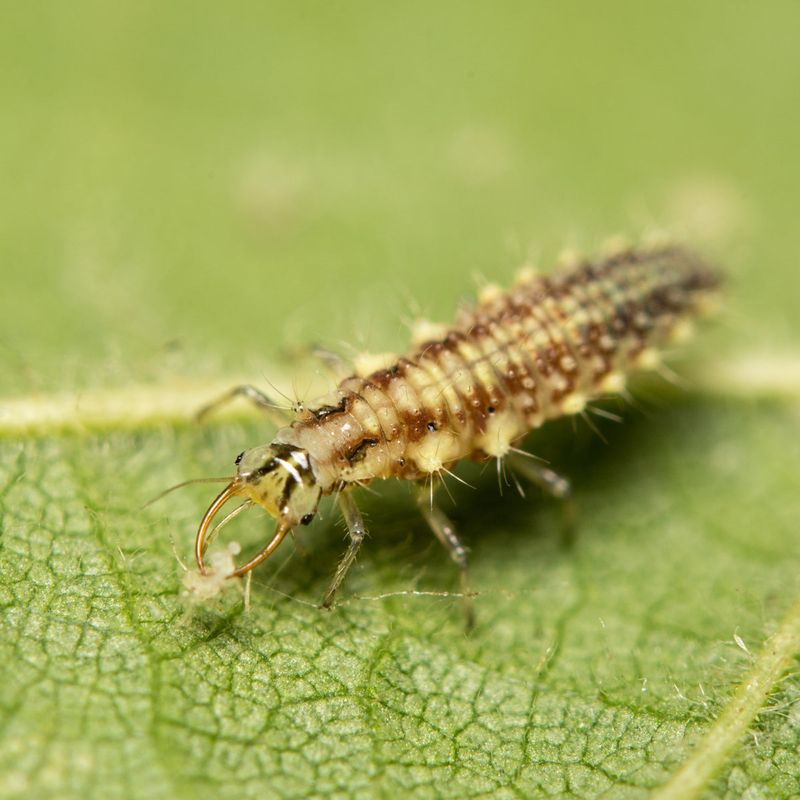
If the adults look delicate and almost fairy-like, the larvae look like something out of a creature feature.
Lacewing larvae are small, brownish, and covered in tiny bristles, with curved hollow jaws that they use to grab soft-bodied insects and drain them dry.
They look nothing like their parents, and many gardeners never realize what they are looking at.
These larvae are the primary reason lacewings matter so much in a summer garden.
Adults eat some nectar and pollen, but it is the larvae that actively hunt. They move across leaves, stems, and flower buds searching for aphids, mite eggs, thrips, small caterpillars, and whitefly nymphs.
Some species even camouflage themselves by sticking the remains of their prey on their backs, which sounds strange but makes them very hard to spot.
NC State Extension describes lacewing larvae as aggressive predators of many common garden pests.
A single larva can consume dozens of soft-bodied insects during its development period.
Because they look so different from the adults, gardeners sometimes mistake them for harmful insects and brush them off plants without realizing what they are losing.
Learning to recognize the larval stage is just as important as recognizing the adults.
Checking your plants in the early morning with a small magnifying glass can help you spot larvae before they move on. Patrol is the right word because these larvae cover serious ground every single day.
4. Aphids Made The First Move
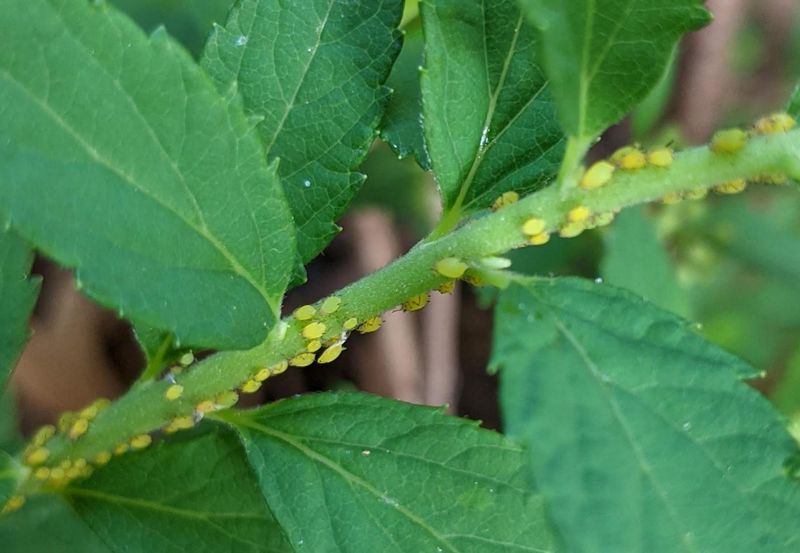
Aphid colonies do not wait for an invitation.
On warm North Carolina summer days, winged aphids drift in from nearby fields, roadsides, and neighboring yards, landing on the most tender growth they can find.
Peppers, squash, roses, and crape myrtles are all prime targets. Once a few settle in and start reproducing, a colony can grow startlingly fast.
Here is the thing about aphids that most gardeners do not realize: they release chemical signals called alarm pheromones and honeydew byproducts that travel through the air and along plant surfaces.
These signals are part of what draws predators like lacewings into the area.
So when you see lacewings gathering near a plant, there is a strong chance an aphid population was already established there first. The aphids made the first move, and the lacewings responded.
NC State Extension points out that aphid populations often peak in early to mid-summer in North Carolina before natural enemies catch up and begin reducing their numbers.
This lag time between pest outbreak and predator arrival is completely normal.
Gardeners who understand this cycle are less likely to spray too early and accidentally remove the very insects that would have handled the problem naturally.
Watching for the first aphid clusters, especially on new growth, gives you the earliest possible warning.
That warning sign is valuable. It tells you that your garden is about to become a very interesting place for beneficial insects to visit.
5. Sprays Could Break The Backup
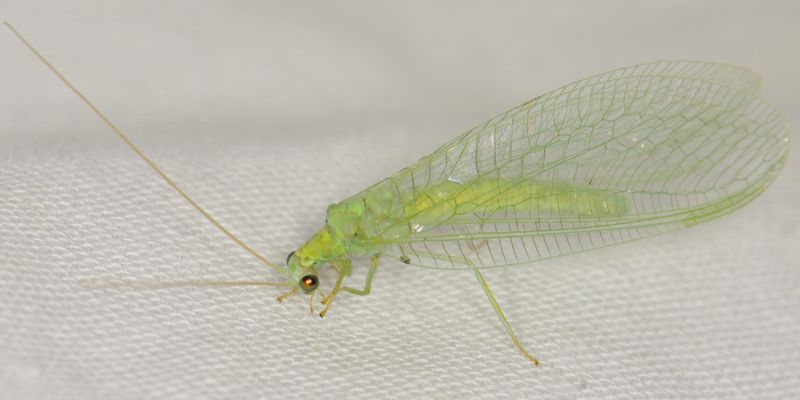
Reaching for a spray bottle feels like doing something useful.
When pests show up on your favorite plants, the instinct to act fast is completely understandable.
But broad-spectrum insecticides do not read labels telling them to avoid the good guys, and lacewings are just as vulnerable to many common sprays as the aphids you are trying to manage.
NC State Extension advises that products containing pyrethroids, neonicotinoids, and some organophosphates can significantly reduce beneficial insect populations in treated areas.
Even some sprays labeled as organic or natural can harm lacewing eggs and larvae when applied directly.
Once you remove the predators, pest populations often rebound faster than before because there is nothing left to slow them down.
Gardeners sometimes end up in a spray cycle that never actually solves the problem.
The better approach, when pests are spotted, is to scout carefully first.
Check how widespread the infestation actually is. Look for lacewing eggs or larvae already present.
If the pest pressure is light or concentrated in one area, a targeted removal like a strong water spray or spot treatment with insecticidal soap on affected leaves only is much less disruptive to the beneficial insects working nearby.
NC State Extension recommends treating only when pest populations reach a level that is genuinely threatening plant health, not at the first sight of a bug.
Protecting your backup team means the garden can handle more on its own over time.
6. Flowers Are Feeding Adults
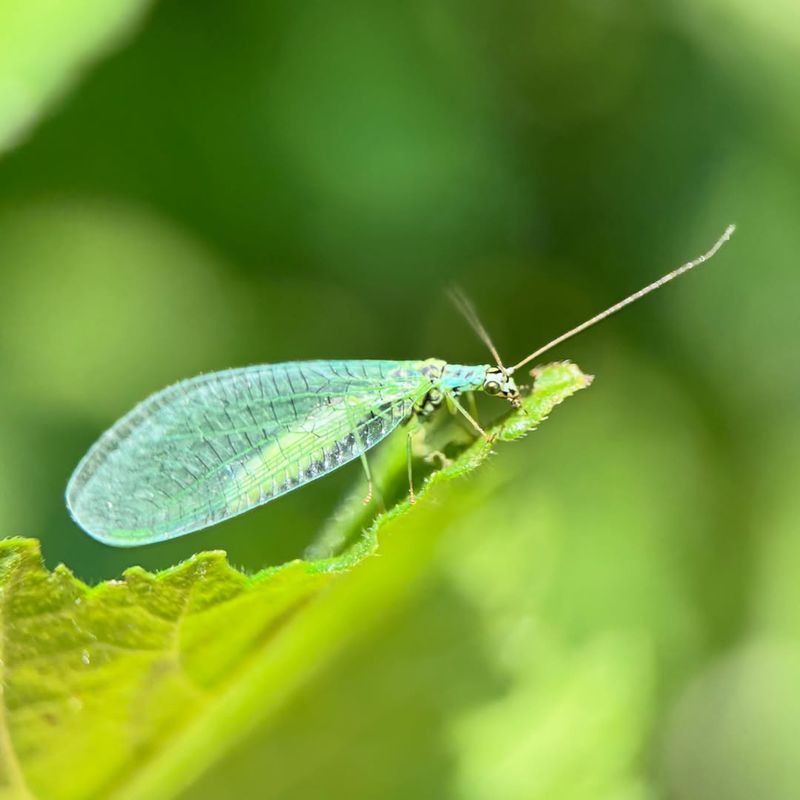
Adult lacewings are not the hunters. That job belongs to the larvae.
Adult lacewings spend much of their time feeding on nectar, pollen, and the honeydew left behind by aphids, and they need reliable food sources to stay in your garden long enough to lay eggs where your plants need them most.
Small, open-faced flowers are especially attractive to lacewings because the nectar and pollen are easy to reach.
Dill, fennel, yarrow, cilantro allowed to bolt, and sweet alyssum are all excellent choices for North Carolina gardens.
These plants are easy to grow, they bloom through much of the summer, and they bring in a wide range of beneficial insects beyond just lacewings.
Planting a row of them near your vegetable beds or tucking them between rose bushes creates a kind of rest stop that keeps adult lacewings nearby.
NC State Extension recommends including flowering plants that support beneficial insects as part of an integrated pest management approach for home gardens.
A garden that only grows vegetables or ornamentals without any small flowering plants may attract fewer beneficial insects overall.
Adding even a small patch of dill or fennel near a troubled plant can make a noticeable difference in how many lacewings stick around through the summer months.
Feed the helpers, and the helpers stay close to work.
7. Your Garden Has A Food Web
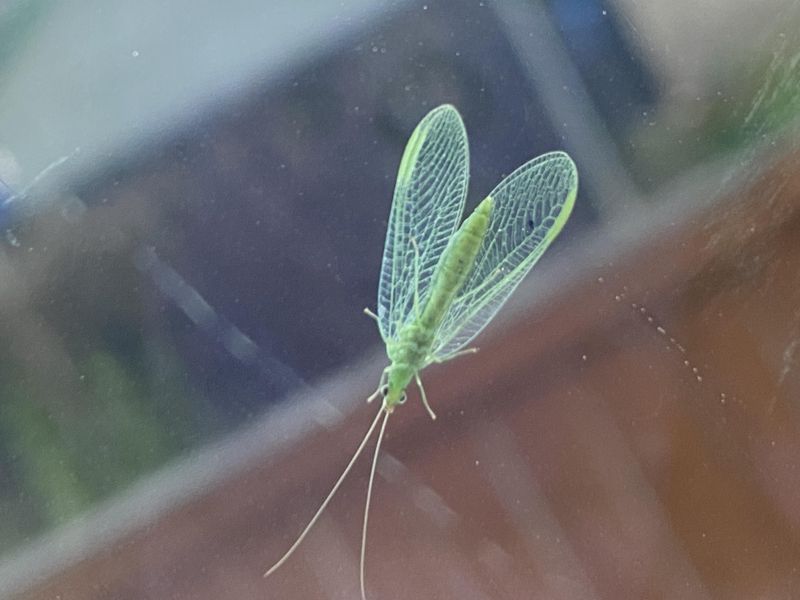
Seeing lacewings in your garden is not just a sign that pests are present. It is a sign that your garden has enough complexity to support multiple layers of life.
Lacewings need prey insects to reproduce. Prey insects need plants to feed on. Plants need pollinators, decomposers, and healthy soil to thrive.
When lacewings show up, they are a visible piece of a much larger puzzle that is quietly assembling itself in your backyard.
NC State Extension describes beneficial insects like lacewings as indicators of a functioning garden ecosystem.
Gardens with high biodiversity, meaning lots of different plant species, flower types, and habitat layers, tend to support more natural pest regulation over time.
A monoculture planting gives beneficial insects very little reason to stick around.
Think of your garden as a neighborhood.
Every insect has a role. Aphids are the unwanted guests who eat too much. Lacewings are the neighbors who keep things in check. Pollinators are the ones making sure everyone has food on the table. Soil organisms are the cleanup crew working underground.
When you spot lacewings this summer, recognize that their presence is a green flag, not a warning.
Your garden is alive in a real way, and the food web is doing exactly what it is supposed to do. That is something worth protecting.
8. Give The Helpers Time
Patience is genuinely hard when you are watching aphids pile up on your squash.
Every gardener knows the feeling of wanting to fix the problem right now.
But beneficial insects like lacewings work on their own schedule, and giving them enough time to build up their numbers is one of the most effective things you can do for your garden all summer long.
Scouting is the skill that makes patience actually work.
Walk your garden every two or three days. Flip leaves. Check stems. Look for lacewing eggs, larvae, or adult activity near pest hotspots.
Keep a simple notebook or take phone photos to track whether pest populations are growing, holding steady, or starting to drop.
This kind of regular observation tells you whether intervention is actually needed or whether the natural system is already handling things.
NC State Extension recommends establishing action thresholds before treating, meaning you decide in advance how much pest damage is acceptable before reaching for a control method.
Light aphid pressure on a healthy plant is very different from a heavy infestation on a struggling seedling.
Many North Carolina gardeners find that by mid to late summer, lacewing populations catch up to pest pressure and populations begin to balance out naturally.
Giving the helpers time does not mean doing nothing.
It means scouting carefully, acting only when truly necessary, and trusting the system your garden has already started building on its own.