What Leaf-Footed Bug Damage Looks Like On North Carolina Peppers And Tomatoes
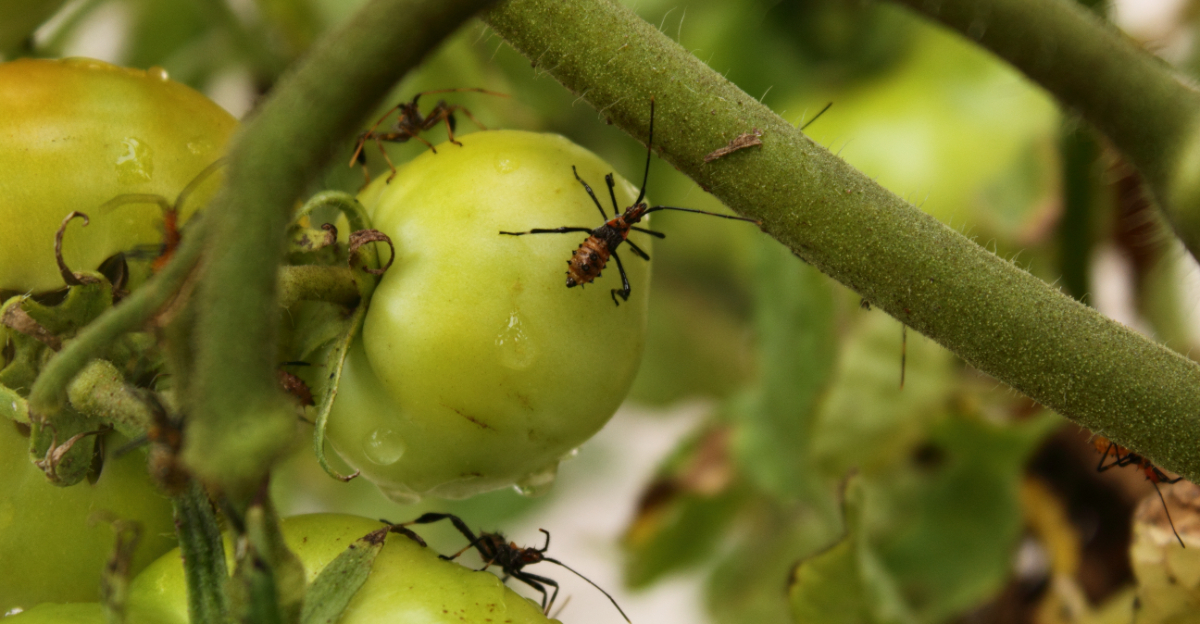
Leaffooted bug damage on peppers and tomatoes often appears as small, discolored spots or dimpled areas where the insects have pierced the fruit’s surface to feed.
These pests use needle like mouthparts to extract juices directly from developing fruit, sometimes causing a corky, hardened texture beneath the damaged spot.
Checking plants during early morning often reveals leaffooted bugs resting on stems or fruit, since they become more active as temperatures rise throughout the day.
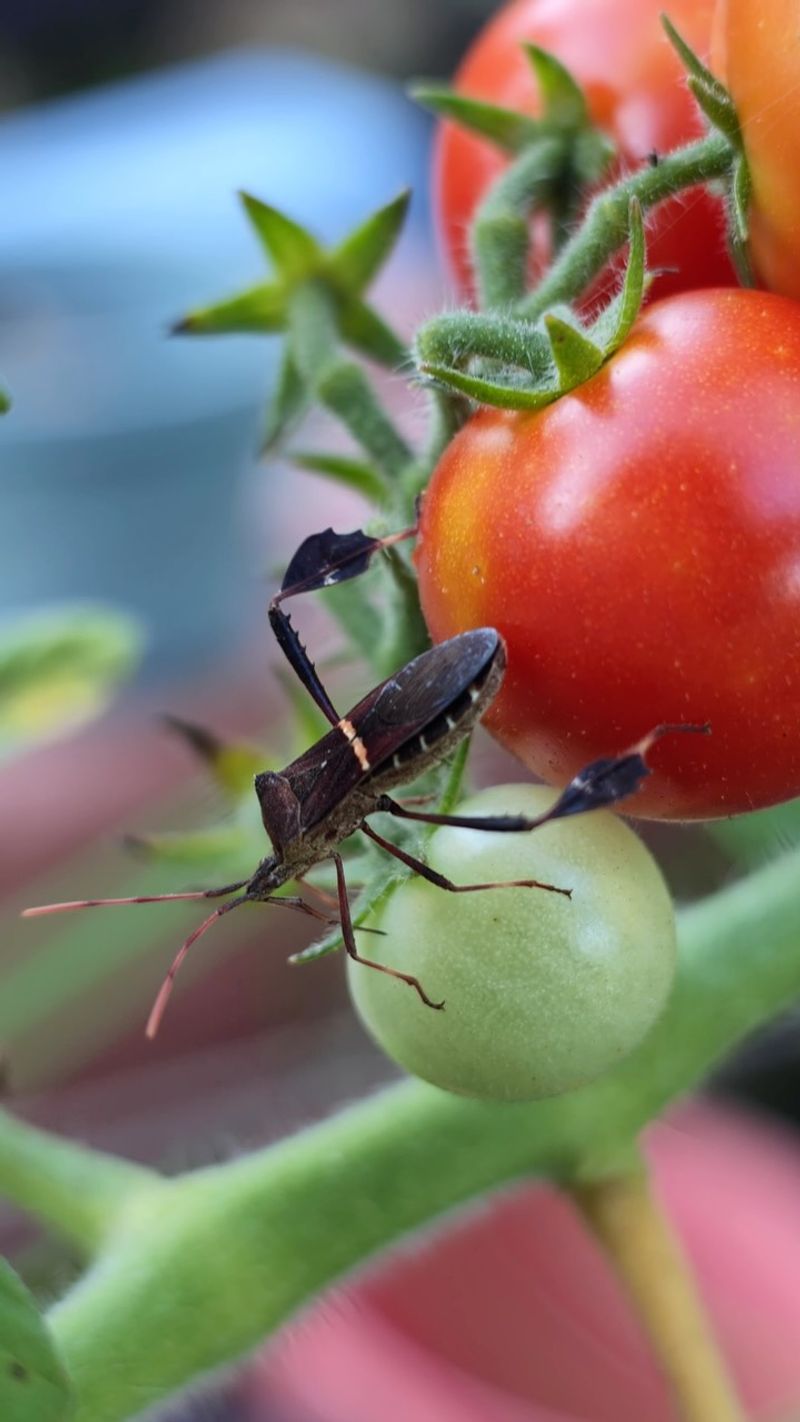
Their distinctive flattened, leaf shaped hind legs make them relatively easy to identify once you know what to look for.
Left unchecked, heavy feeding can cause fruit to develop unevenly or drop prematurely before reaching full maturity. Handpicking adults and nymphs in the early morning offers one of the most effective control methods available.
Removing nearby weeds that host these pests during early life stages can also reduce overall garden pressure. Catching this damage early protects developing fruit before feeding becomes widespread across the entire plant.
1. Tomatoes Get Small Sunken Spots
Ever notice tiny dents on your tomatoes that look like little pinpricks pushed inward? Those shallow spots often appear after a leaffooted bug has been feeding on the fruit while it was still growing.
When the bug pushes its needle-like mouthpart into a young tomato, it creates a very small wound. At first you might not even see anything.
As the tomato keeps growing, the damaged area does not expand the same way as the healthy tissue around it.
The result is a sunken spot that looks slightly lower than the rest of the skin. The color usually turns pale yellow or light green, standing out against the smooth red or orange surface.
Some spots feel firm to the touch, while others stay a bit soft underneath.
In North Carolina gardens, these marks show up most during the warm summer months when leaffooted bugs are busy and hungry. You may spot several dents on a single tomato if more than one bug visited the plant.
The good news is that many of these spots stay small and only affect the surface. You can often cut around them and still enjoy the rest of the fruit. Checking your plants a few times each week helps you catch feeding early.
If you keep finding fresh sunken spots, take a closer look at the leaves and stems nearby, because the bugs are probably hiding close to their favorite snack.
2. Young Tomatoes Can Grow Misshapen
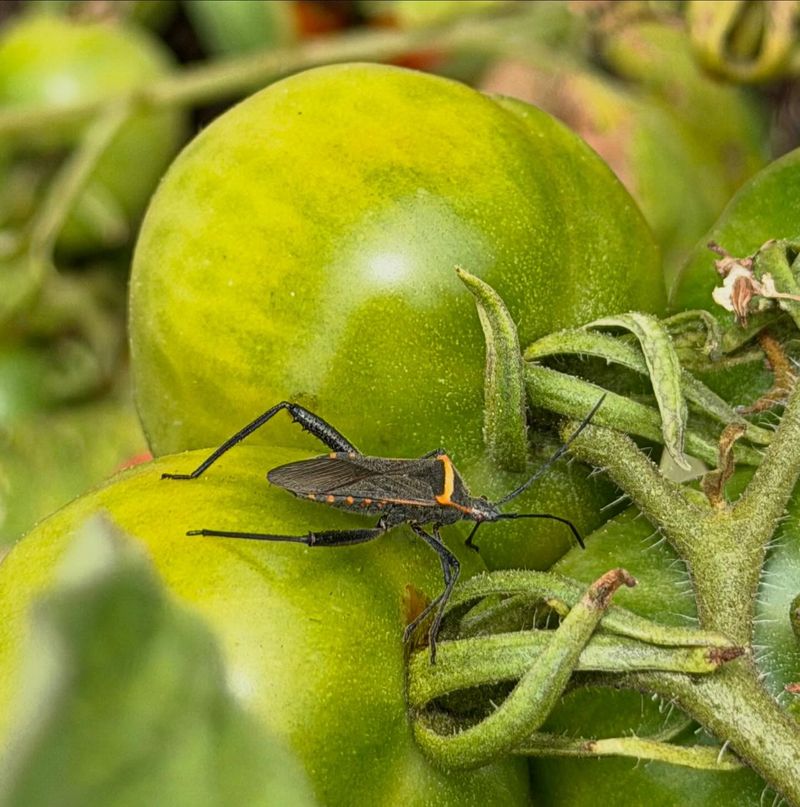
A lopsided tomato can be a puzzle when you first see it, and leaffooted bugs are often the reason behind the strange shape. Feeding on very young fruit sets off changes that show up as the tomato gets bigger.
Picture a tiny green tomato just starting to swell. If a bug pokes it in several places, those little wounds slow down growth in certain spots. The undamaged parts keep growing normally, so the fruit ends up uneven.
Some tomatoes turn out bumpy, with one side puffed out and the other pinched in. Others develop odd bulges or narrow waists that make them look nothing like the round fruit you expected.
Your North Carolina Garden Changes Every Week. Your Plan Should Too.
Gardening in North Carolina changes quickly throughout the season. Every Friday you’ll receive a simple weekly plan showing exactly what to plant, prune, fertilize, harvest, and protect so you never miss the right timing.
The more feeding that happens early, the more twisted the final shape becomes.
This kind of damage is common in North Carolina during late spring and summer, when young fruit is forming and bug numbers climb. Cherry tomatoes and larger slicing types can both show it.
Misshapen tomatoes are usually still safe to eat, even if they will not win any beauty contests. The inside is often perfectly fine once you slice past the strange outer shape.
To cut down on this problem, walk through your garden in the morning and gently check small green fruit. Handpicking bugs and dropping them into soapy water works well for a small patch.
Catching them before they feast on tender young tomatoes keeps your future harvest looking rounder and neater.
3. Ripe Tomatoes May Show Pale Blotches
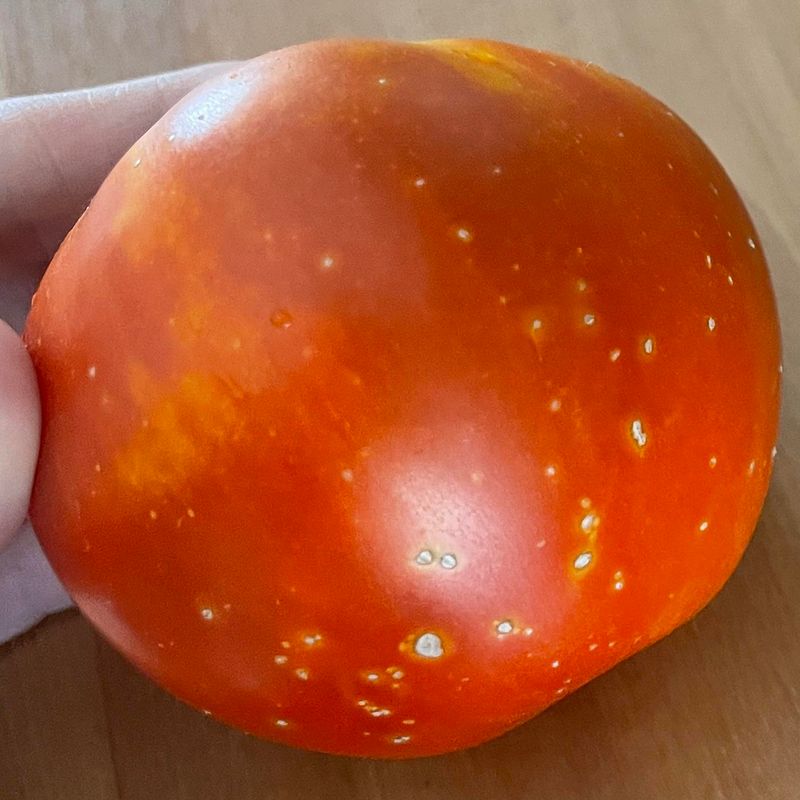
Sometimes a perfectly ripe tomato has faint light patches that seem to come out of nowhere. Leaffooted bugs feeding on mature fruit often leave behind these pale blotches without doing much deeper harm.
When a bug feeds on a tomato that is already turning red, its saliva breaks down a small area under the skin. The spot cannot color up the same way as the rest, so it stays pale yellow or whitish while everything around it ripens fully.
These blotches tend to be flat rather than sunken. They can be round or a little uneven, and you might find a few scattered across one tomato.
From a distance the fruit looks normal, but up close the light spots become easy to notice.
Here is the reassuring part: this kind of damage is mostly about looks. The flesh underneath usually stays firm and tasty, so you can enjoy the tomato with no worry. Many gardeners simply slice off the pale area before eating or cooking.
In North Carolina, warm weather keeps leaffooted bugs active well into late summer, which is prime tomato season. That timing means ripe fruit sitting on the vine is a tempting target.
Picking tomatoes as soon as they ripen gives bugs less chance to feed. Regular harvesting, paired with a quick check for insects on the plant, helps keep your tomatoes smooth and bright instead of speckled with pale spots.
4. Pepper Pods Can Turn Bumpy
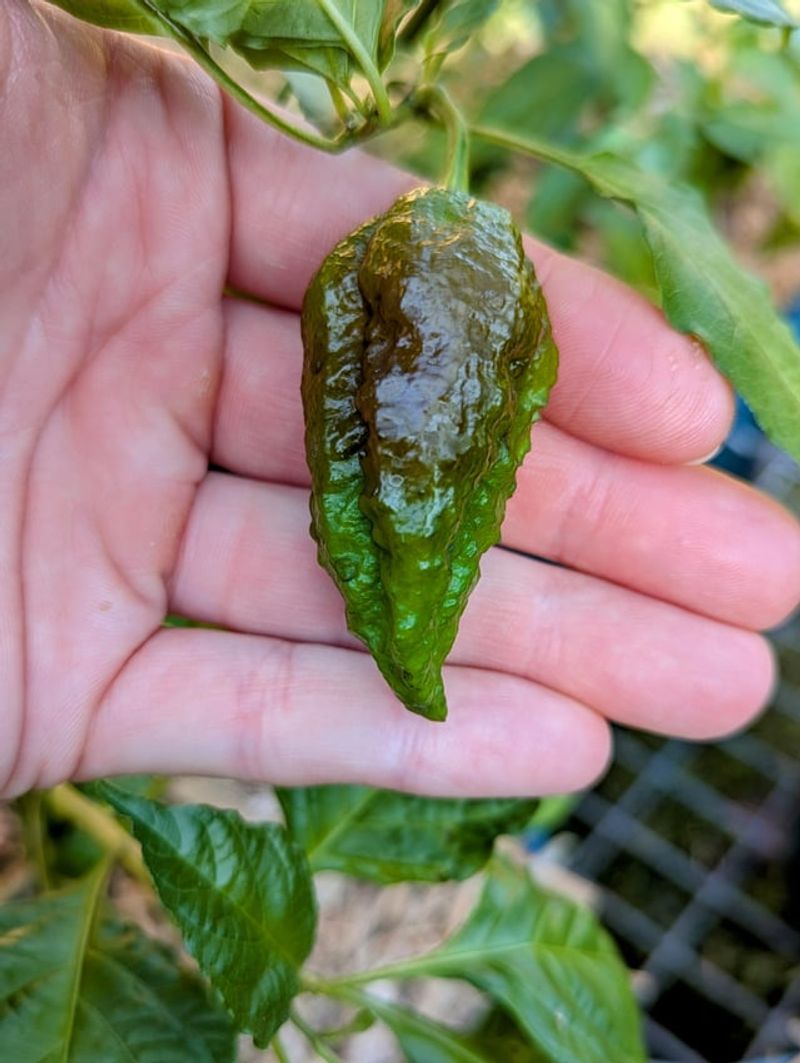
Run your fingers over a pepper and feel raised bumps where the skin should be smooth, and you may be touching the work of a leaffooted bug. These wartlike growths are one of the clearest signs of feeding on pepper pods.
The bumps form because feeding injures the pepper wall while it is still growing. The plant tries to heal the tiny wounds, and that healing creates thick, raised patches on the surface. Over time these patches look like small warts or callus spots.
On green bell peppers, the bumps often show up as pale or corky areas that stand out against the shiny skin. On other pepper types they might appear as clusters of hard little knobs. Either way, the texture feels rough instead of slick.
North Carolina gardeners tend to see this most in summer, when peppers are setting fruit and bug activity is high. A single pod can carry just one bump or several, depending on how many times a bug fed on it.
Peppers with these growths are generally still safe to eat. You can peel or cut away the bumpy sections and use the rest of the pod in your cooking.
Keeping the area around your plants tidy helps, since leaffooted bugs like to hide in weeds and garden clutter. A weekly hunt for the insects, along with a shake of the branches over a bucket, goes a long way toward smoother, cleaner peppers.
5. Peppers Can Grow Crooked
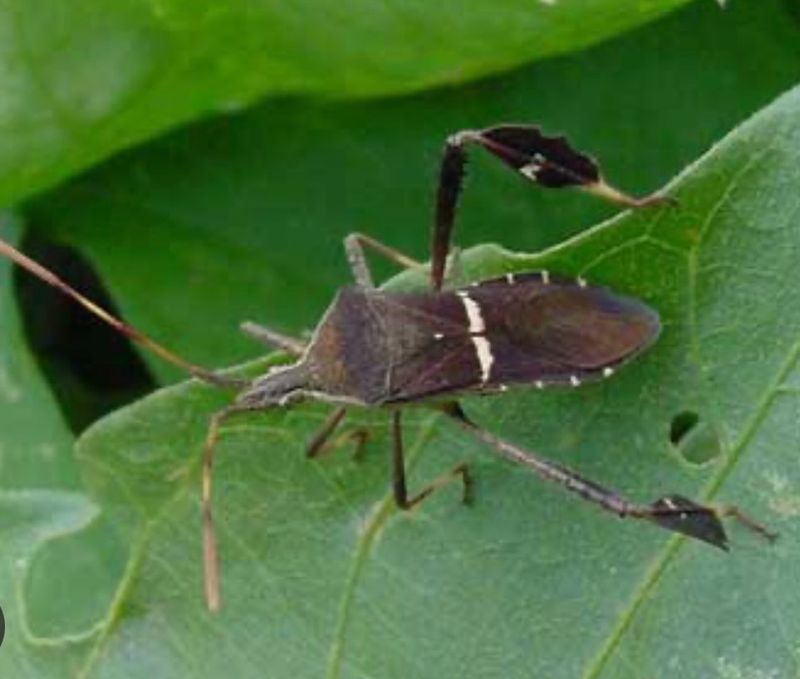
A crooked pepper hanging on the vine almost looks like it bent on purpose, but leaffooted bugs often shape it that way. Feeding on immature pods throws off their growth and leaves them lopsided.
When a bug feeds on a young pepper, it damages the cells in certain spots. Those areas stop expanding at their normal pace while the healthy parts keep growing. The pod is pulled out of balance, and it curls or twists as it enlarges.
You might see peppers with a curved side, a pinched middle, or a strange bend near the tip. Some look almost hooked, while others just seem slightly off compared to the straight, blocky peppers you were hoping for.
This uneven shape shows up most in North Carolina during the busy summer growing months. Sweet peppers and hot peppers alike can end up crooked when bugs get to them early.
Even with a twisted shape, most of these peppers are perfectly fine inside. The flavor and crunch usually stay the same, so they work great chopped up in meals where looks do not matter.
To lower the chances of crooked pods, check your plants often while the fruit is small and tender. Handpicking bugs in the cool morning hours is easy since they move slowly then.
Removing nearby weeds also takes away hiding spots, giving your peppers a better chance to grow tall, even, and straight.
6. Seeds Inside Can Shrivel
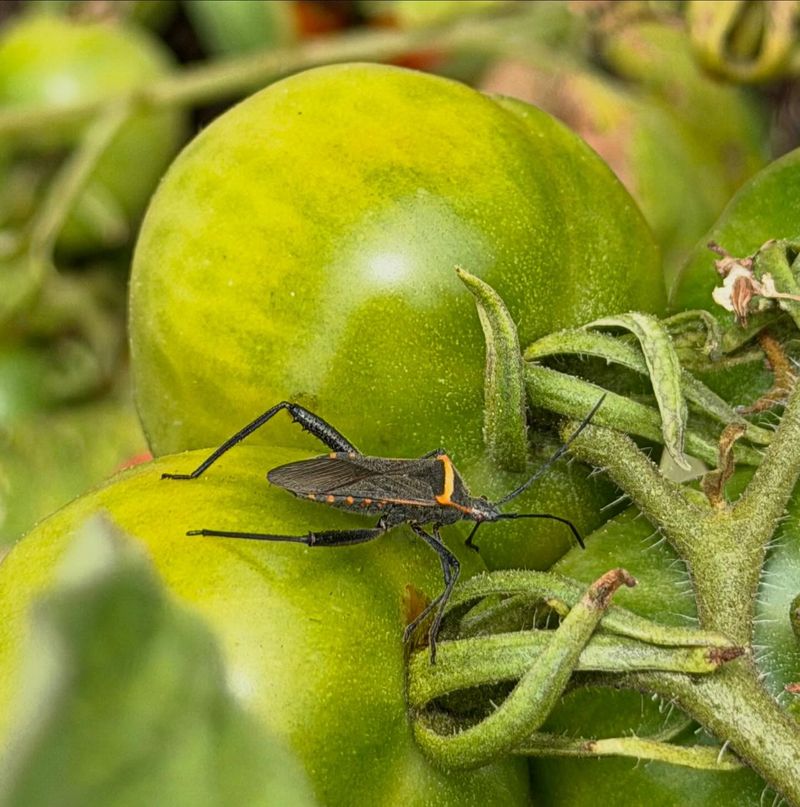
Slice open a pepper and find flat, shriveled seeds instead of plump ones, and you may have uncovered secret bug activity. Leaffooted bugs often feed on the developing seeds tucked deep inside the pod.
These bugs use their long mouthparts to reach through the pepper wall and sip from the seeds while they are still forming. That feeding drains the moisture and nutrients the seeds need to fill out properly.
As a result, the seeds inside look small, flattened, or wrinkled instead of round and full. Some may turn a darker color or feel dry and papery. You might not even notice the problem until you cut the pepper open in the kitchen.
For North Carolina gardeners who like to save seeds for next season, this matters a lot. Shriveled seeds often will not sprout well, so a bug problem now can affect your future planting plans.
The pepper flesh itself is usually still good to eat, so you can cook with the pod even if the seeds inside look poor. If you are saving seeds, though, pick pods from plants that bugs have not bothered.
Protecting your plants early is the best move. Watch for the bugs while pods are young, and remove them by hand whenever you can.
Keeping plants healthy and well watered also helps fruit and seeds develop strongly, giving the insects fewer easy targets to feed on.
7. Red Nymphs Reveal The Culprit
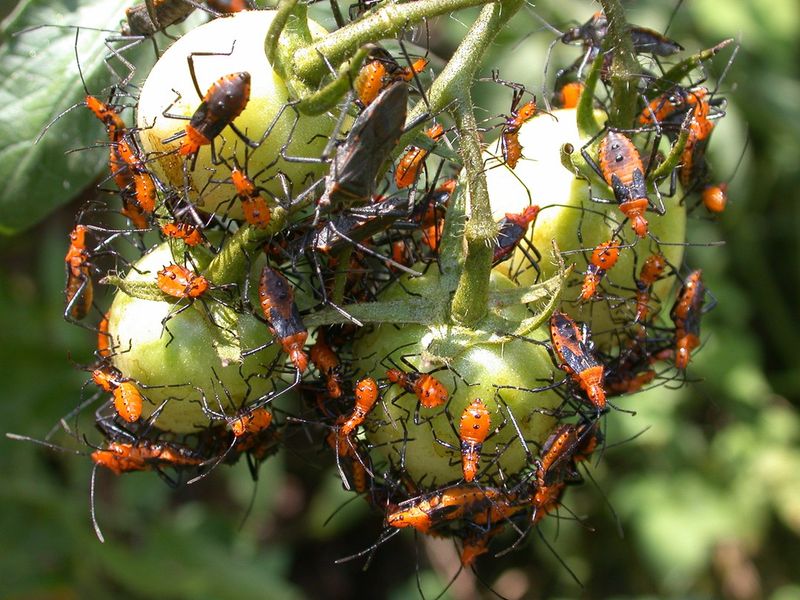
Spotting a cluster of bright red bugs on your plants can feel alarming, but those little insects are a helpful clue. They are the young leaffooted bugs, called nymphs, and they point straight to the source of your fruit trouble.
The nymphs are small and often a bold orange-red color, sometimes with dark legs and skinny bodies. They like to gather in groups on stems, leaves, and near the fruit.
Seeing several together is a strong sign the pests are on your plants.
As they grow up, these nymphs change into brown adults. The adults are longer and skinnier, with a special feature that gives the bug its name. Their back legs have flat, leaflike widenings that look almost like tiny paddles or flags.
Once you learn to spot those leaflike legs, identifying an adult becomes easy. They also give off a faint odor when disturbed, which is another hint you are dealing with the right insect.
In North Carolina, both nymphs and adults show up through the warm season, feeding on peppers and tomatoes. Finding them confirms that any spots, bumps, or twisted fruit you noticed likely came from their feeding.
When you see red nymphs grouped up, you can act fast. Knock them into a container of soapy water or remove the leaf they are sitting on. Catching the young ones early stops them before they grow into hungry, harder-to-handle adults.
8. Similar Damage Can Have Another Cause
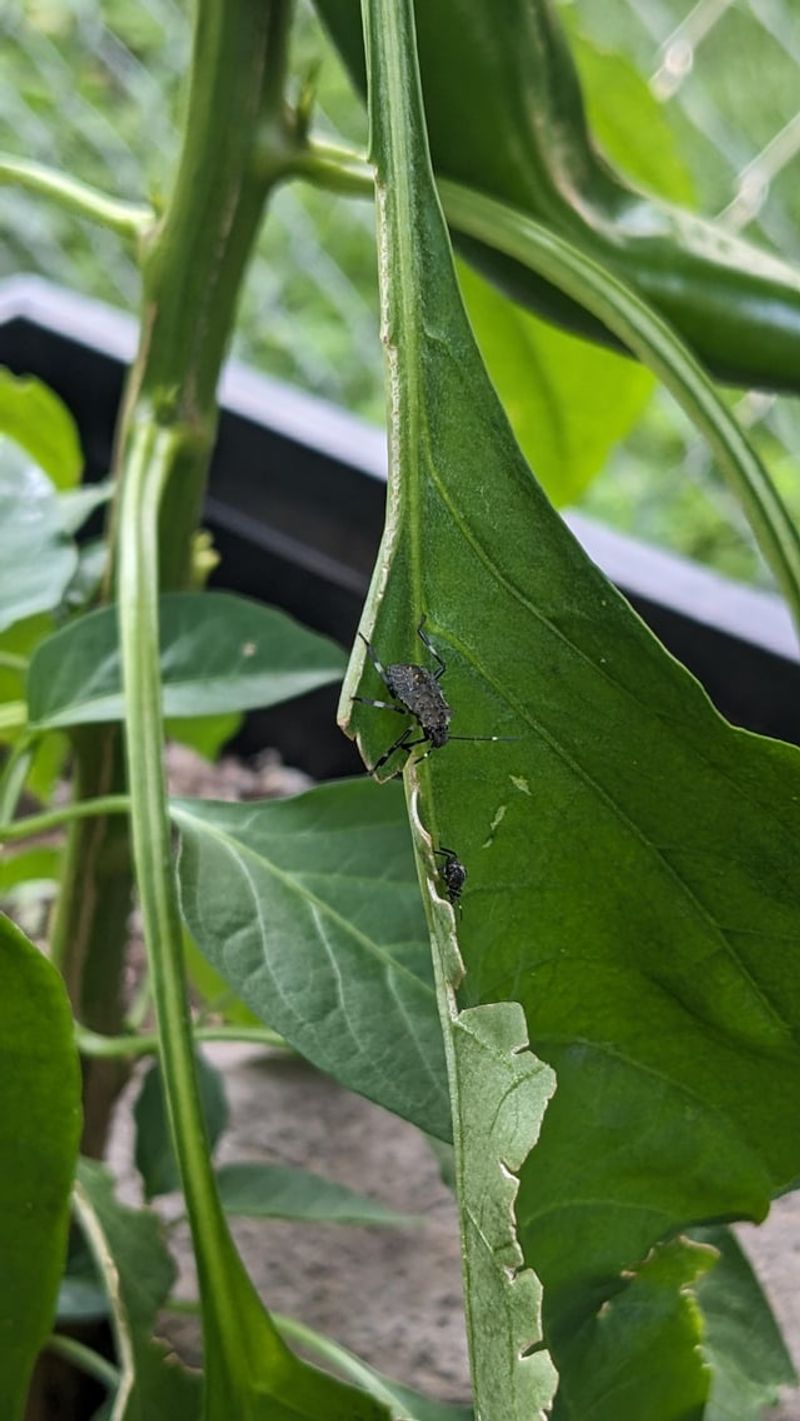
Before you blame leaffooted bugs for every spot on your fruit, take a second look, because another insect can leave nearly identical marks. Stink bugs feed the very same way and cause a lot of the same trouble.
Like leaffooted bugs, stink bugs use piercing mouthparts to drink from peppers and tomatoes. Their feeding also leaves pale blotches, sunken spots, and misshapen fruit. The damage can look so similar that it fools even careful gardeners.
The insects themselves look different, though. Stink bugs have wide, shield-shaped bodies and lack the flat, leaflike back legs that give leaffooted bugs their name. Comparing the two side by side makes telling them apart much easier.
Why does it matter which one you have? Different pests sometimes respond better to different steps, and knowing the true culprit helps you choose the right plan. Guessing wrong can waste your time and effort.
In North Carolina, both bugs show up in gardens during the warm months, and they may even feed on the same plants. Taking a moment to identify the insect saves you from treating the wrong problem.
Get in the habit of watching your plants closely and looking at any bugs you find. Snap a photo if you are unsure, and compare it with trusted gardening guides or your local extension office.
Correct identification is the smart first step, letting you protect your peppers and tomatoes with confidence and keep your harvest looking its best.