What Michigan Gardeners Should Do if Spotted Lanternfly Turns Up Outside the Confirmed Counties
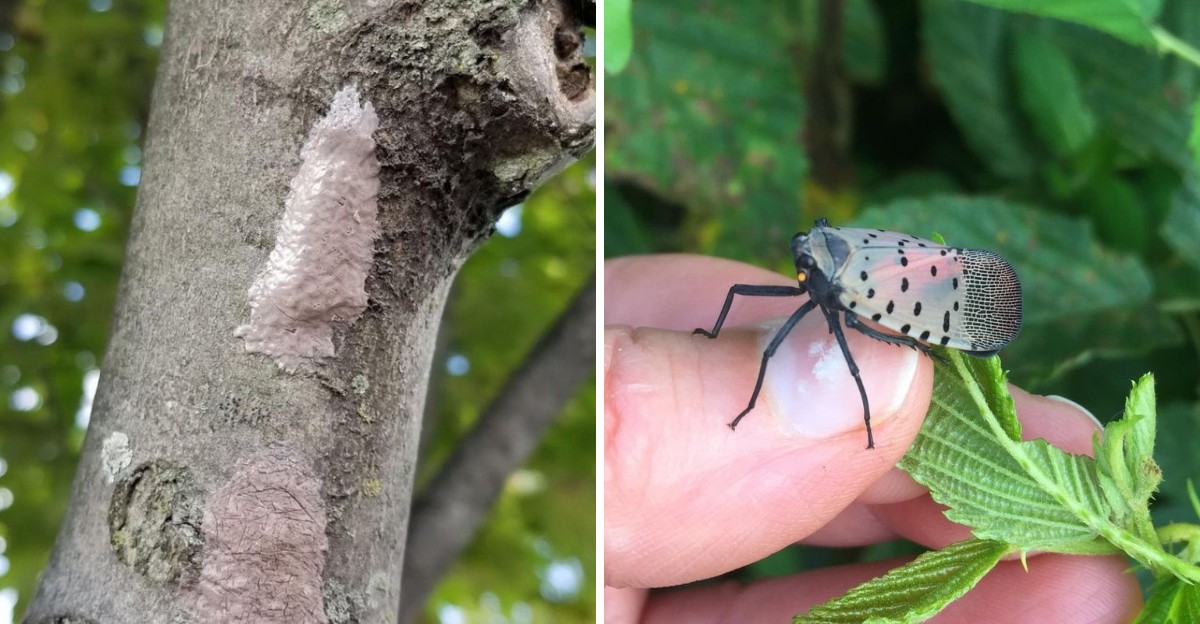
One of the most worrisome bugs in the Midwest is a lousy flier, yet it keeps showing up hundreds of miles from home. Its secret is simple. It rides along on cars, trailers, train cars, and patio furniture like an uninvited road-trip buddy.
In 2022, the first live ones in Michigan turned up in Pontiac. Since then, they have been confirmed in a short list of counties, mostly in the southeast corner of the state. Every new sighting outside that list gets serious attention from experts.
I can’t help but think gardeners are the best early warning system around. We are outside every day, poking at grapevines, staring at tree bark, and noticing every strange speck on a leaf.
So what happens if you spot one of these flashy hitchhikers somewhere it has no business being? Your next few minutes could matter a lot more than you think.
1. A Spotted Lanternfly in a New County Means More Than One Bug

Spotting one insect might feel small. To scientists, though, a single spotted lanternfly outside the known area can be a clue that a whole new population is hiding nearby.
The Michigan Department of Agriculture and Rural Development (MDARD) tracks the pest county by county. Confirmed populations so far sit mostly in southeast Michigan, with Berrien County in the southwest also on the list.
Counties like Oakland, Wayne, Macomb, Washtenaw, Monroe, Lenawee, and Jackson have known activity, so a sighting farther north or west stands out right away.
Why the fuss? Lanternflies spread slowly on their own wings. When one appears somewhere new, it often means eggs or adults hitched a ride on a vehicle, a trailer, or a load of outdoor goods.
Catching that early is a huge advantage. A tiny new group is far easier to manage than a well-settled one, and early reports help crews decide where to survey and treat.
So your role changes a bit in unconfirmed counties. Instead of simply swatting and moving on, you become a field reporter. The steps ahead walk you through what to do, in the order that helps experts most.
2. Grab Your Phone and Photograph That Lanternfly First
Your camera is the most useful tool in your pocket right now. Experts can confirm a spotted lanternfly from a good photo, and that picture becomes official proof of where it showed up.
Get as close as you can without spooking it. Lanternflies tend to hop away rather than fly, so move slowly and keep your shadow off the bug.
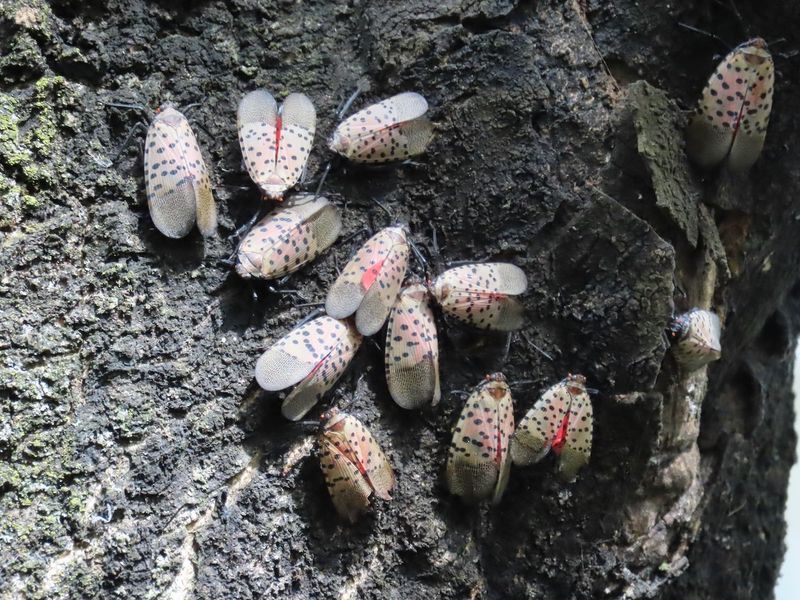
Try to capture a few different angles. A top view shows the speckled gray-brown front wings, while a side view helps with size and shape. If the wings open, that flash of red with black spots is a perfect identifying detail.
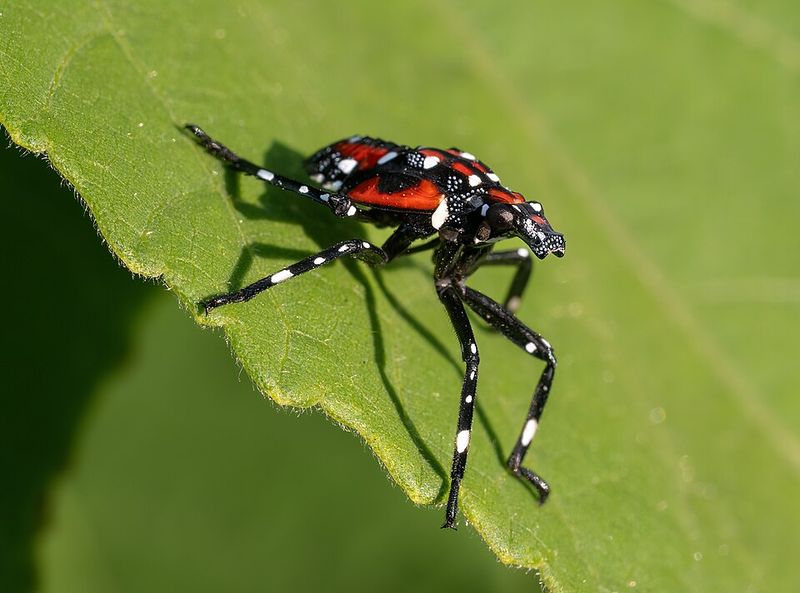
Nymphs deserve photos too. Young ones are black with white dots, and older nymphs add bright red patches. They are smaller than a pencil eraser at first, so a coin or finger in the frame helps show scale.
Before you leave the spot, jot down the date, the time, and the exact address or GPS location. Most phones save location data automatically, but a written note is a smart backup.
One tip from experience: snap the photo first, then try to catch it. Many sightings go unconfirmed because the bug jumped away before anyone took a picture.
3. Trap the Lanternfly in a Sealed Jar or Freezer Bag

A physical specimen is gold for researchers. MDARD and MSU Extension encourage people in unconfirmed areas to collect the insect when they safely can.
Catching one is easier than you might expect. Lanternflies tend to jump forward or sideways when startled, so place a jar or zip-top bag just in front of the bug and nudge it from behind. It often leaps right in.
Seal the container tightly. Popping it in the freezer for a few days preserves the insect well, and it keeps the bug from escaping while you wait to hear back.
Label the bag or jar with the date and location. That small step makes the specimen much more useful if experts ask you to mail it or drop it off.
Gloves are optional since lanternflies do not bite or sting people. Still, a little care keeps the specimen in one piece, which matters for clear identification. Can’t catch it? That is fine. Photos alone are often enough for confirmation.
Don’t chase a bug into a neighbor’s yard or up a ladder, and keep safety ahead of the hunt. Your report still counts, whether or not you end up holding the evidence.
4. Send Your Lanternfly Report Through Eyes in the Field
Reporting takes about five minutes, and it may be the most important part of the whole process. Michigan uses an online tool called Eyes in the Field to collect sightings of invasive pests.
You can reach it through Michigan.gov/SpottedLanternfly, which also links to the Midwest Invasive Species Information Network, known as MISIN. Upload your photos, add the location, and describe what you saw.
Prefer email or phone? MDARD accepts reports at [email protected], and the Customer Service Center can be reached at 800-292-3939. Mention that you are outside the confirmed counties so your report gets the right attention.
Include as many details as you can. How many insects did you see? Were they adults, nymphs, or egg masses? What plant or surface were they on?
Those small facts help staff decide whether a survey visit is needed. A cluster on a tree-of-heaven tells a very different story than a lone bug on a car bumper.
Then sit tight. Someone may follow up with questions or ask for your specimen. Keep the photos and the frozen bug handy for a few weeks, just in case.
5. That Red-Winged Bug Might Be a Leopard Moth or Boxelder Bug

Plenty of Michigan insects wear red and black, and several get mistaken for lanternflies every summer. A quick double-check saves you and the experts some time.
Boxelder bugs are a common mix-up. They are black with thin red-orange lines and a flat, narrow body, and they crowd onto sunny walls in fall. Lanternflies are chunkier, with speckled wings that fold like a tent.
The giant leopard moth is another fooler. Its white wings carry black rings, and it is fuzzy, while lanternflies have smooth wings with simple black dots.
Milkweed bugs and the large milkweed bug look bright orange and black, but they stay close to milkweed plants. Red-banded leafhoppers are tiny and striped green and red, far smaller than a lanternfly adult.
Young lanternfly nymphs can resemble ladybugs at a glance. Look closer, and you will see a pointed head and long legs built for jumping.
Still not sure? Report it anyway. Experts would much rather sort through a few boxelder bugs than miss a real lanternfly.
Penn State Extension and MSU Extension both offer lookalike guides with photos that make comparing insects easier.
6. Tree-of-Heaven and Grapevines Are Where More Lanternflies Hide

Once you find one lanternfly, take a slow walk around your yard. Where there is one, others may be feeding nearby.
Start with tree-of-heaven, an invasive tree with long leaves made of many leaflets and a funky smell when crushed. It is the pest’s favorite host, and it grows along roadsides, railways, and vacant lots across southern Michigan.
Next, check grapevines. Lanternflies feed heavily on grapes, which is why Michigan’s wine and juice grape growers worry so much. Maples, black walnut, willows, and hops can also host them.
Look for clues besides the bugs. Feeding lanternflies release sticky honeydew that makes leaves and patios shiny. Black sooty mold soon grows on that sugar, and wasps, ants, and flies show up for a snack.
Resist the urge to blast everything with insecticide. Outside confirmed areas, treatment decisions are best left to MDARD, and random spraying can harm bees and other helpful insects.
Write down which plants had activity and add that to your report. Knowing the host trees helps survey teams track and treat a new population before it grows.
7. Mud-Like Egg Masses Can Hide on Bark, Stones, and Trailers
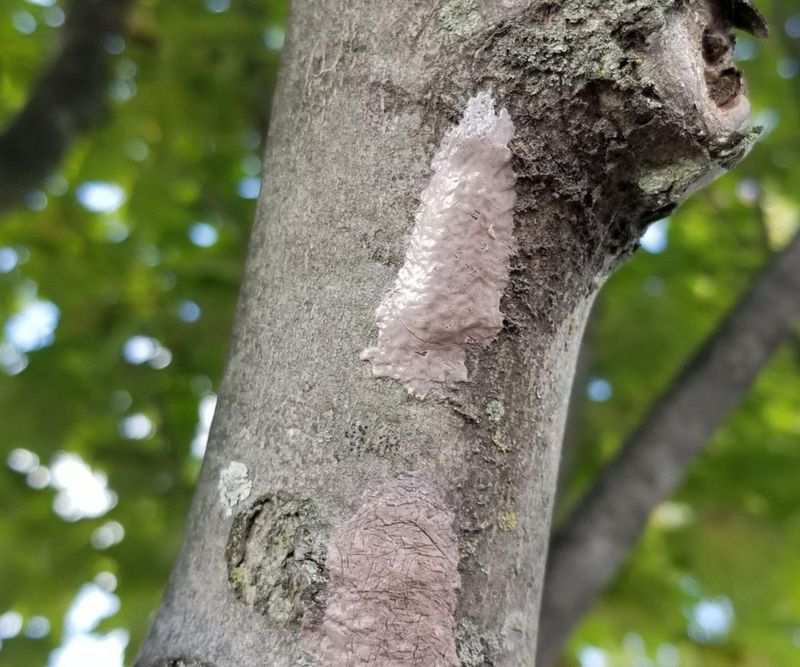
Some of the sneakiest evidence is not a bug at all. Female lanternflies lay egg masses that look like smears of dried mud or old gray putty.
Each mass is roughly an inch to an inch and a half long and can hold 30 to 50 eggs. Fresh ones look shiny and gray, then crack and fade as they age.
Timing helps your search. Adults lay eggs from about September into early winter, and those masses sit through the cold until nymphs hatch around May. So fall, winter, and early spring are prime egg-hunting months.
Check smooth surfaces as well as trees. Lanternflies lay eggs on stones, fence posts, grills, lawn chairs, boat trailers, and the undersides of vehicles.
Found one outside the confirmed counties? Photograph it and report it before you do anything else. Experts may want to see it in place.
If you are told to remove it, scrape the mass into a bag or container with hand sanitizer or soapy water, then seal it. Squishing it firmly also works.
A plastic card or putty knife makes the job quick, and each scraped mass means dozens fewer hungry nymphs next spring.
8. Check Your Car, Firewood, and Patio Gear Before You Travel
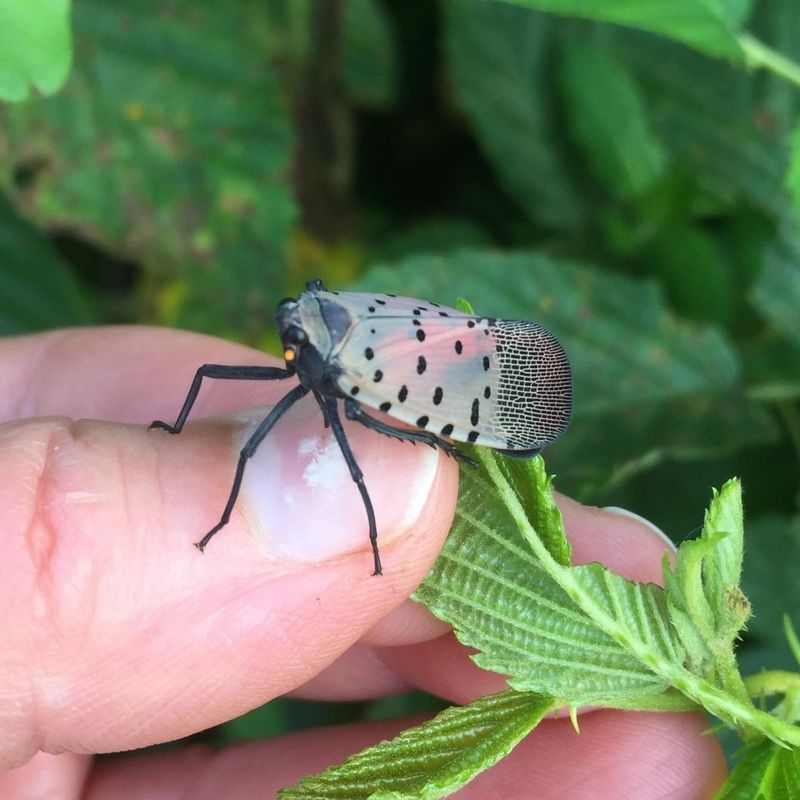
Lanternflies are terrible long-distance fliers but excellent stowaways. Most big jumps in their range happen because people unknowingly carry them.
That makes everyday habits your best long-term defense. Before leaving an area with known activity, walk around your car and peek in the wheel wells, bumpers, and roof racks. Adults sometimes cling to windows and doors, too.
Firewood is another common ride. Buy it near where you plan to burn it, and skip hauling logs between counties or across state lines.
Moving or buying used outdoor items? Inspect patio furniture, grills, playsets, and planters for egg masses.
Michigan also has a quarantine on certain items coming from infested states, including nursery stock and outdoor goods, so businesses must follow inspection rules.
Around home, consider removing tree-of-heaven from your property. Small saplings can be pulled, but larger trees often resprout, so MSU Extension suggests careful treatment or professional help.
Finally, share what you know. Tell neighbors, gardening club friends, and campground buddies what lanternflies look like. Every extra pair of eyes makes it harder for this pest to slip into a new corner of the state unnoticed.