What New York Law Says About Trimming a Neighbor’s Overhanging Branches
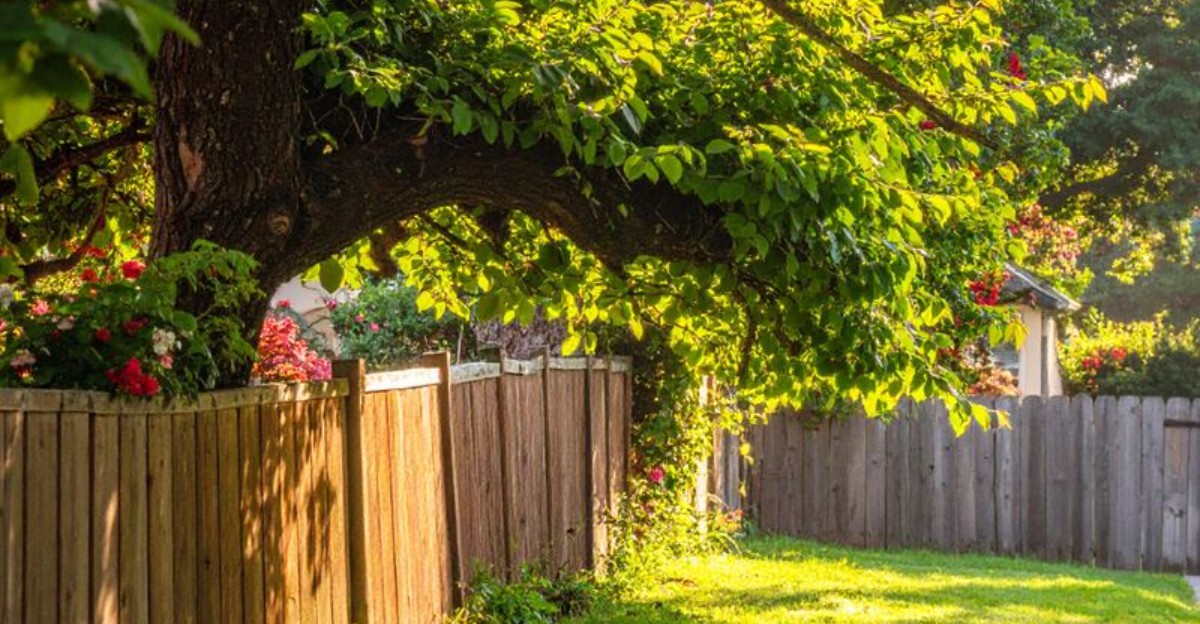
A tree can be legally yours to prune and still not be yours at all. That odd little twist sits at the heart of New York property law, and it surprised me more than any garden pest ever has.
Truth is, I used to think a branch over my fence was fair game. Snip, toss, done. Then I learned that one careless cut can cost far more than a new set of loppers.
Courts across the state have heard real fights over leaves, roots, and limbs. Some ended with neighbors paying triple the value of a tree they only meant to tidy up.
So where does your right to trim stop, and where does trouble start? The answer hangs right at the edge of your yard, about as high as the branch itself.
That Branch Over Your Fence Comes With a Surprising Rule
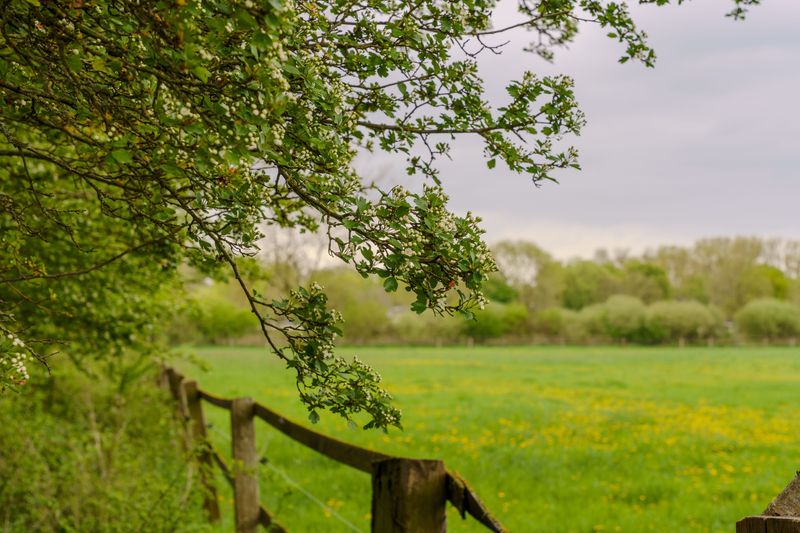
Courts in New York have long followed a principle called the self-help rule. It lets you trim branches from a neighbor’s tree that hang over your property line. You don’t need your neighbor’s permission or a friendly handshake first, though local rules may still apply.
Not going to lie, I was relieved when I first read that. My shady vegetable bed finally had a fighting chance at some afternoon sun. But the rule comes with strings attached, and they matter.
The right covers only the parts of the tree that cross into your space. It also applies to roots creeping under the boundary. The tree itself still belongs to your neighbor, along with its trunk and everything on their side.
Courts treat overhanging limbs as an encroachment you can fix yourself. They usually won’t order a neighbor to cut them for you just because they drop leaves or block a view. That means the job, and the bill, mostly lands on you.
So think of the self-help rule as a limited key, not a master key. It opens the door to tidy pruning on your side. It does not open the door to reshaping, topping, or removing a tree you don’t own.
Your Pruning Shears Stop at the Invisible Property Line
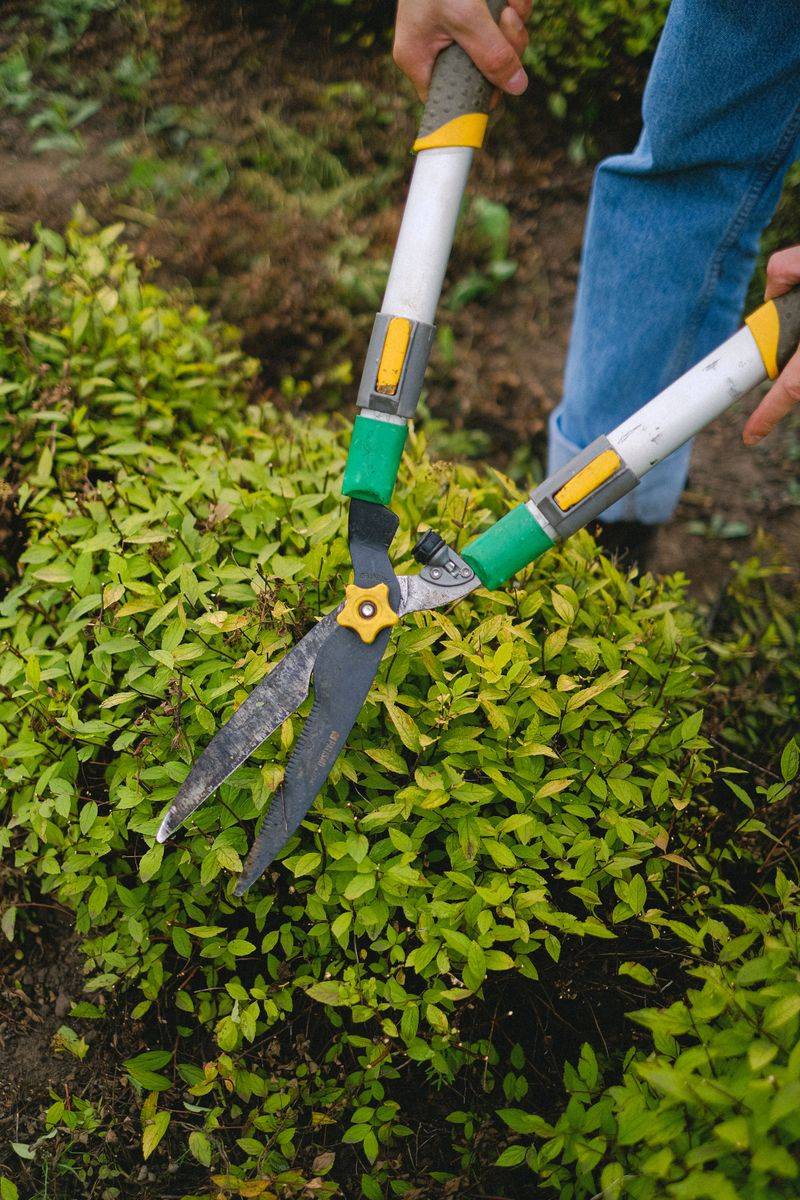
Think of a line running straight up from your boundary into the sky, known as the vertical property line. Okay, I’m not supposed to say picture, so let’s just call it the vertical property line. Everything on your side of it is yours to trim, and nothing past it is.
Crossing that line, even by stepping onto the neighbor’s lawn for a better angle, counts as trespass. Leaning a ladder against their tree or climbing into the branches can also cause trouble. Work from your own ground.
Fair warning, many people guess where the line sits. Fences are often a few feet off the true boundary, so a survey or your property deed can save an awkward argument. Local tax maps give a rough idea but aren’t precise.
A pole saw or pole pruner helps you reach high limbs without leaving your yard. For big branches over a roof or driveway, a certified arborist can rig the cut safely from your side.
One more tip worth gold: tell your neighbor before you start. A quick chat often leads to cooperation, shared costs, or even an invitation to work from their side with permission.
Heavy Cuts Can Leave Your Neighbor’s Oak Badly Hurt
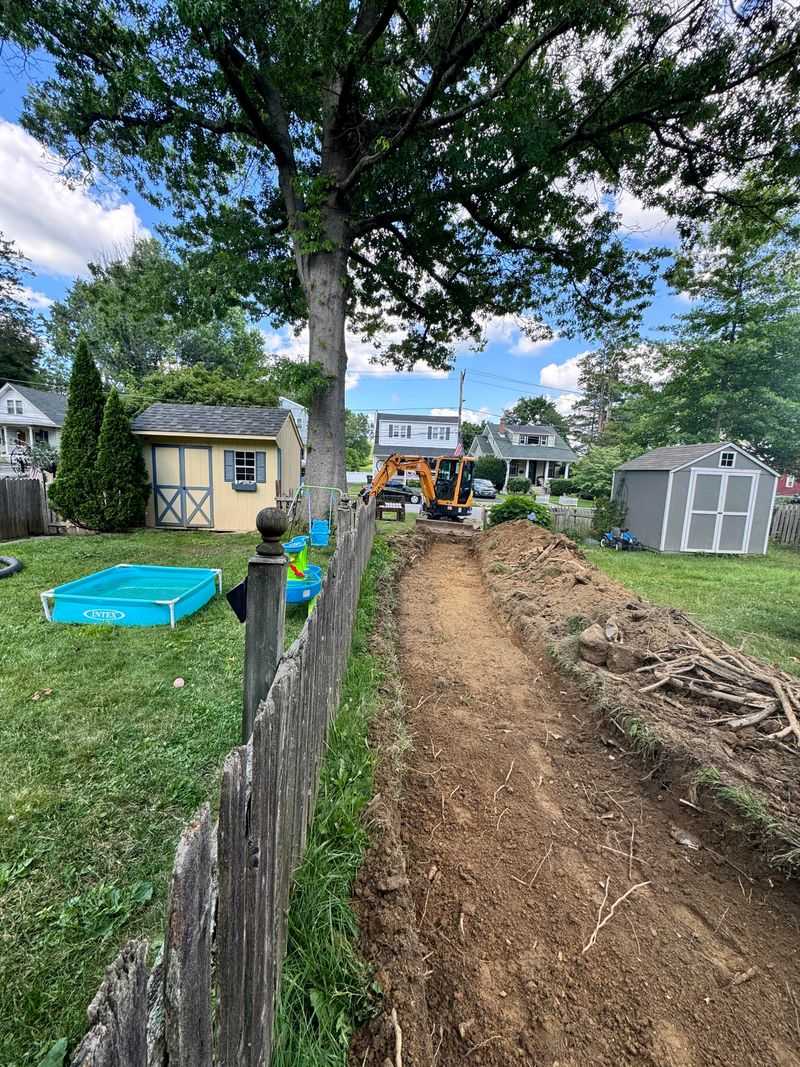
I’m the first to admit it’s tempting to take a little extra off once the saw is running. That urge is exactly where many New York tree disputes begin. Trimming is allowed, but seriously harming the tree is not.
Removing too much of the canopy at once can stress a tree and invite decay. Arborists generally advise against taking off more than about a quarter of the live crown in one season. One-sided cuts can also leave a tree lopsided and less stable in storms.
Courts look at whether your trimming went beyond what was reasonable. If the tree declines or becomes hazardous because of your cuts, you could be on the hook. Good intentions rarely help much in that situation.
Make proper cuts just outside the branch collar, the slightly swollen ring where a limb meets a larger branch. Avoid flush cuts and leaving long stubs. Both slow healing and open the door to rot.
For large limbs, use the three-cut method to keep bark from tearing. Better yet, bring in an arborist certified by the International Society of Arboriculture. A professional opinion now beats a lawsuit later.
Triple Damages Make a Bad Tree Trim Very Expensive
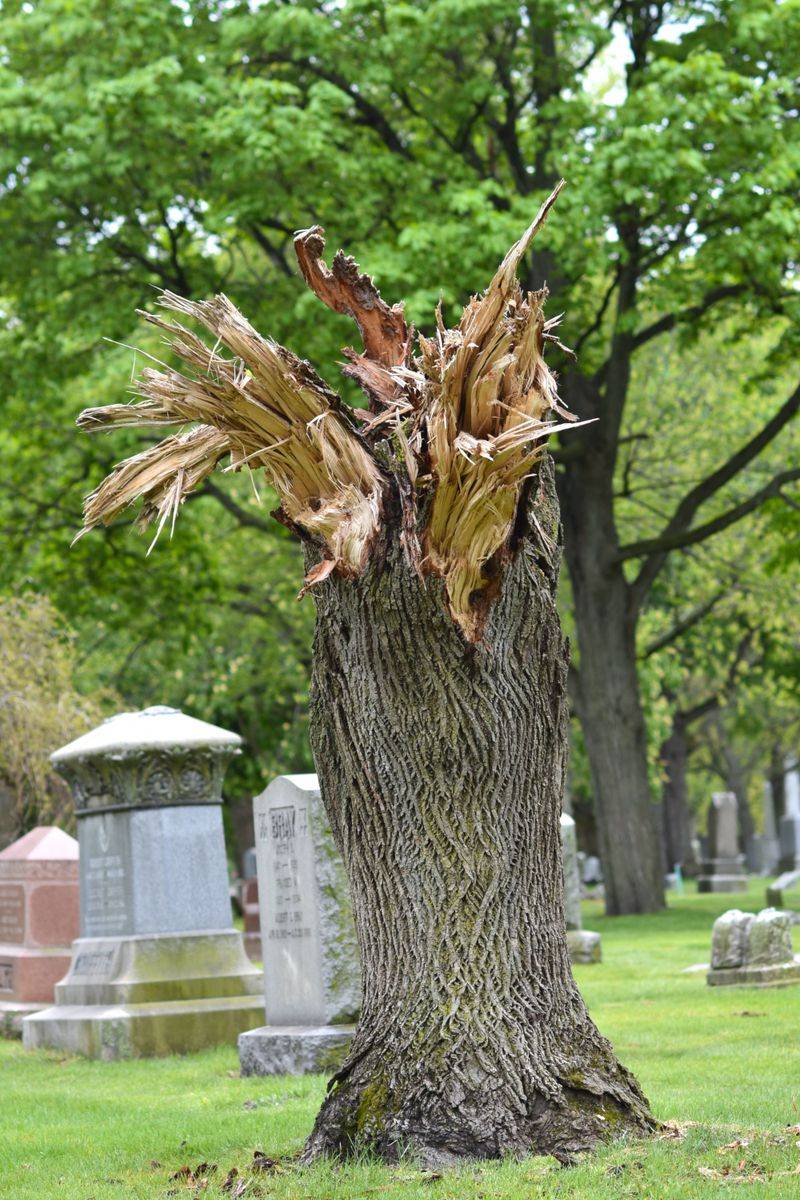
Here’s a number that made me put my chainsaw down for a minute. Under New York’s Real Property Actions and Proceedings Law section 861, cutting or harming someone else’s tree without permission can trigger serious penalties. The law was written with timber theft in mind, but it reaches backyards too.
A tree owner can seek treble damages, meaning three times the stumpage value of the tree. Stumpage value is roughly what the standing tree would be worth as timber. The law also lets the owner recover a fixed statutory amount per tree, either instead of or in addition to the stumpage value.
On top of that, courts may consider restoration costs, which can include replacing a mature tree. Replacing a big shade tree can run into thousands of dollars. Suddenly that quick weekend trim looks pricey.
There is some relief built in. If you had good reason to believe you were on your own land, you may avoid the tripled damages, but you can still owe the stumpage value or the fixed per-tree amount, or both, plus restoration costs.
Still, nobody wants to test that in court. Document the property line, photograph the tree before and after, and keep your cuts modest. Those simple habits protect your wallet.
A Tree Trunk Sitting Right on the Property Line Has Two Owners
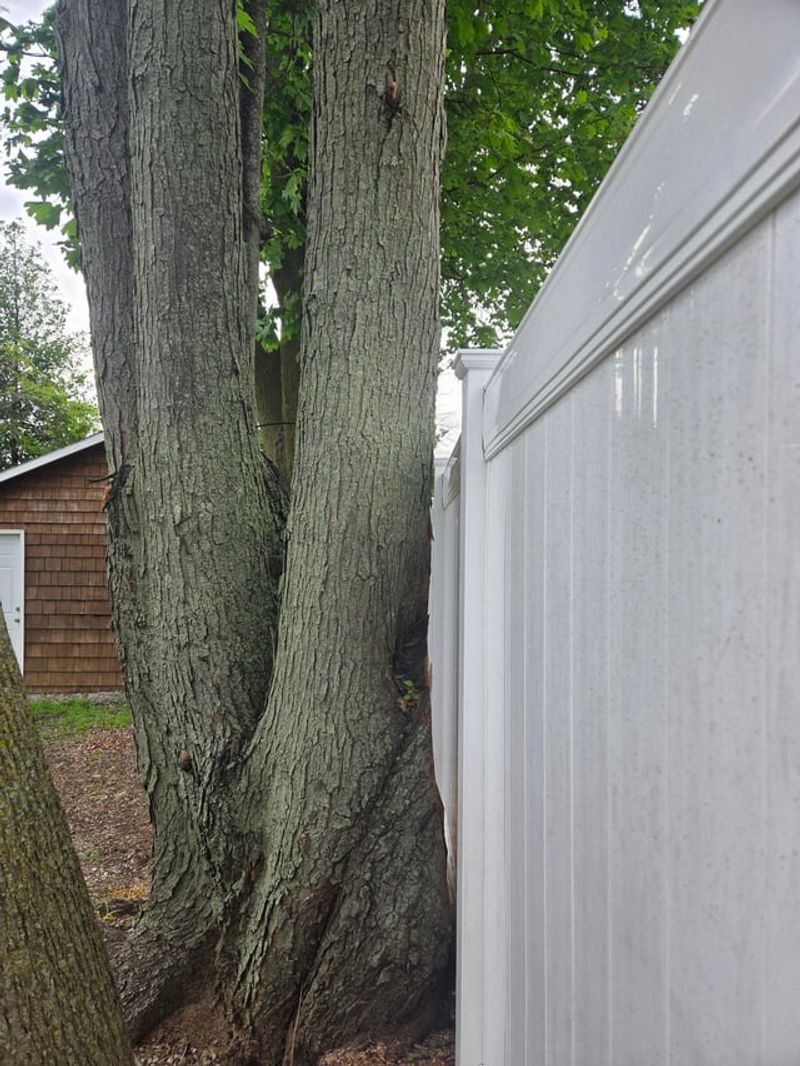
Some trees just refuse to pick a side. When the trunk grows right across the boundary, it’s commonly called a boundary tree. In New York, these trees are generally treated as owned in common by both neighbors.
Shared ownership changes the whole game. One owner usually can’t remove the tree or seriously damage it without the other’s agreement. Doing so could expose you to claims under the same tree damage rules.
I get it, a giant shared tree can feel like a roommate who never pays rent. Leaves land on both yards, and roots wander everywhere. Still, the smartest path is a conversation, not a chainsaw.
Routine trimming of branches over your side is usually fine, as long as you don’t harm the tree’s health. Bigger decisions, like removal or major crown reduction, call for teamwork. Splitting the arborist bill is a fair and common approach.
Put any agreement in writing, even a simple signed note. Spell out what will be cut, who pays, and who hires the crew. That paper trail can calm tempers if the tree later causes damage or a new owner moves in next door.
Creeping Tree Roots Under Your Patio Follow Similar Rules
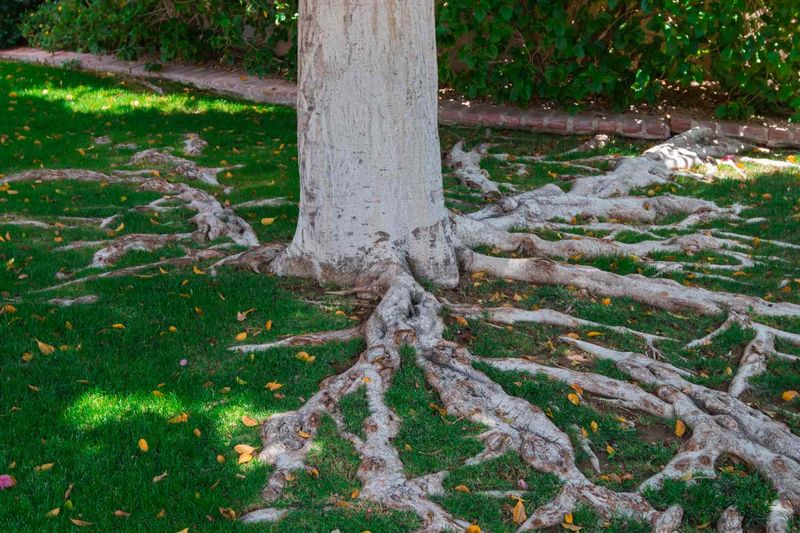
Cracked pavers, a heaving walkway, or a lifted patio slab often point to one sneaky culprit underground. Roots from a neighbor’s tree don’t stop at the fence. They go wherever water and oxygen lead them.
The self-help rule generally covers roots too. You can cut them back to the property line on your side. Trust me on this one, though: roots are riskier than branches.
Large structural roots anchor the tree against wind. Slice through too many close to the trunk, and the whole tree could become unstable or begin to decline. If it then topples or suffers, you may face liability for the harm.
Before you dig, call 811 to have underground utilities marked. New York requires notice before excavation, and gas or electric lines often run near fences. It’s free and takes a few days.
An arborist can map out which roots are safe to cut and which to leave alone. Root barriers installed along the line can redirect future growth downward. For patios, flexible pavers or rerouted paths sometimes solve the problem without heavy root pruning at all.
Who Pays When a Neighbor’s Tree Falls on Your House
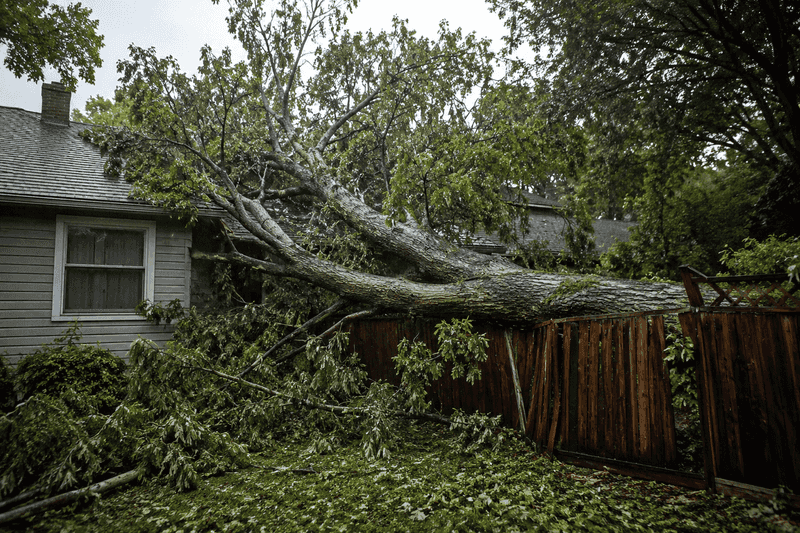
Storm season brings a question I hear often. If the neighbor’s maple crashes onto your roof, are they automatically responsible? Under New York law, not necessarily.
Generally, a tree owner is liable only if they knew, or reasonably should have known, the tree was hazardous. Think obvious decay, large hollows, big dead-looking limbs, mushrooms at the base, or a serious lean. A healthy tree toppled by a severe storm is often treated as a natural event.
In those cases, your own homeowner’s insurance typically handles your damage. Check your policy so you know your deductible and tree coverage limits before trouble strikes.
Here’s a smart move if you spot a worrying tree next door. Send your neighbor a polite, dated letter or email describing the problem, ideally with photos. That written notice can matter a lot if the tree later fails.
Keep a copy for yourself. If the neighbor ignores you and the hazard grows, consider a report from a certified arborist. Some towns and cities also have code enforcement offices that can step in on clearly hazardous trees.
Check Local Tree Rules and Talk Before You Grab the Loppers
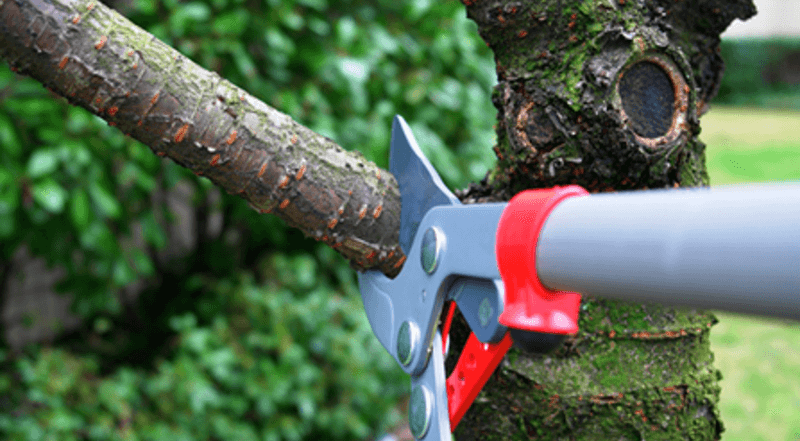
State law sets the basics, but your town might add its own layer. Many New York municipalities have tree ordinances, especially in places like Westchester, Long Island, and New York City. Some require permits to remove or heavily prune larger trees, even on private land.
Street trees are a separate story. In New York City, trees along sidewalks belong to the city, and the Parks Department handles their care. Pruning them yourself without permission can bring fines.
Timing helps too. Late winter is often a good time to prune many deciduous trees, while oaks are best trimmed in the dormant season to lower oak wilt risk. Avoid cutting during spring and early summer bird nesting when you can.
Honestly, the best tool in this whole process isn’t a saw. It’s a friendly conversation over the fence. Most neighbors appreciate a heads-up and may even share the cost.
So check your local code, confirm your property line, and talk first. Then trim modestly from your side, or hire a certified arborist. That simple plan keeps your yard sunny and your neighborhood peaceful.