Finger Lakes Homeowners Should Take These Grape Vine Steps Before Fall Sets In New York
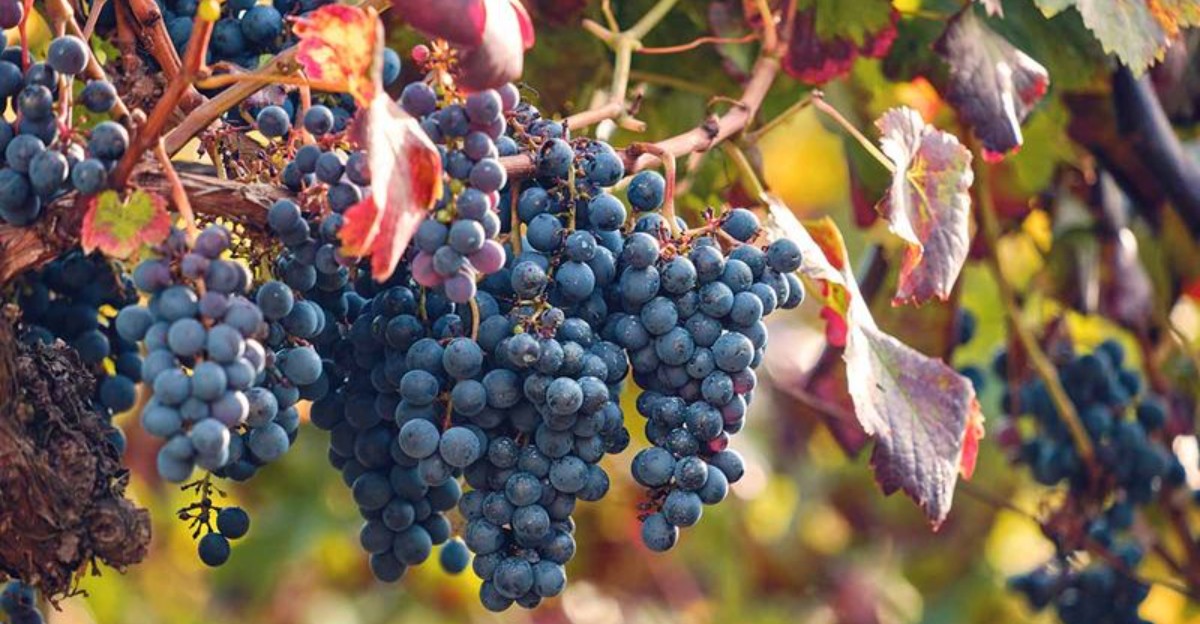
September brings a change you can see and feel across the Finger Lakes, and your grape vines are noticing it too.
As cool evenings settle in and leaves begin turning, the vines start preparing for the long New York winter ahead. That makes this a crucial window for anyone growing grapes at home.
A vine that heads into winter stressed or unhealthy may struggle when spring arrives, while one that enters dormancy in good shape has a much better chance of producing strong growth and flavorful clusters next season.
You only get a short window to give your vines the attention they deserve, so September is not the month to overlook them.
1. Inspect Grape Vines For Late Season Problems And Damage
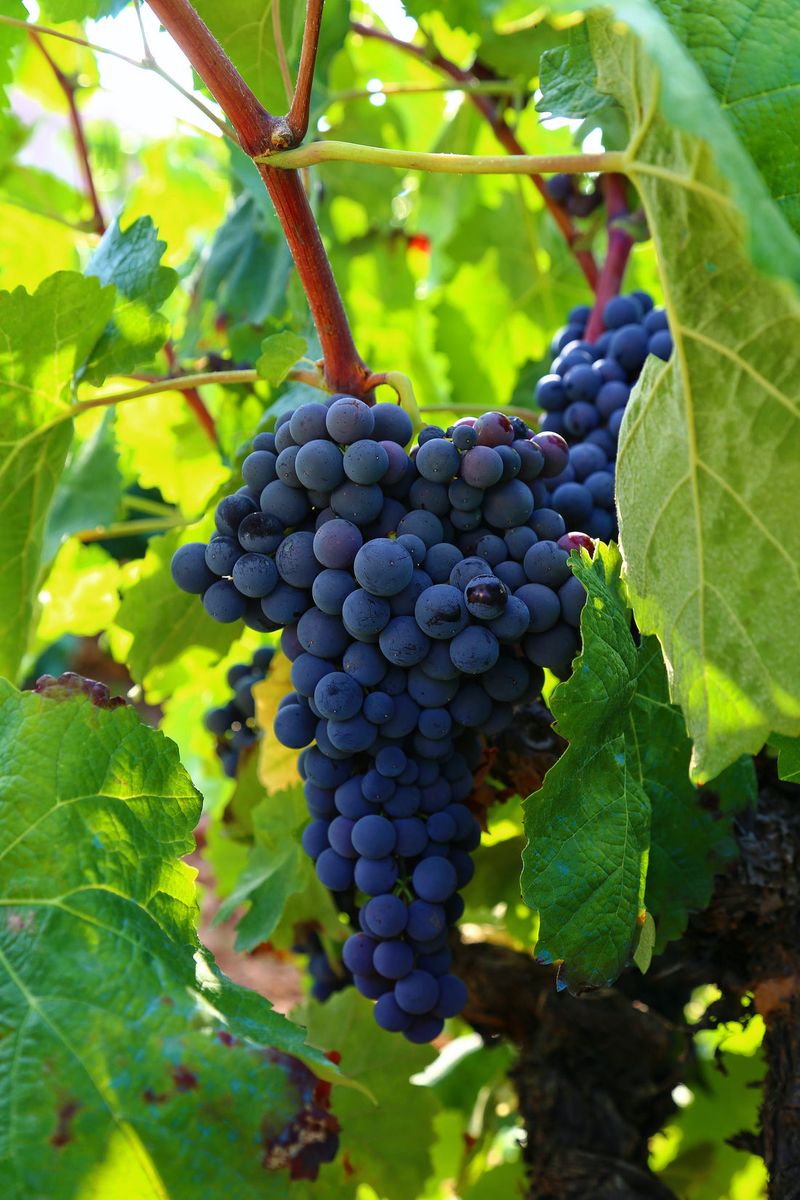
Grab a cup of coffee and walk your vines slowly, the way you would study a car before a long trip. Late season trouble hides in plain sight if you rush past it.
Powdery mildew and downy mildew can still spread after harvest, quietly draining strength from leaves and canes. Look for dusty white patches on leaf surfaces or fuzzy growth on the undersides.
Healthy canes should look firm and evenly colored, usually a warm brown. Canes that seem darker, shriveled, or oddly dull often took a hit during the season.
Buds tell an honest story too. Buds can offer clues about vine health, but their condition can change through winter.
Make a note of any obviously damaged sections, then assess bud survival again when you prune during dormancy.
Brown, black, or washed-out green centers point to damage, and that changes how much wood you should keep later on. Jot down which sections looked rough so you remember in November.
Cool nights and heavy morning dew make fungal problems especially stubborn. Catching them now gives you time to act before the vines shut down for winter.
Bring a notebook or snap photos with your phone. A simple record turns guesswork into a real plan for next season.
2. Remove Weak Growth And Unproductive Canes Before Winter
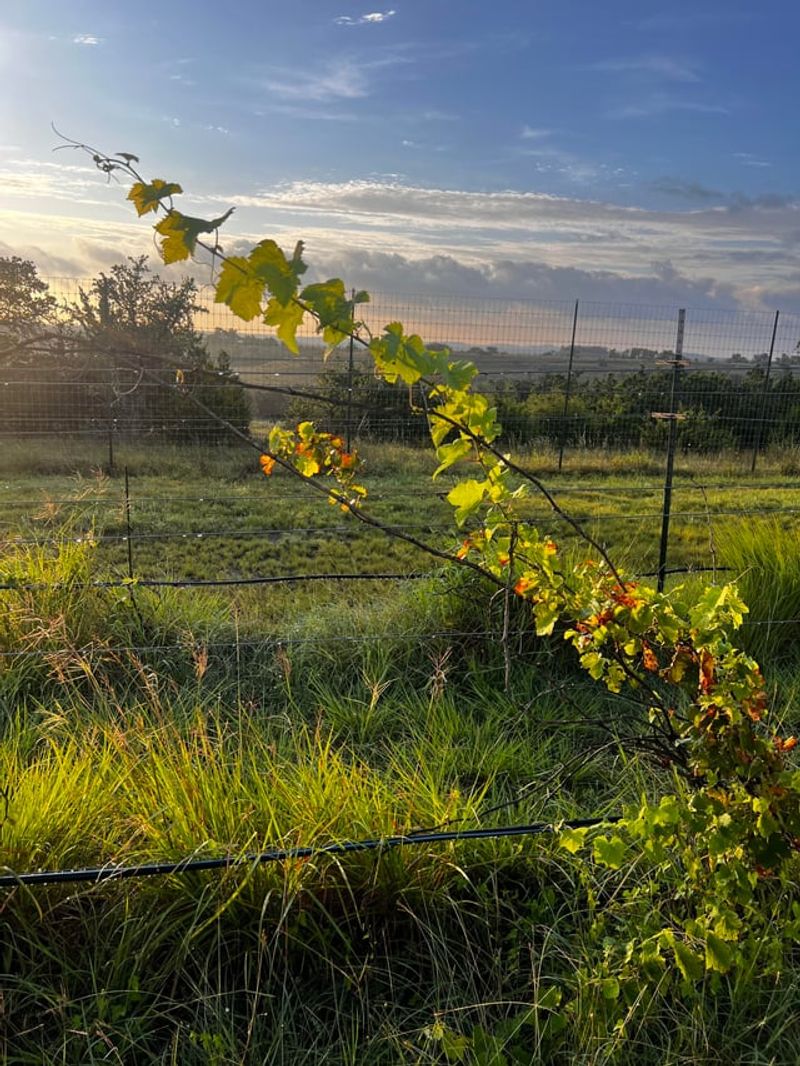
Picture a vine as a household budget. Every skinny, shaded cane is an expense that never pays you back.
Dormant pruning is famously aggressive, and growers commonly remove up to ninety percent of the past season’s growth. That number startles beginners, though the vines respond beautifully.
Your goal is simple. Keep healthy, pencil-thick, one-year-old canes that sit in good light and are well positioned along the wire.
Toss out the spindly stuff hiding under the canopy, plus anything twisted, damaged, or growing in a direction that fights the trellis. Poorly positioned or weak canes can contribute to an unbalanced canopy and poorer fruit production.
By cutting away excess wood, you control the number of fruiting buds and keep the vine’s crop load in balance with its available resources. Fewer clusters usually means better flavor and bigger berries.
Some growers remove obviously damaged or diseased material in fall, then save the main pruning job for the dormant season. That two-step approach keeps things manageable.
Your New York Garden Changes Every Week. Your Plan Should Too.
Gardening in New York changes quickly throughout the season. Every Friday you’ll receive a simple weekly plan showing exactly what to plant, prune, fertilize, harvest, and protect so you never miss the right timing.
Sanitize your pruners between vines with rubbing alcohol or a disinfectant wipe. It takes seconds and helps stop problems from hitchhiking down the row.
Haul the cuttings away rather than leaving them underfoot.
3. Prune At The Right Time To Support Future Grape Production
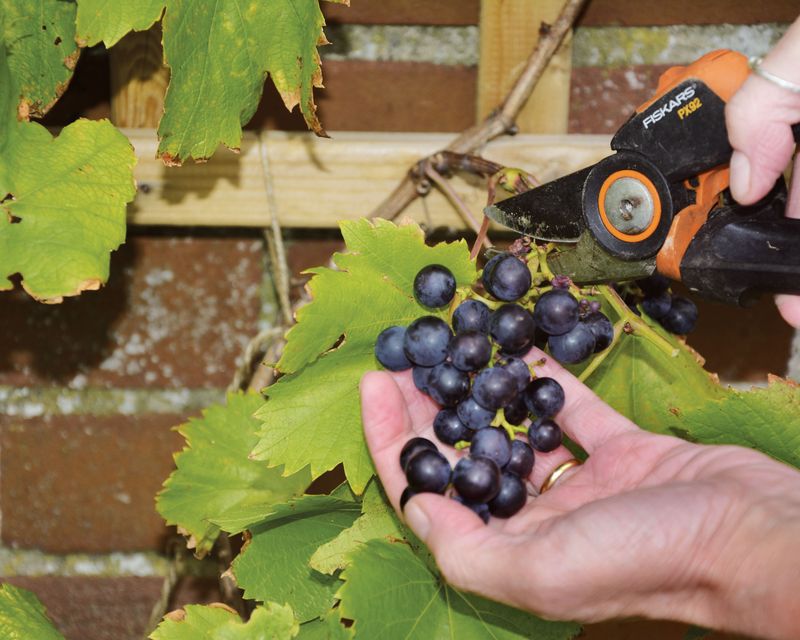
Timing separates a decent grape crop from a great one. Cut too soon and you rob the vine of resources it has not finished packing away.
While leaves are still hanging on, the plant is busy moving carbohydrates and minerals down into its trunk and roots. Interrupt that transfer and buds head into winter weaker than they should be.
Wait until the leaves have dropped and the vine is truly dormant. That window stretches from late fall through winter and into early spring before buds swell.
Plenty of experienced growers deliberately hold off until late winter. Pruning after the worst cold has passed lets you see exactly which buds survived.
Later pruning also nudges bud break slightly later in spring, which can be a real advantage in frost-prone spots near the lakes. A few extra days can save an entire crop.
Make clean, angled cuts about an inch above a healthy bud. The slant sheds water instead of holding it, lowering the odds of rot creeping into the wound.
Sharp blades matter. Crushed wood heals slowly and invites trouble.
4. Clear Fallen Leaves And Debris Around The Base Of Vines
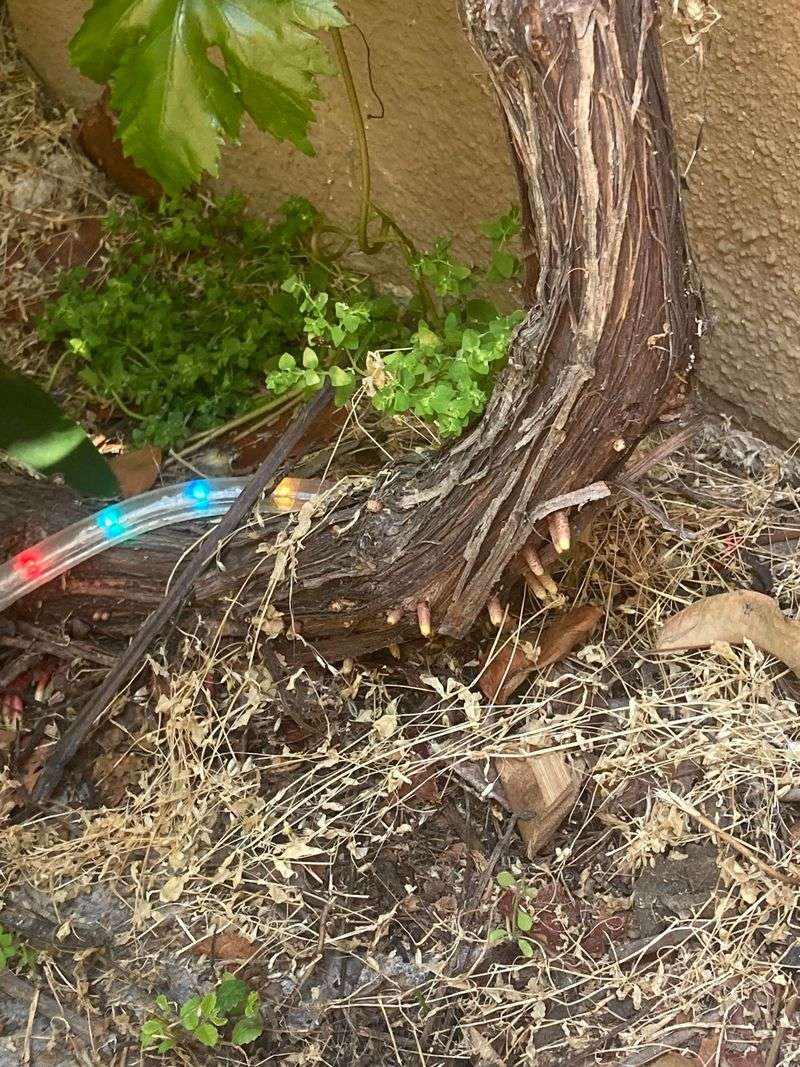
Fallen leaves look harmless piled up at the foot of a vine. Underneath that cozy blanket, though, fungal spores are settling in for a long, comfortable nap.
Phomopsis and powdery mildew can overwinter on infected vine tissues, while black rot survives in mummified fruit and cane lesions, and downy mildew can persist in infected leaf litter. Spring rain then helps release and spread spores onto susceptible new growth.
Raking the vine row is one of the cheapest disease controls available. You are literally hauling away next year’s infection source.
Pay extra attention to mummified berries still clinging to the wire or lying in the grass. Shriveled clusters are packed with black rot spores and deserve a one-way trip out.
Skip the compost pile for this material unless your pile runs genuinely hot. Bagging it or burning it where permitted is the safer route.
Given how damp autumns tend to be, debris rarely dries out on its own. Wet mats of leaves stay moist for weeks.
Keep the grass trimmed short around the base too. Better airflow at ground level speeds drying and discourages rodents from nesting against your trunks.
Ten minutes of raking pays real dividends.
5. Check Soil Moisture Before Colder Weather Arrives
Here is something most backyard growers miss entirely. After harvest, grape roots are not resting, they are hustling.
Vines push out a fall flush of new roots, soak up nitrogen and potassium, and rebuild the carbohydrate reserves that ripening fruit drained away. Dry soil puts the brakes on all of it.
When moisture runs short during this stretch, root growth stalls and nutrient uptake slows. The result often shows up months later as sluggish, uneven growth in spring.
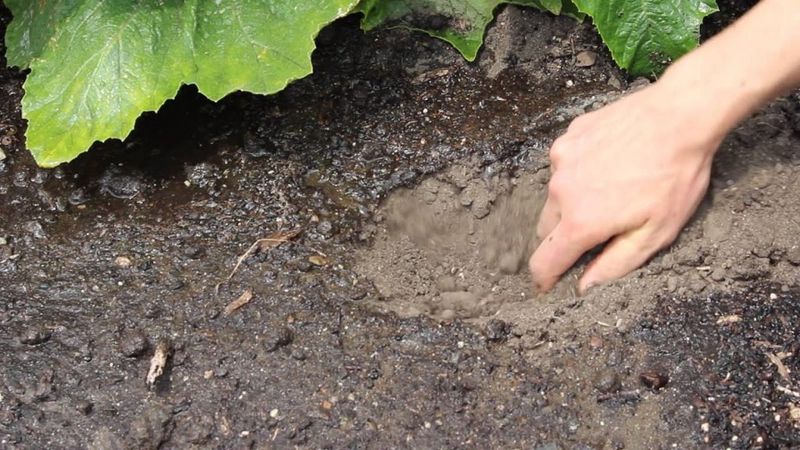
Test with your finger or a cheap moisture meter. Push down four to six inches, and if it feels dusty, give the vines a deep, slow soak before the ground hardens.
There is a balance to strike, though. Avoid both drought stress and excessive watering in late summer.
Keep soil moisture reasonably consistent, then water deeply in fall if rainfall has been insufficient.
So think of it as taper, then top off. Slow down in late summer, then water well in fall if rainfall has been thin.
Young vines planted this year need steady moisture without sitting in muck. Letting the surface dry slightly between waterings encourages roots to chase depth.
Finger Lakes autumns are usually generous with rain, but check anyway.
6. Protect Young Grape Vines From Early Frost Exposure
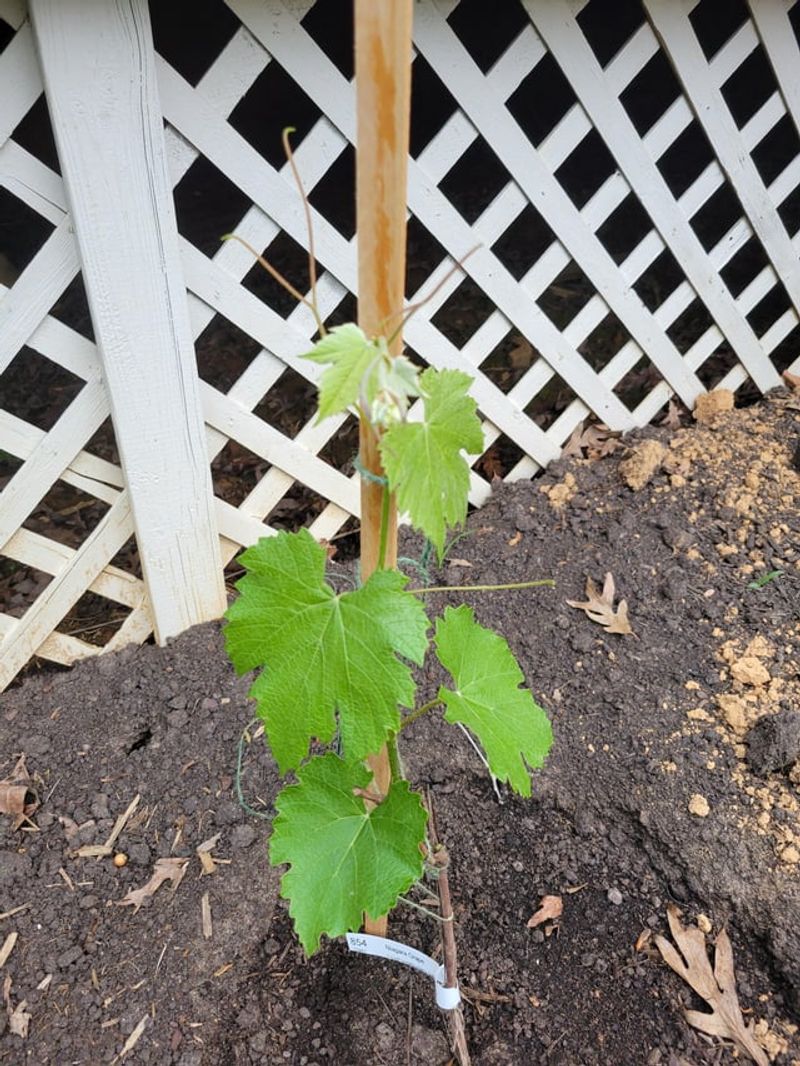
First-year and second-year vines are the drama queens of the vineyard. They have shallow roots, thin bark, and very little stored energy to fall back on.
A classic trick called hilling up solves much of this. You simply mound soil around the base of the vine, burying the graft union under several inches of earth.
That mound insulates the most vulnerable spot on the plant. Should a brutal cold snap harm the top growth, the buried portion often survives and can regrow.
Straw or shredded bark works as an alternative blanket. Organic material holds warmth around the roots and helps the soil keep moisture through dry, windy spells.
Some growers go further with very young plants, laying entire canes down and covering them with soil in late fall before the ground stiffens. They lift them again in spring before buds open.
One housekeeping note deserves attention. Grow tubes protect new shoots in spring, but leave them on too long and the wood stays soft.
Remove grow tubes around the middle of the growing season so young vines have enough time to acclimate and harden before winter.
7. Improve Air Circulation Around Vines With Proper Maintenance
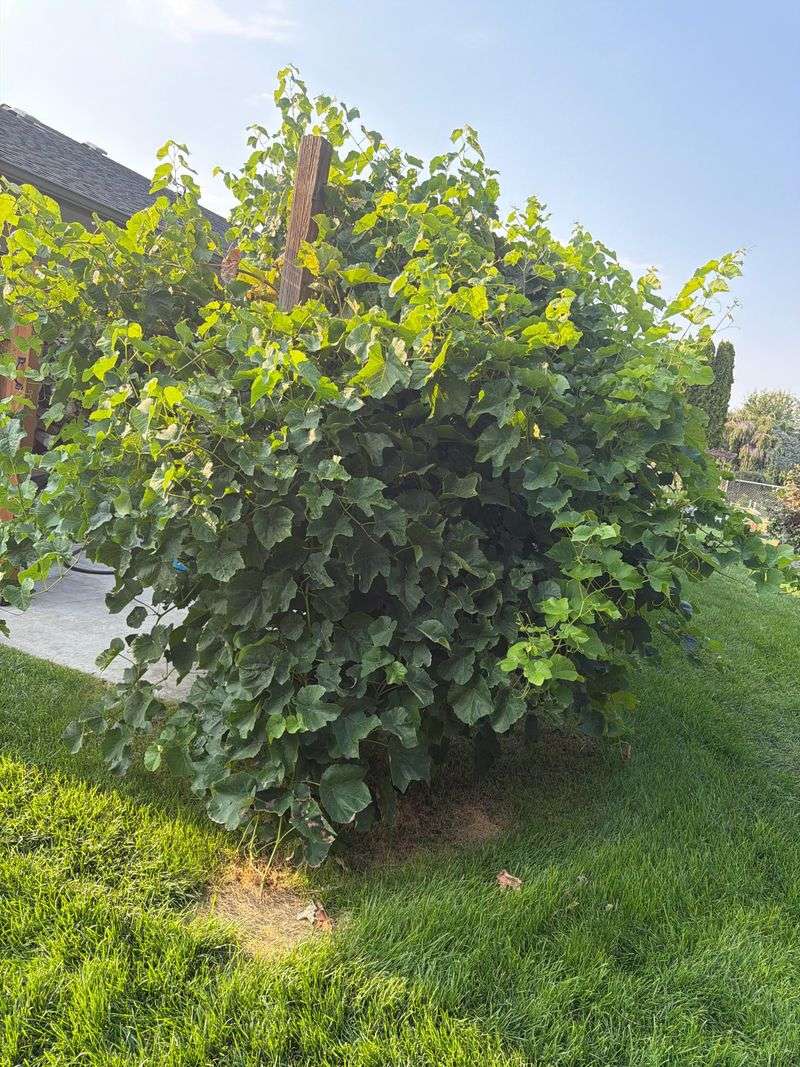
Fungus loves a crowd. Thick, tangled canopies trap humidity like a wet towel, and spores settle in happily.
Opening things up starves those problems of the damp stillness they depend on. Sunlight reaches the leaves, breezes move through, and everything dries faster after morning dew.
Shoot thinning during the season and careful winter pruning both serve the same purpose. You want spaced, well-lit foliage rather than a solid green wall.
Row orientation matters more than most homeowners expect. Running rows along the direction of the slope lets cool air slide downhill instead of pooling around your trunks.
Take a look at what surrounds your planting. Overgrown brush, thick hedges, or a row of shrubs at the bottom of a slope can dam up cold air like a snowbank.
Clearing those obstacles and keeping drainage paths mowed lets air keep moving. Clear dense vegetation and other obstacles that block natural airflow, especially in low spots where cold air can settle.
Steep, breezy hillsides are exactly why the Finger Lakes grows grapes so well. Working with that natural air movement rather than blocking it is half the battle.
Trim nearby tree limbs casting heavy shade too.
8. Look For Signs Of Common Grape Diseases Before Dormancy
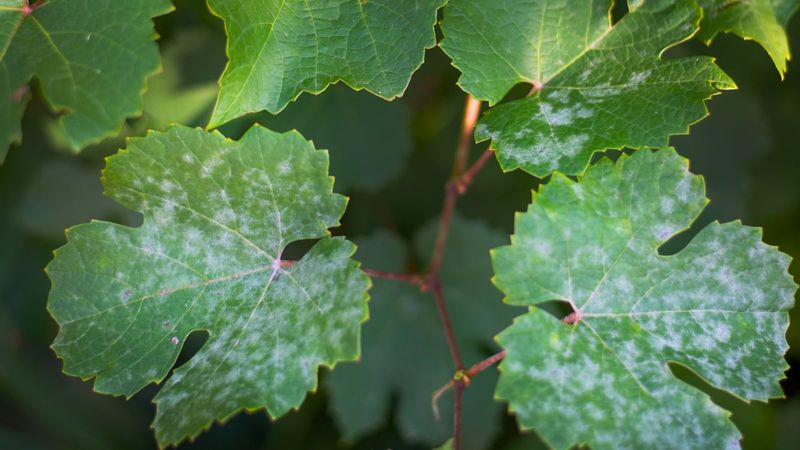
Five troublemakers show up again and again across eastern North America, and all of them call the Finger Lakes home. Powdery mildew, downy mildew, black rot, Phomopsis, and crown gall top the list.
Learning their signatures makes scouting fast. Powdery mildew leaves a dusty white film on leaves and berries, almost like someone shook flour over the vine.
Downy mildew announces itself with yellowish-green oil spots on the upper leaf surface. Flip the leaf over and you may find a fuzzy white coating underneath.
Black rot creates dark, sunken lesions on leaves and turns berries into hard, wrinkled mummies. Those shriveled fruits are spore factories.
Phomopsis shows up as small black specks and cracking near the base of shoots. Crown gall forms rough, tumor-like swellings on trunks, often after winter injury.
Spotting trouble before dormancy gives you options. A late-season fungicide aimed at the mildews can help vines enter winter with more healthy leaf tissue and better stored energy.
Record what you find and where. Next spring you will know exactly which vines deserve early attention and extra breathing room.
Healthy vines simply handle cold better.
9. Add Mulch Carefully To Protect Roots Through Winter
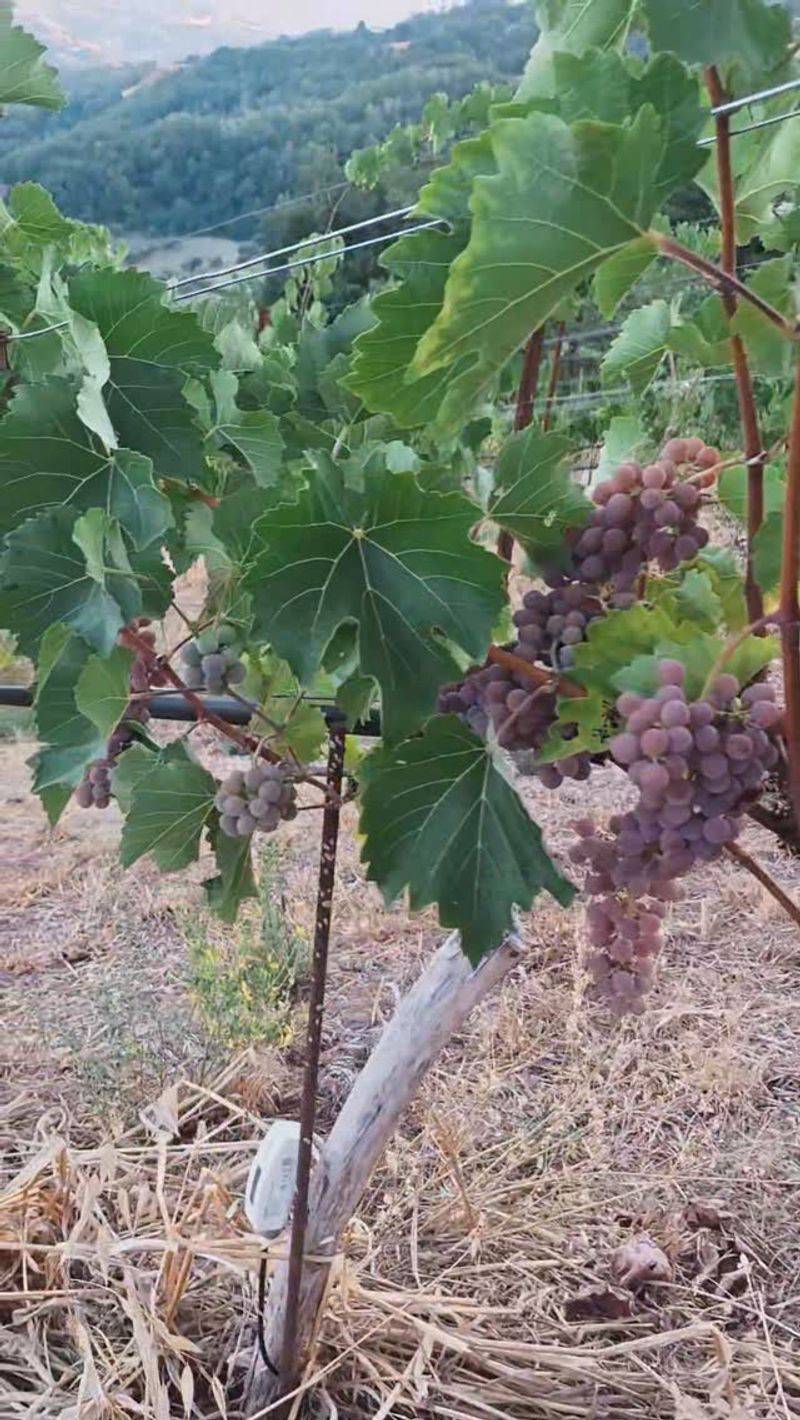
Mulch around grapes is a genuinely debated topic, so approach it with a light hand. Used well, it insulates roots and shields the graft union from bitter cold.
Straw and shredded bark both perform nicely. They help insulate the root zone and, when used around grafted vines, can provide additional protection against extreme cold.
Here is the catch. Grapes prefer soil that drains fast and warms quickly, and a thick mulch layer can keep the ground cool and soggy well into spring.
Some growers skip mulch entirely for that reason. If your site holds water or sits in heavy clay, they have a fair point.
Sandy, sharply drained ground is a different story. A thin layer of compost applied in late fall or early spring feeds the soil without smothering it.
Watch the mound itself carefully. Canes poking out of the top of a soil or mulch hill can suffer winter injury, and those wounds open the door to crown gall.
Cover fully or not at all. Around Finger Lakes properties with clay-heavy slopes, less mulch is often the wiser choice.
10. Prepare Trellises And Supports For The Next Growing Season
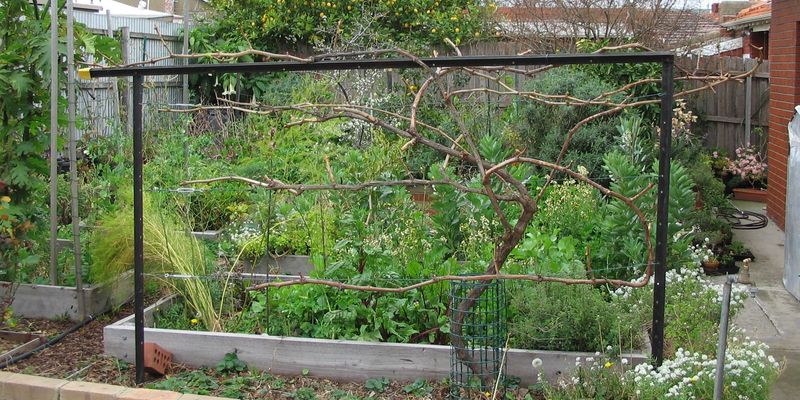
A trellis carries an astonishing amount of weight once vines fill in. Add wet snow or a coat of ice and the load climbs fast.
Autumn is the smart moment to walk the line and test every post. Push on them, look for rot at ground level, and check that end posts still sit tight in their anchors.
Treated wood or metal posts hold up best in New York winters. Roughly six feet should stand above ground once the post is set firmly.
Wire deserves the same attention. Heavy galvanized wire in No. 9 or 10 gauge, ideally high tensile, handles the pull of mature vines without stretching into a sag.
Check that wires run freely through staples or drilled holes and still shift side to side, or that tensioners are snugged up properly. Loose wire lets vines flop and shade themselves.
Spacing gives you room to work. Posts about twenty to twenty-five feet apart, with ten to twelve feet between rows, keeps airflow good and mowing easy.
Fix weak spots before the first heavy storm. Repairs are far simpler on a mild afternoon than in February.