What North Carolina Gardenias Need In August Or Their Leaves Will Yellow Before Fall
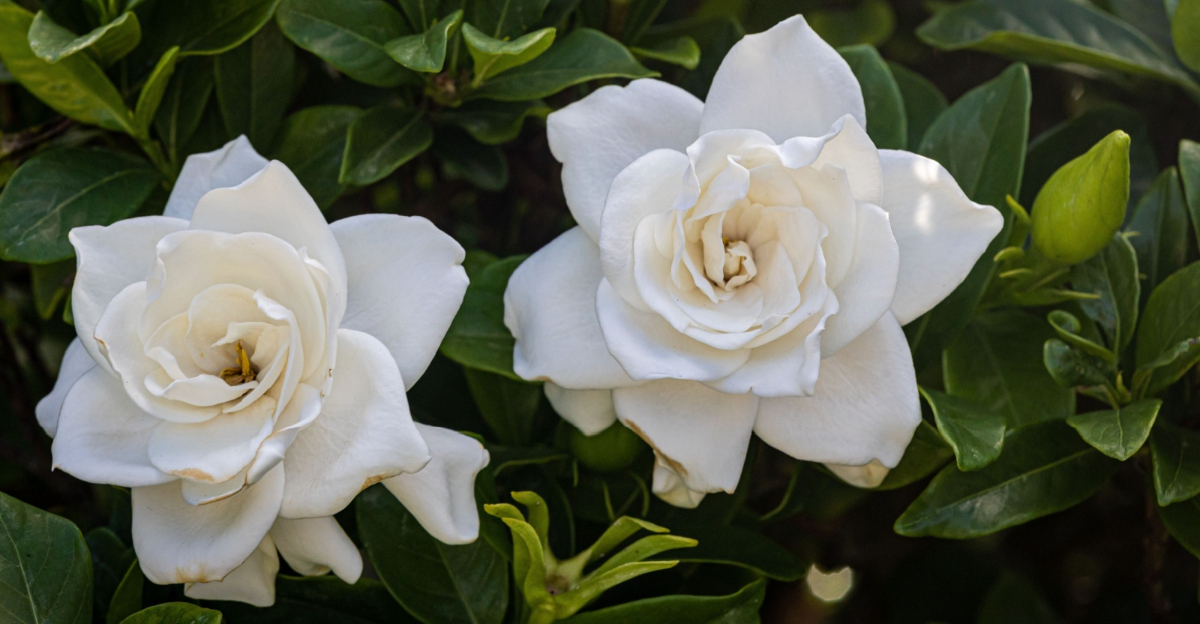
August is basically gardenias putting North Carolina gardeners through their paces.
The heat is relentless, afternoon storms dump heavy rain and disappear just as fast, and then a dry spell moves in and leaves the soil cracked and thirsty before you even have time to react.
Gardenias are notoriously particular about their root zone, and that swing between soggy and bone dry is exactly the kind of drama they do not handle well.
Yellow leaves show up fast when the moisture situation gets inconsistent, and once that starts happening in August it can feel like a losing battle.
The good news is that keeping the soil evenly moist is the single most important move right now, and when you pair that with the right mulch, acidic soil, and proper iron availability, your gardenia has a genuinely solid shot at staying green through fall.
1. August Moisture Keeps Gardenias Steady
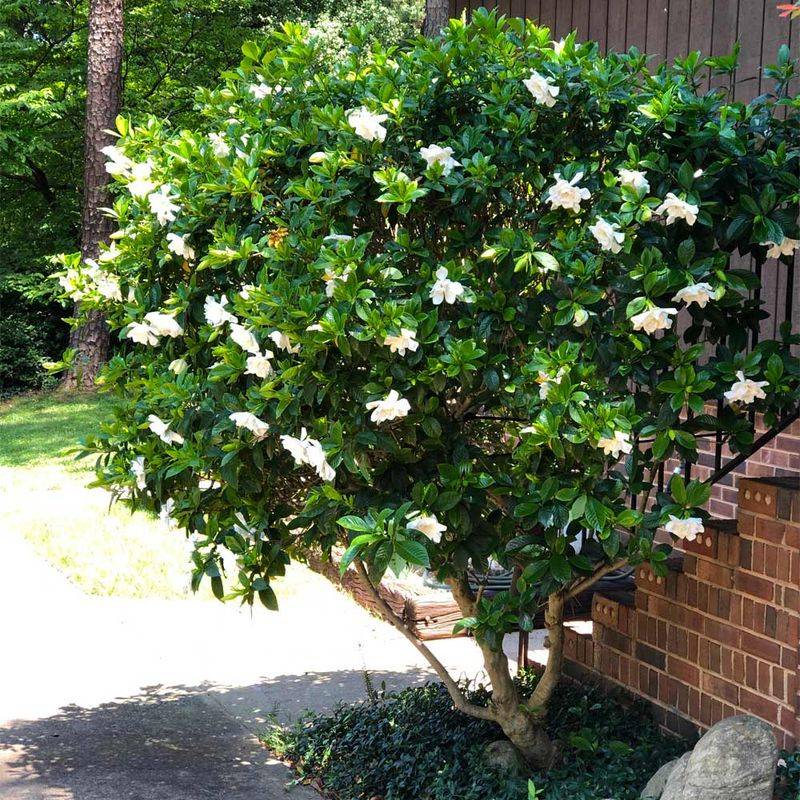
Hot August afternoons in North Carolina can pull moisture out of the soil faster than most gardeners expect.
Gardenias are shrubs that like consistent moisture at their roots, and when that moisture disappears during a stretch of dry, humid heat, the plant begins to show signs of stress before you even notice the soil feels dry.
Steady moisture does not mean soaking the ground every day. It means checking the root zone regularly and watering when the top inch or two of soil begins to feel dry to the touch.
For gardenias growing in sandy soil or raised beds, that check may need to happen more often than it does for shrubs planted in heavier clay.
North Carolina summers can shift quickly between baking heat and afternoon thunderstorms. That unpredictability makes it easy to assume the garden is getting enough water when it may not be.
Rainfall during summer storms often runs off before soaking deeply into the root zone, especially in compacted or sloped yards.
Gardenias planted near foundations, along walkways, or under roof overhangs may receive even less rainfall than gardenias in open beds. Checking those spots by hand rather than relying on rainfall alone helps catch dry conditions early.
Catching moisture stress in August, before it becomes visible yellowing, gives the shrub a much better chance of staying green and healthy as fall approaches.
2. Dry Soil Can Trigger Leaf Stress
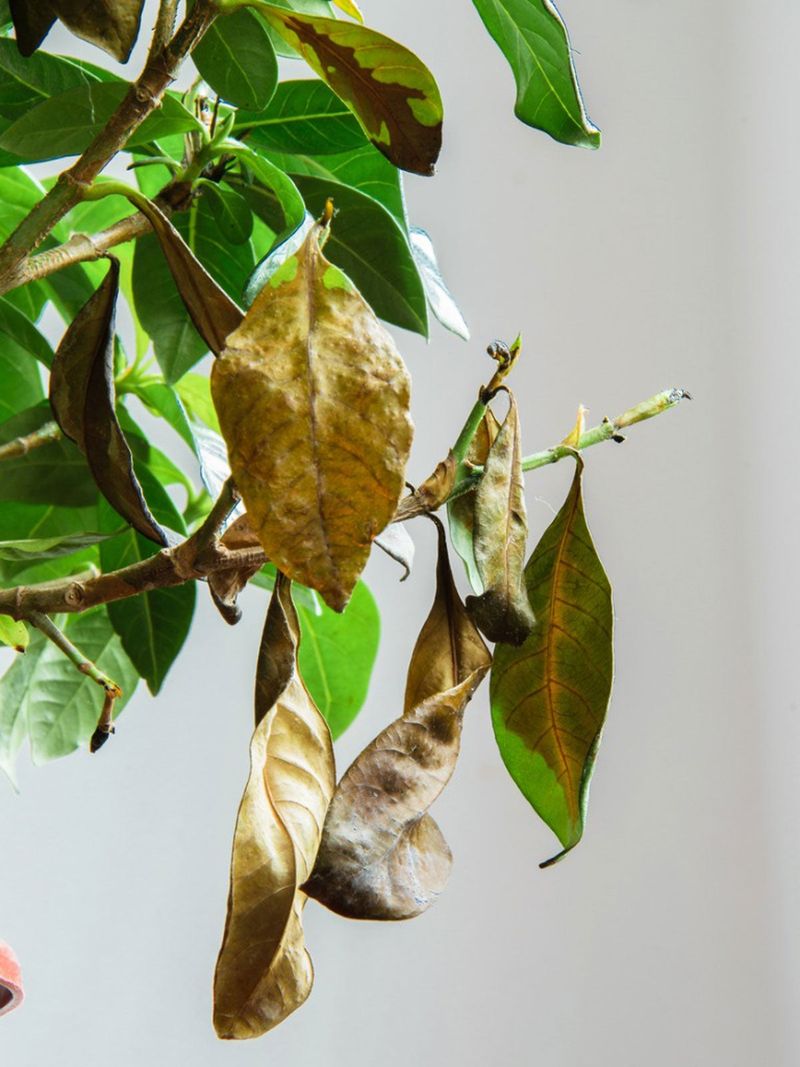
Yellowing leaves near the tips or on the lower branches of a gardenia are often one of the first signs that the root zone has been too dry for too long.
Dry soil in August is a common problem across North Carolina, especially during stretches when temperatures stay high and rainfall is scattered or light.
When gardenias cannot pull enough moisture from the soil, they begin to redirect energy away from older leaves. Those leaves may yellow and drop while the newer growth at the top of the shrub still looks relatively healthy.
Seeing this pattern, older leaves yellowing while new growth stays green, can help a gardener figure out whether the problem is moisture stress rather than something else.
Your North Carolina Garden Changes Every Week. Your Plan Should Too.
Gardening in North Carolina changes quickly throughout the season. Every Friday you’ll receive a simple weekly plan showing exactly what to plant, prune, fertilize, harvest, and protect so you never miss the right timing.
Clay soil, which is common in many parts of North Carolina, can be misleading during dry periods. The surface may crack and look dry while a layer just below still holds some moisture.
Pushing a finger or a thin wooden dowel a few inches into the soil gives a much more accurate reading than simply looking at the surface.
Sandy soils in eastern North Carolina tend to dry out faster and may need more frequent attention during August heat. Regardless of soil type, the goal is to keep gardenias from experiencing prolonged dry conditions at the root zone.
Addressing dry soil early in August can help prevent the kind of leaf stress that turns into widespread yellowing by September.
3. Soggy Roots Can Cause Yellowing Too
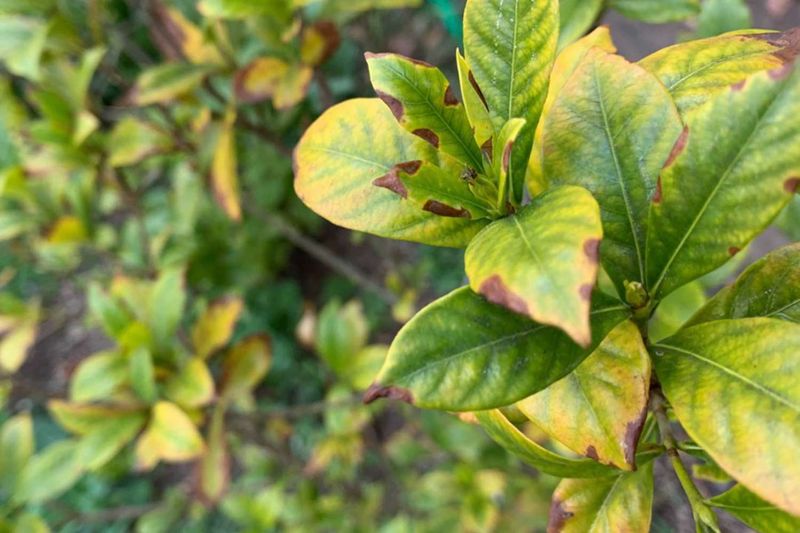
Heavy summer rain is a regular part of August in North Carolina, and while gardenias need moisture, their roots do not tolerate standing water or consistently soggy soil.
When the root zone stays waterlogged for extended periods, the roots struggle to take in oxygen, and the plant begins to show stress in the form of yellowing leaves.
Yellowing from soggy roots can look similar to yellowing from dry soil, which makes it easy to misread. The key difference is often in the soil itself.
If the ground around a gardenia feels wet or muddy several days after a rainstorm, drainage may be the real issue rather than a lack of water.
North Carolina landscapes with heavy clay soil are especially prone to drainage problems after summer storms.
Clay holds water longer than sandy or loamy soil, and gardenias planted in low spots or areas where water pools after rain are at higher risk for root problems during wet stretches of August.
Improving drainage around established gardenias can be challenging, but adding coarse organic material to the surrounding soil over time may help.
For gardenias in containers, checking that drain holes are clear and not blocked by roots or debris can make a real difference.
If a gardenia has been sitting in soggy conditions for a while, allowing the soil to dry out somewhat before the next watering cycle is a reasonable step to consider.
4. Mulch Helps Protect The Root Zone
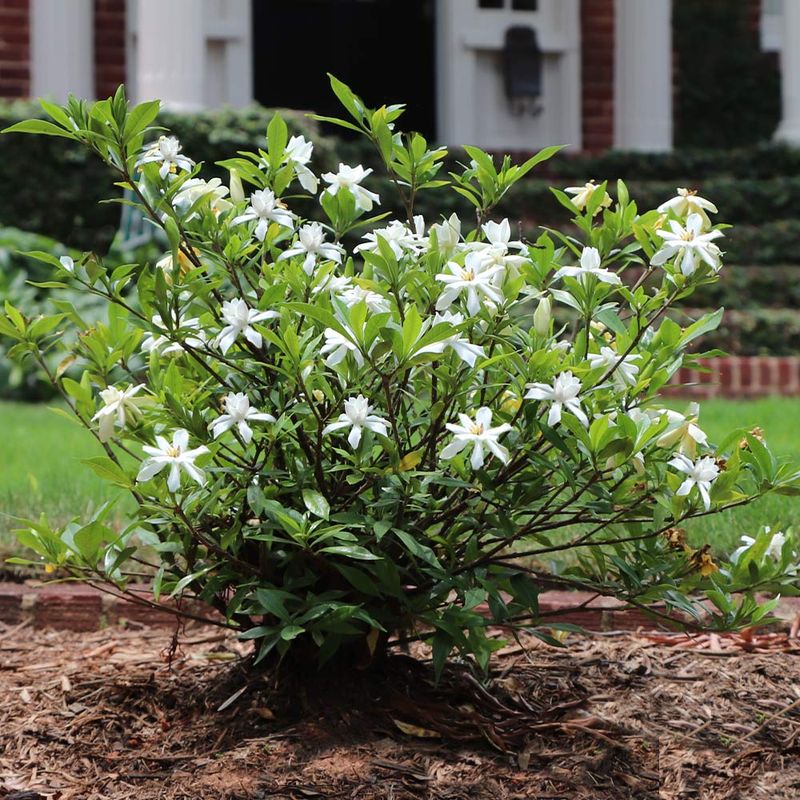
Pine straw spread a few inches deep around a gardenia shrub does more than just make the bed look tidy. Mulch acts as a buffer between the root zone and the intense August heat that bakes North Carolina gardens through much of the summer.
Without it, the soil heats up quickly, dries out faster, and becomes harder for roots to navigate comfortably.
A consistent layer of organic mulch, roughly two to three inches deep, helps slow evaporation so the soil holds moisture longer between waterings. This is especially helpful during dry spells when the days are hot and rainfall is unreliable.
Mulch also helps buffer the soil temperature, keeping roots cooler than they would be in bare, exposed ground.
Pine straw and pine bark are popular mulch choices for North Carolina gardenia beds partly because they break down slowly and can contribute to slightly more acidic soil conditions over time.
Gardenias prefer acidic soil, so using mulch materials that align with that preference makes good practical sense.
One thing to watch is mulch depth near the base of the shrub. Piling mulch directly against the stems can trap moisture against the bark and create conditions that invite problems.
Keeping a small gap between the mulch and the main stems of the gardenia helps the base stay dry while the root zone beneath the mulch stays evenly moist. Checking and refreshing mulch in August is a simple task with noticeable benefits.
5. Acidic Soil Supports Greener Leaves
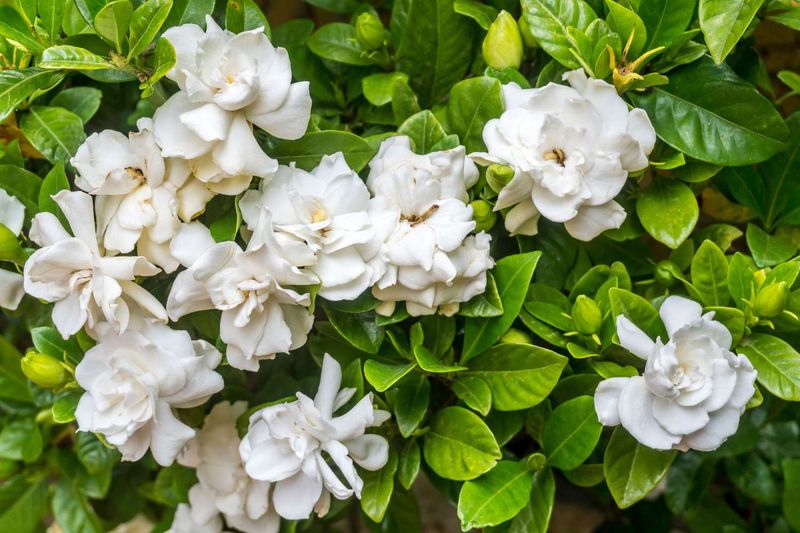
Soil pH has a direct effect on how well gardenias can absorb the nutrients they need to stay green.
Gardenias grow best in acidic soil, generally in the range of 5.0 to 6.0, and when the pH drifts higher than that range, the plant may struggle to take up certain nutrients even when those nutrients are present in the soil.
North Carolina soils vary quite a bit depending on the region and the history of the land. Some areas naturally have acidic soil that suits gardenias well, while others have soil that is closer to neutral or even slightly alkaline.
Gardenias planted near concrete foundations or sidewalks may be exposed to alkaline conditions caused by lime leaching from the concrete over time.
A basic soil test, available through North Carolina Cooperative Extension offices, can give a clear picture of current pH levels and help a gardener decide whether any adjustments are worth making.
Soil testing is a practical step that takes the guesswork out of diagnosing yellowing problems related to soil chemistry.
If soil pH is found to be higher than the preferred range for gardenias, elemental sulfur is sometimes used to gradually lower it. However, adjusting soil pH takes time and repeated applications, and it is not something that produces instant results.
Working on soil acidity as a long-term practice, rather than a quick fix, tends to produce more reliable outcomes for gardenias growing in North Carolina landscapes.
6. Yellow New Growth May Point To Iron Issues
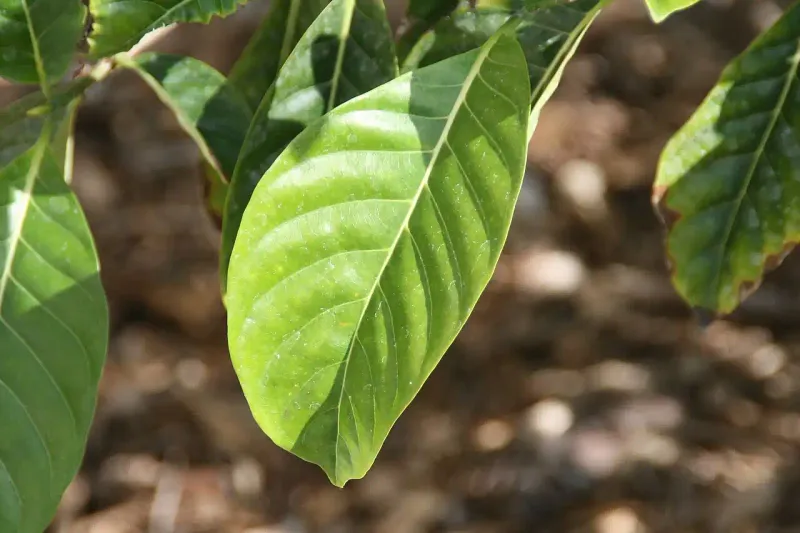
When the newest leaves on a gardenia come in yellow with the veins staying noticeably greener, that pattern has a specific name: interveinal chlorosis.
It is a visual clue that the plant may not be getting enough iron, and in most cases the problem is not that the soil lacks iron but that the iron present in the soil is not in a form the plant can absorb.
Iron availability is closely tied to soil pH. When soil becomes less acidic than gardenias prefer, iron tends to bind to soil particles in a way that makes it harder for roots to take it in.
The result is that yellowing pattern on new growth even when the gardener has not changed anything about their routine.
North Carolina gardeners sometimes notice this kind of yellowing after a particularly rainy August, when soil conditions shift or when lime has been applied nearby.
It can also appear in gardenias growing near concrete structures where alkaline conditions have gradually developed around the root zone over several seasons.
Foliar sprays containing chelated iron can sometimes help in the short term by delivering iron directly to the leaves. However, correcting the underlying soil pH issue is generally the more effective long-term approach.
Before applying any iron product, confirming the problem with a soil test helps avoid adding unnecessary amendments.
Yellow new growth with green veins is worth taking seriously because it signals a nutrient availability issue rather than a simple watering problem.
7. Check Soil Before Adding Fertilizer
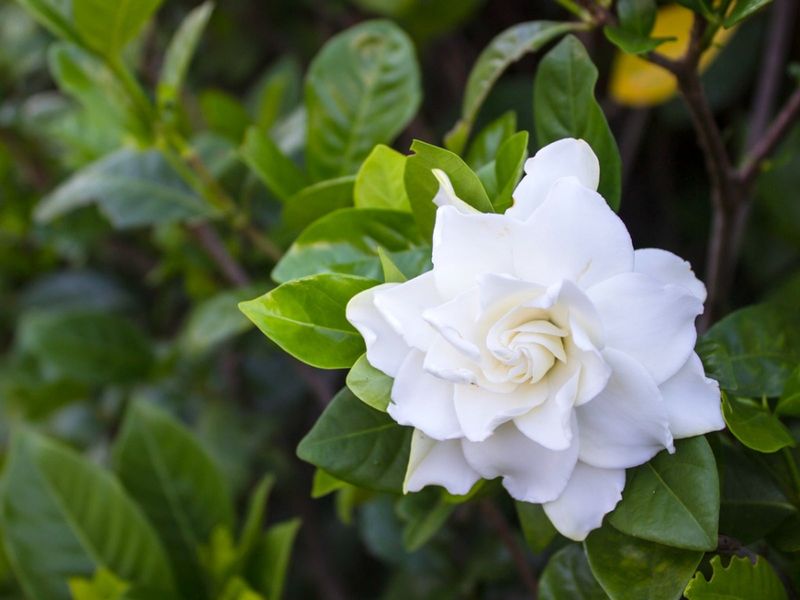
Reaching for fertilizer when gardenia leaves start turning yellow is a common instinct, but adding fertilizer without checking soil conditions first can sometimes make things worse rather than better.
Fertilizer applied to dry soil can sit without being taken up properly, and fertilizer applied to already stressed roots can add unnecessary pressure to a plant that is already struggling.
August is late in the growing season for gardenias in North Carolina.
Most recommendations suggest avoiding heavy fertilizer applications in late summer because pushing new growth at that time of year can leave tender shoots vulnerable when temperatures begin to drop in the fall.
Lighter applications earlier in summer are generally more appropriate for encouraging healthy growth.
Before deciding whether fertilizer is even the right step, checking soil moisture and soil pH gives a much clearer picture of what is actually going on. If yellowing is caused by dry soil, soggy roots, or a pH issue, fertilizer will not solve the problem and may complicate it.
Identifying the actual cause first leads to a more useful response.
If a gardener does choose to fertilize in early August, using an acidifying fertilizer formulated for acid-loving plants like gardenias, azaleas, or camellias is a reasonable option.
Watering the soil before and after applying fertilizer helps distribute it more evenly and reduces the chance of root irritation.
Reading the product label and following the recommended rates is always a sensible practice.
8. Even Moisture Helps Before Fall Arrives
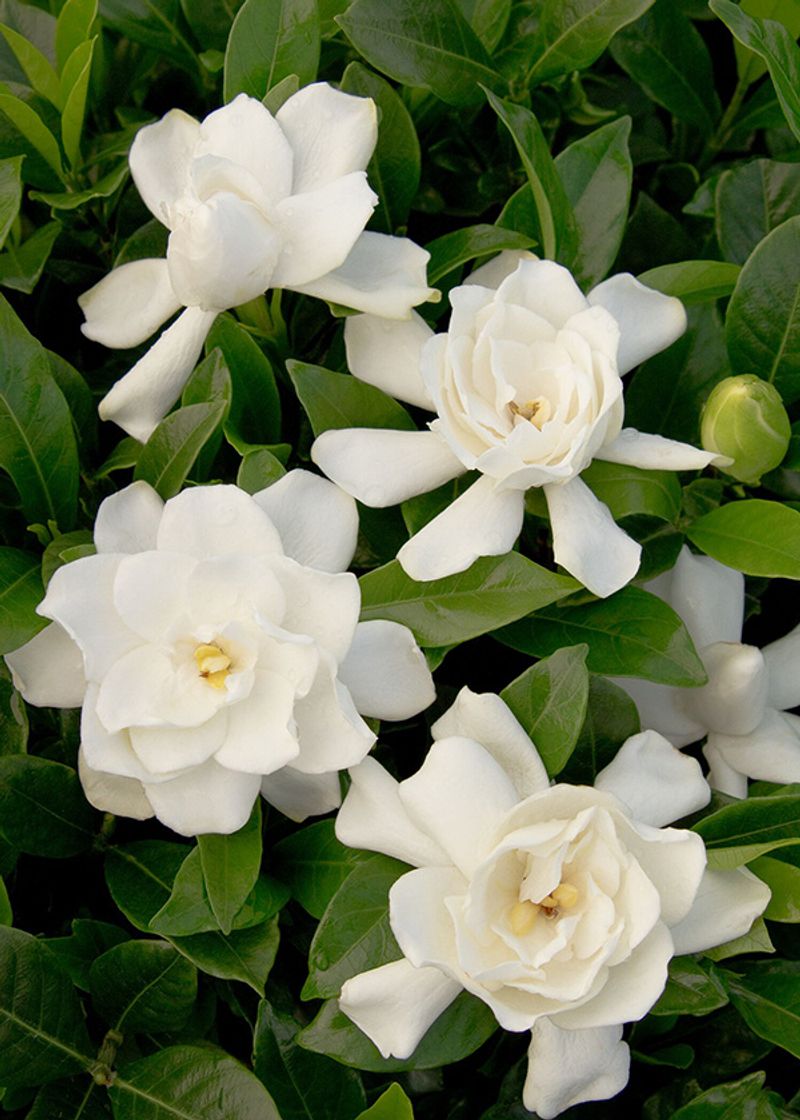
As August winds down and September begins to feel a little closer, gardenias in North Carolina benefit from consistent attention to soil moisture more than almost anything else.
The weeks between late August and early fall are when gardenias begin to slow their growth and prepare for cooler temperatures, and keeping the root zone evenly moist during that transition supports healthier foliage going into the season change.
Even moisture means the soil stays consistently damp but not saturated. Checking the root zone every few days rather than watering on a fixed schedule is one of the most practical habits a gardener can build.
Weather in North Carolina in late summer is unpredictable, and adjusting watering based on actual soil conditions rather than the calendar makes a real difference.
Gardenias that experience swings between dry and soggy conditions in August are more likely to show widespread yellowing in September.
Those yellow leaves can sometimes persist into fall, affecting the overall appearance of the shrub during a season when many North Carolina landscapes are otherwise looking their best.
Mulch, regular moisture checks, attention to soil pH, and restraint with late-season fertilizer all work together to give gardenias the best chance of holding their dark green color through the end of summer.
None of these steps require special tools or complicated techniques.
Consistent, thoughtful care through August sets gardenias up to enter fall in a much steadier condition than if the summer ends with neglect or guesswork.