What’s Really Behind The Browning St. Augustine Lawns In Florida This August
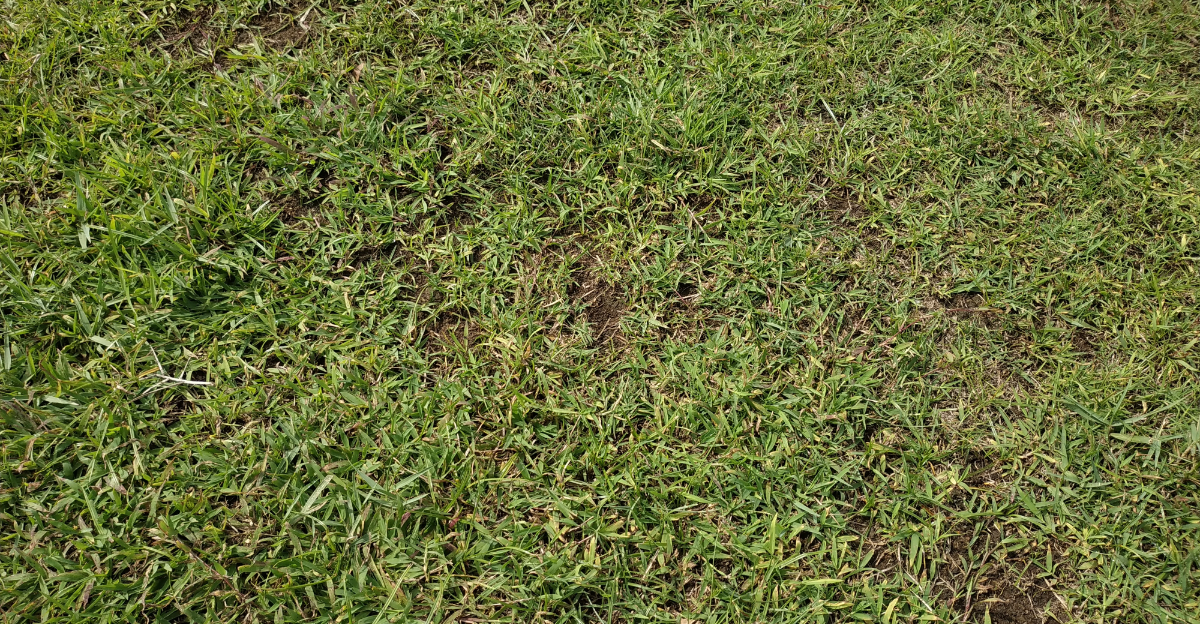
St. Augustine lawns across Florida are browning in August and the heat is taking all the blame. The heat is a factor.
It is rarely the whole story, and treating it as the whole story is exactly why the browning keeps coming back in the same spots every summer regardless of how much water gets applied. Brown St. Augustine in August is almost always a layered problem.
The heat revealed it. Something else created it, weeks or months earlier, in the soil or in the management decisions that seemed reasonable at the time.
Watering more into a lawn that is brown for the wrong reasons does not fix the underlying issue. It adds water on top of a problem that water was never going to solve.
What is actually behind the browning matters more than how much the lawn gets watered this week. August is the month that question finally deserves an honest answer.
1. The Brown Color May Be Starting On Individual Leaf Blades
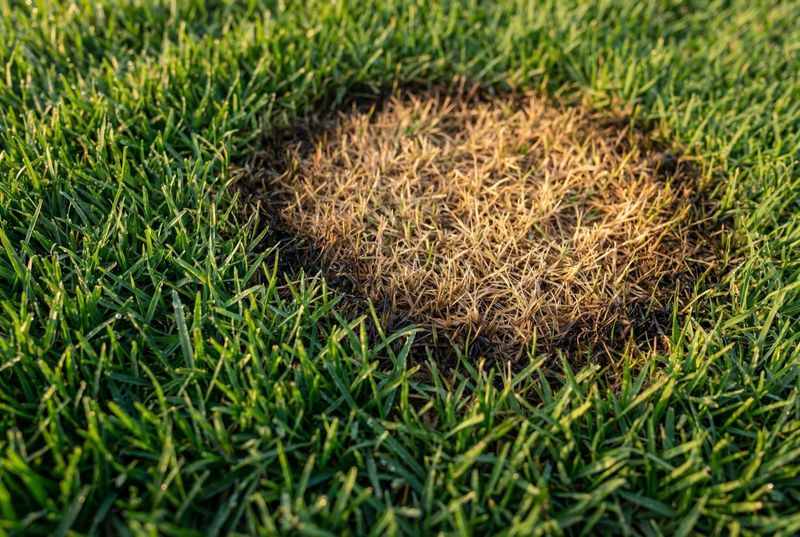
Before you call in a treatment, get close to the grass and look at single blades. Browning that starts at the leaf level is one of the earliest clues that gray leaf spot may be involved.
The pathogen that causes this disease on Stenotaphrum secundatum creates small, water-soaked spots that expand into oval or irregular lesions.
According to UF/IFAS turfgrass guidance, these lesions typically show tan-to-gray centers surrounded by darker brown or purple-brown borders. Multiple lesions can appear on one blade at the same time.
As more lesions form, they can merge together until most of the blade looks uniformly brown.
That merging effect is important to understand. A lawn with thousands of heavily spotted blades can look like one large, solid brown patch when you stand back at the street.
The individual spots get lost in the overall color shift.
Examining several blades taken from the edge of an affected area gives you better evidence than lawn color alone. Compare blades from the brown zone with green blades nearby.
Look for that characteristic oval shape and the two-toned lesion pattern. Not every spot on a blade means gray leaf spot is present, but finding consistent patterns across multiple blades from the same area is meaningful evidence worth noting.
2. Warm August Rain Gives Gray Leaf Spot Its Biggest Opening
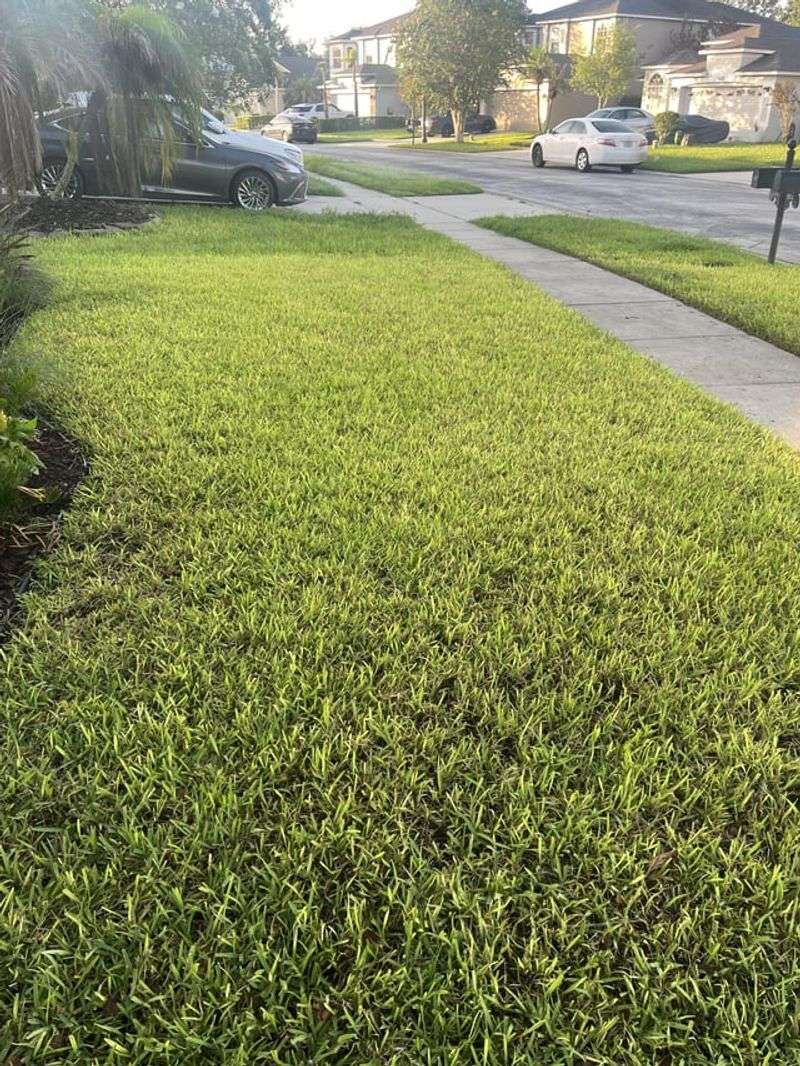
Rainfall itself does not create the pathogen behind gray leaf spot, but August weather in Florida can create conditions that strongly favor disease development.
UF/IFAS guidance points to three key conditions: warm temperatures, high humidity, and extended leaf wetness. Together, they allow this disease to develop and spread.
Repeated afternoon storms and humid overnight air can keep the turf canopy wet for many hours at a stretch. The grass never really dries out between one storm and the next.
That extended wetness on the leaf surface is what the pathogen needs to move from blade to blade.
The period from May through September is generally considered disease-favorable for gray leaf spot in warm-season turfgrass. Heat alone is not the real issue here.
Your Florida Garden Changes Every Week. Your Plan Should Too.
Gardening in Florida changes quickly throughout the season. Every Friday you’ll receive a simple weekly plan showing exactly what to plant, prune, fertilize, harvest, and protect so you never miss the right timing.
The combination of warmth and persistent moisture is what creates the problem, not 90-degree temperatures by themselves.
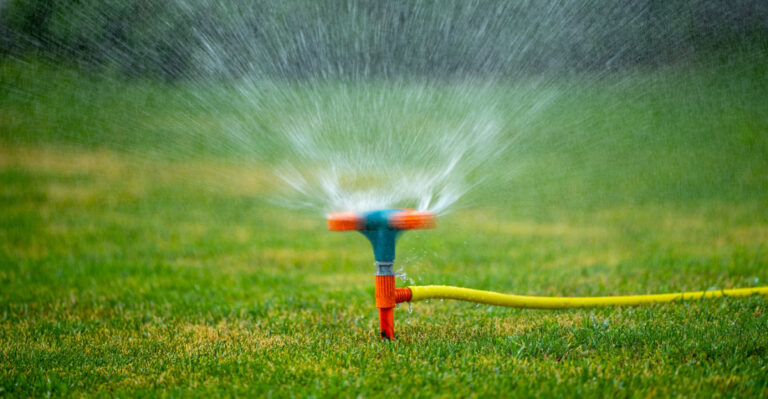
One factor homeowners can control is unnecessary irrigation after summer rainfall. Running a sprinkler system on a schedule without checking whether recent rain already provided enough moisture extends the wet period further.
That extra leaf wetness, added on top of what nature already delivered, can make a rainy August even more favorable for disease development than it would otherwise be. Checking rainfall totals before running the system is a simple habit worth building.
3. Tiny Lesions Can Spread Into A Lawn That Suddenly Looks Thin
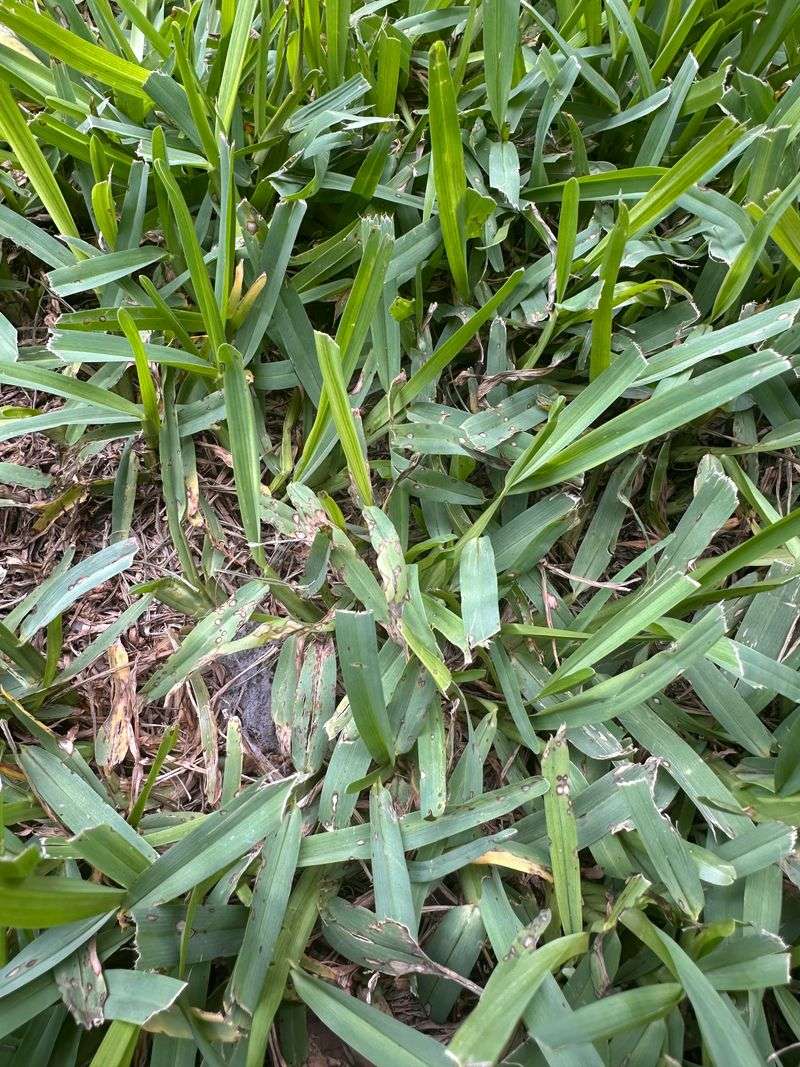
A single lesion on one blade is barely noticeable. The problem is that gray leaf spot does not stop at one blade or even one small cluster.
As the number of affected blades increases across a section of Florida lawn, the overall appearance of the turf begins to change in a way that can catch homeowners off guard.
Healthy green leaf tissue gets replaced by spotted, browning blades. The lawn starts to look thin and tired rather than lush and full.
From a distance, thinning and declining vigor can look a lot like drought stress. That often leads people to add more water when water is not the missing ingredient.
Gray leaf spot primarily attacks above-ground tissue rather than beginning in the roots. That detail matters because it separates this disease from root problems that show similar above-ground symptoms for very different reasons.
Comparing affected blades with healthy blades from nearby areas helps confirm whether the thinning matches a leaf-level disease pattern.
The speed of progression varies based on weather, turf health, and how long conditions stay favorable. Avoid assuming the worst will happen quickly, but also avoid waiting too long before investigating.
Catching the pattern early makes accurate identification much easier. Clear lesions on individual blades provide better clues than a section that has already browned out completely.
4. Fresh Lush Growth Can Be More Vulnerable Than Gardeners Expect
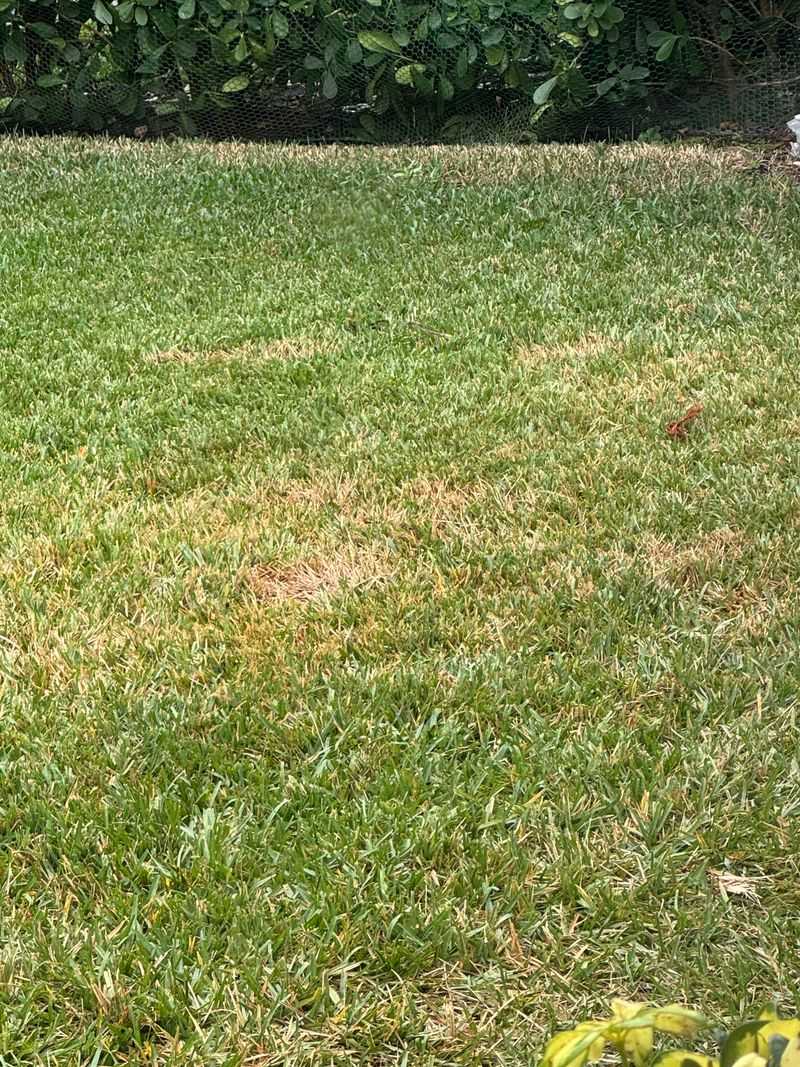
Soft, rapidly growing turf has less structural resistance to leaf-level disease than mature, steadily growing tissue. UF/IFAS guidance confirms that gray leaf spot develops more readily on lush, actively growing St. Augustine grass.
Newly established turf falls into this category almost automatically because young plants are still building their root systems and producing tender new blades.
Excessive nitrogen fertilization is another way Florida homeowners can accidentally push the grass into that vulnerable soft-growth state. Applying heavy nitrogen during warm, wet weather encourages fast, lush shoot growth that the pathogen finds easier to colonize.
That does not mean fertilizer directly causes the disease, because the pathogen still requires the right environmental conditions to develop.
The real risk is adding nitrogen when weather conditions already favor disease, which can amplify the problem. Seeing brown turf and reaching for a bag of quick-release nitrogen as a fix is a response worth reconsidering during August.
The grass may look hungry, but the browning might have nothing to do with a nutrient shortage.
Local fertilizer restrictions also apply in many Florida communities during the rainy season. Check your county or municipality rules before applying anything.
The general principle supported by UF/IFAS is that faster and greener is not always better when disease-favorable weather is already in place. Steady, appropriate growth is a more resilient target than maximum green speed.
5. Evening Irrigation Keeps The Leaves Wet At The Worst Time
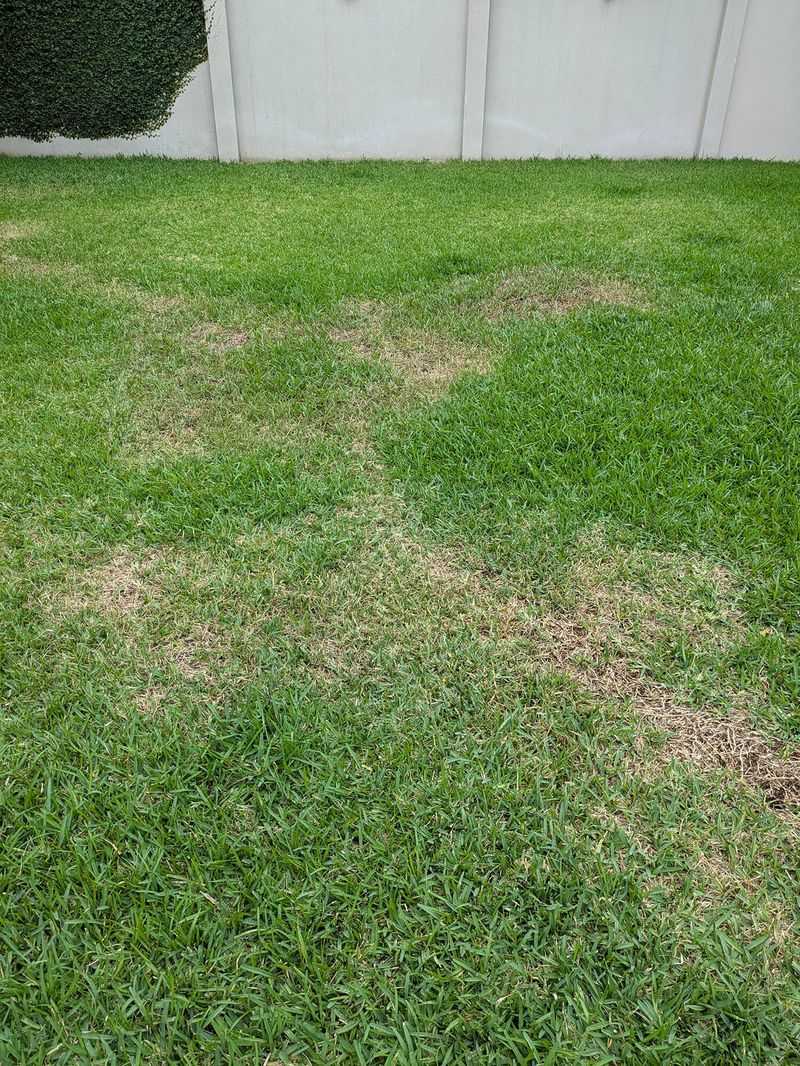
Irrigation timing matters more than most homeowners realize when it comes to managing leaf wetness.
Running sprinklers in the late afternoon or evening means the grass blades stay wet throughout the night, when temperatures drop and drying slows down considerably.
That overnight wetness on the leaf surface is exactly the condition that favors disease development.
UF/IFAS guidance recommends early-morning irrigation when supplemental watering is actually needed. Watering in the early morning allows the sun and rising temperatures to dry the turf canopy relatively quickly after the irrigation cycle ends.
The leaf surface spends far less time wet compared to an evening watering schedule.
Established turf should not be watered simply because the irrigation controller is programmed to run. Recent rainfall should be factored in before any additional water is applied.
Overriding the schedule after a rainy week is a straightforward habit that reduces unnecessary leaf wetness and saves water at the same time.
Short, frequent watering cycles create a separate problem by encouraging shallow root development. Roots follow moisture, and if water is only available near the surface, that is where roots tend to stay.
Deeper, less frequent irrigation when the turf actually needs it supports stronger root development. Managing water timing and volume is one of the most practical steps a homeowner can take before reaching for any chemical product.
6. Chinch Bugs Usually Tell A Hotter And Drier Story
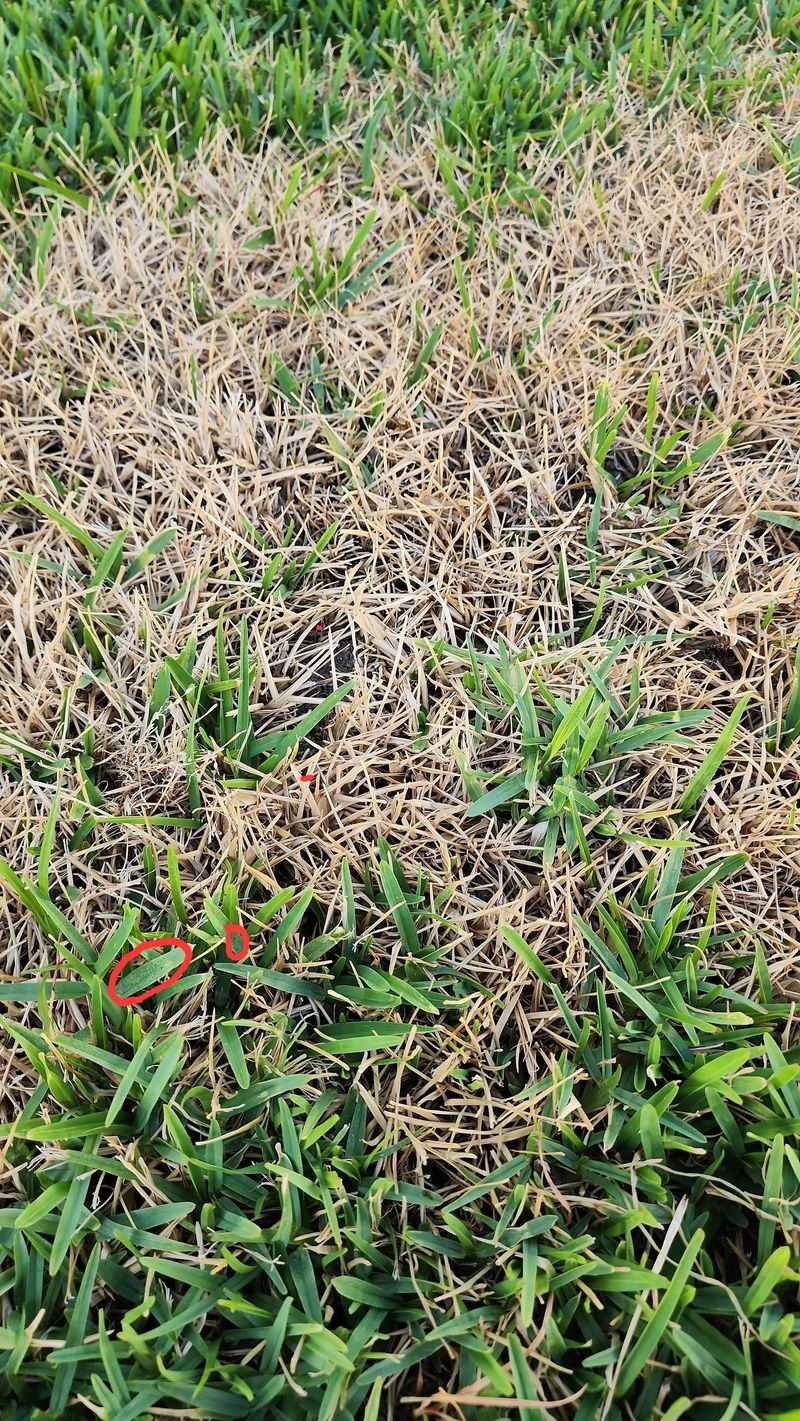
Not every brown patch on a St. Augustine lawn points back to a leaf disease. Southern chinch bugs create patches that can look superficially similar from a distance, but the story behind that damage is usually quite different.
These insects tend to show up first in the hottest, most water-stressed parts of the lawn.
Areas along sidewalks, driveways, building foundations, and other sun-baked edges are common starting points for chinch bug activity. The heat radiating from hard surfaces raises the local temperature and stresses the nearby turf.
Chinch bugs feed on grass by extracting plant fluids, and the affected area turns yellow and then brown as feeding continues.
UF/IFAS recommends a scouting method to confirm whether insects are actually present before assuming they are the cause. Press a bottomless coffee can into the soil at the edge of the damaged area and fill it with water.
Then watch for several minutes to see whether small insects float to the surface. Presence of insects in meaningful numbers supports an insect-related diagnosis.
Applying an insecticide to a lawn that is actually suffering from a fungal disease wastes effort and creates unnecessary pesticide exposure. The visual and environmental comparison matters here.
Leaf lesions with tan centers point toward disease. Damage concentrated along hot, sunny edges with confirmed insects present points toward chinch bugs.
Check before treating.
7. Take-All Root Rot Starts Below Ground Instead Of On The Blades
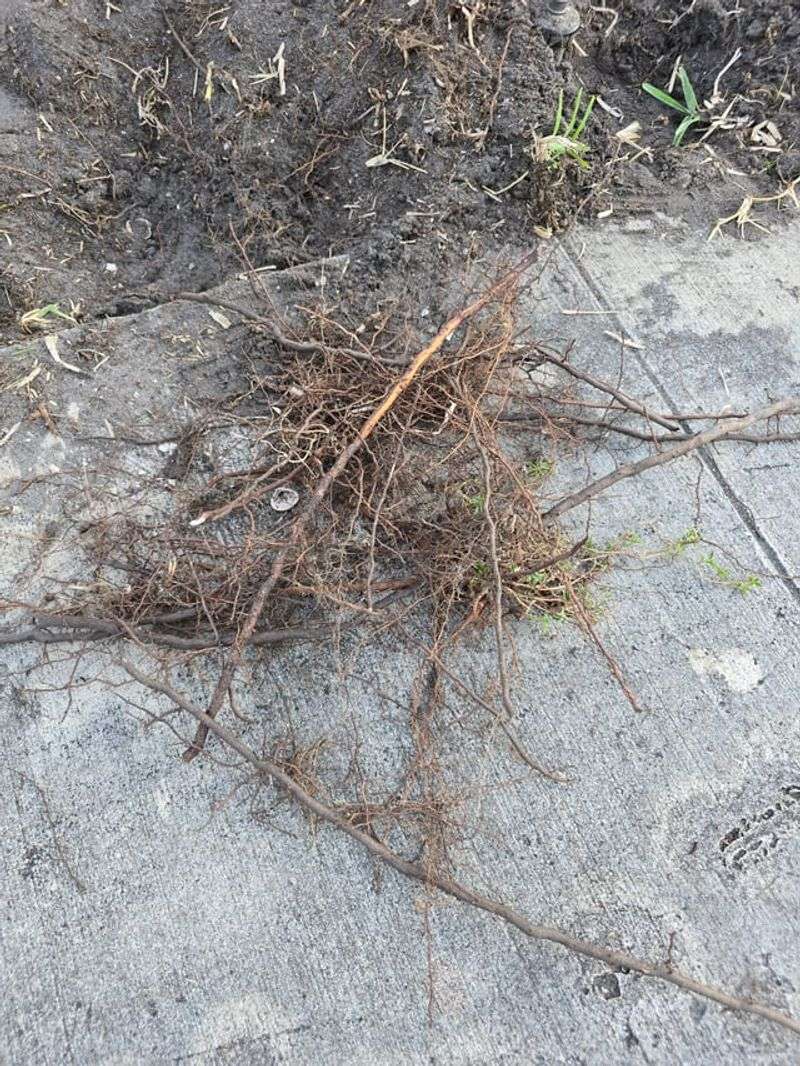
A yellow, weak section of lawn without the oval lesions of gray leaf spot may have a different problem. The issue could be happening underground rather than on the leaf surface.
Take-all root rot is a disease that begins in the root system, even though the above-ground symptoms can resemble other problems.
Prolonged wet conditions and turf stress can favor take-all development. UF/IFAS guidance describes a progression in which roots become short, darkened, and deteriorated as the disease advances.
Stolons can also show symptoms when the problem becomes more severe. Above-ground yellowing and thinning may not appear until the root problem has been active for some time.
Visible symptoms can therefore lag behind the actual damage.
That delay is an important reason not to diagnose this disease from yellow turf color alone. A patch that looks like drought stress or a nutrient problem from above may actually have compromised roots below.
Gently pulling on affected turf and examining the roots is the most direct way to investigate when the above-ground picture is unclear.
If roots are healthy and white, the problem is more likely above ground. If roots are short, dark, and fall apart easily, that changes the diagnostic direction entirely.
The blade-versus-root distinction is one of the most useful separations a homeowner can make before deciding on any course of action.
8. A Close Leaf Check Beats Treating Every Brown Patch The Same Way
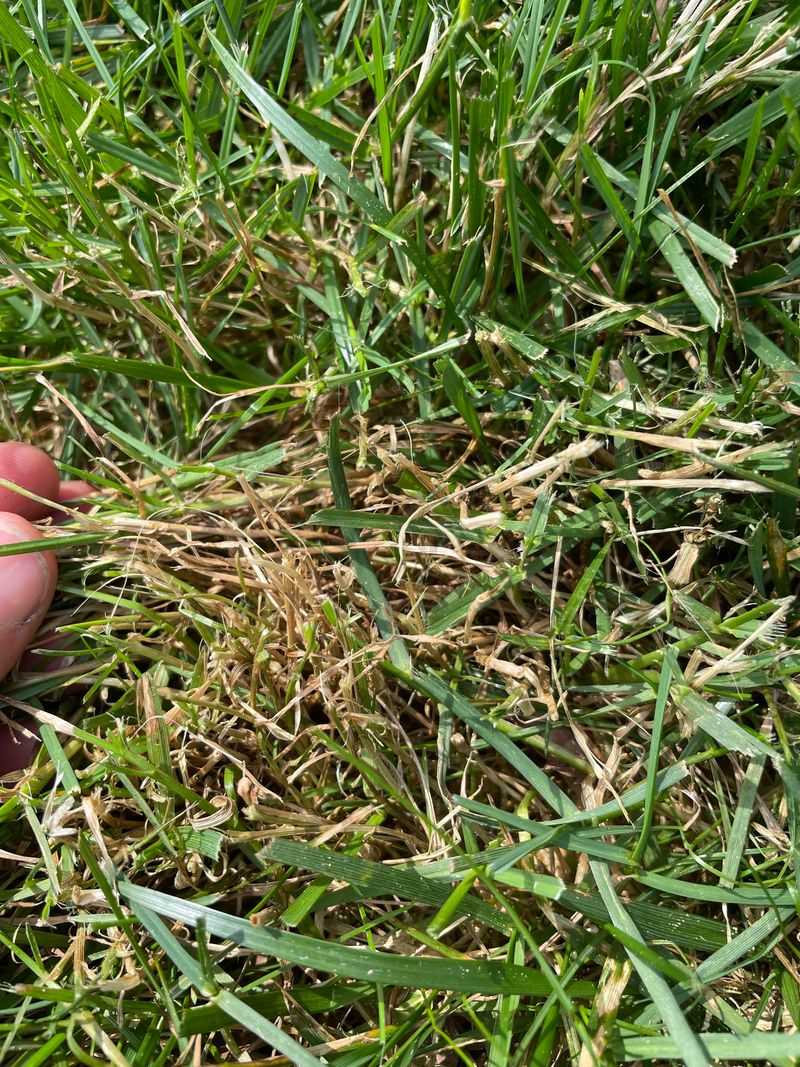
Brown St. Augustinegrass is a symptom, not a diagnosis. That single idea is the most practical takeaway from everything covered here.
Treating every brown patch the same way, with more water, more fertilizer, or the nearest pesticide, often makes the underlying problem worse rather than better.
A useful routine starts at the blade level. Pull several blades from the edge of the affected area and look for lesions.
Oval spots with tan-to-gray centers and darker borders suggest a leaf disease pattern worth investigating further. No lesions on the blades means the search should continue elsewhere.
Check soil moisture and recent rainfall before adding any water. Wet soil under brown turf points away from drought and toward disease or root problems.
When turf is yellowing and thinning without clear leaf spots, gently examine the roots. Short, dark, deteriorated roots shift the diagnostic direction toward a root disease rather than a leaf problem.
When damage concentrates along sunny, hot edges near pavement, scout for chinch bugs using the float method before reaching for an insecticide. Also consider mowing height, shade changes, compaction, and other physical stresses as contributing factors.
If a chemical treatment seems warranted after a confident diagnosis, verify the current product label and UF/IFAS recommendations before applying anything. Accurate identification first protects both the lawn and the effort you invest in caring for it.