What Those Brown Patches Spreading Across Your Georgia Lawn Really Mean
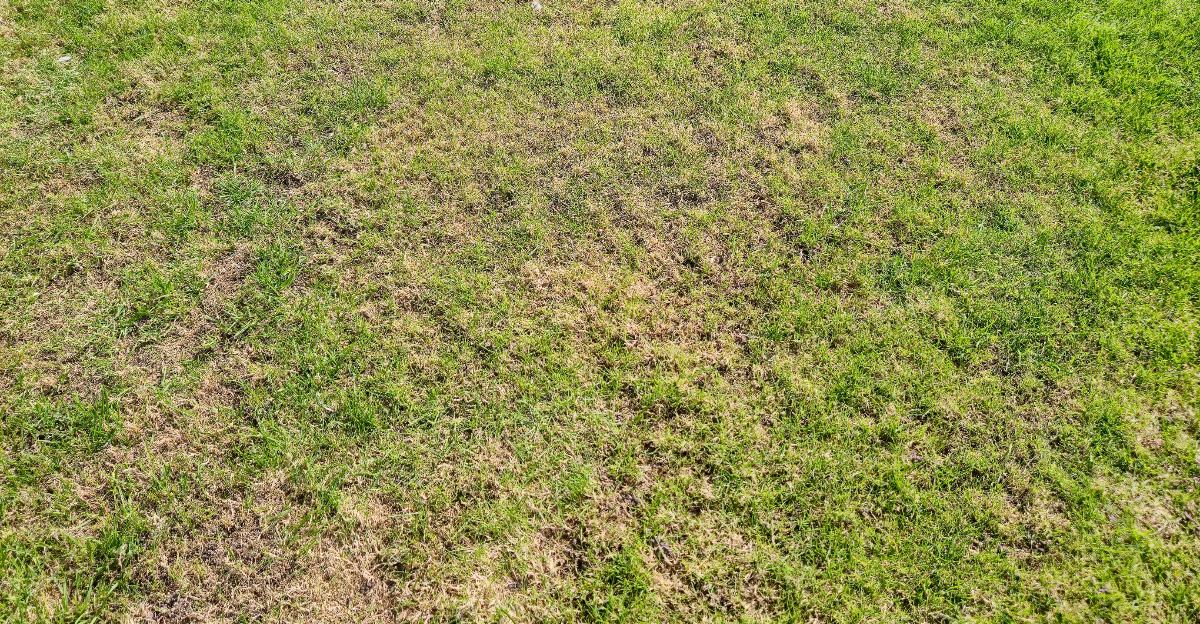
Brown patches showing up in a green lawn deserve more than a quick glance. Look closely before you assume the grass simply needs another round of water.
Several completely different lawn issues can create similar brown areas. That is exactly why treating the first thing that comes to mind can send you in the wrong direction.
Summer conditions in Georgia can make the clues even harder to read. Heat, moisture, insects, and lawn care habits can each leave their own marks behind.
Pay attention to where the discoloration begins and how quickly it changes. The pattern often tells you more than the color itself.
Your grass may be showing you exactly what is happening beneath the surface.
Take time to read those signs correctly, and you will have a much better idea of what your lawn actually needs next.
1. Brown Patch Fungus Thrives In Warm Humid Weather
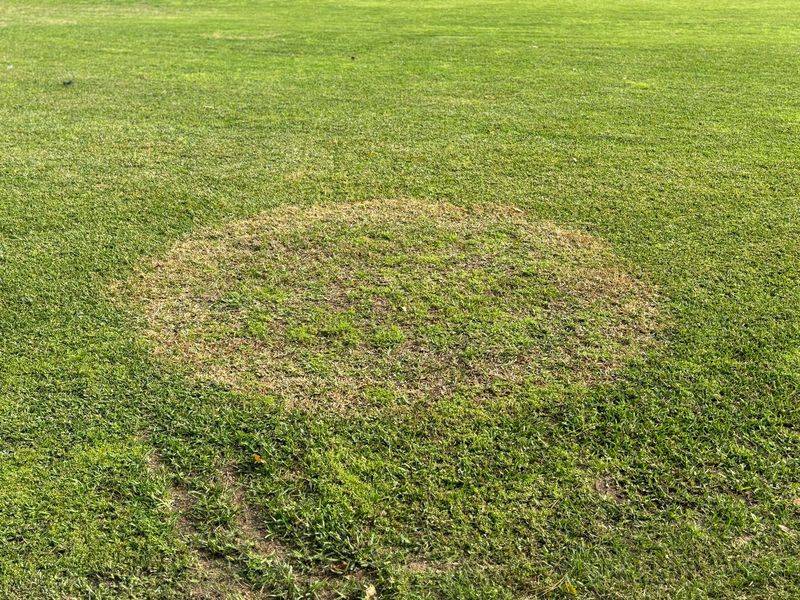
Fungus does not announce itself before spreading across your lawn. Brown patch fungus hits hardest when nighttime temperatures stay above 70 degrees and humidity stays high for several days in a row.
Warm, wet Georgia summers create near-perfect conditions for this fungus to spread fast.
Patches usually start small and circular, then expand outward. You might notice a darker, water-soaked ring around the edge of each patch in the early morning.
That ring is a sign the fungus is still actively spreading.
Fescue and ryegrass are especially vulnerable, though zoysia and bermuda can also be affected under the right conditions. Fungus tends to move faster in lawns that get watered late in the evening, since the grass stays wet overnight.
Switching your watering schedule to early morning can help reduce moisture on the blades at night. Avoid applying heavy nitrogen fertilizer during hot, humid stretches, since lush growth tends to be more susceptible to fungal infections.
Fungicide treatments can slow the spread, but results vary depending on how early you catch it and what product you use.
A local cooperative extension office can help identify the exact fungal strain and recommend appropriate treatment options for your specific turf type.
2. Chinch Bugs Can Damage Sunny Parts Of The Lawn
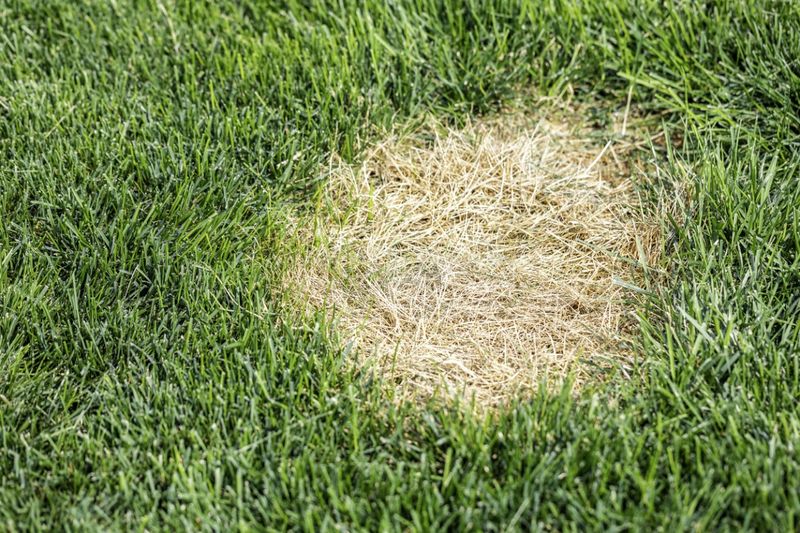
Hot, dry patches in the sunniest corners of your yard might not be drought stress at all. Chinch bugs are tiny insects that feed on grass by sucking out plant fluids, leaving behind yellow and brown patches that look a lot like heat damage.
St. Augustine grass is a common target, though other warm-season grasses can also be affected. Chinch bugs tend to cluster in areas with full sun exposure and thatch buildup, which gives them shelter while they feed.
Spotting them takes a close look. Part the grass near the edge of a damaged patch and look for tiny reddish or black insects moving through the thatch layer.
A simple water float test can also help confirm their presence.
Thatch buildup is one of the main reasons chinch bug populations grow out of control. Dethatching regularly and avoiding overwatering can make the lawn less hospitable to them over time.
Your Georgia Garden Changes Every Week. Your Plan Should Too.
Gardening in Georgia changes quickly throughout the season. Every Friday you’ll receive a simple weekly plan showing exactly what to plant, prune, fertilize, harvest, and protect so you never miss the right timing.
Insecticide treatments are available, but proper timing and product selection matter. Applying the wrong product or treating at the wrong life stage may reduce effectiveness.
Contact a local lawn care professional or extension service to confirm identification before treating, since misdiagnosis can lead to repeated applications without results.
3. Drought Stress Appears When Soil Stays Too Dry
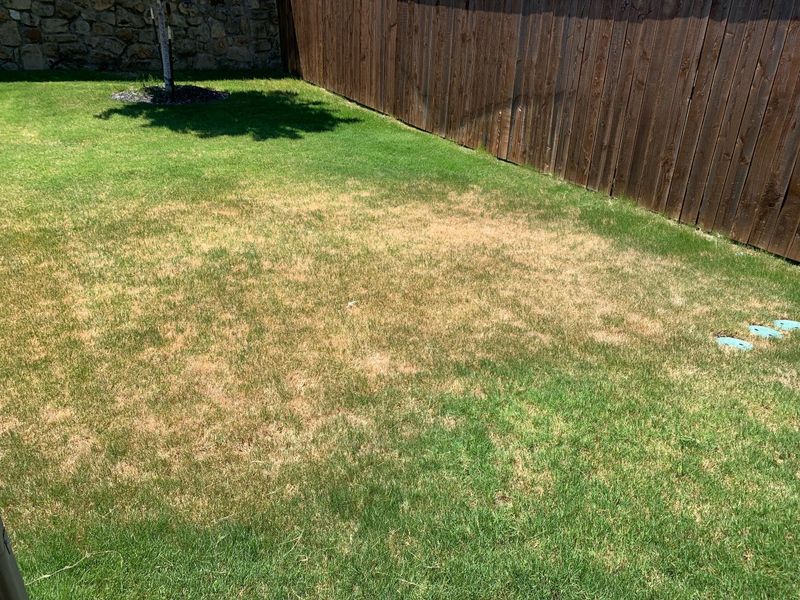
Grass does not need to look completely brown to be drought stressed. One of the earliest signs is footprints that stay pressed into the turf instead of bouncing back.
That slow recovery means the grass blades have lost enough moisture to go limp.
Drought stress tends to spread evenly across a lawn rather than showing up in irregular circles or clusters.
South-facing slopes and areas near pavement or concrete tend to dry out faster than shaded spots, so they often show symptoms first.
Sandy soils, which are common in parts of Georgia, drain quickly and hold less water than clay-heavy soils. Lawns on sandy ground may show drought stress even after a recent rainfall if the water moved through the soil too fast for roots to absorb it.
Watering deeply and less frequently encourages roots to grow deeper into the soil, which helps the grass handle dry spells better over time. Shallow, frequent watering keeps roots near the surface where they dry out quickly.
Checking soil moisture before watering is more reliable than following a fixed schedule. A simple soil probe or screwdriver test can tell you whether the soil is actually dry below the surface before you run the sprinklers again.
4. Excess Water Weakens Turf During Rainy Summer Weeks
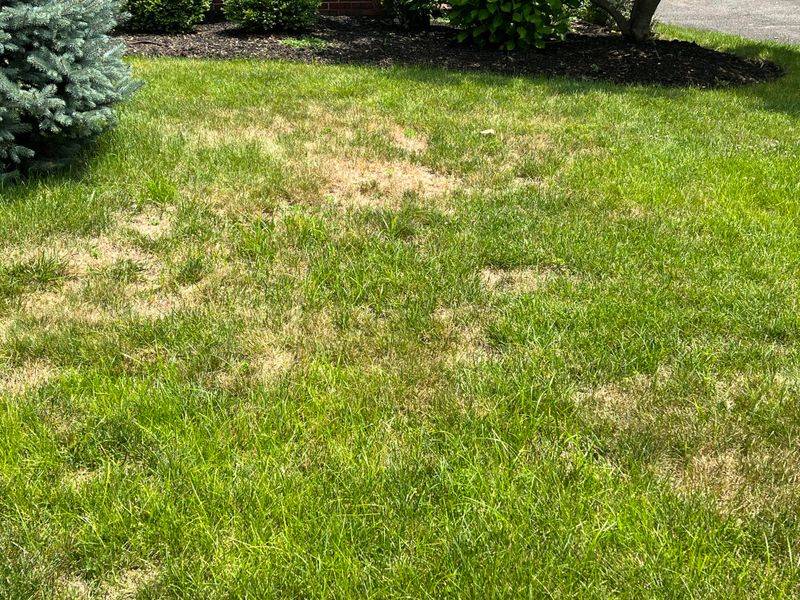
Too much water is just as damaging as too little, and overwatered lawns often look worse than expected. Grass roots need oxygen to function, and waterlogged soil pushes air out of the spaces between soil particles.
Roots sitting in saturated ground become weak and more prone to rot.
During heavy summer rain stretches, running irrigation on top of natural rainfall creates a serious problem. Soggy conditions weaken the turf’s ability to resist fungal infections, insect pressure, and compaction from foot traffic.
Overwatered patches often look yellowish before turning brown. The soil may feel spongy underfoot, and you might notice an unpleasant smell coming from the ground, which can signal root decay from anaerobic conditions.
Cutting back on irrigation during and after extended rainy periods is one of the simplest adjustments you can make. Smart irrigation controllers with rain sensors can help prevent unnecessary watering during wet weather.
Aerating compacted soil helps water move downward more efficiently instead of pooling near the surface. Core aeration is most effective in the fall for cool-season grasses and late spring for warm-season varieties.
Pairing aeration with organic matter amendments can gradually improve how well your soil manages excess moisture over multiple seasons.
5. Poor Drainage Leaves Roots Sitting In Wet Ground
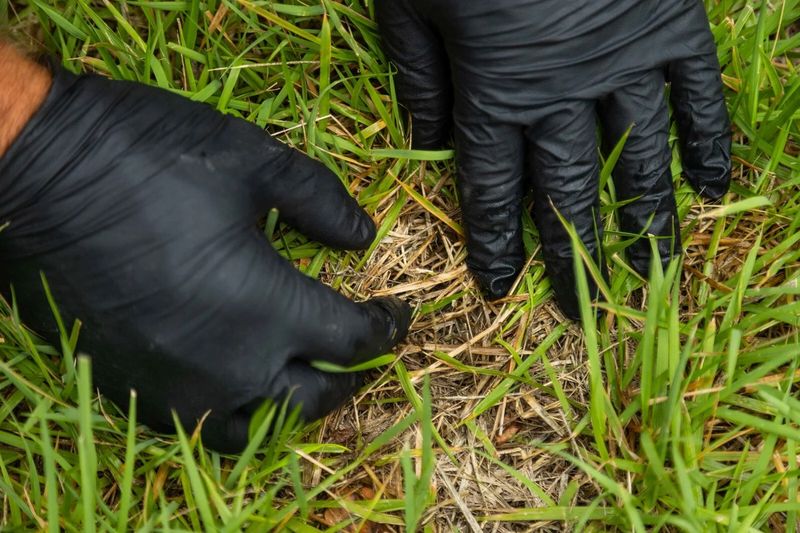
Standing water that lingers for hours after a rainstorm is a clear sign that drainage is not working properly. Poor drainage is not just an inconvenience.
It creates conditions where roots sit in wet ground long enough to weaken significantly.
Low spots in the yard, clay-heavy soil, and compacted ground are the most common causes of poor drainage. Water collects in these areas and stays put, slowly stressing the turf above it.
Grass in these zones often turns brown in irregular, low-lying shapes rather than neat circles.
Clay soils hold water much longer than sandy or loamy soils. In areas where clay dominates the soil profile, even moderate rainfall can create drainage problems that take days to resolve on their own.
Regrading low spots is one long-term fix, though it requires some effort and planning. Topdressing with compost over time can also help improve the soil structure in affected areas, making it easier for water to move through.
French drains are another option for yards with persistent drainage issues. A properly installed French drain redirects water away from problem areas and toward a better outlet.
Before adding any drainage system, it helps to map where water collects after heavy rain so you can target the right spots effectively.
6. Mowing Too Short Makes Heat Damage More Likely
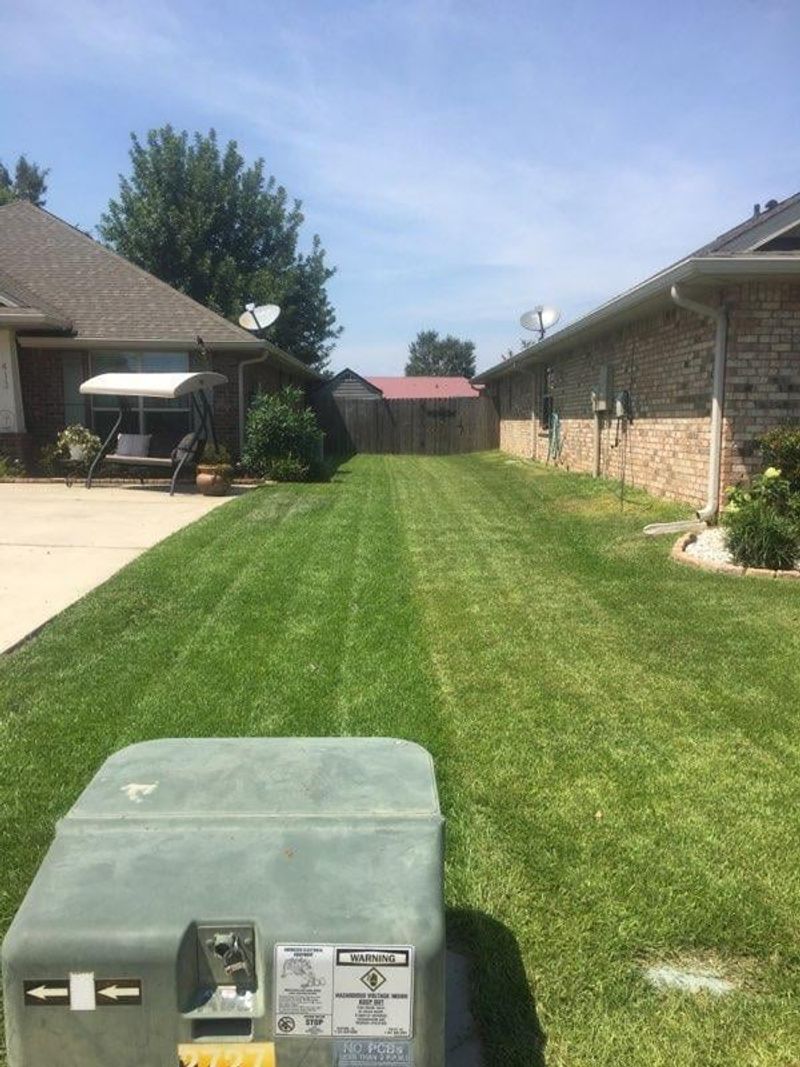
Cutting grass too short is one of the most common lawn mistakes, and the damage shows up fast during hot weather. Scalped turf loses its ability to shade the soil below it, which lets surface temperatures climb quickly.
Exposed soil dries out faster and stresses the root system from below.
Most warm-season grasses in Georgia do best when kept at a height between two and four inches, depending on the variety. Bermuda can tolerate shorter cuts, while zoysia and St. Augustine generally prefer to stay a bit taller during peak summer heat.
Cutting more than one-third of the blade length at once puts the grass under immediate stress. If you let the lawn get tall and then cut it back hard in one session, the sudden reduction shocks the plant and slows recovery.
Dull mower blades make things worse by tearing grass instead of cutting it cleanly. Torn blades dry out faster at the tips and turn brown more quickly than cleanly cut ones.
Sharpening your blades at least once per season can make a noticeable difference in how the lawn looks and recovers after mowing.
Raising your mower deck during the hottest weeks of summer is a simple adjustment that can reduce heat stress noticeably. Taller grass keeps soil cooler and retains moisture better between watering sessions.
7. Grubs Feeding Belowground Can Create Irregular Patches
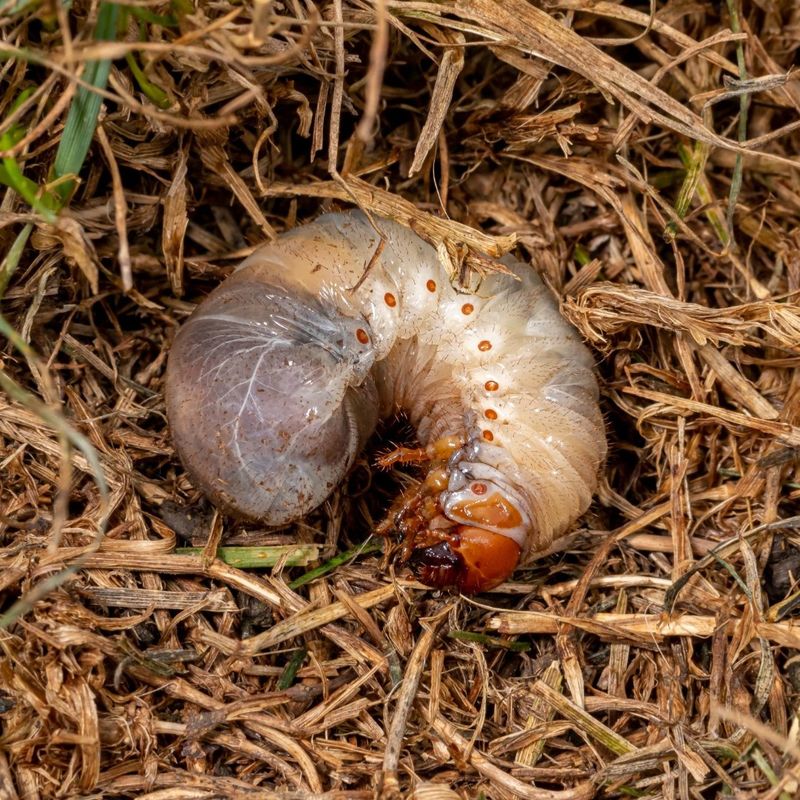
Grubs work quietly underground, and by the time you notice the damage above the surface, they have often been feeding for weeks. White grubs are the larvae of beetles like Japanese beetles and June beetles, both of which are common in the Southeast.
Grub damage shows up as irregular brown patches that do not follow any pattern. One of the clearest signs is turf that peels back like a loose carpet, since grubs sever the roots just below the surface.
Skunks and birds digging into the lawn overnight can also signal a grub problem below.
Grub populations tend to peak in late summer, which lines up with when many homeowners start noticing unexplained brown patches. A quick check involves cutting a one-square-foot section of sod and counting how many grubs are present.
Finding more than a handful per square foot may justify treatment.
Timing matters a lot with grub control. Preventive treatments applied in late spring or early summer tend to work better than curative treatments applied after damage is already visible.
Curative options exist but may be less reliable once grubs are larger and deeper in the soil.
Beneficial nematodes offer a lower-impact option that some homeowners use as part of an integrated approach. Results can vary based on soil conditions, moisture, and application timing, so realistic expectations are important.