Georgia Native Plants That Cover The Dry Bare Strip Along Foundations Without Any Extra Watering
Foundation strips are basically the problem child of the Georgia garden, and they look so unassuming before you actually try to grow something in them.
Roof overhangs block most of the natural rainfall, brick and concrete walls reflect serious heat back onto plants all afternoon, and the clay soil that shows up in a lot of Georgia yards bakes into something resembling pavement by midsummer.
Most plants take one season in those conditions and quietly give up. Native plants are a different story.
Georgia has a solid collection of tough, well-adapted natives that can handle dry foundation edges, reflected heat, and inconsistent moisture once they get properly established.
Pick the right one for your light conditions and soil type and that tricky strip can actually start looking like an intentional part of the landscape.
1. Pennsylvania Sedge Covers Dry Shade Near Foundations
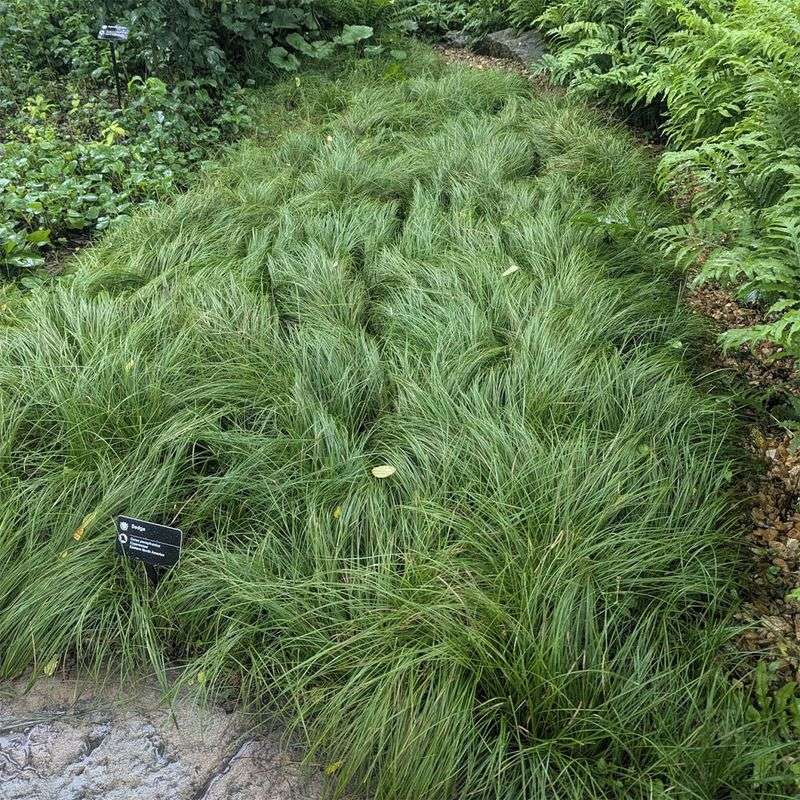
Shaded foundation strips that stay bone-dry under roof overhangs are notoriously hard to plant, and Pennsylvania sedge is one of the few natives that can genuinely settle into those conditions.
This low-growing sedge forms soft, arching clumps of fine-textured green foliage that stay relatively tidy along narrow beds.
It spreads slowly through rhizomes, gradually filling in gaps without becoming aggressive or overwhelming neighboring plants.
In Georgia landscapes, Pennsylvania sedge tends to perform well on the north and east sides of homes where shade is consistent and the soil does not bake in direct afternoon sun.
It can handle dry shade better than many ornamental grasses, making it a practical choice for spots where little else wants to grow.
The foliage stays semi-evergreen through winters, which means it provides year-round ground coverage in most parts of the state.
Homeowners should plan to water new plants regularly during the first season while roots establish. Once settled in, established clumps can manage extended dry stretches fairly well, especially under shade where soil moisture evaporates more slowly.
Spacing plants about twelve to eighteen inches apart gives each clump room to spread without crowding.
Pennsylvania sedge works especially well massed along foundation edges beneath deciduous trees or in the dry shade created by wide eaves on Georgia homes with mature tree canopy nearby.
2. Moss Phlox Mats Over Sunny Dry Strips
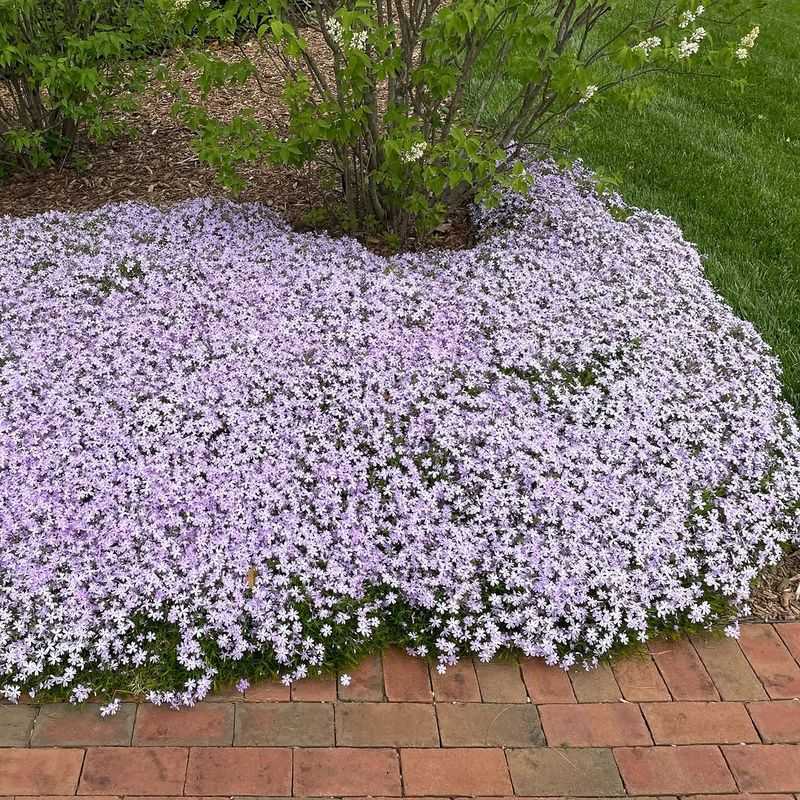
Few sights in a Georgia spring garden match the cheerful color of moss phlox blanketing a dry sunny strip in a wave of pink, white, or lavender blooms.
This low-growing native spreads into a tight, evergreen mat that hugs the soil closely, rarely reaching more than six inches tall.
That compact habit makes it well-suited for narrow foundation strips where upright plants would look awkward or block window views.
Sunny south-facing and west-facing foundation beds tend to collect reflected heat from brick or concrete walls, creating conditions that would stress many plants.
Moss phlox handles that reflected warmth reasonably well once established, especially when planted in well-drained soil that does not hold standing water after rain.
Georgia’s clay soils may need some amendment with coarse sand or grit to improve drainage before planting, since moss phlox strongly dislikes sitting in wet, compacted ground.
Your Georgia Garden Changes Every Week. Your Plan Should Too.
Gardening in Georgia changes quickly throughout the season. Every Friday you’ll receive a simple weekly plan showing exactly what to plant, prune, fertilize, harvest, and protect so you never miss the right timing.
The blooms appear in early spring and attract early pollinators, adding seasonal interest to what might otherwise be a plain stretch of mulched soil.
After flowering, the foliage remains dense and green through summer and fall, continuing to suppress weeds and cover bare soil.
New plants benefit from consistent watering during the first growing season.
Once roots are established, moss phlox can manage dry spells with minimal intervention, making it a rewarding choice for Georgia’s warm, often unpredictable summers along sunny foundation edges.
3. Bird’s Foot Violet Brightens Well-Drained Edges
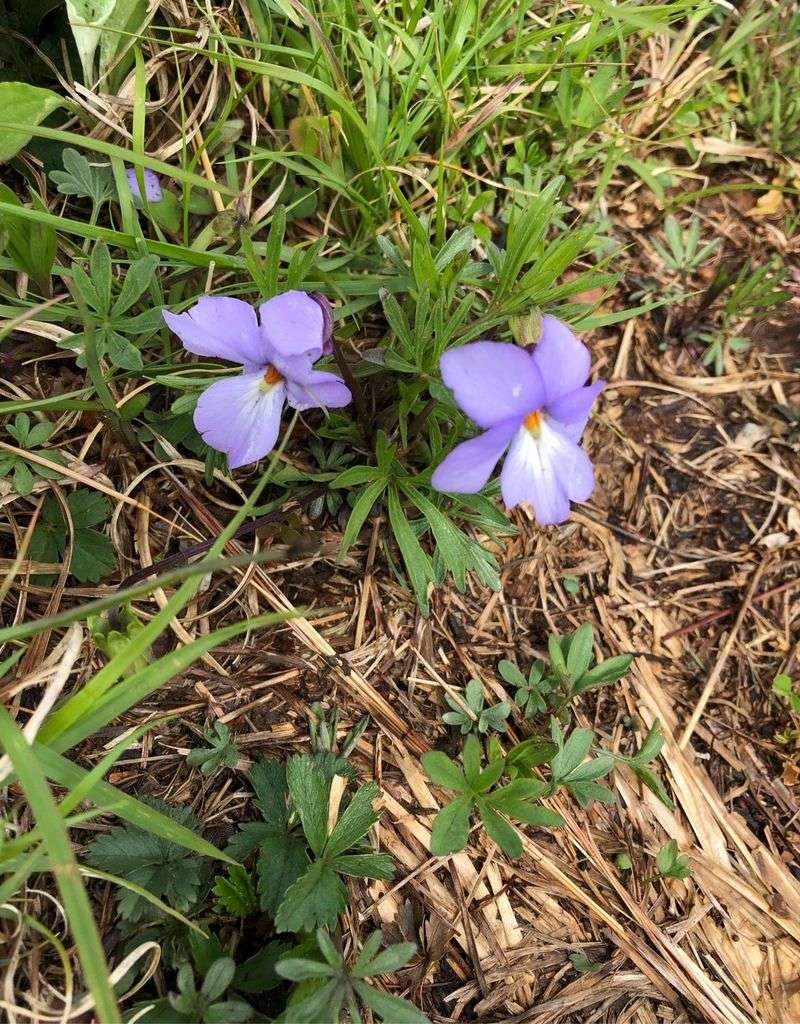
Tucked along a dry foundation edge with fast-draining soil, bird’s foot violet can surprise homeowners with its deep purple blooms and finely divided foliage that earned it such a distinctive name.
The leaves are cut into narrow segments that look almost feathery, giving the plant a delicate texture even when it is not in bloom.
It tends to grow in loose rosettes that spread gradually without forming a dense carpet, so it works best when mixed with other low-growing natives that fill the gaps between plants.
In Georgia, bird’s foot violet is found naturally along roadsides, open woods, and dry sandy or rocky sites, which gives a useful hint about where it performs best in home landscapes.
Foundation strips with sandy or amended soil and good drainage suit it far better than heavy clay that stays wet after rain.
South-facing or west-facing beds with full sun exposure mirror the open, dry habitats where this violet thrives in the wild.
Blooms appear in spring, typically in shades of violet-purple, and the plant goes relatively quiet through summer heat, though the foliage remains.
Some homeowners find that bird’s foot violet self-seeds lightly into nearby areas, which can help fill sparse spots over time.
Watering during the establishment period is helpful, but once roots settle into well-drained Georgia soil, the plant manages dry stretches with little extra attention. It pairs well with moss phlox or little bluestem in sunny foundation beds.
4. Robin’s Plantain Spreads Through Mixed Light
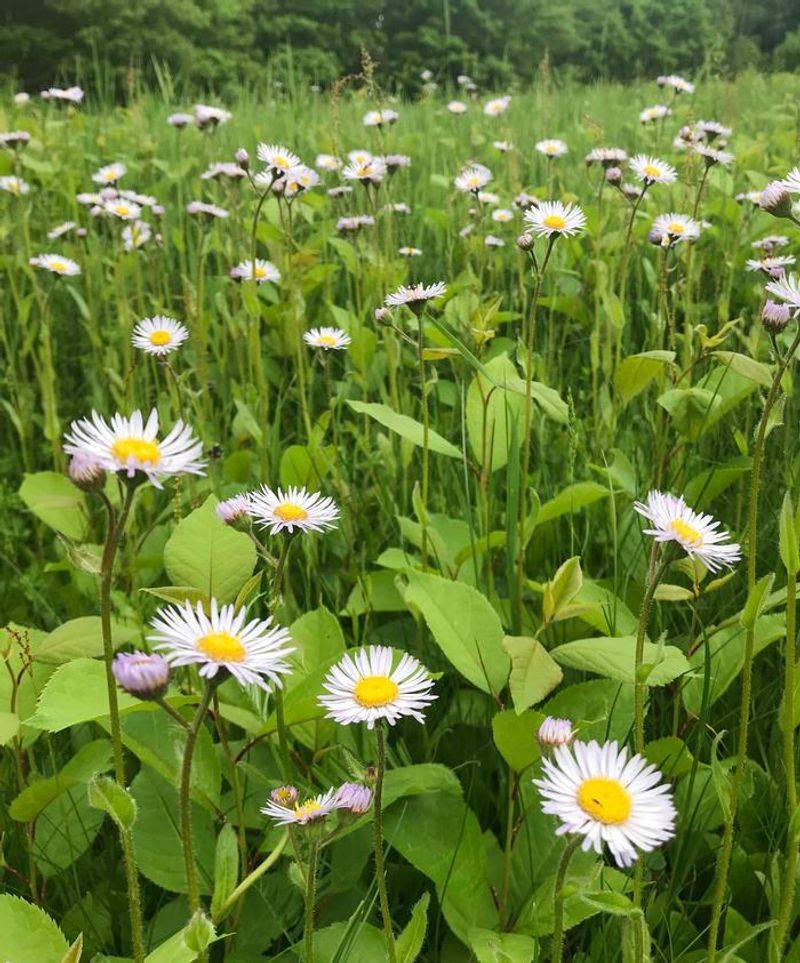
Along foundation strips that receive a mix of morning sun and afternoon shade, robin’s plantain brings a relaxed, meadow-like quality that feels right at home in naturalistic Georgia gardens.
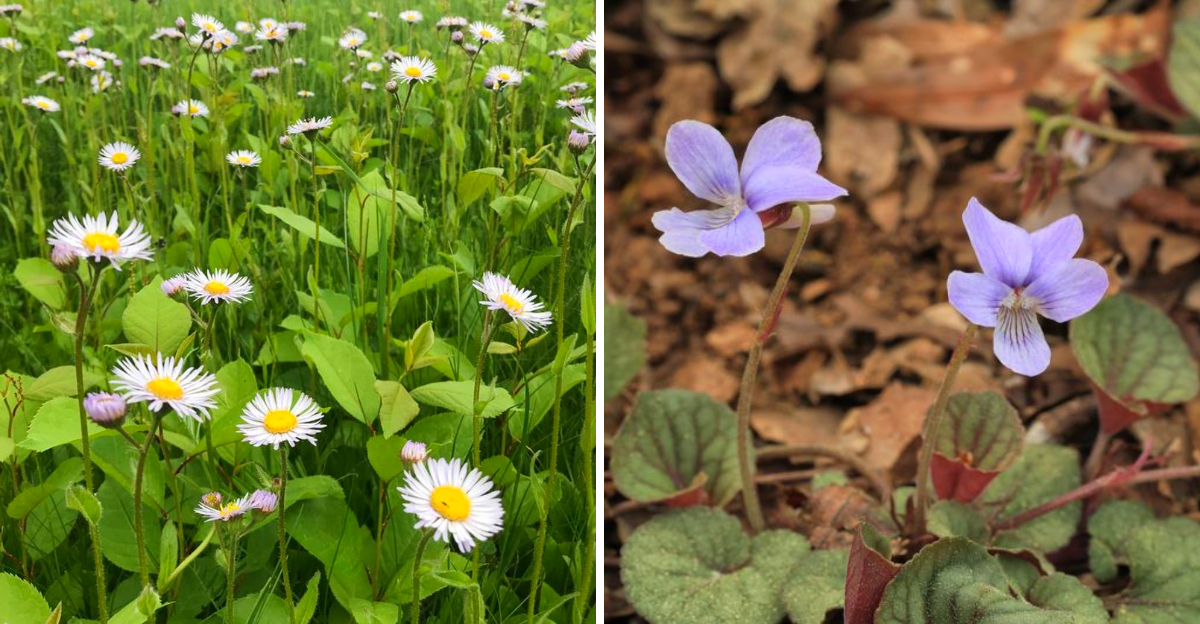
The plant produces soft, daisy-like flowers with pale lavender or white petals surrounding a yellow center, and it blooms in late spring to early summer when many other foundation plants are just warming up.
The foliage forms low rosettes that spread by stolons, gradually covering ground without becoming pushy.
Robin’s plantain tends to do well in Georgia on the east sides of homes where morning light is available but the hottest afternoon sun is blocked by the house itself.
It tolerates a range of soil conditions from moderately dry to slightly moist, which gives it flexibility in foundation beds where drainage can vary depending on how close the planting strip sits to a downspout or slope.
Avoiding spots with standing water after heavy rains will help it settle in more successfully.
As it spreads, robin’s plantain creates a soft, informal mat of foliage that suppresses some weeds and covers bare soil between blooming periods.
It is not a tight, uniform ground cover, so pairing it with sedges or other low natives can create a fuller look along foundation edges.
Regular watering during the first season encourages strong root development.
After establishment, the plant handles dry summer stretches reasonably well, especially in partially shaded foundation beds where soil moisture lasts longer between rains.
5. Hairy Elephant’s-Foot Fills Naturalized Dry Spots
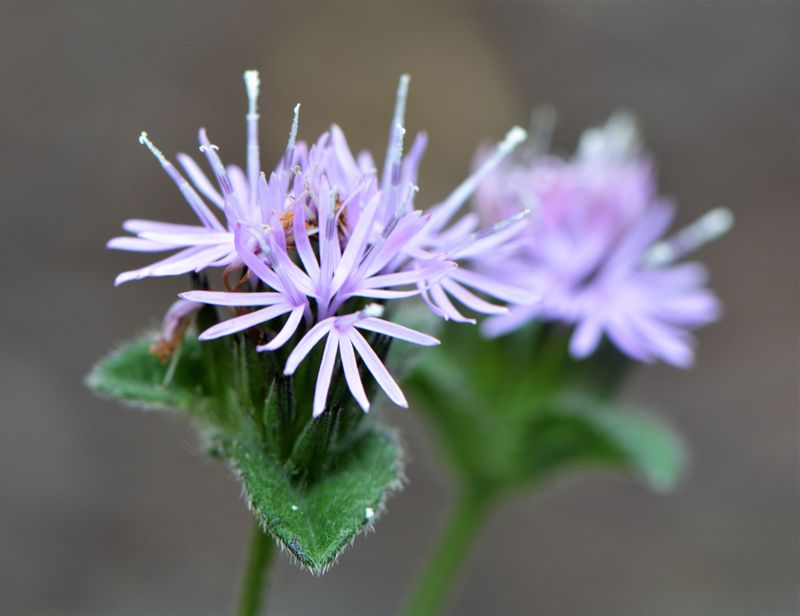
Rough, textured, and full of personality, hairy elephant’s-foot is not the most glamorous native on this list, but it earns its place in dry foundation spots that other plants simply give up on.
The large, deeply veined basal leaves lay close to the ground in a wide rosette that shades the soil beneath it, reducing moisture loss and suppressing weed growth.
Small purplish flower heads appear on branching stems in late summer and early fall, offering a modest but cheerful seasonal display.
Georgia’s open woodlands, roadsides, and dry upland sites are natural habitats for this plant, and those conditions translate well to foundation strips with compacted or clay-heavy soil that drains reasonably in summer.
It handles dry shade and dry open spots with similar resilience, which makes it adaptable to different sides of the home depending on tree coverage and roof overhang.
The plant spreads slowly and does not form a tight mat, so it works better as a naturalistic filler than a formal ground cover.
Homeowners who appreciate low-maintenance, wildlife-friendly landscaping will find hairy elephant’s-foot a reliable option for Georgia foundation beds that are hard to establish with more delicate natives.
The flowers attract small pollinators, and the plant requires minimal intervention once roots are settled.
Consistent watering during the first growing season is recommended before pulling back on supplemental irrigation. Its unpretentious, sturdy character suits dry, neglected foundation strips that simply need reliable, native coverage without fuss.
6. Alpine Violet Softens Small Foundation Pockets
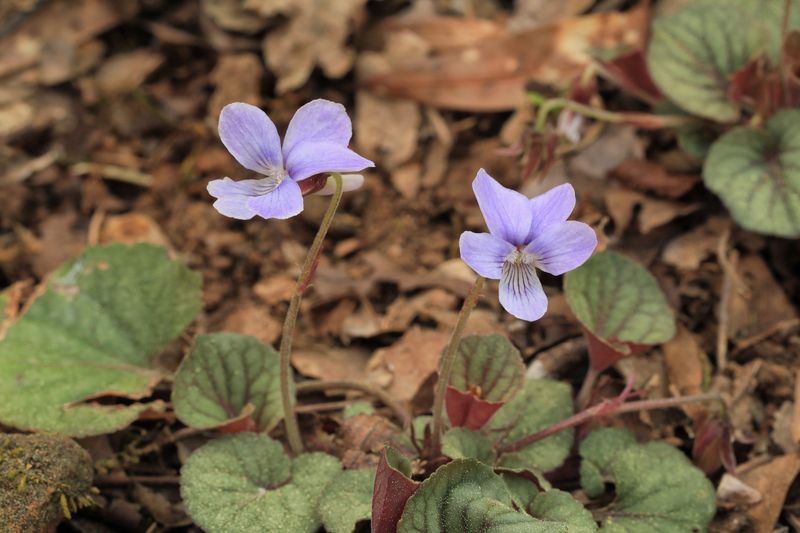
Small pockets of soil wedged between foundation corners, steps, and shrub roots can be some of the most ignored spots in a Georgia garden, and alpine violet is a native that fits those tight spaces with surprising grace.
Also known as Viola walteri, this low-growing violet produces heart-shaped leaves on trailing stems that root at nodes, forming a quiet, creeping mat over time.
Soft purple flowers appear in early spring, adding a gentle pop of color to spots that rarely get much attention.
Alpine violet performs well in moist to moderately dry shade, making it a candidate for north-facing and east-facing foundation pockets where sun is limited and the soil stays cooler than exposed southern strips.
It tends to prefer some organic matter in the soil, so working in a bit of compost before planting can help it establish more confidently in Georgia’s often compacted foundation-edge soil.
It is not built for full sun or heavy reflected heat, so placement matters.
The trailing stems spread gradually, weaving through other low plants and filling in gaps without smothering neighbors.
Homeowners often notice it quietly expanding into nearby areas over two to three seasons, eventually covering small foundation pockets that previously showed bare soil.
Watering during establishment supports strong root spread. Once settled, alpine violet manages moderate dry spells in shaded locations with minimal extra care.
Its understated, soft appearance suits cottage-style Georgia home landscapes and shaded foundation beds where a delicate touch is more fitting than bold texture.
7. Pink Muhly Grass Adds Airy Dry-Site Texture
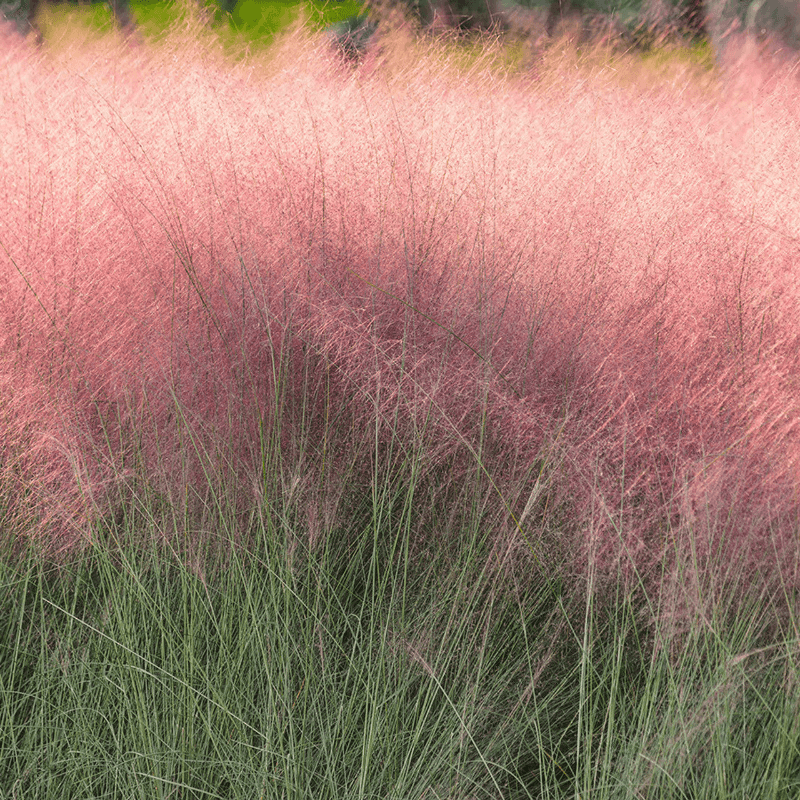
Every fall, pink muhly grass puts on one of the most dramatic displays a foundation planting can offer, sending up clouds of rosy-pink, feathery seed heads that seem to glow in the late afternoon sun.
The plant grows in upright clumps of fine, wiry foliage that stays relatively tidy through summer before the spectacular fall show begins.
While it does not spread as a flat ground cover, massing several plants along a dry foundation strip creates a cohesive, textured look that covers space beautifully.
Pink muhly grass thrives in full sun and well-drained soil, which makes it well-matched to south-facing and west-facing Georgia foundation strips that collect heat from walls and pavement.
It handles drought and reflected heat with notable resilience once established, and it adapts to both sandy and clay-based soils as long as drainage is adequate.
Avoid planting it in low spots where water collects after Georgia’s heavy summer rains, since standing water can weaken the clumps over time.
Spacing plants about two to three feet apart allows each clump to develop its full, arching shape without crowding.
New plants should receive regular watering through the first growing season to encourage deep root development before summer heat arrives.
After establishment, pink muhly grass requires very little supplemental watering in most Georgia locations.
The winter seed heads provide off-season structure, and cutting plants back in late winter keeps them looking fresh as new growth emerges each spring along the foundation edge.
8. Little Bluestem Covers Space With Native Clumps
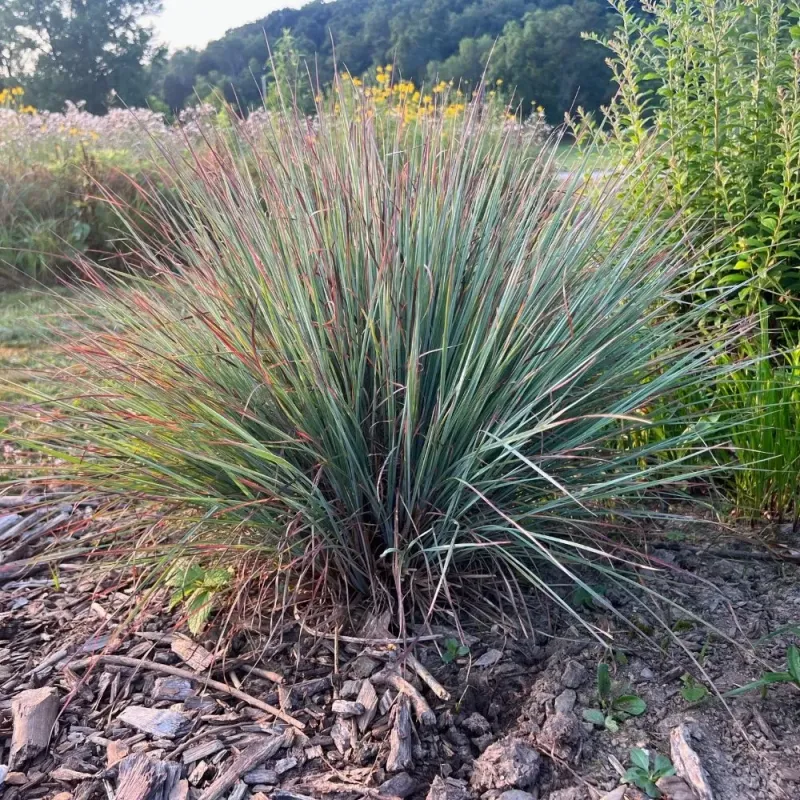
Warm, coppery-bronze in fall and blue-green through summer, little bluestem is a native grass that brings bold seasonal color to dry Georgia foundation strips without needing much attention once it finds its footing.
The plant grows in upright, medium-height clumps that do not sprawl or flop, making it a structured option for foundation beds where a neat but natural look is the goal.
Fluffy white seed heads appear in fall alongside the changing foliage color, giving the planting a soft, prairie-like quality.
Little bluestem is native to Georgia’s dry uplands, open meadows, and roadsides, and those origins make it well-adapted to the thin, dry soils often found along home foundations.
It performs best in full sun with good drainage and can handle the reflected heat from Georgia brick or stucco walls without much stress once established.
Heavy clay soils that stay wet can be challenging, so improving drainage before planting or selecting a spot with a slight slope helps the plants settle in successfully.
Because little bluestem forms individual clumps rather than spreading rhizomes, covering a foundation strip requires planting several specimens spaced about eighteen to twenty-four inches apart.
Over time, the mass of clumps creates a unified, textured sweep of native coverage along the foundation edge.
Watering regularly during the first season gives roots time to reach deeper soil moisture.
After that first year, little bluestem manages Georgia’s dry summers with minimal supplemental irrigation, rewarding patient gardeners with reliable, low-effort seasonal interest.