What Those Grey Patches On Maryland Tree Trunks Mean In September
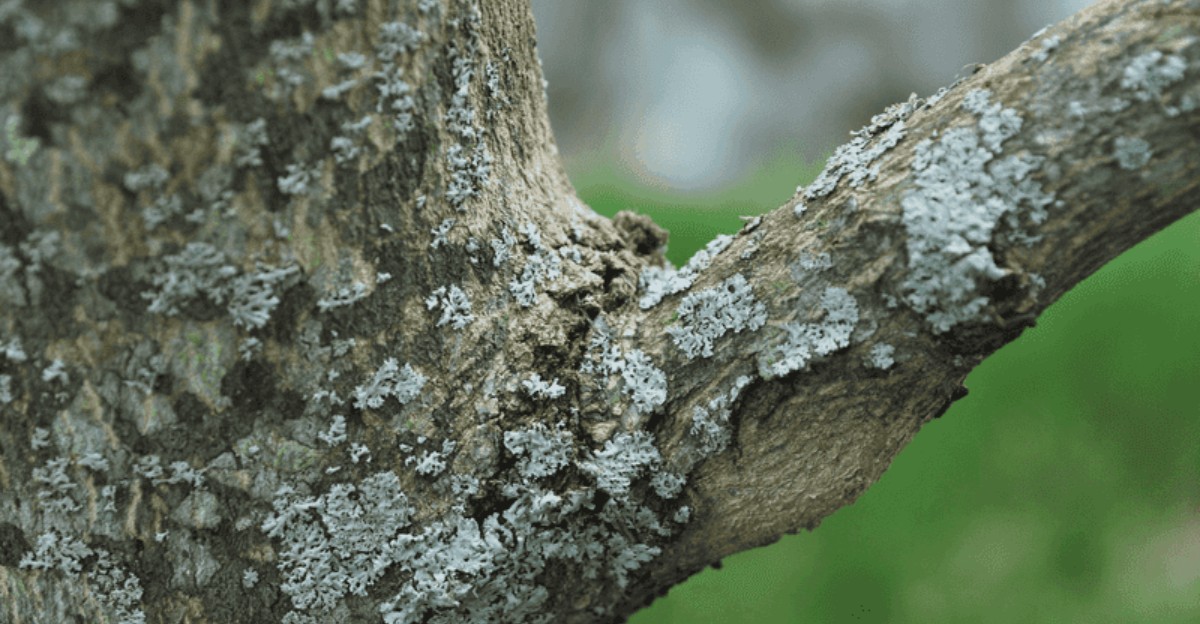
Patches of pale grey have started climbing across the bark you walk past every single morning, and they weren’t sitting there back in July. Nobody warned you this exact shift shows up right when the air finally turns crisp and the mornings sharpen.
Maryland yards from the mountains to the coast are showing the very same marks right now, and the timing is not a coincidence. Bark that looked clean and healthy all summer suddenly wears a chalky, uneven coat you can’t ignore this week.
Certain trunks seem to attract it more than others nearby, and the pattern turns out to be anything but random. Every arborist across Maryland fields the exact same question this month, over and over again, from worried callers.
Your neighbor might already be scraping at it with a fingernail, fully convinced it’s something it clearly isn’t. A closer look tells a story most people don’t expect to hear, and it changes how you see every trunk on the block.
The Grey Crust Explained
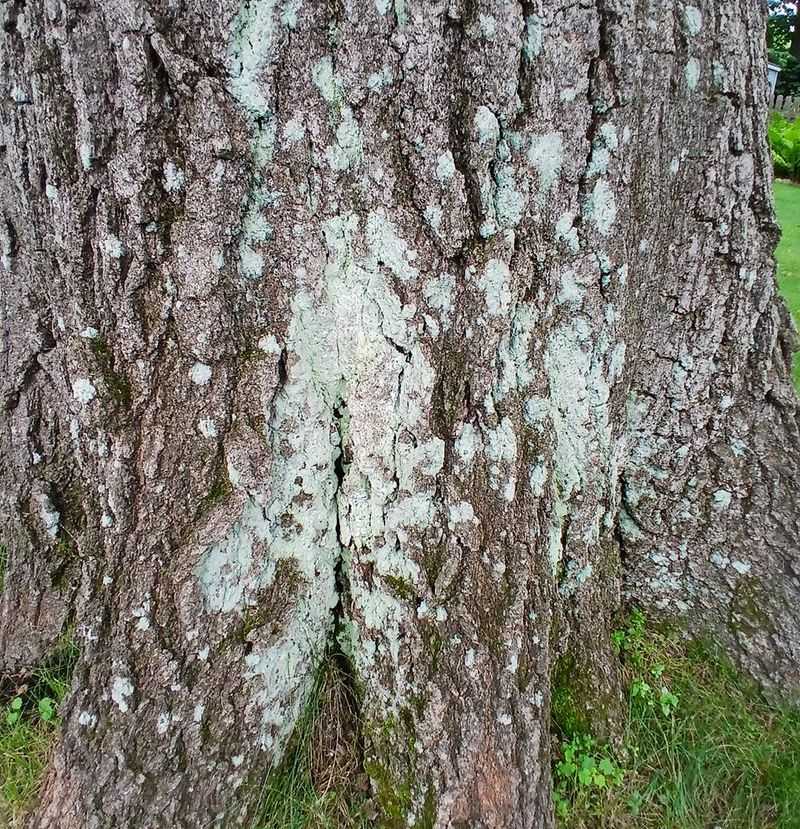
That crusty grey coating is almost certainly lichen, one of nature’s strangest partnerships. It is not a single organism but two working together, a fungus and an algae sharing one body.
The fungus builds the structure and grips the bark. The algae handles food production, using sunlight the way any green plant does.
Because the algae makes its own meals, lichen has no reason to feed on your tree. It uses bark purely as a shelf to sit on, the same way moss uses a stone wall.
Maryland happens to be excellent lichen country. Humid summers, mild winters, and plenty of hardwoods give these organisms a comfortable home on oaks, maples, crepe myrtles, and old apple trees.
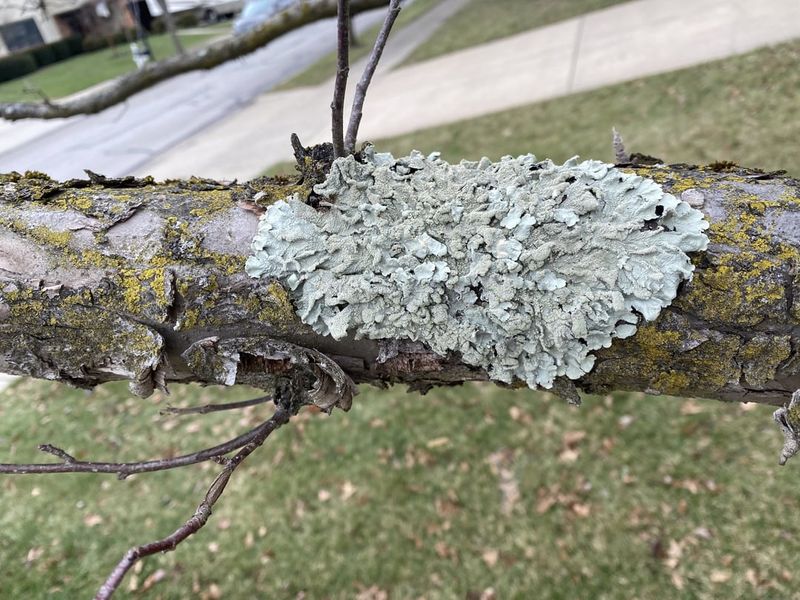
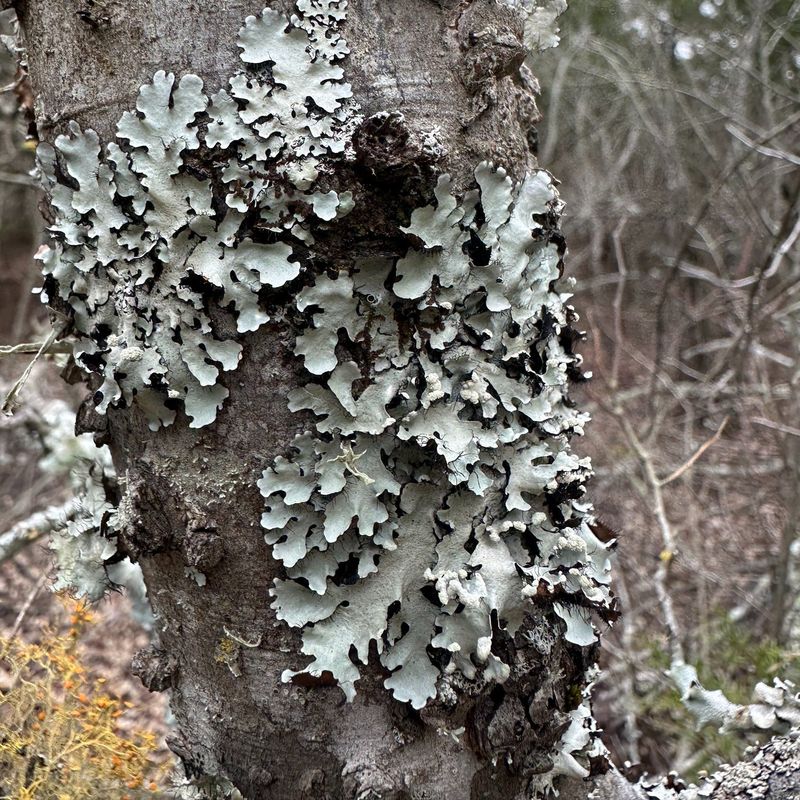
Colors range from silvery grey to sage green, sometimes with a papery, ruffled edge that curls away from the bark. Others look flat and painted on, like someone splashed grey primer across the trunk.
Here is a fun bit of science. Researchers still use lichen surveys to map air pollution across the East Coast, because these organisms shrivel in dirty air.
So a trunk covered in healthy grey rosettes is a small sign your local air quality is decent. Industrial neighborhoods often have noticeably barer bark.
Once you know what you are looking at, the grey patches shift from alarming to interesting. They are closer to a decorative tenant than an unwelcome guest.
September Timing And Maryland Weather
Timing explains a lot of the sudden discovery. Lichen grows painfully slowly, sometimes only a millimeter or two per year, so it did not appear overnight.
What changes in September is moisture and visibility. Cooler nights bring heavy dew, and Maryland’s late-season rain keeps bark damp for hours each morning.
Wet lichen swells, brightens, and softens. A patch that looked like a faded grey smudge in August suddenly puffs up into something obvious and slightly alien.
Meanwhile the canopy starts thinning. As leaves loosen and light angles lower, sunlight hits trunks that spent all summer in deep shade.
Your Maryland Garden Changes Every Week. Your Plan Should Too.
Gardening in Maryland changes quickly throughout the season. Every Friday you’ll receive a simple weekly plan showing exactly what to plant, prune, fertilize, harvest, and protect so you never miss the right timing.
Homeowners also spend more time outdoors in September, raking, planting bulbs, and closing up gardens. More trunk-level attention means more noticing.
Hurricane season plays a role too. Tropical moisture pushing up the Chesapeake keeps humidity high through early fall, which is prime growing weather for these organisms.
There is a helpful test you can run yourself. Look at the same patch on a dry, breezy afternoon and it will shrink back to a dull, brittle crust.
That shrinking act is not distress. Lichen simply goes dormant when water is scarce and reactivates whenever conditions improve, which is part of why it survives on bare rock.
So September is less a growth spurt than a reveal. The grey has been there for seasons, waiting for the right damp morning to make itself known.
The Common Mistake Of Blaming Lichen
Plenty of well-meaning tree owners get this backwards. They spot heavy lichen on a struggling tree and assume the grey stuff caused the decline.
The real relationship runs the other direction. Thinning branches let more light reach the bark, and more light means faster lichen growth.
Picture an old crepe myrtle that has been losing vigor for years. As its canopy opens up, the trunk becomes a sunny patio for algae-powered organisms.
So the lichen is a symptom of change, not the source of it. Blaming it is a bit like blaming umbrellas for rain.
Acting on that mistake can cause real harm. People scrub trunks with wire brushes, spray bleach solutions, or apply copper products meant for other purposes.
Bark is living tissue with a protective outer layer. Scraping and harsh chemicals wound that layer and open doors for insects and actual pathogens.
Pressure washing is another popular disaster. High-pressure water strips bark plates off older trees and can damage the thin cambium underneath.
If a tree looks unwell, the answers usually sit elsewhere. Check for girdling roots, buried root flares, mower wounds, compacted soil, or standing water after storms.
Maryland clay soils drain slowly, and poor drainage stresses more suburban trees than anything growing on the outside of the trunk.
Save your energy for the causes that matter. The grey patches were rarely the villain in this story.
Sorting Harmless Growth From Real Trouble
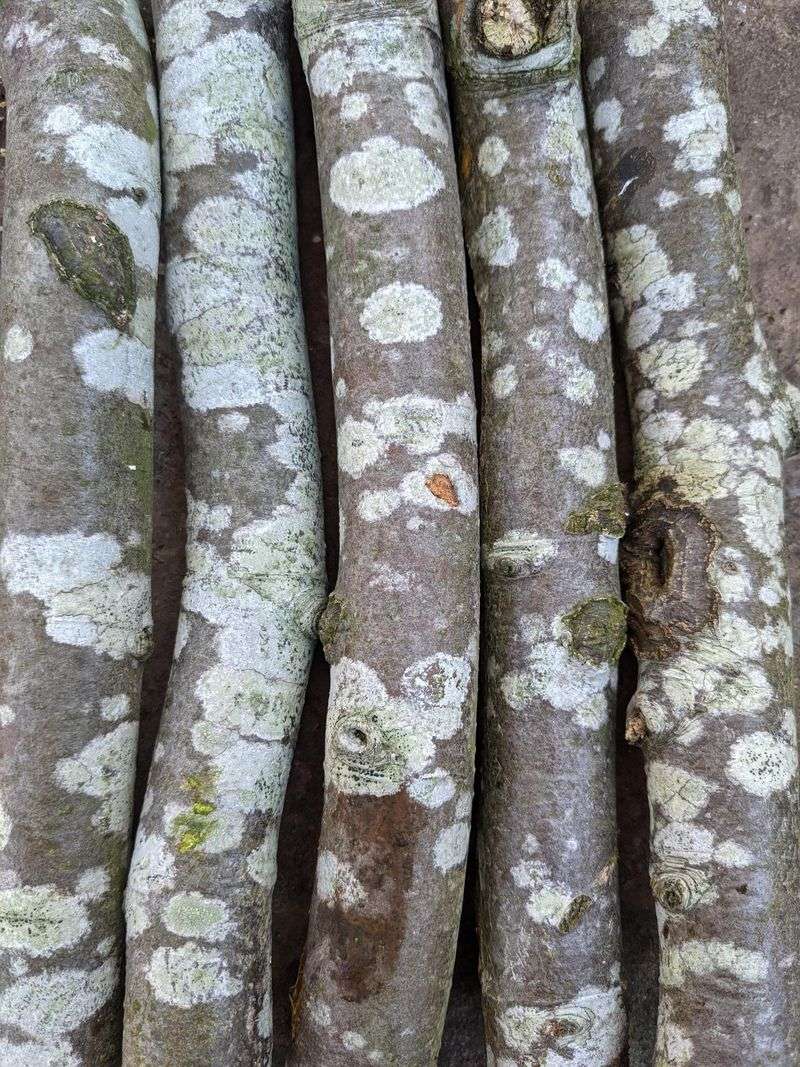
Not everything grey on bark deserves a shrug. A few look-alikes genuinely signal problems, and learning the difference takes about two minutes.
Lichen sits on the surface and peels away in flakes if you nudge it with a fingernail. The bark underneath looks normal and intact.
Bracket fungi behave differently. Also called conks, they push out as firm shelves or hoof shapes and mean decay is active inside the wood.
Finding a conk on a trunk or major limb is worth a call to a certified arborist. Internal decay affects how safely a tree stands in a storm.
Slime flux is another one to know. It shows as dark, wet streaks with a sour smell, often near old wounds or pruning cuts.
Watch for bark that sounds hollow, sheds in large plates, or reveals crumbly brown wood beneath. That combination points to structural issues, not surface tenants.
Sunken, discolored areas with cracked edges suggest cankers. Those spread through living tissue and behave nothing like a flaky grey rosette.
Powdery grey-white coatings that rub off on your fingers may be scale insects or their residue. Look closely for tiny bumps arranged in rows along twigs.
A simple habit helps enormously. Walk your yard each fall with a phone camera and photograph anything unfamiliar at trunk level.
Year-over-year photos turn guesswork into evidence and make any professional consultation far more useful.
Gentle Cleanup Options For Fussy Homeowners
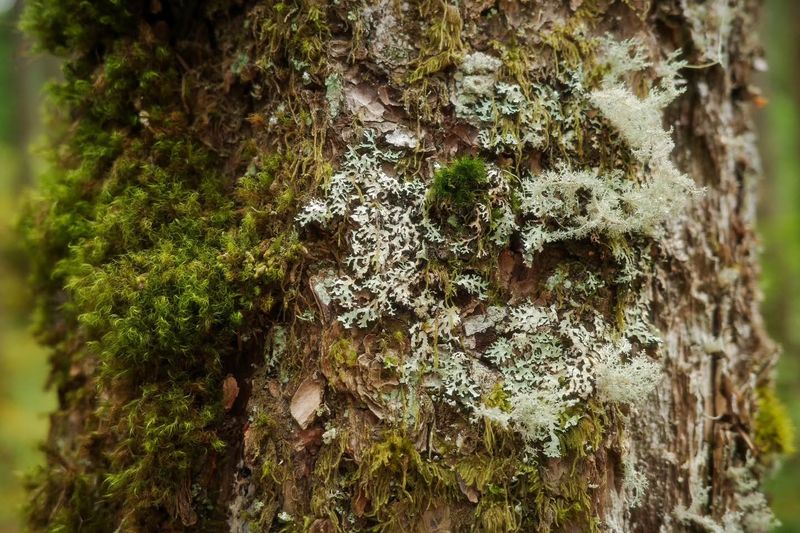
Some folks simply do not like the look, and that is a fair preference. There are ways to tidy a trunk without roughing up the bark.
Start with the mildest approach possible. A soft-bristled brush and plain water will lift loose foliose lichen from a damp trunk in a few minutes.
Work with light pressure and follow the grain of the bark. If flakes resist, leave them rather than forcing the issue.
Skip bleach, vinegar, dish soap, and homemade sprays. Those solutions run down into root zones and can burn feeder roots near the surface.
Pressure washers and wire brushes belong on patios, not on living wood. The damage they cause lasts far longer than the appearance you were trying to fix.
Better results often come from changing conditions instead. Pruning a few crowded interior branches improves airflow and lets bark dry faster after Maryland’s morning dew.
Careful thinning also means less shade-loving moisture sitting against the trunk through fall and winter. Slower lichen growth follows naturally.
Timing matters for any pruning. Late winter suits most Maryland hardwoods, while oaks are best pruned in the dormant months to reduce disease risk.
One quirky note worth mentioning. Certain lichens were once boiled down for wool dyes in colonial America, producing soft golds and rusty browns.
Before you scrub, take one more look. Many people decide the mottled grey texture actually suits an old shade tree.
Long-Term Tree Care Beyond The Bark
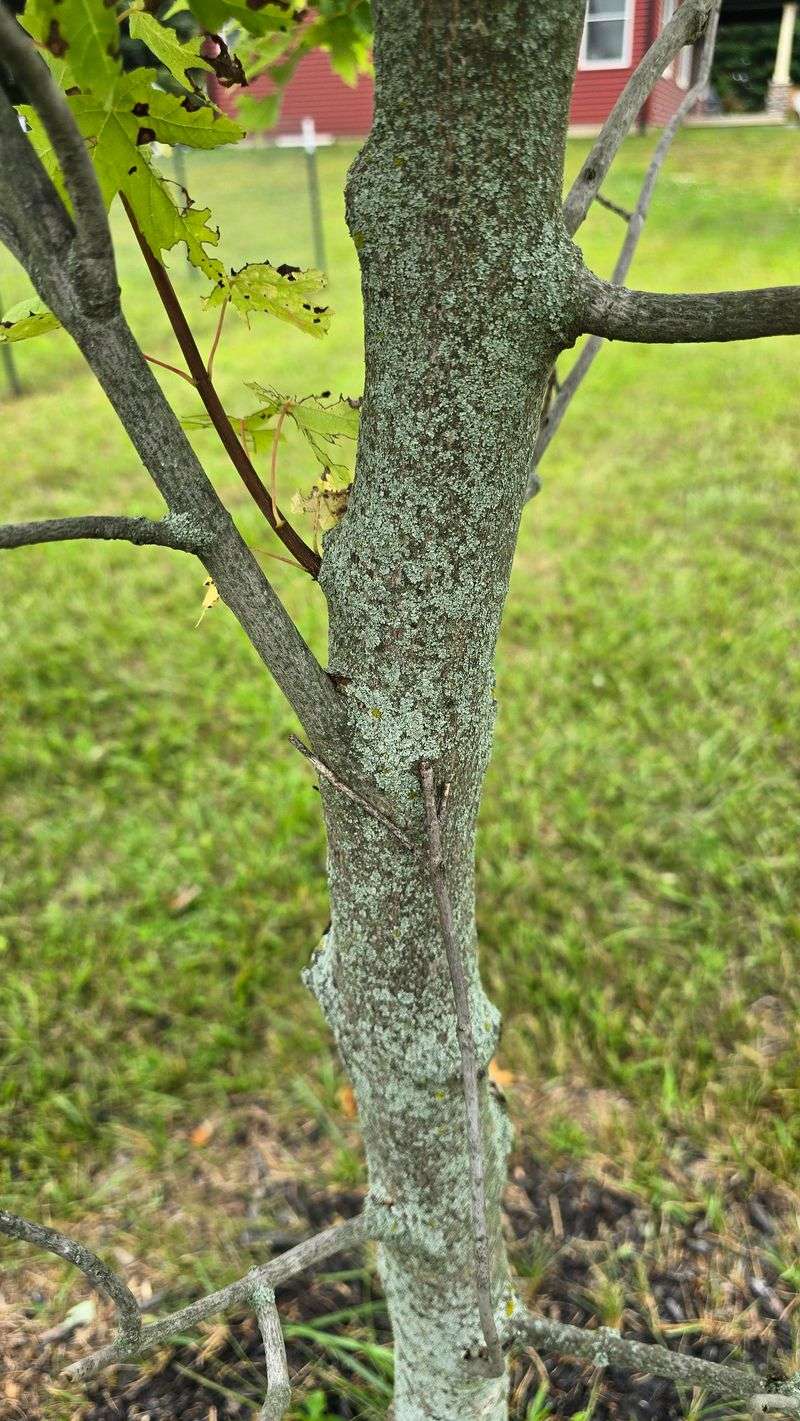
Strong trees carry their lichen like character marks. The goal is not a spotless trunk but a tree with room to thrive for decades.
Mulch does more good than any spray. Spread wood chips two to three inches deep in a wide ring, keeping material off the trunk itself.
That doughnut shape protects roots from mower strikes and holds moisture through dry spells. Volcano-shaped mulch piles against bark cause rot instead.
Water deeply during Maryland’s late-summer dry stretches. Trees planted within the last five years especially benefit from slow soaking once a week.
Give the root flare some breathing room. Soil, sod, and landscape fabric piled against the base cause more suburban tree decline than most people realize.
Avoid string trimmer nicks near the base. Those small wounds add up and give insects and pathogens easy entry points.
Soil testing through the University of Maryland Extension is inexpensive and genuinely useful. Results tell you if your compacted clay actually needs amendment or just aeration.
Consider planting native species like white oak, blackgum, or serviceberry. Trees suited to Chesapeake-region soils and rainfall handle stress far better than imports.
Check in with an arborist every few years for mature specimens. Professional eyes catch structural concerns long before they become emergencies.
Do all that, and the grey patches become part of the scenery. A trunk speckled with lichen starts looking less like a warning and more like a badge of clean air and old age.