Tennessee’s New Backyard Visitor Comes With Massive Golden Webs
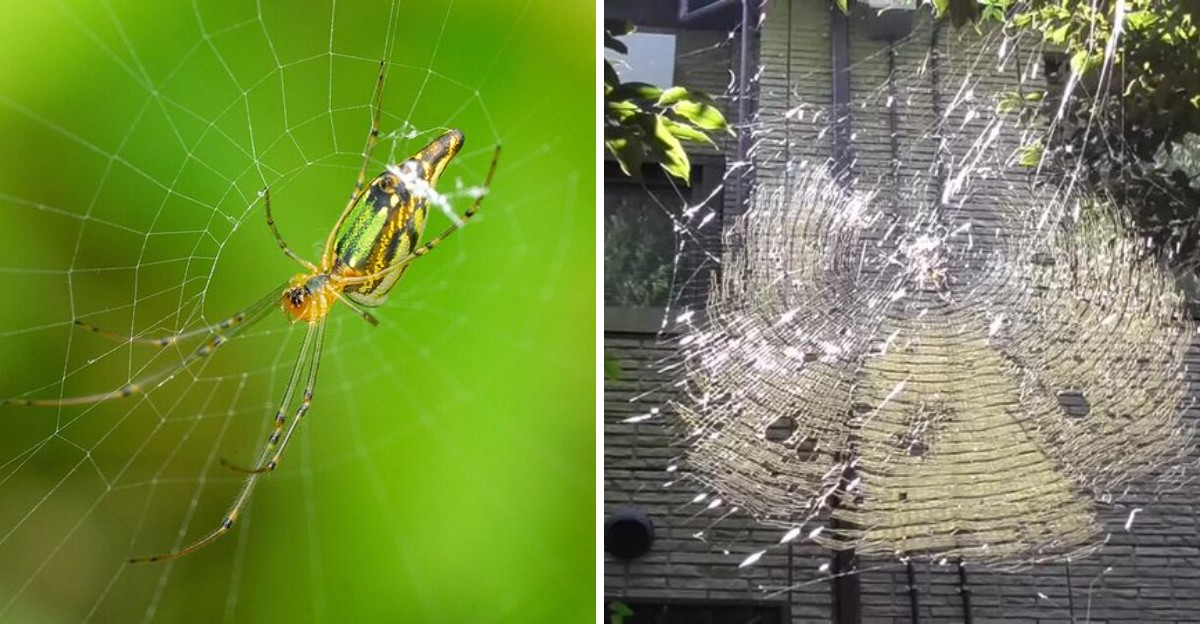
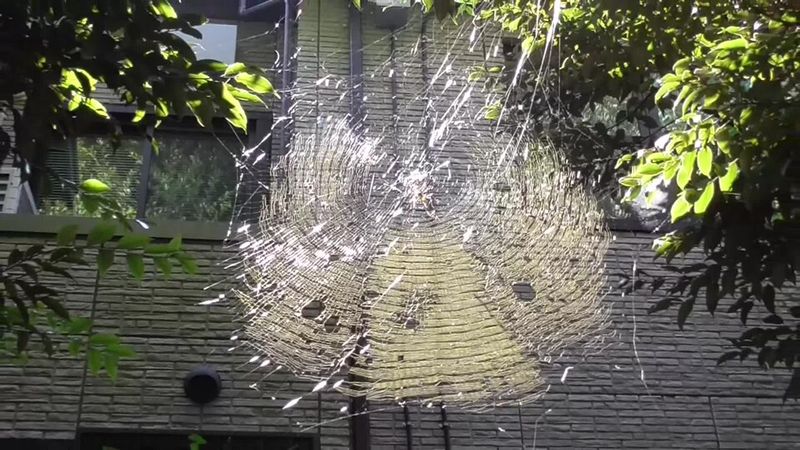
Dew turns ordinary silk into blinding spectacle this morning. Threads stretch wider than your arms can reach. Light catches each strand like scattered sunlight. Right in the center sits a resident you did not invite.
Tennessee yards have gained a colorful newcomer over recent seasons. Neighbors trade blurry photos and ask the same question.
What exactly is spinning webs this size? Golden silk orb weavers have quietly claimed Tennessee backyards.
Late summer pushes them into full display. Bright yellow markings run down their long legs. Size alone stops people mid-step before they process spider.
This spider spins silk strong enough to trap large insects, and in rare cases even small birds have been caught. Scientists say its bright color helps draw prey close. Surprise arrives faster than explanation usually does.
Curiosity wins over hesitation when something unfamiliar moves in close. Grabbing a broom feels tempting, yet answers matter more. You will not walk past this web the same way again.
The Newcomer Spinning Gold Across Tennessee Porches
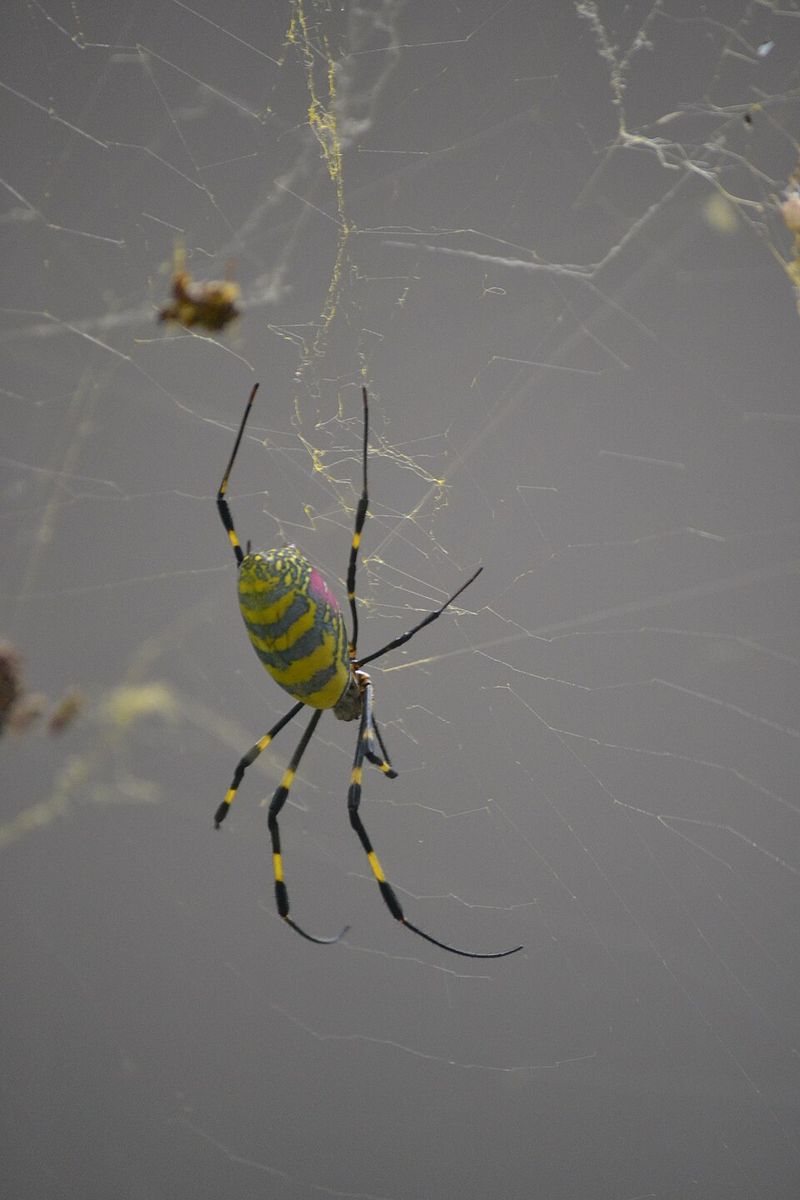
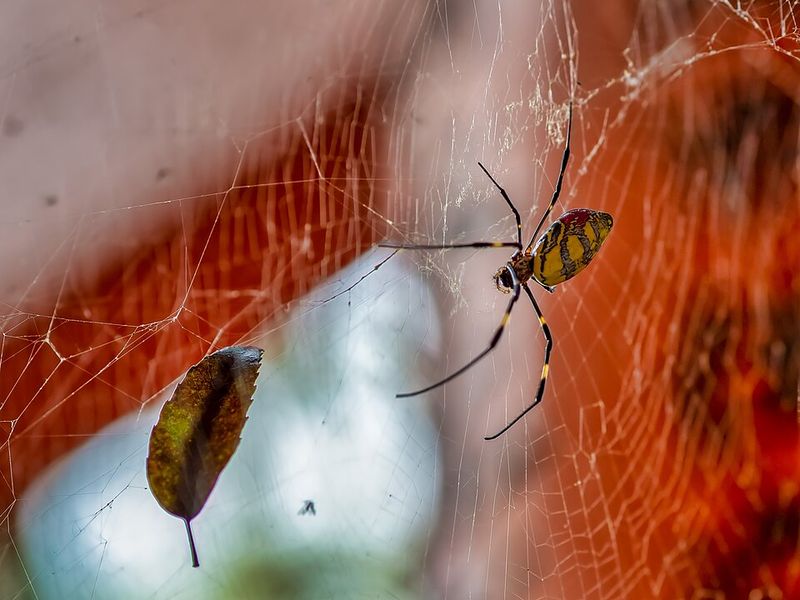
The Joro spider is a palm-sized orb weaver with bright yellow bands, slate-blue stripes, and a splash of red underneath. Females stretch about three inches across when you count those long, striped legs.
Originally from East Asia, Joros likely hitchhiked to the United States inside shipping containers around 2013. They settled first in northern Georgia, then began spreading outward through the Southeast.
Tennessee homeowners started noticing them in the eastern counties, and sightings have crept steadily westward. Reports cluster most heavily in the eastern part of the state, though new sightings keep popping up in different spots each season.
Males look nothing like their partners. They are small, brownish, and easy to overlook as they linger at the edge of a female’s web waiting for a chance to approach.
The scientific name is Trichonephila clavata, and the species belongs to the golden orb-weaver family. That family connection explains the unusual color of the silk, which really does look faintly gold in sunlight.
September is peak Joro season across the state. The spiders reach full size in late summer, so webs that seemed small in July suddenly look enormous by Labor Day weekend.
Folks often mistake them for banana spiders or garden spiders, which are cousins with similar shapes. The blue-and-yellow leg banding is the giveaway once you know to look for it.
Learning the name takes the edge off the surprise. A stranger on the porch feels a lot less alarming once you can introduce it.
Webs That Span Six To Ten Feet
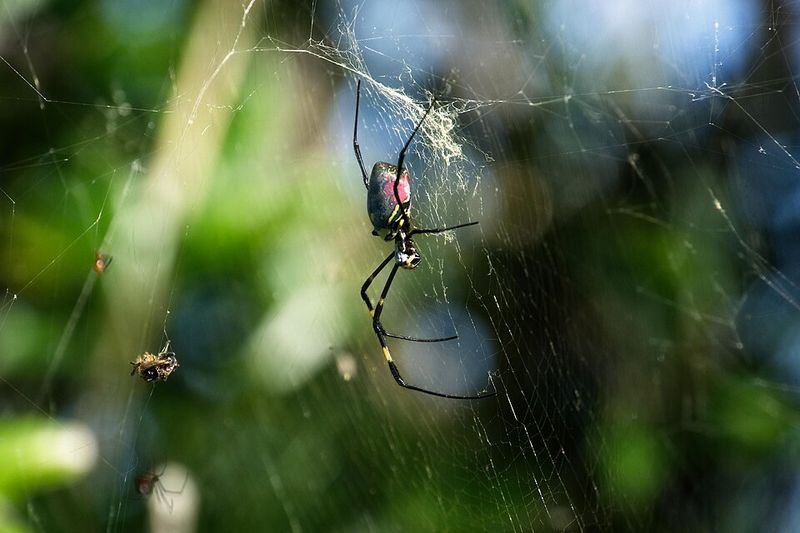
Walk through a Joro web once and you will remember it. The silk is noticeably tough, and the structures can span six to ten feet between trees, fence posts, or the corner of a shed.
What sets these webs apart is the architecture. Instead of one flat circle, Joros build a three-dimensional setup with messy support layers of silk on both sides of the main orb.
Your Tennessee Garden Changes Every Week. Your Plan Should Too.
Gardening in Tennessee changes quickly throughout the season. Every Friday you’ll receive a simple weekly plan showing exactly what to plant, prune, fertilize, harvest, and protect so you never miss the right timing.
Scientists call that design a barrier web. The tangled outer layers act like bumpers, catching insects that bounce off and giving the spider extra warning when something big blunders in.
The golden tint comes from pigments in the silk itself. Researchers think the color helps in two ways, blending into sunlit gaps while appearing bright enough that bees sometimes steer toward it.
Joros love open air with something solid on each side. Power lines, mailbox posts, basketball hoops, and gaps between parked cars all qualify as prime real estate.
Because the anchor lines run so high, you often meet the web before you see the spider. A gentle sweep with a stick held in front of you clears the path on early morning walks.
Rain and wind tear the webs apart regularly, and the females rebuild fast, sometimes overnight. That rebuilding habit means a spot you cleared on Monday may be occupied again by Wednesday.
The silk has caught the attention of textile researchers too. Its strength and shine make it an interesting subject for people studying natural fibers.
How Baby Spiders Ride The Wind Into Your Yard
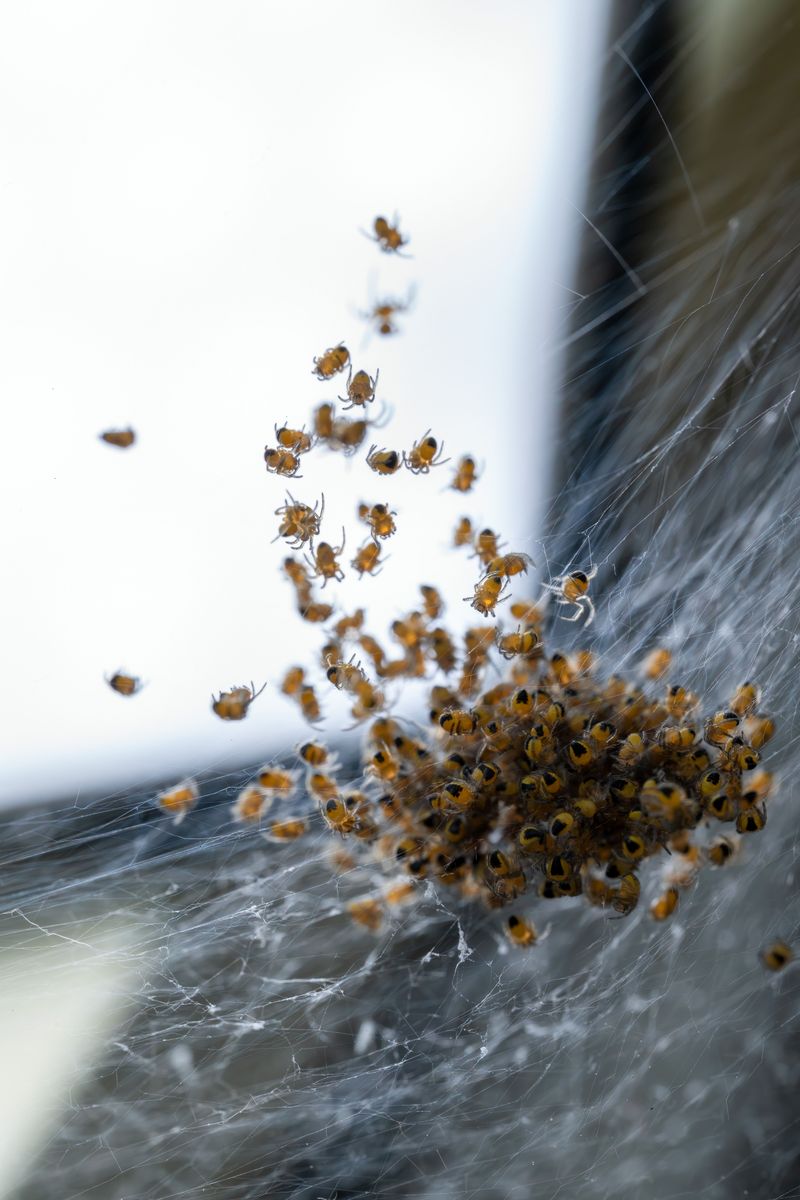
Here is the trick that explains their fast spread: baby Joros fly. Not with wings, but with silk. Spiderlings climb to a high point, lift their abdomens, and release fine threads that catch the breeze.
The wind lifts them up and carries them along, usually for short distances, though rare cases have covered far greater ranges.
Naturalists call this ballooning, and plenty of spider species do it. Joros just happen to be very good at it, and a single egg sac can hold hundreds of hatchlings ready to launch.
Cars and trucks help too. A spider or an egg sac tucked into a wheel well or a truck bed can travel across three counties before lunch.
That combination of wind travel and accidental hitchhiking is why the range map keeps growing. Researchers tracking sightings have watched the population push north into Virginia and Maryland and west across Tennessee.
Cold weather does not seem to slow them much. Studies at the University of Georgia found Joros tolerate chillier temperatures than related species, with a faster metabolism and a heart rate that holds up in the cold.
Their toughness suggests they may settle across a wide slice of the eastern United States over the coming years. Some scientists predict they will reach New England eventually.
Knowing how they arrive helps you predict where they turn up. Breezy, open yards near woods and roadways tend to collect the newcomers first.
Surprisingly Timid Despite The Intimidating Size
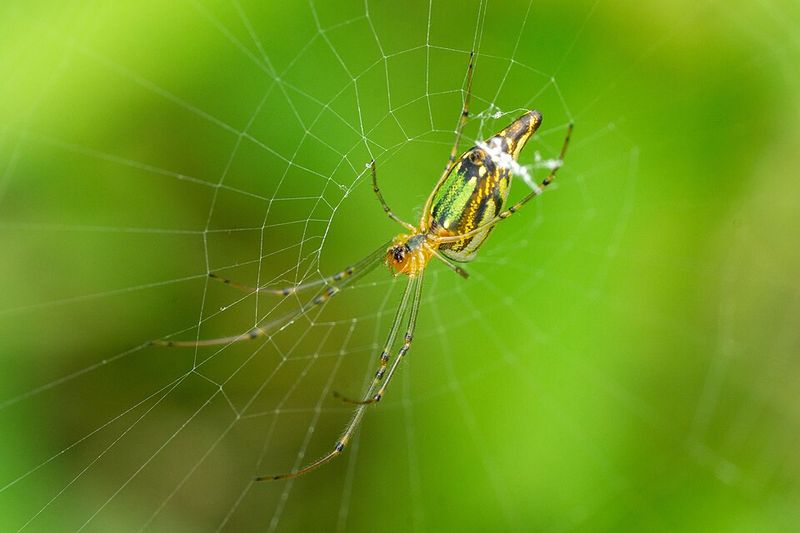
Big spider, tiny nerve. Researchers who tested Joros found them to be among the shyest spiders ever measured in a lab setting.
In the experiment, scientists puffed air at more than 450 spiders from over 30 species. Most froze for about a minute before moving again, but Joros stayed motionless for more than an hour.
That freeze response is their main defense. Rather than lunging or charging, a startled Joro curls up, plays statue, or drops straight out of the web and hides in the grass.
Their fangs are small relative to their body, and they struggle to break human skin. Bites are rare and usually happen only when a spider gets pressed against skin, such as inside a glove or a sleeve.
When a bite does occur, people describe it as similar to a bee sting with mild redness that fades within a day. The venom is not considered medically significant for humans.
Pets get curious, and that worries a lot of owners. Dogs and cats that nose a web typically end up with a face full of silk and an annoyed spider fleeing the scene.
The internet nickname circulating a few years back was the parachuting giant spider, which made things sound far more dramatic than reality. Spiders aren’t parachuting toward people on purpose.
Understanding the timid streak changes how the yard feels. A shy neighbor is much easier to share space with.
What They Catch And Why Gardeners Are Watching
Gardeners have started noticing something interesting in those webs: pests. Joros regularly snag brown marmorated stink bugs, an invasive nuisance that plenty of Tennessee growers would love to see fewer of.
Mosquitoes, biting flies, wasps, and moths also end up wrapped in silk. In neighborhoods with heavy Joro activity, some people report fewer bugs buzzing around evening cookouts.
The picture is not entirely rosy, though. Joros also catch pollinators, including honeybees and native bees, and researchers are studying whether that matters at a larger scale.
Another open question involves native orb weavers. Scientists want to know whether Joros crowd out familiar spiders like the yellow garden spider, and so far the evidence is mixed rather than alarming.
Birds, wasps, and lizards do eat Joros, which gives the local food web a chance to push back. Mud daubers in particular seem happy to raid webs.
Agricultural experts in the region generally treat Joros as a curiosity rather than a crop threat. No state agency has labeled them a serious agricultural pest so far.
If your tomato patch has picked up a resident, consider leaving it alone through the season. Free pest patrol is a decent trade for walking around one web.
Community science apps let you log sightings with a photo and location. Those reports feed the maps that researchers use to track how far the population has spread.
Sharing The Porch With A New Neighbor
Nobody expects you to hand over the deck. There are calm ways to reclaim doorways without going to war with the whole backyard.
A long-handled broom or a pole works best for webs over walkways. Sweep during daylight when the spider can move off, and the resident usually relocates to a nearby tree.
Trimming shrubs back from railings and doorframes removes the anchor points Joros depend on. Fewer attachment spots means fewer webs in the paths you use daily.
Porch lighting matters more than people realize. Bright white bulbs draw clouds of insects, and insects draw spiders, so switching to warm yellow bulbs or motion sensors cuts the buffet line.
Skip broad-spectrum insecticide sprays across the yard. Those treatments hit beneficial insects too, and Joros simply rebuild farther out anyway.
For webs away from foot traffic, the easiest approach is leaving them be. Cooler weather arrives, the adults finish their season, and the webs come down on their own by late fall.
Egg sacs appear in autumn as fuzzy grayish-tan lumps on tree bark, fences, and eaves, each holding hundreds of eggs. Scraping those into a bag in October reduces next spring’s crowd around your house.
Kids often come around faster than adults do. Handing a child a magnifying glass and letting them watch a female repair her web turns a scary situation into a science lesson worth remembering.