What To Do With Fallen Pine Needles In A California Yard
Gardeners in the Southeast pay good money for bales of the exact stuff piling up under your trees right now. Growers there harvest it, bale it, and sell it like hay.
Out here, that free brown carpet gets a bad reputation. People warn it will sour your soil, smother your flowers, and invite trouble. Some of that worry holds up, and some of it falls apart once you check the research.
I’ll admit I once filled three green bins a week with it every fall. Now I treat it more like a pantry than a pile of trash. Personally, I can’t imagine buying bagged mulch again.
Living in California adds one serious twist, though. Where you spread it matters as much as how you use it. So which spots in your yard deserve this crunchy freebie, and which ones should stay bare?
That Rust-Colored Pine Needle Carpet Is Worth More Than You Think
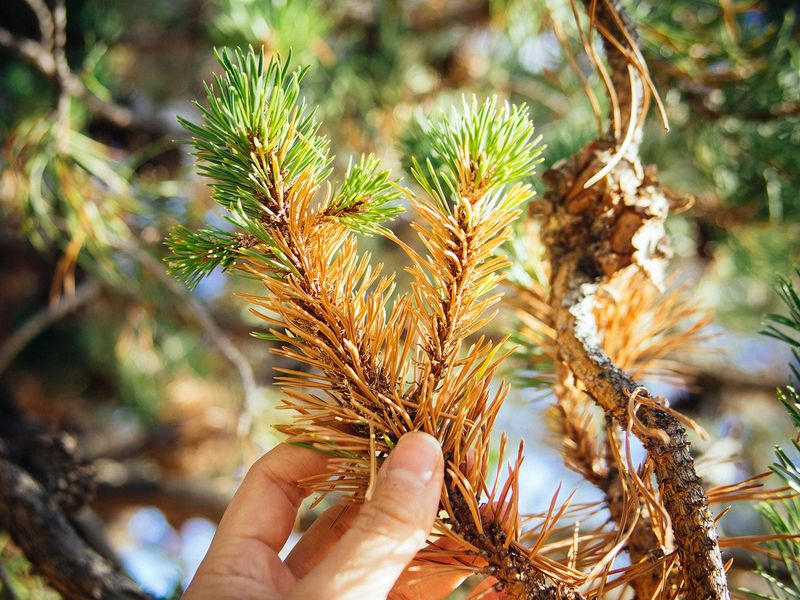
Fresh green pine needles on the branch really are acidic, often testing somewhere around pH 3 to 4. That fact started a myth that has hung around garden centers for decades.
Once the needles turn brown and fall, things change. Research from Washington State University and other extension programs shows that pine needle mulch barely moves soil pH at all. Soil microbes and minerals buffer the acids as the needles slowly break down.
So why is the ground under pines often acidic? In many forests, the soil was acidic first, and pines simply grow well there. The trees moved in because of the soil, not the other way around.
That matters a lot here. Much of California has neutral to alkaline soil, especially in inland valleys and southern regions. A layer of needles will not turn that ground sour, and it will not harm your roses or vegetables.
I find this freeing. Those piles stop looking like a chore and start looking like a resource you already own.
Fallen needles still carry one real concern in this state, and it involves fire, not pH. The next few sections cover where they help and where they should stay off the ground.
Spread Pine Straw As Mulch Around Thirsty Shrubs And Fruit Trees
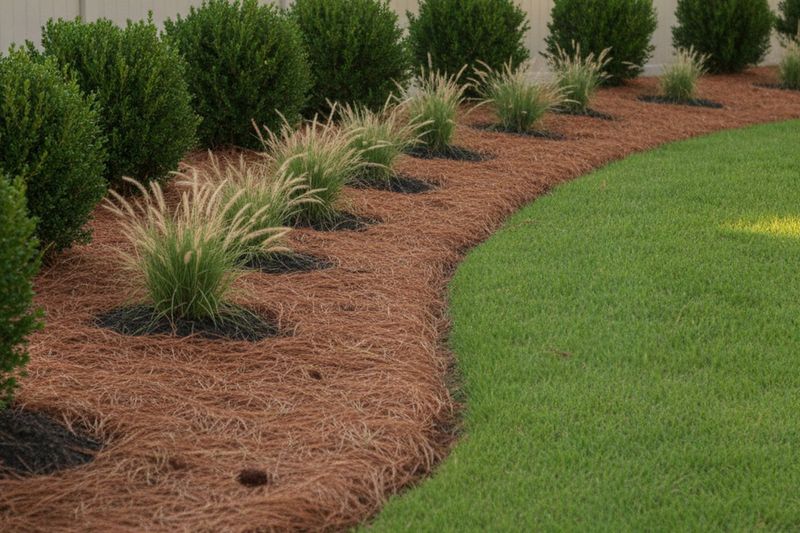
Pine straw is so popular in Georgia and the Carolinas that farmers rake and bale it for sale. You get the same material for free, minus the delivery fee.
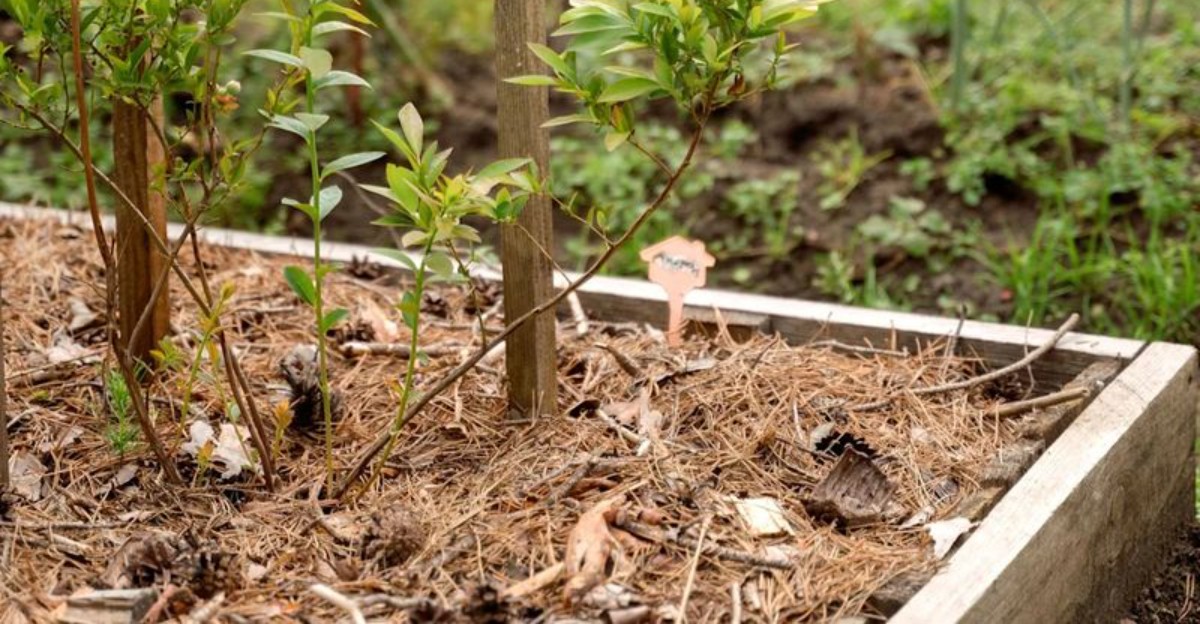
Spread needles 2 to 4 inches deep around shrubs, fruit trees, and perennial beds. The long, thin needles knit together into a loose mat. Water still slips through easily, yet the mat shades the soil and slows evaporation during hot, rain-free summers.
Weeds struggle under that layer too. Sunlight can’t reach most seeds, so fewer of them sprout. You may need to top up the mulch once a year as the bottom layer settles and breaks down.
Keep a gap of a few inches between the needles and any trunk or stem. Mulch piled against bark holds moisture and invites rot and pests.
I like how airy pine straw stays compared to wood chips. It doesn’t pack into a hard crust, and it rarely blows away once it knits together.
Timing helps as well. Spreading fresh mulch in fall or early spring lets winter rains soak in, then holds that moisture well into the dry months ahead.
Just pick your mulching spots with care, since placement near buildings comes with rules.
Pine Needles Piled Against Your House Walls Need To Go First
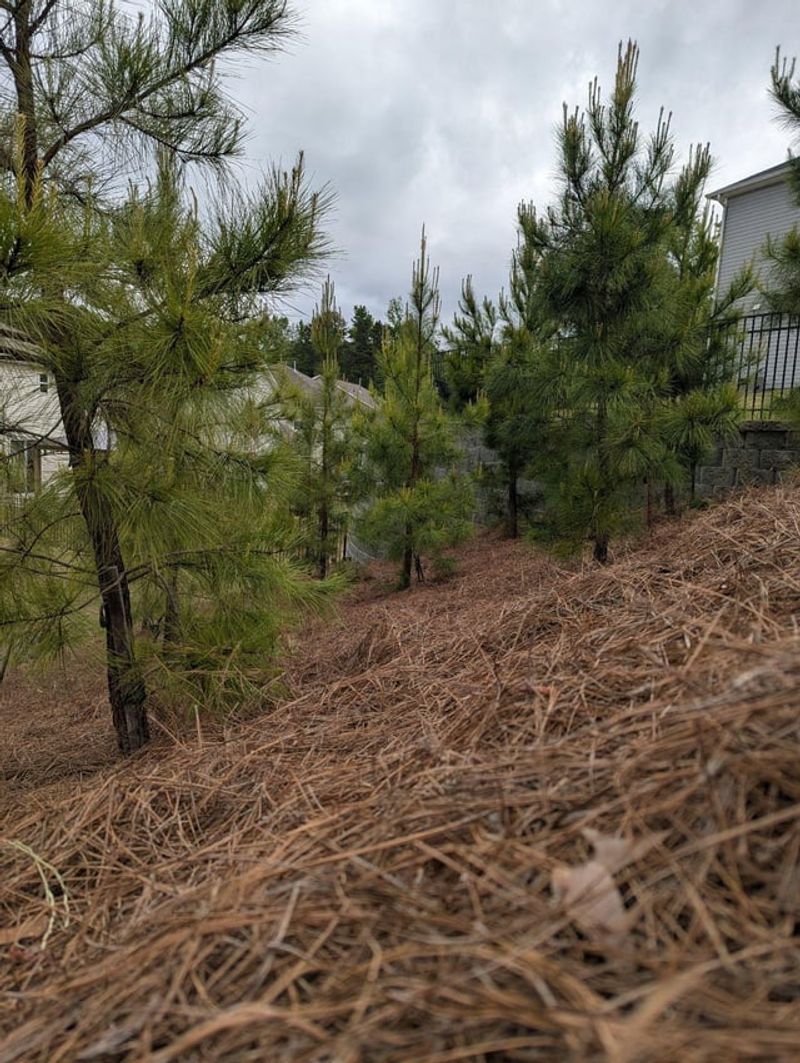
CAL FIRE has a blunt message for homeowners with pines nearby. The first 5 feet around your house, called Zone 0 or the ember-resistant zone, should hold no pine needles at all.
Wind-blown embers cause most home ignitions during wildfires. A dry pile of needles against a wall, under a deck, or beside a wooden fence can catch those sparks and carry flames straight to the structure. Pine straw lights faster than many other mulches because it is thin, airy, and full of resin.
Swap needles in this zone for gravel, pavers, decomposed granite, or bare soil. Clear underneath decks and along fence lines that touch the house as well.
Zone 1 covers 5 to 30 feet out. Here, the guidance calls for removing dried leaves and needles from the yard regularly. Zone 2 stretches from 30 to 100 feet, where fallen needles may stay up to 3 inches deep.
Rules can be stricter in some cities and counties, and Zone 0 requirements are still rolling out for high-risk areas. Check with your local fire department or fire safe council.
Personally, I rake this zone first every week during fire season. Ten minutes feels like cheap insurance.
Roofs And Rain Gutters Collect More Pine Needles Than You Realize
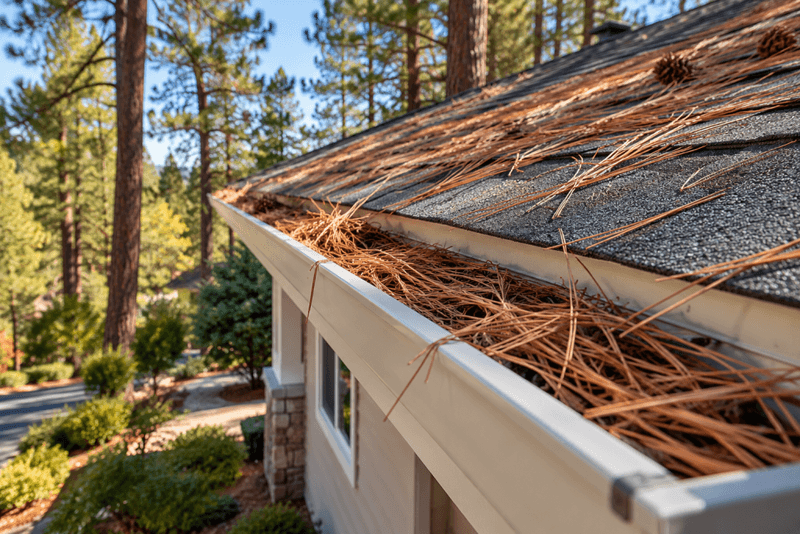
Climb a ladder after a windy week and you might find a small hay field up there. Pine needles slide down roof valleys and pack into gutters faster than most leaves.
Fire officials point to roofs and gutters as top landing spots for embers. A gutter stuffed with dry needles sits right at the edge of your roofline, which makes it an easy place for a spark to start trouble. CAL FIRE guidelines ask homeowners to keep roofs and gutters clear of needles and leaves.
Clogged gutters cause winter headaches too. Water backs up, spills over the edge, and can soak fascia boards or pool near your foundation.
Aim to clear them several times a year, especially before fire season peaks and again before the first big storms. A gutter scoop, a leaf blower, or a hired crew all work.
Gutter guards help, though fine pine needles can still poke through some mesh styles. Metal micro-mesh tends to block them better than foam or plastic inserts.
Stay safe on that ladder. Use a sturdy one, keep three points of contact, and ask someone to hold the base. Toss the cleared needles into compost or the green bin.
Interlocking Pine Needles Help Hold Soil On Sloped Hillsides
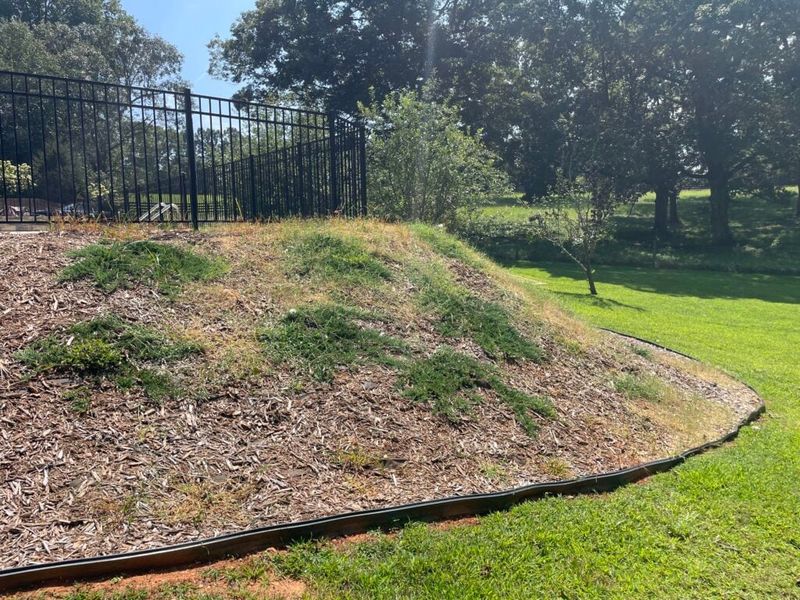
Watch rain hit a bare hillside and you can see soil start to wander. Pine needles act like a woven doormat that holds that ground in place.
Because the needles interlock, they resist washing downhill better than bark nuggets or loose leaves. They also soften the force of raindrops, so less soil splashes loose in the first place. Many landscapers favor pine straw for banks and slopes for this exact reason.
Spread a layer about 2 to 3 inches thick and press it lightly with a rake. On steep spots, tuck the ends into small terraces or pin them with jute netting until they settle.
Planting helps even more. Deep-rooted native shrubs and grasses suited to your region, such as California fescue or ceanothus, hold slopes for years while the needles protect bare spaces between them.
Fire rules still apply on hillsides. Slopes near your home fall within the same defensible space zones, and fire climbs uphill quickly. Keep needle mulch thin, patchy, and well away from the house on steep ground.
Winter is the season this trick shines. Get the mulch down before heavy rains arrive, and you might notice far less mud on your patio come spring.
Blueberries, Camellias, And Azaleas Enjoy A Pine Needle Blanket
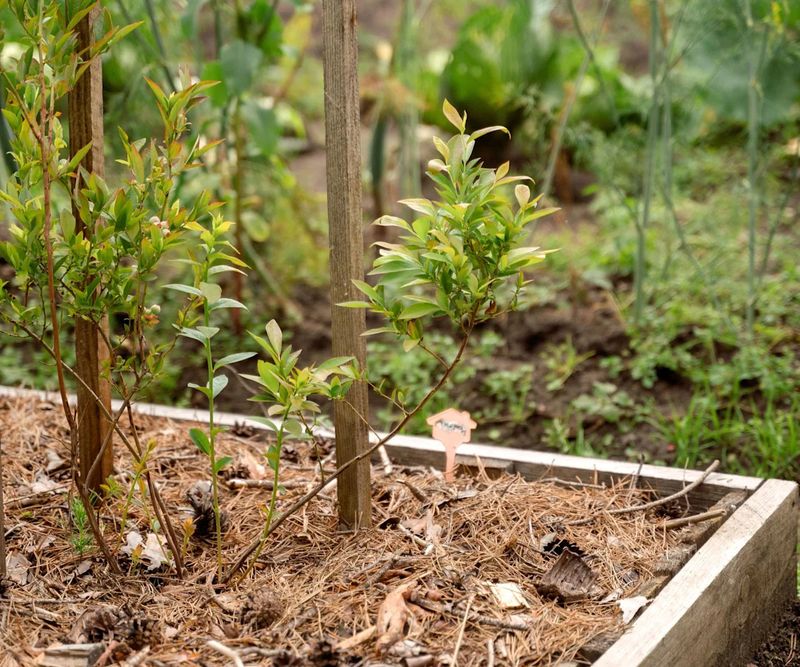
Camellias, azaleas, rhododendrons, and blueberries all prefer soil on the acidic side. They also love a cool, moist root zone, and pine straw delivers that beautifully.
Let’s be honest about the science. Needle mulch won’t lower your soil pH much, so it can’t fix yellow leaves caused by alkaline soil or hard water. For that, you’d need soil sulfur, an acid-loving fertilizer, or containers filled with an acidic potting mix.
What the needles do offer is comfort. These shrubs have shallow, fine roots that dry out fast and dislike heat. A loose 2 to 3 inch blanket keeps those roots evenly moist and shaded.
Strawberries are another fun match. Gardeners have tucked pine straw under strawberry plants for generations, since it keeps berries off damp soil and cuts down on rot.
I’ve seen blueberries in coastal gardens perk up after a season under pine needles, mostly thanks to steadier moisture. A soil test from a local lab will tell you where your pH truly stands.
Pull the mulch back slightly from stems, and feed with a fertilizer labeled for acid-loving plants in spring. Then sit back and enjoy those glossy leaves.
Shredded Pine Needles Make Slow But Steady Compost
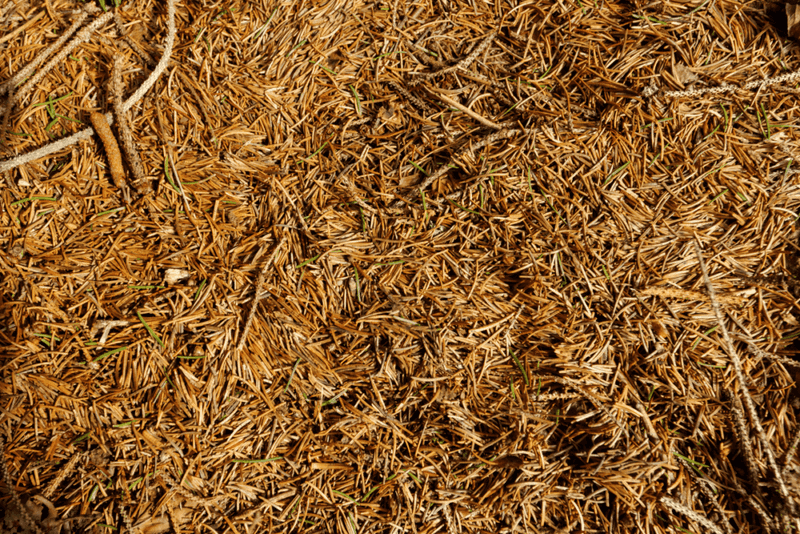
Patience is the main ingredient here. A waxy coating and natural resins let pine needles hold together for a long time, sometimes a couple of years in a cool compost pile.
Shredding speeds things up dramatically. Run the needles over with a mulching mower or feed them through a leaf shredder before they go in. Smaller pieces give microbes more surface to work on.
Keep needles to a modest share of the pile, roughly 10 to 20 percent. Mix them with nitrogen-rich greens like grass clippings, coffee grounds, and kitchen scraps. Turn the pile often and keep it about as damp as a wrung-out sponge.
Finished compost made with pine needles ends up close to neutral. That means you can spread it around tomatoes, squash, or flowers without worrying about acidity.
Hot, dry summers can stall a pile fast. Shade helps, and so does a lid or tarp to keep moisture in.
Fun fact: needles add structure to compost. Their stiff shape creates air pockets that help oxygen reach the center of the pile, which keeps smells down.
Any extra needles that won’t fit can sit in a separate bin as a slow leaf mold project.