What Wooly Aphids On Michigan Beech Trees Look Like (And When They’re Actually A Problem)
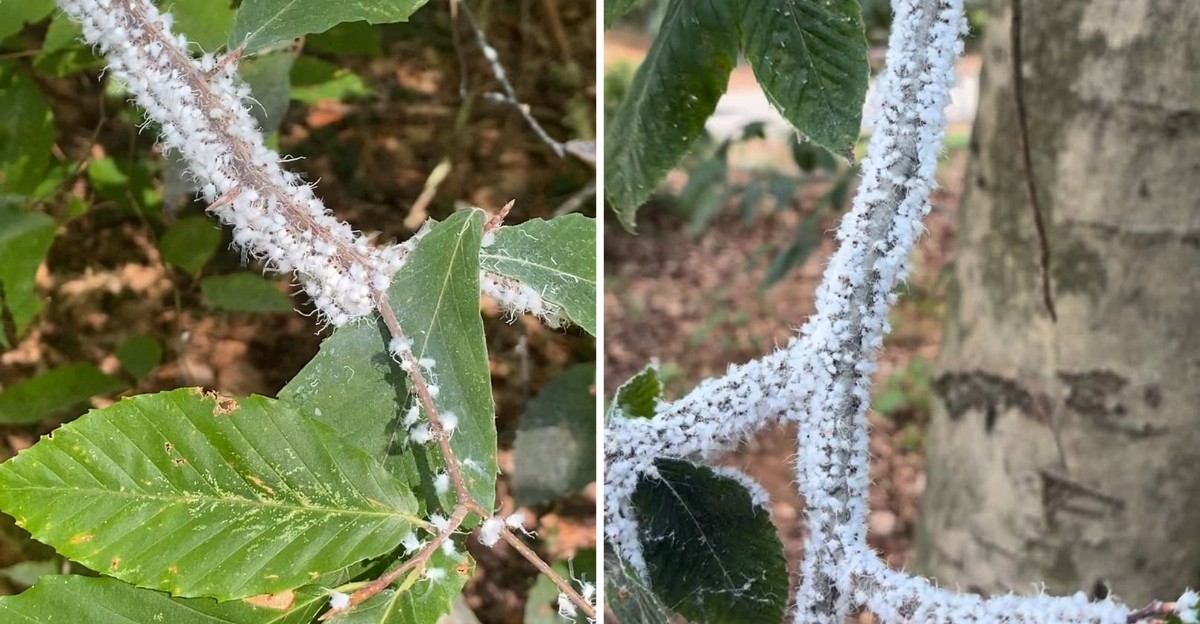
A quiet September walk in the north woods sounds peaceful until something small on a branch shifts. You lean closer, expecting a scrap of lint, and the lint leans right back at you.
Michigan woodlots hide plenty of odd autumn scenes, and this fuzzy white one ranks near the top. Cotton candy growing where cotton candy has no business growing tends to grab your full attention.
Your shoes stick faintly to the trail below, and the air carries a strange sugary smell. Something up in that canopy has been busy since July while nobody down here bothered looking up.
Spotting the fluff early can spare you sticky decks, cranky wasps, and one genuinely alarming black crust. Forests keep their secrets well, but this particular secret waves at anybody who pokes it.
White Fuzz On Undersides Of Leaves And Twigs
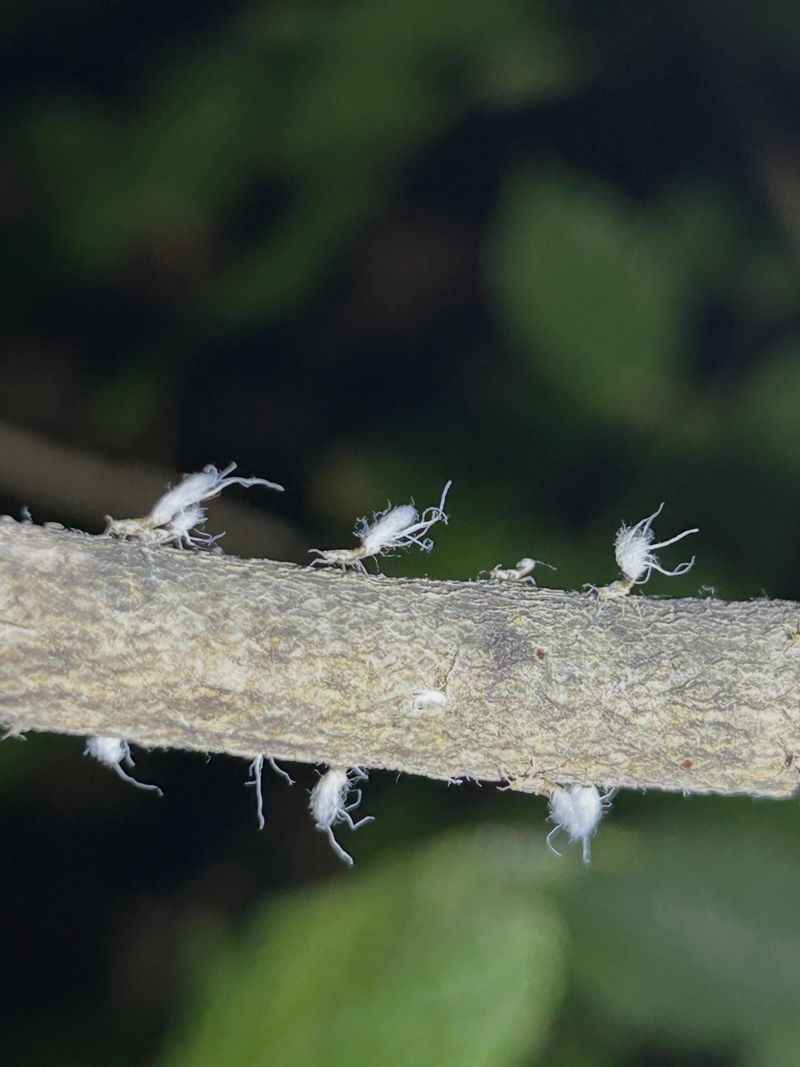
Picture a cotton ball that decided to move. Colonies of these insects coat twig undersides in dense white wax that shivers when you lean close.
Each insect measures about an eighth of an inch, hidden under waxy threads. Up close the fluff looks like tiny feathers or frost stuck to the bark.
Groups gather on branch tips, leaf undersides, and the shady inner parts of the crown. Touch one and the whole colony lifts its back end and waves.
That synchronized wiggle earned them the nickname boogie-woogie aphids decades ago, and the name stuck everywhere the insect turns up. The motion startles predators and makes identification fairly simple in the field.
Leaves above an active colony often feel tacky, and wasps or ants patrol nearby. Sunlight hitting the wax can make a branch appear dusted with snow.
Most colonies sit low enough to inspect with a step stool and hand lens. Pull a twig gently toward you rather than shaking the entire limb.
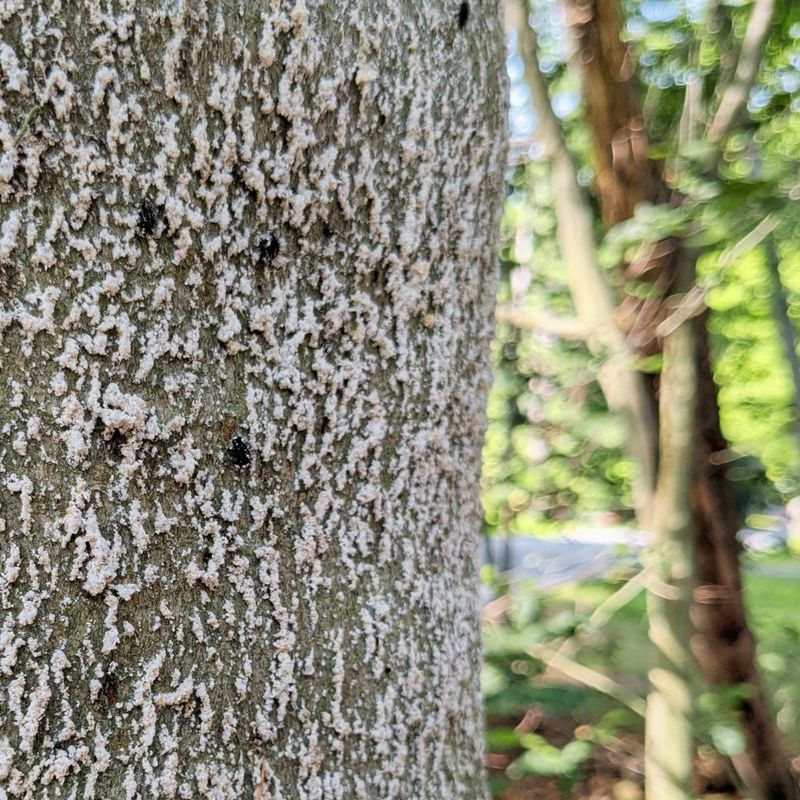
Wool stuck to smooth gray trunk bark is a different story worth checking carefully. Branch fluff usually means aphids, while trunk fluff points somewhere more serious.
Michigan sightings cluster in beech stands across the Lower Peninsula and shaded northern woodlots. Backyard trees near woods edges get colonized more often than isolated yard specimens.
Look during calm morning light when the wax stands out against dark foliage. A flashlight helps you spot colonies tucked deep inside the canopy.
Snap a photo with something for scale, like a coin or your thumb. Records taken now help you compare colony size again next August.
Late Summer And Early Fall Timing In Michigan Woodlots
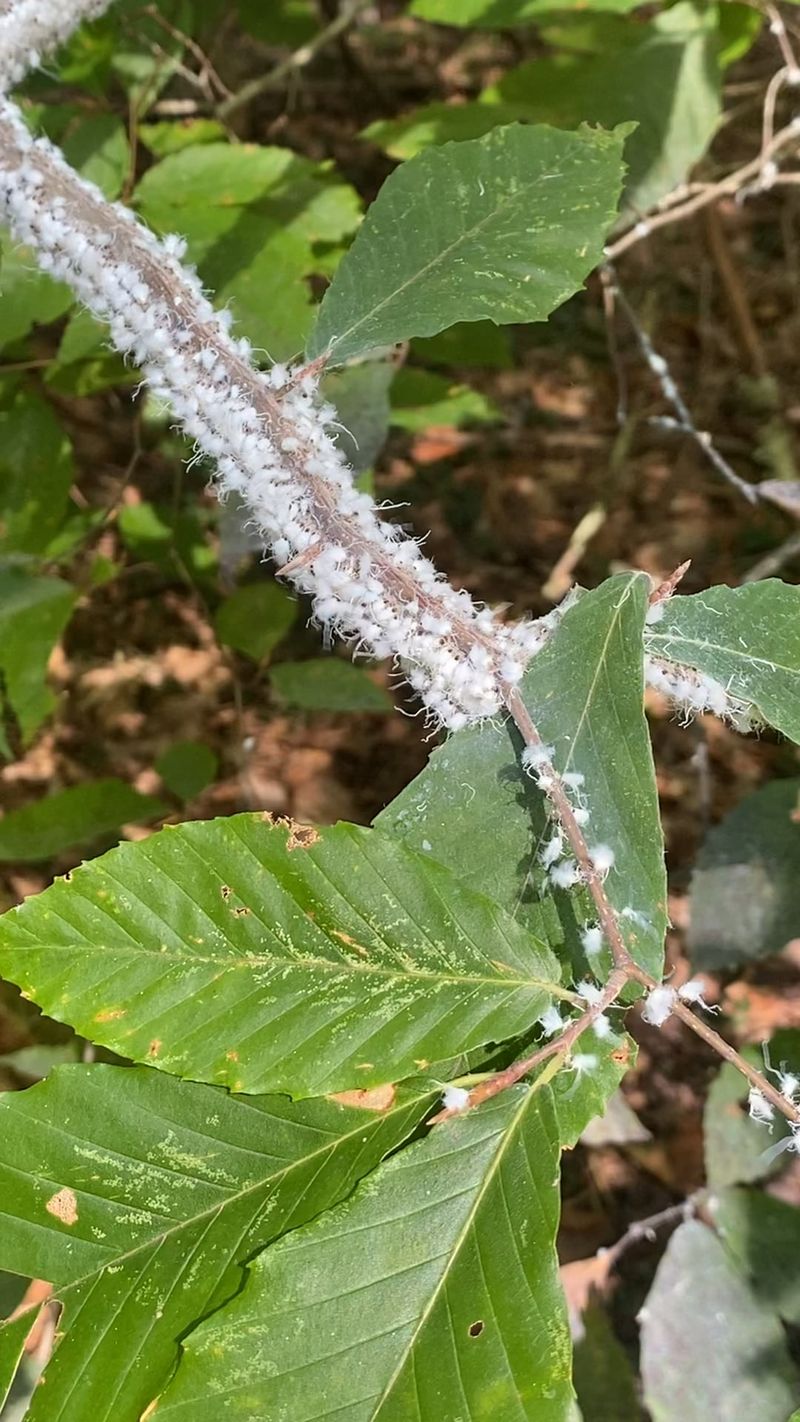
September walks reveal what July hid. Colonies stay small and easy to miss early in summer, then explode as the season turns.
Eggs overwinter in bark cracks, and the first generation appears quietly in late spring. Numbers build through July while the wax coating is still thin.
By mid-August the colonies look like fuzzy white sleeves wrapped around twigs. Michigan homeowners usually notice them for the first time around Labor Day.
Warm, humid stretches speed reproduction, so a muggy August often means a crowded September. Cool nights slow things down but rarely clear a colony out.
Your Michigan Garden Changes Every Week. Your Plan Should Too.
Gardening in Michigan changes quickly throughout the season. Every Friday you’ll receive a simple weekly plan showing exactly what to plant, prune, fertilize, harvest, and protect so you never miss the right timing.
Honeydew output peaks right along with colony size in the first weeks of fall. Sidewalks, decks, and parked cars under the tree turn sticky fast.
Late September brings winged forms and an egg-laying generation that sets up next year. Colonies then thin out on their own once hard frost arrives.
Acting in early September gives you the best window for reducing honeydew mess. Waiting until October mostly means cleaning up after the fact.
The white wool often sticks to bark long after the insects have gone. Old fluff can fool you into treating a branch that needs nothing.
Mark your calendar for a mid-August check and another in late September. Two quick looks each year catch the buildup before honeydew coats everything.
Weather records help too, since drought-stressed trees host bigger colonies the following season. Michigan’s dry summers of recent years have made heavy autumn colonies common.
Sticky Honeydew And The Black Sooty Film Beneath
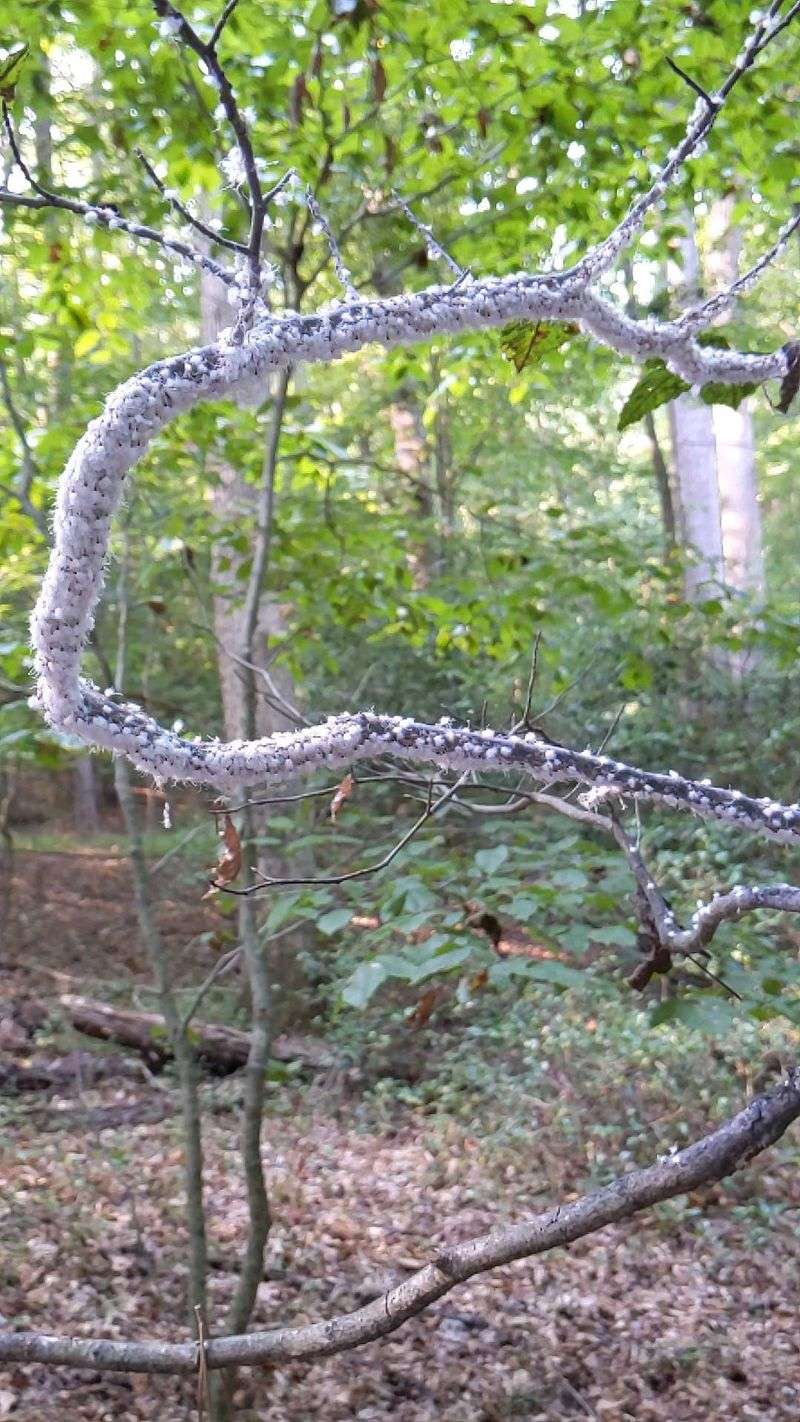
Park under an infested branch once and you will understand the complaint immediately. Sap-feeding insects drink more than they can use and drip the rest downward.
That sugary drip is honeydew, and it lands on leaves, bark, patios, and lawn furniture. Sunlight turns the film shiny, then dust sticks to it.
Fungi move in next, feeding on the sugar rather than the tree itself. One species forms a spongy yellow mass that hardens into crusty black lumps.
Beech blight fungus, Scorias spongiosa, is the odd growth people often mistake for rot. It looks alarming yet feeds only on the sticky residue.
Heavy sooty coatings block light from leaf surfaces and reduce food production. A tree already stressed by drought or root damage feels that loss more.
Wasps, hornets, and ants crowd honeydew sources, which matters near patios and play areas. Yellowjackets in September are cranky company for a backyard party.
Wash sticky decks and cars with warm soapy water before the film bakes on. Leaf surfaces clean themselves slowly once rain returns.
Black residue on bark can linger for a year or two after colonies fade. Scrubbing bark is unnecessary, and stiff brushes injure thin beech skin.
Potted plants and grass under the canopy may thin out from constant shade and syrup. Moving containers a few feet saves you repeated cleanup.
Honeydew also draws hummingbirds, chickadees, and butterflies looking for an easy sugar snack. Nature turns the mess into a September buffet.
Common Mix-Ups With Beech Scale And Powdery Mildew
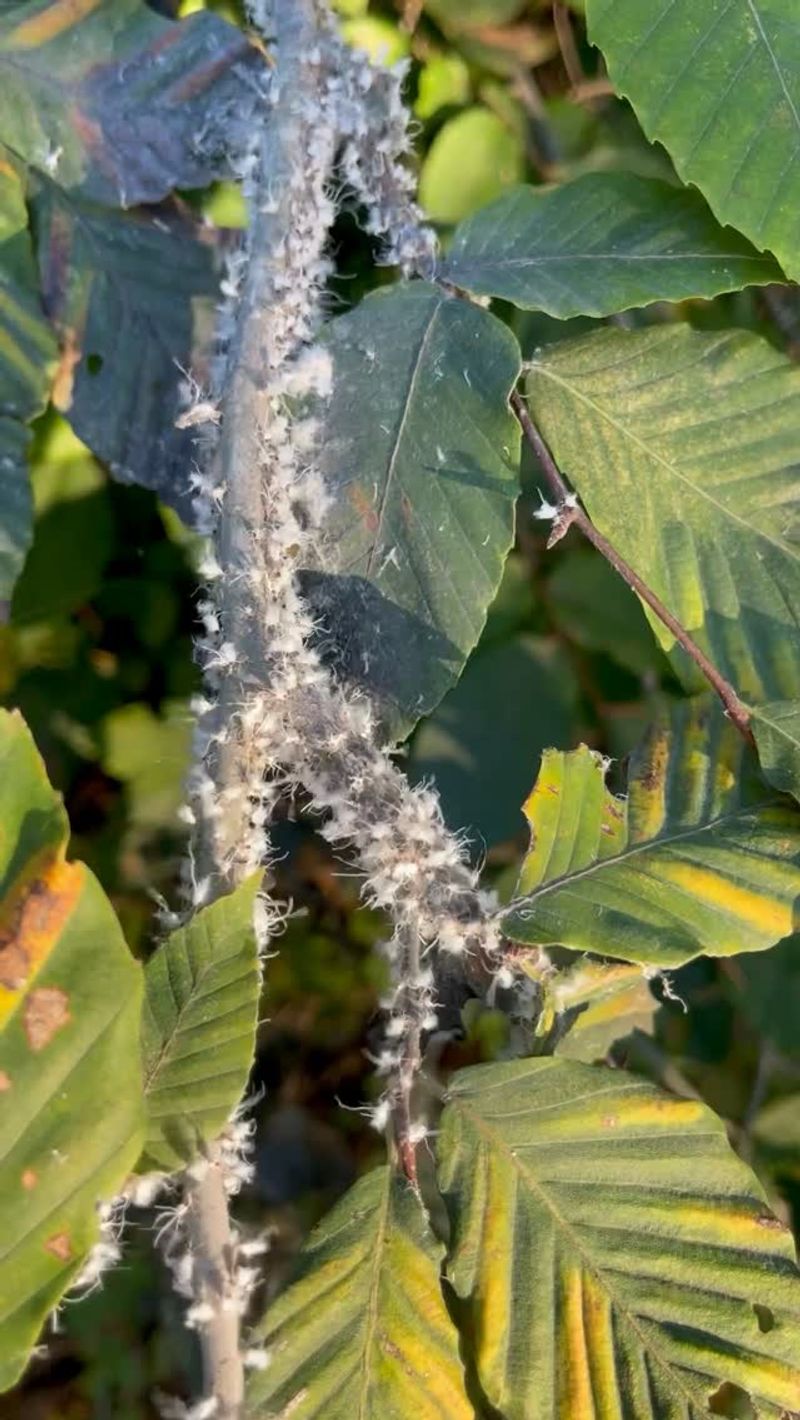
Homeowners see white fluff and assume one culprit, which leads to the wrong treatment. Two very different problems wear similar cotton costumes on Michigan beech.
Beech scale, a tiny insect, coats smooth trunk bark with fine white wax. Its feeding wounds open the door to a fungus behind beech bark disease.
Scale wool sits flat on trunks and large limbs, often in shaded crevices. Aphid wool puffs out in loose tufts on small twigs instead.
Poke a fluffy twig colony and the insects wave their rear ends at you. Scale insects stay put, glued in place with straw-like mouthparts.
Powdery mildew adds another look-alike, dusting leaf tops with pale gray film. That coating wipes off easily with a finger and shows no insects underneath.
Beech leaf disease, now confirmed in Michigan, shows dark bands between leaf veins. Bands look striped and leathery, with no wool involved at all.
Getting the diagnosis right decides whether you shrug or call a professional. Twig fluff is mostly cosmetic, while trunk fluff deserves quick expert attention.
MSU Extension staff will identify samples from photos or sealed bags of twigs. Clear pictures of bark, leaves, and insects speed up their answer.
Spider egg sacs and cottony mealybugs occasionally join the confusion on stressed trees. A hand lens settles most arguments in under a minute.
Write the date and branch height on every photo you take. Notes like that turn guesswork into a useful record for your tree.
Practical Treatment Options For Backyard Beech
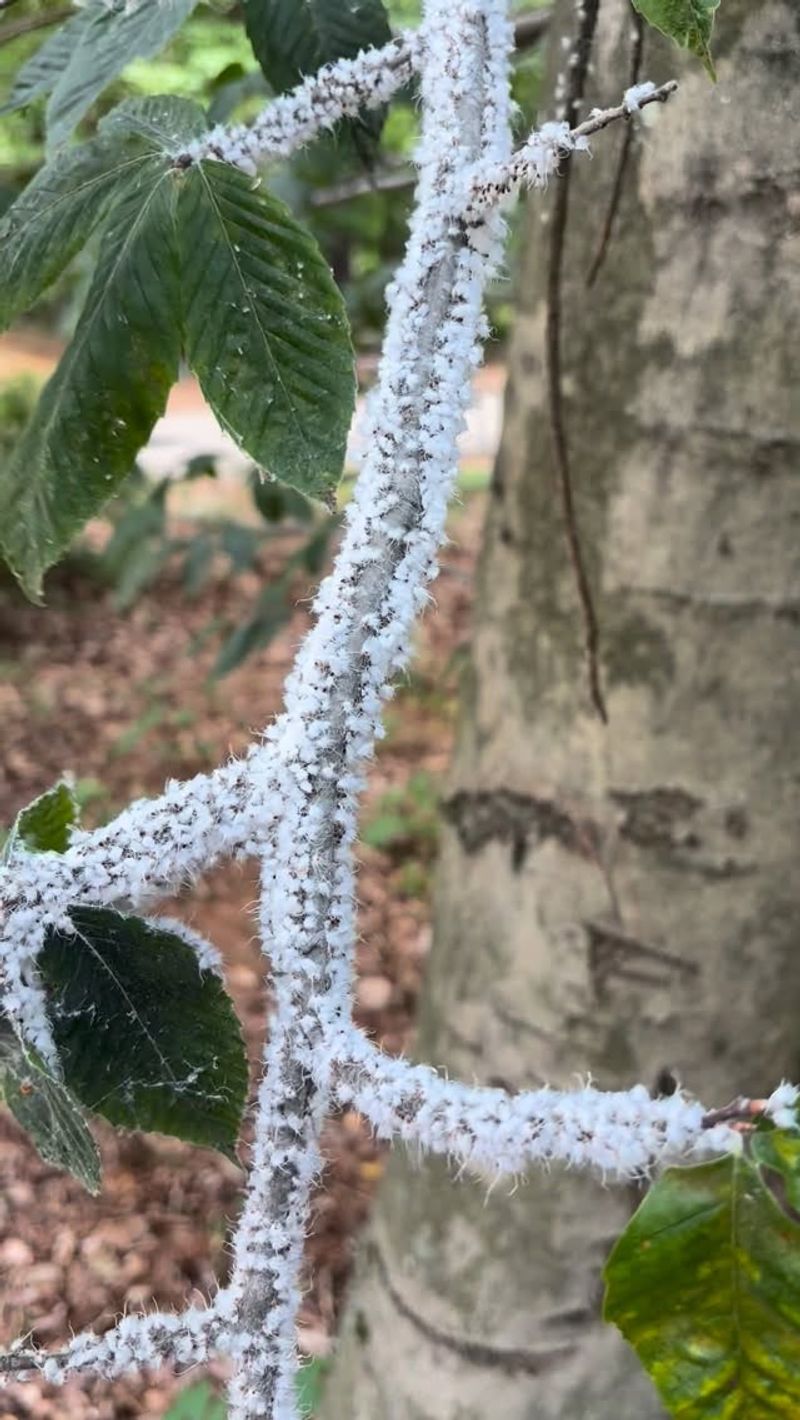
Good news first, since most twig colonies need less work than people expect. A garden hose handles more of the job than any spray bottle.
A firm blast of water knocks colonies off twigs and washes honeydew away. Repeat every week or two during September for steady control.
Insecticidal soap or horticultural oil works when you soak through the waxy fluff. Coverage matters more than strength, so spray until the tufts collapse.
Spray in early morning or evening, avoiding hot afternoons above eighty-five degrees. Oil applied to sun-baked leaves can scorch the foliage you are protecting.
Pruning out a few heavily coated twigs solves small problems in one snip. Bag the clippings so drifting insects do not resettle nearby.
Skip broad-spectrum insecticides, which wipe out lady beetles and lacewing larvae feeding there. Those helpers often crash a colony without any help from you.
Tall mature beech are better left to a certified arborist with proper gear. Ladder work under a crowd of angry yellowjackets ends badly for everyone.
Systemic soil treatments exist but rarely make sense for cosmetic damage this mild. Save that budget for watering and mulch, which help far more.
Water deeply during dry spells, giving the root zone an inch each week. Stressed roots make a tree far more appealing to sap feeders.
Rinse sooty mold from lower leaves with plain water once colonies are gone. Green comes back on its own after a few good rains.
Long-Term Tree Care And Prevention In Michigan Yards
Healthy trees shrug off fuzzy visitors, and that is the whole prevention strategy. Strong roots, steady moisture, and undisturbed soil beat any spray schedule.
Beech roots run shallow and wide, hating compaction from mowers and parked trailers. Keep heavy traffic and construction outside the drip line whenever possible.
Spread two to three inches of wood chip mulch over the root zone. Leave a gap around the trunk itself so bark stays dry.
Go easy on nitrogen fertilizer, which pushes soft growth that sap feeders love. A soil test tells you what the tree actually lacks before you feed.
Plant flowering perennials nearby to feed the wasps, hoverflies, and beetles doing free pest work. Yarrow, goldenrod, and mountain mint pull in plenty of them.
Check the trunk each spring for white wax, since that problem needs early action. Beech bark disease spreads through Michigan stands and rewards early detection.
Avoid pruning beech in wet spring weather, when wounds invite fungal trouble. Late winter cuts heal cleaner and keep the crown open to light.
Fun bit of history, the waving colonies have puzzled naturalists since the 1800s. Researchers believe the synchronized dance works alongside the aphids’ surprisingly aggressive group defense against predators.
Record colony locations each September so patterns become obvious over a few years. Trees hit yearly usually share a stress problem worth fixing.
Mature beech can live well past two hundred years with sensible, patient care. A few cottony autumns barely register on that kind of timeline.