What Yellow Leaves On Your North Carolina Tomatoes Are Really Telling You To Fix
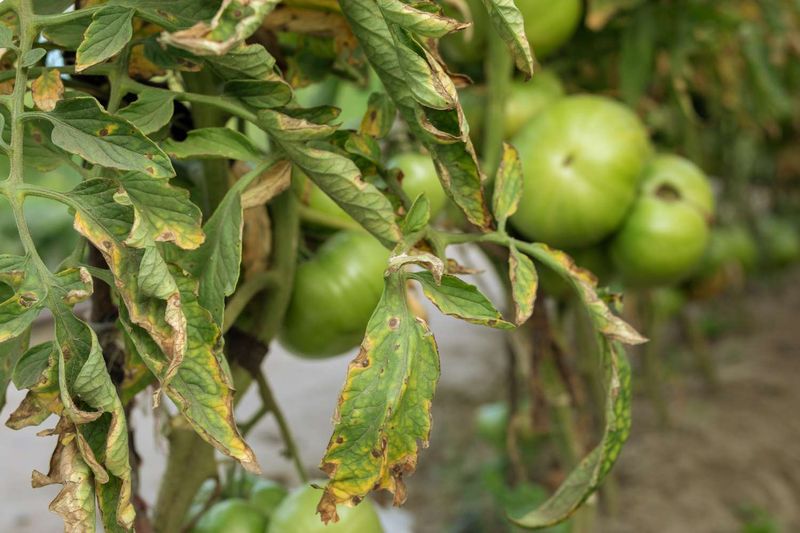
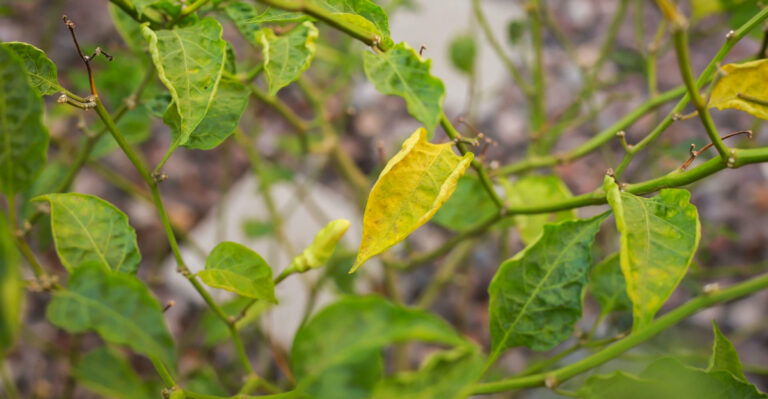
You walk out to check your tomatoes on a muggy July morning, coffee in hand, and there they are: yellow leaves creeping up from the bottom of the plant. Most gardeners reach for the fertilizer bag or the hose before they stop to look closely, and that reflex can actually make things worse. Yellow leaves on North Carolina tomatoes are a signal, not a sentence, and the spot where the color shows up tells a very different story depending on what else you see. Learning to read those clues before you act is the difference between a plant that recovers and one that keeps sliding.
Yellow Leaves Offer Clues, Not a Diagnosis
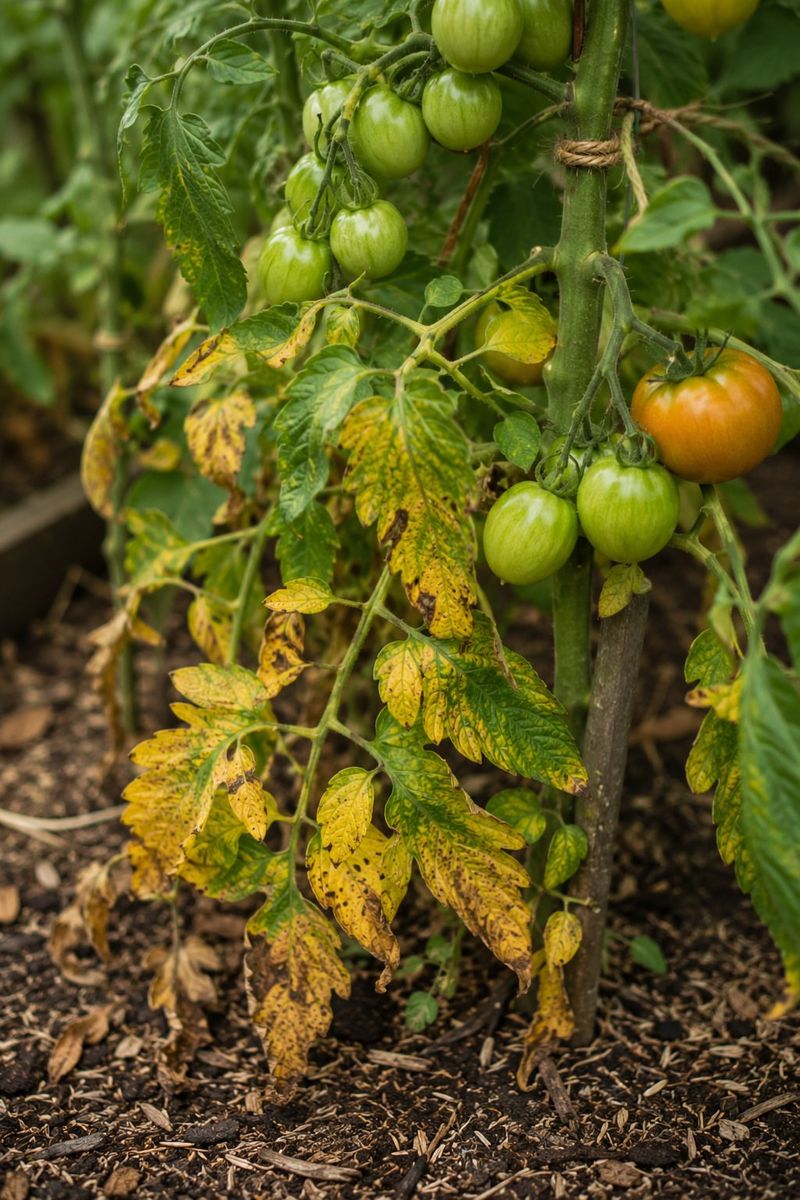
Pull up a stool next to your tomato plant and start at the bottom. A few pale lower leaves on an otherwise sturdy, upright plant with good color higher up may not call for any treatment at all. Observation is the first tool, and it costs nothing.
Yellow leaves show stress, but stress has a long list of causes: nitrogen shortage, waterlogged roots, foliar disease, viruses, herbicide drift, spider mites, nematodes, and plain old heat. NC State’s soils and plant nutrients guidance makes clear that nutrient problems are just one branch of a much bigger diagnostic tree. Matching the wrong treatment to the real problem wastes time and can push the plant further into decline.
The most useful thing you can do right now is combine several observations at once. Note where the yellowing starts, whether the leaf veins stay green or go pale too, whether spots or lesions appear, and whether the leaf surface feels normal or looks stippled. Check soil moisture with your finger, not just your eyes. Look at whether one plant is struggling or several in a row are fading together, because
University of Minnesota Extension’s tomato disorder guide points out that plant distribution can separate a soil problem from a disease moving through a planting.Work from the oldest leaves upward. If the yellowing is climbing fast, involves distorted new growth, or the plant is wilting despite moist soil, the urgency goes up. A few yellow leaves at the base of an otherwise vigorous plant? Watch it for a couple of days before you open a single bag or bottle.
Old Leaves Narrow the Possibilities
Evenly pale older leaves, the kind that fade from bright green to a washed-out yellow without spots, often suggest that the plant is short on nitrogen or that something is blocking nutrient uptake from the roots. Nitrogen is a mobile nutrient, meaning the plant pulls it from older tissue first when supplies run low, so the bottom leaves show the shortage before the top ones do.
Here is where it gets tricky, though. University of Illinois Extension explains that heavy rain or overwatering can saturate the soil and suffocate roots, cutting off nutrient absorption even when fertilizer is present. After a stretch of afternoon thunderstorms, common across the Piedmont and Coastal Plain in July and August, an evenly pale lower leaf may reflect root stress rather than an empty nutrient tank. Adding more fertilizer to a plant with damaged roots will not fix the problem and may add to the salt load in already stressed soil.
Your North Carolina Garden Changes Every Week. Your Plan Should Too.
Gardening in North Carolina changes quickly throughout the season. Every Friday you’ll receive a simple weekly plan showing exactly what to plant, prune, fertilize, harvest, and protect so you never miss the right timing.
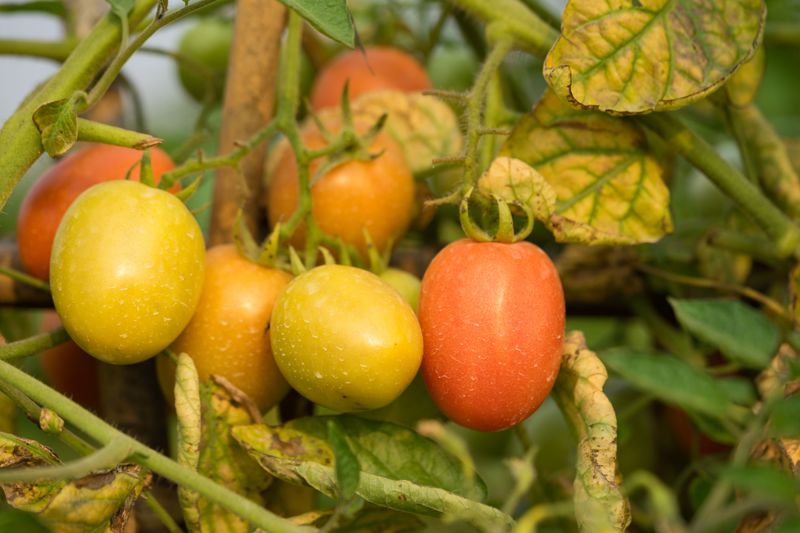
Older leaves that yellow between still-green veins tell a slightly different story. That pattern can suggest magnesium deficiency, because NC State’s Extension Gardener Handbook notes that magnesium deficiency in North Carolina typically appears first on older foliage. But green veins alone do not confirm it. Disease, root damage, and nutrient interactions can produce overlapping patterns, and University of Minnesota Extension’s fertilizing guide cautions that visual diagnosis of nutrient deficiencies is genuinely unreliable without a soil or tissue test.
One more thing to remember: older leaves are not immune to foliar disease. NC State’s Septoria leaf spot resource notes that this common North Carolina disease often starts on the lowest leaves and works its way up. Check the whole picture before you decide the problem is underground.
Spots Shift Attention Toward Leaf Disease
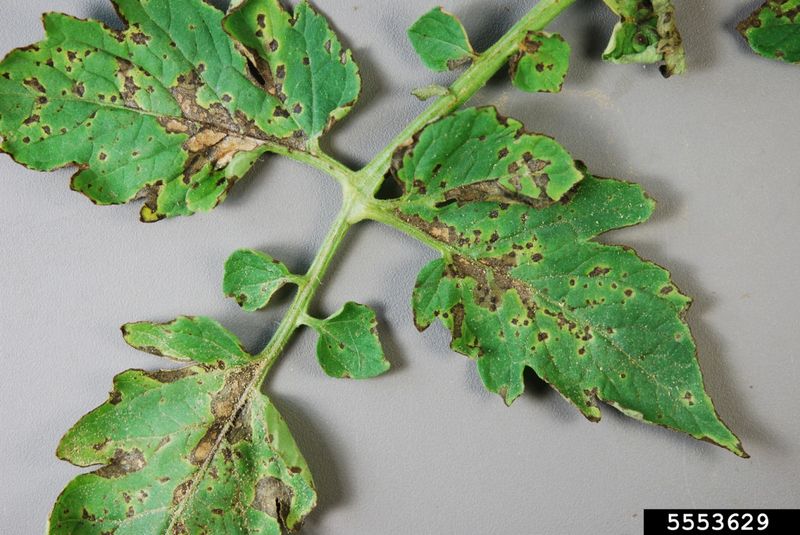
Small brown or gray spots ringed by yellow halos on the lower leaves are a different kind of message entirely. That pattern raises concern for Septoria leaf spot or bacterial spot rather than a fertilizer shortage, and reaching for a bag of granules will not slow either one down.
NC State’s Septoria leaf spot publication explains that this disease thrives in moderate temperatures with frequent rainfall, conditions that North Carolina serves up reliably from late spring through late summer. The spores spread by splashing water, so every afternoon thunderstorm that hits bare soil and bounces back up onto the lower leaves is doing the pathogen a favor. NC State’s bacterial spot guide describes a similar wet-weather pattern for that disease, and the two can look alike enough that visual identification alone is not always reliable.
Inspect both the top and bottom of the leaf surface before drawing any conclusions. Remove leaves that are fully yellow or heavily spotted, especially any that are touching or near the soil surface, and discard the material away from the garden rather than leaving it on the ground nearby. NC State’s disease control chapter lists sanitation, improved air movement, and dry foliage as meaningful components of tomato disease management in North Carolina.
Water at the base of the plant, not overhead. Drip lines or careful hand watering keeps the leaves drier, and drier leaves give these pathogens fewer entry points. Crowded plants stay wet longer after rain, so if your tomatoes are shoulder to shoulder, that is a risk factor worth correcting next season.
New Growth Deserves a Different Check
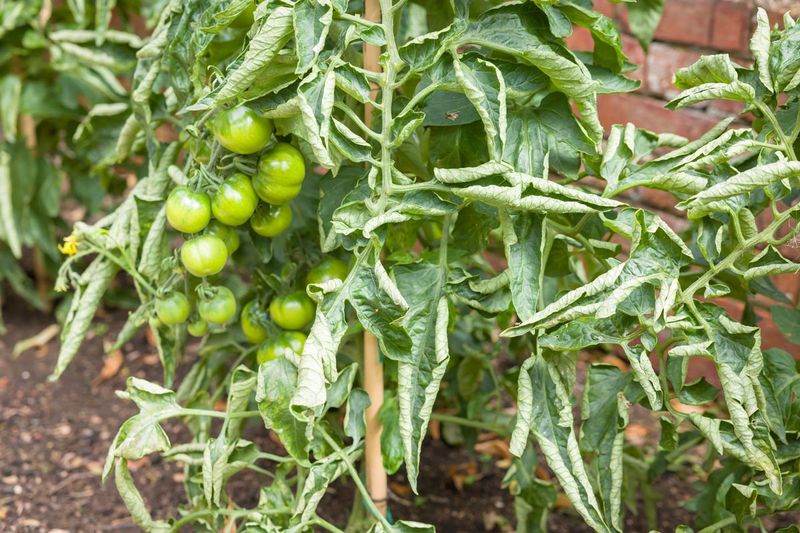
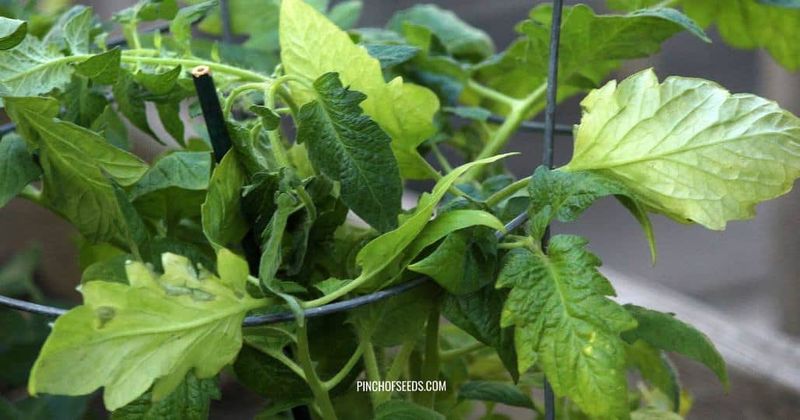
When the yellowing shows up on the newest leaves at the top of the plant rather than the old ones at the bottom, that is a signal to stop and look harder before doing anything else. Mobile nutrients like nitrogen and magnesium move out of older tissue first, so they rarely cause trouble on young growth. If the new leaves are pale, curled, crumpled, stunted, or if the plant has dropped its flowers and looks bushier than it should, the cause is more likely to be a virus, herbicide injury, or an immobile micronutrient problem.
NC State’s tomato yellow leaf curl virus resource notes that this disease affects young leaves first, which is the opposite of the older-leaf start typical of magnesium deficiency. NC State has also observed infected transplants from other regions appearing in western North Carolina, and symptoms can take up to three weeks to show after a plant is exposed. That means a transplant that looked healthy at the garden center can develop symptoms in your raised bed weeks later, with no obvious explanation.
Herbicide drift is another possibility that many gardeners overlook. Lawn herbicides applied nearby on a breezy day, or residue in grass clippings used as mulch, can produce distorted, cupped, or yellowing new growth that looks like a virus. University of Minnesota Extension’s tomato disorder overview includes herbicide injury as a cause of young-leaf distortion that is frequently misread.
Skip the reflex fertilizer application when new growth is the problem. Adding nutrients will not help a viral infection or herbicide injury, and it may complicate the picture further. If the plant is declining quickly or the new growth looks genuinely strange, NC State’s diagnostics handbook recommends submitting photographs or a sample to a county Extension office or the Plant Disease and Insect Clinic before choosing any treatment.
Wilt Sends You to the Stem and Roots
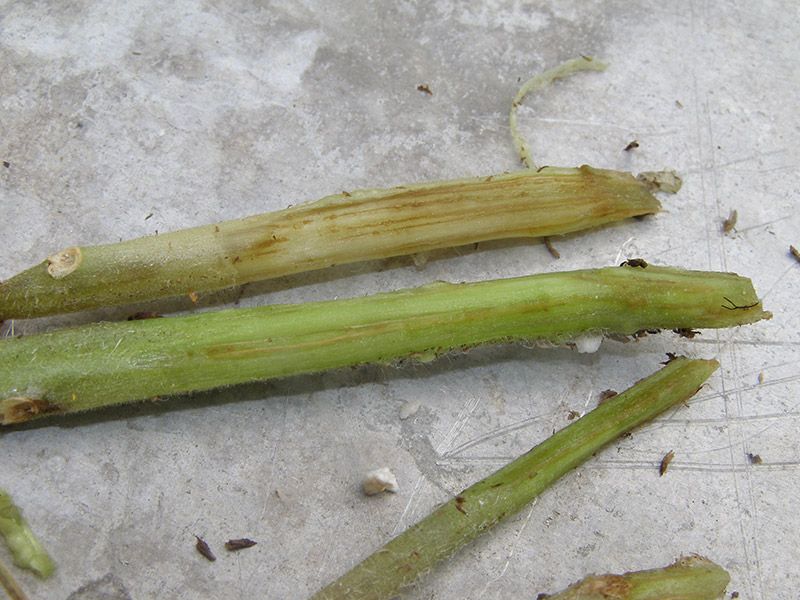
Yellowing that travels with wilting is a different category of problem, and it sends the investigation underground. If one side of the plant droops while the other stays upright, if the plant wilts repeatedly around midday even when the soil feels moist, or if a stem cut near the base shows brown or tan tissue inside instead of clean white, those are signs that raise concern for a wilt disease rather than a nutrient shortage.
University of Minnesota Extension’s Fusarium wilt guide describes how Fusarium and Verticillium wilt fungi can colonize the vascular tissue that carries water up the plant, starting symptoms in lower leaves and working upward through the canopy. The plant starves for water even when the soil around it is perfectly moist, because the pipeline is blocked. Adding water or fertilizer to a plant in that condition does not address the actual problem.
Root-knot nematodes add another layer of complexity. NC State’s root-knot nematode publication explains that these microscopic soil pests can cause above-ground yellowing and stunting while the real evidence stays hidden underground in the form of swollen galls on the roots. If a plant is declining without a clear foliar disease pattern, gently pull it up and examine the root system. Knobby, beaded swellings along the roots are a strong indicator, but confirmation requires a proper nematode assay rather than a visual guess.
The UMN tomato leaf-discoloration diagnostic tool reinforces that moist soil does not prove healthy roots. A plant with rotted, infected, or nematode-damaged roots can sit in perfectly watered soil and still decline steadily. When the stem and root symptoms do not add up, diagnostic testing is the only reliable next step.
North Carolina Conditions Can Blur the Pattern
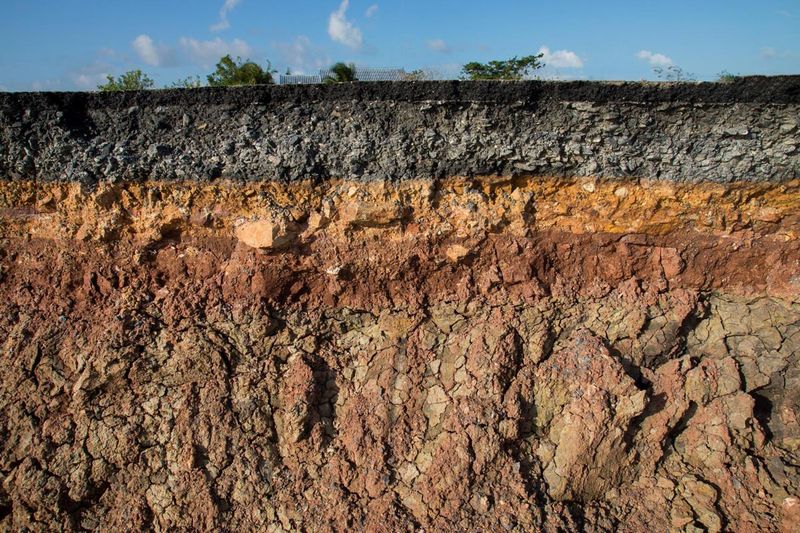
The same yellow-leaf pattern can have genuinely different causes depending on where in North Carolina your garden sits, and that is not a small distinction. A tomato growing in Piedmont red clay after three days of rain is dealing with a fundamentally different root environment than one growing in a sandy Coastal Plain bed or a container on a Raleigh deck.
Piedmont red clay holds water long after a storm and can become compacted enough to restrict root growth, essentially creating a soggy, airless zone where roots struggle even if the surface looks fine. NC State’s fresh-market tomato guide for the Piedmont and Coastal Plain highlights how soil type shapes root health and nutrient availability across the state. Sandy Coastal Plain soil, by contrast, drains fast and can leach nutrients more readily, meaning a plant there may actually be short on nitrogen even when watering looks adequate on paper.
Containers are their own category. NC State’s container-growing handbook notes that pots dry out faster and hold a smaller nutrient reserve than in-ground beds, so both drought stress and nutrient depletion can develop quickly, especially during a hot North Carolina week with no rain.
For watering, NC State’s home tomato guide recommends soaking the soil 6 to 8 inches deep at roughly 7-day intervals, adjusting for rainfall and soil type. NC State’s vegetable gardening handbook offers about 1 inch of water per week as a general reference, with fruiting vegetables sometimes needing 1 to 2 inches during dry stretches. A fixed schedule applied the same way to clay, sand, and a container will produce different outcomes in each.
One plant can also carry more than one problem at once. Root stress from poor drainage can weaken a tomato just enough to let a leaf disease take hold, and then you are chasing two causes with symptoms that overlap. Work through the possibilities one layer at a time.
Inspect Before You Feed or Spray
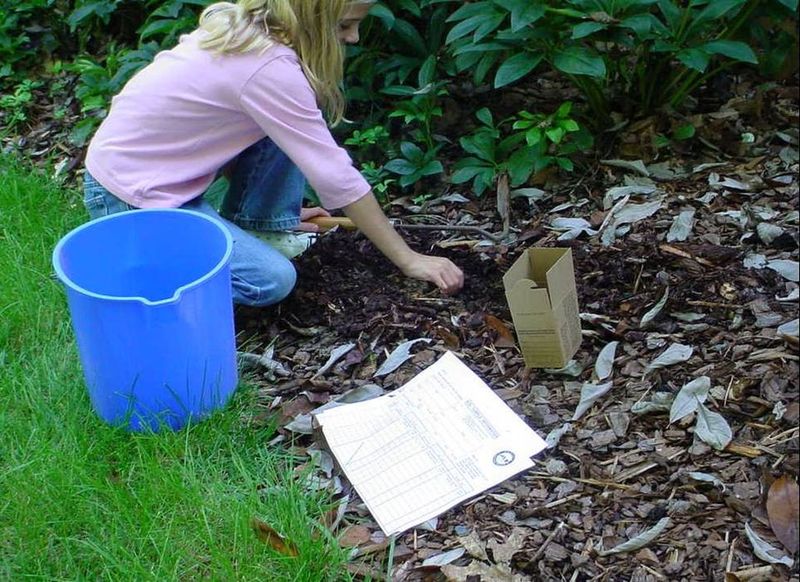
Before you open a bag, turn on the hose, or reach for a spray bottle, run through a short inspection sequence. Start with the soil. Push a finger 2 inches into the ground near the root zone. Wet and compacted?
Adding water is the wrong move. Bone dry and pulling away from the pot? That changes the conversation entirely.
Next, flip the leaves and look at the undersides. Fine yellow stippling or a faint bronze cast on the leaf surface, sometimes with thin webbing in the corners where the leaf meets the stem, raises concern for spider mites. Colorado State Extension’s spider mite guide notes that mites thrive in hot, dry conditions, which North Carolina delivers reliably in July and August. Aphids and whiteflies cluster on the underside of leaves and can leave a sticky residue.
NC State’s tomato pest resource describes their direct feeding damage on home-garden plants as often less severe than their potential to spread disease from plant to plant.
Compare the affected plant with healthy ones nearby. Is the pattern isolated to one plant, or are several declining in the same direction? That spatial clue can separate a soil or root problem from a disease moving through your planting.
Soil testing is the most defensible way to guide fertilizer decisions. NC State’s soil testing guide explains that a standard test identifies pH, phosphorus, potassium, and lime needs. Note that nitrogen is not routinely included because its predictive value in soil is limited. A pH between 6.0 and 6.5 is generally suitable for most North Carolina vegetable gardens.
If a test points toward a real nitrogen shortage and the soil is well-drained, NC State’s home tomato guide suggests sidedressing with 2 to 3 tablespoons of a complete fertilizer per plant after fruit set, kept 4 to 6 inches from the stem, with a repeat 4 to 6 weeks later. Those rates are a labeled example, not a substitute for what your own soil test recommends.
Routine Epsom salt, calcium sprays, and extra water are not universal fixes. Each can fail or worsen a problem it was not meant to solve. For disease control, NC State’s diagnostic handbook recommends identifying the host, pest, or pathogen before choosing any chemical. Any product you apply must be currently labeled for tomatoes in North Carolina, used exactly according to the label, with attention to harvest intervals, protective equipment, and pollinator and water safety.
Reduce Stress and Get a Diagnosis When Needed
Good habits before trouble starts are worth more than any treatment after it arrives. Water at the base of the plant rather than overhead, keep 2 to 3 inches of mulch around the stem to hold moisture and reduce soil splash, and give plants enough room to breathe. NC State’s home tomato guide recommends 1.5 to 2 feet between plants in a row and 3 to 4 feet between rows, with caged plants needing up to 3 to 4 feet of spacing. Crowded foliage stays wet longer after North Carolina’s afternoon storms, and wet foliage is an invitation for the pathogens that cause Septoria and bacterial spot.
Remove fully yellowed or badly spotted leaves and discard them away from the garden. NC State’s disease control chapter lists sanitation alongside air movement and dry foliage as practical risk-reduction steps, not guaranteed cures, but genuinely useful ones. When you replant next season, look for varieties labeled VFN, which signals resistance to Verticillium wilt, Fusarium wilt, and root-knot nematodes. Resistance reduces risk; it does not make a plant immune to every disease, drainage problem, or insect pressure.
Hot, dry stretches in August can cause physiological leaf roll, where leaves curl upward and feel firm and leathery. University of Minnesota Extension notes that this disorder usually does not reduce growth or yield noticeably and does not require a pesticide response. It is the plant managing heat, not signaling collapse.
When a plant is rapidly declining, wilting despite moist soil, distorted on new growth, or showing symptoms you cannot explain after a careful look, that is the moment to reach out. NC State’s diagnostics handbook and your local county Extension office are built exactly for this, and the Plant Disease and Insect Clinic can work from photographs or a physical sample. The plant is already telling you something, the job is to listen carefully enough to hear the right answer.