What Your Ohio Boxwoods Need In June To Stay Full And Green All Summer
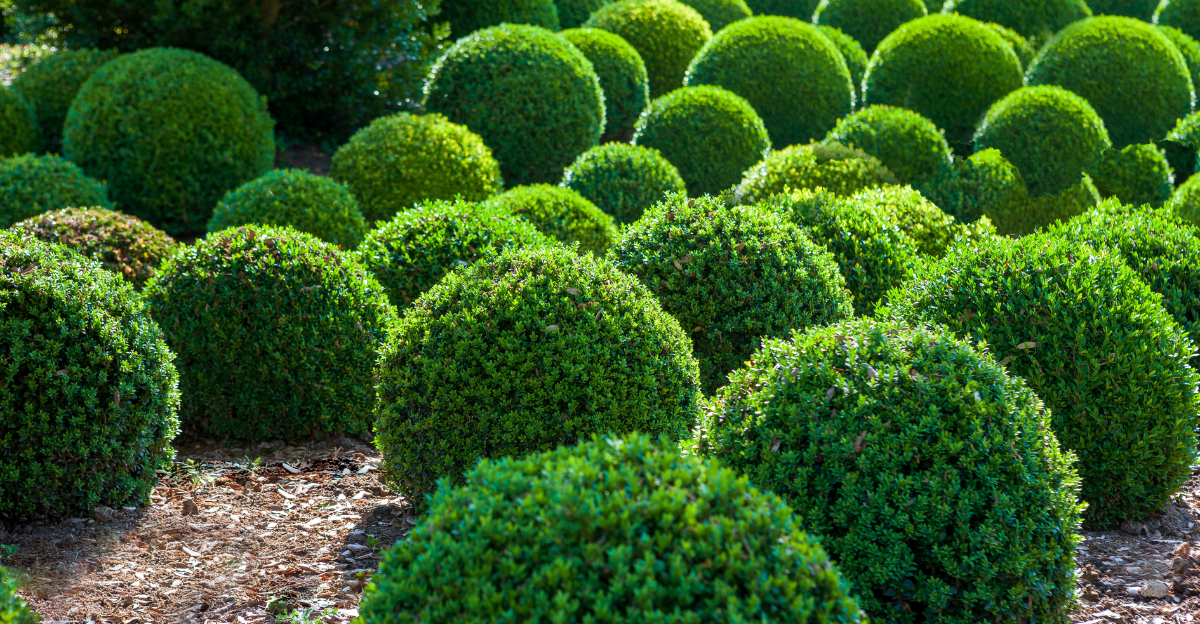
Boxwoods are the backbone of a lot of Ohio yards. Reliable, structured, evergreen.
Most homeowners plant them, trim them occasionally, and assume they will just handle themselves. That assumption holds up fine until summer arrives.
Then the shrubs start telling a different story through yellowing leaves, thinning patches, and that washed out color that is hard to ignore once you notice it.
June is actually a critical month for boxwoods in Ohio, and most people treat it like any other month in the garden calendar.
That gap between what boxwoods need in June and what they typically get is exactly where summer problems start taking shape. Boxwoods are not asking for much.
A few specific things done at the right time make a noticeable difference by August. Miss the window though, and you spend the rest of summer managing decline instead of preventing it.
1. Check The Soil Before Summer Heat Builds
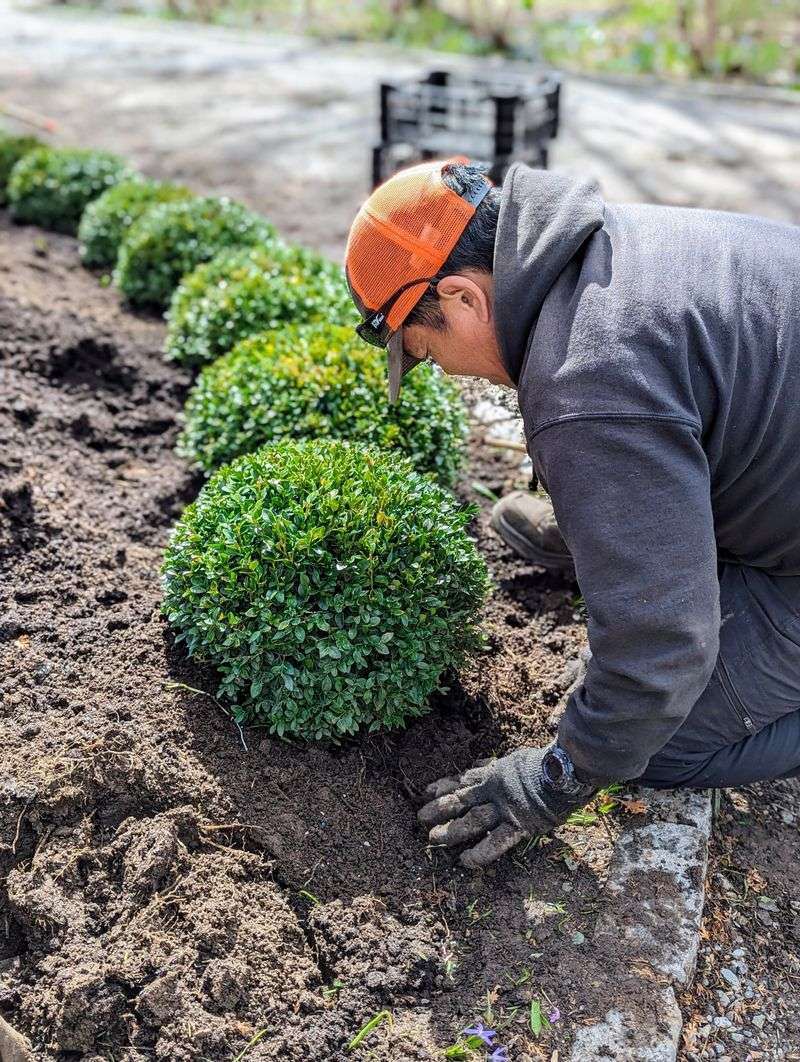
A tidy green hedge can hide dry soil long before the leaves start to look tired. Many gardeners assume their boxwoods are fine after a light rain, but surface moisture does not always reach the root zone where it matters most.
June weather in this state can shift quickly, with warm winds and bright sun pulling moisture out of the ground faster than expected.
The best way to check is simple. Push your finger two to three inches into the soil near the outer edge of the shrub, not right at the stem.
If it feels dry at that depth, the roots are likely asking for water even if the top of the ground looks damp.
Mulch depth can also affect your reading. A thick layer of mulch may feel cool and moist on top while the soil underneath is drier than it should be.
Checking below the mulch layer gives you a more accurate picture. Making this a weekly habit in June helps you stay ahead of moisture stress before foliage shows any signs of trouble.
Consistent monitoring is a small effort with a meaningful payoff for the health of your shrubs.
2. Water Deeply Before Leaves Start Bronzing
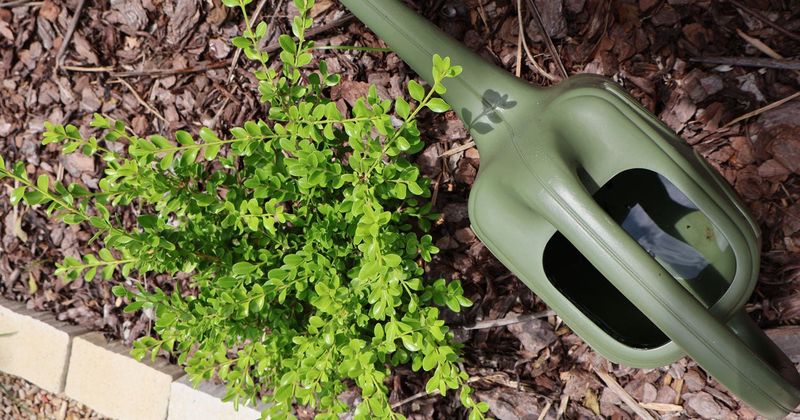
Dull, slightly off-color foliage is one of the first signs that a boxwood is running short on water. By the time bronzing appears, the shrub has already been stressed for a while.
Waiting until leaves change color means playing catch-up during the hottest part of summer, which is harder on the plant than staying consistent through June.
Shallow, frequent watering is a common habit that does not serve boxwoods well. A quick splash from a hose wets the surface but rarely reaches the deeper roots where the plant draws most of its moisture.
Slow, deep watering encourages roots to grow downward, which helps the shrub handle dry spells more easily on its own.
A good rule of thumb is to water slowly at the soil level until moisture soaks down several inches. This might mean running a soaker hose for thirty to forty-five minutes during a dry stretch rather than a quick sprinkle every day.
Your Ohio Garden Changes Every Week. Your Plan Should Too.
Gardening in Ohio changes quickly throughout the season. Every Friday you’ll receive a simple weekly plan showing exactly what to plant, prune, fertilize, harvest, and protect so you never miss the right timing.
Newly planted boxwoods need more attention than established ones, but even mature shrubs benefit from a deep drink when rainfall has been light for a week or more. Consistency in June sets a strong foundation for summer.
3. Refresh Mulch Without Burying The Stems
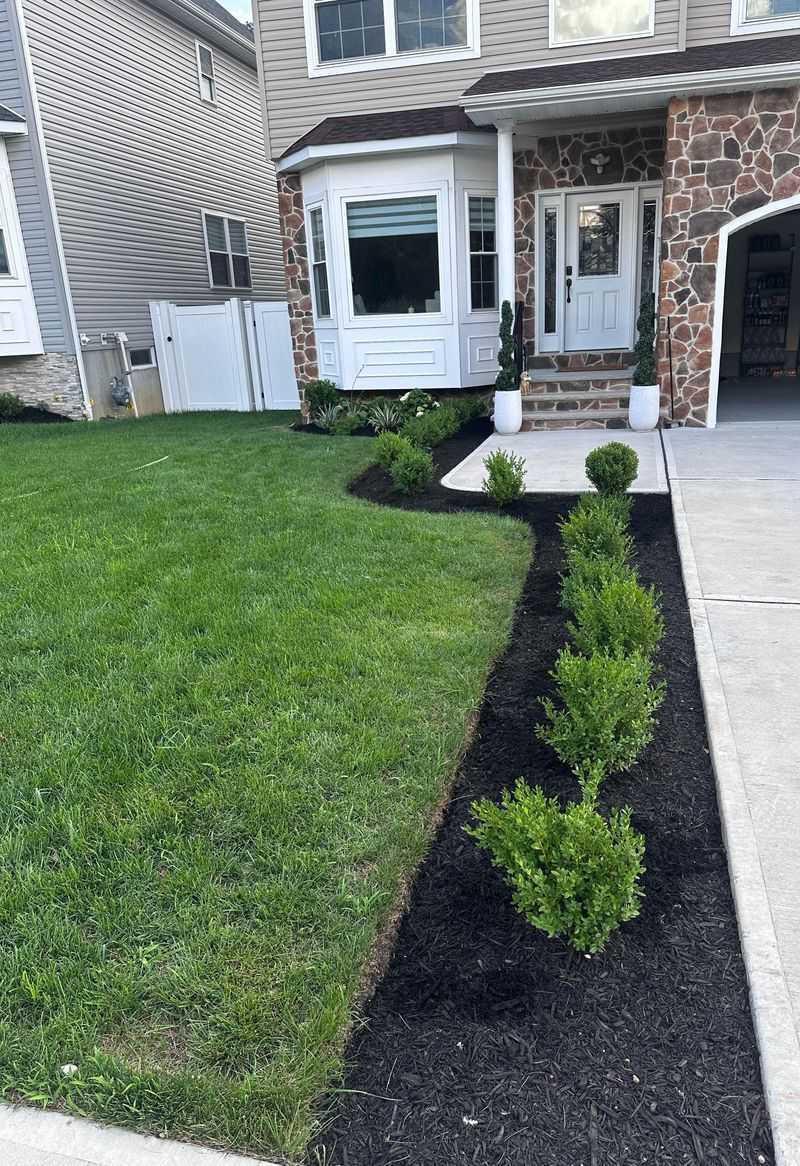
Fresh mulch in June does two jobs at once. It slows moisture loss from the soil during hot days and helps keep root zone temperatures from spiking when the sun bears down on bare ground.
For boxwoods, which have relatively shallow roots, that kind of temperature buffering can reduce stress during the warmest weeks of summer.
The catch is that mulch piled against the base of the stems creates a different kind of problem. Trapped moisture near the bark can encourage rot and fungal issues over time.
Keeping mulch pulled back two to three inches from the stem gives the base of the shrub room to breathe while still protecting the surrounding root area.
A two to three inch layer spread evenly over the root zone is usually enough. Going thicker than four inches can actually hold too much moisture and limit oxygen exchange in the soil.
Shredded bark, wood chips, or composted leaf material all work well around boxwoods. If last year’s mulch is still in reasonable shape, you may only need to fluff and top it off rather than replace it entirely.
A small refresh now can carry your shrubs through the dry stretch ahead with much less watering effort on your part.
4. Thin Crowded Growth To Improve Airflow
After a wet spring, boxwoods can fill in quickly, and all that lush new growth sounds like a good thing. Then you realize the interior of the shrub is now dark, damp, and barely moving air.
Dense canopies trap humidity after rain or irrigation, and that lingering moisture creates conditions where fungal problems are more likely to take hold.
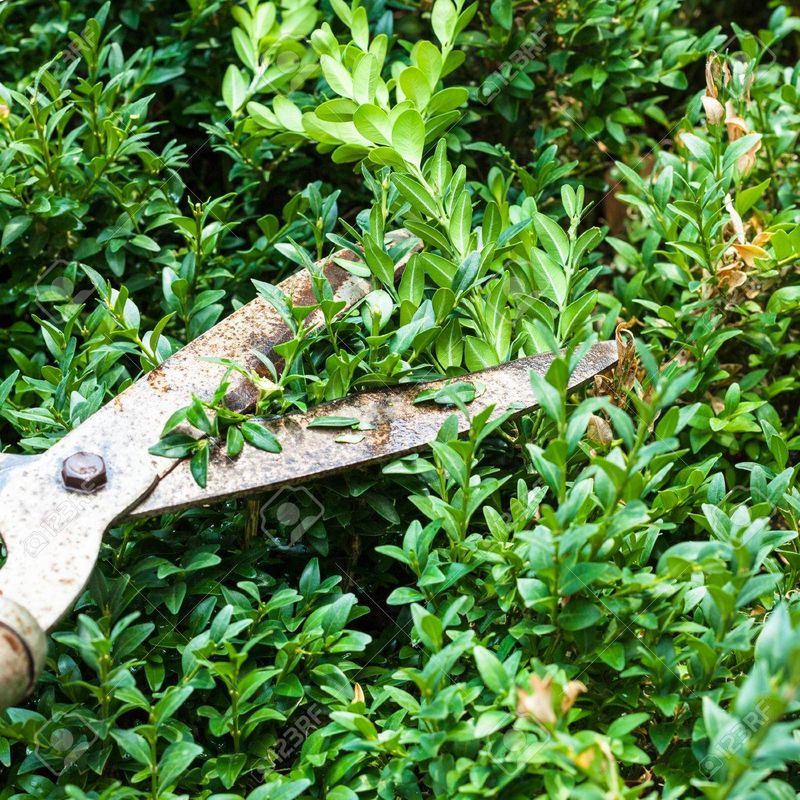
Selective thinning is different from shearing the outside of the shrub. The goal here is to remove a few stems from inside the canopy to let light and air filter through more freely.
This does not mean stripping the interior bare. Removing just enough growth to break up the densest pockets can make a noticeable difference in how quickly the foliage dries after a rain.
Better airflow also makes it easier to spot problems early. When you can actually see into the shrub, spotting discolored leaves, blistered foliage, or unusual spots becomes much simpler.
Hand pruners work better than shears for this kind of careful interior work. Take a few stems at a time, step back to check, and avoid cutting so much that you change the overall shape of the shrub.
A little selective thinning in June goes a long way toward a healthier shrub by late summer.
5. Skip Heavy Shearing During Hot Weather
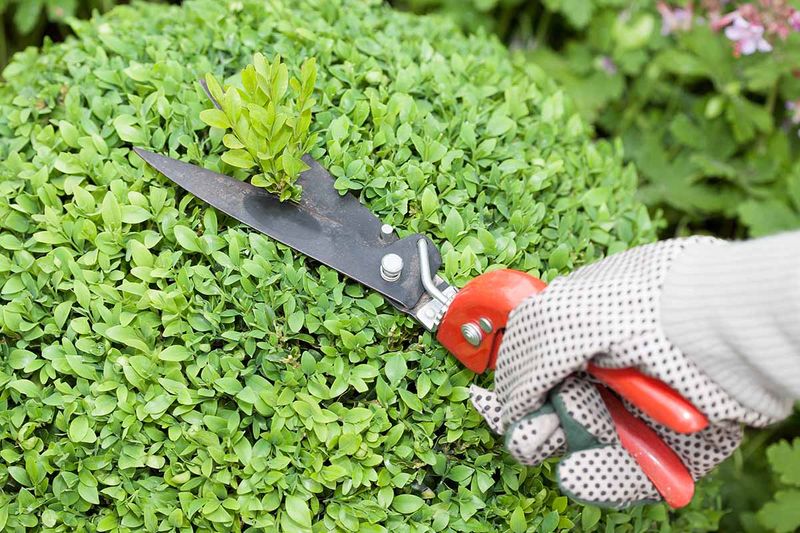
Running electric hedge trimmers along every boxwood in the yard on a hot June afternoon might feel productive. But heavy shearing at the wrong time can set these shrubs back rather than help them.
Fresh cuts made during heat stress leave exposed tissue vulnerable. The burst of new growth that follows a hard shearing also requires extra water and energy from a plant that is already working harder than usual in summer heat.
Heavy shearing also creates a dense outer shell of tightly packed foliage. That shell can block light and air from reaching the interior of the shrub.
This leads to the kind of withered interior wood that makes boxwoods look hollow and thin over time. A shrub with a thick green wall on the outside but bare stems inside is harder to fix than one that was shaped more gradually.
If your boxwoods need tidying in June, a light touch is the right approach. Snipping back a few wayward stems with hand pruners is much gentler than running shears along the whole plant.
Save any major reshaping for late winter or early spring when the shrub is not under heat stress. Keeping June pruning minimal protects the foliage that is already working hard to fuel the plant through summer.
6. Watch For Leafminer Damage Inside The Leaves
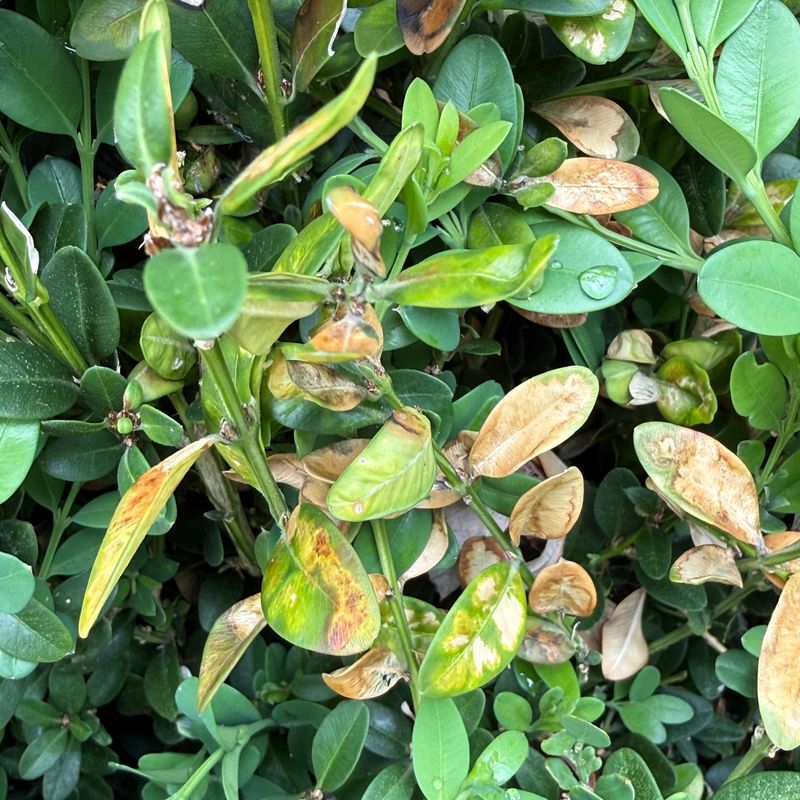
Not every brown or discolored patch on a boxwood is caused by drought or winter injury. Boxwood leafminer is one of the most common insect pests affecting these shrubs in regional gardens, and June is a good time to check for signs of its activity.
The larvae feed inside the leaves themselves, which is why the damage can be easy to miss until it becomes widespread.
Infected leaves often look blistered, puckered, or slightly yellowish on the surface. If you hold a suspicious leaf up to the light, you may be able to see the hollowed-out area where a larva has been feeding inside.
Leaves that feel thicker or softer than normal in spots are another clue worth investigating before assuming the problem is something else entirely.
Catching leafminer activity early gives you more options. Ohio State University Extension notes that adult leafminers typically emerge in May, so by June the larvae are already at work inside the foliage.
Removing and disposing of heavily infested leaves can help reduce the population. Monitoring closely now means you have a clearer picture of how widespread the issue is.
That helps you make a more informed decision about whether any further action is needed later in the season.
7. Keep Overhead Water Off Dense Foliage
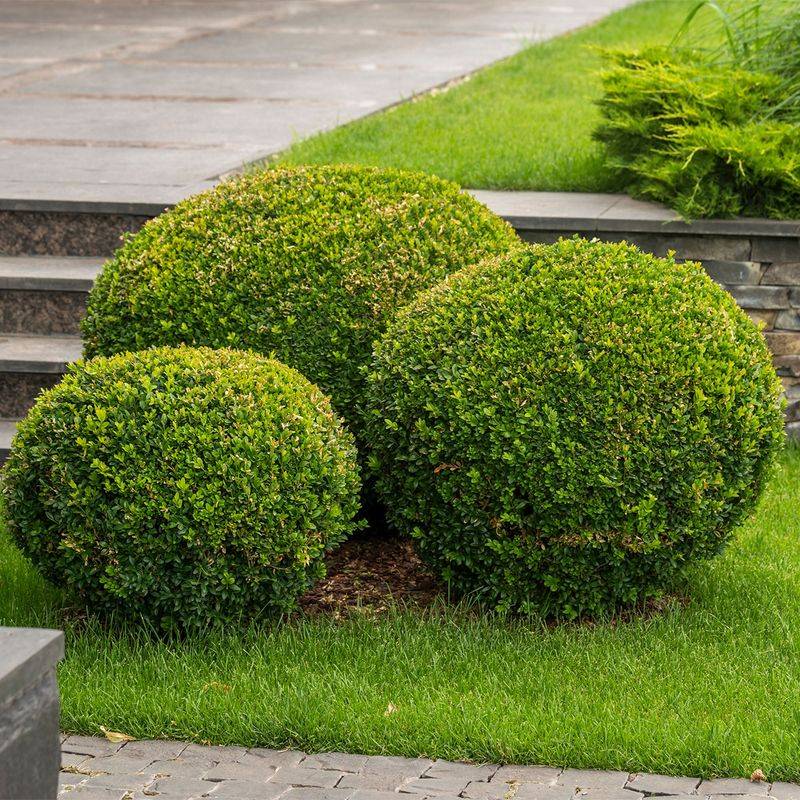
Sprinkler heads that arc water up and over dense Ohio boxwood hedges might seem like an efficient watering method. But wet foliage in a tightly packed shrub stays wet longer than most gardeners expect.
Foliage that does not dry out quickly creates conditions that certain fungal pathogens find very favorable. That is especially true during the warm, humid weeks that June can bring to this state.
Foundation plantings and tight formal hedges are especially prone to this issue because airflow is already limited by walls, fences, and neighboring plants.
When you add overhead watering to that environment, moisture can linger in the interior of the shrub for hours after the irrigation cycle ends.
Watering at the soil level instead of over the top of the foliage removes one of the conditions that makes disease more likely.
Soaker hoses and drip lines are practical tools for keeping water where it belongs, at the root zone rather than on the leaves. If you use a hand hose, directing the water low and slow toward the base of the shrub is more effective than spraying the canopy.
Morning is still the better time to water if overhead contact is unavoidable, since warmer daytime temperatures help foliage dry before evening. Small changes in watering habits can reduce disease pressure noticeably over the course of a full summer.
8. Prune Out Brown Branches With Clean Cuts
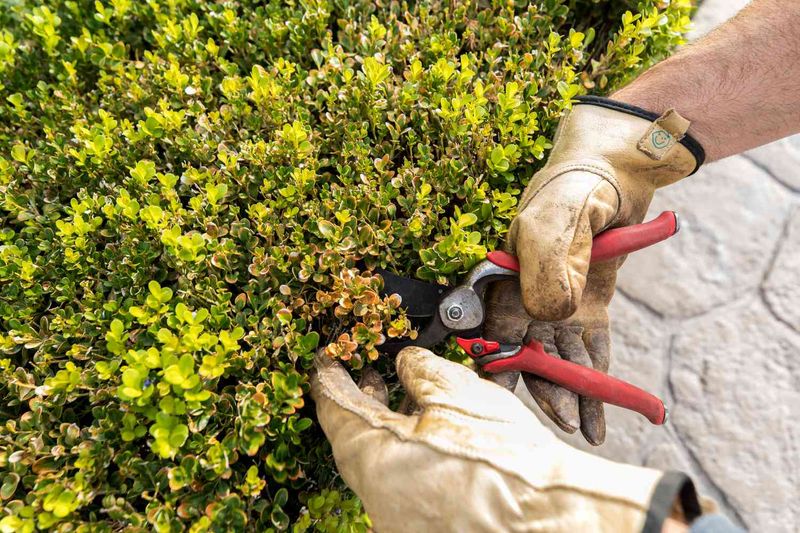
Brown branches tucked inside a boxwood can be easy to ignore when the outside of the shrub still looks green, but leaving them in place is not doing the plant any favors.
Withered or damaged wood can harbor disease spores and insects, and removing it carefully gives the surrounding healthy growth more room and light.
The key word here is carefully, because cutting without knowing why a branch browned in the first place can lead to unnecessary removal of wood that might still recover.
Before making cuts, take a close look at the affected branches. Check whether the browning is isolated to a few stems or spread across a larger section.
Look at nearby foliage for signs of pest activity, fungal spots, or physical damage from winter or lawn equipment. A single brown stem near the base often has a different cause than widespread discoloration across the top of the shrub.
When you are ready to prune, use clean, sharp bypass pruners rather than anvil-style cutters, which can crush stems. Cut back to healthy green wood, and wipe your blades with a diluted bleach solution or rubbing alcohol between cuts if disease is suspected.
Collecting and removing all pruned material from around the base of the shrub helps keep the area clean and reduces the chance of reinfection later in the season.