What’s Behind The Black Coating On South Carolina Crape Myrtles In June
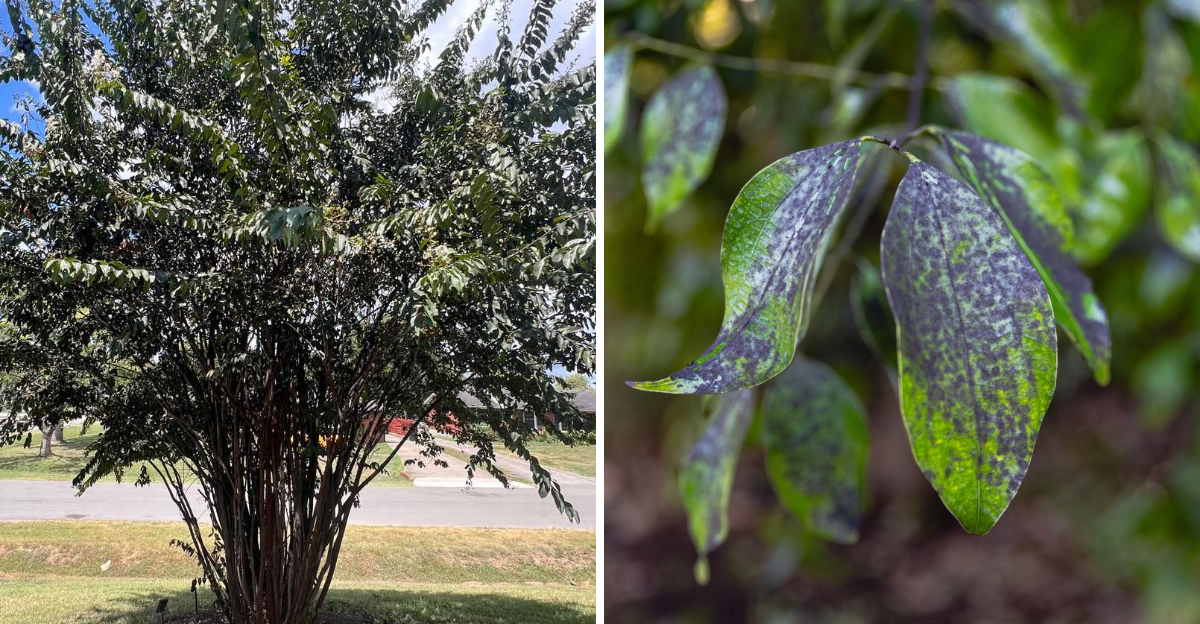
If your crape myrtles looked fine in May and look noticeably different now, you are not imagining things. June has a way of turning these trees from standout yard features into something that looks like a chimney sweep brushed against every branch.
That black coating is not soot, not dirt, and not something that started inside the tree itself. It arrived from the outside, and something alive brought it there.
The coating has a name, a cause, and a surprisingly straightforward explanation once you know where to look. It almost always traces back to a small insect problem that quietly built up before you noticed anything wrong.
Catching it in June, right when it tends to peak in South Carolina, puts you in the best position to deal with it before it gets worse.
Honeydew-Feeding Insects Are Almost Always The Culprit
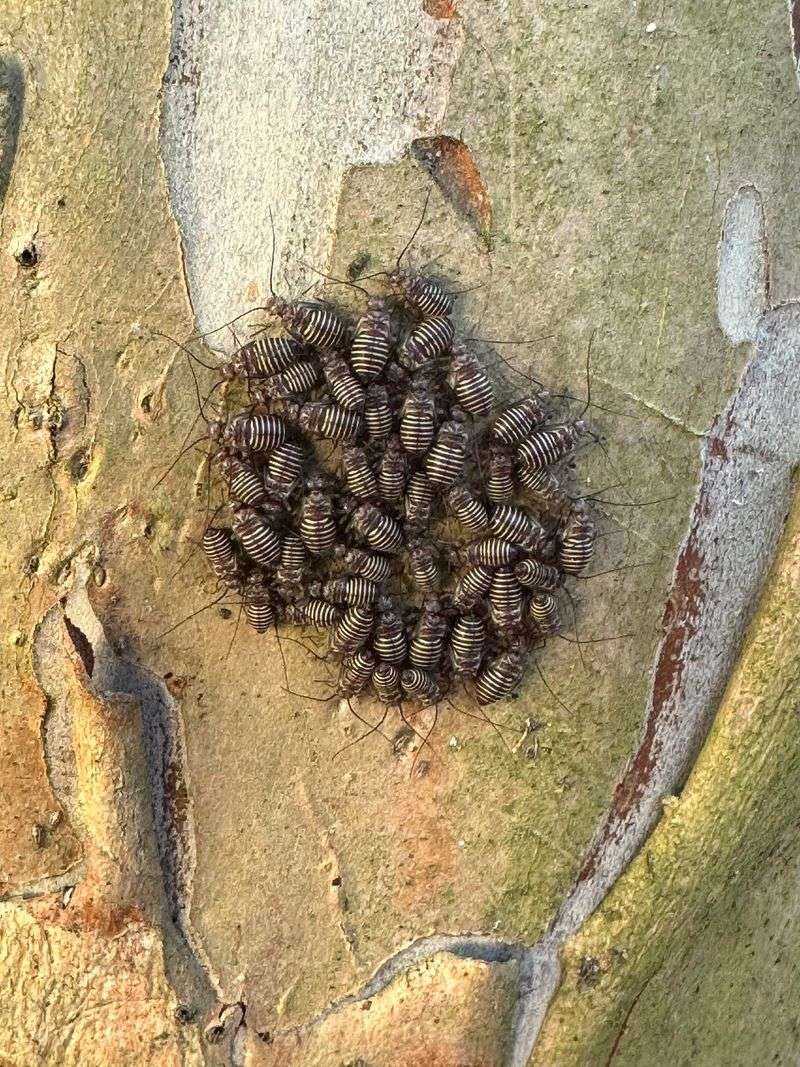
Look closely at your crape myrtle branches, and you might see tiny creatures hiding in plain sight. Aphids, scale insects, and crape myrtle bark scale are the most common bugs causing this mess.
These insects attach themselves to stems and leaves, then feed on the tree’s sap. As they feed, they produce a sticky, sweet liquid called honeydew.
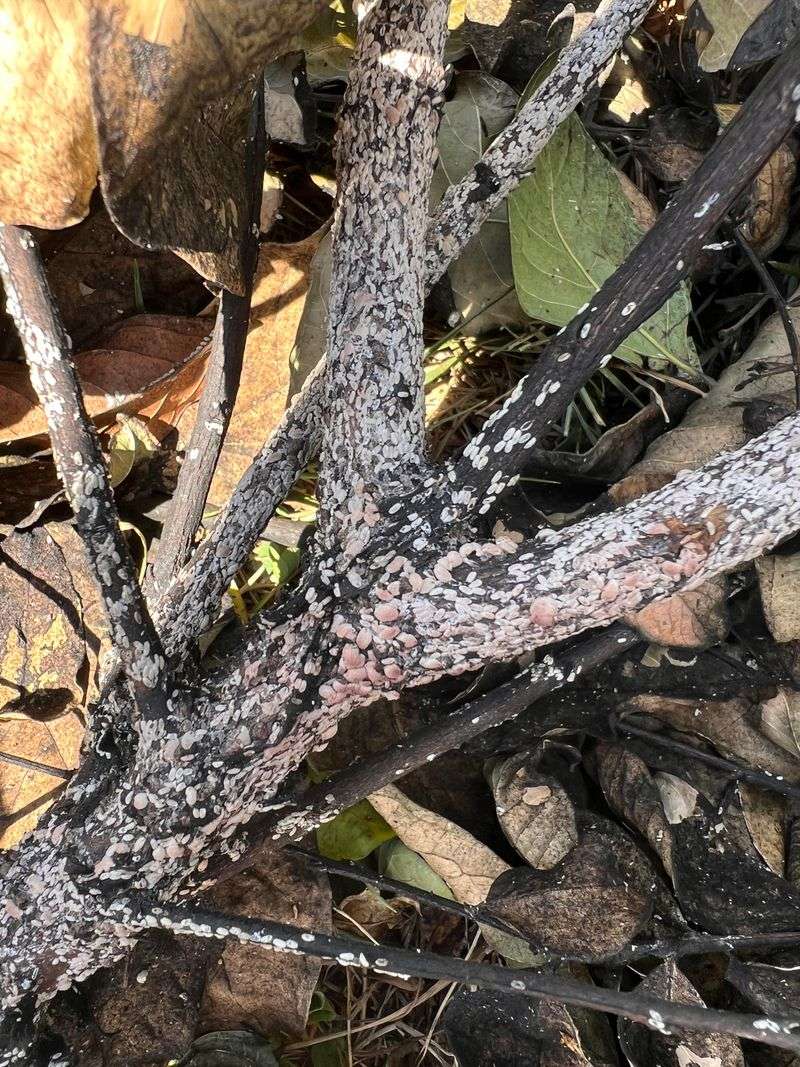
Crape myrtle bark scale is a newer pest that has spread across the South fast. It looks like small white or gray crusty bumps along the branches and trunk.
Aphids cluster in groups, usually on new growth near the tips of branches. They are small and pear-shaped, and a single colony can grow to large numbers remarkably fast under warm conditions.
Scale insects are sneakier because they barely move and look like part of the bark. Many gardeners mistake them for natural tree texture and never treat the problem.
All of these insects share one habit: they eat and excrete honeydew constantly. That sticky waste coats everything below the feeding site.
Ants are often a clue that something is going on. Ants love honeydew and will actually protect aphid colonies from predators to keep the supply flowing.
If you see a trail of ants marching up your crape myrtle trunk, that is a red flag worth investigating. Check the branches above carefully for signs of insect activity and sticky residue.
The Role Of Honeydew In Sooty Mold Development
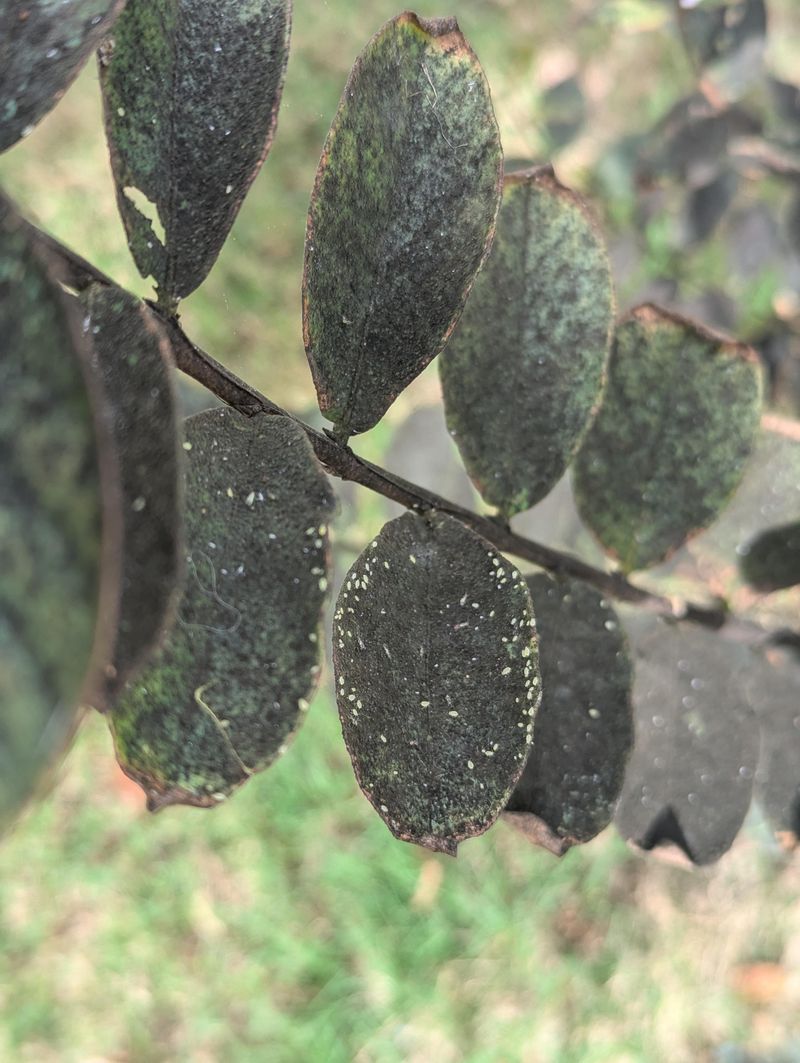
Honeydew sounds harmless, even a little sweet. But left on plant surfaces, it becomes the perfect food source for a fungus called sooty mold.
Sooty mold is not one single fungus but a group of different fungal species. They all thrive on sugar-rich surfaces left behind by feeding insects.
Once the honeydew coats a leaf or branch, fungal spores land on it and begin to grow quickly. Within days, a thin black film starts forming across the surface.
The mold itself does not attack the tree’s tissue directly. It lives on top of the plant, feeding entirely off the sugary residue left by insects.
That distinction matters because it changes how you treat the problem. Treating the mold without addressing the insects means the coating will return within weeks.
Your South Carolina Garden Changes Every Week. Your Plan Should Too.
Gardening in South Carolina changes quickly throughout the season. Every Friday you’ll receive a simple weekly plan showing exactly what to plant, prune, fertilize, harvest, and protect so you never miss the right timing.
Honeydew also drips downward from infected branches. Leaves below the insect colony get coated even if no bugs are feeding directly on them.
Anything under a heavily infested crape myrtle can get sticky and dark. Patio furniture, cars, and sidewalks are often collateral damage in a bad infestation year.
The black coating on South Carolina crape myrtles in June is almost always traced back to this exact chain. Insects feed, honeydew falls, mold follows, and the whole tree starts to show it.
Breaking that chain at the honeydew stage is a smart strategy for any homeowner dealing with this problem this season.
June Brings The Conditions Sooty Mold Needs To Spread
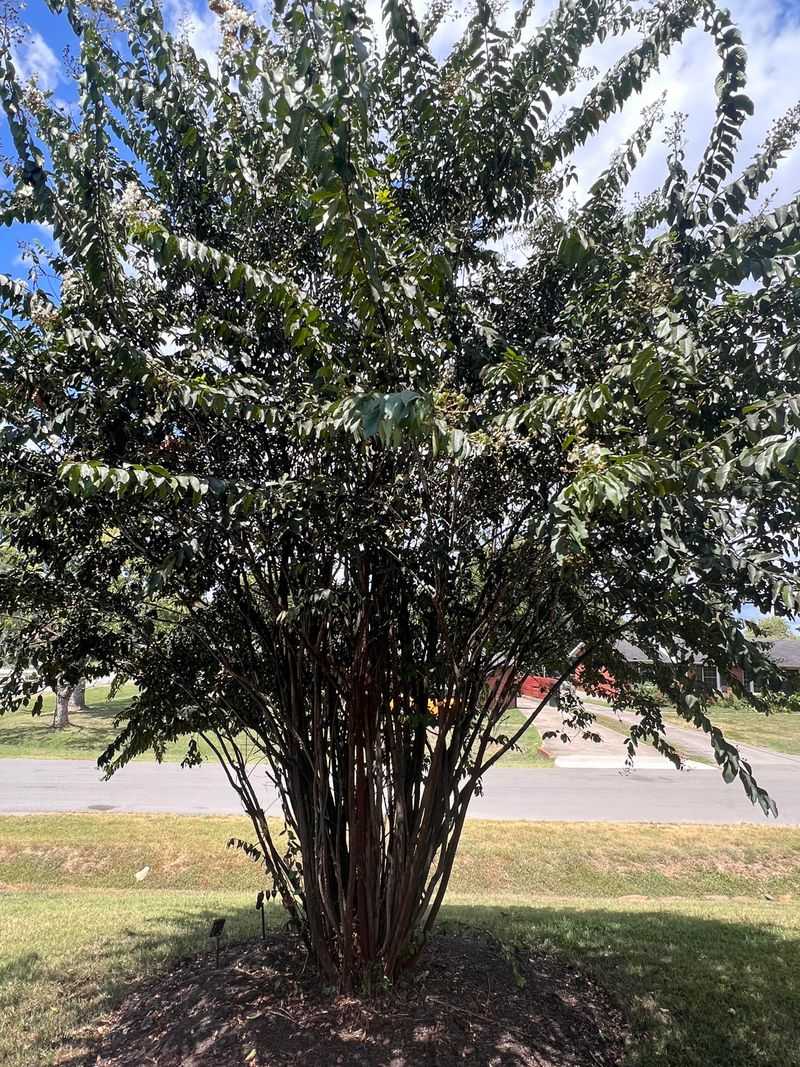
June in South Carolina is not just hot and sticky for people. It is also the ideal environment for sooty mold to explode across crape myrtles.
Warm temperatures and high humidity give fungal spores exactly what they need to germinate fast. Add honeydew to the mix and the mold moves across the tree quickly.
Insect populations also peak in early summer, which means more honeydew production than at any other point in the year. The timing lines up in a way that gives mold every advantage it needs.
Afternoons with little wind allow spores to settle on sticky surfaces without being blown away. Humid nights keep the mold moist and actively growing through the dark hours.
Shade plays a role too. Crape myrtles planted close together or near fences dry out more slowly after rain or dew.
Slower drying means the honeydew stays wet longer, giving the fungus more time to establish itself before conditions change. Trees in full sun tend to have slightly less severe mold problems for this reason.
Rainfall in June can wash some mold off temporarily. But if insects are still feeding, the honeydew returns quickly and the mold comes right back.
Gardeners often notice the black coating getting worse after a stretch of cloudy, humid days. That pattern makes sense once you understand what conditions mold needs to thrive.
Watching the weather in June can actually help you time your treatments for maximum impact this summer.
Leaves And Branches Take The Brunt Of The Damage
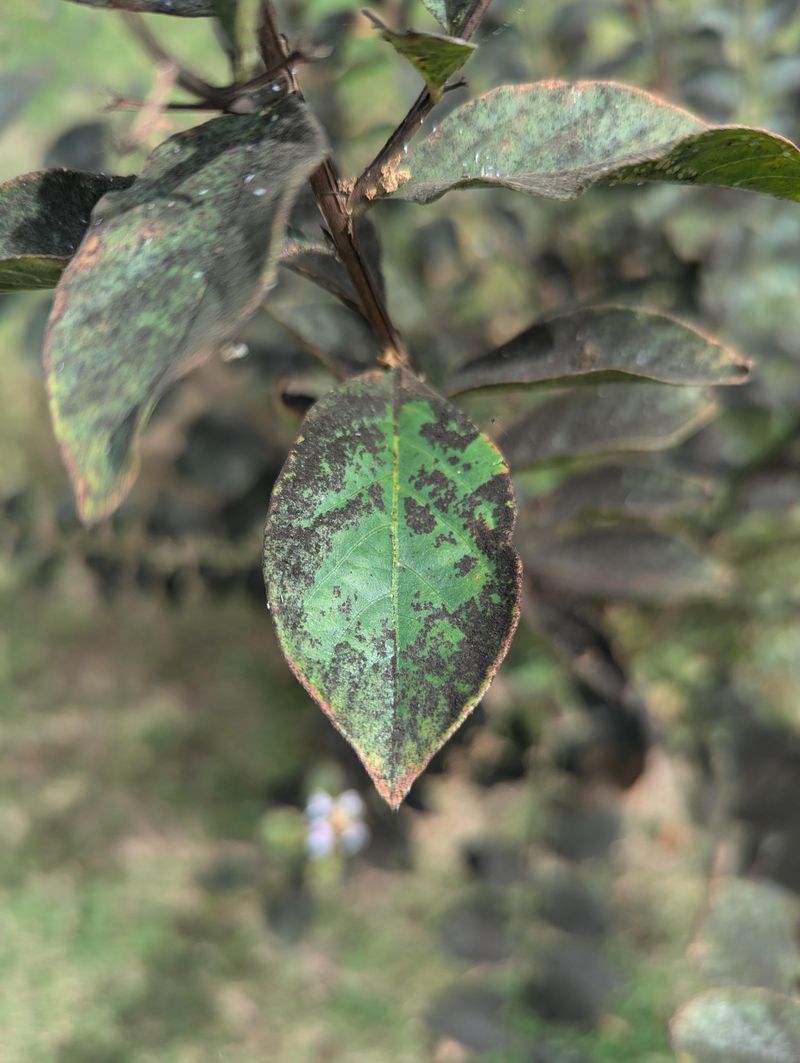
When sooty mold takes hold, the leaves are the first thing most people notice. They go from bright green to patchy gray and then fully black in a matter of weeks.
The coating starts in spots and then connects until entire leaf surfaces look painted over. At that stage, the tree takes on a shadowed, darkened look that is hard to miss from across the yard.
Branches get hit hard too, especially smaller stems where insects like to cluster. The bark can look almost charcoal-colored when scale insects and mold combine forces.
New growth coming in during June is especially vulnerable. Fresh leaves are tender and covered in the sticky secretions insects prefer, making them prime targets for both bugs and mold.
Flower clusters on crape myrtles can also get coated during a bad year. That ruins the bloom display most homeowners look forward to all spring.
The mold does not just look bad on the outside. A thick layer of fungal coating blocks sunlight from reaching the leaf surface beneath it.
Leaves need sunlight to make food through photosynthesis. When that process slows down, the whole tree loses energy it needs for healthy growth.
Young or newly planted crape myrtles feel this stress more acutely than mature ones. A small tree fighting mold and insects at the same time can struggle to put on new growth at all.
Spotting the damage early on leaves and branches gives you the best chance of stepping in before things get worse.
Sooty Mold Affects The Tree More Than It Looks
At first glance, sooty mold looks like a cosmetic problem. Many homeowners assume it is just ugly and leave it alone, hoping it clears up on its own.
That approach tends to make things worse over time. The longer mold coats the leaves, the less sunlight the tree can absorb for energy production.
Reduced photosynthesis means slower growth and weaker branches over a full season. A crape myrtle that should be putting on strong seasonal growth may fall noticeably short of that when mold and insects are both active.
Stressed trees are also more attractive to additional insect pests. A weakened tree sends out chemical signals that certain bugs can detect, drawing more of them in.
Repeated seasons of heavy mold and insect pressure can reduce bloom production noticeably. Homeowners often blame pruning habits or soil when the real culprit is ongoing pest damage.
The effects can extend beyond what is visible above ground. When a tree cannot photosynthesize properly, it draws on stored energy reserves to compensate.
Those reserves support recovery during dry spells and cold months. Tapping into them repeatedly can leave the tree with less to work with when other stressors hit.
Crape myrtles are tough plants, but they are not indestructible. Even a resilient tree has limits when it faces compounding stress season after season.
The black coating on South Carolina crape myrtles in June is more than an eyesore. Treating it seriously protects the long-term health of a tree that can live for decades.
Clearing The Mold And Stopping It From Returning
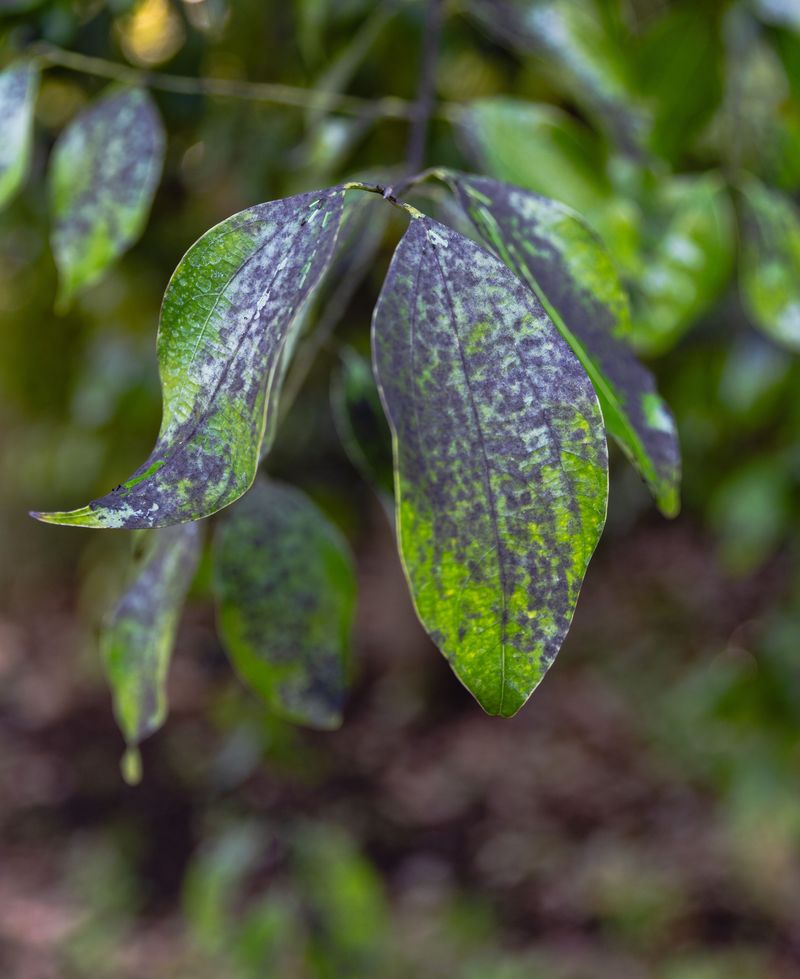
Image Credit: © Robert So / Pexels
Getting rid of the mold starts with targeting the insects causing the honeydew. No amount of scrubbing will solve the problem if the source is still active.
Horticultural oil and insecticidal soap are both effective options for treating aphids and scale. Apply them thoroughly, targeting the stems and branches where insects tend to concentrate.
For crape myrtle bark scale specifically, a soil drench with imidacloprid works well on established trees. The tree absorbs it and the insects ingest it while feeding.
Once insects are under control, the honeydew stops and the mold slowly dries out. A strong spray of water from a garden hose can help dislodge the dried mold from leaves and bark.
Some gardeners use a mild solution of dish soap and water to wipe down heavily coated branches. That speeds up the cleaning process on smaller trees within reach.
Ants need to be managed too, since they protect insect colonies and undo your pest control efforts. Sticky barriers placed around the trunk keep ants from climbing up to the canopy.
After treatment, check your trees every two weeks through the rest of summer. Catching a new infestation early means a much smaller battle the second time around.
Planting crape myrtles in full sun and keeping good air flow around the canopy reduces mold risk going forward. Proper spacing between trees makes a meaningful difference in long-term outcomes.
Staying ahead of the black coating on South Carolina crape myrtles in June keeps your yard looking its best all season long.