When Do Arizona Sycamores and Cottonwoods Turn Gold?
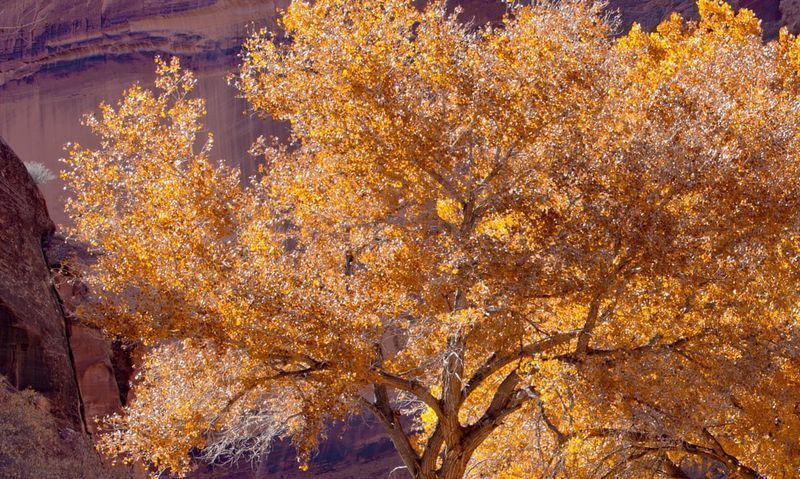
Gold leaves along a desert stream can look like a surprise gift in a landscape known for cactus and sun. Arizona sycamores and cottonwoods grow where water stays close to the surface, and their fall color lights up those green ribbons.
The yellow is not new paint. It was hiding in the leaves all summer, and the timing depends on where you stand.
How Leaves Turn Yellow and Gold
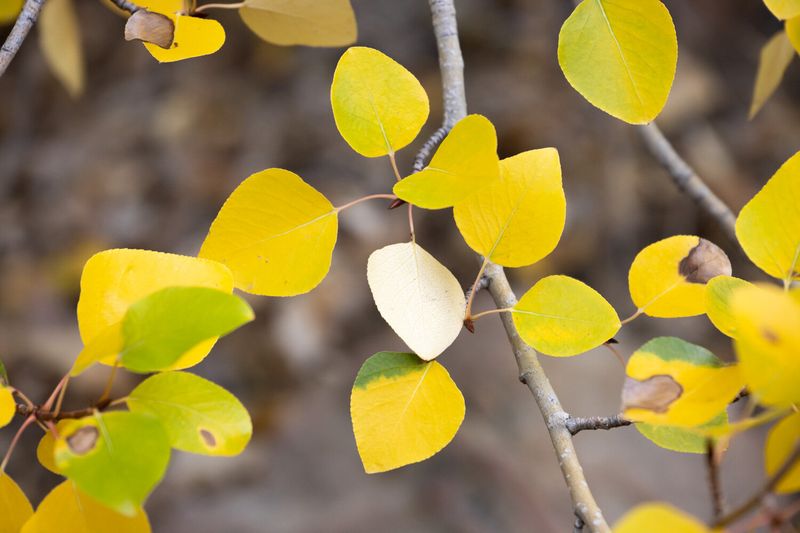
Gold leaves are not painted on in autumn. Yellow and gold tones come from carotenoid pigments that were in the leaf all along, hidden under the green of chlorophyll during the growing season.
As the season shifts, the tree breaks down its chlorophyll, and the green fades. Harvard Forest’s explanation of leaf color change describes how the remaining pigments then show through.
Think of it as a curtain being pulled back rather than a new color being made.
Color is one question, and timing is another. Shorter days are an important seasonal cue that tells a tree to begin the change.
Weather, such as cool nights or a dry spell, can shift when the color appears and how bright it looks. Cold alone does not turn a leaf gold, and no single weather forecast can tell you what one particular tree will do next week.
Why November Is Not a Statewide Peak
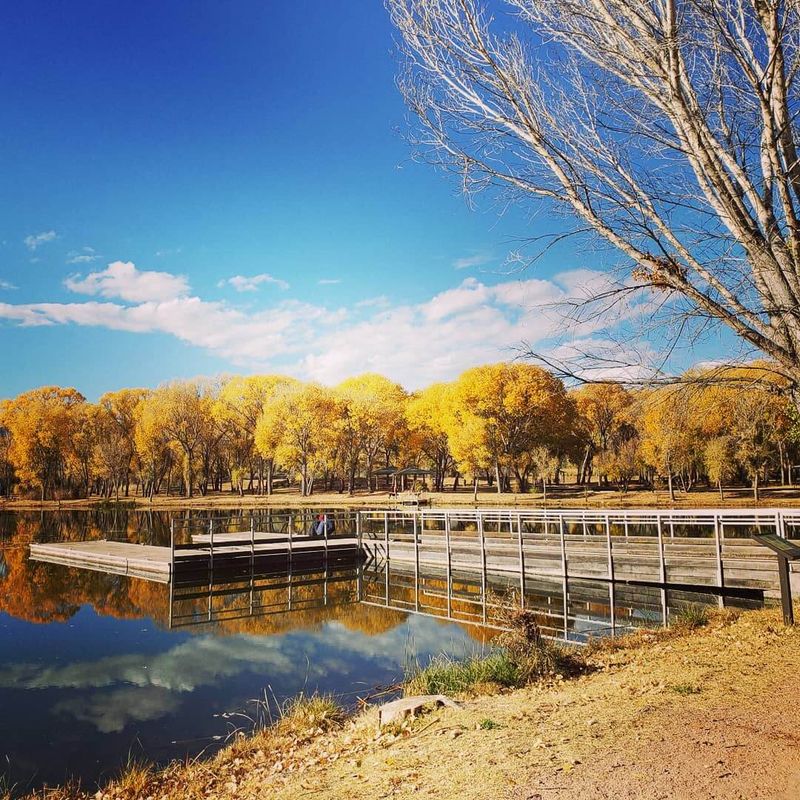
Arizona stretches from low desert river valleys to high mountain forests, so fall color does not arrive everywhere on the same day. November can be a good viewing window in some lower-elevation places, but it is not a statewide or species-wide peak.
Higher country often changes earlier, and lower spots often change later.
Published guides show how much the dates move around. Arizona Highways’ fall color guide lists late October to mid-November for cottonwoods at Dead Horse Ranch State Park.
It gives early October to early November for cottonwood and sycamore among other trees in Oak Creek Canyon.
Treat those dates as examples for particular places, not deadlines. Weather can nudge the display earlier, later, brighter, or duller, though cold is not its only ingredient.
Day length stays an important cue underneath it all.
Sycamore and Cottonwood Do Not Share One Calendar
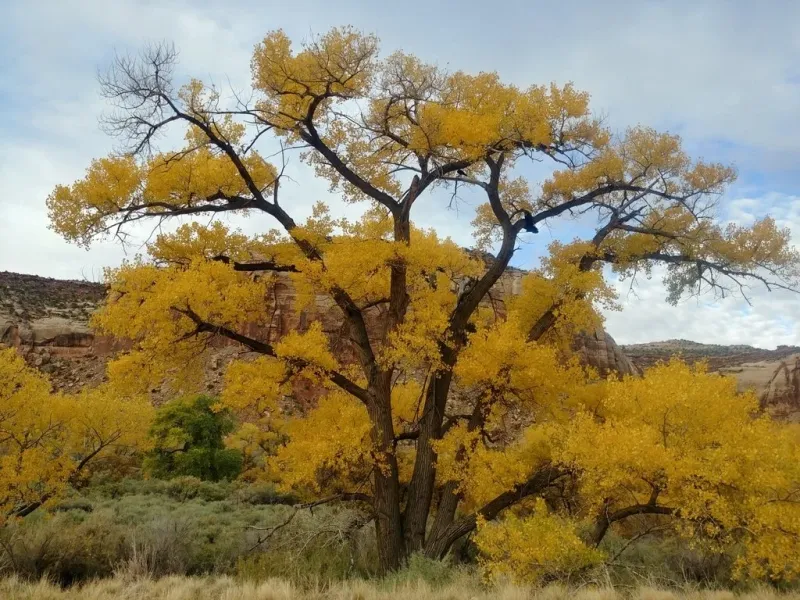
Arizona sycamore is Platanus wrightii, a single, specific species. Cottonwood is a looser word, and it can point to more than one tree.
Fremont cottonwood (Populus fremontii) is the one most Arizonans picture, but narrowleaf cottonwood, hybrids, and planted poplars also exist, so confirm the species before assigning it a schedule.
The two trees also run on different general timelines. A USDA Forest Service review of Fremont cottonwood gives a generalized pattern of late-September senescence and mid-October leaf fall.
The sycamore review places dormancy around mid-November, and senescent leaves can sometimes hang on until spring.
Those are broad species notes, not exact peak-color dates. Color change, senescence, dormancy, and leaf fall are separate steps.
A tree that still holds leaves has not necessarily skipped its seasonal shift, and a tree in your neighborhood may run ahead of or behind a textbook estimate.
Gold Foliage Grows Along Arizona’s Waterways
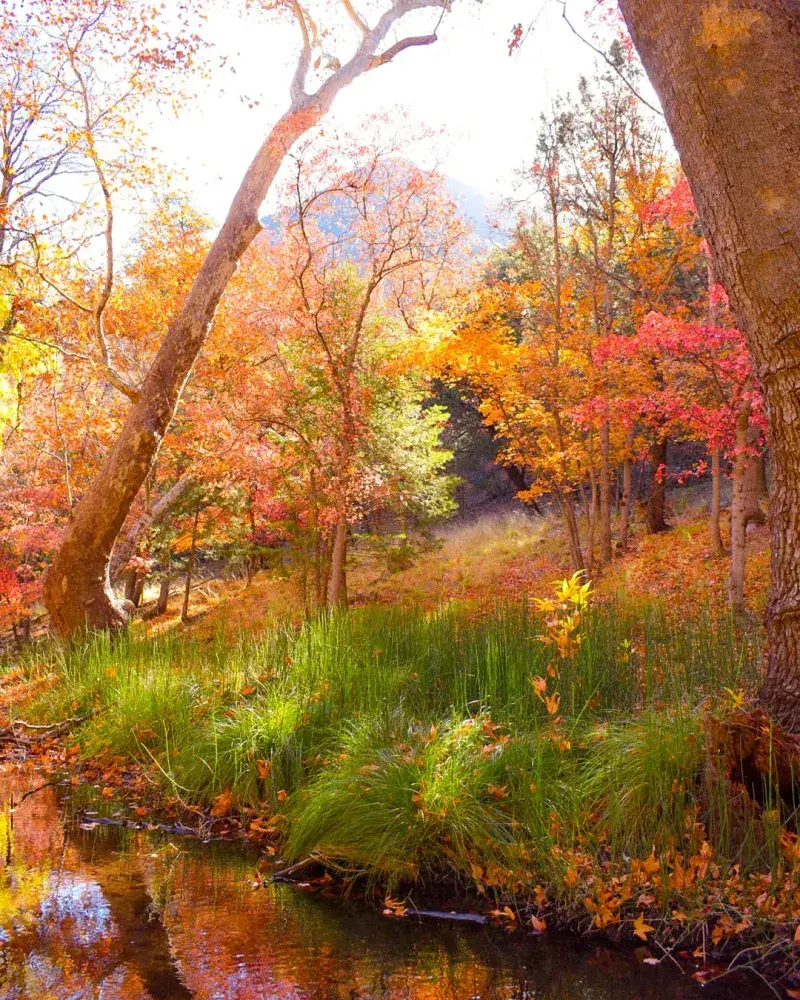
Out in the open desert, these trees would struggle. They gather along creeks and rivers where water sits near the surface, so their gold stands out as a narrow band of color against dry hills.
Arizona sycamore is described by the Forest Service as an obligate riparian species, meaning it depends on abundant surface water or groundwater. Its review of Arizona sycamore ties it firmly to these moist habitats.
Those stream corridors matter to wildlife. Fremont cottonwood stands provide habitat for birds and other animals, and Arizona’s riparian communities support a wide range of species.
That value belongs to the whole waterway, though, and a single tree will not promise visits from any particular animal.
Plan a Place-Specific Foliage Outing
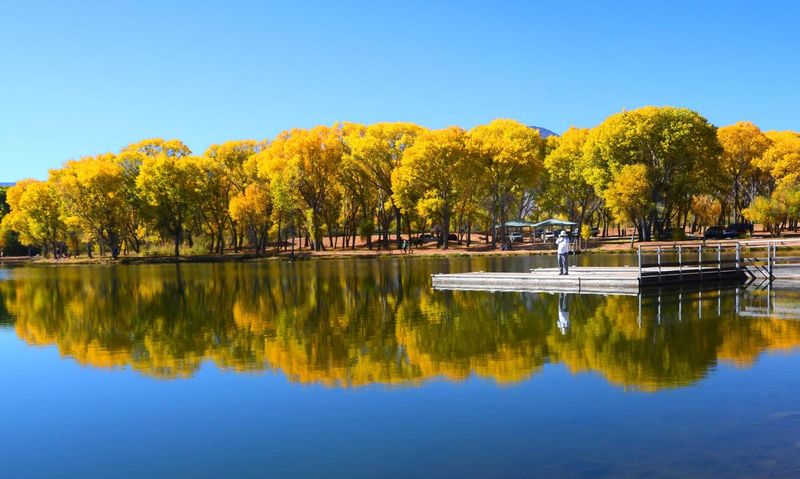
Pick a destination first, then match your timing to it. Dead Horse Ranch State Park near Cottonwood has a published window of late October to mid-November for its cottonwoods.
Oak Creek Canyon is listed earlier, from early October to early November, for cottonwood and sycamore among other trees.
Higher-elevation spots run on their own schedules, and Visit Arizona’s fall color guidance places color at different times across the state. Those lists are helpful starting points, not forecasts for every tree along a route.
Before you drive, check current updates from the park or land manager. Ask about recent weather and trail conditions, and leave room in your plans to try a nearby spot if one stretch looks green.
Flexibility is the best tool for chasing gold.
These Are Riparian Trees, Not Easy Low-Water Yard Choices
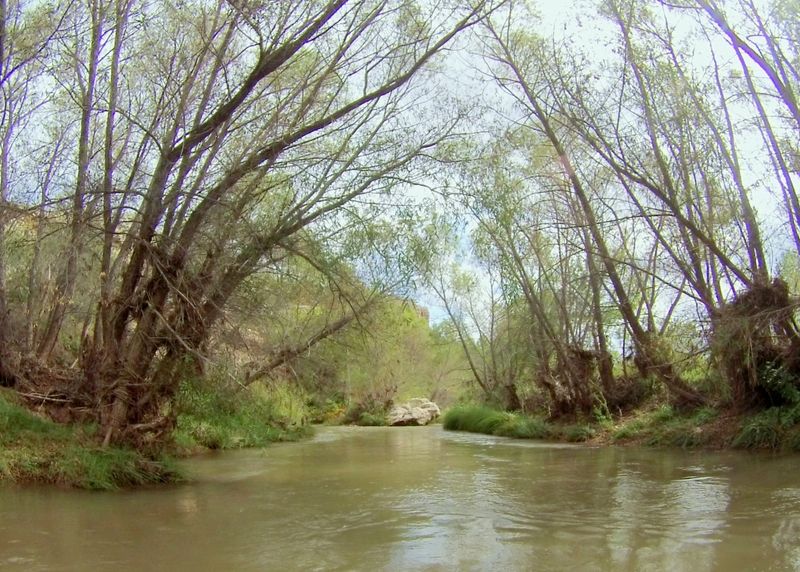
After a gorgeous fall walk, planting one at home can sound tempting. These trees are a poor match for an ordinary desert yard, though.
University of Arizona Extension describes cottonwoods as high-water-use trees that can grow very large and have extensive roots.
Arizona sycamore has the same basic need. The Forest Service calls it an obligate riparian species that depends on abundant surface water or groundwater.
Neither tree should be treated as a low-water, low-maintenance shortcut.
If you want gold leaves without the demands, enjoy them where they belong, along a creek or river. Save the yard for plants suited to your site and water budget.
Some trees are best admired from the trail.