When Oregon Gardeners Should Stop Fertilizing Tomatoes So The Fruit Actually Ripens
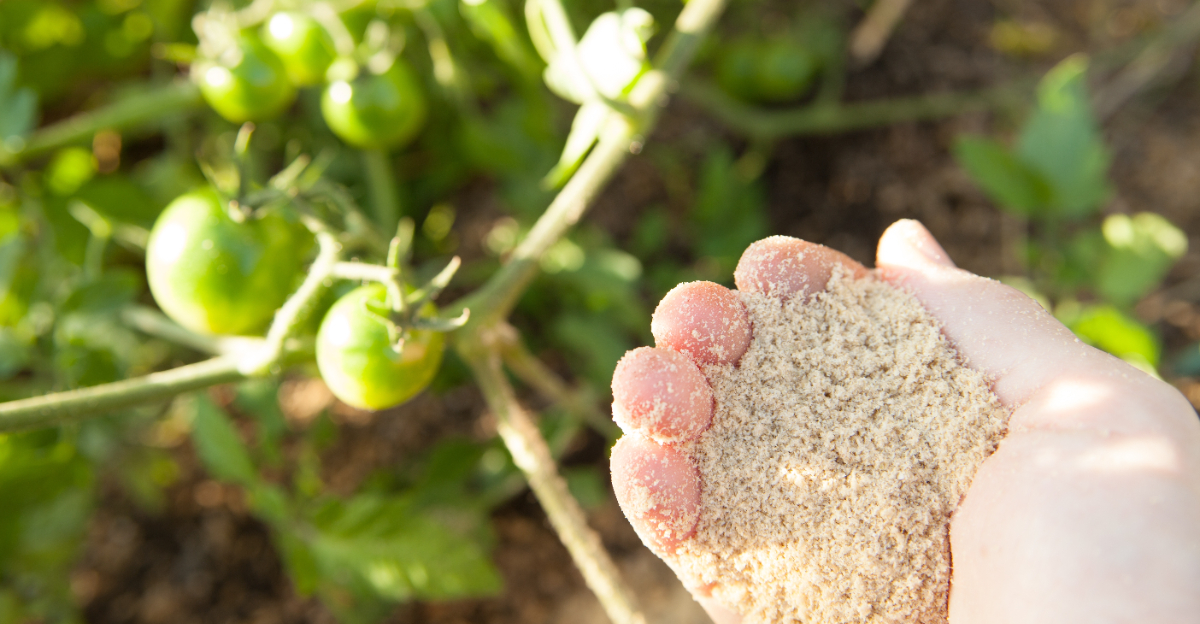
Late summer can make Oregon tomato plants look like they are still ready to party. The vines are leafy, new growth keeps appearing, and there may be plenty of green fruit hanging around with absolutely no sense of urgency.
Meanwhile, gardeners are staring at the forecast and mentally begging those tomatoes to hurry up already.
That is when fertilizing can become a surprisingly important decision. Feeding tomatoes feels like good gardening, especially after spending months watering, staking, pruning, and protecting them.
More plant food must mean more progress, right? Tomatoes, unfortunately, do not always follow that logic.
As the growing season starts winding down, the goal in the garden begins to shift. Keeping plants lush and vigorous is not necessarily the same thing as helping the existing crop finish what it started.
Timing matters, and continuing a familiar routine for too long can change what the plant focuses on next.
So before reaching for another scoop of fertilizer, take a look at the calendar, the plant, and those stubborn green tomatoes.
Knowing when to stop feeding could make the final stretch of the season much more rewarding.
1. Stop Pushing Leafy Growth Once Late Summer Hits
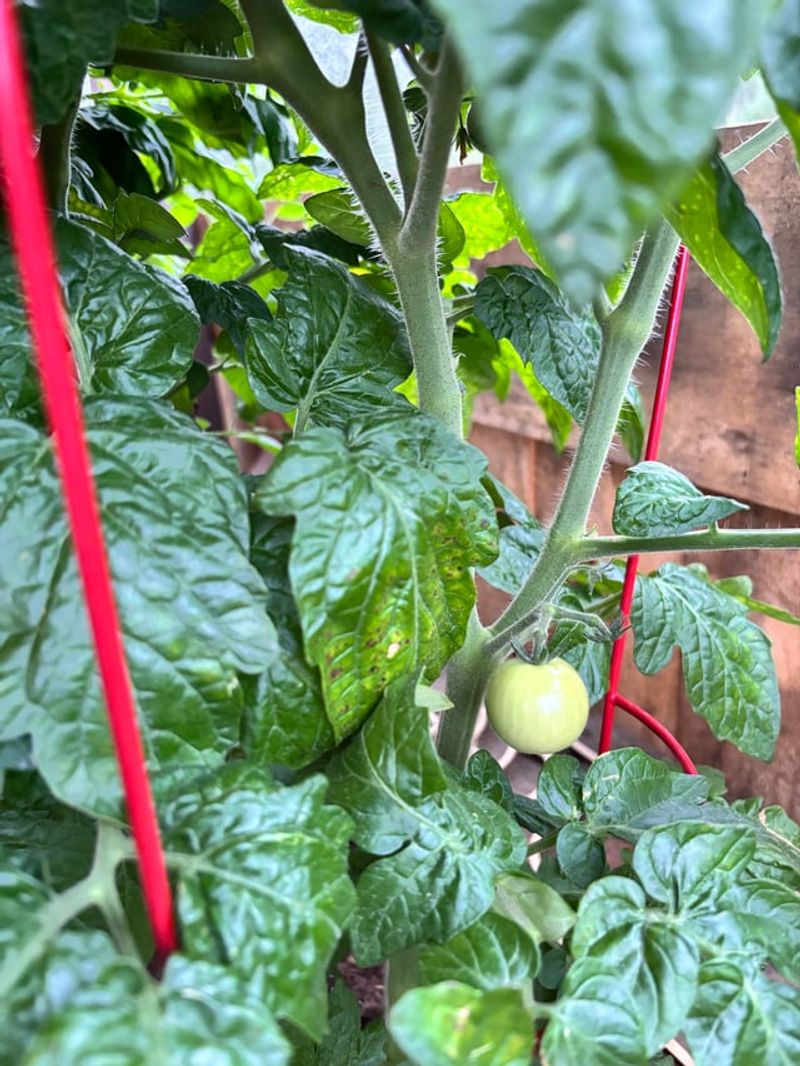
Late Oregon summer is a turning point in the garden. Around mid-July to early August, your tomato plants have already done the hard work of growing tall and setting fruit.
At this stage, the last thing you want is to push more leafy, green growth. Fertilizing with a nitrogen-heavy product at this point tells the plant to keep building stems and leaves instead of finishing the fruit already on the vine.
Most gardeners do not realize that plants respond very literally to what you give them. Nitrogen is the nutrient that drives green, leafy growth.
When you apply it late in the season, the plant takes the signal and runs with it. New shoots pop up, leaves multiply, and the tomatoes just hang there, staying stubbornly green.
A good rule of thumb is to stop or seriously cut back on fertilizing by early August in most Pacific Northwest gardens. If your plants already have a solid set of tomatoes on them, trust the process.
The plant knows what to do once you stop competing with it. Pull back on feeding, keep the water consistent, and let the fruit take over as the plant’s main focus.
You will likely see color developing faster than you expected once you give the vine a chance to redirect its resources where they matter most.
2. Too Much Nitrogen Can Keep Vines Growing Instead Of Ripening
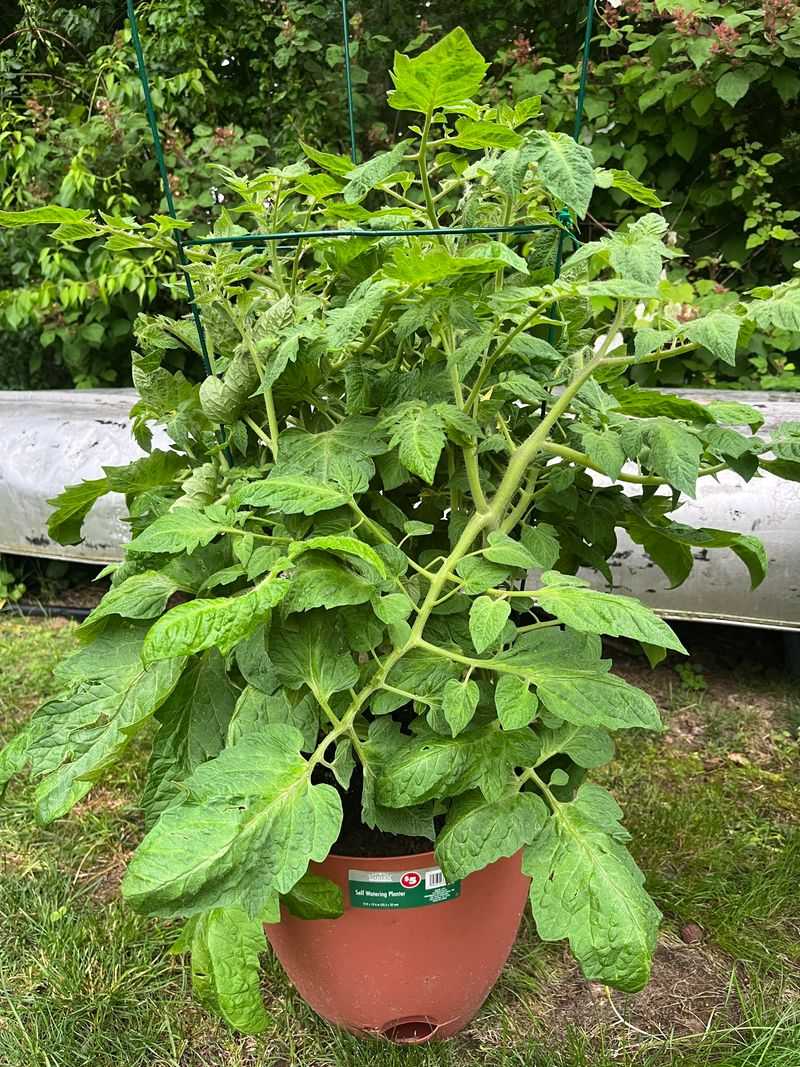
Nitrogen is like a fuel boost for plants. A little at the right time helps your tomatoes grow strong and healthy early in the season.
But too much of it, or applying it at the wrong time, flips the plant’s priorities in the wrong direction. Instead of putting energy into ripening the fruit, the vine just keeps growing and growing.
You might notice this happening if your plant looks incredibly bushy and green but the tomatoes are taking forever to change color. That is a classic sign of too much nitrogen late in the game.
Your Oregon Garden Changes Every Week. Your Plan Should Too.
Gardening in Oregon changes quickly throughout the season. Every Friday you’ll receive a simple weekly plan showing exactly what to plant, prune, fertilize, harvest, and protect so you never miss the right timing.
The plant is essentially stuck in growth mode when it should be in ripening mode. Gardeners sometimes panic and add more fertilizer thinking the plant needs a boost, but that actually makes the problem worse.
Phosphorus and potassium are the nutrients that support fruit development and ripening. If you do feel the need to feed your plants in mid to late summer, look for a fertilizer that is very low in nitrogen and higher in those two nutrients.
Even better, consider skipping the fertilizer altogether once your fruit is well developed. Give the plant a chance to slow down its vegetative growth and focus on what is already there.
You spent all season getting those tomatoes to set, so let the plant finish the job without interference from extra nitrogen pushing it in the wrong direction.
3. Big Green Plants Do Not Always Mean More Ripe Tomatoes
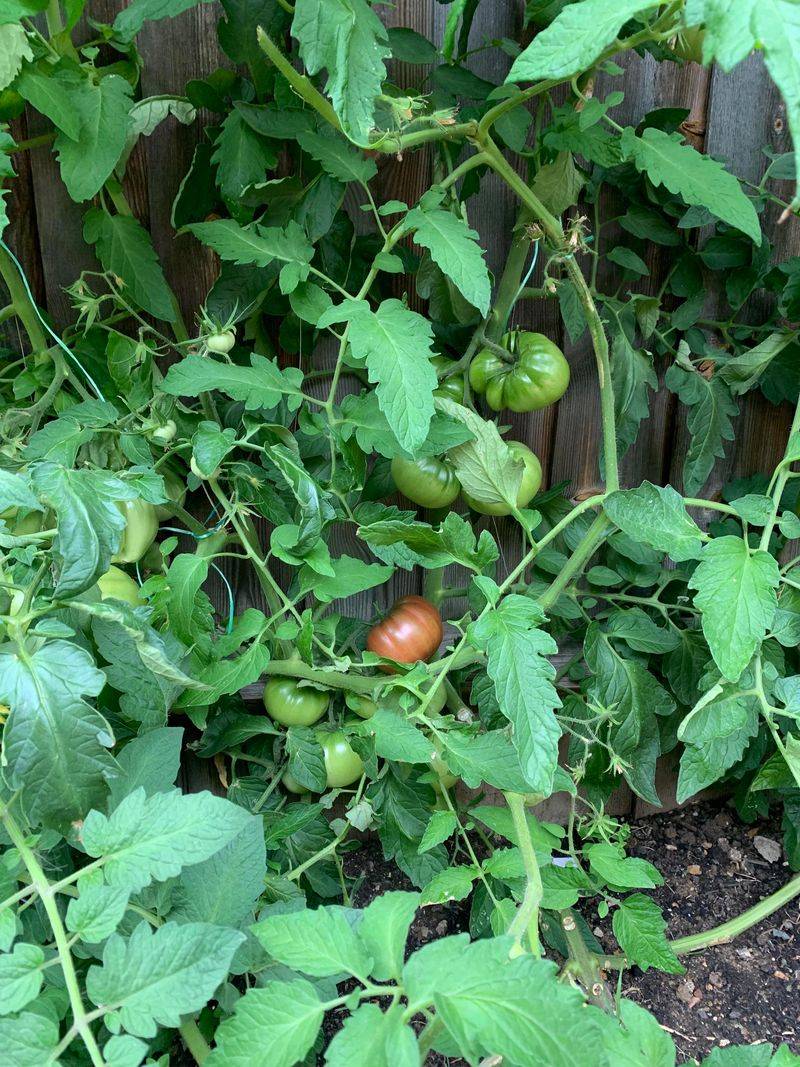
There is something satisfying about a big, full tomato plant. It looks healthy, productive, and impressive.
But appearances in the garden can be misleading. A plant that is extremely leafy and tall is not necessarily a plant that will give you a big harvest of ripe, flavorful tomatoes by the end of the season.
When a tomato plant puts most of its energy into growing leaves and stems, it has less energy available for ripening the fruit already on the vine. This is especially true when fertilizer keeps pushing that vegetative growth well into the summer months.
You can end up with a gorgeous-looking plant that produces very little in terms of ripe, ready-to-eat tomatoes before the first frost arrives.
Experienced Oregon growers know that a slightly smaller, less leafy plant can actually outperform a giant one when it comes to fruit ripening. Pruning off some of the extra suckers and leaves in late summer helps redirect the plant’s focus.
Stopping fertilizer at the right time works the same way. You are essentially telling the plant to wrap things up and finish what it started.
A focused plant with good fruit set and no extra nitrogen pushing new growth is far more likely to give you a rewarding harvest. Size is not everything in the tomato garden. Results are what count.
4. Late Feeding Can Delay The Finish Line
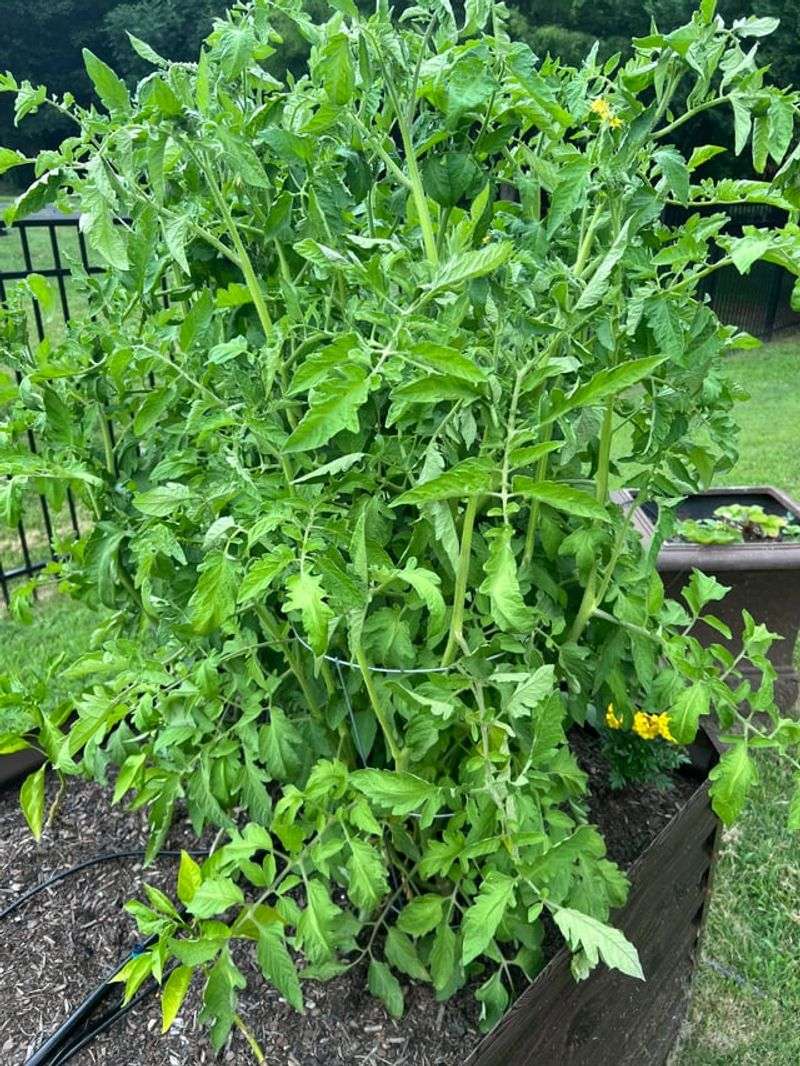
Timing matters more than most gardeners expect when it comes to tomato fertilization. Feeding your plants too late in the growing season does not give them an extra push toward the finish line.
Instead, it can actually push that finish line further away. The plant gets a signal to keep growing rather than to wrap up the ripening process.
Think of it like telling a runner who is almost at the finish line to start training again instead of just finishing the race.
The extra input does not help at that stage. It just creates confusion for the plant and redirects energy away from the fruit.
In Oregon, where the warm season can end abruptly in September and October, this delay can mean the difference between a full harvest and a bunch of green tomatoes that never quite make it.
Most gardeners should plan to stop fertilizing entirely by late July or early August, depending on how their plants are progressing.
If your tomatoes are already a good size and starting to show the first hints of color, that is your sign to step back.
Water consistently, manage pests, and let the plant do its natural thing. The ripening process is already underway.
Adding more fertilizer at that stage is like hitting the brakes and the gas at the same time. Pull back on the feeding and let those tomatoes cross the finish line on their own schedule.
5. Let Existing Fruit Get The Plant’s Energy Instead
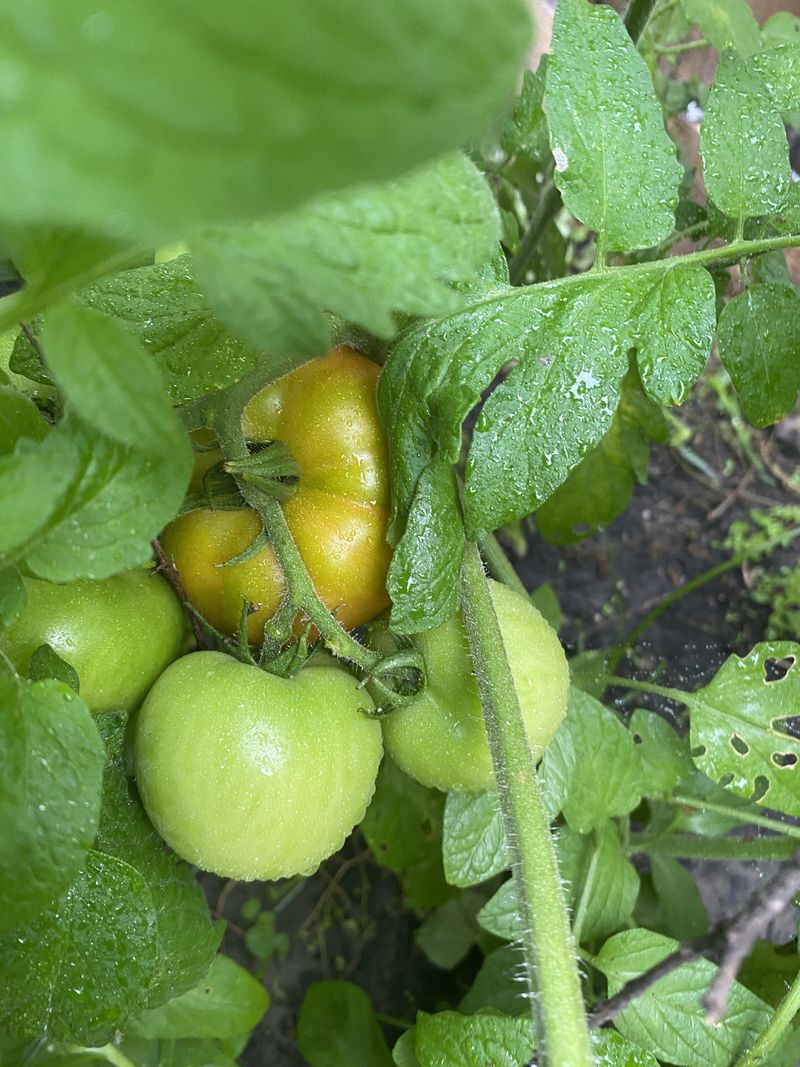
Every tomato plant has a limited amount of energy to work with at any given time. Early in the season, that energy goes into building roots, stems, and leaves.
Once fruit sets, the plant’s job shifts. Now it needs to take all of that stored energy and pour it into ripening the tomatoes that are already hanging on the vine.
When you keep fertilizing late into the season, you are telling the plant to split its attention. Part of the energy goes to the fruit, but a good chunk of it goes into producing new growth instead.
That split focus slows everything down. The tomatoes ripen unevenly or not at all before cooler weather arrives and shuts the whole process down.
Letting the plant focus on existing fruit means removing the competition. Stop fertilizing, trim back any new growth that is not going to produce fruit before the season ends, and remove flowers that appear too late to be useful.
Gardeners in the Pacific Northwest know that late-season tomatoes are always a race against the weather. Giving the plant a clear, focused task is one of the most effective things you can do.
No new leaves, no new stems, no extra feeding. Just the fruit that is already there, getting everything the plant has left to offer.
That shift in energy is often all it takes to go from a pile of green tomatoes to a genuinely satisfying harvest.
6. Skip High-Nitrogen Fertilizer Once Fruit Is Well Set
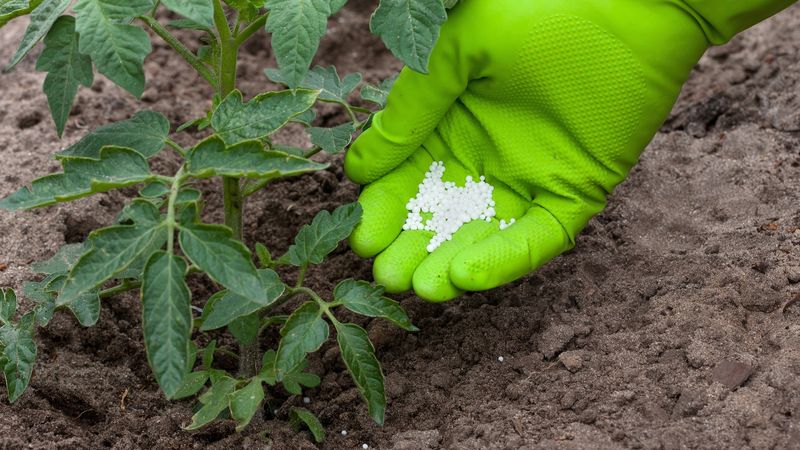
Once you can see that your tomato plants have a solid number of fruits set and growing, that is the moment to put the high-nitrogen fertilizer away. Seriously, step back from it.
Nitrogen at this stage does not help the tomatoes you already have. It only encourages the plant to produce more leaves and possibly more flowers, neither of which will benefit your harvest if the season is running short.
A well-set fruit load is a sign that your plant has done its job. You fed it well early on, it grew strong, it flowered, and it set fruit.
That process is complete. Continuing to pour nitrogen into the soil now is like adding ingredients to a cake that is already in the oven. It does not improve the outcome. It just creates a mess.
If you feel like your plants need something during this period, a light application of a low-nitrogen, high-potassium fertilizer can support the ripening process without pushing new vegetative growth.
Potassium plays a real role in how fruit develops and finishes. But even that should be used carefully and sparingly.
The safest and most effective approach for most home gardeners is to simply stop fertilizing once fruit is well set and focus on consistent watering and sun exposure instead.
Healthy, steady moisture levels and warm temperatures will do far more for your harvest than any fertilizer at this late stage of the game.
7. More Fertilizer Is Not The Fix For Slow Ripening
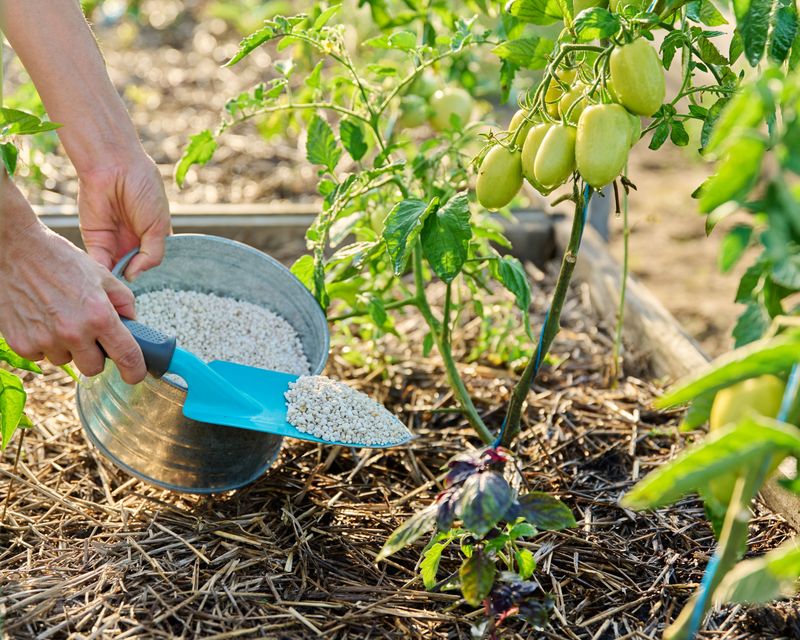
When tomatoes are taking forever to ripen, the natural instinct is to do something. Water more, prune more, or reach for the fertilizer bag.
But slow ripening is almost never caused by a lack of nutrients in late summer. It is usually caused by cool temperatures, low light, or the plant being stuck in growth mode from too much nitrogen earlier on.
Adding more fertilizer when ripening is slow is one of the most common mistakes home growers make. It feels productive, but it often makes the problem worse.
The plant gets another round of nutrients and responds by trying to grow more instead of finishing the fruit it already has. You end up deeper in the same cycle that caused the delay in the first place.
The real fixes for slow ripening are much simpler. Trim back heavy leaf coverage so sunlight can reach the fruit directly.
Remove any new growth at the tips of the vines so the plant stops putting energy into expansion. Make sure your watering is consistent but not excessive, since irregular moisture can slow ripening too.
In the Pacific Northwest, you can also try laying black plastic mulch around the base of the plant to absorb heat and warm the soil. These practical, low-cost steps do far more for ripening than extra fertilizer ever will.
Trust the process, step back from the bag, and let the season finish on its own terms.