When To Stop Mowing Your Virginia Lawn This Fall

The mower is still sitting by the shed, and the grass keeps sneaking taller between chilly mornings. You start to wonder when this chore finally ends.
In Virginia, the answer isn’t as simple as circling a date on the calendar. Your grass type, the weather, and even the morning frost all get a vote.
Stop too early, and your lawn heads into winter shaggy and matted. Keep going too long, and you might stress grass that’s trying to rest.
Luckily, your lawn gives clear signals if you know what to watch for. Each one depends on what’s growing in your yard.
Keep Mowing As Long As The Grass Keeps Growing
Your lawn does not check the calendar, so you should not rely on one either. Grass sets its own schedule based on weather and soil temperature.
Across much of Virginia, mowing season often runs well into November. In Northern Virginia, some yards still need a trim in early December.
Watch how fast the blades climb between cuts. If the lawn looks shaggy after a week, the grass is still actively growing.
Temperature is the biggest clue you can follow. Growth slows down a lot once daily temperatures stay below 50 degrees.
A cheap soil thermometer can help you track things. Push it a few inches into the ground and check it in the morning.
Roots keep working even after the tops slow down. Cool-season grasses build strong roots underground during these chilly weeks.
Healthy roots now mean a thicker, greener lawn next spring. Regular mowing keeps the top tidy while roots quietly do their job.
Try stretching the time between cuts as growth slows. Weekly mowing might become every ten days, then every two weeks.
Keeping a simple mowing log can be surprisingly helpful. Jot down the date and grass height each time you mow.
After a season or two, you will spot patterns in your own yard. Shady corners and sunny slopes often grow at different speeds.
Let the grass lead the way, and you will rarely guess wrong. When the growth stops for weeks, your mowing season is nearly done.
Tall Fescue Often Grows Into November
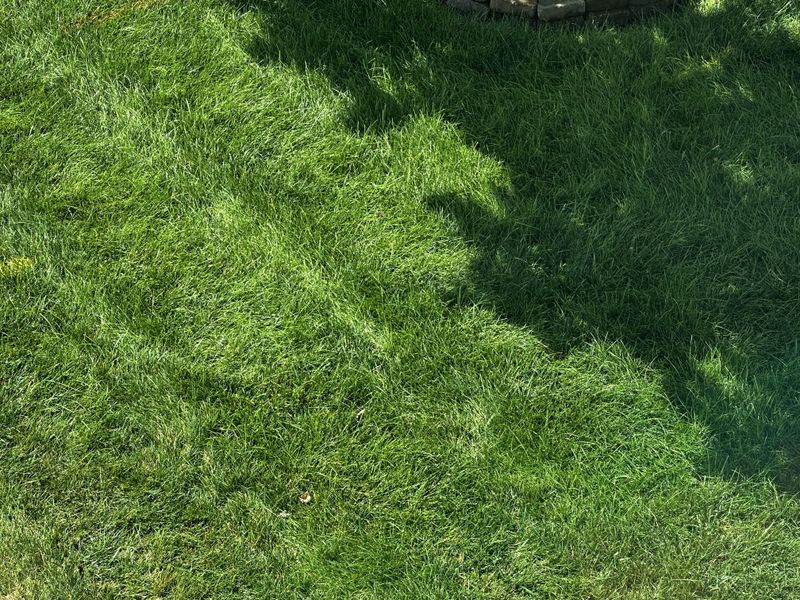
Picture a grass that actually enjoys sweater weather. Tall fescue perks up when summer heat fades and cool breezes roll in.
Many homeowners have tall fescue without even knowing it. It is the most common lawn grass across the state’s middle and northern regions.
Spring and fall are its busiest growing times. Cool nights and mild days give fescue exactly what it craves.
So while neighbors with other grasses stop mowing, fescue owners keep going. Late November mowing is normal, and December cuts happen in warm years.
You can spot tall fescue by its wide, coarse blades. It grows in clumps and stays green long after other grasses fade.
Fall is also prime time for fescue to recover from summer stress. Hot July days often leave thin patches that fill in now.
Here is a helpful tip for fescue lawns. Fertilize in September and again in November to feed those busy roots.
Your Virginia Garden Changes Every Week. Your Plan Should Too.
Gardening in Virginia changes quickly throughout the season. Every Friday you’ll receive a simple weekly plan showing exactly what to plant, prune, fertilize, harvest, and protect so you never miss the right timing.
Mowing supports that recovery by encouraging side shoots. Each tidy cut nudges the grass to spread and thicken up.
Growth finally stops when cold weather settles in for good. Once several chilly weeks pass with no new height, the season is over.
Fun fact for your next backyard chat. Tall fescue came to America from Europe and became popular in the 1940s.
Give your fescue the attention it deserves this fall. It pays you back with a rich green carpet for months.
Warm-Season Lawns Slow Down After First Frost
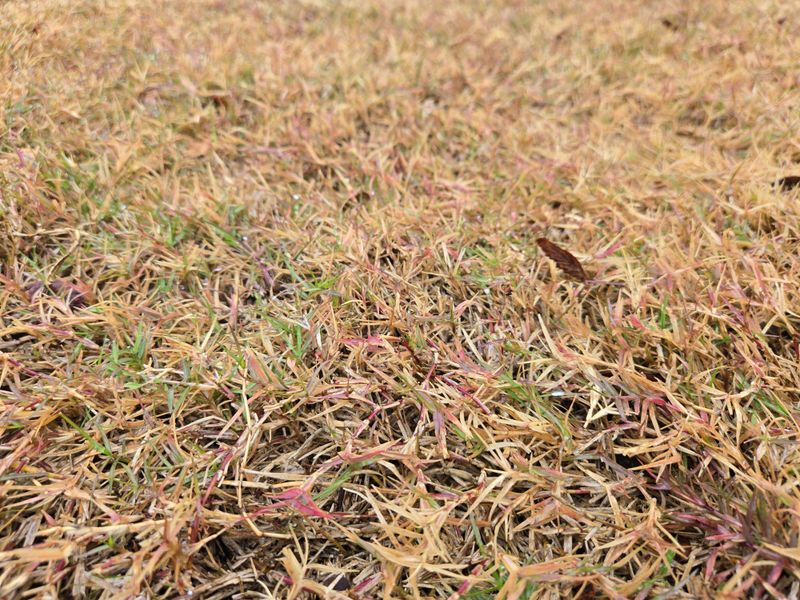
Bermudagrass is basically a sunbather. Give it a hot 90 degree afternoon, and it grows like it is showing off.
Warm-season grasses thrive in southeastern Virginia and parts of the Tidewater area. Bermudagrass, zoysiagrass, and St. Augustinegrass are the usual suspects.
Their favorite temperatures sit between 80 and 95 degrees. Anything cooler makes them sluggish, much like a cat on a chilly morning.
As fall arrives, their growth slows down naturally. Once temperatures stay below 50 degrees, these grasses begin to go dormant.
The first frost is often the clear turning point. Within days, green blades start fading to a soft tan color.
You may only need one or two more light cuts after that. Some years, the first frost ends the season right away.
Owners of warm-season lawns get an earlier break than fescue fans. Many can store their mowers by late October or early November.
Keep an eye out for winter weeds in these resting lawns. Dormant grass leaves gaps where chickweed and henbit like to sneak in.
A pre-emergent weed control in early fall can help a lot. Apply it before cool-season weeds sprout, usually in September.
Skip fertilizer on warm-season grass once fall sets in. Feeding it now can push weak growth that winter cold will damage.
Enjoy the golden look while your lawn rests. That tan color signals a lawn saving its energy for spring.
Dormant Grass Means It’s Time To Park The Mower
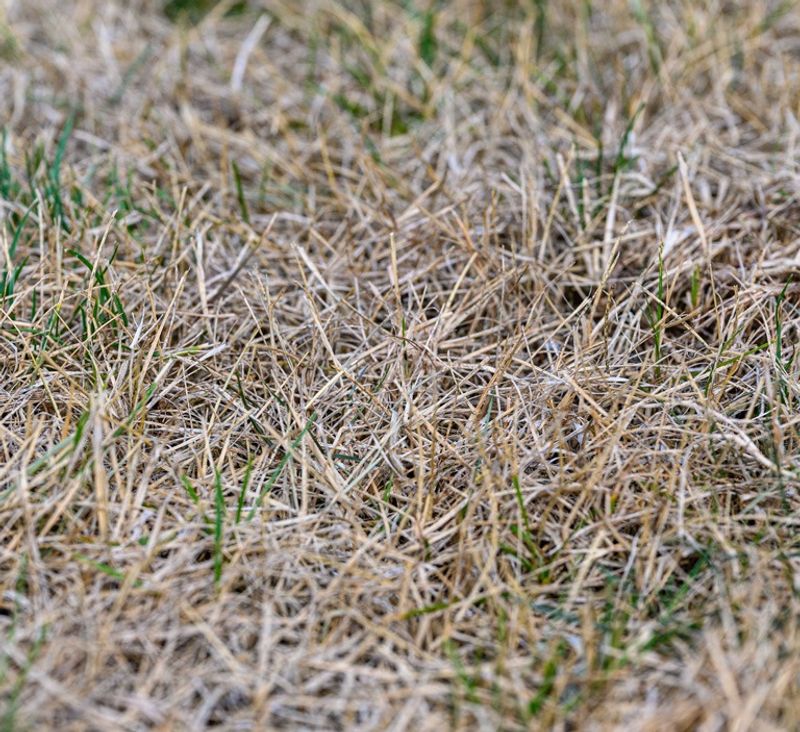
Here is a quick test anyone can try. Grab a handful of tan grass and give it a gentle tug.
If it stays firmly rooted, the grass is dormant, not lost. The crowns near the soil are alive and simply resting.
Dormant grass looks evenly tan or straw colored across the yard. The blades seem dry and brown, yet they hold tight to the ground.
Patchy brown spots are a different story. Uneven damage might point to grubs, disease, or other problems worth checking.
Once your lawn reaches this resting stage, mowing has no real purpose. The grass is not growing, so there is nothing to trim.
Mowing dormant grass can actually hurt it. Wheels and blades stress the crowns, which are the growing points of each plant.
Damaged crowns can lead to slow, thin growth in spring. Your lawn might struggle to green up when warm weather returns.
Think of dormancy like a long winter nap. Waking someone up over and over leaves them grumpy and tired.
Limit foot traffic on dormant lawns when you can. Paths worn across the yard often show up as bare strips later.
Use this quiet season to plan instead. Sketch out spring projects, like overseeding bare spots or adding new garden beds.
Park that mower with a clear conscience. Your resting lawn will thank you with a stronger comeback in a few months.
Stick To The Recommended Height Until The End
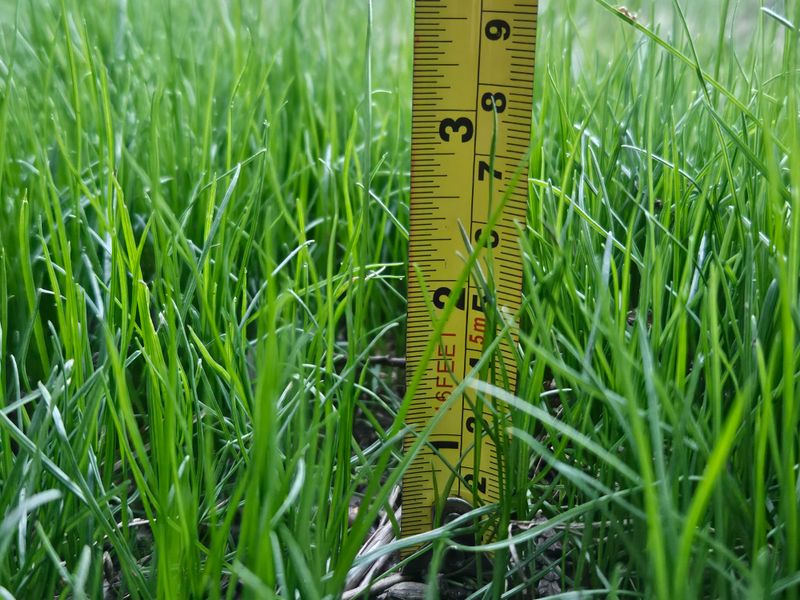
Numbers matter more than you might think when it comes to grass. The right mowing height can make or break your lawn this winter.
For tall fescue, aim for 3 to 4 inches through most of fall. Some experts suggest a range of 2.5 to 3.5 inches instead.
Taller grass shades the soil and blocks weed seeds. It also builds deeper roots that handle cold snaps better.
For the final mow, drop the height a little. Around 2.5 to 3 inches helps prevent matting and snow mold.
Snow mold is a fungus that loves long, flattened grass under snow. It leaves gray or pink crusty patches in early spring.
Warm-season grasses follow different rules. Zoysia likes 2 to 3 inches, while Bermudagrass prefers a short 1 to 1.5 inches.
The last cut for warm-season lawns can land around 1.5 to 2 inches. Virginia lawns with Bermudagrass look neat and tidy at that height.
Follow the one-third rule every single time. Remove no more than one-third of the blade height in one cut.
Scalping the lawn too short is a common fall mistake. It weakens the grass and leaves bare soil open to weeds.
Measure with a simple ruler if you are unsure. Set the mower on a flat driveway and check the deck height.
Small adjustments add up to a healthier yard. Stay consistent until the final cut, and spring will look brighter.
Mulch Fallen Leaves As You Mow
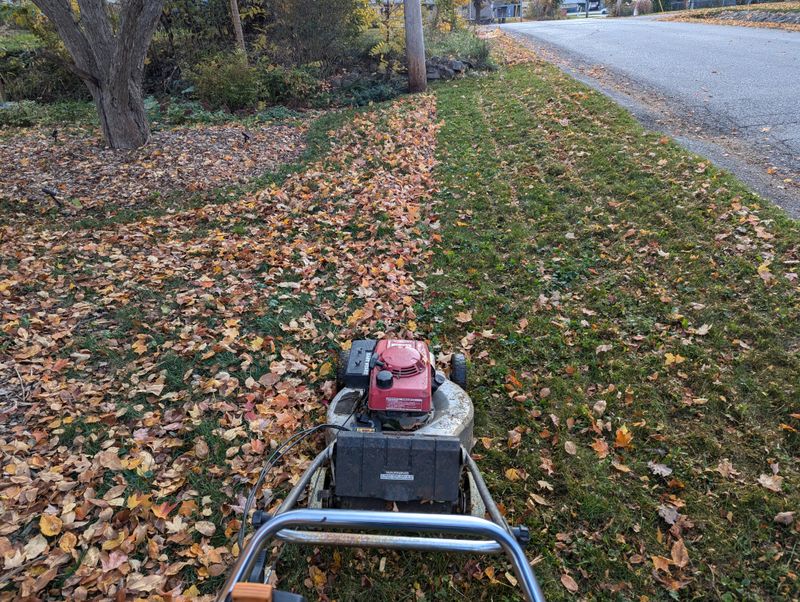
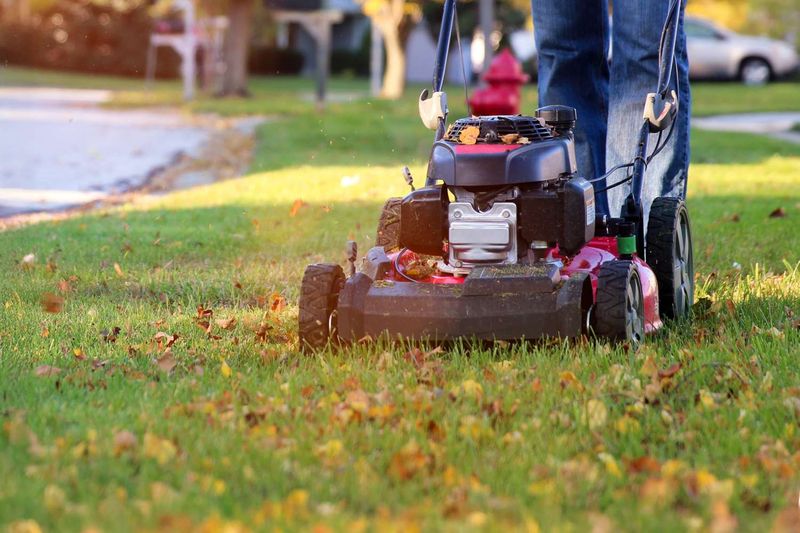
Raking leaves for hours might be a family tradition, but your mower offers a shortcut. Chopped leaves can feed your lawn for free.
Virginia’s oaks, maples, and tulip poplars drop piles of leaves every fall. Instead of bagging them, run the mower right over the top.
A mulching mower shreds leaves into tiny, dime-sized bits. Those pieces slip down between the grass blades and break down over winter.
As they decay, leaves return nutrients to the soil. Studies show they can supply up to 25 percent of a lawn’s fertilizer needs.
Earthworms love chopped leaves too. They pull the bits underground and help loosen your soil along the way.
Watch out for thick, heavy layers though. Big clumps block sunlight and can smother the grass beneath them.
A good rule is simple to follow. You should see grass poking through the shredded leaves after you mow.
If leaves pile up too deep, make two passes. You can also rake a portion into garden beds as natural mulch.
Mow leaves when they are dry for the best results. Wet leaves clump, stick to the deck, and shred poorly.
Keep the mower a bit higher while mulching heavy piles. The extra room helps the blade chop leaves without clogging.
Your back will appreciate this trick. Your lawn will too, soaking up that free food all winter long.
Newly Seeded Lawns Need A Careful First Cut
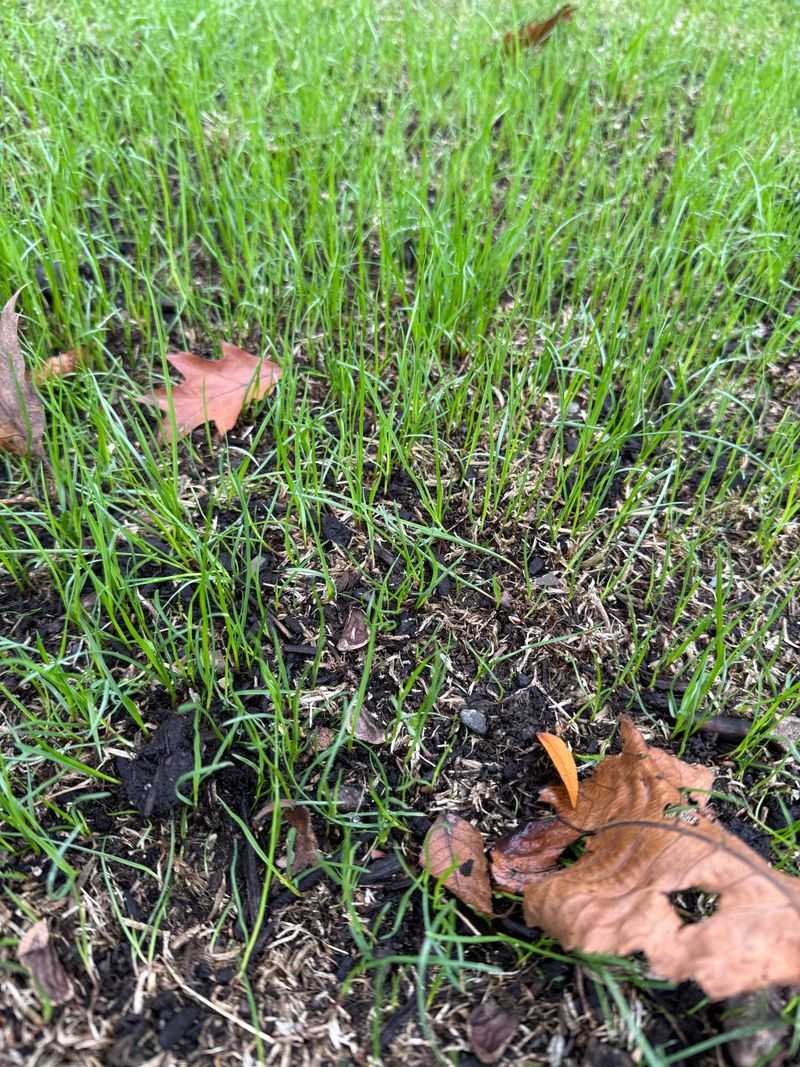
Fall overseeding is a favorite project for many homeowners. Cool weather and warm soil make it the perfect time to plant grass seed.
But those fresh sprouts need a little patience. Mowing baby grass too soon can rip it right out of the ground.
Wait until new grass reaches 3 to 4 inches tall. That usually happens about 4 to 6 weeks after planting.
Before you mow, try the tug test. Gently pull on a small clump and see if it holds firm.
If the seedlings slide out easily, give them more time. Roots need to anchor well before handling a mower.
Make the first cut a light trim only. Take off just the top inch or so to encourage thicker growth.
Sharp blades matter even more with young grass. A dull blade can yank tender shoots instead of slicing them.
Choose a dry day when the soil is firm. Soft, wet ground lets mower wheels leave ruts and crush seedlings.
Skip sharp turns on the new area if possible. Wide, gentle turns keep the wheels from scuffing fragile patches.
Late-seeded lawns might only get one or two cuts before winter. That is perfectly fine, since roots will keep growing underground.
Treat your new grass like a young houseplant. A little extra care now means a thick, healthy lawn next year.
Skip Mowing Frosty Or Soggy Grass
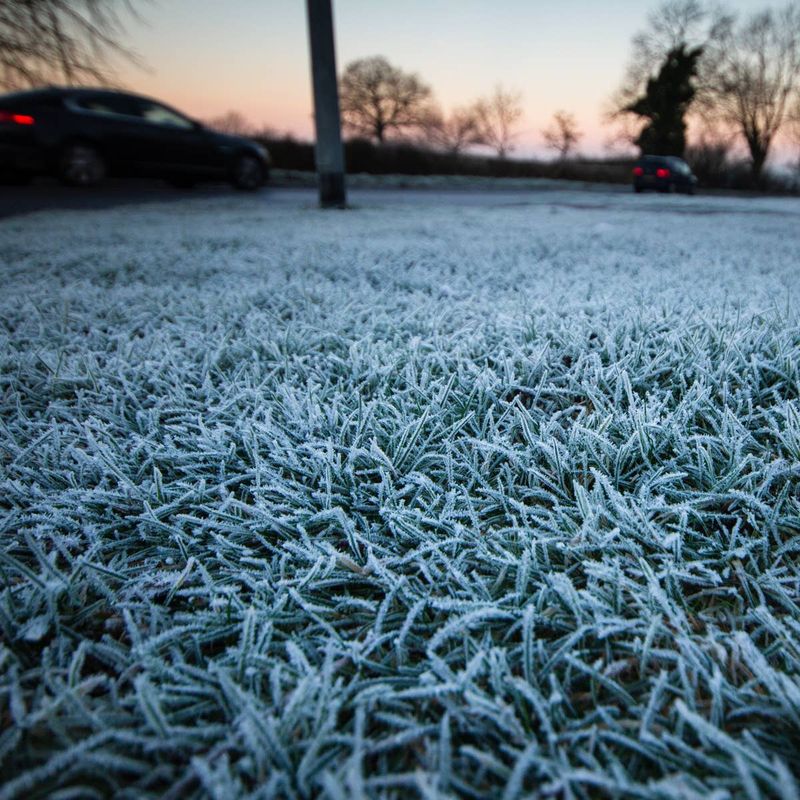
Ever seen footprints stay on a frosty lawn for days? Those dark marks are grass blades that snapped under pressure.
Frozen grass turns brittle, a bit like thin glass. Mowing or walking on it can break blades and leave lasting damage.
Wait until the frost melts and the grass dries out. Late morning or early afternoon is usually a safer window.
Many experts suggest mowing when temperatures climb above 40 degrees. Cold, stiff grass does not cut cleanly.
Soggy lawns bring a different set of headaches. Wet grass tears unevenly, and clippings clump into soggy piles.
Those clumps can smother the grass underneath. Damp conditions also help fungal diseases spread from spot to spot.
Wet soil gets squished easily by mower wheels. You might end up with ruts and packed dirt that roots struggle to push through.
Fall rain can stretch for several days. Resist the urge to mow just because the weekend arrived.
Try the shoe test before starting the mower. If your sneakers come back soaked after a short walk, wait longer.
Slipping on wet grass is a safety risk too. Slopes become extra slick, especially with a heavy push mower.
A day or two of waiting will not hurt your lawn. A rushed cut on frosty or soggy grass definitely can.
Sharpen The Blade For The Final Cuts
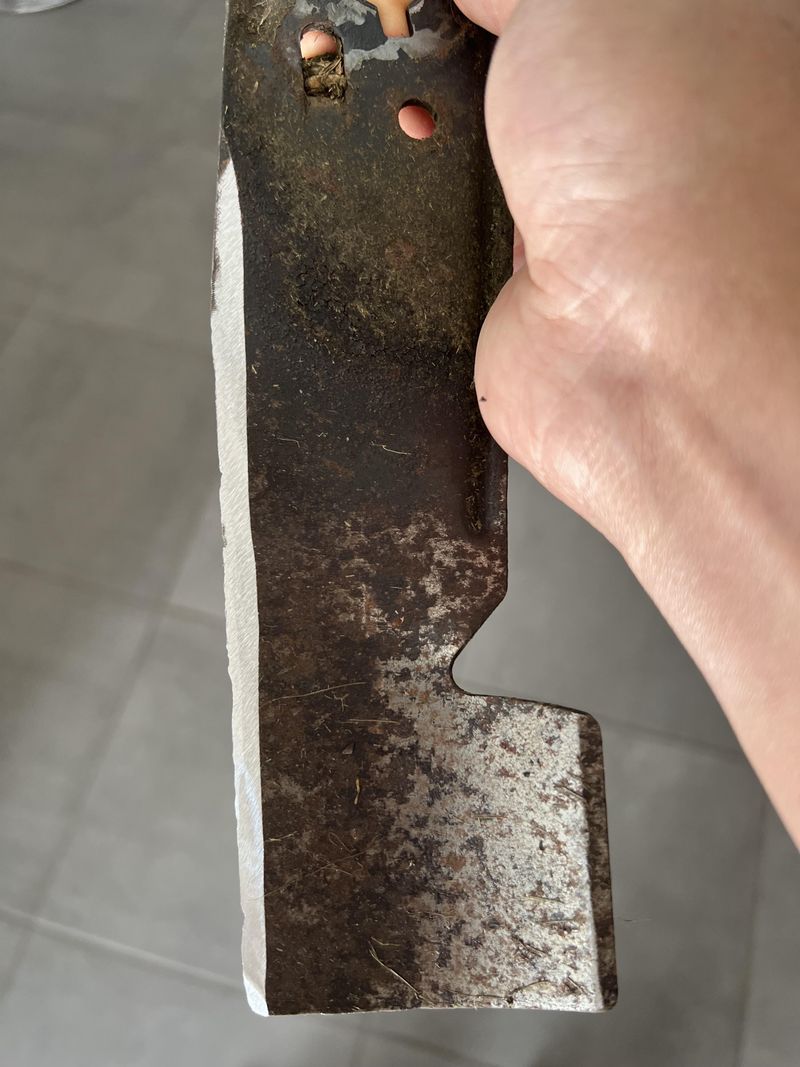
Look closely at a grass blade after you mow. Clean edges mean a sharp blade, while ragged brown tips mean trouble.
Dull blades tear grass instead of slicing it. Those frayed ends lose moisture and invite disease to move in.
Your lawn needs every advantage heading into winter. Clean cuts help grass heal fast and stay strong through cold months.
Most mower blades need sharpening once or twice a season. By fall, yours has probably handled plenty of sticks and acorns.
Safety comes first before touching the blade. Disconnect the spark plug wire so the engine cannot start by accident.
Tip the mower with the air filter facing up. That position keeps oil and fuel from leaking where they should not.
Remove the blade with a wrench and clamp it securely. A metal file or grinder can restore the edge in minutes.
Balance matters as much as sharpness. Hang the blade on a nail to see if one side dips lower.
An unbalanced blade shakes the mower and wears out parts. File a little more from the heavy side to even it out.
Not comfortable with tools? Many hardware stores sharpen blades for a small fee.
Some folks keep a spare blade on hand for quick swaps. That way, mowing never waits on a trip to the repair shop.
A fresh edge makes the last cuts look crisp. Your yard enters winter looking neat instead of shaggy.
Winterize The Mower After The Last Pass
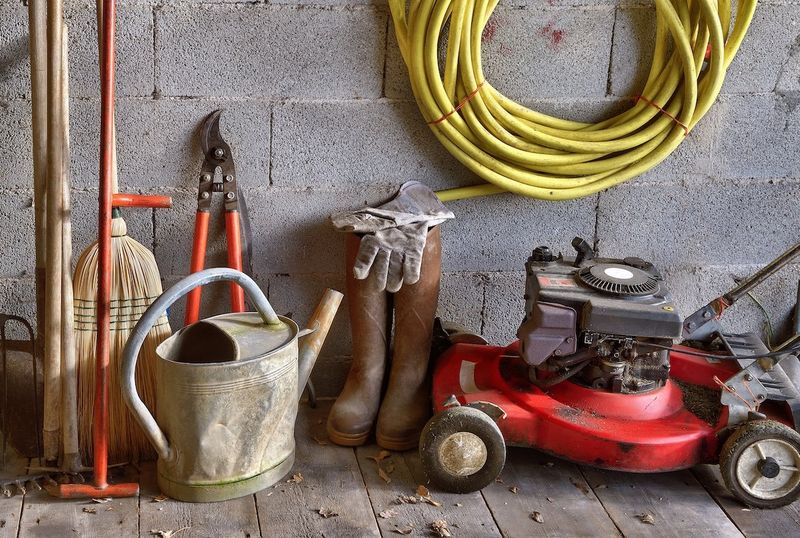
The final mow feels like a small victory lap. Before you celebrate, give your mower a little care for its long winter rest.
Start by cleaning the deck thoroughly. Caked grass and dirt hold moisture that leads to rust over the cold months.
Change the oil while the engine is still warm. Warm oil drains faster and carries more gunk out with it.
Fuel needs attention too. Add fuel stabilizer to a full tank, then run the engine a few minutes to circulate it.
Draining the fuel system is another good option. Old gas can gum up the carburetor and cause hard starts in spring.
Riding mowers often have batteries to handle. Remove the battery, clean it, and store it somewhere cool and dry.
Check the spark plug and air filter next. Clean or replace them now so spring startup goes smoothly.
Lubricate moving parts as your owner’s manual suggests. Wheels, cables, and pivot points appreciate a light touch of oil.
Store the mower in a dry, frost-free spot if possible. A shed or garage protects it from damp winter weather.
Toss a breathable cover over it to keep dust away. Avoid plastic tarps, since they can trap moisture underneath.
Spring mornings will feel easier because of this work. One pull, a steady hum, and the new season begins.