Where Desert Tortoises Go in Winter and What Arizona Homeowners Should Do if They Find One
A desert tortoise can spend most of the coldest months tucked inside a shelter, and still show up in your yard on a mild winter day. That can leave you wondering if it is lost, sick, or just out for some sun.
The seasonal details in this article describe Sonoran desert tortoises, and they may not fit every tortoise in Arizona. Knowing what is normal helps you respond in a way that keeps the animal safe.
Which Arizona Tortoise Does This Winter Pattern Describe?
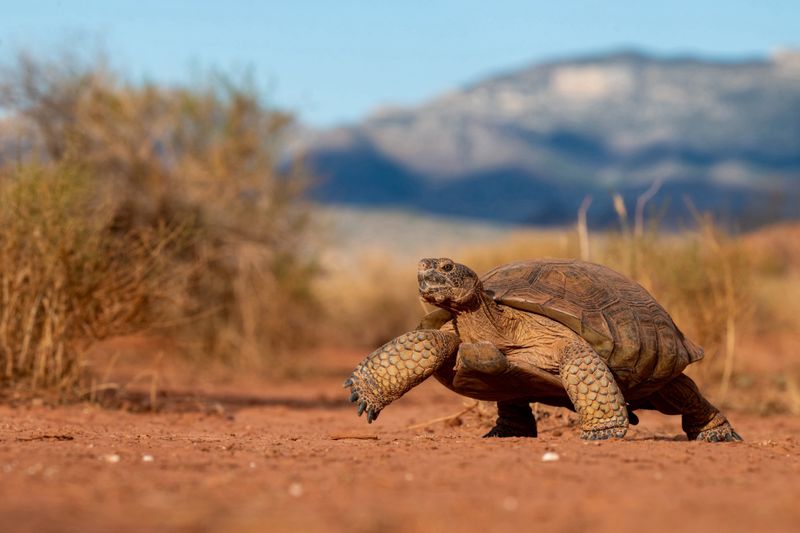
Arizona has two native desert tortoise species, and they do not live in the same places. The Sonoran desert tortoise lives across much of the state, while the Mojave desert tortoise lives north and west of the Colorado River, according to Arizona Game and Fish Department.
That difference matters for this article. The winter timing and the field research described below concern Sonoran tortoises only.
They are not a schedule for Mojave tortoises, and they should not be treated as one.
Why draw such a firm line? Two populations in different landscapes can behave differently through the seasons.
Elevation, local weather, and habitat all play a part, so one calendar cannot cover every tortoise in the state.
If you live in the Sonoran Desert region, which includes much of central and southern Arizona, the pattern in the next sections is a useful guide. If you are unsure which kind of tortoise you are looking at, that is a good reason to ask the state wildlife agency rather than guess.
How Sonoran Tortoises Shelter Through Winter
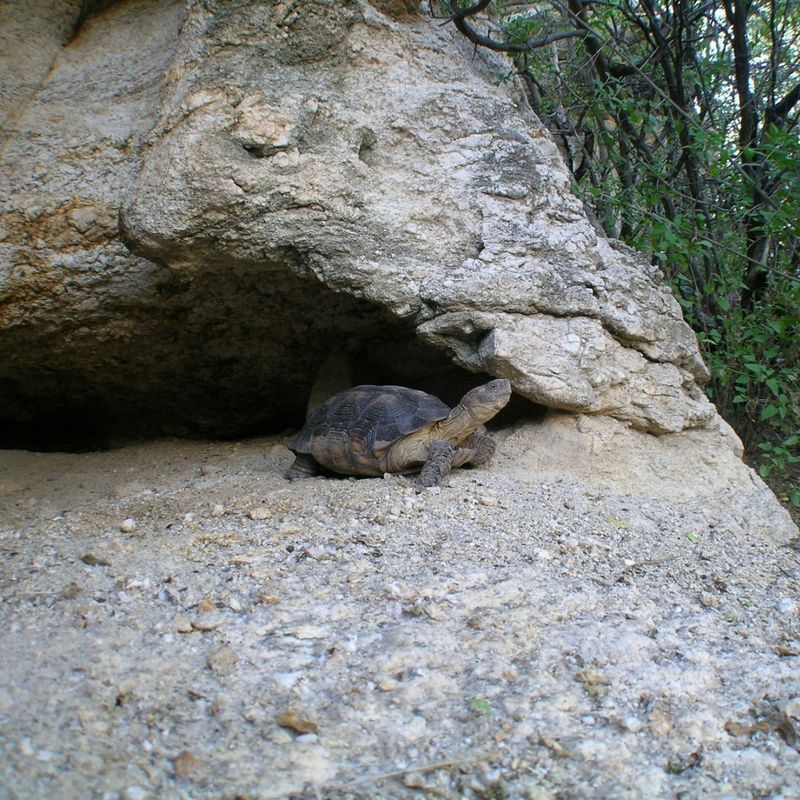
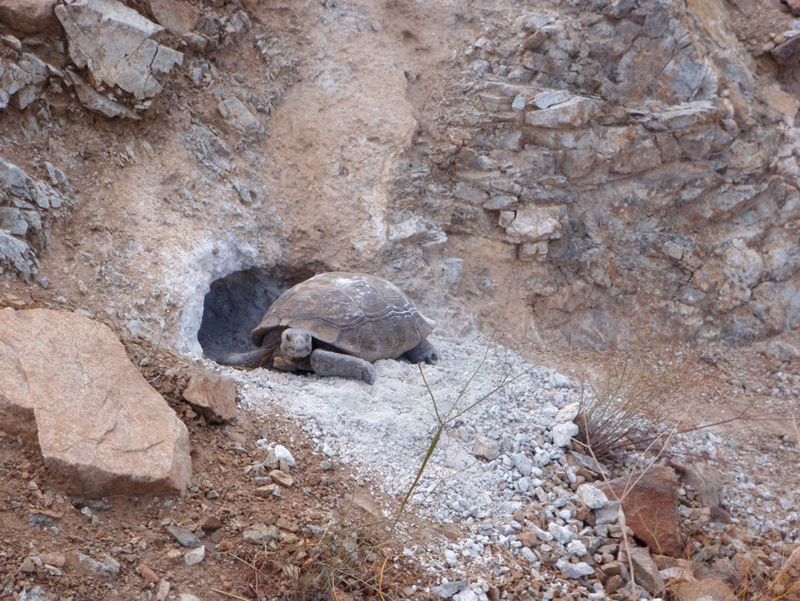
Winter for a Sonoran tortoise mostly means staying put in a safe spot. These animals use burrows, rock crevices, and other protected sites to avoid cold and to keep their body temperature steady.
The U.S. Fish and Wildlife Service reports in its species status assessment that Sonoran tortoises are largely dormant in shelters from mid-November through mid-February.
That is a general window, and behavior varies with elevation, season, and conditions.
Notice the word largely. Seasonal sheltering is not the same as sleeping without a break for three months.
A tortoise may be inactive for long stretches and still stir when conditions change.
So the idea that tortoises vanish underground and stay there all winter is too simple. A better picture is a animal that spends much of the season tucked away, usually out of sight, and that does not follow a calendar printed on a wall.
Why a Sonoran Tortoise May Emerge in Winter
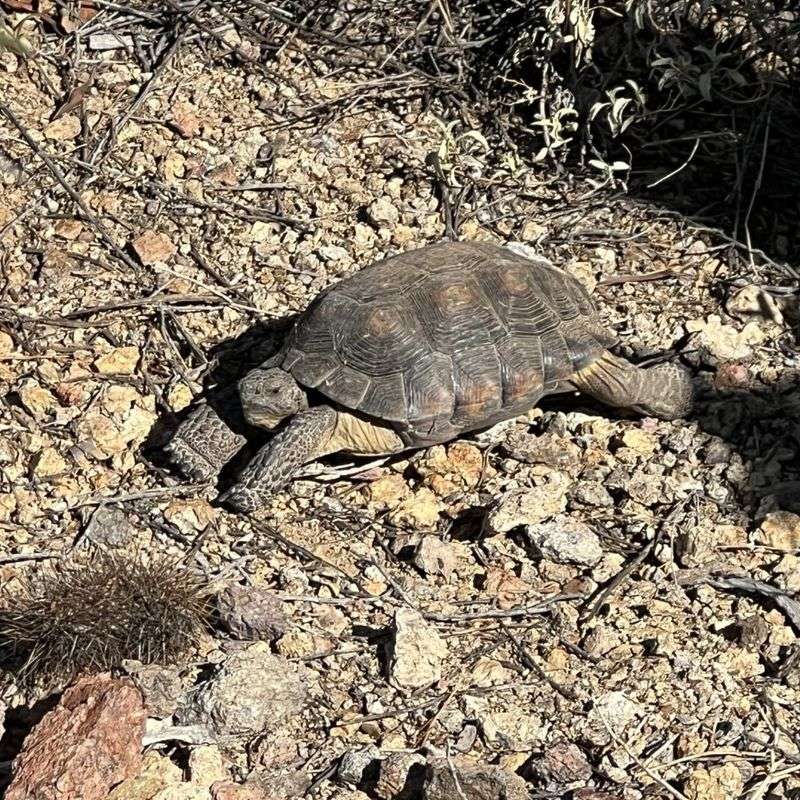
A tortoise out in the open during winter can be perfectly normal. Sonoran tortoises may come out to bask in the sun, move between shelters, or rehydrate during or after rainfall, as noted in the federal assessment.
One peer-reviewed study looked at this directly. Researchers documented adult, juvenile, and hatchling Sonoran tortoises active from November through February at three central Arizona sites, according to the study record.
At one of those sites, all 36 observed tortoises came out to drink during a heavy rain event in December. That is a striking detail, but it describes one site and one event.
Treat it as proof that winter activity happens, not that it is common everywhere. The study offers no fixed temperature, rainfall amount, or statewide schedule, so a tortoise on the move in January is simply one piece of a varied picture.
A Yard Sighting Does Not Explain the Tortoise’s History
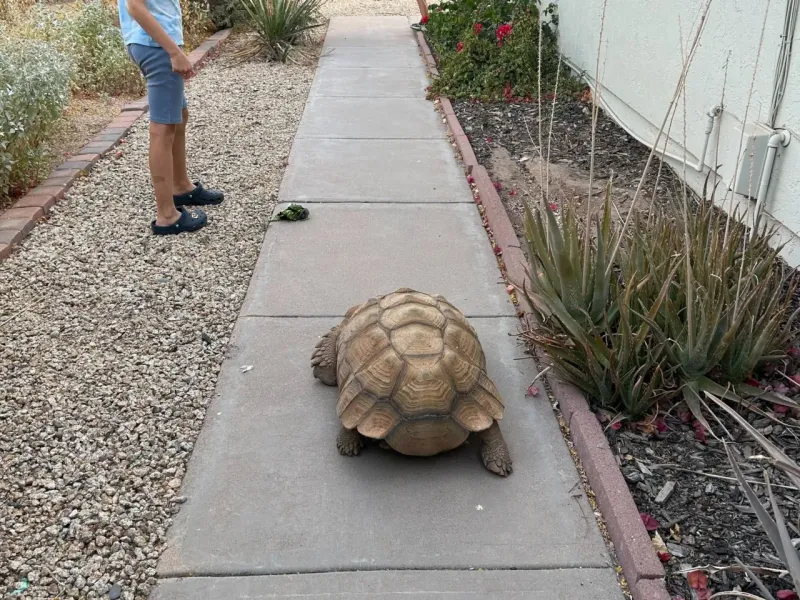
Seeing a tortoise in your yard tells you where it is, not where it came from. The animal could be a wild tortoise passing through, or it could be someone’s escaped pet.
Location alone cannot settle the question.
Winter timing does not settle it either. Since Sonoran tortoises can emerge on mild days or after rain, a winter sighting does not mean the animal is lost, sick, or in trouble.
The same caution runs the other way. A tortoise in a neighborhood is not automatically wild, and it is not automatically someone’s pet.
Arizona Game and Fish Department offers guidance through its tortoise program because each animal’s situation differs.
What you can do is observe from a distance. Notice whether it moves normally, whether it seems hurt, and how close it is to roads, pools, or dogs.
Those details help the experts give you better advice.
Give It Space and Contact AZGFD When Appropriate
The kindest first move is usually to back away. If a healthy tortoise is in open, wild habitat, leave it alone.
Keep people at a distance and keep pets away, especially dogs, since even gentle dogs can pose a serious threat.
Some situations call for a phone call. If the tortoise may be injured, or if a healthy tortoise is in a populated area such as a neighborhood yard, contact the Desert Tortoise Adoption Program at 844-896-5730.
AZGFD explains this guidance on its tortoise adoption page.
Think of the call as a request for advice about your particular tortoise. It is not a signal to pick the animal up or drive it anywhere.
The staff can help you decide what happens next.
While you wait, a few simple steps help. Bring dogs indoors, keep children from crowding the animal, and note where you saw it.
Photos taken from a distance can be useful when you describe what you found.
Why You Should Not Take or Release a Tortoise

It can be tempting to bring a tortoise inside to keep it safe. Resist that urge.
Arizona Game and Fish Department says collecting a tortoise from the wild is illegal and can harm tortoise populations.
Releasing a captive tortoise into the wild causes trouble too. According to the agency’s tortoise information, releases can spread disease and disrupt the genetics of wild populations.
This is also why informal relocation is a poor idea for a tortoise in your yard. You usually cannot know whether it is wild or captive, so moving it could cause harm either way.
Asking the agency first protects the animal and the wild tortoises nearby.
The rules around keeping captive tortoises are detailed and can change, so check current Arizona guidance before acting. A tortoise that spends winter safely underground and wanders out on a sunny day is doing just fine without us.