Why A Bald Eagle Circling Your California Property Is Not Random
One giant raptor nest found in Florida weighed nearly two tons, which is heavier than plenty of small cars. The builders of that monster home sometimes glide right over California backyards, turning slow circles high above our tomato beds.
Those wide loops look lazy from the ground, yet scientists say they usually serve a clear purpose. Rising pockets of warm air and nearby food both play a big part in that graceful sky dance.
I have to admit that I once dropped a whole flat of seedlings just to watch one bird overhead. You might notice the same visitor returning to your California property week after week during the cooler months.
What surprises me most is how much these patient hunters reveal about the water and trees around our homes. So what exactly is that big bird looking for when it keeps circling above your garden?
Bald Eagles Ride Warm Thermals To Save Energy
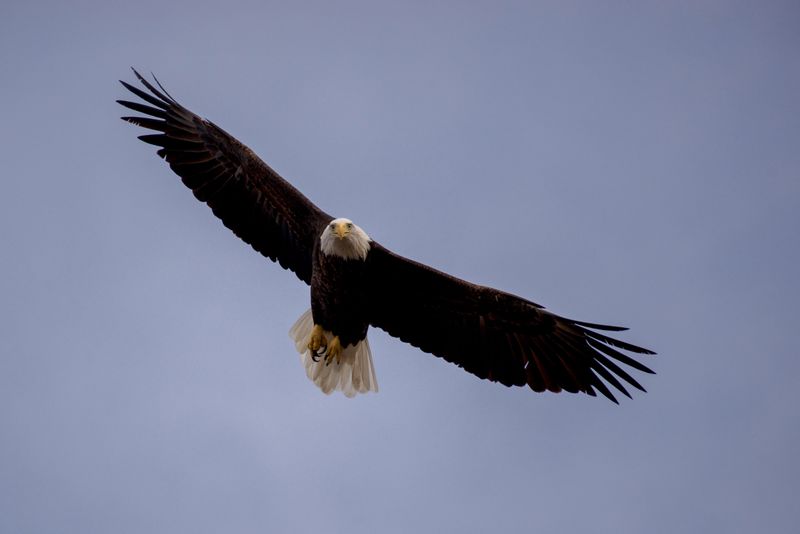
Those slow, lazy loops overhead are often a free elevator ride powered by sunshine and warm rising air. Bald eagles have wingspans reaching about seven feet, which makes flapping hard work for such a heavy bird.
Thermals form when sunlight heats bare ground or pavement and pockets of warm air begin drifting upward. An eagle simply spreads its broad wings inside that column and spirals higher without spending much energy.
I love how the circling often starts in late morning, once the sun has warmed things up nicely. Your sunny driveway or a dry hillside nearby might be the very reason that bird keeps returning.
Once an eagle gains enough height, it can glide for long distances toward the next lake or river. Migrating birds use this trick constantly, hopping from one thermal to another like stepping stones in the sky.
Hawks and vultures often share the same rising columns, so you may spot a mixed crowd turning together. Look for the eagle’s flat, plank-like wings and steady flight compared to the wobbly tilt of turkey vultures.
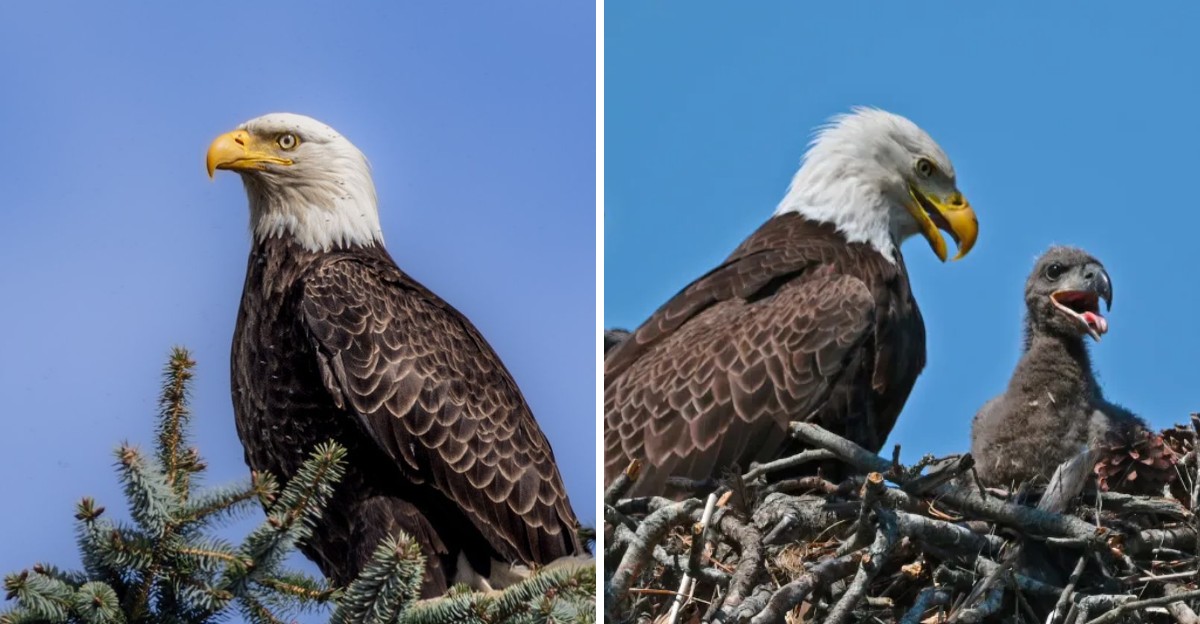
Adults show that famous white head and tail, while young birds look mottled brown for about five years. Many folks mistake a juvenile for a golden eagle, so check for white blotches under the wings.
Keep a pair of binoculars near the back door during sunny afternoons for a closer look at the show. Personally, I think spotting an eagle beats any garden chore on the list, even pulling weeds.
A Backyard Pond Or Nearby Lake Draws Hungry Eagles
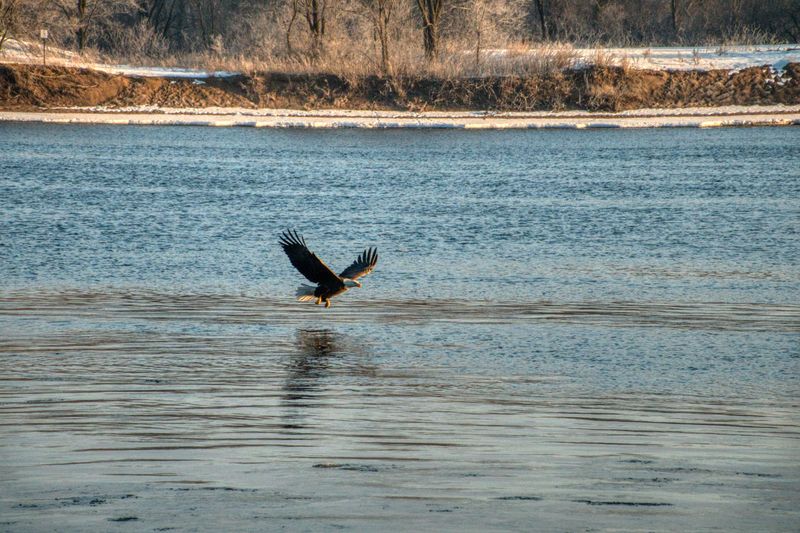
Fish are the favorite snack on the eagle menu, and those keen eyes can spot a fin from remarkable heights. Experts estimate their vision is roughly four to five times sharper than ours, which feels a little unfair.
A circling eagle over your land may be scanning a nearby reservoir or even your shiny backyard koi pond. Once it locks onto a target, the bird swoops low and snatches the fish with its powerful talons.
Bald eagles often prefer easy meals, so sluggish or injured fish near the surface catch their attention quickly. They are also known for bullying ospreys in midair until the smaller hawk drops its fresh catch.
Waterfowl like coots and ducks also land on the menu, especially around lakes during the winter months. Places like Big Bear Lake and Lake Cachuma host wintering eagles that arrive from farther north each year.
If you keep ornamental fish, I strongly suggest adding some cover so they have places to hide. Deeper water zones and sturdy pond netting both give your fish a better shot at staying safe.
Native plants along the pond edge can also offer shade, which makes bright koi a little harder to spot. Remember that harming or harassing an eagle is illegal, so gentle prevention is the smartest path forward.
I can’t imagine a more thrilling sight than an eagle lifting a wriggling trout straight from the water. Just make sure that trout came from the lake down the road rather than your prized garden pond.
Eagles Scan Open Fields For Carrion And Small Prey
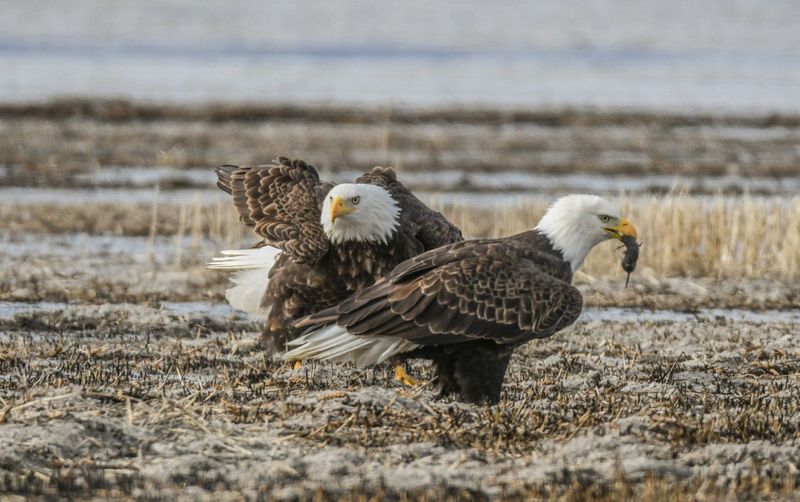
Bald eagles are proud national symbols, yet they happily eat leftovers that would turn your stomach in seconds. Benjamin Franklin famously grumbled about their character, partly because they steal food and scavenge so often.
Carrion, meaning animal remains, makes up a meaningful share of their diet, especially during the colder months. A circling eagle above rural acreage may be checking for a deer struck along a nearby road or a spent salmon in a creek.
Ravens and vultures often find these meals first, and eagles watch them closely to locate the feast. I like how these birds treat each other like a neighborhood news service for free food.
Live prey matters too, and eagles will grab rabbits and ground squirrels when the opportunity appears. Ranch owners sometimes notice eagles hanging around during calving or lambing season, drawn by afterbirth and losses.
Small pets worry many people, but eagles rarely target them and usually struggle to lift heavy loads. Most can carry only about four or five pounds, so a large dog is not on the shopping list.
Still, I keep tiny dogs and backyard chickens close when a big raptor lingers overhead for a while. A covered run for poultry is a simple fix that also keeps out hawks and hungry raccoons.
Avoid using rodent poisons on your property, since eagles that eat poisoned animals can become seriously sick. Lead fragments left in hunted carcasses are another major threat, and wildlife groups track this problem closely.
Mature Trees Near Water Make Perfect Eagle Perches
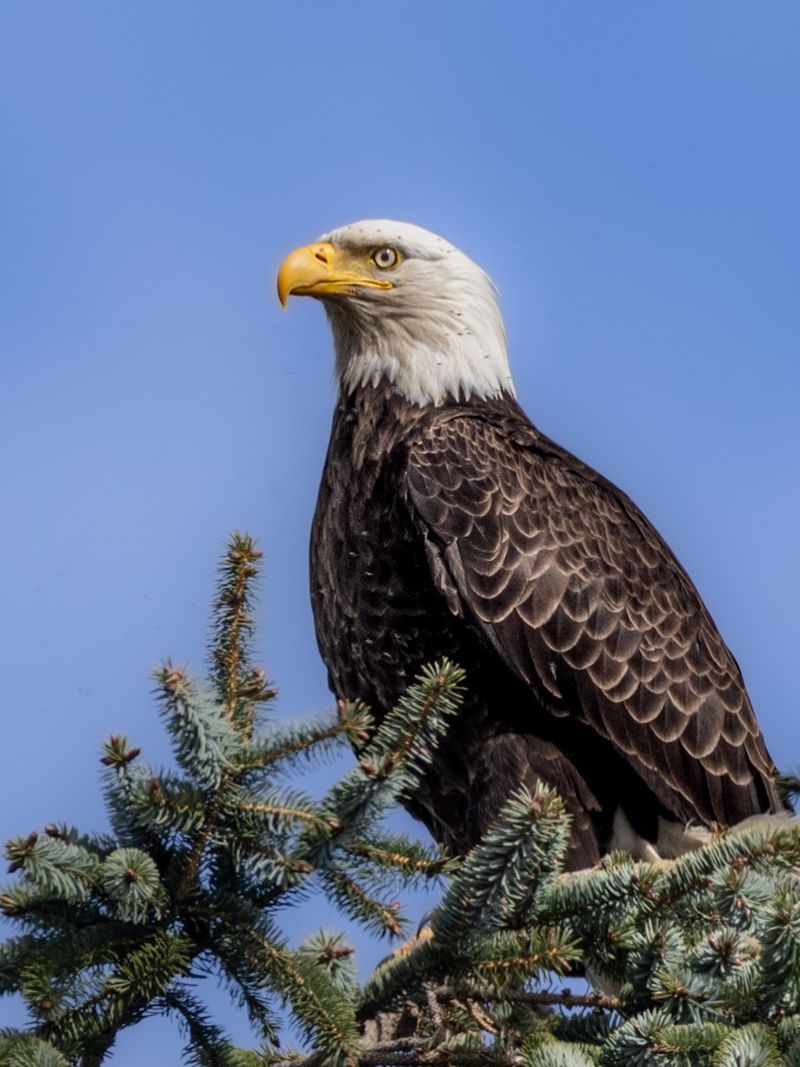
Eagle nests can grow wider than a king-size bed, and they need seriously sturdy trees to hold them. Those towering pines and oaks on your property may look like prime real estate from above.
In California, bald eagles mostly nest in tall conifers near lakes and large reservoirs with plenty of fish. They also perch on bare snags, which give them clear views without leafy branches blocking the scenery.
A circling eagle might be sizing up your tallest tree as a resting spot or a lookout post. Perching saves energy, and a high branch lets the bird digest a meal while watching for the next one.
In winter, many eagles gather in communal roosts, sometimes sharing the same grove night after night. These roosts are usually sheltered from wind, which helps the birds hold onto precious body heat.
Personally, I think twice before removing any big tree, especially when it overlooks a creek or lake. An arborist can often make a tree safer through careful pruning instead of taking the whole thing down.
Leaving a safe snag standing in a back corner can also help woodpeckers and cavity-nesting owls find a home. Just confirm that it stands well away from your house and from any spot where people gather.
Planting native trees like ponderosa pine or valley oak creates future perches, though patience is definitely required here. You might not see eagles in them soon, but your grandkids could enjoy the view someday.
Paired Bald Eagles Perform Dramatic Courtship Flights
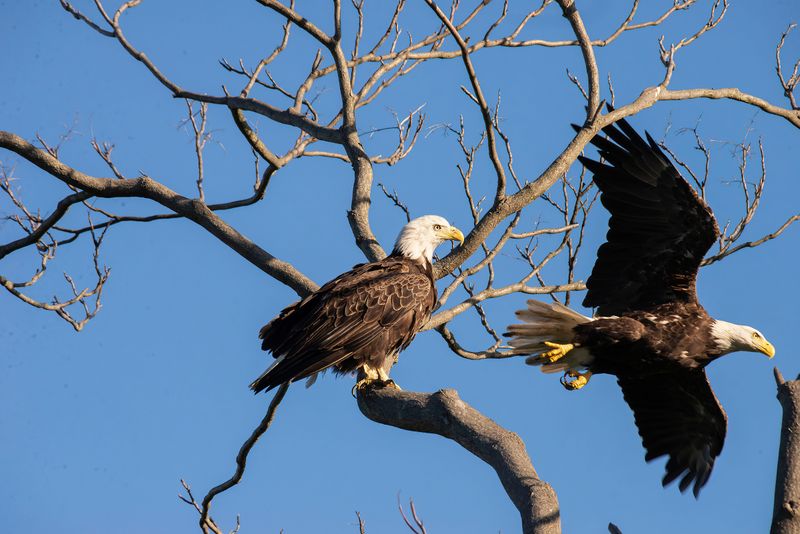
Few sights in nature beat two eagles locking talons in midair and tumbling toward earth like falling pinwheels. Birders call this the cartwheel display, and pairs usually break apart well before reaching the ground.
Circling together in wide loops is a gentler part of courtship, and it often happens in winter. In California, the breeding season commonly runs from about January through July, depending on location and elevation.
Bald eagles typically mate for life, and a bonded pair may reuse the same nest for many years. Each season they add fresh sticks, which is how some nests eventually weigh more than a ton.
I believe watching a pair glide side by side is one of the sweetest sights a gardener can get. You might even hear their surprisingly high, giggly calls, which sound nothing like the movie version.
Hollywood often swaps in a red-tailed hawk scream, because the real eagle voice sounds rather chirpy. Once you learn that call, picking out eagles from other raptors overhead becomes much easier for you.
If you see repeated courtship flights near your land, an active nest could be hidden somewhere close by. Federal guidelines generally suggest keeping loud work and construction about 660 feet away from active nests.
Save noisy projects like tree trimming or pouring a new patio for late summer when nesting has wrapped up. Your patience gives a young eaglet the quiet start it needs to grow into a soaring adult.
Bald Eagles And Their Nests Are Protected By Law
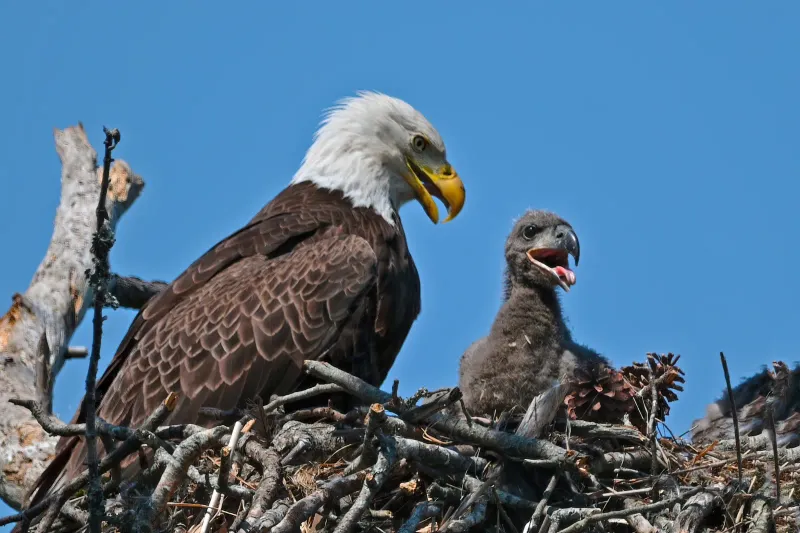
Bald eagles nearly vanished from the lower 48 states, dropping to roughly 417 nesting pairs by 1963. The pesticide DDT thinned their eggshells, and hunting along with habitat loss made the slump much worse.
Thanks to a DDT ban and strong protections, the species recovered and left the federal endangered list in 2007. I love how this comeback proves that thoughtful rules can help wildlife bounce back in a big way.
Federal law still protects these birds through the Bald and Golden Eagle Protection Act and Migratory Bird Treaty Act. Those laws forbid harming or disturbing eagles, and they even cover loose feathers along with nests.
California adds another layer, listing the bald eagle as endangered under state law and as a fully protected species. That fully protected status means permits to take the birds are extremely limited across the Golden State.
Violations can bring hefty fines and even jail time, so curiosity should stay at a respectful distance. Picking up a single feather from your lawn is technically illegal without a permit, which surprises many people.
If you suspect a nest on your property, contact the state wildlife department or the U.S. Fish and Wildlife Service. Biologists can explain which yard projects are fine and which ones should wait until the young have fledged.
Injured eagles need expert care, so call a licensed wildlife rehabilitator rather than trying to help on your own. Honestly, sharing my garden airspace with a recovered national symbol feels like a quiet little win.