Why California Citrus Trees Are Dropping Fruit In July And What To Do Immediately
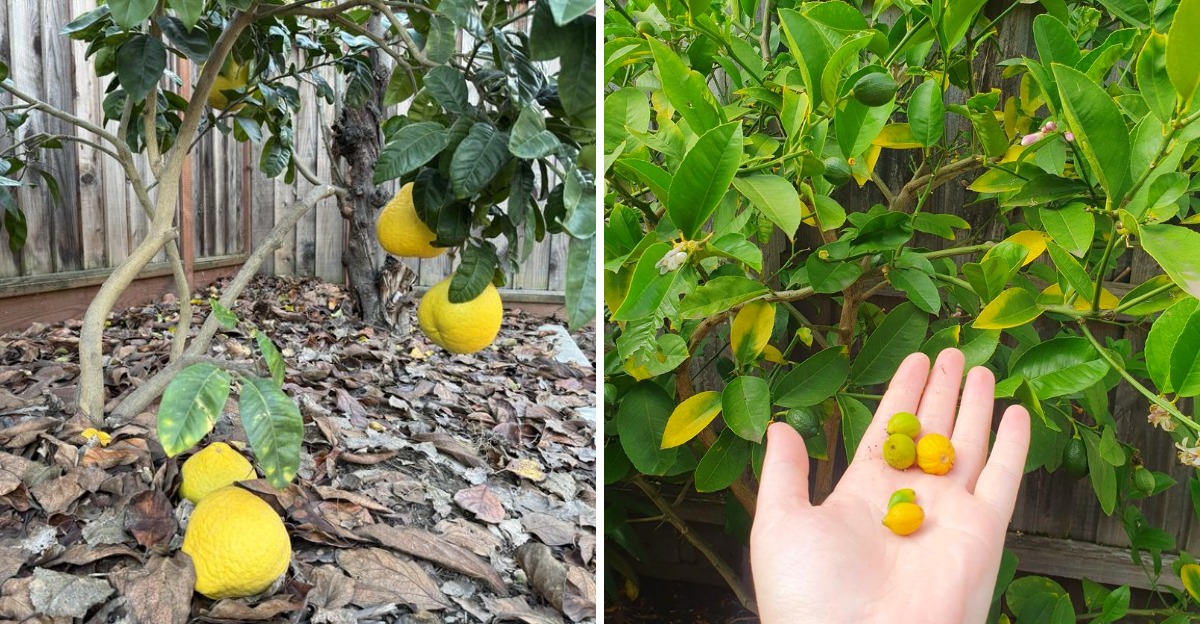
You walked outside this morning feeling pretty good about life, took one look at your citrus tree, and found a bunch of small fruit on the ground that definitely was not there yesterday. First reaction: mild panic.
Completely valid. Here is the thing though, not all citrus fruit drop in July is a red flag.
Trees actually shed fruit they cannot fully support, which is essentially their version of quality control. Impressive, honestly.
The problem is knowing the difference between a tree doing its thing and a tree that genuinely needs help.
A sudden drop during a heat wave or after a stretch of dry weather is usually the second situation, and it often points to something worth investigating right away.
Before you reach for fertilizer or pruning shears though, start with the soil. That is almost always where the real answer is.
1. Natural Fruit Drop May Still Be Happening
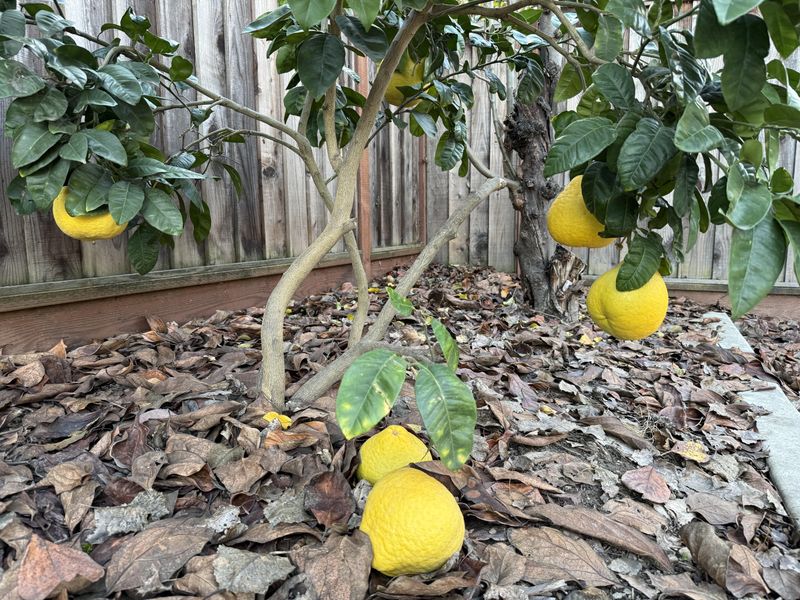
Finding a handful of small green fruit on the ground does not automatically mean something is wrong.
Citrus trees go through a natural thinning process that can stretch from late spring all the way into early summer, and in warmer California climates, this process sometimes extends a little further into July.
During this period, the tree is making decisions about how many fruit it can realistically bring to full size. If the tree set more fruit than it has the energy or water resources to support, it will shed the extras.
Think of it as the tree doing its own math.
Young lemon, orange, and mandarin trees are especially prone to dropping a portion of their fruit load as they figure out what they can handle. Mature trees in warm inland California yards may also thin more aggressively after a hot spell in late June.
The key question is whether the drop looks gradual or sudden. A steady trickle of small fruit over a few weeks is more likely to be natural thinning.
A sudden pile of fruit appearing after a heat spike or a missed watering deserves a closer look at soil moisture and irrigation patterns before assuming the worst.
2. July Heat Can Push Trees Into Stress
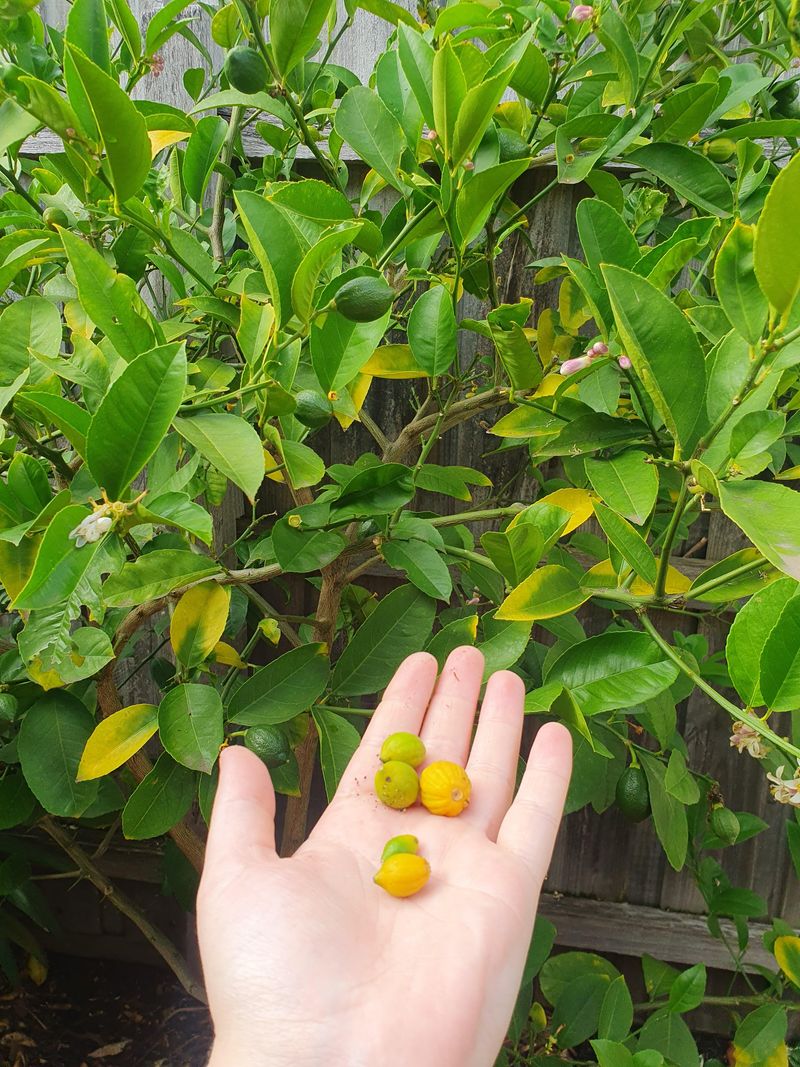
Hot July afternoons in California can be genuinely tough on citrus trees, especially when temperatures climb well above 95 degrees Fahrenheit for several days in a row.
Most citrus varieties handle warmth reasonably well, but extended heat waves push trees into a kind of protective mode where they start conserving energy.
One of the ways a tree conserves energy during heat stress is by shedding fruit it does not have enough water or resources to keep developing. This is not a failure on the tree’s part.
It is a survival response, and it can happen even when the tree looks otherwise green and leafy from a distance.
Warm inland areas of California, including parts of the Central Valley, Inland Empire, and East Bay foothills, tend to see more heat-related fruit drop than mild coastal gardens near the coast.
Gardeners in those hotter zones may notice fruit dropping in clusters rather than gradually, especially after temperatures spike above 100 degrees.
Your California Garden Changes Every Week. Your Plan Should Too.
Gardening in California changes quickly throughout the season. Every Friday you’ll receive a simple weekly plan showing exactly what to plant, prune, fertilize, harvest, and protect so you never miss the right timing.
Wilted or curled leaves during the hottest part of the day can be a signal that the tree is struggling with heat. If the leaves perk back up in the evening, the tree is likely managing.
If they stay droopy overnight, that points toward a watering issue that needs attention sooner rather than later.
3. Dry Soil Can Trigger More Fruit Drop
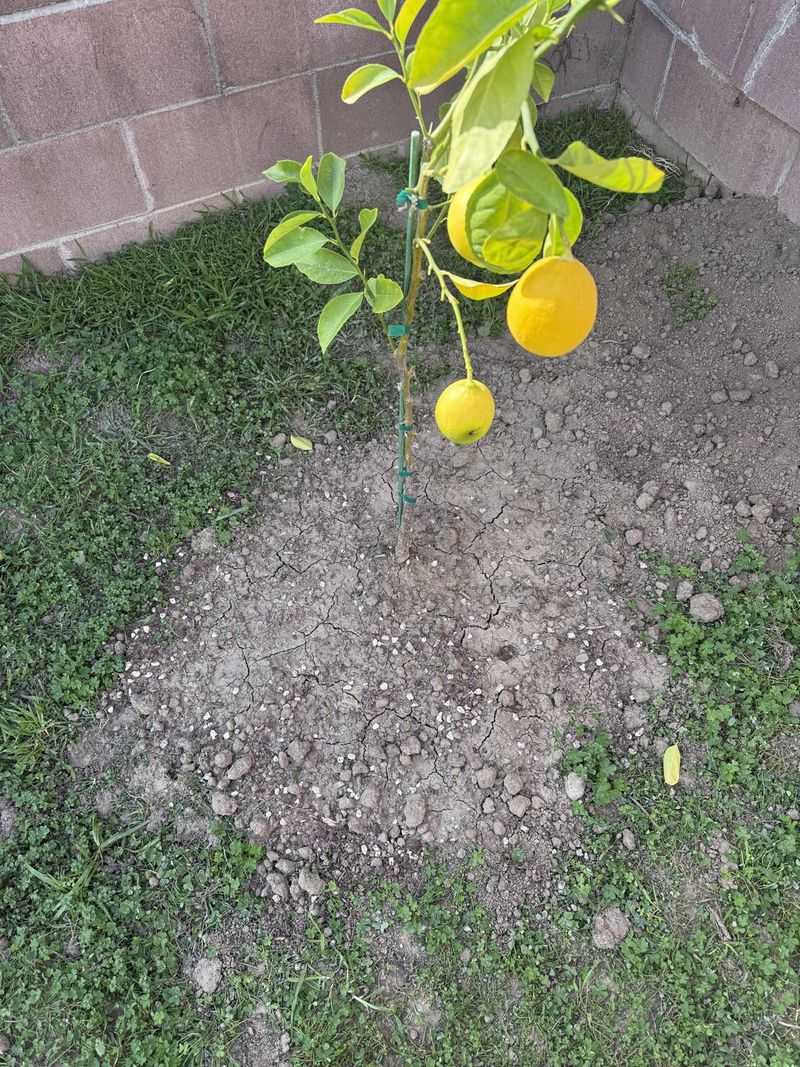
Soil that looks moist on the surface can be completely dry just a few inches down, and citrus roots need moisture at depth to keep fruit development on track.
In California summers, the top inch or two of soil can dry out within a day or two, especially in sandy or fast-draining garden beds.
When the root zone stays dry for too long, the tree begins to experience water stress. One of the earliest visible responses to that stress is fruit drop, often before leaves show any obvious signs of trouble.
Small developing fruit require a steady and consistent water supply, and any interruption to that supply can cause the tree to let some of them go.
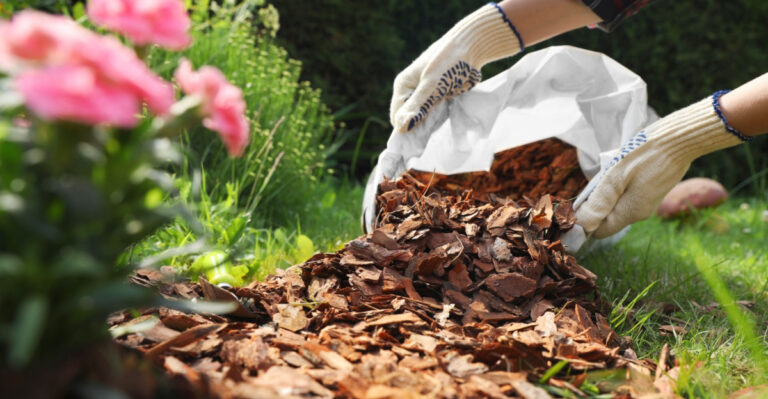
Mulching around the base of the tree, keeping the mulch a few inches away from the trunk itself, can help hold moisture in the soil longer between watering sessions.
A two to four inch layer of wood chip mulch or straw can make a noticeable difference during hot California summers, reducing how quickly the soil dries out.
Before adjusting any watering schedule or adding amendments, push a wooden dowel or a long screwdriver several inches into the soil near the drip line of the tree.
If it comes out dry or barely damp, the tree likely needs more water reaching deeper into the root zone more regularly.
4. Uneven Watering Makes Drop Worse
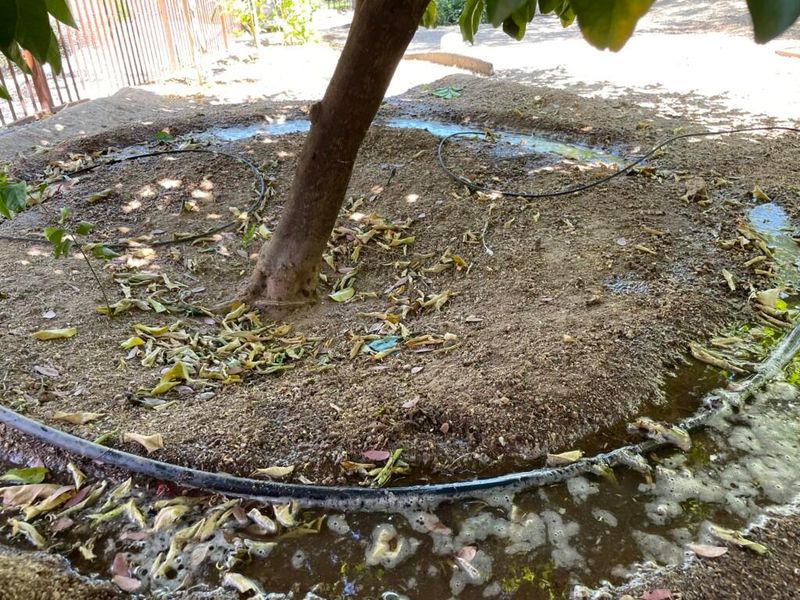
Watering a citrus tree every few days sounds straightforward until you realize the water may not be reaching all parts of the root zone evenly.
Drip emitters can clog, shift, or lose pressure over time, leaving portions of the root zone consistently dry while other sections stay adequately moist.
Citrus roots spread outward well beyond the canopy edge, and if only a portion of that root zone is getting water, the tree may still show signs of stress even when the gardener feels confident the irrigation is running on schedule.
Uneven moisture creates an inconsistent environment for fruit development, and the tree responds by dropping fruit it cannot fully support.
Checking each drip emitter for proper flow takes only a few minutes and can reveal problems that are easy to fix.
Running the irrigation system during daylight hours at least once a month and watching where the water actually lands helps catch coverage gaps before they cause significant fruit loss.
In-ground sprinklers and hand watering can also create uneven coverage, especially in California yards with irregular slopes or compacted soil that causes water to run off rather than soak in.
Watering slowly and deeply, allowing the water time to penetrate rather than rushing through a quick cycle, gives the root zone a much better chance of staying consistently moist throughout a hot July stretch.
5. New Citrus Trees Shed Fruit More Easily
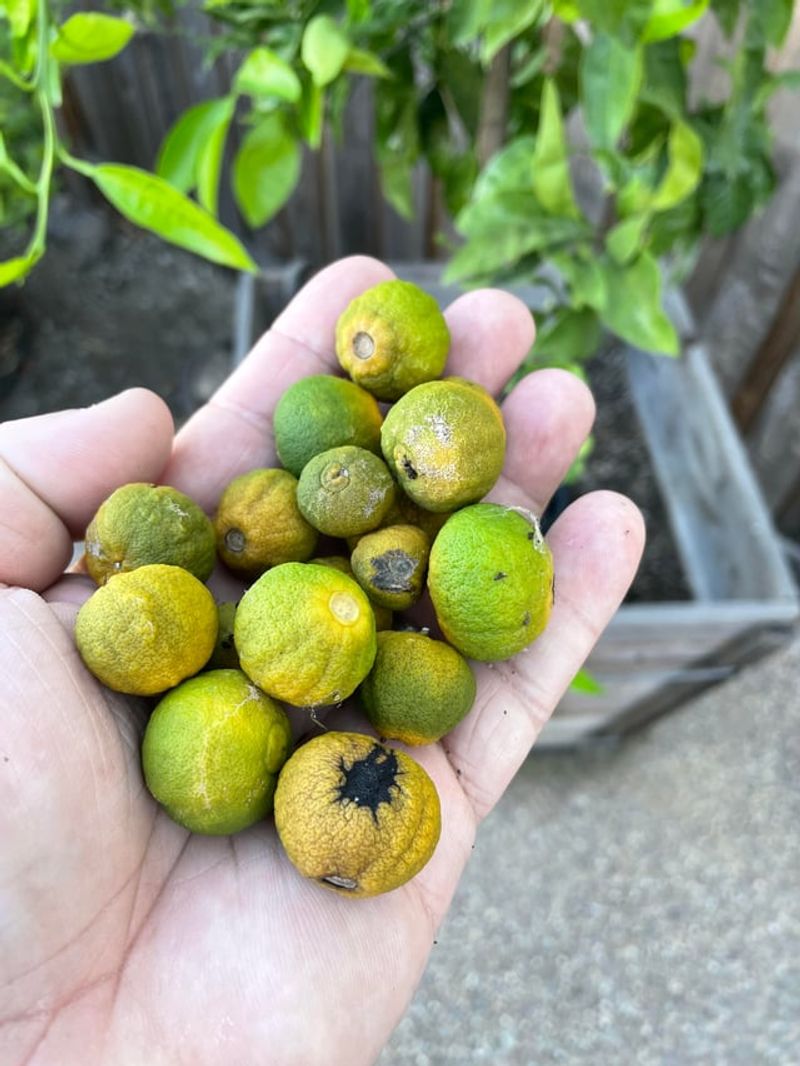
Young lemon, orange, and mandarin trees planted within the last one to three years have a lower tolerance for summer stress than established trees with deep, wide root systems.
A young tree is still building its root network, and that limited root reach makes it far more vulnerable to dry spells, heat waves, and irregular watering.
It is pretty common for a young citrus tree in its first or second summer in a California yard to drop most or even all of its developing fruit during a hot July.
That can feel discouraging, especially after watching the tree flower and set fruit in spring with so much promise.
But the tree is not failing. It is prioritizing its own survival and root development over fruit production.
Gardeners with young citrus trees should focus on keeping the root zone consistently moist during summer rather than pushing for a heavy fruit crop.
Deep, slow watering every few days during heat waves gives young roots a better chance of staying functional and growing outward into the surrounding soil.
Avoiding heavy fertilizer applications on young trees during a heat wave also helps. Fertilizer encourages new growth, which increases the tree’s water demand at the exact moment when water resources may already be stretched thin.
Letting the tree settle before pushing growth tends to produce better results over the following seasons.
6. Container Citrus Dries Out Faster
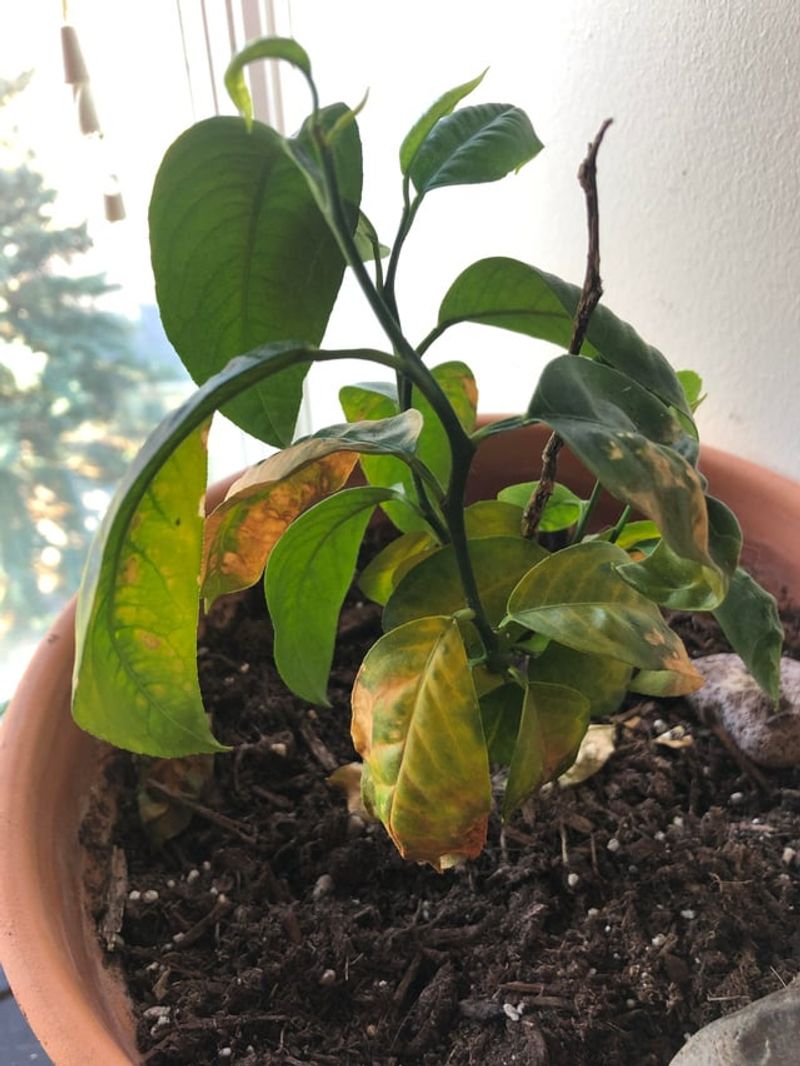
Patio citrus trees growing in containers face a much more intense version of the summer drying problem compared to in-ground trees.
A pot holds a limited volume of soil, and that soil can dry out completely within one to two days during a California heat wave, even if the pot is a large one.
Container citrus trees are among the most common victims of July fruit drop in California home gardens, and the cause is almost always insufficient or inconsistent watering.
When the potting mix dries out completely, even once, the stress response can trigger fruit drop that continues for days after watering resumes.
Checking the moisture of container citrus daily during hot weather is a reasonable habit rather than an overreaction. Pushing a finger two to three inches into the potting mix gives a quick and reliable read on whether the soil still holds any moisture.
If it feels dry at that depth, the tree needs water right away.
Moving container citrus to a spot with afternoon shade during the hottest weeks of summer can reduce moisture loss significantly without hurting fruit development.
Many California gardeners find that a location with morning sun and afternoon shade during July and August helps container citrus hold onto both moisture and developing fruit far more reliably than full all-day sun exposure in a warm inland yard.
7. Too Much Or Too Little Water Can Stress Roots
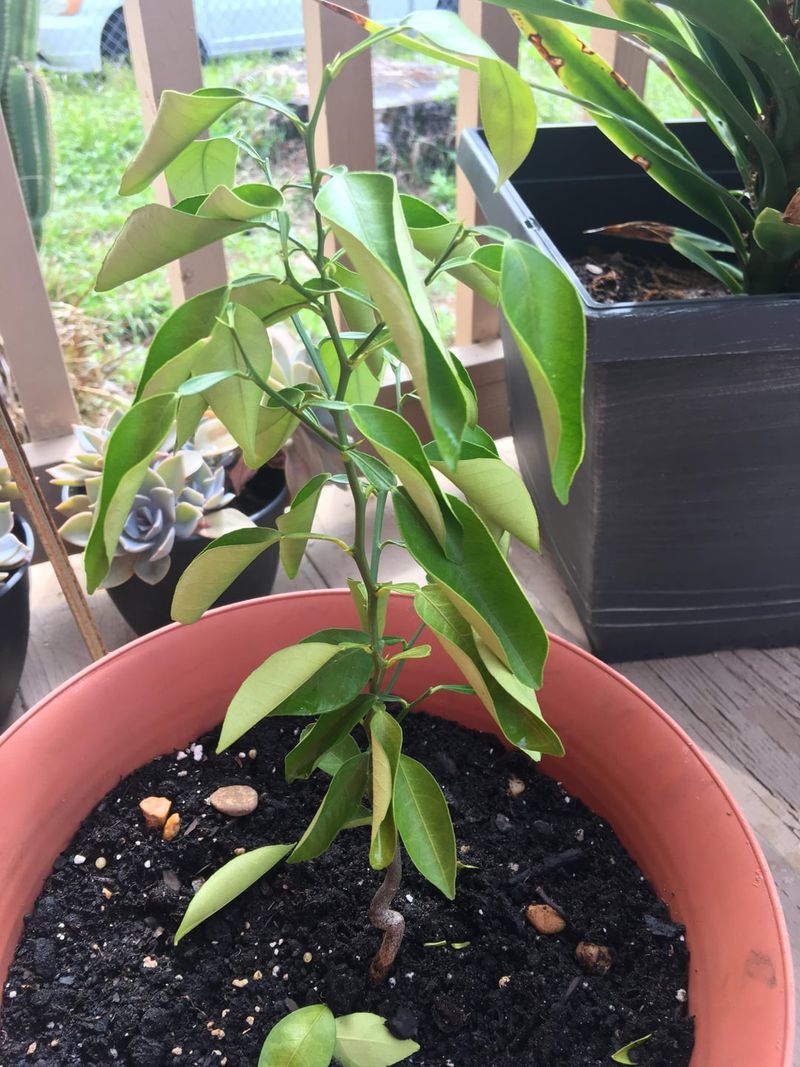
Root stress from overwatering is just as real as root stress from drought, and both can lead to fruit drop in July.
Citrus roots need oxygen in the soil to function properly, and soil that stays saturated for extended periods can deprive roots of the air they need, reducing their ability to take up water and nutrients even when plenty of both are technically available.
Slow-draining clay soil is a common challenge in many California yards, and gardeners who water frequently without checking drainage can accidentally create waterlogged conditions at the root zone.
The signs of overwatering and underwatering can look similar from above, including yellowing leaves, wilting, and fruit drop, which makes soil inspection particularly important before adjusting irrigation.
Pushing a soil probe or screwdriver into the ground near the drip line of the tree gives a much clearer picture than looking at the surface alone.
Soil that feels soggy and heavy several inches down in a yard that has been watered frequently points toward overwatering rather than drought.
Adjusting the watering schedule to allow the top few inches of soil to partially dry between sessions helps restore oxygen to the root zone without swinging to the opposite extreme of drought stress.
Getting that balance right in a California summer takes some observation and adjustment, but it makes a meaningful difference in how well a citrus tree holds onto its developing fruit.
8. Deep Soil Moisture Should Be Checked First
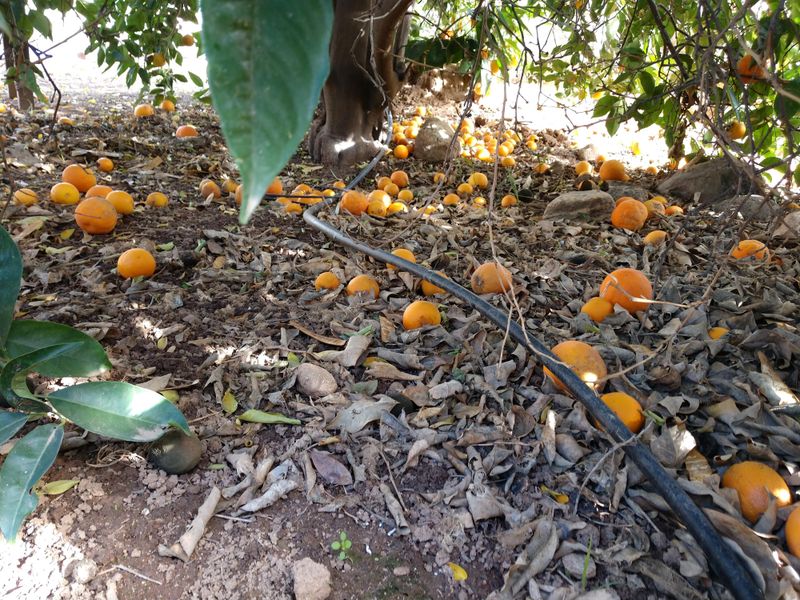
Before changing the watering schedule, adding fertilizer, or doing any pruning, the single most useful step for a California citrus tree dropping fruit in July is checking how moist the soil is several inches below the surface.
Surface soil can appear fine while the deeper root zone stays dry, and citrus roots that reach down six to twelve inches need moisture at that depth to function well during summer heat.
A simple wooden dowel, a long screwdriver, or a soil moisture probe works well for this check. Push it into the soil near the outer edge of the canopy, which is roughly where the most active feeder roots tend to be, and pull it back out.
Damp soil will cling to the dowel or show a color change. Dry soil will release cleanly and feel hard to push through.
If the soil is dry at depth, the priority is getting water down into that zone slowly and thoroughly. Running a drip system for a longer session or using a hose on a slow trickle for an extended period helps water penetrate rather than run off the surface.
Repeating this check a day later confirms whether the water actually reached the root zone.
Once the moisture situation is understood, other adjustments make more sense. Adding mulch, adjusting emitter placement, or shifting watering frequency all work better when grounded in what the soil is actually telling you rather than guesswork.