Why Arizona Gardeners Think Twice Before Planting This Shade Tree
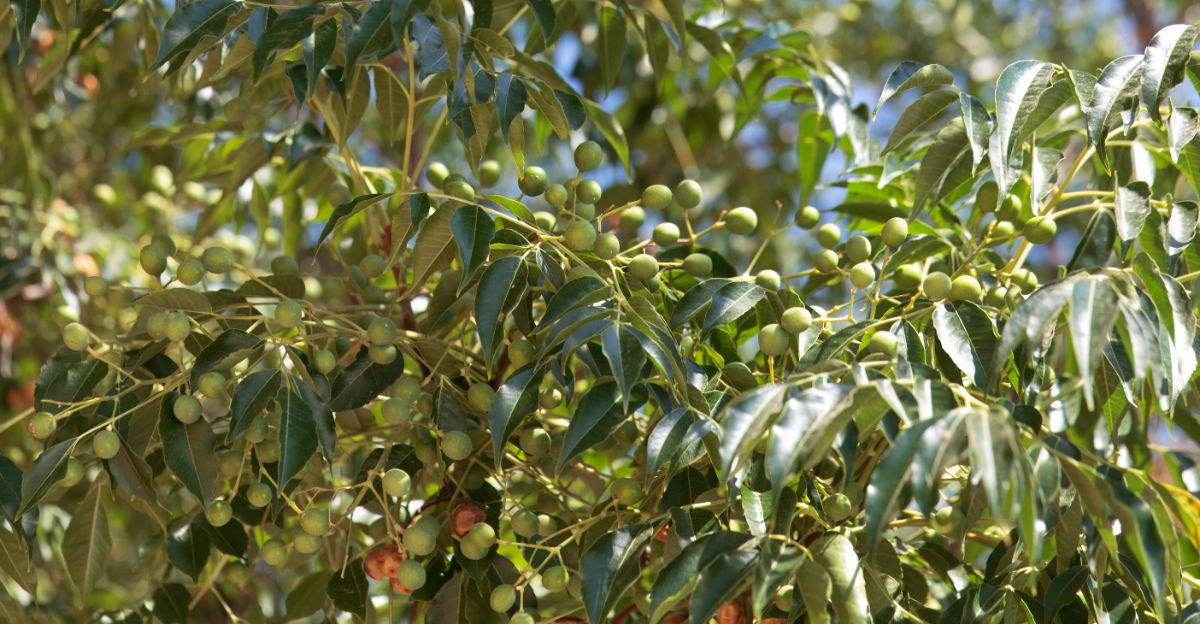
Planting a shade tree feels like one of the smartest ways to make your yard more comfortable. It is easy to believe that faster growth automatically means a better choice.
That assumption has disappointed plenty of gardeners over the years. Arizona makes every tree prove itself once extreme heat, dry soil, and strong summer storms become part of the picture.
Before you bring home the first tree that promises quick shade, pause for a closer look. Some popular choices come with problems that nurseries rarely mention when they are young.
You deserve to know what those trees can look like after a few years in the ground.
Taking a little extra time now could save you from expensive surprises later and help you choose a shade tree you will truly enjoy for years ahead.
1. Chinaberry Trees Spread Far Beyond The Yard
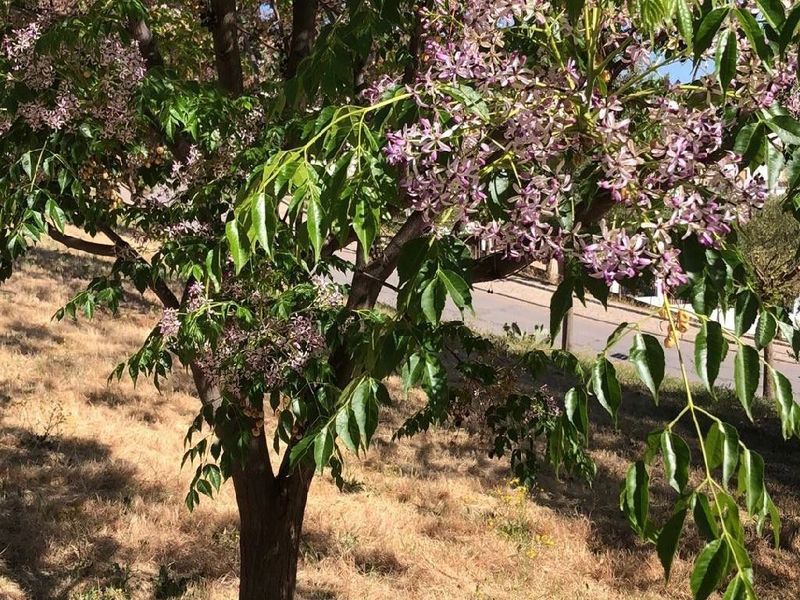
Chinaberry trees do not stay put. Once established, they spread aggressively into neighboring properties, drainage areas, and open desert land through seed dispersal carried by birds and wind.
Each mature Chinaberry can produce thousands of berries in a single season. Birds eat the berries and deposit seeds far from the original tree.
Seedlings pop up in cracks, gravel beds, and areas where no planting was ever intended.
In the Southwest, this kind of unchecked spreading is a real concern. Native plant communities can be disrupted when fast-growing non-native trees outcompete slower-growing local species for water and space.
Chinaberry is listed as an invasive species in several U.S. states, including parts of the Sun Belt. Planting one in your yard can unintentionally contribute to a larger ecological problem beyond your property line.
Neighbors may find unwanted seedlings popping up in their flower beds. Municipalities sometimes flag these trees as nuisance plants in certain regions.
Before planting, check with your local cooperative extension office to understand the specific risks in your area.
Controlling spread requires removing berries before they mature, which is time-consuming and not always practical on a tall tree.
2. Fallen Berries Leave A Mess All Season
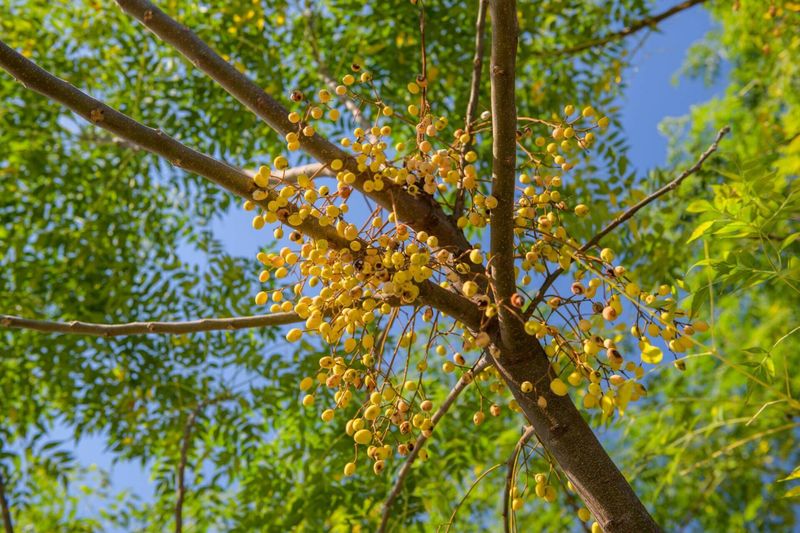
Walk barefoot across a Chinaberry-covered patio and you will understand the problem immediately. Fallen berries coat hard surfaces and create a slick, sticky layer that is genuinely hazardous underfoot.
Chinaberry trees produce berries in large quantities. When ripe, they drop steadily over weeks.
On concrete, pavers, or tile, they break down into a pulpy residue that stains and smells unpleasant as it decomposes.
Cleaning up berries becomes a near-daily chore during peak drop season. Raking, sweeping, and hosing down surfaces takes real time and effort.
Gardeners with pools nearby often find berries floating in the water and clogging skimmer baskets.
Pets and children who spend time in the yard are also a consideration. Chinaberry berries are toxic to dogs, cats, horses, and other animals if consumed in significant amounts.
Keeping a yard safe means staying on top of cleanup regularly.
The berry mess does not stop at the property line either. Berries roll into gutters, wash into storm drains, and accumulate in low spots throughout the landscape.
Your Arizona Garden Changes Every Week. Your Plan Should Too.
Gardening in Arizona changes quickly throughout the season. Every Friday you’ll receive a simple weekly plan showing exactly what to plant, prune, fertilize, harvest, and protect so you never miss the right timing.
In Arizona, where yards often have gravel or decomposed granite ground cover, fallen berries are especially difficult to remove completely.
Over time, the cleanup burden adds up.
3. New Trees Keep Popping Up On Their Own
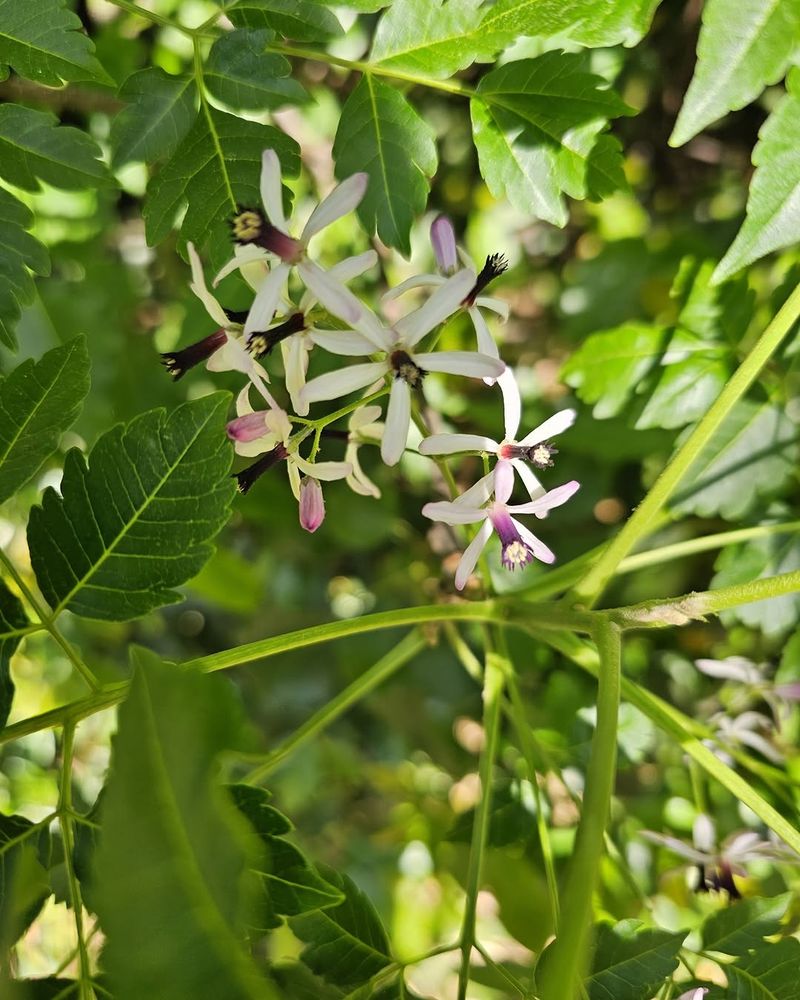
Pull one Chinaberry seedling out of your gravel, and three more seem to appear the following week. Self-seeding is one of the most frustrating traits of this tree for backyard gardeners.
Seeds germinate readily in warm, dry conditions. That makes the desert climate of the Southwest almost ideal for volunteer seedlings to take hold.
They sprout in gravel, along fence lines, under shrubs, and in garden beds where they were never wanted.
Young seedlings are easy enough to pull when small. Leave them even a few weeks too long and the taproot becomes surprisingly strong.
Removing established volunteers takes more effort and sometimes leaves root fragments that resprout.
Gardeners who already have a Chinaberry on their property often describe a constant cycle of pulling volunteers. It becomes a recurring weekend task rather than a one-time fix.
Some report finding seedlings several yards away from the parent tree.
Herbicide can help manage seedlings, but it requires careful application near desirable plants and garden beds. Repeated treatments may be needed over multiple seasons before volunteer sprouting slows down noticeably.
If a neighbor has a Chinaberry nearby, you may be dealing with seedlings in your yard even without planting one yourself.
4. Thick Shade Crowds Out Nearby Plants
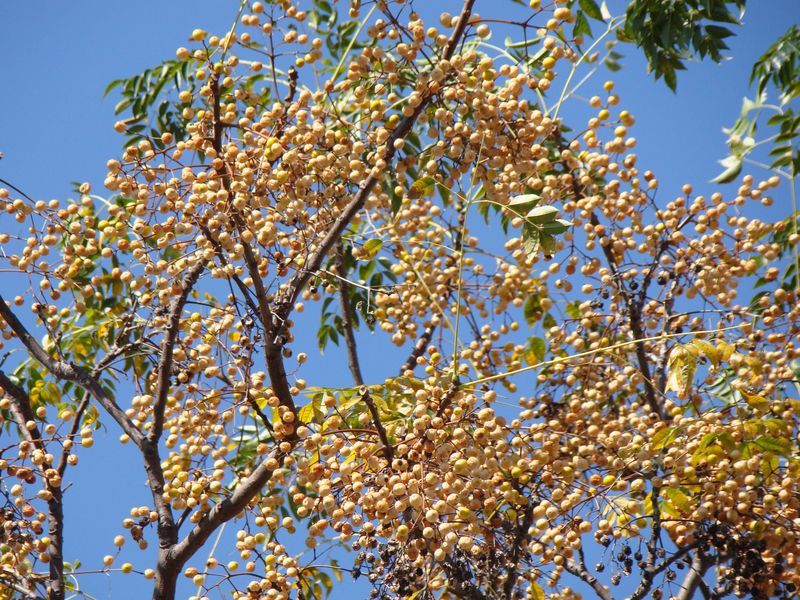
Shade feels like a gift in the desert heat, but too much of it in the wrong place can quietly suffocate a garden. Chinaberry trees develop a dense, spreading canopy that blocks significant sunlight from reaching plants growing beneath and around them.
Sun-loving desert plants struggle under heavy shade. Cacti, agave, and many native flowering plants need direct sun for several hours each day.
When a Chinaberry canopy expands, those plants often thin out, stop blooming, or simply stop thriving over time.
Grass lawns under Chinaberry trees tend to become patchy. Even shade-tolerant turf varieties have limits, and the combination of root competition and low light can make maintaining a healthy lawn underneath very challenging.
Root competition adds another layer to the problem. Chinaberry roots are vigorous and spread outward in search of water and nutrients.
Nearby plants end up competing directly with a much larger, more established root system, often losing that competition.
Garden beds placed too close to a Chinaberry frequently underperform. Flowers may produce fewer blooms.
Vegetables in partial shade tend to yield less and grow more slowly than expected. Repositioning established garden beds is time-consuming and sometimes not practical.
Planning around a large shade tree requires careful thought about plant placement from the start.
5. Brittle Branches Break In Wind And Storms
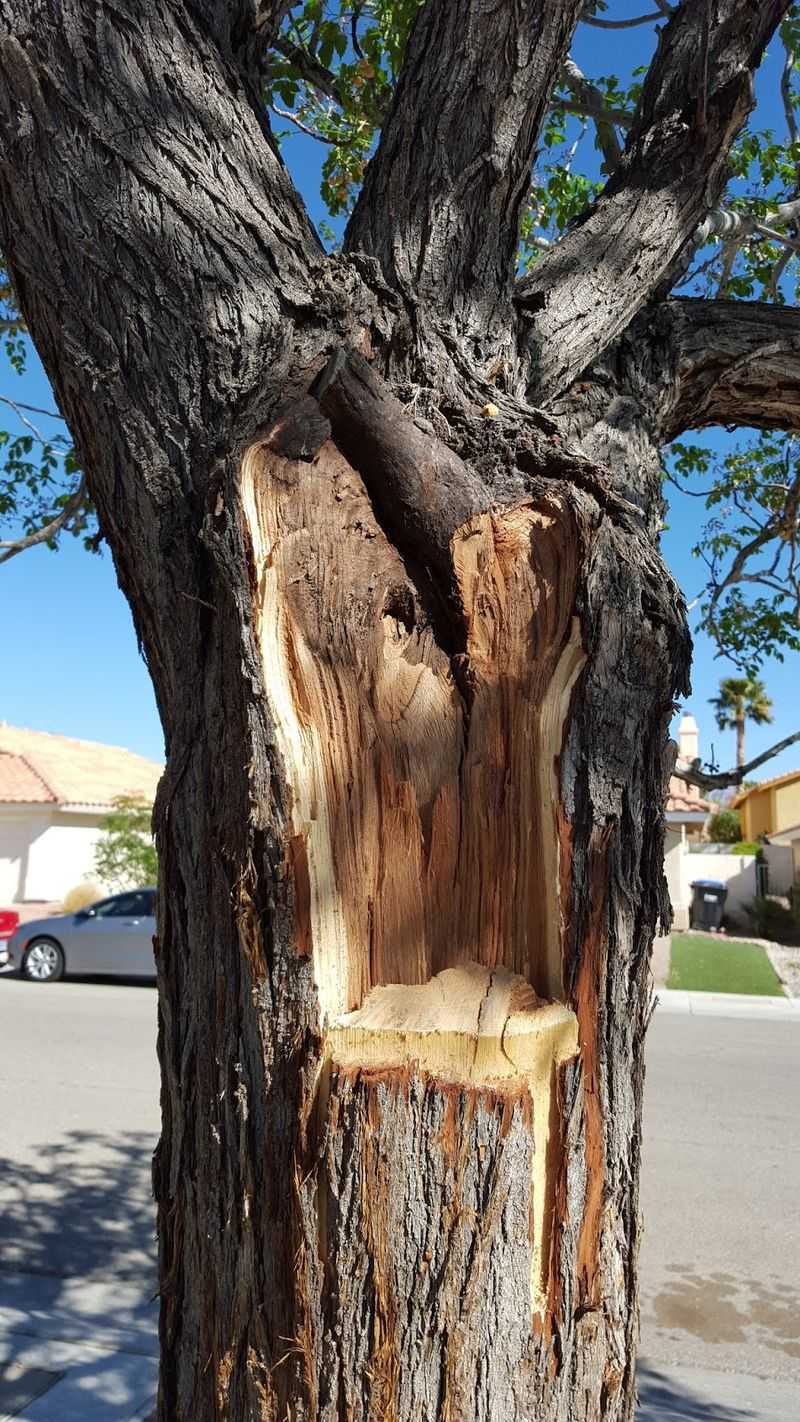
Monsoon season in Arizona is no joke. Strong gusts, sudden downbursts, and heavy rainfall can arrive fast.
Chinaberry trees are not built to handle that kind of stress particularly well.
Chinaberry wood is considered relatively soft and brittle compared to many hardwood shade trees. Branches can snap under wind load, especially when the canopy is full and heavy with foliage or berries.
Large limbs sometimes break without much warning.
Fallen branches create immediate safety hazards. A broken limb landing on a fence, car, roof, or patio causes real damage.
In yards where children or pets spend time, falling branches are a serious concern during active storm seasons.
After a significant monsoon event, Chinaberry owners often spend considerable time clearing debris. Broken branches need to be cut, hauled, and disposed of properly.
Repeated storm damage over several seasons adds up to significant cleanup time and potential repair costs.
Proper pruning can reduce some storm risk by thinning the canopy and removing weak or crossing branches. However, pruning a large Chinaberry requires skill and often a professional arborist, which adds to the overall cost of maintaining the tree.
6. Frequent Pruning Becomes Part Of The Job
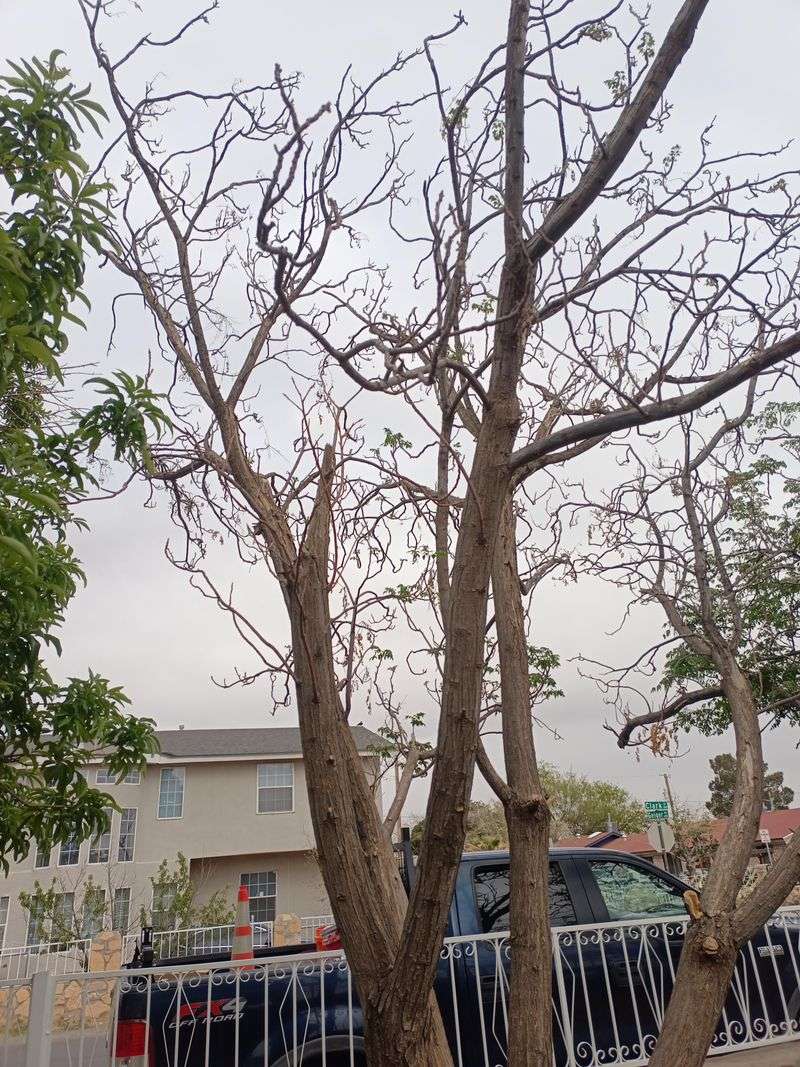
Owning a Chinaberry tree means committing to regular pruning whether you planned on it or not. Fast growth and a tendency toward dense, tangled branching means the tree needs attention several times a year to stay manageable.
Left unpruned, Chinaberry trees develop a heavy, sprawling canopy. Branches grow in unpredictable directions.
Crossing limbs rub against each other and create weak spots that are more likely to break under stress from wind or the weight of wet foliage.
Pruning a young Chinaberry is straightforward enough. Pruning a mature one is a different situation.
Large limbs require proper cutting technique to avoid tearing bark or leaving stubs that invite pests and disease. Many homeowners eventually hire a professional for this work.
In Arizona, timing matters. Heavy pruning is generally best done in late winter before new growth begins.
Pruning during summer heat stresses the tree. Pruning during monsoon season can create open wounds that are vulnerable to certain fungal issues in wet conditions.
Beyond shaping, pruning also means removing suckers that sprout at the base. Chinaberry trees are prone to sending up basal shoots that look like separate small trees growing from the root zone.
Removing them regularly keeps the base of the tree tidy and manageable.
7. Desert Willow Is A Better Shade Tree Choice
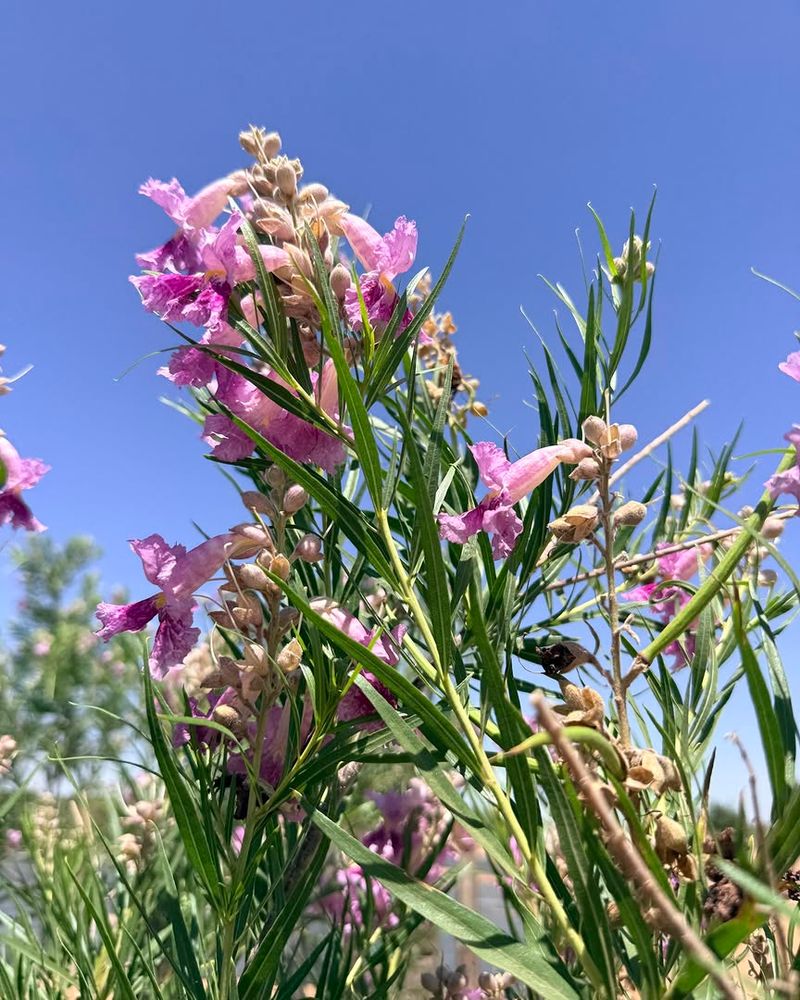
Swap out the Chinaberry and you open the door to something far more rewarding. Desert Willow is a native Southwestern tree that offers beauty, shade, and a much shorter list of headaches.
Desert Willow produces stunning trumpet-shaped flowers in shades of pink, purple, and white throughout the warm season. Pollinators love it.
Hummingbirds visit regularly when it is in bloom. It adds genuine color and life to a yard without the mess of berry drop.
Growth rate is moderate rather than explosive. That means less frequent pruning and a more predictable canopy shape over time.
Branches tend to be more flexible than Chinaberry wood, which helps the tree hold up better during high-wind events.
Water needs are low once the tree is established, which suits the desert climate well. It does not demand supplemental irrigation the way many non-native trees do.
Planting a tree that fits the local environment reduces long-term maintenance considerably.
Self-seeding is minimal compared to Chinaberry. You will not spend weekends pulling volunteer seedlings out of your gravel or garden beds.
Neighbors are also unlikely to find uninvited sprouts showing up in their yards from your tree.
Choosing a tree that works with the desert rather than against it makes gardening more enjoyable.