A Gila Monster in Your Arizona Yard Means It Is Using the Area, Not Grading Your Landscape
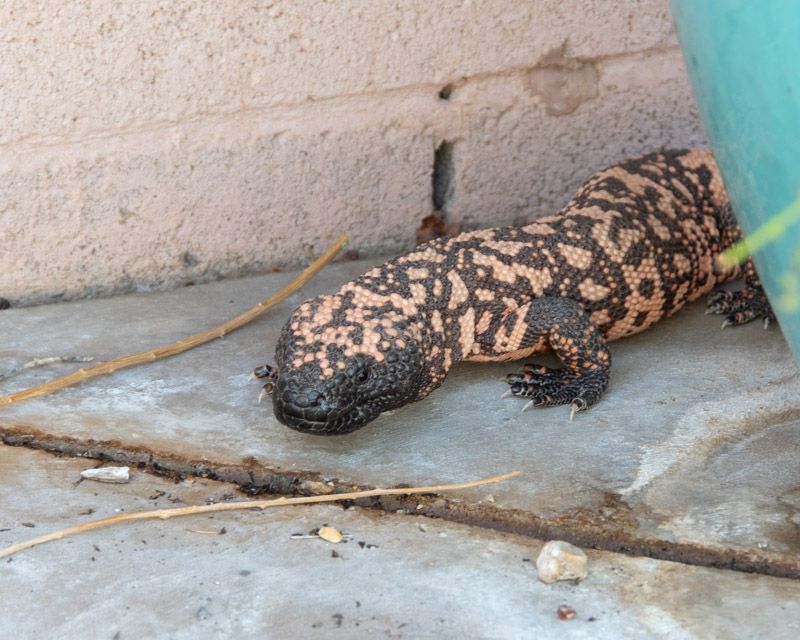
A slow, bead-skinned lizard in orange and black crosses your patio, and suddenly you wonder what it says about your yard. It feels like a good sign, and in a modest way it can be.
But a single sighting tells a smaller story than many people think. Here is what it can show, what it cannot, and how to treat the visitor with care.
What does a sighting tell you?
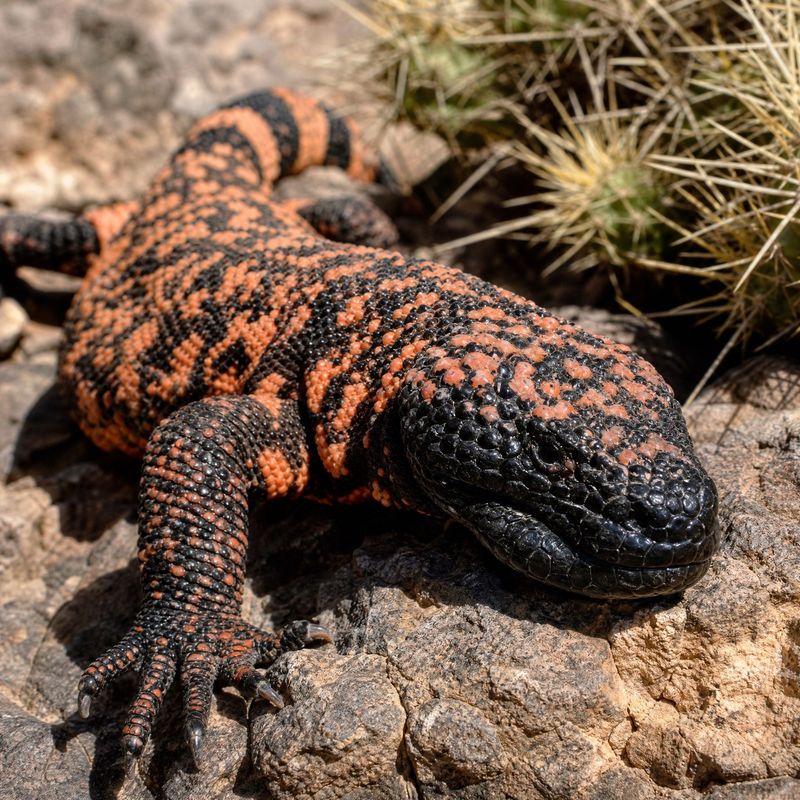
Seeing a Gila monster means one thing for sure: that animal used your yard or the ground nearby. That can feel like a happy surprise, and it is fair to enjoy it as an encouraging wildlife encounter.
What it does not give you is a grade. One lizard on one day cannot prove your yard is intact native habitat, that the population around you is healthy, or that the wider ecosystem is in good shape.
The reason is simple. According to National Park Service information, Gila monsters live in rocky lowlands, desert scrub and grassland, and rocky canyons, and they spend much of their time underground.
Your yard may be just one small piece of a much larger area the animal travels through.
Think of the sighting as a single data point about where the animal walked, not a review of your landscaping.
The hidden habitat behind the visit
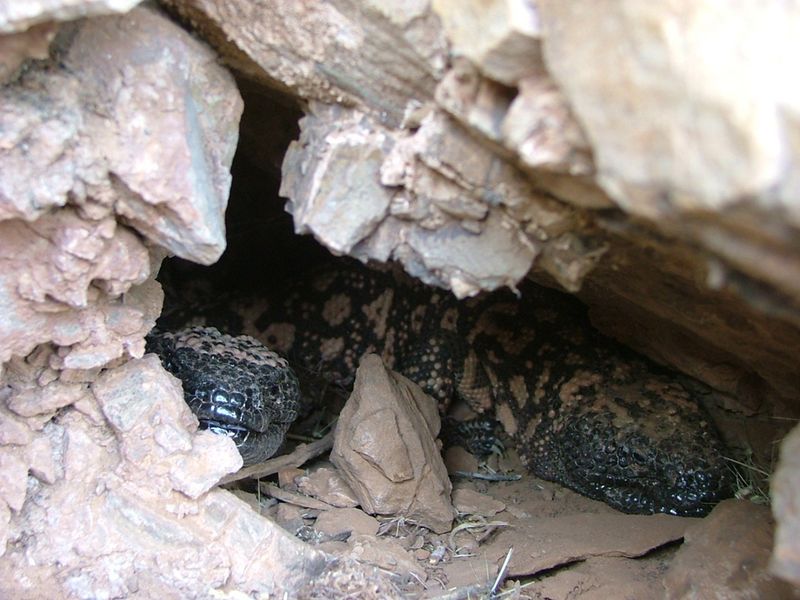
Most of a Gila monster’s life happens where you cannot see it. The animal shelters in underground burrows and rocky refuges, and it also tucks into rocks or vegetation.
Its range is far wider than any planted yard. Desert scrub, grasslands, rocky lowlands, and canyons all count as home ground, so a lizard crossing your gravel may have come from a hillside, a wash, or a vacant lot you never think about.
A federal species assessment notes that the animal’s low surface activity makes it hard to detect. That cuts both ways.
Not seeing one does not mean none are around, and seeing one does not tell you how many there are.
Habitat quality depends on far more than visible plants. Burrows, rock cover, prey, and connected open land all matter, and a quick glimpse reveals almost none of it.
Native cover is not a proven lure
Here is the tempting leap: the animal showed up, so something in the yard must have drawn it. Nothing in the sources reviewed shows that.
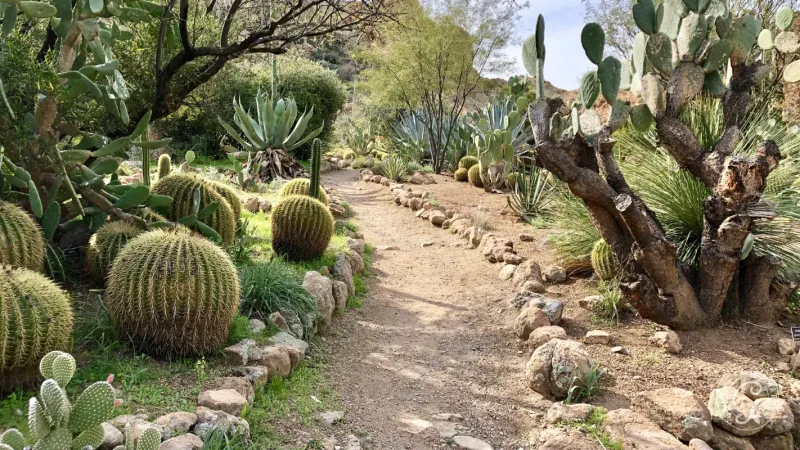
What is documented is that Gila monsters use vegetation, rocks, and burrows. Keeping existing native cover and natural rock refuges in place fits with that known habitat use, so it is a reasonable, low-risk habit for a desert property.
But fitting the habitat is different from causing the visit. No evidence shows that a particular plant or yard feature brought this individual to your property, and it may simply have been passing through from surrounding land.
So skip any advice about adding features to draw a venomous wild animal closer. If you are curious about the bigger picture, the park service overview is a good place to see the range of places these lizards live.
Your Arizona Garden Changes Every Week. Your Plan Should Too.
Gardening in Arizona changes quickly throughout the season. Every Friday you’ll receive a simple weekly plan showing exactly what to plant, prune, fertilize, harvest, and protect so you never miss the right timing.
Does an urban visit prove development is harmless?
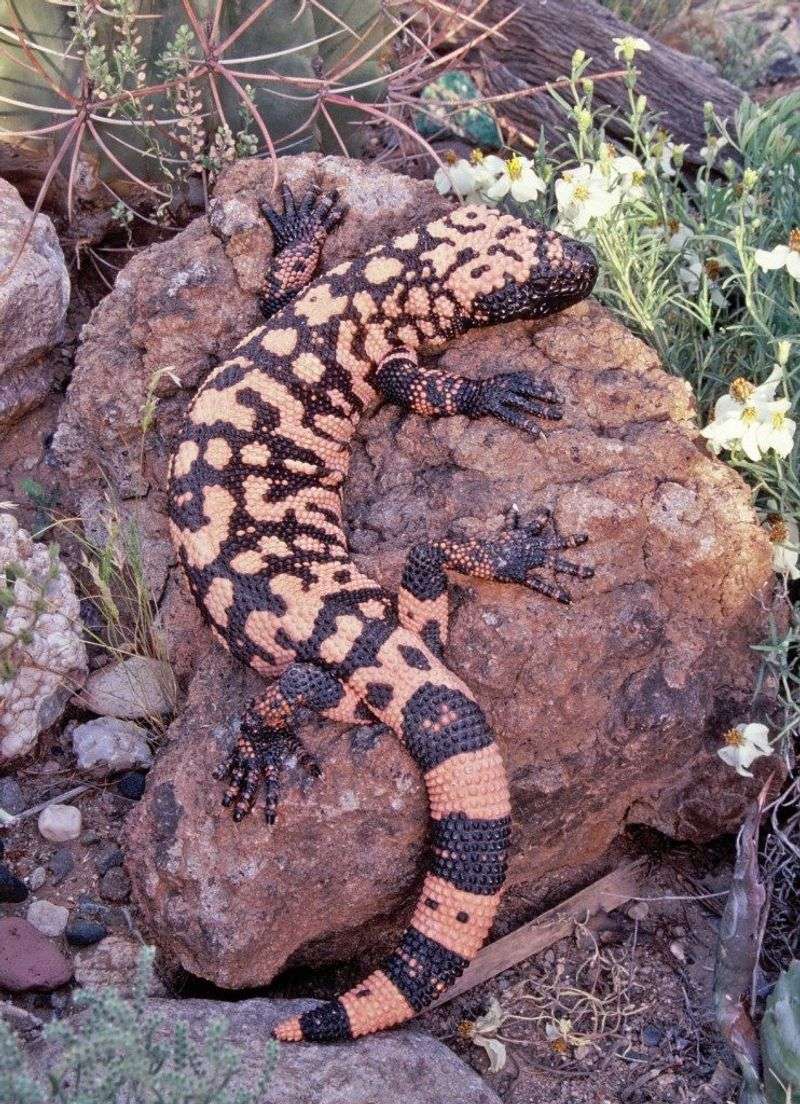
If a Gila monster can show up near houses, maybe development is no problem. The research is more careful than that.
A USGS study at three Sonoran Desert sites found that movement and home-range measures did not differ with urbanization. Animals at the urban site also used artificial refuges.
That is interesting, but it has limits. Only three sites were studied, and the authors cautioned that longer-term effects and effects at higher levels of urbanization remain uncertain.
So an urban sighting shows that a Gila monster can use some developed areas. It does not show that building has no effect on the animals or on their habitat over time.
If you live near a neighborhood edge, the sighting is worth noticing, but not worth treating as proof that everything nearby is fine.
Give the visitor room to leave
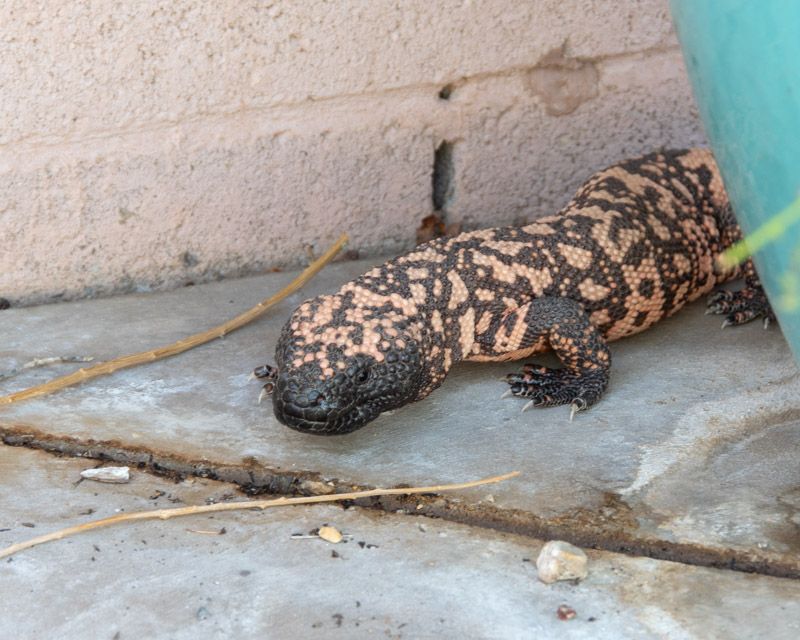
The best response is quiet and simple: step back and let the animal go on its way. Gila monsters are venomous, so do not touch or handle one, and keep children and pets well away.
Pima County’s visitor health guidance advises stepping away from the animal. If someone is bitten, get medical attention immediately.
The Arizona Poison and Drug Information Center also directs bite patients to medical care.
Do not try to trap, capture, move, or harass the lizard. Arizona law generally prohibits taking or possessing wildlife except as permitted, and a stressed animal is more likely to cause trouble.
If the Gila monster seems unable to leave, such as when it is boxed in by a fence or a pool area, call your local wildlife authorities rather than handling it yourself. Otherwise, a little distance and patience usually solve the problem.
A sign of use, not a report card
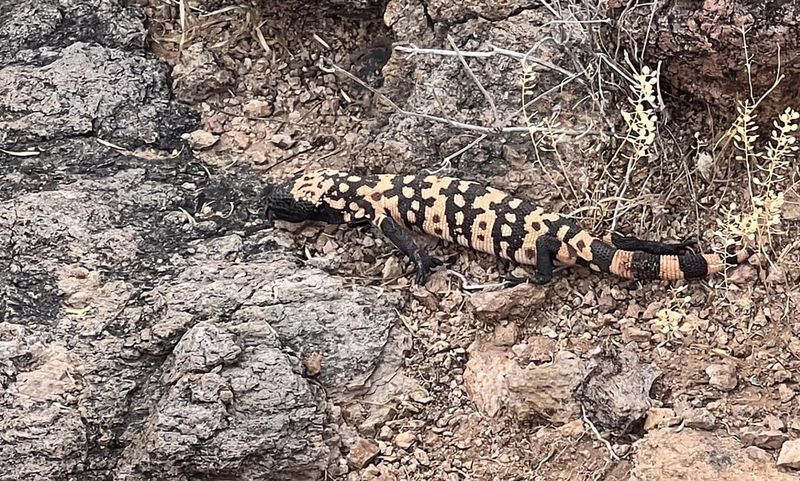
Enjoy the sighting for what it is: proof that a remarkable desert reptile used the ground near your home. It is not a compliment to your landscaping or a ruling on the land around you.
Much of this animal’s life stays hidden below the surface, which is part of why a glimpse feels so rare.
Watch from afar, let it wander, and count yourself lucky to have crossed paths.